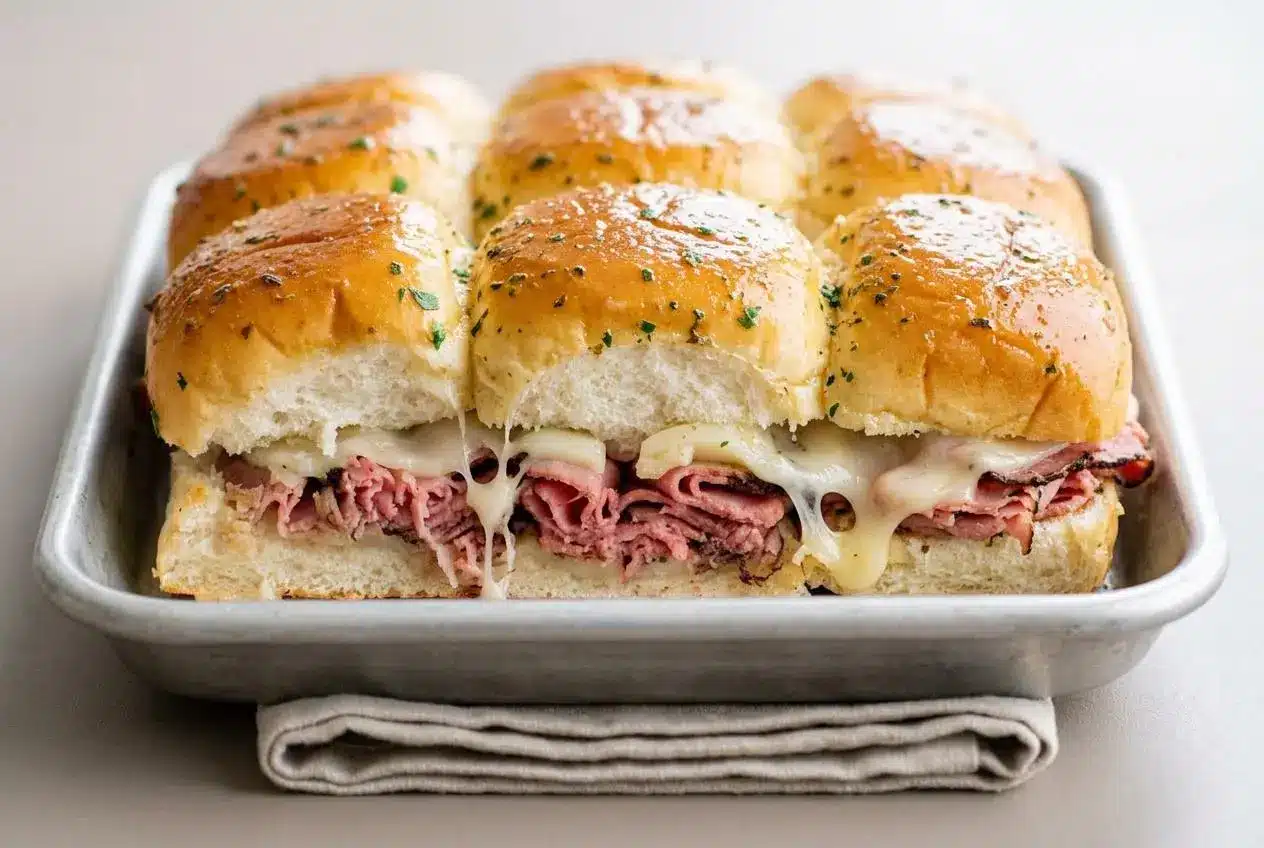
Roast beef sliders are warm mini sandwiches made with thinly sliced beef and provolone between connected roll slabs, finished with garlic butter and baked at 375 degrees F until golden and melted.
These roast beef sliders turn out toasty on top, savory in the middle, and easy to slice into a shareable platter. The garlic butter settles into the roll crevices while the provolone keeps the filling together.
They work for game day, a relaxed weeknight dinner, or any time warm sandwiches need to feed a group without much fuss. The cheese barrier is the small move that makes a big difference.
Keep the rolls connected until after baking so the filling stays neatly in place and the tops brown evenly.
Essential Ingredients for Roast Beef Sliders
Each ingredient contributes to the finished sliders: rolls provide structure, beef brings savory depth, provolone adds melt and moisture protection, and the seasoned butter creates a fragrant golden crust.
- 12 dinner rolls (connected – regular or Hawaiian rolls)
- ¾ pound deli roast beef (more or less as desired)
- 8 ounces sliced provolone cheese (12 thin slices (more or less as desired))
- 3 tablespoons butter (melted)
- ½ teaspoon garlic powder
- ½ teaspoon dried parsley
- 1 teaspoon Worcestershire sauce
Provolone gives these sliders their smooth, stretchy center while also helping shield the bottom buns from beef juices. Butter carries the garlic and parsley over every roll crown, and Worcestershire sauce adds a deep savory edge that keeps the glaze from tasting flat.
I prefer deli roast beef sliced thin enough to fold into loose ribbons, because thick slices can turn chewy before the cheese has fully melted.
Roll Selection: Sweet Hawaiian vs. Savory Buns
Hawaiian sweet rolls create a sweet-and-salty contrast with seasoned roast beef and Worcestershire butter. Their softer crumb also absorbs the glaze readily, so brush the tops evenly rather than letting butter collect around the pan edges.
Regular dinner rolls, potato rolls, or buttery bakery rolls lean more deli-style, letting the roast beef and provolone take center stage. Whichever you choose, buy rolls that are still connected and slice them as one slab. Separate buns are harder to fill evenly and tend to tip or shift while baking.
Deli Beef Cuts and Thickness
Choose rare or medium-rare deli roast beef when possible. The meat continues warming in the oven, so thinly shaved slices stay tender far better than thick, heavily cooked slabs.
If the slices are broad and cling together, cut the stack crosswise before layering. Smaller folds create little air pockets between the meat, helping heat move through the filling without producing one dense, chewy layer. If you have leftover roast beef, slice it very thinly across the grain before using it here.
Cheese Pairings That Melt Evenly
Provolone is the best fit for the main recipe because it melts evenly, tastes mild and creamy, and creates a gentle pull without overwhelming the beef. It also settles into the layers during the short bake, which helps the finished sliders hold together.
- Swiss: Use it as an optional swap for a nuttier, slightly sharper flavor that pairs especially well with caramelized onions.
- Mild cheddar: Choose it for a familiar, richer melt with a more pronounced cheese flavor.
- Sharp cheddar: Use it when you want a bolder contrast, keeping in mind that it can release more oil than provolone during baking.
How to Make Roast Beef Sliders
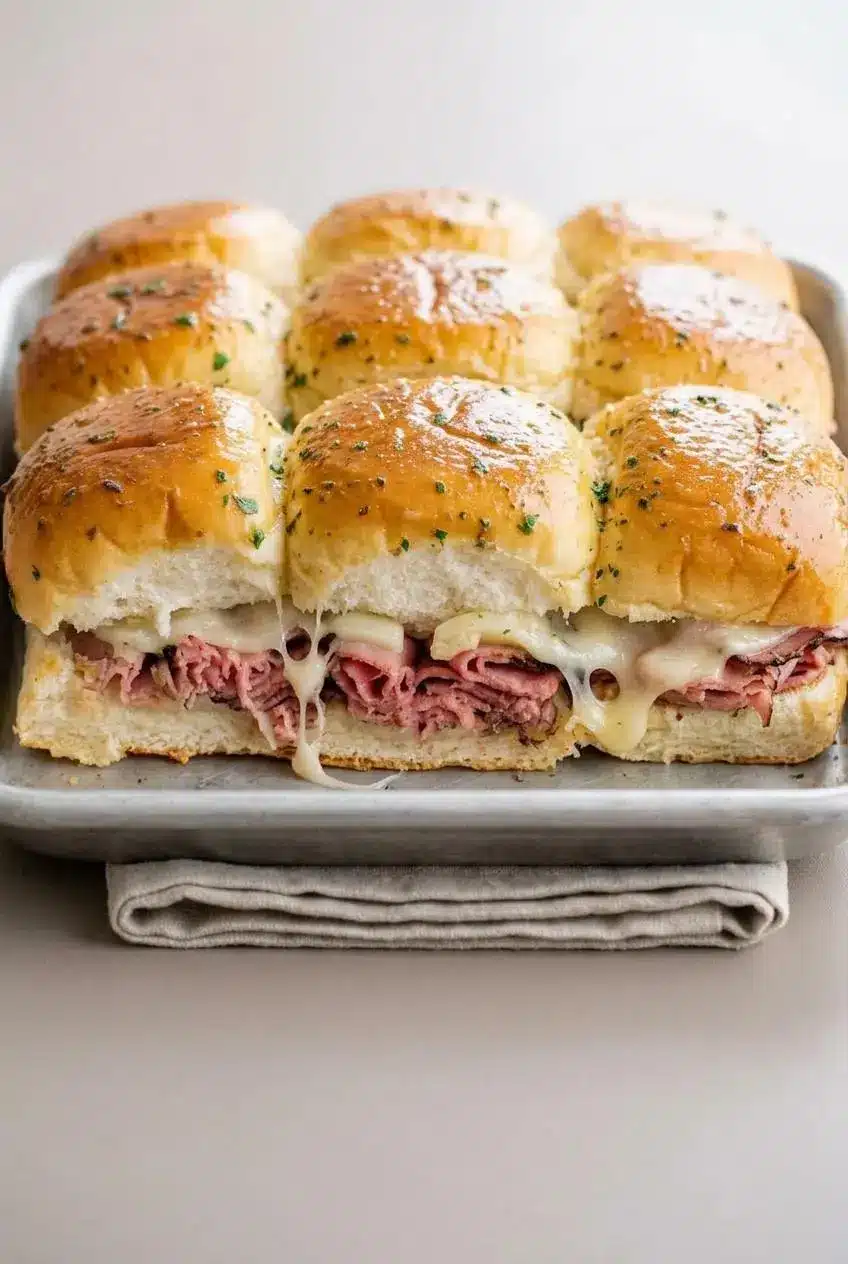
Build the sliders in one connected slab, with cheese below and above the roast beef. That order protects the bread, melts the filling evenly, and makes slicing far less messy after the sliders rest.
- Heat the oven to 375 degrees F and cover a baking sheet with foil.
The foil catches melted cheese and butter, making cleanup much easier. - Split the connected dinner rolls horizontally with a serrated knife, then set the bottom slab on the prepared baking sheet.
Keep the rolls attached so the slab stays stable while you layer the filling. - Arrange half of the provolone over the bottom slab, add all of the roast beef, then cover the beef with the remaining provolone before replacing the top slab.
The bottom cheese layer creates a buffer between the bread and the warm beef juices. - Stir the melted butter, garlic powder, dried parsley, and Worcestershire sauce in a small bowl, then brush the mixture across the roll tops.
A light, even coating gives the rolls a glossy finish without leaving excess butter to scorch around the edges. - Bake for 10 to 12 minutes.
The sliders are ready when the tops are golden, the cheese has melted, and a light sizzle appears around the roll crevices. - Let the baked slab rest for 5 minutes, then move it to a cutting board and separate the sliders with a serrated knife.
The melted provolone should offer slight resistance as it sets, helping the beef and cheese stay inside each sandwich.
The Slab Technique for Clean Slices
A long serrated bread knife gives the cleanest horizontal cut. Use a gentle sawing motion and keep one hand flat over the roll tops so the slab does not tear or compress. The goal is two even layers, not perfectly identical halves.
Assembling one large slab is faster than filling each roll separately, and it keeps the beef distributed across the pan. Once baked and rested, the sliders cut apart in neat portions instead of collapsing into a pile of runaway roast beef.
Building the Dual-Cheese Moisture Barrier
Soggy bottoms usually come from warm meat juices reaching the bread before the rolls have a chance to toast. Place the first provolone layer directly on the bottom buns, then add the roast beef and the second layer of cheese.
The lower cheese melts into a protective layer, while the top cheese helps hold the roast beef against the roll lid. Avoid piling the beef into a thick, compact mound. Loose folds warm more evenly and let the cheese settle around them.
Glazing and Oven Temperature Control
Brush the garlic butter over the roll crowns, concentrating on the tops rather than pouring it down the sides. Butter that pools against the pan can brown too quickly and leave a harsh flavor around the bottom edges.
The 375 degrees F oven gives the bread enough heat to toast while the provolone melts in 10 to 12 minutes. If sweet Hawaiian rolls darken faster than you like, loosely tent the top with foil near the end of baking while the center finishes melting.
Flavor Variations and Sauce Upgrades
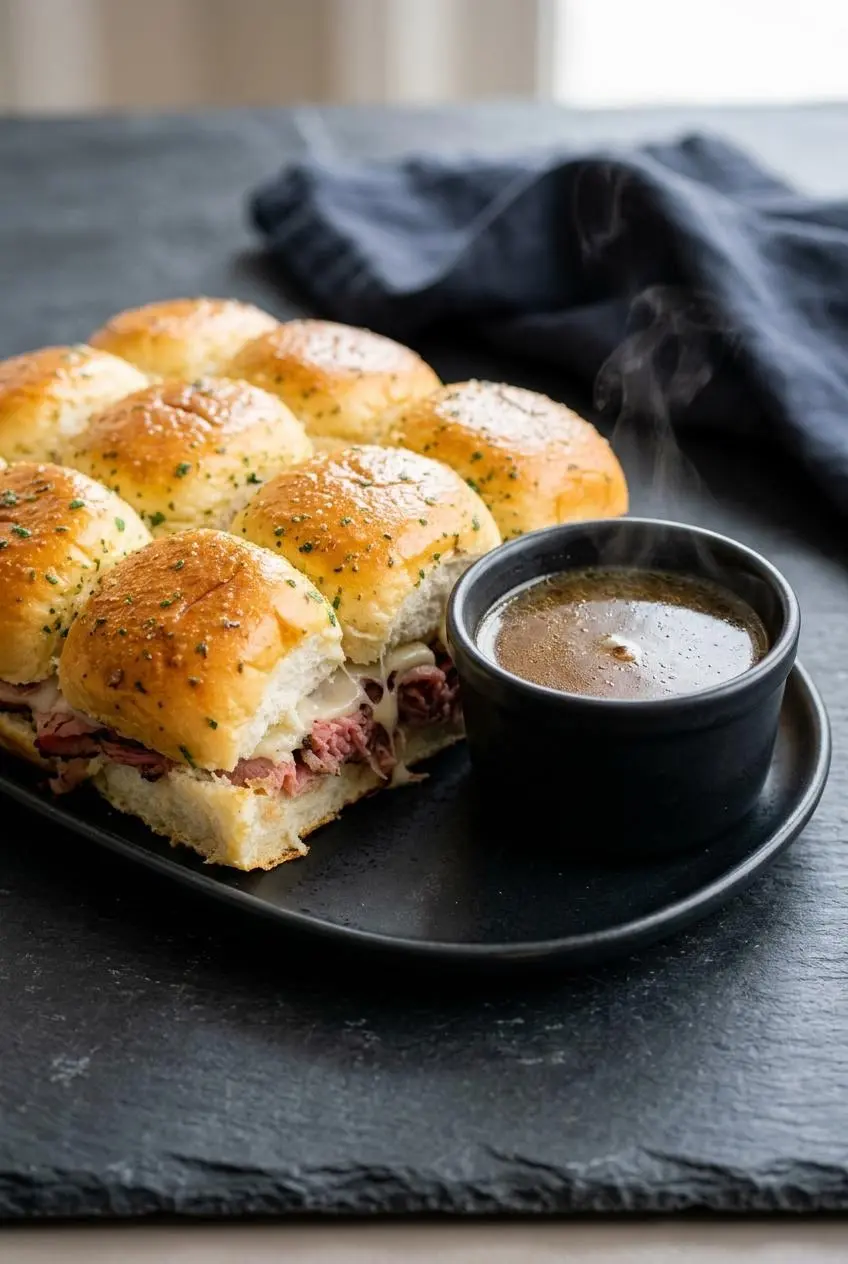
Keep the main sliders as written, then use these additions when you want to steer the platter toward French dip, peppery deli flavors, or a richer onion finish.
French Dip Sliders With Au Jus
Serve the warm sliders with small bowls of hot beef au jus for dipping. The contrast is especially good: buttery crisp roll tops, melted cheese, and a quick dip into savory broth without soaking the whole sandwich before it reaches the plate.
For a spicier sandwich direction with dipping broth, juicy Italian beef offers another warm beef sandwich idea. Keep any dipping broth alongside the sliders rather than pouring it over the baked slab.
Horseradish Cream and Dijon Glaze
For optional horseradish cream roast beef sliders, spread a thin layer of prepared horseradish cream over the beef before adding the top cheese. Use a restrained layer so the rolls do not become wet or slippery. The peppery bite cuts through the richness of the beef and provolone.
Another optional change is a Dijon butter glaze. Stir a small spoonful of Dijon mustard and a pinch of smoked paprika into the garlic butter mixture for a tangier, smokier finish. Brush it only over the tops, just as you would with the standard glaze.
Caramelized Onion Layering
Caramelized onion and Swiss sliders bring a French onion feel to the platter. Spoon well-drained, slowly cooked onions in a thin layer between the roast beef and the upper cheese slices, then bake as usual.
The key is keeping the onions concentrated rather than watery. Too much moisture can overwhelm the cheese barrier, while a modest layer adds sweetness and savory depth without making the buns heavy.
Make-Ahead and Storage
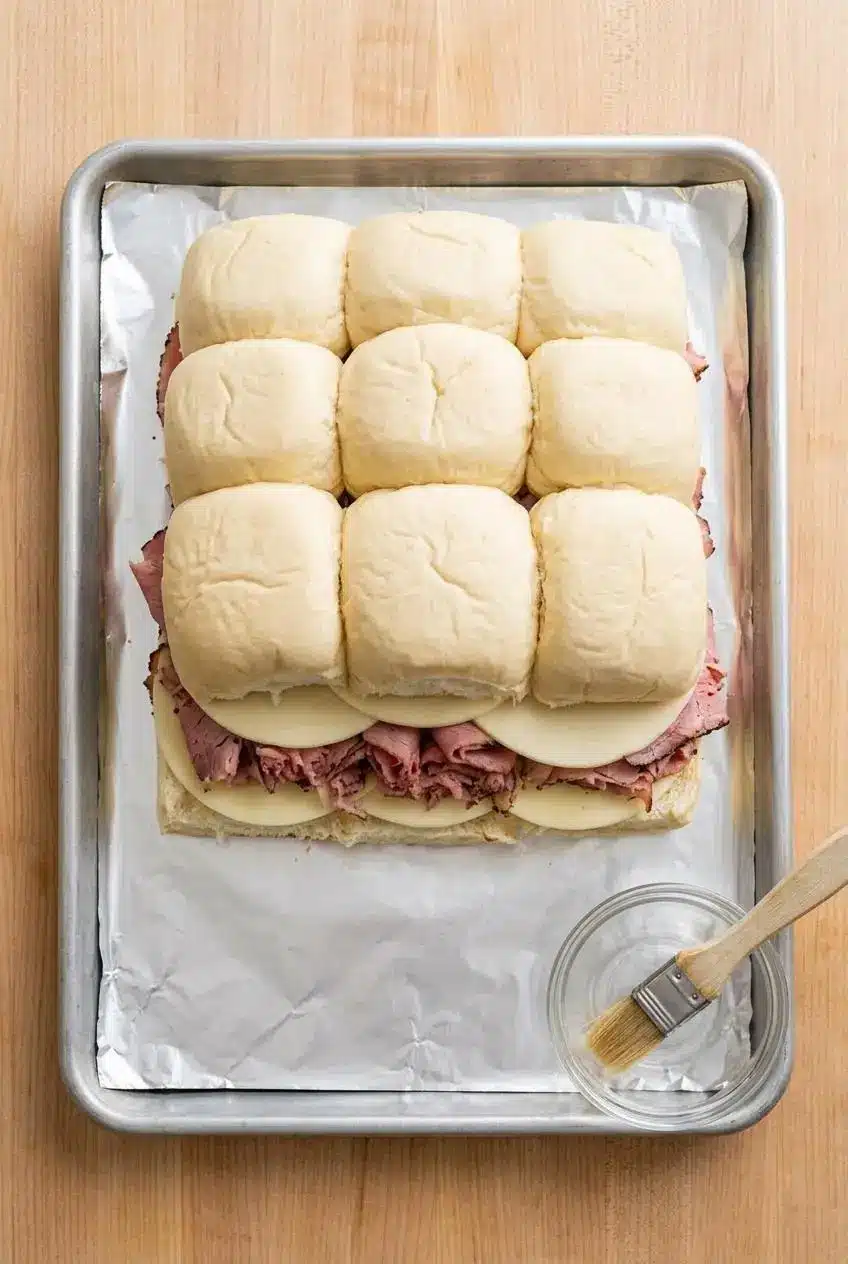
For party prep, assemble the rolls, cheese, and roast beef in the lined baking sheet, cover tightly, and refrigerate until it is time to bake. Hold back the garlic butter glaze until just before the pan goes into the oven so the tops stay soft enough to brown properly rather than absorbing the butter while chilled.
Store cooled leftovers covered in the refrigerator. Reheat only the portion you plan to serve, which helps preserve the remaining buns from repeated warming and cooling.
Refrigerator Prep Rules
- Keep the rolls attached while assembling so the slab stays compact under its cover.
- Place cheese against the bottom buns before adding roast beef to help protect the bread during chilling.
- Wait to mix and brush on the melted butter glaze until baking time.
- Keep the assembled pan covered and chilled until it goes into the preheated oven.
This approach protects the texture that makes sliders appealing: fluffy centers, crisped tops, and cheese that stays where it belongs.
Reheating in the Oven and Air Fryer
For the oven, loosely wrap leftover sliders in foil and warm them until the cheese is melted and the centers are hot throughout. Open the foil near the end if the tops need a little more crispness. Avoid the microwave when possible, since it tends to make the bread soft and gummy.
An air fryer works well for a small portion because it refreshes the crust quickly. Warm the sliders in a single layer and check often so the roll tops do not overbrown. For leftover handling, heat the centers to 165 degrees F, the temperature listed for reheating leftovers.
Conclusion
These sliders succeed because the connected-roll method keeps assembly easy, while the dual layer of provolone helps the bottom buns stay pleasantly firm. Give the baked slab its full 5-minute rest so every cut holds together.
Serve them warm from the cutting board with potato wedges, a crisp garden salad, or bowls of beef broth for dipping. They are built for casual game-day plates and cozy weeknight dinners alike.
Frequently Asked Questions
Can I Assemble Roast Beef Sliders Ahead of Time?
Yes. Assemble the rolls, cheese, and roast beef in the baking sheet, cover tightly, and refrigerate until baking time. Brush on the garlic butter glaze right before baking. Adding it too early can soften the tops and reduce browning.
What Is the Best Cheese for Roast Beef Sliders?
Provolone is the main choice because it melts smoothly, tastes mild, and helps the sliders hold their shape. Swiss offers a nuttier flavor, while sharp cheddar gives the beef a bolder contrast. Both work as optional swaps for provolone.
How Do You Keep the Bottom Buns From Becoming Soggy?
Place half of the cheese directly on the bottom roll slab before adding the roast beef. That melted cheese layer helps keep beef juices from soaking into the bread. Brush butter over the tops only and avoid letting it pool around the bottom edges of the pan.
How Should Leftover Sliders Be Reheated?
Warm leftovers loosely wrapped in foil in the oven until the centers are hot and the cheese has melted again. Open the foil near the end if the tops need crisping. For a small serving, use an air fryer in a single layer and check frequently. The microwave will warm them, but the bread is more likely to turn soft.
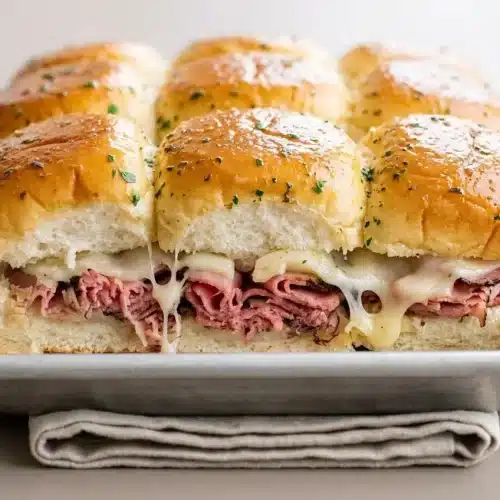
Roast Beef Sliders

Equipment
- Baking Sheet
- Aluminum Foil
- Serrated bread knife
- Pastry brush
- Cutting board
Ingredients
- 12 dinner rolls connected – regular or Hawaiian rolls
- ¾ pound deli roast beef more or less as desired
- 8 ounces sliced provolone cheese 12 thin slices (more or less as desired)
- 3 tablespoons butter melted
- ½ teaspoon garlic powder
- ½ teaspoon dried parsley
- 1 teaspoon Worcestershire sauce
Instructions
- Heat the oven to 375 degrees F and cover a baking sheet with foil. The foil catches melted cheese and butter, making cleanup much easier.
- Split the connected dinner rolls horizontally with a serrated knife, then set the bottom slab on the prepared baking sheet. Keep the rolls attached so the slab stays stable while you layer the filling.
- Arrange half of the provolone over the bottom slab, add all of the roast beef, then cover the beef with the remaining provolone before replacing the top slab. The bottom cheese layer creates a buffer between the bread and the warm beef juices.
- Stir the melted butter, garlic powder, dried parsley, and Worcestershire sauce in a small bowl, then brush the mixture across the roll tops. A light, even coating gives the rolls a glossy finish without leaving excess butter to scorch around the edges.
- Bake for 10 to 12 minutes. The sliders are ready when the tops are golden, the cheese has melted, and a light sizzle appears around the roll crevices.
- Let the baked slab rest for 5 minutes, then move it to a cutting board and separate the sliders with a serrated knife. The melted provolone should offer slight resistance as it sets, helping the beef and cheese stay inside each sandwich.