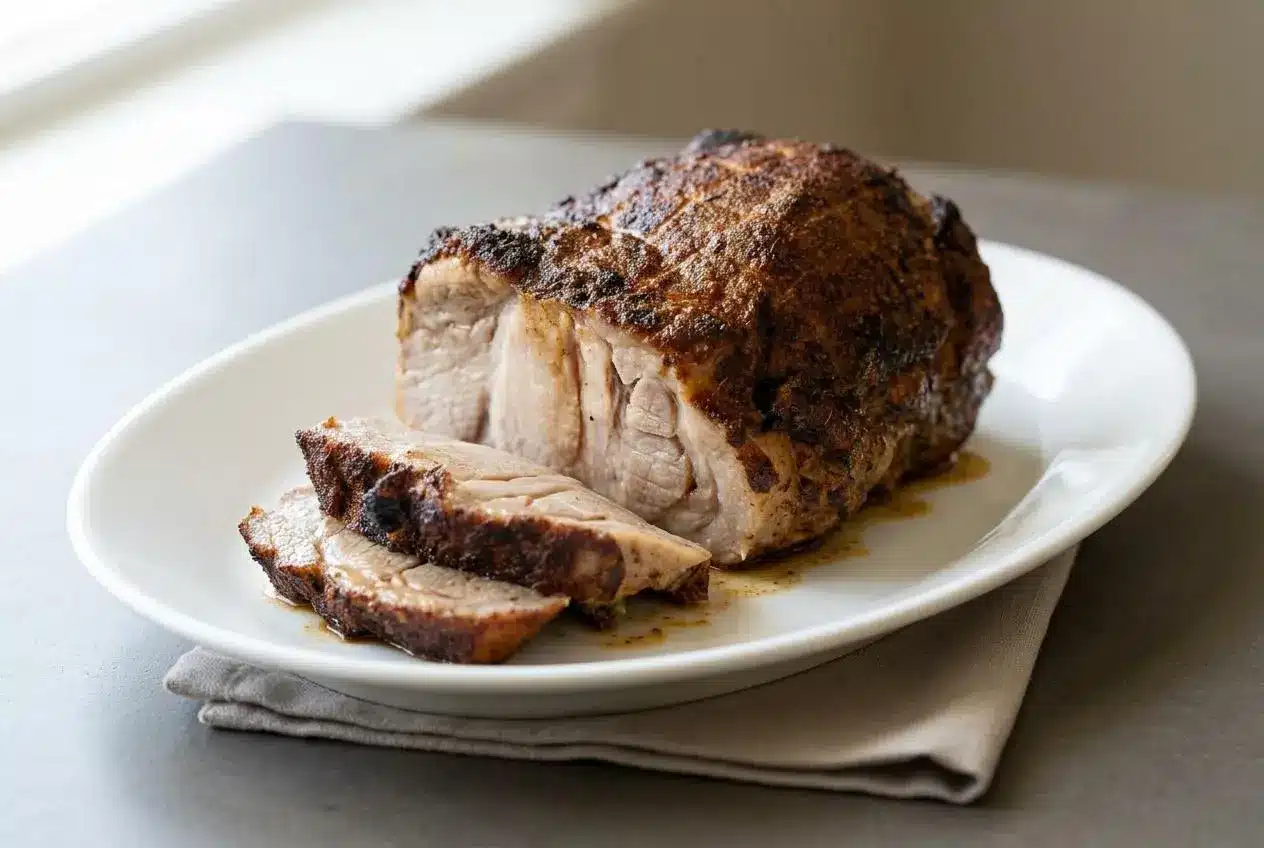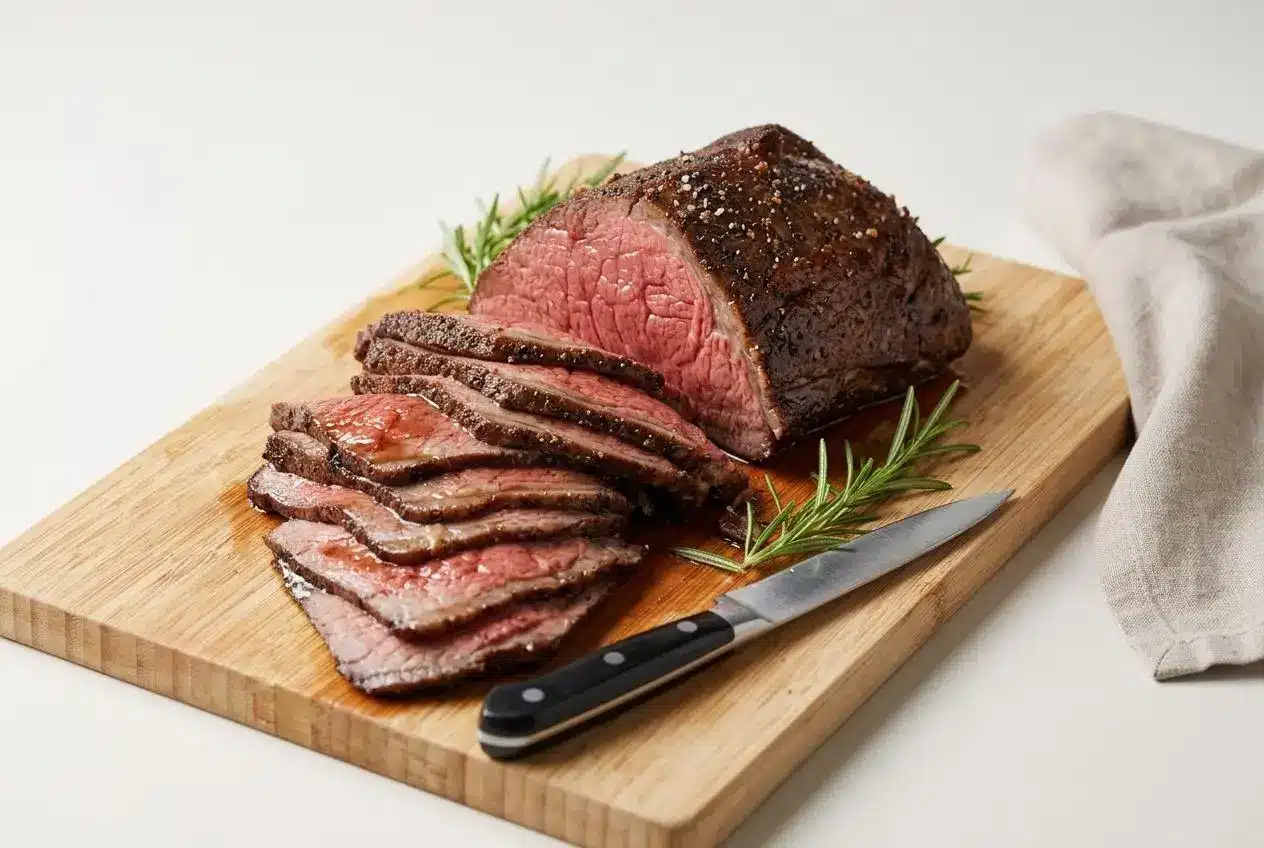
For tender oven-roasted beef, bring the roast closer to room temperature, sear it in butter, roast at 275 F to 115 F, then rest it for 20 minutes before slicing thinly across the grain.
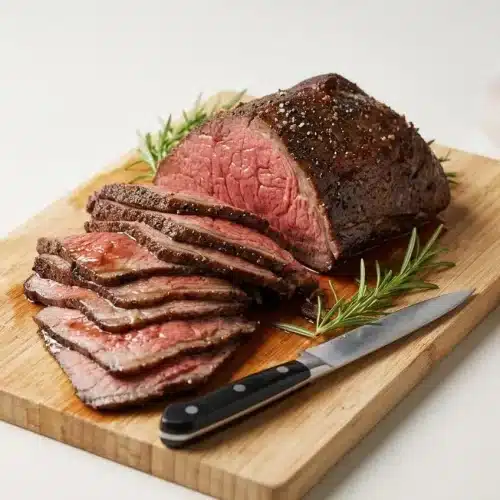
This rump roast recipe turns a lean cut into savory, herb-crusted roast beef with a deeply browned exterior and a warm pink center.
Garlic and butter hit the hot skillet first, followed by rosemary, onions, and pan juices. The rest is where the magic settles in.
Use an oven-safe skillet and a digital meat thermometer so the roast can move from stovetop to oven without losing those flavorful browned bits.
Understanding Rump Roast: Cut Profile and Best Methods
Rump roast comes from the hindquarter, often called the bottom round area. It has a beefy flavor but much less intramuscular fat than richly marbled cuts, so the cooking method makes a major difference in the final texture.
For rosy, sliceable roast beef, cook rump roast gently and stop before the center moves beyond medium-rare. For fork-tender meat that pulls apart, choose a moist braise with broth and a long cooking time instead.
Rump Roast vs Chuck Roast: Understanding the Fat Difference
Chuck roast comes from the shoulder and contains more marbling and connective tissue. That structure makes chuck especially suited to a long, moist classic pot roast, where time softens the meat into tender chunks.
Rump roast is leaner, with long, visible muscle fibers. It can become chewy when dry-roasted too far, so keep the oven gentle, monitor the internal temperature, and carve it very thinly. If shopping at the meat counter, look for an evenly shaped roast with a modest, even fat cap rather than a roast with thin, ragged ends.
When to Roast for Slicing vs When to Braise for Shredding
Choose the 275 F oven method when you want medium-rare slices for dinner plates, sandwiches, or a deli-style roast beef board. The meat should remain firm enough to carve cleanly while still yielding under gentle pressure after resting.
Choose braising when you want shredded beef for sandwiches, wraps, or a saucy dinner. In that method, broth and steady low heat gradually soften the roast until a fork can pull the meat apart. These are two different finishes, and each suits rump roast well when cooked for its intended texture.
Key Ingredients for This Rump Roast Recipe
Each ingredient supports the roast’s flavor, browning, moisture, and aroma: garlic seasons the center, butter builds color, broth and wine lift pan flavor, and onions with rosemary round out the juices.
- 4-pound rump roast
- 6 cloves garlic
- 2 tablespoons sea salt
- 2 teaspoons black pepper
- 2 tablespoons salted butter
- ½ cup beef broth
- ½ cup dry red wine
- 1 large yellow onion, thinly sliced
- 2 sprigs rosemary
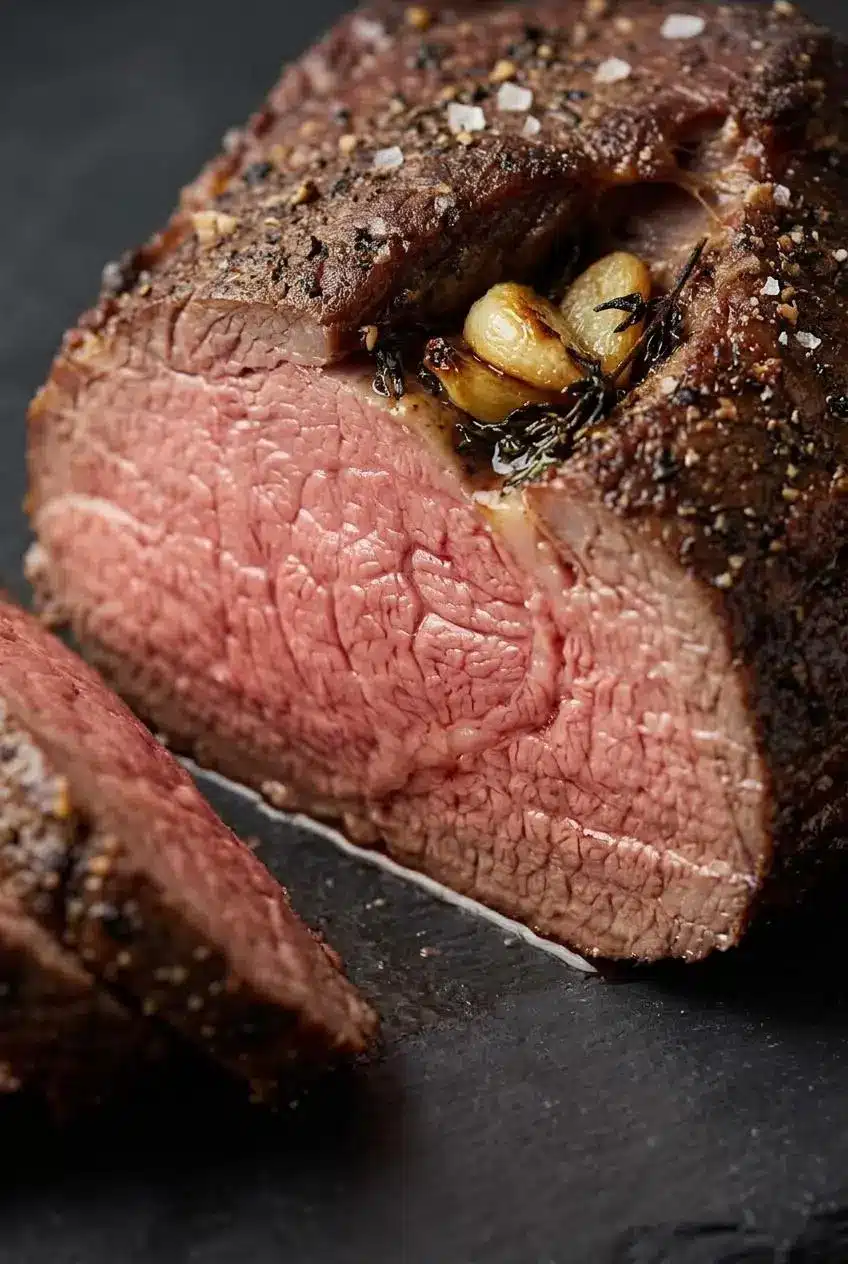
Whole garlic cloves tucked into deep slits bring savory flavor into the lean interior rather than leaving all the seasoning on the crust. Salt and pepper season both the garlic pockets and the exterior, while salted butter gives the roast a rich medium for browning.
The broth and red wine loosen the dark fond on the skillet bottom after searing. That fond becomes the backbone of the pan juices. If avoiding wine, use beef broth with a dash of Worcestershire sauce as a non-alcoholic deglazing option.
I prefer firm, plump garlic cloves here because they stay intact in the roast and soften into mellow little pockets of flavor.
Herbs and Seasonings: Building a Flavorful Crust
Rosemary perfumes the butter, onions, and beef as the roast cooks. Its piney aroma works especially well with cracked black pepper and garlic, giving the pan juices a classic roast-beef character.
For an optional garlic-herb crust, brush a thin layer of Dijon mustard over the seared roast and add cracked peppercorns with fresh thyme before it goes into the oven. This adds a sharper herb finish without changing the main method.
Step-by-Step Method for Perfectly Tender Rump Roast
The clock offers a useful estimate, but roast thickness can change the pace. A digital thermometer in the geometric center gives a much more dependable doneness check than timing alone.
- Set the rump roast out about 2 hours before cooking, without leaving it out longer than that.
Taking off the refrigerator chill helps the center heat more evenly once the roast enters the oven. - Cut three deep slits, about 2 to 3 inches deep, into each side of the roast with a sharp thin knife, filling them with the garlic cloves and some of the salt and pepper; rub the remaining salt and pepper over the exterior.
The garlic should sit well inside the meat, while the seasoned surface should look evenly coated. - Heat the oven to 275 F.
A low oven temperature warms the center gradually and limits the thick gray band that can form around overcooked lean beef. - Melt the salted butter in an oven-safe skillet over medium-high heat, brown the roast on every side for about 15 minutes, then transfer it to a plate and pour in the beef broth and dry red wine.
The butter will foam and the beef should develop a deep mahogany crust while the liquid releases browned bits from the pan. - Return the roast to the skillet and arrange the sliced onion and rosemary sprigs around it.
The onions should sit in the deglazing liquid, where they soften and absorb the savory pan flavor. - Roast until a thermometer placed in the center reads 115 F, allowing about 12 to 15 minutes per pound, or roughly 48 minutes to 1 hour for a 4-pound roast.
Begin checking near the earlier end of the range because internal temperature matters more than the clock. - Move the roast to a cutting board, tent it loosely with foil, and rest it for about 20 minutes before serving at 130 F for medium-rare or 125 F for rare.
The roast will continue warming as it rests, and the surface should feel relaxed rather than tight when gently pressed.
Garlic Larding and Stovetop Searing
Deep garlic pockets matter because rump roast has little internal fat to carry flavor through the center. Cut the slits decisively with a narrow knife, push in the garlic, and season each opening before rubbing the rest of the seasoning over the beef.
Give the skillet enough heat to create a serious sear without scorching the butter. Turn the roast patiently so each side browns. The goal is a dark, savory crust and the rich aroma of butter and beef, not a pale surface that disappears into the oven.
Oven Temperatures, Timing, and Internal Doneness Cues
At 275 F, the exterior has time to brown and warm without racing far ahead of the center. Insert the thermometer probe into the thickest central portion, avoiding a garlic pocket or the skillet surface.
- Pull at 115 F for a final medium-rare temperature of about 130 F after resting.
- For rare beef, the roast finishes around 125 F after its rest.
- Use the 12 to 15 minutes per pound as a planning range, not a substitute for the thermometer.
Cooking lean rump roast much beyond medium-rare in a dry oven tightens the muscle fibers and can leave the slices tough. If you prefer fall-apart beef, the Dutch oven or slow cooker methods below are the better choice.
The Power of the 20-Minute Carryover Rest
Resting is part of the cooking, not an optional pause. Under loose foil, residual heat continues moving inward and raises the internal temperature while the muscle fibers loosen.
Skip the rest and the cutting board will collect the juices that belong in the roast. Give the beef the full 20 minutes, then carve only when the temperature has reached the desired finish.
Essential Carving and Serving Techniques for Maximum Tenderness
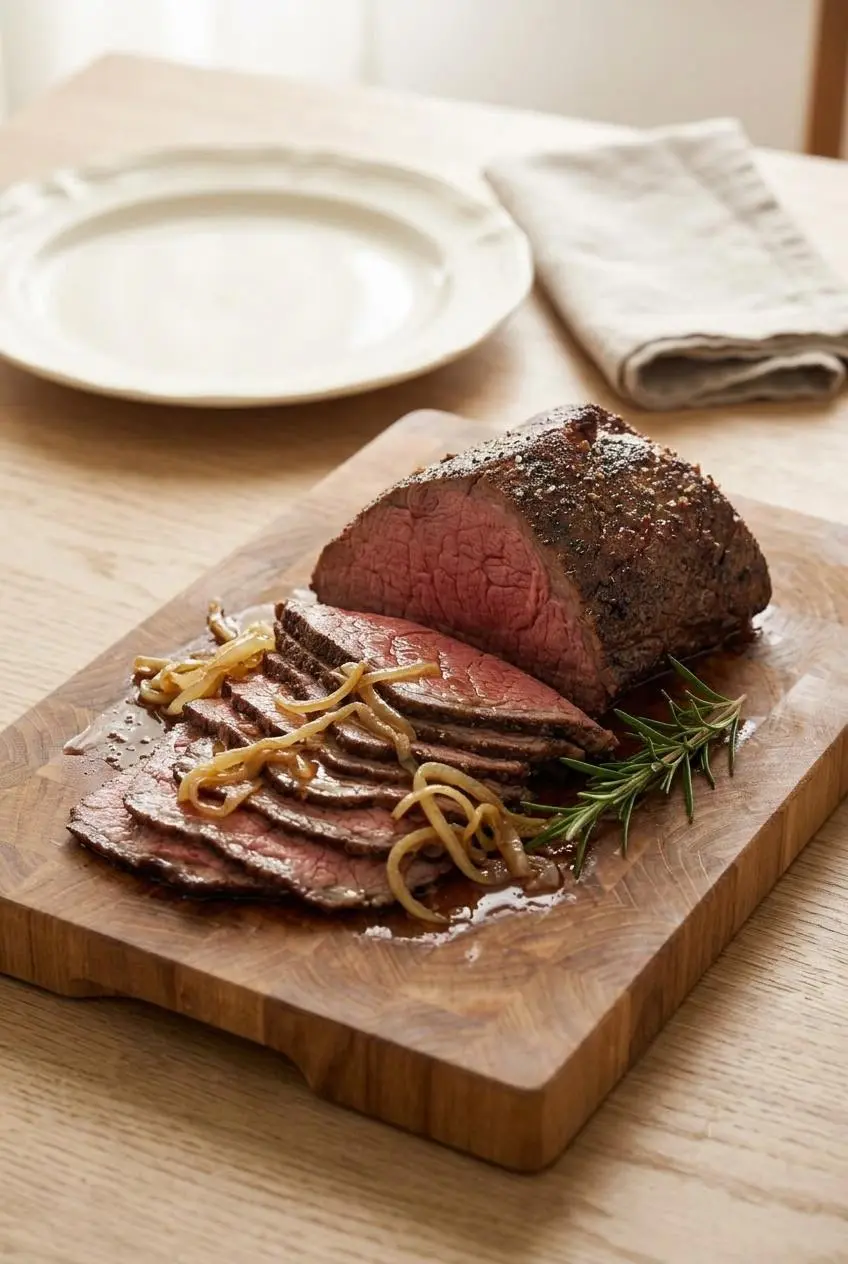
Thin carving is the final move that makes a lean roast eat tenderly. Start with a sharp carving knife and let the roast rest fully before deciding which direction to slice.
Carving Technique: Why Slicing Across the Grain Matters
Look closely at the roast surface for lines of long, parallel muscle fibers. Those lines are the grain. Position the knife perpendicular to them, then slice across those lines rather than following alongside them.
Keep the slices paper-thin, under one-quarter inch when possible. Cutting across the grain shortens each fiber, so the beef feels tender instead of stringy and resistant. If the grain changes direction across the roast, rotate the meat before continuing to carve.
Serve the warm slices with the softened onions and pan juices. For a comforting dinner, spoon the juices over beef alongside roasted red potatoes and a crisp green salad.
How to Turn Pan Drippings into Rich Au Jus or Gravy
Do not discard the liquid left in the skillet. It contains the broth, wine, rosemary, softened onions, and browned fond released during deglazing. Spoon it over the sliced roast for a light au jus that keeps each serving glossy and flavorful.
For a fuller finishing sauce, set the skillet over the stove and let the juices simmer gently with a splash of broth. Stir and scrape the bottom until the flavors come together, then ladle the warm onions and juices over the beef.
Alternative Cooking Methods: Dutch Oven and Slow Cooker
These optional methods turn rump roast into a completely different meal: tender, braised beef meant for shredding rather than pink slices. Keep the oven-roasted method above for classic medium-rare roast beef.
Dutch Oven Braised Pot Roast Method
For a braised rump roast, brown the beef first, then place it in a heavy Dutch oven with roughly 2 cups of broth and aromatics such as onions and herbs. Cover the pot and cook at 300 F for 6 to 7 hours, until the roast yields easily to a fork.
The cooking liquid surrounds the meat and supports a moist, fall-apart texture. This method is a good fit when you want shredded beef, richer juices, and a meal that does not depend on medium-rare doneness.
Slow Cooker Hands-Off Method
For the slow cooker, sear the roast first if time allows, then place it in the cooker with broth and sliced onions. Cook on low for 7 to 8 hours, until the meat gives way under gentle fork pressure.
Shred the beef in its cooking juices and use it for hearty sandwiches or spoon it over potatoes. If you want another hands-off braised dinner, a slow cooker pot roast follows the same cozy, fork-tender direction.
How to Store, Reheat, and Repurpose Leftover Roast Beef
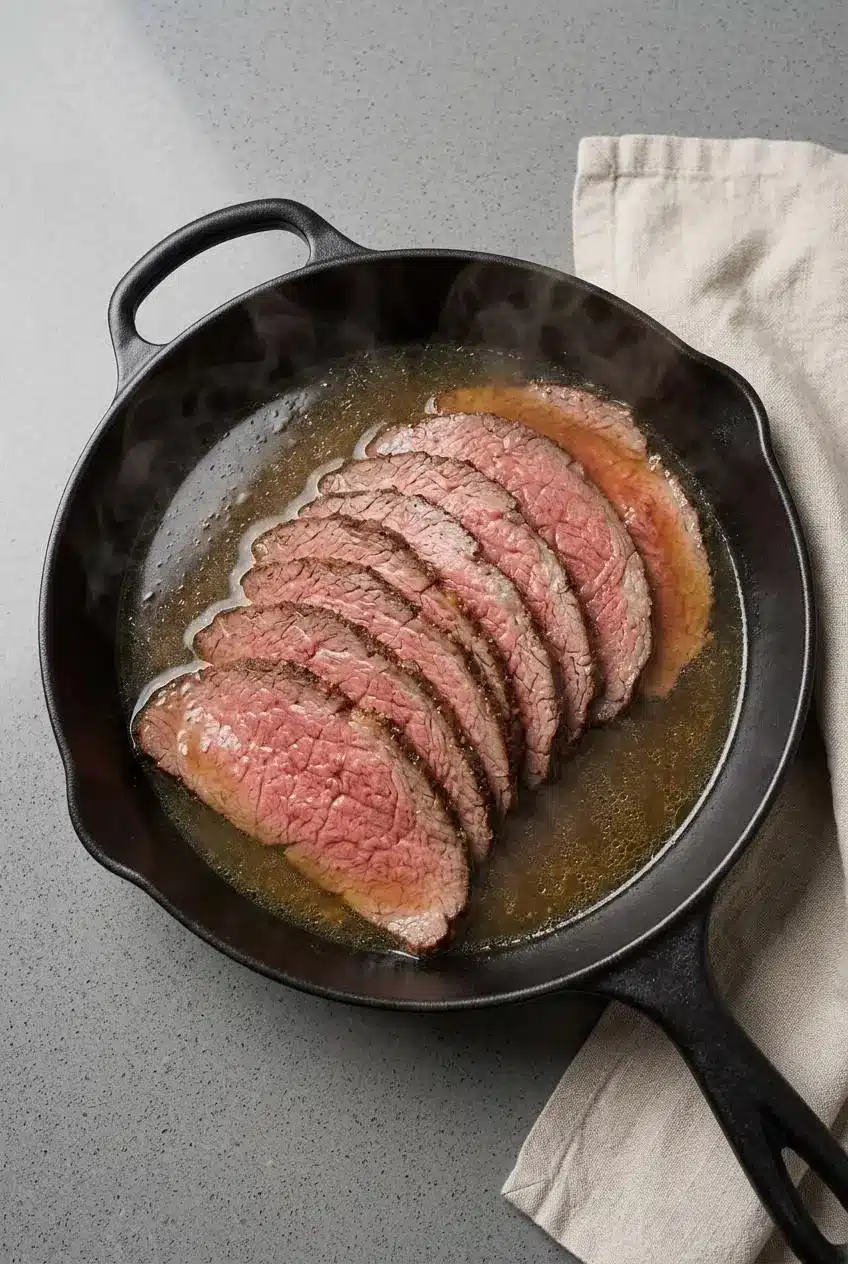
Cool leftover beef, then keep it tightly covered so the slices stay protected from drying air. For cooked beef, tightly covered refrigeration for two to three days and freezer storage for two to three months helps preserve quality when the beef is wrapped or contained well.
Store sliced beef with a little of its pan juice when possible. The juices protect the cut surfaces and make gentle reheating much easier. Chill the roast before wrapping it for freezer storage rather than packing it while still hot.
Gentle Broth Reheating Without Drying Out
High microwave heat can turn lean roast beef rubbery in a hurry. Instead, arrange cold slices in a covered skillet or shallow baking dish with a shallow layer of beef broth.
Warm over low heat just until the meat is heated through. The covered pan creates gentle steam while the broth keeps the slices from drying at the edges. Reheat only the portion you plan to serve so the remaining beef stays in better shape.
Creative Ways to Serve Leftover Slices
- Make French dip sandwiches with warmed beef, melted provolone, and the reserved pan juices for dipping.
- Pile thin slices onto kummelweck rolls with horseradish cream for a beef-on-weck style sandwich.
- Layer reheated roast beef with sautéed peppers and cheese for a quick Philly-style sandwich.
- Serve chilled thin slices over crisp greens with onions and a tangy dressing for a hearty steak salad.
Conclusion
A tender rump roast comes down to steady heat, a reliable thermometer, a patient rest, and thin slicing across the grain. The garlic-studded interior, butter-browned crust, rosemary, and onions give every slice plenty of flavor.
Keep the pan juices warm, carve only what you need, and let the roast stay the star of the plate.
Frequently Asked Questions
How Do You Make a Rump Roast Tender Instead of Tough?
Roast it gently at 275 F and remove it at 115 F rather than cooking by time alone. Rest it for 20 minutes until it reaches about 130 F for medium-rare, then slice it paper-thin across the grain.
At What Internal Temperature Should I Remove Rump Roast From the Oven?
Remove the roast at 115 F for medium-rare. Carryover heat raises the temperature while it rests, bringing it to about 130 F. For rare, serve when the rested roast reaches about 125 F.
Can I Make Rump Roast in a Slow Cooker or Dutch Oven?
Yes. Sear it first, then braise it with broth and aromatics in a covered Dutch oven at 300 F for 6 to 7 hours, or cook it on low in a slow cooker for 7 to 8 hours. Both methods produce fork-tender shredded beef rather than medium-rare slices.
How Should I Reheat Leftover Roast Beef Without Drying It Out?
Place the slices in a covered skillet or baking dish with a shallow layer of beef broth. Warm them gently over low heat only until heated through, which protects the tender center from overcooking.
Can I Substitute Beef Broth for Red Wine When Deglazing?
Yes. Use beef broth in place of the wine, then add a dash of Worcestershire sauce or red wine vinegar if you want a deeper, tangier finish. Scrape the skillet well so the browned fond dissolves into the pan juices.
Rump Roast Recipe

Equipment
- oven-safe skillet
- sharp thin knife
- Cutting board
- Meat Thermometer
- Aluminum Foil
Ingredients
- 4 pound rump roast
- 6 cloves garlic
- 2 tablespoons sea salt
- 2 teaspoons black pepper
- 2 tablespoons salted butter
- ½ cup beef broth
- ½ cup dry red wine
- 1 large yellow onion thinly sliced
- 2 sprigs rosemary
Instructions
- Set the rump roast out about 2 hours before cooking, without leaving it out longer than that. Taking off the refrigerator chill helps the center heat more evenly once the roast enters the oven.
- Cut three deep slits, about 2 to 3 inches deep, into each side of the roast with a sharp thin knife, filling them with the garlic cloves and some of the salt and pepper; rub the remaining salt and pepper over the exterior. The garlic should sit well inside the meat, while the seasoned surface should look evenly coated.
- Heat the oven to 275 F. A low oven temperature warms the center gradually and limits the thick gray band that can form around overcooked lean beef.
- Melt the salted butter in an oven-safe skillet over medium-high heat, brown the roast on every side for about 15 minutes, then transfer it to a plate and pour in the beef broth and dry red wine. The butter will foam and the beef should develop a deep mahogany crust while the liquid releases browned bits from the pan.
- Return the roast to the skillet and arrange the sliced onion and rosemary sprigs around it. The onions should sit in the deglazing liquid, where they soften and absorb the savory pan flavor.
- Roast until a thermometer placed in the center reads 115 F, allowing about 12 to 15 minutes per pound, or roughly 48 minutes to 1 hour for a 4-pound roast. Begin checking near the earlier end of the range because internal temperature matters more than the clock.
- Move the roast to a cutting board, tent it loosely with foil, and rest it for about 20 minutes before serving at 130 F for medium-rare or 125 F for rare. The roast will continue warming as it rests, and the surface should feel relaxed rather than tight when gently pressed.