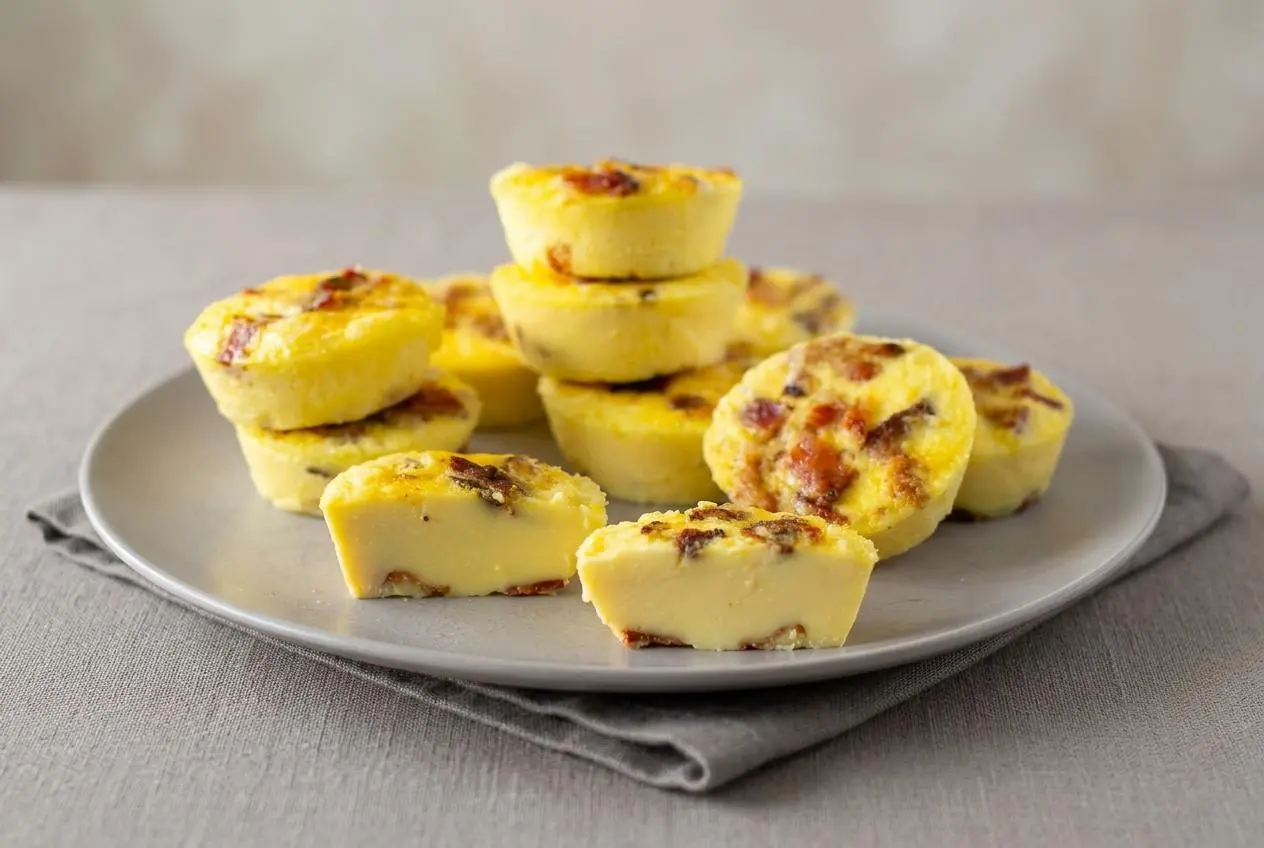
This starbucks egg bites recipe creates velvety bacon and Gruyere egg bites by blending cottage cheese with eggs and cornstarch, then baking the mixture in a 300 F water bath for 30 minutes.
Skip the morning drive-through line and enjoy warm, savory egg bites with a soft custard center and crisp bacon tucked throughout. They have that rich coffee-shop feel without any special sous vide equipment.
The key is gentle heat, not a hot oven. A shallow steam bath keeps the centers tender while the edges set neatly.
Set the blender, muffin tin, sheet pan, and kettle out before starting so the hot-water step feels calm and controlled.
Essential Ingredients for Authentic Starbucks Texture
Each ingredient supports the finished bite: bacon adds smoky contrast, cottage cheese brings moisture, Gruyere supplies savory richness, and cornstarch helps the egg custard hold its tender structure.
- cooking spray
- 4 slices bacon or turkey bacon (diced)
- 8 eggs, whisked
- 1 cup cottage cheese
- 1 cup gruyere cheese (shredded)
- 1 tbsp cornstarch
- 1/4 tsp salt
The Role of Blended Cottage Cheese
Cottage cheese is what gives these bites their plush, custardy character. Once blended until fully smooth, the curds disappear into the egg mixture, leaving behind a mild dairy flavor and a thicker batter that resembles pancake batter without large air bubbles.
Choose whole-milk cottage cheese when possible. Its fuller texture supports a silky result better than thin, watery dairy, which can leave the bites loose around the edges. The blended cottage cheese also gives the eggs body, so the finished bites feel creamy instead of dry or scrambled.
Cornstarch has a small but important job. One tablespoon helps hold moisture in the custard as it bakes, which limits dramatic sinking after the bites cool. It should blend completely with the cottage cheese and Gruyere before the eggs go in, so no starchy pockets remain.
I gently shake off excess liquid sitting on top of cottage cheese before measuring because it keeps the blended batter thick and smooth.
If you enjoy this creamy egg texture, these cottage cheese egg bites use the same useful blending approach with a different flavor direction.
Selecting the Best Cheeses and Proteins
Gruyere brings the familiar nutty, aged-cheese flavor that makes bacon egg bites taste especially savory. It melts smoothly into the custard and adds enough sharpness to balance the mild cottage cheese. Shred it finely so it blends evenly instead of forming heavy clumps at the bottom.
Bacon provides salty, smoky pops throughout the soft egg mixture. Cook it until crisp, then drain it well before adding it to the cups. That extra drain matters because rendered bacon fat can make the bottoms greasy.
- Turkey bacon and cheddar: Use the turkey bacon already listed in the ingredients and swap Gruyere for sharp cheddar if you prefer a leaner, more familiar cheese flavor. The bites will be a little less nutty but still rich and savory.
- Ham, cheddar, and chives: Use diced cooked ham, sharp cheddar, and fresh chives as an optional flavor direction. Keep the ham dry and use it in place of the bacon.
- Monterey Jack: This optional cheese swap melts softly and gives the bites a milder finish than Gruyere.
How to Bake Starbucks Egg Bites

Low heat and a water bath are the two moves that turn an ordinary muffin tin into a gentle custard cooker. Work steadily, especially once the boiling water is ready.
- Heat the oven to 300 F and bring water to a boil in a kettle.
Keep the hot water nearby so it can go into the sheet pan only after the filled muffin tin is safely in the oven. - Coat a skillet with cooking spray and warm it over medium-high heat, then cook the diced bacon for 4 to 5 minutes.
Transfer the bacon to a paper towel-lined plate when it is browned and crisp, leaving excess fat behind. - Blend the cottage cheese, gruyere cheese, cornstarch, and salt on high until completely creamy.
Add the whisked eggs and blend only until combined, keeping the mixture smooth rather than foamy. - Coat a 12-count metal muffin tray thoroughly with cooking spray and place it on a 9×13 baking sheet.
Scatter the bacon among the cups, then divide the egg mixture evenly over it. - Set the sheet pan with the filled muffin tin on the oven rack, then carefully pour the boiling water into the sheet pan.
The water should surround and submerge the bottom portion of the muffin cups without splashing into the egg mixture. - Bake for 30 minutes, then lift out the muffin tin before carefully removing the sheet pan with hot water.
The tops should feel softly set with a gentle jiggle in the center, subtle edge retraction, and no browned crust.
Let the bites cool in the pan for 5 minutes before loosening them. That brief rest allows trapped steam to settle and gives the custard a chance to firm up, making clean removal much easier.
The Secret Oven Water Bath Method
A water bath, also called a bain-marie, gives these egg bites their signature soft texture. Commercial egg bites are cooked with precise low-temperature water immersion, while this oven method surrounds the muffin tin with gentle steam and moderates the heat reaching the eggs.
At 300 F, the eggs set gradually instead of tightening quickly into rubbery curds. The water in the sheet pan buffers the heat around the muffin cups, helping the centers stay creamy and the tops remain pale rather than puffed and dry.
For the safest setup, place the dry sheet pan and filled muffin tin on the middle oven rack first. Then pour boiling water from a kettle with a steady spout directly into the rimmed pan. Avoid carrying a full pan of hot water across the kitchen, where even a small slosh can cause a painful spill.
After baking, remove the muffin tin first and set it on a heat-safe surface. Pull out the water-filled sheet pan slowly with oven mitts, keeping it level. Steam will rise when the oven door opens, so give it a moment to escape before reaching in.
- Greased metal muffin tin: Metal conducts heat efficiently and works beautifully with this water bath, but every cup needs a generous, even coating of cooking spray. Run a thin flexible spatula around each cooled bite if needed.
- Silicone muffin mold: Silicone is especially forgiving for delicate custards because the flexible cups release the bites with a gentle push from underneath. Set the mold on the sheet pan before filling so it stays stable.
- Avoid overfilling: Leave a little room at the top of each cup. The mixture should settle smoothly rather than cresting over the rim.
Troubleshooting Common Texture Problems
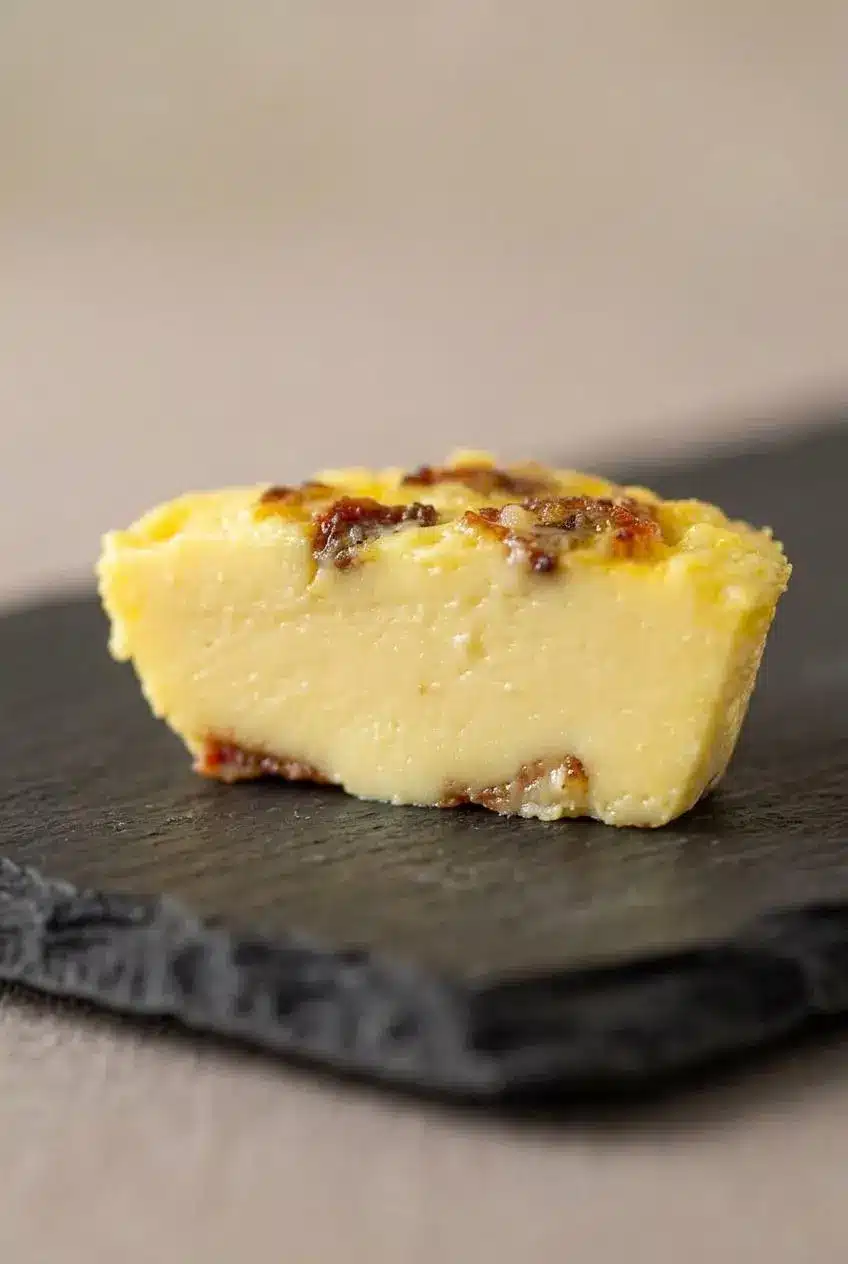
Small changes in blending, moisture, and pan preparation have a big effect on egg-bite texture. These fixes target the problems that most often get in the way of a smooth result.
- The bites deflate sharply: Too much blending whips air into the eggs, creating a soufflé-like rise that drops as it cools. Blend the dairy mixture smooth first, then add the eggs briefly and stop as soon as the batter comes together.
- The texture is spongy: Foamy batter bakes into larger air pockets instead of fine custard. Look for a thick, smooth surface in the blender with very few visible bubbles before filling the cups.
- The edges are dry or rubbery: High heat or a missing water bath causes the eggs to set too aggressively. Keep the oven at the stated 300 F and make sure hot water surrounds the muffin tin during baking.
- The bottoms are watery: Moisture from wet fillings or thin dairy can collect beneath the custard. Drain cooked bacon well, and for vegetable versions, cook and pat fillings dry before portioning them into the cups.
- The bites stick to the tin: A light mist of cooking spray often misses the upper sides of the cups. Spray the bottom and walls generously, then let the baked bites rest in the pan for 5 minutes before removing them.
- The flavor tastes flat: Gruyere and bacon bring saltiness, but the small amount of salt still rounds out the dairy flavor. Keep the measured salt in the batter, then taste any optional fillings before adding extra seasoning.
Popular Menu Variations: Red Pepper and Mushroom Kale
Use the same gentle water-bath approach for these optional flavor ideas. Keep vegetable fillings dry and concentrated so they add flavor without turning the egg centers loose or soggy.
Roasted Red Pepper and Spinach Egg White Bites
For a lighter, café-style option, replace the whole eggs with liquid egg whites and use roasted red peppers, baby spinach, and crumbled feta as the filling. Pat the roasted peppers very dry with paper towels because jarred peppers often carry enough liquid to thin the custard.
Quickly sauté the spinach until wilted, then press out as much moisture as possible before adding it to the muffin cups. This keeps the egg-white mixture dense and firm rather than wet at the base. Feta adds briny flavor, so season the mixture with a lighter hand.
Mushroom and Kale Bites
For a vegetarian option, use sliced portobello mushrooms, finely shredded lacinato kale, and Swiss cheese. Sauté the mushrooms and kale in a dry pan until their liquid has fully evaporated, then let them cool slightly before spooning them into the cups.
Mushrooms release a surprising amount of water, and kale can hold onto it. Cooking both before they meet the egg mixture keeps the custard cohesive. Swiss cheese melts gently and suits the earthy mushroom flavor, while Monterey Jack is another mild optional choice.
A tiny pinch of smoked paprika and a drop of apple cider vinegar can brighten either vegetable variation. The paprika deepens the smoky aroma, while the vinegar cuts through the cheese richness without making the filling taste sharp.
For a café-style breakfast spread, serve the savory bites with fruit and a slice of copycat lemon loaf. The bright lemon flavor is a pleasant contrast to the rich egg custard.
Storing and Reheating Egg Bites
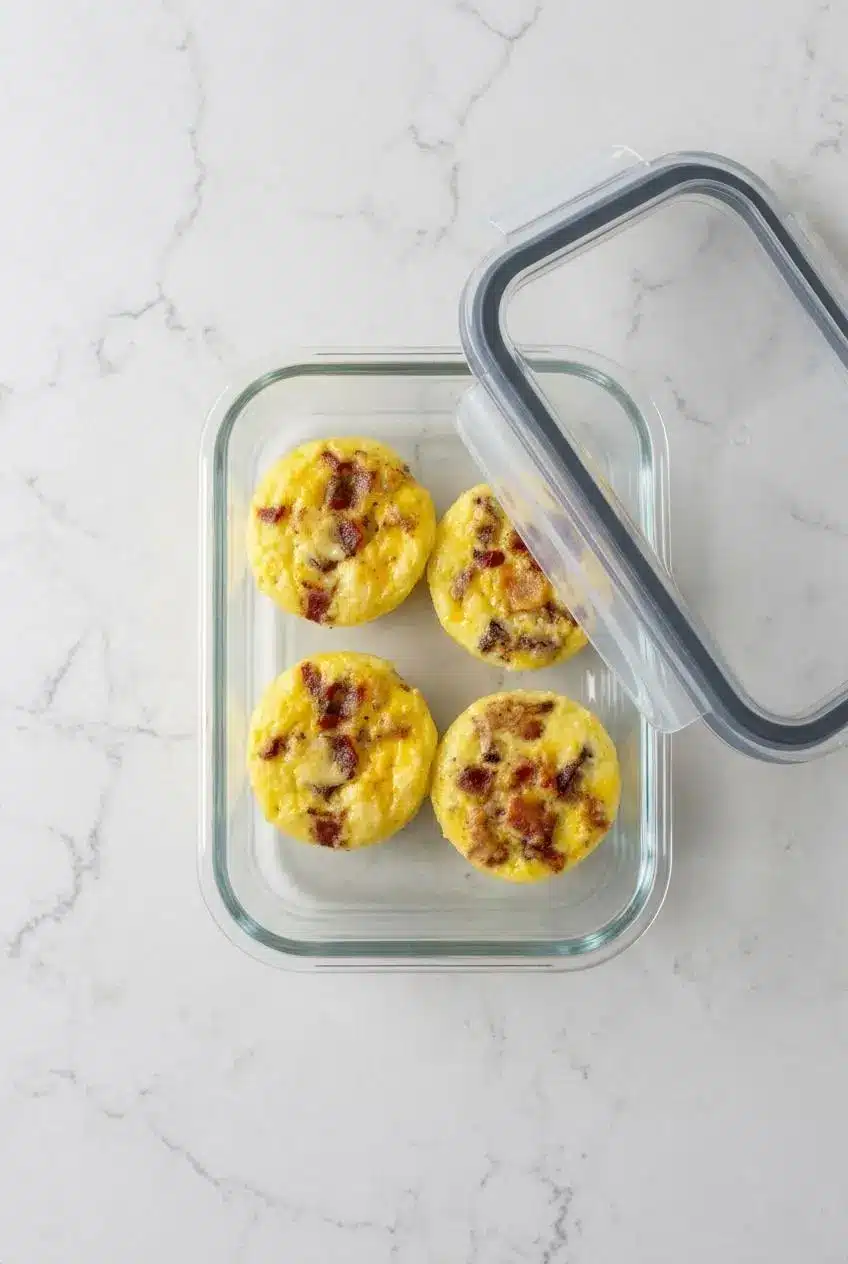
Cool the egg bites completely, then keep them in an airtight container in the refrigerator. Chilling them promptly helps preserve their soft texture and keeps the bacon from becoming greasy against the custard.
Reheat one bite at a time for the best texture. For a soft center, wrap a chilled bite in a lightly damp paper towel and warm it gently in the microwave until heated through. The trapped moisture helps prevent the eggs from turning tough.
For firmer edges and bacon that regains some crispness, warm the bites in a toaster oven or air fryer at a moderate setting until hot in the center. Avoid blasting them with intense heat, which can make the eggs rubbery before the middle warms.
If handheld breakfasts make busy mornings easier, these pancake sausage bites are another convenient option to keep in the breakfast rotation.
Conclusion
These egg bites bring the bacon, Gruyere, and custardy comfort of a coffee-shop breakfast into your own kitchen. Blended cottage cheese, crisp bacon, and smooth-melting cheese give every bite a rich, savory finish.
Keep the oven low, use the water bath, and resist overblending the eggs. That gentle approach is what makes the texture feel special.
Frequently Asked Questions
How Does Starbucks Make Their Egg Bites So Velvety?
Commercial egg bites are cooked with low-temperature water immersion equipment, which sets eggs gently. At home, blend cottage cheese until smooth, add the eggs briefly, and bake the mixture in a 300 F water bath. The steam softens the oven’s heat and helps create a similarly creamy custard.
Why Do Homemade Egg Bites Deflate After Baking?
Overblending adds too much air to the eggs. That air makes the bites puff in the oven like a soufflé, then collapse as they cool. Blend the cottage cheese mixture until silky, pulse in the eggs only briefly, and keep the cornstarch in the batter for extra structure.
What Is the Best Way to Reheat Frozen Egg Bites Without Making Them Rubbery?
For the softest reheated texture, use a lightly damp paper towel and gentle microwave heat until the center is hot. A moderate toaster oven setting works well when you prefer firmer edges. Avoid high heat, which can tighten the eggs and make them chewy.
Can I Make Copycat Egg Bites Without Cottage Cheese?
Yes. Full-fat ricotta or cream cheese can replace cottage cheese as an optional substitution, though the flavor and texture will change slightly. Cottage cheese gives the closest mild, velvety result once blended, while ricotta tastes richer and cream cheese makes the custard denser.

Starbucks Egg Bites Recipe

Equipment
- Blender
- Muffin Tin
- Sheet Pan
Ingredients
- cooking spray
- 4 slices bacon or turkey bacon diced
- 8 eggs whisked
- 1 cup cottage cheese
- 1 cup gruyere cheese shredded
- 1 tbsp cornstarch
- 1/4 tsp salt
Instructions
- Heat the oven to 300 F and bring water to a boil in a kettle. Keep the hot water nearby so it can go into the sheet pan only after the filled muffin tin is safely in the oven.
- Coat a skillet with cooking spray and warm it over medium-high heat, then cook the diced bacon for 4 to 5 minutes. Transfer the bacon to a paper towel-lined plate when it is browned and crisp, leaving excess fat behind.
- Blend the cottage cheese, gruyere cheese, cornstarch, and salt on high until completely creamy. Add the whisked eggs and blend only until combined, keeping the mixture smooth rather than foamy.
- Coat a 12-count metal muffin tray thoroughly with cooking spray and place it on a 9×13 baking sheet. Scatter the bacon among the cups, then divide the egg mixture evenly over it.
- Set the sheet pan with the filled muffin tin on the oven rack, then carefully pour the boiling water into the sheet pan. The water should surround and submerge the bottom portion of the muffin cups without splashing into the egg mixture.
- Bake for 30 minutes, then lift out the muffin tin before carefully removing the sheet pan with hot water. The tops should feel softly set with a gentle jiggle in the center, subtle edge retraction, and no browned crust.