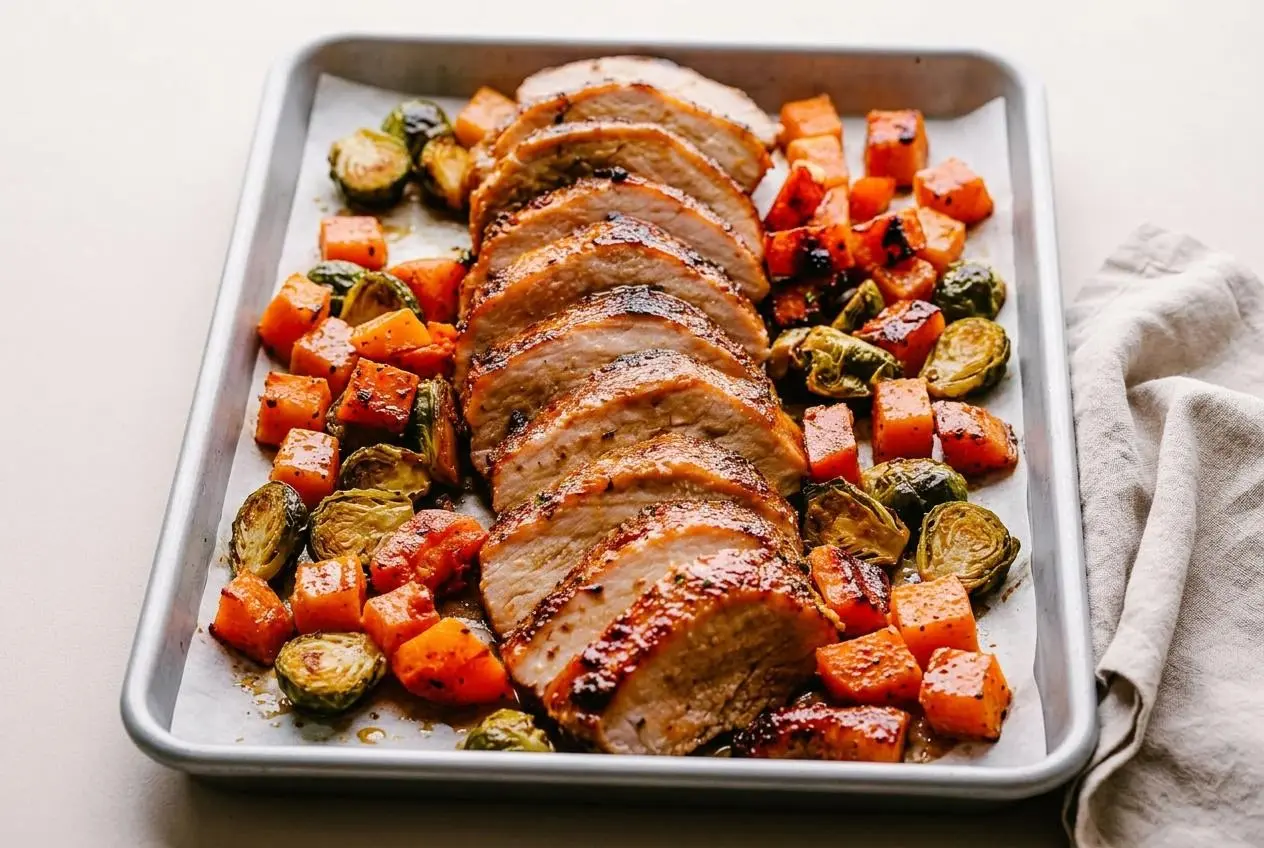
Roast a boneless pork loin at 375°F until the center reaches 145°F, then rest it under loose foil before slicing. A stovetop sear, fat cap facing up, and a protected honey glaze help keep the meat tender.
This pork loin roast recipe pairs a savory herb rub with a sticky honey garlic glaze, Brussels sprouts, and butternut squash. The roast develops deep browned edges while the vegetables catch the flavorful pan juices.
Garlic, rosemary, and honey smell especially good once the roast starts to caramelize. The foil tent is the small move that keeps the glaze from getting too dark.
Pat the pork very dry before seasoning so the spice rub clings well and the skillet can build a proper brown crust.
Pork Loin vs Pork Tenderloin: What You Need to Know
Pork loin and pork tenderloin are different cuts, and using the wrong one can throw off the whole dinner. Pork loin is a broad, thick roast that benefits from steady oven heat, while tenderloin is narrow and cooks much faster.
Anatomical Differences and Fat Cap
A boneless pork loin roast is usually wide and fairly uniform from end to end, often with a white fat cap running across the top. That fat slowly renders as the roast cooks, helping protect the lean meat and adding richness to the pan juices.
Pork tenderloin looks like a long, slim strip of meat with little external fat. At the butcher counter, ask for a center-cut boneless pork loin with an even thickness and an intact fat layer. Avoid a roast with one very thin end, which can dry out before the center is ready.
Cooking Time and Temperature Adjustments
A 3-pound pork loin needs sustained roasting time, typically about 50 to 60 minutes at 375°F in this method. A tenderloin may cook in about 20 minutes, so applying pork loin timing to one will leave it dry and tough.
Think of pork loin as a roast that needs gentle monitoring rather than a cut that can be judged by the clock alone. Thickness, pan heat, and the starting temperature of the meat all affect the finish time, so an internal meat thermometer matters more than a per-pound estimate.
Ingredients for Honey Garlic Pork Loin Roast
Each ingredient supports the final roast: the rub brings savory depth, honey promotes caramelization, soy sauce adds balance, and the vegetables roast in the flavorful glaze and pan juices.
FOR THE PORK LOIN
- 3 pound pork loin
- 1 tablespoon olive oil
FOR THE SPICE RUB
- 1 teaspoon sweet paprika
- 1 teaspoon garlic powder
- 1/2 teaspoon onion powder
- 1/2 teaspoon dried thyme
- 1/2 teaspoon dried rosemary
- salt and freshly ground black pepper, to taste
FOR THE HONEY GARLIC GLAZE
- 4 cloves garlic, minced
- 1/4 cup honey
- 3 tablespoons low-sodium gluten free soy sauce
- 1 tablespoon dijon mustard
- 1 tablespoon olive oil
FOR THE VEGETABLES
- 1 tablespoon olive oil
- 1 pound brussels sprouts, cut in half
- 1 pound butternut squash, peeled, seeds cleaned out, and cut into 1-inch cubes (you can also buy pre-cut butternut squash)
The paprika gives the roast warm color, while thyme and rosemary bring an earthy aroma that works well with pork. Dijon helps the glaze taste balanced rather than overly sweet, and the soy sauce adds savory depth to the honey.
I prefer to leave the fat cap in place and score it only lightly if it is especially thick, keeping the cuts shallow enough that they do not reach the meat.
How to Make Roasted Pork Loin
This method uses a quick skillet sear followed by steady roasting at 375°F. The early roast time sets the glaze, while the second phase cooks the vegetables and finishes the center without scorching the honey.
- Heat the oven to 375°F and line a rimmed baking sheet with aluminum foil or parchment paper.
Set the prepared pan nearby so the seared roast can move straight from the skillet to the oven. - Stir the paprika, garlic powder, onion powder, thyme, rosemary, salt, and black pepper together in a small bowl.
The mixture should look evenly blended, with the dried herbs distributed throughout. - Dry the pork loin thoroughly with paper towels, lightly coat it with cooking spray, and rub the seasoning over every surface.
A dry exterior and even coating help the roast brown instead of steaming in the skillet. - Warm the olive oil in a large skillet over medium heat, then brown the pork for about 3 minutes per side.
Turn it until all sides are deeply golden, then place it on the baking sheet with the fat layer facing up. - Whisk the garlic, honey, soy sauce, Dijon mustard, and olive oil until smooth, reserving 2 tablespoons for the vegetables.
The glaze should be fluid enough to brush over the pork without forming a thick clump. - Brush the remaining glaze over the pork and roast it for 25 minutes.
The surface will begin to darken and smell sweetly savory as the honey caramelizes. - Toss the Brussels sprouts and butternut squash with 1 tablespoon olive oil and the reserved glaze, then arrange them around the pork in one layer.
Keeping the vegetables spread out gives their cut sides room to brown instead of turning soft. - Loosely tent the pork with foil and return the pan to the oven for 25 to 30 minutes, stirring the vegetables halfway through.
Check the thickest part of the roast with an instant-read thermometer and cook until it reaches 145°F. - Remove the pan from the oven, loosely cover the pork and vegetables with foil, and rest for 10 minutes before slicing.
Cut the roast across the grain with a smooth, non-serrated knife for cleaner, more tender slices.
If the vegetables are browning too quickly at the edges, gently turn them when you stir. They are ready when the squash is tender and the Brussels sprouts have browned cut sides with crisp-looking outer leaves.
Essential Rules for Tender and Juicy Pork Loin
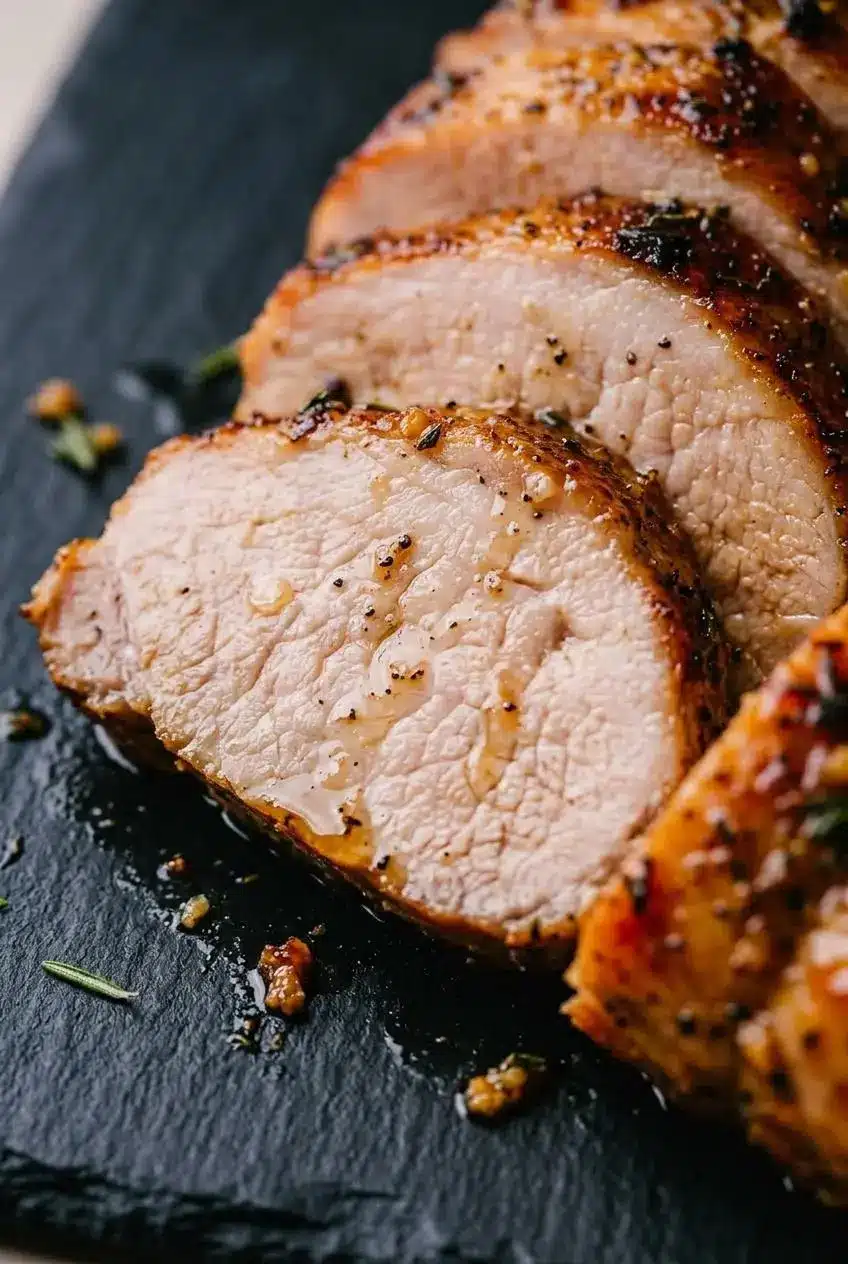
Lean pork loin can go from succulent to dry when it stays in the oven too long. The most dependable protections are an intact fat cap, a well-browned exterior, a thermometer placed in the center, and a full rest before carving.
- Pale crust: The skillet was not hot enough or the pork was damp. Dry the roast thoroughly and wait for the oil to shimmer before adding it.
- Dark glaze: Honey can brown quickly. Keep the foil tent loose over the roast during the second roasting stage.
- Tough slices: Cutting with the grain makes even a properly cooked roast feel chewier. Slice across the grain into even pieces.
- Dry meat: The roast likely cooked beyond its target. Start checking the center near the end of the roasting window.
The same close attention to doneness helps with other lean pork cuts, including baked pork chops, where a few extra minutes can change the texture quickly.
The 145-Degree Temperature Target
For this roast, the target temperature is 145°F in the thickest center portion, away from the fat cap. A faint blush of pink can remain in the middle, especially after resting, while the exterior stays browned and glazed.
Cooking pork loin all the way to 165°F tends to make this naturally lean cut firmer and drier. Let the thermometer, rather than the color of the juices, guide the finish.
Why Carryover Resting Is Mandatory
For a little extra protection against overcooking, begin checking the pork when the thermometer reads 140 to 143°F. Residual heat can continue raising the center temperature as the roast rests under loose foil.
Give the roast the full 10-minute rest before cutting. The meat relaxes, the juices settle, and the slices stay noticeably moister instead of leaving a puddle on the cutting board.
How to Make Silky Pan Dripping Gravy
Those browned bits left in the skillet or on the baking sheet are packed with savory flavor. After moving the pork and vegetables to a serving platter, carefully pour the drippings into a small saucepan and spoon away excess surface fat if needed.
Add a splash of broth and gently scrape up the caramelized glaze and browned bits. Simmer until the liquid tastes concentrated, then whisk in a little butter for sheen or a flour slurry for a thicker gravy. Keep the heat moderate and whisk steadily so the sauce stays smooth.
For a lighter finish, use the reduced pan juices as they are and spoon them over the carved pork. The salty-sweet drippings are especially good over mashed potatoes or roasted squash.
Flavor Variations and Seasoning Ideas
The honey garlic version works beautifully as written, but pork loin also welcomes savory herb blends and onion-rich pan sauces. Keep these ideas separate from the main method so the original balance of glaze and vegetables stays intact.
Garlic Rosemary Herb Stuffed Pork Loin
For an optional garlic rosemary profile, cut small shallow slits across the pork before searing and tuck sliced garlic and fresh rosemary into them. Keep the slits shallow so the roast stays intact and the interior does not lose moisture during roasting.
Skip the honey glaze for a more savory finish, or use a thin layer of Dijon on the outside before applying the herb rub. This variation gives the center slices a more pronounced herbal aroma.
Slow Cooker Pork Loin Method
A slow cooker version benefits from browning the pork first, then setting it over broth and aromatics so the cooking environment stays moist. Because pork loin is lean, check the center carefully and slice it once tender rather than expecting the shreddable texture of shoulder.
For a pork cut meant for a softer, pull-apart finish, try crock pot pulled pork instead.
Traditional Czech Onion Gravy Roast
For an optional onion gravy version, roast the seasoned loin over a bed of sliced yellow onions. As the onions soften and brown in the drippings, blend them for a smooth sauce or reduce them in a saucepan for a more rustic gravy.
An optional apple cider Dijon glaze brushed over the fat cap during the final 10 minutes adds a sharper sweet-tangy contrast. Apply it lightly so the sugars do not darken before the pork is finished.
What to Serve with Pork Loin Roast
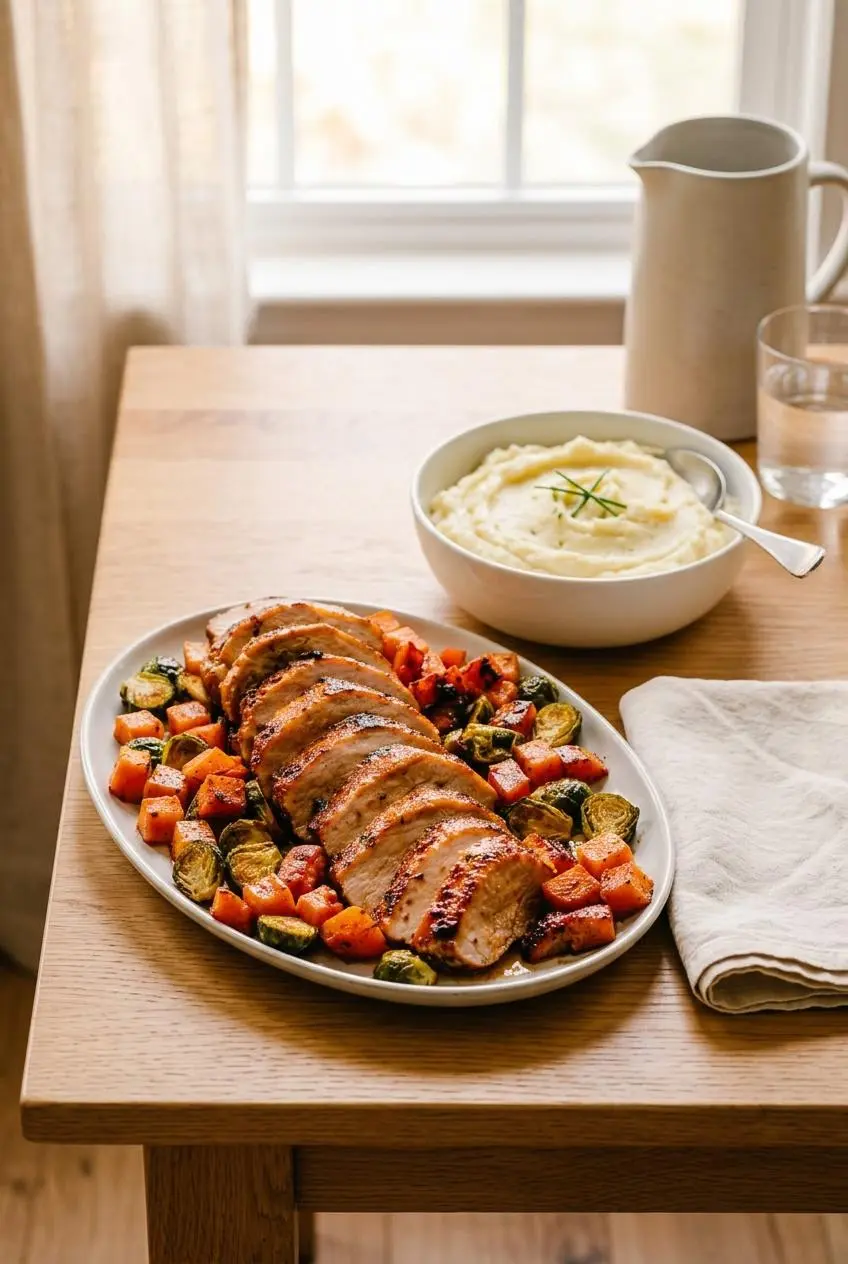
The honey garlic glaze and roasted vegetables pair well with sides that can catch a little extra pan juice.
- Garlic butter mashed potatoes make a soft, rich base for sliced pork and gravy.
- Roasted red potatoes add crisp edges and a hearty contrast to the tender meat.
- Wild rice pilaf brings a nutty texture without competing with the sweet glaze.
- A crisp seasonal green salad with a tangy dressing helps balance the roast’s richness.
- Crusty bread is handy for swiping up the honey garlic drippings.
Cold, thin slices also make an excellent next-day sandwich filling or a savory addition to a breakfast hash.
Storage and Reheating Guide
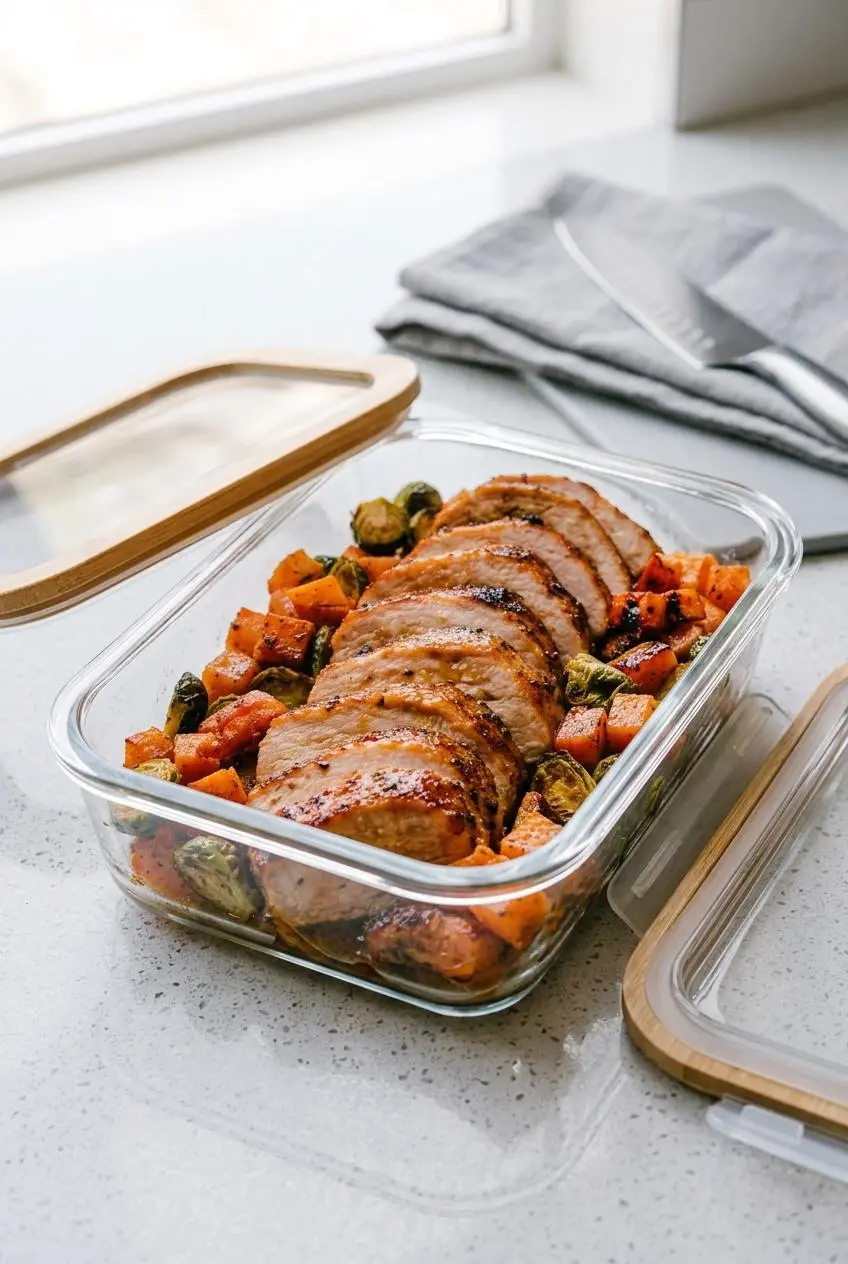
Cool leftover pork before placing it in an airtight container and keep the slices with any pan juices you have left. Storing the meat in a little moisture helps protect its texture when you warm it again.
Refrigerating Leftovers
Arrange the sliced pork in a shallow airtight container, spoon a little pan juice over it, and refrigerate it promptly once cooled. Keep the vegetables separate if you want their browned edges to hold up better.
Use clean utensils when portioning leftovers and keep the container chilled until you are ready to reheat. If the pork develops an off smell or an unusual texture, discard it.
Reheating Without Drying Out the Meat
Warm pork slices gently in a covered skillet over medium-low heat with a splash of chicken broth or water. The steam softens the chilled meat without subjecting it to aggressive heat.
Avoid blasting slices on high power in the microwave, which can tighten the lean meat and make it rubbery. Reheat only the portion you plan to eat so the remaining pork stays in better condition.
Conclusion
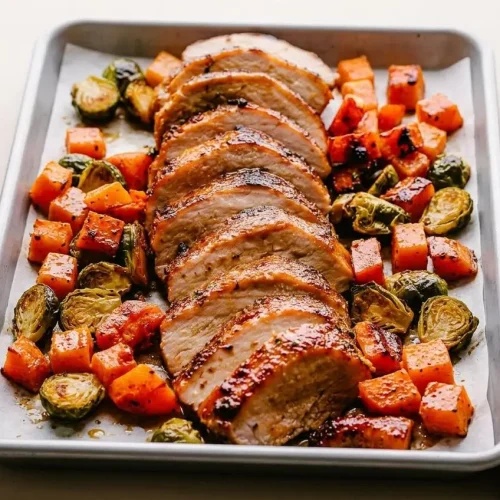
This honey garlic pork loin brings together a browned herb crust, caramelized glaze, and roasted vegetables on one pan. Searing first gives the roast deeper flavor, while the fat cap and foil tent help protect the lean center.
Use a thermometer, rest the pork before carving, and slice across the grain. Tender, juicy dinner slices are well within reach.
Frequently Asked Questions
How Do I Prevent Pork Loin Roast From Drying Out?
Keep the fat cap facing upward so it can render over the roast as it cooks. Sear the pork first to build a browned exterior and richer flavor. Begin checking the center at 140 to 143°F rather than waiting until the roast has gone too far. Rest it under loose foil for 10 minutes before slicing.
What Internal Temperature Signals That Pork Loin Roast Is Done?
Check the thickest part of the pork loin with an instant-read thermometer. This recipe finishes at 145°F, followed by a short rest, for tender slices with a lightly pink center.
Can I Substitute Pork Tenderloin for Pork Loin in This Recipe?
No. Pork tenderloin is much smaller and narrower than pork loin, and it cooks in roughly 20 minutes. Using the longer pork loin timing would likely leave tenderloin dry and overcooked.
How Should Leftover Roast Pork Loin Be Stored and Reheated?
Cool the pork, place it in an airtight container with a little pan juice, and keep it chilled. Reheat slices gently in a covered skillet with a splash of broth or water so they stay tender.
Pork Loin Roast Recipe

Equipment
- Rimmed baking sheet
- Aluminum Foil
- Large Skillet
- Instant-read thermometer
Ingredients
FOR THE PORK LOIN
- 3 pound pork loin
- 1 tablespoon olive oil
FOR THE SPICE RUB
- 1 teaspoon sweet paprika
- 1 teaspoon garlic powder
- 1/2 teaspoon onion powder
- 1/2 teaspoon dried thyme
- 1/2 teaspoon dried rosemary
- salt and freshly ground black pepper to taste
FOR THE HONEY GARLIC GLAZE
- 4 cloves garlic minced
- 1/4 cup honey
- 3 tablespoons low-sodium gluten free soy sauce
- 1 tablespoon dijon mustard
- 1 tablespoon olive oil
FOR THE VEGETABLES
- 1 tablespoon olive oil
- 1 pound brussels sprouts cut in half
- 1 pound butternut squash peeled, seeds cleaned out, and cut into 1-inch cubes (you can also buy pre-cut butternut squash)
Instructions
- Heat the oven to 375°F and line a rimmed baking sheet with aluminum foil or parchment paper. Set the prepared pan nearby so the seared roast can move straight from the skillet to the oven.
- Stir the paprika, garlic powder, onion powder, thyme, rosemary, salt, and black pepper together in a small bowl. The mixture should look evenly blended, with the dried herbs distributed throughout.
- Dry the pork loin thoroughly with paper towels, lightly coat it with cooking spray, and rub the seasoning over every surface. A dry exterior and even coating help the roast brown instead of steaming in the skillet.
- Warm the olive oil in a large skillet over medium heat, then brown the pork for about 3 minutes per side. Turn it until all sides are deeply golden, then place it on the baking sheet with the fat layer facing up.
- Whisk the garlic, honey, soy sauce, Dijon mustard, and olive oil until smooth, reserving 2 tablespoons for the vegetables. The glaze should be fluid enough to brush over the pork without forming a thick clump.
- Brush the remaining glaze over the pork and roast it for 25 minutes. The surface will begin to darken and smell sweetly savory as the honey caramelizes.
- Toss the Brussels sprouts and butternut squash with 1 tablespoon olive oil and the reserved glaze, then arrange them around the pork in one layer. Keeping the vegetables spread out gives their cut sides room to brown instead of turning soft.
- Loosely tent the pork with foil and return the pan to the oven for 25 to 30 minutes, stirring the vegetables halfway through. Check the thickest part of the roast with an instant-read thermometer and cook until it reaches 145°F.
- Remove the pan from the oven, loosely cover the pork and vegetables with foil, and rest for 10 minutes before slicing. Cut the roast across the grain with a smooth, non-serrated knife for cleaner, more tender slices.