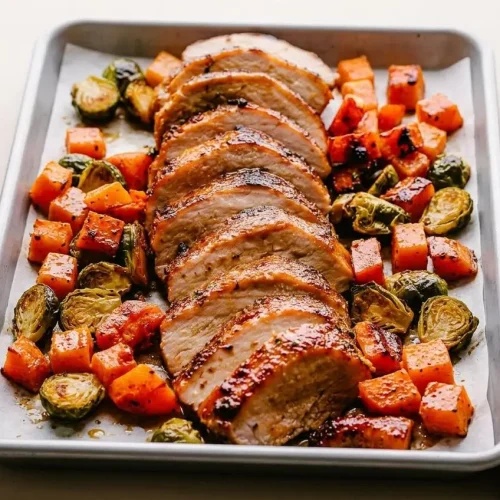
Pork Loin Roast Recipe

Tender roasted pork loin pairs with caramelized butternut squash and Brussels sprouts under a savory honey garlic glaze, baked steadily to 145°F after a quick stovetop sear.
Equipment
- Rimmed baking sheet
- Aluminum Foil
- Large Skillet
- Instant-read thermometer
Ingredients
FOR THE PORK LOIN
- 3 pound pork loin
- 1 tablespoon olive oil
FOR THE SPICE RUB
- 1 teaspoon sweet paprika
- 1 teaspoon garlic powder
- 1/2 teaspoon onion powder
- 1/2 teaspoon dried thyme
- 1/2 teaspoon dried rosemary
- salt and freshly ground black pepper to taste
FOR THE HONEY GARLIC GLAZE
- 4 cloves garlic minced
- 1/4 cup honey
- 3 tablespoons low-sodium gluten free soy sauce
- 1 tablespoon dijon mustard
- 1 tablespoon olive oil
FOR THE VEGETABLES
- 1 tablespoon olive oil
- 1 pound brussels sprouts cut in half
- 1 pound butternut squash peeled, seeds cleaned out, and cut into 1-inch cubes (you can also buy pre-cut butternut squash)
Instructions
- Heat the oven to 375°F and line a rimmed baking sheet with aluminum foil or parchment paper. Set the prepared pan nearby so the seared roast can move straight from the skillet to the oven.
- Stir the paprika, garlic powder, onion powder, thyme, rosemary, salt, and black pepper together in a small bowl. The mixture should look evenly blended, with the dried herbs distributed throughout.
- Dry the pork loin thoroughly with paper towels, lightly coat it with cooking spray, and rub the seasoning over every surface. A dry exterior and even coating help the roast brown instead of steaming in the skillet.
- Warm the olive oil in a large skillet over medium heat, then brown the pork for about 3 minutes per side. Turn it until all sides are deeply golden, then place it on the baking sheet with the fat layer facing up.
- Whisk the garlic, honey, soy sauce, Dijon mustard, and olive oil until smooth, reserving 2 tablespoons for the vegetables. The glaze should be fluid enough to brush over the pork without forming a thick clump.
- Brush the remaining glaze over the pork and roast it for 25 minutes. The surface will begin to darken and smell sweetly savory as the honey caramelizes.
- Toss the Brussels sprouts and butternut squash with 1 tablespoon olive oil and the reserved glaze, then arrange them around the pork in one layer. Keeping the vegetables spread out gives their cut sides room to brown instead of turning soft.
- Loosely tent the pork with foil and return the pan to the oven for 25 to 30 minutes, stirring the vegetables halfway through. Check the thickest part of the roast with an instant-read thermometer and cook until it reaches 145°F.
- Remove the pan from the oven, loosely cover the pork and vegetables with foil, and rest for 10 minutes before slicing. Cut the roast across the grain with a smooth, non-serrated knife for cleaner, more tender slices.
Notes
Doneness cue: Begin checking the roast when the internal temperature reaches 140 to 143°F. Residual heat brings the meat to 145°F during the tented rest.
Glaze protection: Keep the foil tent loose over the pork during the second roasting stage so the honey glaze caramelizes without scorching.
Carving tip: Slice the loin across the grain using a smooth, non-serrated knife for clean, tender cuts.
Nutrition information is an estimate based on common ingredients and serving sizes. Values may vary depending on brands, portions, and substitutions.