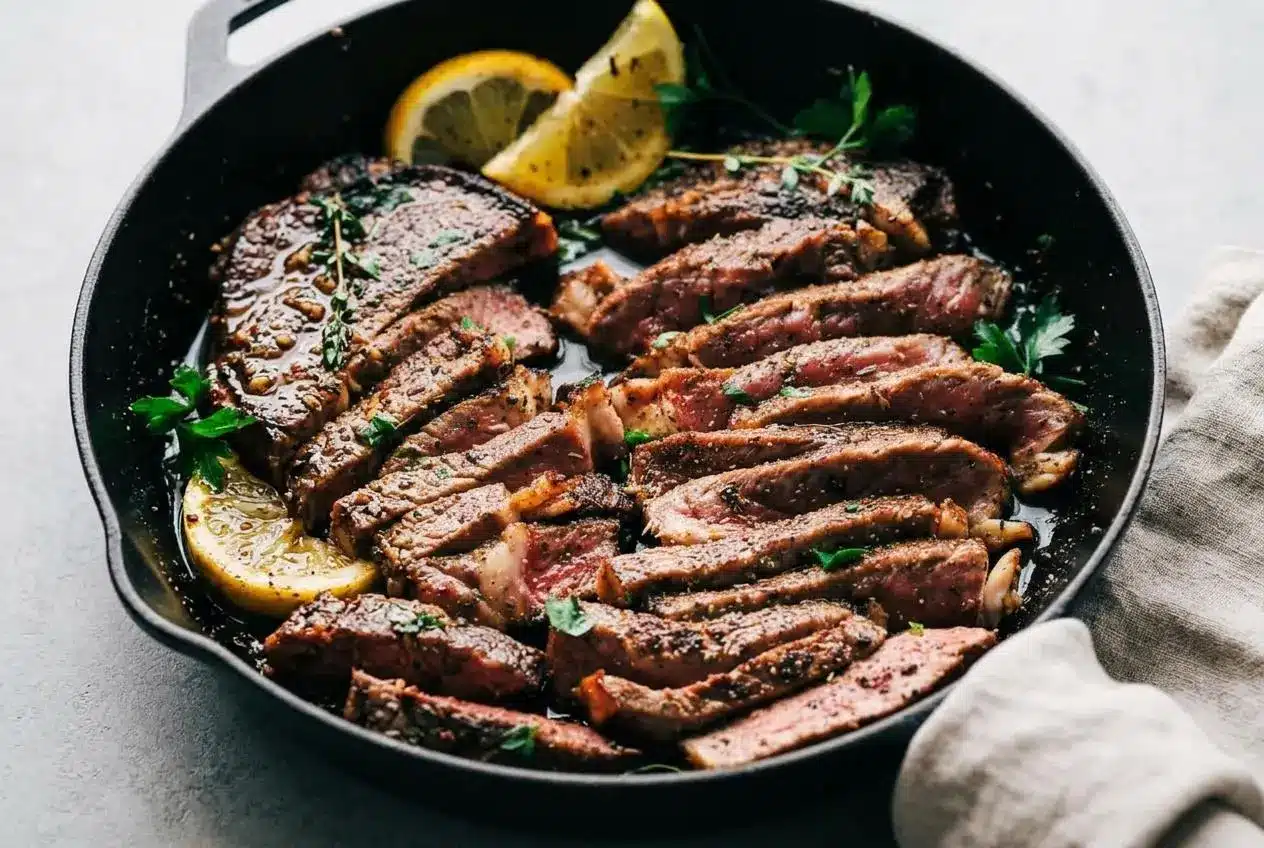
A balanced marinade of oil, lemon juice, savory sauces, and aromatics gives steak rich surface flavor, helps tenderize firmer cuts, and supports a deeply browned crust when the meat is dried well before cooking.
This steak marinade combines soy sauce, Worcestershire sauce, lemon, garlic, and Italian herbs for bold, tangy flavor that works with many cuts of beef.
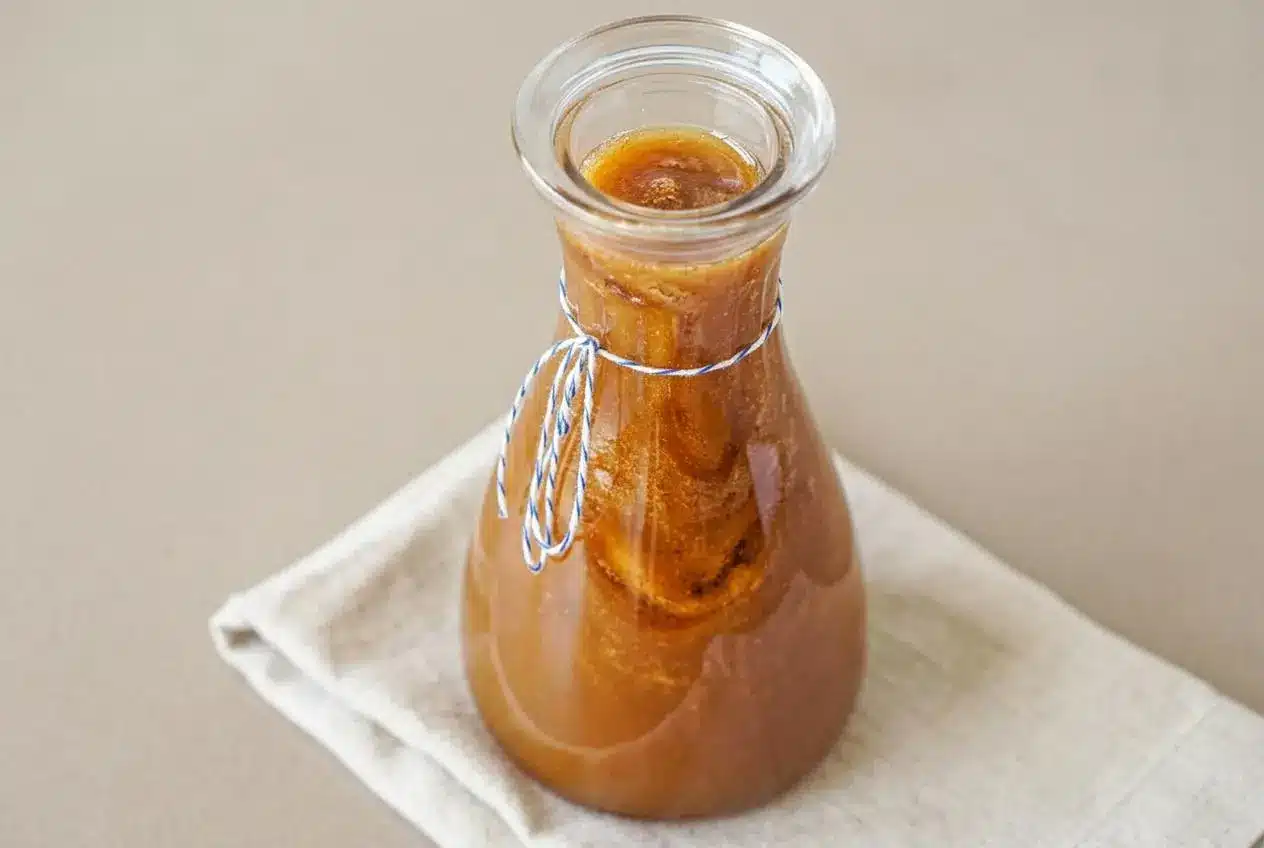
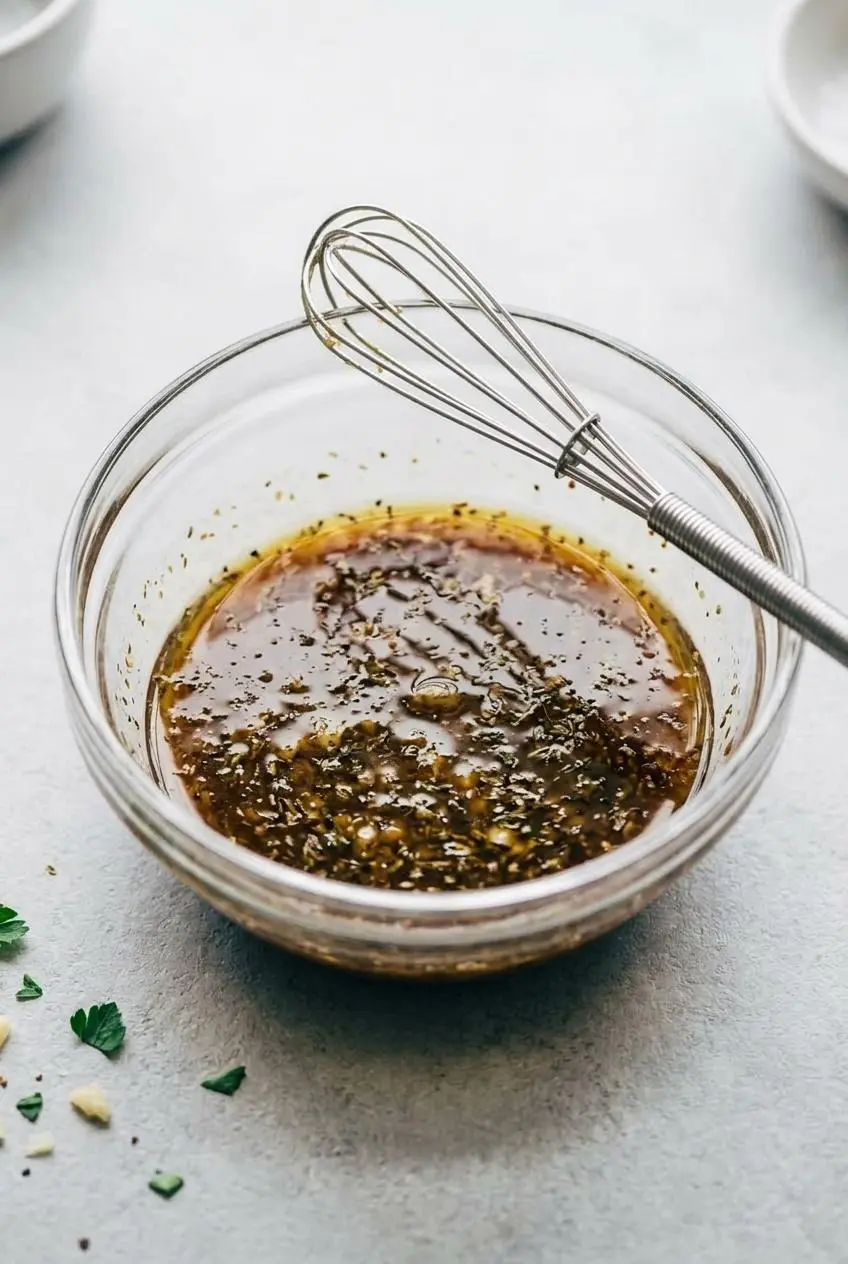
The oil and soy sauce should look glossy and lightly emulsified after a vigorous whisk. That sheen is the start of a great crust.
Before cooking, lift the steaks from the bag and blot every side thoroughly dry with paper towels.
Ingredients for the Classic Steak Marinade
Each ingredient contributes something useful: savory depth, bright acidity, fragrant herbs, gentle heat, and enough richness to coat the beef evenly.
- ⅓ cup soy sauce
- ⅓ cup lemon juice
- ½ cup olive oil
- ¼ cup Worcestershire sauce
- 1 tablespoon minced garlic
- 2 tablespoons Italian seasoning
- 1 teaspoon ground black pepper
- ½ teaspoon salt
- 1 pinch red pepper flakes
Soy sauce and Worcestershire sauce create the dark, savory backbone, while lemon juice brings tang and works mainly on the steak’s outer fibers. Olive oil carries the garlic and herbs across the meat’s surface, helping them cling during marinating. Garlic, pepper, Italian seasoning, and red pepper flakes bring the warm, aromatic flavor that smells especially good once the steak hits high heat.
If you prefer a more stable mixture, you can optionally whisk in Dijon mustard. It helps the oil and citrus stay blended, but it is not needed for the main marinade.
I like to whisk until the oil no longer sits in a separate slick on top, so the herbs and garlic coat the steaks more evenly.
How to Make Steak Marinade
Marinade
- Whisk the soy sauce, lemon juice, olive oil, Worcestershire sauce, minced garlic, Italian seasoning, black pepper, salt, and red pepper flakes in a small bowl.
The mixture should look glossy, with the oil and darker sauces blended together and the herbs suspended throughout. - Place 4 pounds of steaks in a resealable zip lock bag, then add the marinade and seal the bag securely.
Turn the bag gently so the beef is coated on all sides, then marinate for 2 hours or overnight.
Use a food-grade resealable bag or a nonreactive glass container. Avoid aluminum containers because the lemon juice can react with the metal and leave an off flavor.
The Four Pillars of an Exceptional Steak Marinade
A good marinade has a job for every component. It should season the meat, support browning, and add character without overwhelming the beef itself.
- Fat: Olive oil carries fat-soluble flavors from the herbs, garlic, and pepper over the steak’s surface. It also helps the seasonings cling and can reduce sticking on the grill or skillet.
- Acid: Lemon juice brightens the savory sauces and softens the outermost muscle fibers. Acid does not travel straight through the center of a thick steak, so its biggest impact is near the surface.
- Salt and umami: Soy sauce and Worcestershire sauce bring saltiness and deep savory flavor. They make leaner steaks taste fuller and more seasoned without relying on a heavy spice coating.
- Aromatics: Garlic, Italian herbs, black pepper, and red pepper flakes give the steak its fragrant, steakhouse-style finish. Small bits of garlic and herbs can brown quickly, so remove excess clumps before cooking.
This balance also works well for smaller pieces of beef, such as marinated steak kabobs, where plenty of exposed surface picks up the garlic-herb flavor quickly.
The Best Cuts of Beef for Marinating
Marinades shine most on cuts with a pronounced grain or firmer texture. They add savory flavor to any steak, but some cuts benefit far more than others.
- Flank, skirt, hanger, flat iron, and top sirloin: These budget-friendly cuts have strong beef flavor and visible grain. Marinating helps season the surface and can make each bite feel more tender when sliced thinly against the grain. Try this approach with marinated flank steak.
- London broil and tri-tip: These thicker, denser cuts can handle a longer marinating window. The extra time gives the savory ingredients a chance to season the exterior thoroughly.
- Ribeye and New York strip: These steaks are already naturally tender and richly marbled. A brief soak adds flavor without masking their character.
- Tenderloin or filet mignon: These delicate cuts rarely need much acidic marinating. Keep the contact brief or choose dry seasonings to protect their soft texture.
The cut matters as much as the marinade. A flank steak welcomes assertive lemon and soy flavor, while a filet can become soft around the edges if left in acid too long.
How Long to Marinate Steak Without Making It Mushy
Marinating time should match the cut, not just the clock. Lemon juice is useful in moderation, but prolonged contact can make the outer layer of beef feel mealy instead of tender.
- About 30 minutes: A good choice for thin steaks or naturally tender cuts when you want light surface flavor without changing the texture much.
- Four to eight hours: This is the sweet spot for flank steak, skirt steak, hanger steak, and top sirloin. The beef takes on savory flavor while keeping a satisfying chew.
- Up to 24 hours: Reserve the longest window for thicker, firmer cuts such as London broil or tri-tip. Beyond that point, acidic ingredients can weaken the exterior proteins enough to create a mushy texture.
Skip the fork. Piercing steak before marinating does not create better flavor, and the holes can let juices escape while the meat cooks. Let the marinade work around the surface, then slice cooked steak across the grain for the tenderest bite.
Step-by-Step Cooking Guide: Grill and Skillet Methods
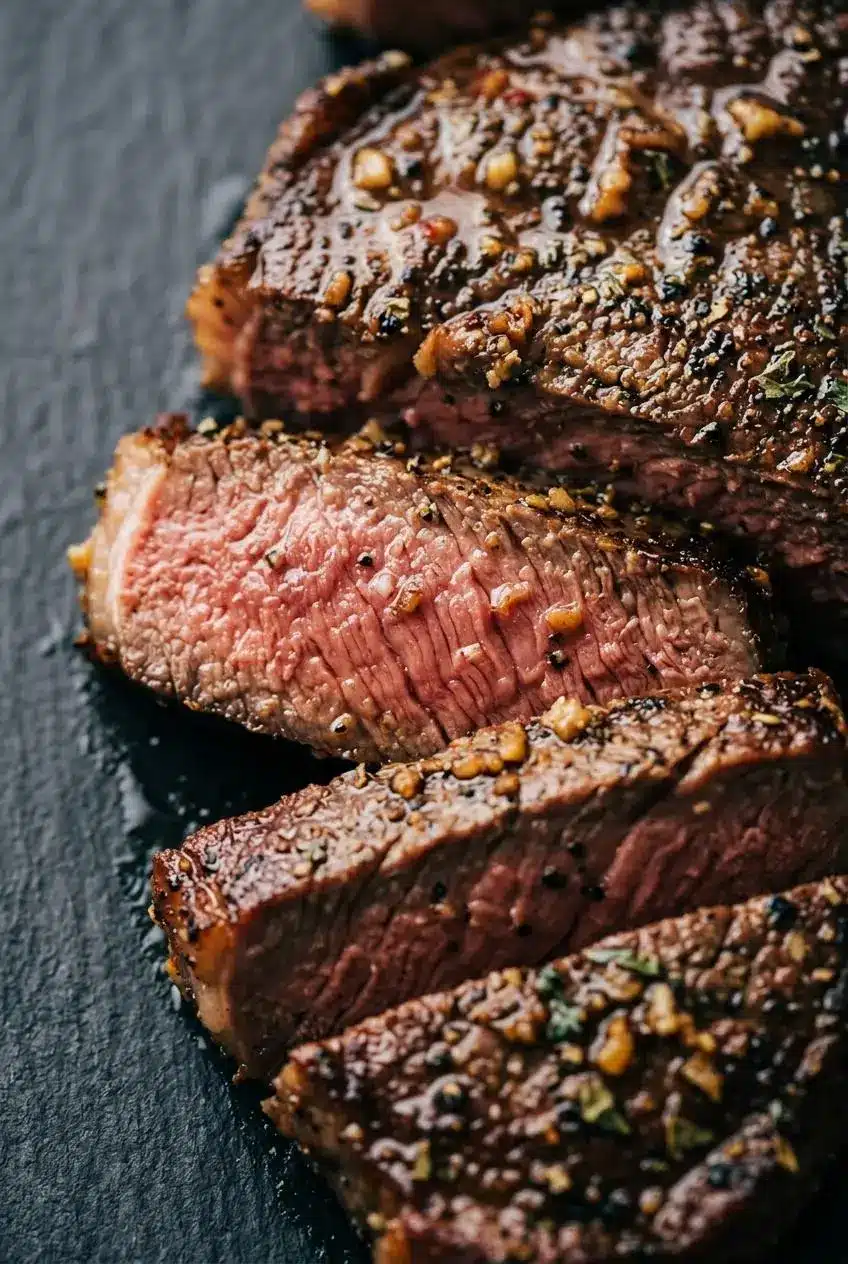
Drying the steak is the move that separates a flavorful steak from a wet, gray one. Moisture turns to steam under high heat, which slows the Maillard reaction and keeps the surface from forming a dark crust.
After marinating, remove the steaks from the bag and gently wipe away loose garlic and herb clumps that could burn. Blot the meat repeatedly with paper towels until it feels dry to the touch, then cook it right away on a properly heated grill or skillet.
Outdoor Grilling Over High Heat
Preheat the grill to medium-high heat, around 450°F to 500°F. Scrape the grates clean and lightly oil them before adding the dry steaks.
For typical 1-inch steaks, grill for about 4 to 5 minutes per side for a medium-rare center, adjusting for thickness and heat. If oil from the marinade causes flames to lick at the beef, move the steak to indirect heat until the flare-up settles, then finish over direct heat for color.
A dry steak makes a sharp, steady sizzle when it lands on hot grates. If it sounds faint and watery, give the surface another quick blot before continuing.
Cast Iron Skillet Stovetop Searing
Heat a heavy cast iron skillet until very hot, then add a high-smoke-point oil. Lay the dried steak flat in the pan and leave it undisturbed for 3 to 4 minutes so a deep brown crust can form.
Flip the steak and cook the second side. During the final minute, add a small pat of butter and crushed garlic, then tilt the skillet and spoon the foaming butter over the steak for a richer finish.
Keep an eye on the garlic. If it darkens too quickly, move it to a cooler edge of the skillet so it perfumes the butter instead of turning bitter.
Internal Doneness and Resting Rules
Use a digital thermometer inserted horizontally into the thickest part of the steak rather than relying on timing alone. For a food-safety benchmark, cook whole beef steaks to 145°F and let them rest for at least 3 minutes, as outlined in minimum temperature and resting guidance for beef steaks.
For your preferred texture, remove the steak from the heat before it reaches its final doneness because the center continues warming as it rests. Let it rest on a warm cutting board for 8 to 10 minutes, then slice against the grain. The steak should feel gently springy, not stiff, when pressed with tongs.
Food Safety, Make-Ahead Prep, and Pan Sauce Secrets
Handle marinade that has touched raw beef carefully. Do not use it straight from the bag as a table sauce or brush it onto cooked steak without heating it first.
For a cooked glaze, pour the used marinade into a small saucepan and bring it to a rolling boil. Keep it boiling for at least one minute before using it for basting, following safe handling for marinade that touched raw meat. Continue simmering if you want a thicker consistency, then finish with cold butter for shine and richness.
Fresh, unused marinade can be mixed ahead and kept chilled in a covered nonreactive container until you are ready to add it to the beef. Keep raw steak refrigerated while it marinates, and discard marinade that has contacted raw meat if you do not plan to cook it into a sauce.
For meal prep, portion steaks with their marinade in tightly sealed bags before chilling. If you choose to freeze a portion, thaw it in the refrigerator before cooking and dry the surface thoroughly once the steak is thawed.
Flavor Variations and Seasoning Adaptations
These optional directions keep the same fat, acid, savory sauce, and aromatic structure while shifting the flavor profile. Keep them separate from the classic version above.
Garlic Balsamic and Herb Marinade
Swap the lemon juice for aged balsamic vinegar and add chopped fresh rosemary. The result is darker, sweeter, and earthier, with an Italian steakhouse feel that suits top sirloin, tri-tip, or grilled vegetables alongside the beef.
Spicy Citrus Fajita Marinade
Replace the lemon juice with fresh lime juice, then add cumin, smoked paprika, chili powder, and chopped cilantro. This brighter, smokier version is especially good with skirt steak sliced for tacos or beef steak fajitas.
Quick Three-Ingredient Emergency Pantry Marinade
When fresh citrus and garlic are unavailable, whisk equal parts olive oil, soy sauce, and Worcestershire sauce. It will not have the same herbal brightness, but it gives steak savory depth and a useful coating for a fast weeknight meal.
Kitchen Tips for Grilling Marinated Steaks
Small adjustments make a big difference once the steaks reach the heat.
- Garlic scorches before the steak browns: Brush off heavy garlic pieces after marinating. The flavor remains, while fewer exposed bits burn on the grill or skillet.
- Flare-ups keep charring the outside: Move the steak to indirect heat briefly, close the lid if grilling, and return it to direct heat once the flames settle.
- The steak tastes too salty: Use reduced-sodium soy sauce next time and avoid adding extra salt at the table until you taste the cooked beef.
- The crust looks pale: The steak was likely still damp or the cooking surface was not hot enough. Dry the meat until no liquid beads remain, then preheat thoroughly.
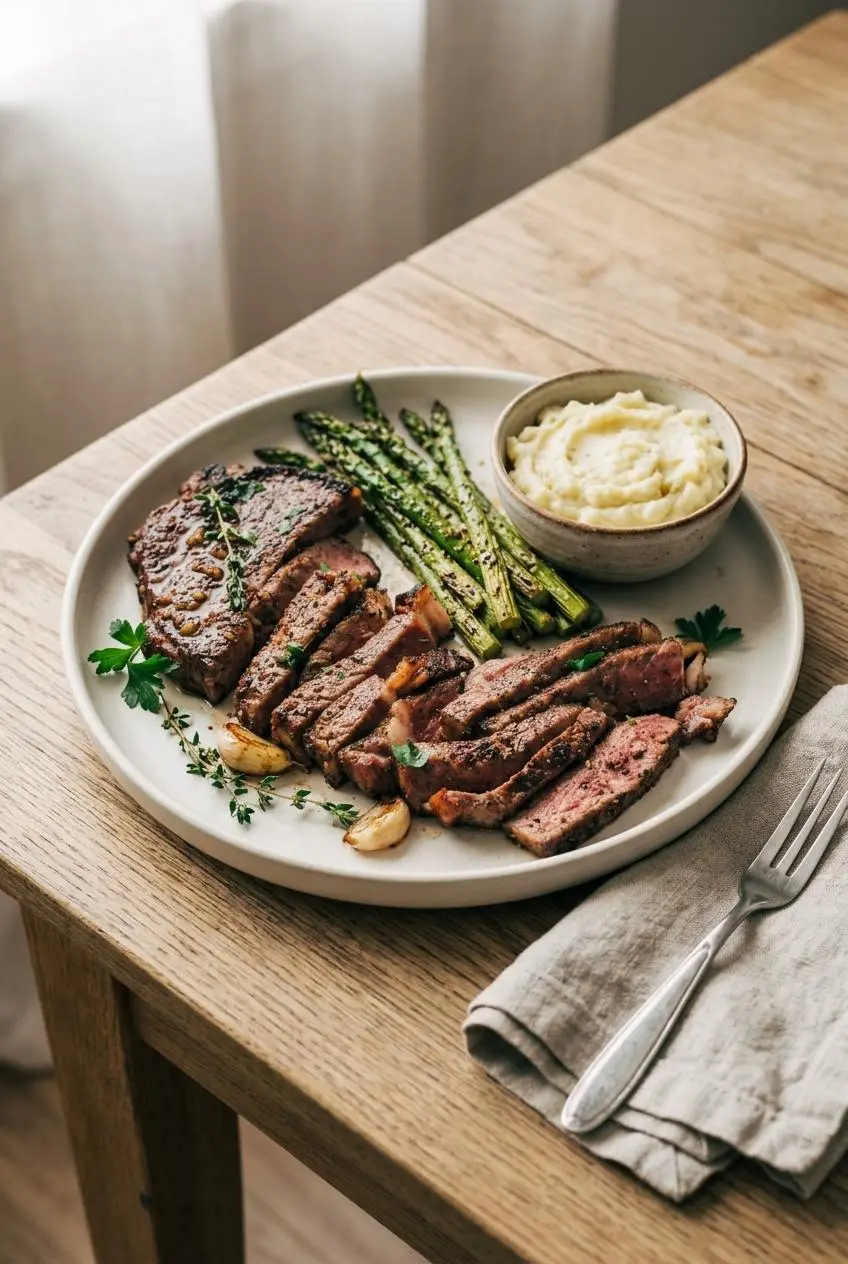
For a steakhouse-style plate, serve sliced steak with roasted asparagus and garlic mashed potatoes. For a lighter meal, layer it over crisp greens in a steak salad or tuck it into warm tortillas with avocado.
Conclusion
This balanced marinade gives beef a bold blend of savory soy sauce, tangy lemon, garlic, herbs, and peppery warmth. It is especially useful for flank, skirt, sirloin, and other flavorful cuts with a firmer grain.
Keep the marinating time suited to the cut, then dry the steak completely before it meets high heat. That combination delivers the browned crust and juicy bite that make steak feel special at home.
Frequently Asked Questions
How Long Should You Leave Steak to Marinate?
For tougher cuts such as flank or skirt steak, aim for 4 to 8 hours or overnight. Tender cuts such as ribeye, strip steak, and filet need only 30 minutes to 2 hours. Avoid going beyond 24 hours with this lemon-based marinade, since the outer texture can become mushy.
Do You Rinse Off Steak Marinade Before Cooking?
No. Rinsing with water washes away seasoning and adds more surface moisture. Instead, remove the steak from the marinade and pat it thoroughly dry with paper towels so it sears instead of steams.
Can You Reuse Steak Marinade as a Sauce?
Do not use marinade raw after it has touched beef. Transfer it to a saucepan and bring it to a rolling boil before using it as a glaze or basting sauce. If you do not want a cooked sauce, discard the used marinade.
Can You Freeze Steak in Marinade?
You can portion steak with marinade in a tightly sealed freezer-safe bag for meal prep. Thaw it in the refrigerator before cooking, then blot the steak dry very thoroughly to help it brown properly.
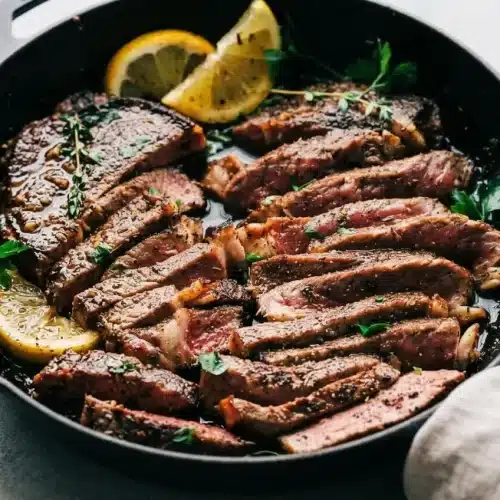
Steak Marinade

Equipment
- Whisk
- Small bowl
- resealable zip lock bag
Ingredients
- ⅓ cup soy sauce
- ⅓ cup lemon juice
- ½ cup olive oil
- ¼ cup Worcestershire sauce
- 1 tablespoon minced garlic
- 2 tablespoons Italian seasoning
- 1 teaspoon ground black pepper
- ½ teaspoon salt
- 1 pinch red pepper flakes
Instructions
Marinade
- Whisk the soy sauce, lemon juice, olive oil, Worcestershire sauce, minced garlic, Italian seasoning, black pepper, salt, and red pepper flakes in a small bowl. The mixture should look glossy, with the oil and darker sauces blended together and the herbs suspended throughout.
- Place 4 pounds of steaks in a resealable zip lock bag, then add the marinade and seal the bag securely. Turn the bag gently so the beef is coated on all sides, then marinate for 2 hours or overnight.