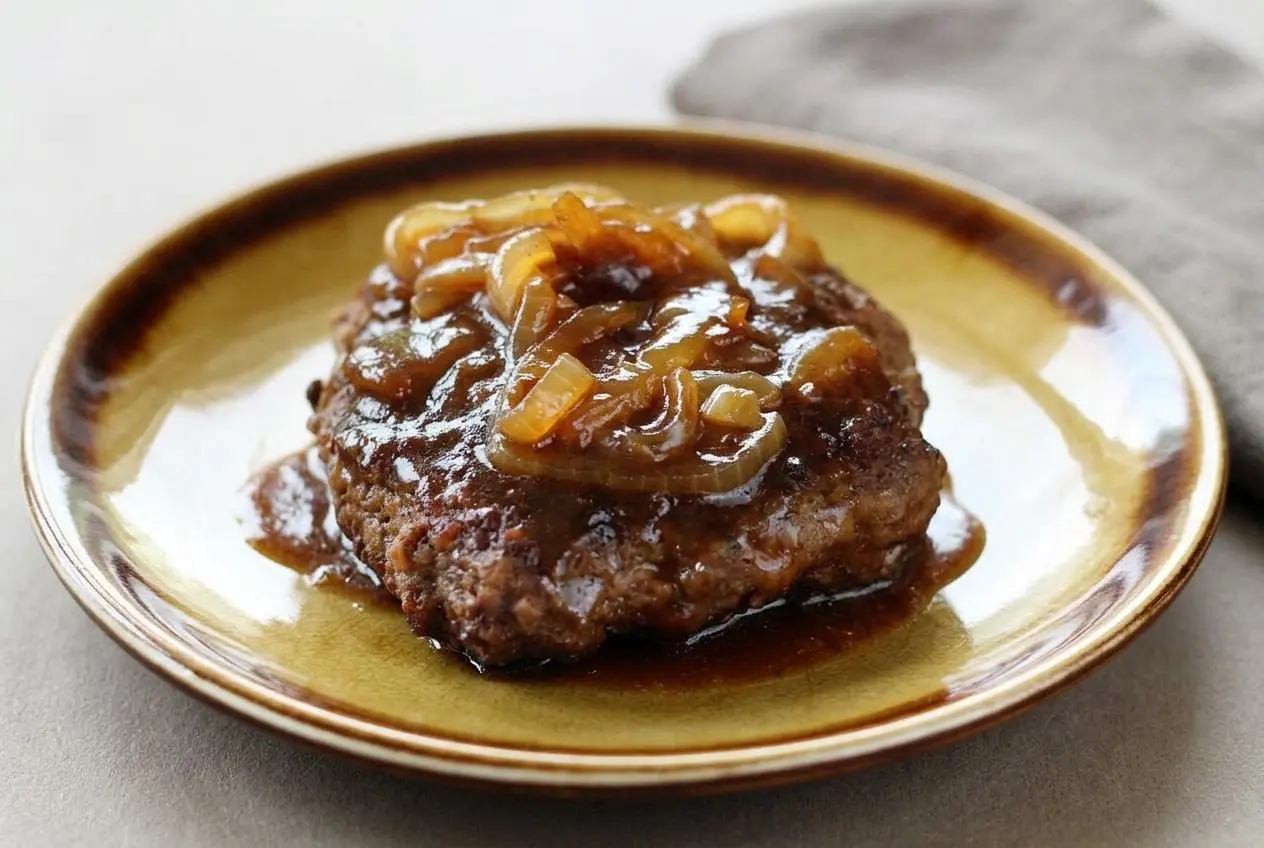
Hamburger steaks are seasoned ground beef patties seared in a hot skillet, then gently simmered in rich onion gravy until tender.
Hamburger Steaks bring the best kind of weeknight sizzle: well-seasoned beef, a browned crust, and onions that soften in the savory drippings.
The patties stay hearty and juicy while the skillet turns every browned bit into gravy. That onion aroma is worth waiting for.
Use a wide, heavy skillet so the patties have room to brown instead of steaming.
Essential Ingredients and Flavor Foundations
Each ingredient supports the finished dish: beef creates richness and drippings, dry seasonings deepen the crust, and onion, soup, gravy mix, water, and Worcestershire sauce build a balanced pan gravy.
- 1 1/2 pounds ground beef (I like using ground chuck)
- 1/2 teaspoon garlic powder
- 1 teaspoon onion powder
- 1/2 teaspoon salt
- 1/4 teaspoon black pepper
- 1 teaspoon ground mustard
- 1 small onion thinly sliced
- 1 (10.5-ounce) can French onion condensed soup (undiluted)
- 1 (.87-ounce) packet brown gravy mix
- 1/2 cup water
- 1 tablespoon Worcestershire sauce
Ground chuck gives the patties enough richness to stay moist and leaves behind flavorful drippings for the pan. Garlic powder, onion powder, black pepper, and mustard season the beef throughout without adding moisture that could weaken the patty structure. The sliced onion, condensed soup, gravy mix, and Worcestershire sauce create a dark, savory gravy with a little tang to balance the beef.
I prefer ground chuck here because its rendered fat gives the onions a far better start than very lean beef does.
Choosing the Right Beef Fat Percentage
Look for 80/20 ground chuck when possible. That ratio means 80 percent lean meat and 20 percent fat, which gives the hamburger steaks a moist, tender bite and leaves enough beef drippings to carry the onion gravy.
Leaner 90/10 ground beef can work, but it has less fat to protect the patties during searing. It also leaves fewer drippings in the skillet, so the gravy can taste thinner and less rounded. If lean beef is all you have, mix and shape it especially gently and watch the simmer closely so the patties do not tighten up.
Aromatics and Seasoning Secrets
The dry seasoning blend is doing quiet but important work. Onion powder and garlic powder spread evenly through the meat, while black pepper gives the crust a gentle warmth. Ground mustard adds a tangy edge that keeps the beefy flavor from tasting flat.
Skip eggs and breadcrumbs for this style of hamburger steak. The lightly seasoned beef stays more steak-like, and a firm skillet crust holds the patty together. Thinly sliced onion cooks quickly in the reserved drippings and brings a sweet, savory backbone to the gravy.
Building the Gravy: Shortcuts vs. Scratch
Condensed French onion soup and brown gravy mix create a fast, onion-forward skillet gravy with plenty of body. Keep the soup undiluted as listed, then add the measured water and Worcestershire sauce after the onions soften.
Because both the soup and gravy mix are seasoned, taste the gravy before adding extra salt. If you prefer a milder result, choose reduced-sodium versions when available or use a little less added water only if the gravy needs more concentration. The goal is a smooth gravy that tastes beefy and oniony, not aggressively salty.
How to Make Hamburger Steaks: Mastering the Skillet Sear and Gravy Simmer
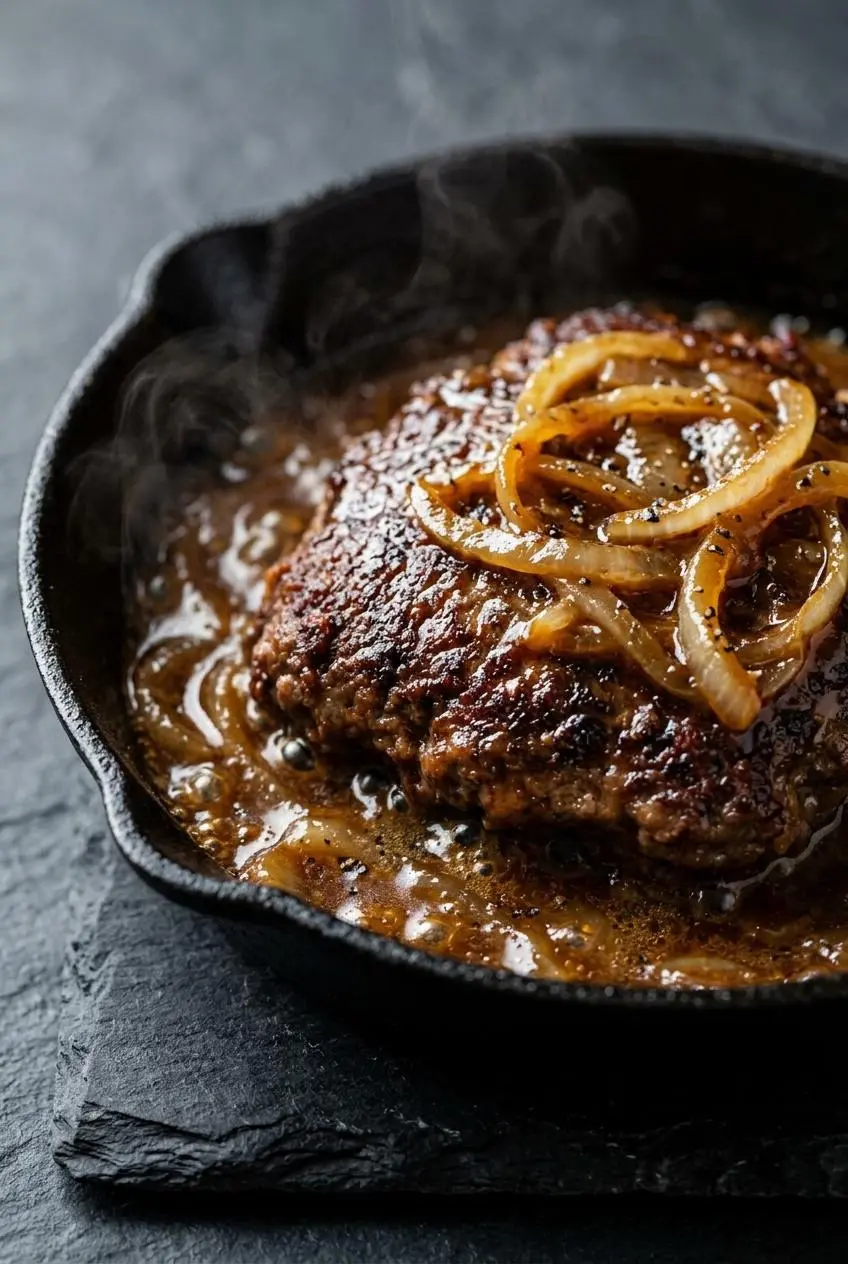
Gentle handling and a patient sear turn seasoned ground beef into patties that hold together beautifully in the gravy.
- Place the ground beef in a large bowl, scatter over the garlic powder, onion powder, salt, black pepper, and ground mustard, then combine lightly with a fork and shape the mixture into 4 equal patties.
Keep the meat loose rather than packed tightly, and press a shallow dip into the center of each patty so it stays flatter in the skillet. - Heat a cast-iron or other heavy skillet over medium-high heat, then sear the patties without moving them for about 4 minutes before turning and cooking the second side for another 4 minutes.
Wait for a deep brown crust before flipping, then transfer the patties to paper towels while the skillet retains its browned bits. - Pour off the drippings until about 2 tablespoons remain, cook the sliced onion in the skillet for about 3 minutes, then stir in the undiluted onion soup, gravy mix, and water; bring it to a boil, lower to a simmer, add Worcestershire sauce, and return the patties to the pan.
The onions should look translucent and smell sweet before the liquids go in, while the finished gravy should bubble gently around the patties rather than boil hard.
Finish the patties until the center reaches 160°F for ground beef when checked with a food thermometer. A gently simmering gravy helps the centers finish cooking without turning the outside dry and tight.
Shaping Patties for Even Cooking
Use a fork or relaxed fingertips to combine the beef and seasonings. Heavy mixing compresses the proteins, which can make the finished patties dense. Divide the mixture evenly, shape it into oval steaks, and make a small center indentation with your thumb.
That indentation matters more than it seems. Ground beef naturally swells in the center as it cooks, and the shallow dip helps prevent a rounded, domed patty. If the kitchen is warm and the patties feel soft, chill them briefly while the skillet heats.
Achieving the Deep Cast-Iron Sear
Preheat the skillet over medium-high heat until it is properly hot before adding the patties. The beef should make a lively sizzle on contact. If the pan is crowded or underheated, moisture collects around the patties and they turn gray before they can brown.
Leave each patty alone for the full 4 minutes. The deep mahogany crust develops from browning proteins and sugars in the beef, creating both a fuller flavor and the fond that later enriches the gravy. Resist pressing the patties with a spatula, since that sends flavorful juices into the skillet too soon.
Deglazing the Pan Fond and Simmering
Keep about 2 tablespoons of drippings in the pan instead of draining everything away. When the sliced onions hit that rendered fat, they should sizzle and release a sweet, savory fragrance. Let them soften until translucent before adding the gravy ingredients.
The soup, gravy mix, and water loosen the browned fond from the skillet bottom as you stir. Those dark bits are flavor, not a mess to discard. Once the gravy reaches a boil, lower the heat to a steady simmer before returning the patties. A rolling boil can make ground beef firmer than you want.
Hamburger Steak vs. Salisbury Steak: Key Differences
These comfort-food classics share a skillet and gravy, but their patties are built differently.
- Hamburger steak: seasoned ground beef shaped into patties without eggs, breadcrumbs, crackers, or other binders. The flavor stays focused on beef, browned crust, and onion gravy.
- Salisbury steak: often includes a panade or binder, such as breadcrumbs, crackers, egg, or milk. Tomato paste or ketchup may also appear in the meat mixture.
- Gravy style: hamburger steak commonly comes with an onion-forward brown gravy, while Salisbury steak often leans toward mushroom gravy or a sauce with a tomato-tinged flavor.
Neither dish is better than the other. Hamburger steak has a looser, more direct beef texture, while Salisbury steak tends to have a softer, more seasoned meatloaf-style interior.
Proven Tips and Troubleshooting for Tender Steaks
Most hamburger steak problems come down to heat, handling, or gravy consistency, and each one has a practical fix.
- Tough or rubbery patties: The meat was likely mixed too firmly or pressed while searing. Combine it lightly, shape it without packing, and leave the spatula alone once the patties hit the pan.
- Patties falling apart: The beef may have been warm or flipped before a crust formed. Keep the meat cold while shaping and give each side the full undisturbed sear before turning.
- Pale patties: The skillet was not hot enough or the pan was crowded. Let the pan preheat fully and work in batches if your skillet cannot hold the patties with space around them.
- Thin gravy: Keep the skillet at a gentle simmer and allow the gravy to reduce until it coats a spoon more evenly. Avoid cranking up the heat, which can make the onions scorch before the gravy thickens.
- Overly thick gravy: Stir in a small splash of water or beef broth until it loosens and looks smooth again.
- Gravy tasting too salty: Add a little water gradually and let it simmer briefly so the flavor evens out. Serve it over potatoes, noodles, or vegetables to spread the seasoning across the plate.
- Scorched fond: Lower the heat before the onions go in. Browned bits should smell deeply savory, while blackened bits can make the whole skillet taste bitter.
Delicious Recipe Variations
These optional changes keep the same skillet spirit while shifting the gravy toward mushroomy, from-scratch, or wheat-free territory.
Fresh Mushroom and Sweet Onion Gravy
For an earthy variation, add sliced cremini or baby bella mushrooms alongside the onions and cook them until they release their moisture and turn golden. Fresh thyme gives the finished gravy a woodsy lift, while a small dab of Dijon mustard can sharpen the rich beef drippings.
This version is especially good when you want a more steakhouse-style plate. For another cozy ground-beef dinner with a savory topping, try classic cottage pie.
Scratch-Made Flour Roux Gravy
If you would rather skip condensed soup and gravy mix, make an optional roux gravy in the same skillet. Whisk all-purpose flour into the reserved drippings and cook it until the raw flour smell fades, then gradually whisk in low-sodium beef broth with the softened onions.
The roux creates a more traditional gravy texture and gives you more control over seasoning. Keep the heat moderate and whisk steadily so the flour does not form lumps or catch on the skillet bottom.
Allergen Swaps and Starch Thickeners
- Use a cornstarch slurry mixed with cold water as an optional thickener for a wheat-free gravy. Add it gradually near the end so the sauce does not become gluey.
- Use arrowroot dissolved in beef broth for a glossy, grain-free thickener. Keep the gravy at a gentle heat because prolonged hard boiling can weaken its texture.
- Choose tamari or gluten-free Worcestershire sauce if needed to preserve that savory, tangy depth without wheat-containing condiments.
Perfect Comfort Food Sides for Serving
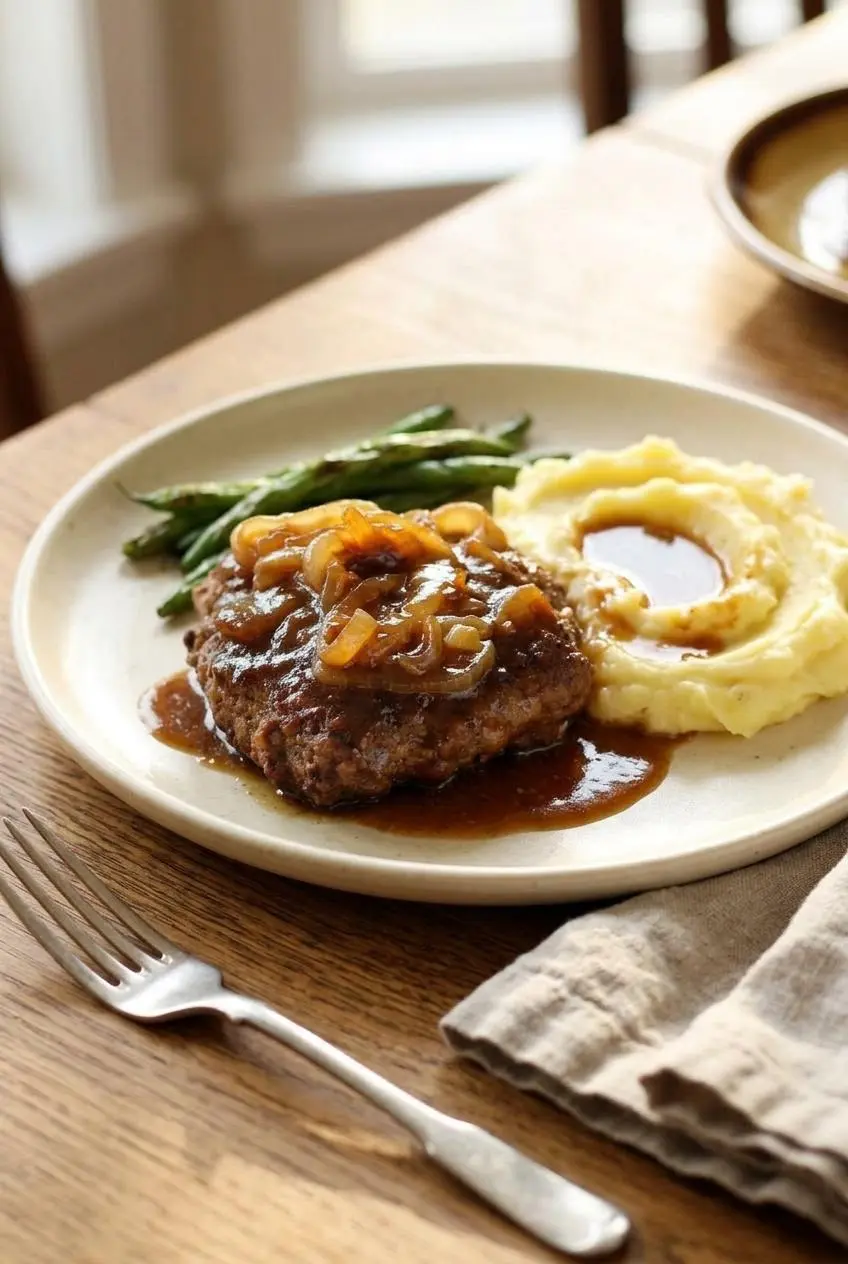
Rich onion gravy deserves something ready to catch every spoonful.
- Creamy Yukon Gold mashed potatoes and buttered egg noodles both soak up the gravy without competing with the beef.
- Buttermilk biscuits, skillet cornbread, or soft dinner rolls make the plate feel especially comforting and help with the last bit of gravy.
- Roasted green beans, steamed broccoli, sweet skillet corn, or roasted cabbage steaks add a fresher, lighter contrast to the rich skillet flavors.
For a cool, crisp counterpoint, a chilled salad with a sharp dressing works well alongside the hot gravy. Keep the vegetables simply seasoned so the hamburger steaks remain the center of the meal.
Storage and Reheating Guidelines
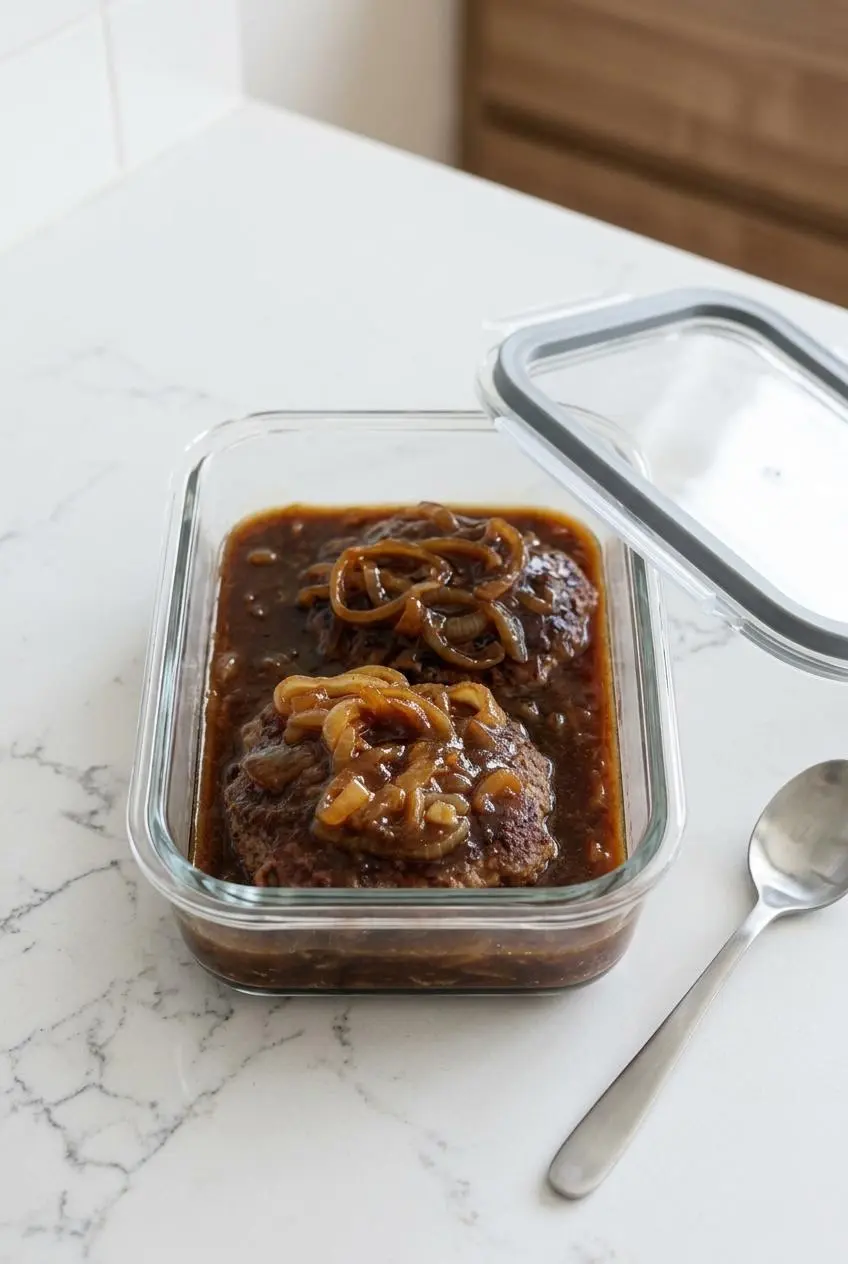
Store cooled hamburger steaks submerged in their gravy in an airtight container and keep them chilled. Keeping the patties covered with gravy helps protect their texture and prevents the exposed edges from drying out.
For reheating, place the patties and gravy in a skillet over low heat. Add a small splash of water or beef broth if the gravy has tightened, cover loosely, and warm gently until heated through. High-power microwave reheating can make the beef firm and may cause the gravy to separate.
If you want to prepare components earlier in the day, slice the onion and measure the seasonings ahead. Shape the patties close to cooking time so the meat stays cold and the texture remains tender.
Conclusion
Hamburger steaks turn seasoned ground beef, a hot skillet, and onion gravy into a deeply satisfying dinner. Ground chuck, dry seasonings, and the browned fond give the dish its full savory character.
Give the patties time to form their crust before flipping, then let them simmer gently in the gravy. That small bit of patience makes every bite more tender.
Frequently Asked Questions
What Is the Real Difference Between Hamburger Steak and Salisbury Steak?
Hamburger steak is seasoned ground beef without fillers or binders, usually served with brown onion gravy. Salisbury steak commonly includes ingredients such as breadcrumbs, crackers, egg, milk, tomato paste, or ketchup in the meat mixture. Its gravy often includes mushrooms or a more tomato-forward flavor.
How Do You Keep Hamburger Steaks From Falling Apart Without Eggs or Breadcrumbs?
Use 80/20 ground chuck and mix the beef lightly with a fork. Overmixed meat becomes dense and can lose its tender texture. Shape even patties, keep them cold if the kitchen is warm, and sear them untouched for about 4 minutes per side. The browned crust helps the patties hold together naturally.
What Fat Percentage Is Best for Hamburger Steaks?
An 80/20 ground chuck blend is the sweet spot for most skillet hamburger steaks. It gives the patties moisture while providing enough drippings to cook the onions and flavor the gravy. Leaner beef can still work, but it tends to produce a firmer patty and fewer flavorful drippings. Avoid beef that is extremely lean when you want a rich pan gravy.
Can You Freeze Hamburger Steaks and Gravy for Later?
This guide focuses on chilled storage and gentle stovetop reheating, since the cooking method does not include freezing directions. For the best leftover texture, keep cooked patties covered in gravy in an airtight container and reheat them slowly with a little added liquid if needed.
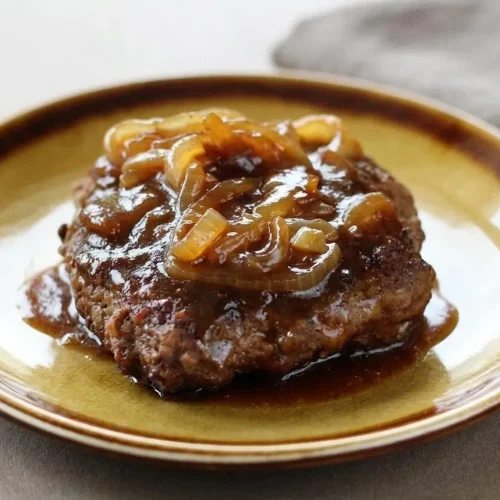
Hamburger Steaks

Equipment
- Skillet
Ingredients
- 1 1/2 pounds ground beef (I like using ground chuck)
- 1/2 teaspoon garlic powder
- 1 teaspoon onion powder
- 1/2 teaspoon salt
- 1/4 teaspoon black pepper
- 1 teaspoon ground mustard
- 1 small onion thinly sliced
- 1 (10.5-ounce) can French onion condensed soup (undiluted)
- 1 (.87-ounce) packet brown gravy mix
- 1/2 cup water
- 1 tablespoon Worcestershire sauce
Instructions
- Place the ground beef in a large bowl, scatter over the garlic powder, onion powder, salt, black pepper, and ground mustard, then combine lightly with a fork and shape the mixture into 4 equal patties. Keep the meat loose rather than packed tightly, and press a shallow dip into the center of each patty so it stays flatter in the skillet.
- Heat a cast-iron or other heavy skillet over medium-high heat, then sear the patties without moving them for about 4 minutes before turning and cooking the second side for another 4 minutes. Wait for a deep brown crust before flipping, then transfer the patties to paper towels while the skillet retains its browned bits.
- Pour off the drippings until about 2 tablespoons remain, cook the sliced onion in the skillet for about 3 minutes, then stir in the undiluted onion soup, gravy mix, and water; bring it to a boil, lower to a simmer, add Worcestershire sauce, and return the patties to the pan. The onions should look translucent and smell sweet before the liquids go in, while the finished gravy should bubble gently around the patties rather than boil hard.