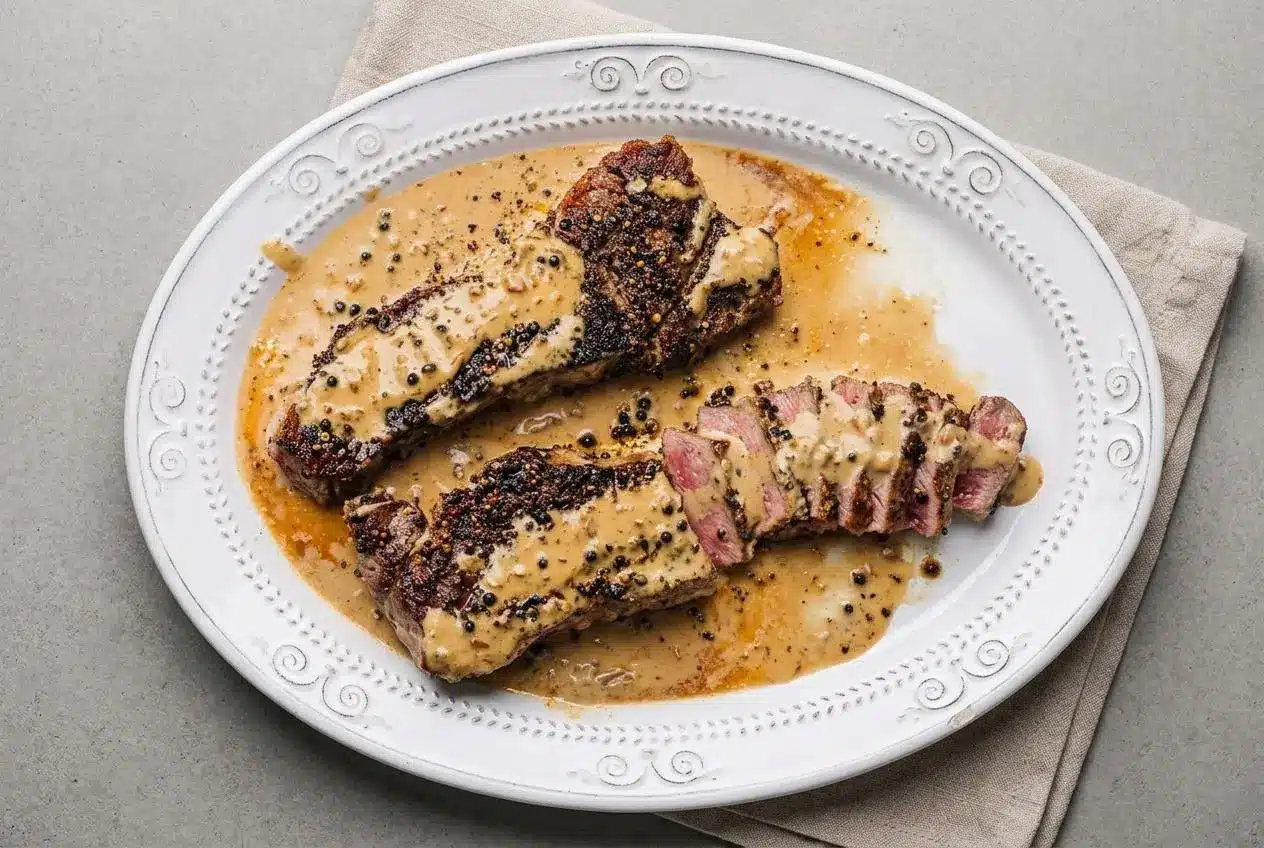
Steak au poivre is a classic French bistro dish of pepper-crusted steak seared in a skillet and finished with a Cognac, shallot, heavy cream, and butter pan sauce.
This steak au poivre recipe delivers a deeply browned steak, fragrant cracked peppercorns, and a rich sauce that clings to every slice without hiding the beef.
The peppercorns should smell warm and nutty in the pan, never harsh or smoky. That difference comes down to their size and the skillet heat.
Set out a cutting board and foil before cooking so the steaks can rest as soon as they leave the pan.
Essential Ingredients and Beef Cuts
Each ingredient builds the bistro-style balance: steak provides richness, cracked pepper creates texture and heat, shallot adds savoriness, and cream with cold butter gives the sauce its glossy finish.
- 2 12 ounces New York strip steaks (trimmed and removed from fridge 1 hour before)
- 3 tablespoons black peppercorns (coarsely crushed)
- 2 teaspoons kosher salt
- 2 tablespoons neutral oil (avocado, vegetable, canola, etc.)
- 1/3 cup cognac or brandy
- 1 cup heavy cream
- 1 tablespoon unsalted butter (cold)
- 1 medium shallot (minced)
- 1 tablespoon green peppercorns (optional)
New York strip brings a bold beef flavor and enough marbling to stay juicy during a hard sear. The shallot softens into the pan drippings, while Cognac lifts the browned bits into the sauce. Heavy cream gives the sauce its body, and cold butter finishes it with a velvety sheen.
Choose full-fat heavy cream, commonly labeled with at least 36 percent milk fat, rather than a lower-fat dairy product. It has the richness needed for a smooth reduction alongside the Cognac and pan drippings.
I prefer peppercorn pieces that are uneven but clearly visible, with plenty of cracked hulls and almost no powdery dust.
Selecting the Best Beef Cut
Boneless New York strip is the classic choice here. It has a firm, satisfying chew, a distinct fat edge, and enough marbling to stand up to the peppercorn crust and rich cream sauce.
- New York strip: The most traditional bistro-style option. Its beefy flavor and fat cap make it especially good for stovetop searing.
- Ribeye: Richer and more marbled, with a softer texture. Render the outer fat carefully so it does not leave the sauce overly greasy.
- Filet mignon: The tenderloin option for an especially tender steak. Because filet is leaner and often smaller, begin checking its temperature earlier than a strip steak.
For filet mignon, keep the same peppercorn technique and sauce, but rely on an instant-read thermometer rather than the exterior color. A dark pepper crust can make a steak look more cooked than it is.
Peppercorn Selection and Crushing Technique
Whole black peppercorns are essential because they give steak au poivre its crisp, aromatic crunch. Fine ground pepper burns quickly in hot oil and can turn bitter before the steak develops a proper crust.
Crush the peppercorns with the bottom of a heavy cast iron skillet, a small heavy pan, or a mortar and pestle. Aim for rough fragments, from coarse grains to small split peppercorns. Avoid grinding them into a uniform powder.
After crushing, lightly shake the pepper through a small sieve or fine colander. Use the larger pieces for the steak and discard the finest dust. This small step keeps the pepper flavor fragrant instead of acrid.
How to Make Steak au Poivre
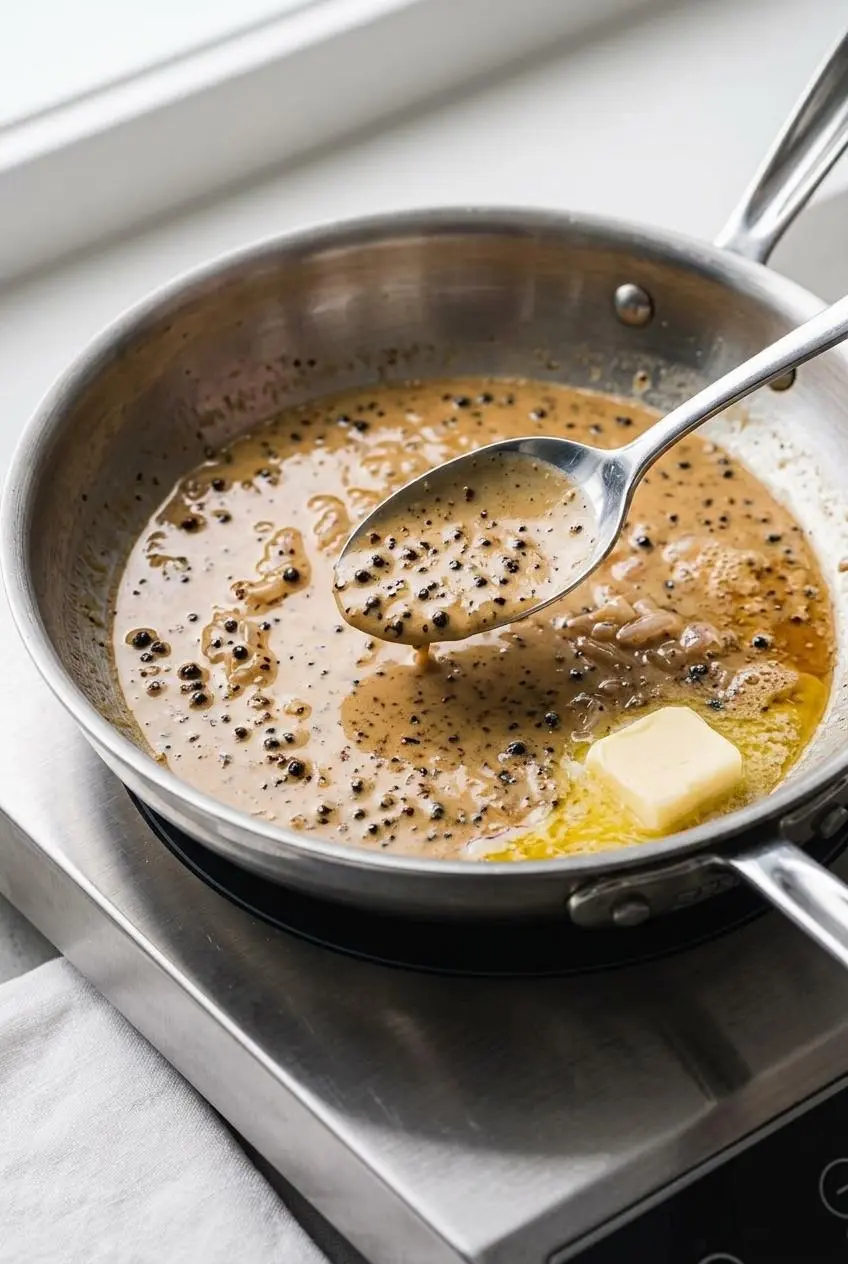
Use a large stainless steel or cast iron skillet so the steaks have room to sear instead of steaming. The method moves quickly once the pan is hot, so keep the shallot, Cognac, cream, and butter nearby.
- Warm a large stainless steel or cast iron skillet over medium heat.
The pan is ready when it feels evenly hot across the cooking surface and the oil will shimmer rather than sit still. - Blot the steaks thoroughly with paper towels, then season them with kosher salt and press both sides into the crushed black peppercorns.
Press firmly enough for the pepper to adhere, leaving a rugged crust with visible pieces rather than a dusty coating. - Pour the neutral oil into the hot skillet and add the steaks when the oil shimmers, leaving space between them. Sear without moving them for 4 minutes per side, then brown any thick side fat by holding the steaks upright with tongs.
The crust should turn deep brown and smell toasty, while the fat edge becomes golden and rendered. - Check the steaks for your preferred doneness, then transfer them to a cutting board and tent loosely with foil for 5 minutes.
For medium-rare, remove the steaks at 120 to 125°F so carryover heat can bring them to 130 to 135°F as they rest. - Carefully pour off excess pan fat, then cook the minced shallot with a pinch of salt for 2 to 3 minutes. Remove the skillet from the heat before adding the Cognac or brandy, then return it to medium-high heat and reduce for about 2 minutes.
The shallot should be soft and fragrant, and the Cognac should reduce until only a small amount remains in the pan. - Add the heavy cream and bring it to a gentle simmer for 2 to 3 minutes.
Stir and scrape up the browned bits as the sauce thickens enough to coat the back of a spoon cleanly. - Stir in the green peppercorns, if using, and season the sauce with salt to taste. Turn off the heat, whisk in the cold butter, then divide one-quarter of the sauce between two plates before adding the steaks and spooning over the rest.
The finished sauce should look glossy and flow slowly around the steak rather than appear oily or thin.
Crusting and Searing the Steaks
Dry steak matters because surface moisture works against browning. Patting the beef dry lets the oil make direct contact with the meat, while pressing the peppercorns into the surface helps them stay put during the sear.
Keep the heat at medium rather than chasing an aggressive blast of heat. The goal is to toast the cracked pepper while building a dark crust on the beef. If the skillet starts smoking heavily or the pepper smells sharp, lower the heat briefly before the crust scorches.
If the strip steaks have a broad fat cap, hold each steak on its edge with tongs after searing both flat sides. Browning this strip of fat helps prevent curling and adds savory beef flavor to the pan.
Deglazing and Emulsifying the Sauce
Move the skillet completely off an active burner before pouring in Cognac or brandy. Once the spirits are in the pan, return it to the heat and let them reduce naturally rather than trying to ignite them.
As the Cognac cooks down, scrape the caramelized fond from the skillet with a wooden spoon or whisk. Those browned bits carry the steak flavor into the sauce, while the softened shallot keeps the finish savory and rounded.
Bring the cream only to a gentle simmer. When it coats a spoon in a thin, even layer, turn off the heat and whisk in the cold butter. The butter should melt into the sauce until it looks smooth, glossy, and velvety.
Mastering the Sear and Temperature Cues
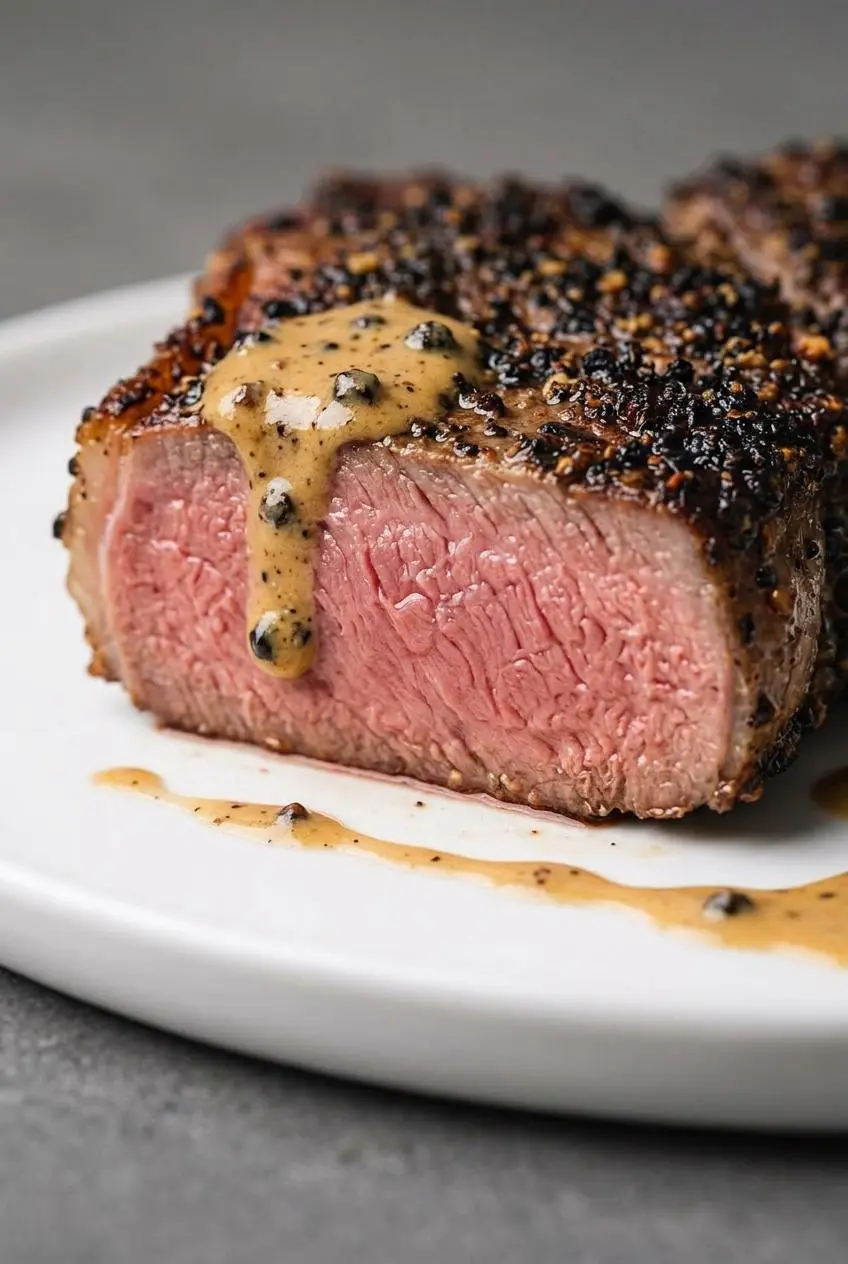
A thermometer gives the clearest read on doneness because the pepper crust darkens quickly. Insert it into the center of the steak from the side, avoiding the fat cap, then pull the meat before it reaches its final temperature.
- Rare: Pull at 115 to 120°F for a rested temperature of about 125°F.
- Medium-rare: Pull at 120 to 125°F for a rested temperature of 130 to 135°F.
- Medium: Pull at 130 to 135°F for a rested temperature of 140 to 145°F.
Rest the steaks, loosely tented, for the full 5 minutes. Carryover cooking can raise the internal temperature by about 5 to 8 degrees, and the pause lets the meat relax before slicing. A rested medium-rare strip feels gently firm and springs back when pressed.
Keep the skillet between roughly 325°F and 400°F when possible. In this range, the peppercorns toast while the steak browns. Above that range, pepper oils can char before the interior reaches the doneness you want.
Common Mistakes and Troubleshooting
- The pepper tastes bitter: Fine pepper dust or excessive heat likely scorched the pepper oils. Crush whole peppercorns coarsely, sift away the dust, and moderate the heat if the pan begins to smoke.
- The sauce looks oily or separated: The sauce may have boiled too hard after the butter went in. Take it off the heat and whisk steadily with a small splash of warm water or cold cream until it comes back together.
- The cream sauce seems thin: Let it simmer gently a little longer before adding the butter. It should coat the back of a spoon, not run off like broth.
- The steak curls in the skillet: A thick fat edge can tighten as it cooks. Trim excess fat and make shallow scores in the edge before cooking, then brown it with tongs.
- The steak sticks: Give it time. A well-seared steak releases more easily once the crust has formed, so avoid nudging it during the 4-minute sear.
Flavor Variations and Sauce Substitutions
The classic Cognac cream sauce is rich and peppery, but optional adjustments can shift the flavor without changing the main method. Keep the original ingredient list and steps intact when making these alternatives.
- Dijon and thyme finish: Whisk a little Dijon mustard and fresh thyme into cold compound butter before using it as the finishing butter. It adds savory tang and a subtle herbal aroma.
- Ribeye version: Use ribeye for a more marbled, luxurious steak, but pour off extra rendered fat before building the shallot sauce.
- Extra peppery dinner: For another pepper-forward beef option, try homemade pepper steak on a different night.
Alcohol-Free Pan Sauce Option
For an alcohol-free au poivre sauce, replace the Cognac with rich beef broth and add a splash of Worcestershire sauce or red wine vinegar for savory depth and acidity. Remove the skillet from the heat before adding the liquid, then return it to medium-high heat and reduce it until concentrated.
Continue with the cream and cold butter as written. The sauce will have a less pronounced Cognac aroma, but it can still taste full-bodied, peppery, and balanced rather than flat.
Green Peppercorn Bistro Variation
Brined green peppercorns bring a softer heat than black pepper, with a pleasantly tart and floral edge. Stir them into the finished cream sauce as the optional ingredient directs, rather than pressing them onto the steak before searing.
They work especially well when you want a gentler pepper flavor while keeping the classic black pepper crust. Their briny pop also cuts through the richness of cream and butter.
Serving and Leftover Sauce Care
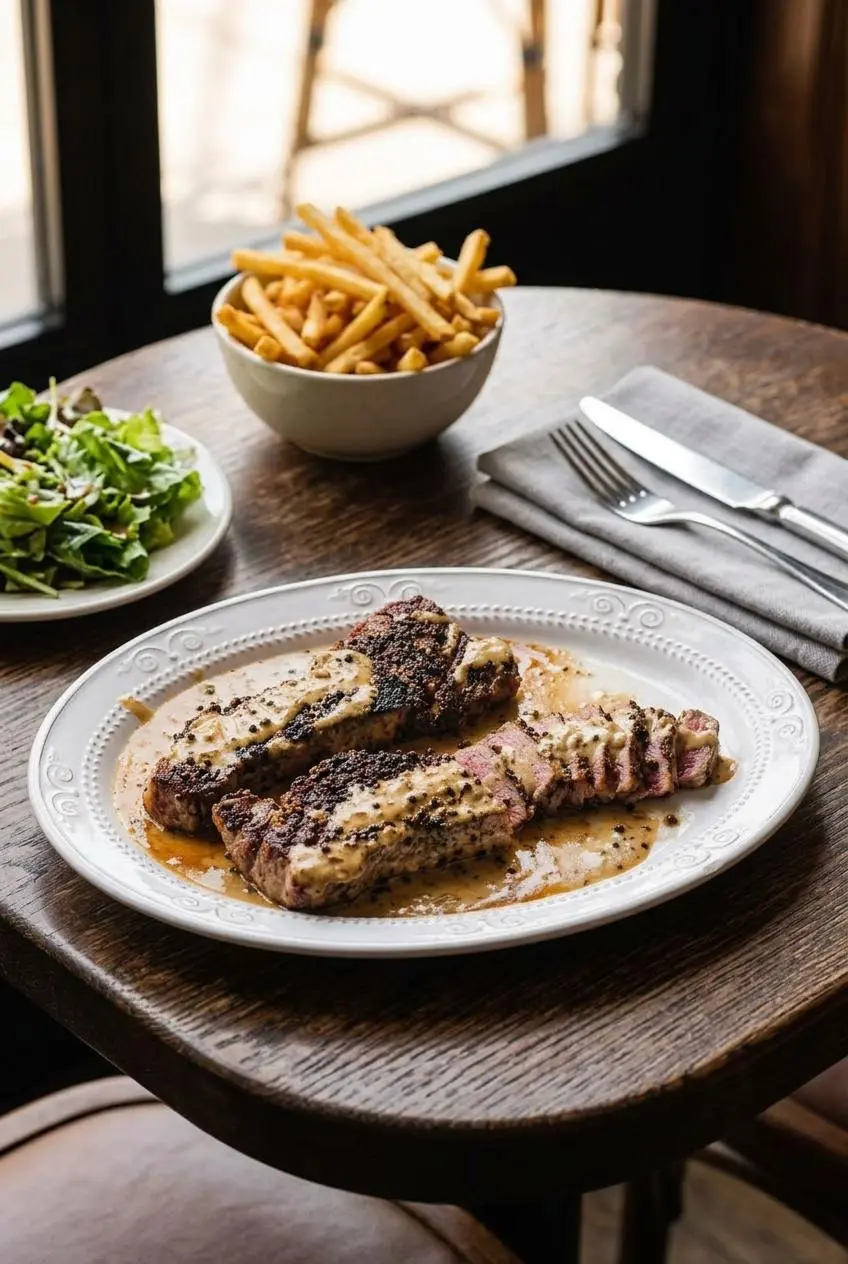
Serve steak au poivre immediately while the pepper crust is crisp and the sauce is warm and glossy. For a classic plate, pair it with crisp fries, a warm crusty baguette, or buttery mashed potatoes with roasted asparagus.
For the full French brasserie feel, serve it with bistro steak frites and a sharp green salad dressed with Dijon vinaigrette. The salty fries are especially good for catching the extra cream sauce.
If you have leftover sauce, cool it promptly in a covered container and keep it chilled. Warm it gently over low heat, whisking as it loosens, and avoid a hard boil so the butter and cream stay smooth. Slice leftover steak thinly and warm it only briefly, or serve it chilled over greens.
Conclusion
This steak au poivre brings together crunchy cracked pepper, tender seared beef, and a silky Cognac cream sauce in one skillet. The method feels special, yet the cues are straightforward once you know what to watch for.
Rest the steak before slicing, then whisk the cold butter into the sauce off direct heat. Those two small moves make the final plate feel polished and deeply satisfying.
Frequently Asked Questions
What Cut of Steak Works Best for Steak au Poivre?
Boneless New York strip is the classic choice because it has a beefy flavor, good marbling, and a fat cap that browns beautifully. Filet mignon is ideal when you want a softer, exceptionally tender texture. Ribeye also works well, though its extra fat should be managed carefully before making the sauce.
How Can I Make Au Poivre Sauce Without Alcohol?
Use rich beef broth in place of Cognac or brandy. Add a splash of Worcestershire sauce or red wine vinegar to bring back savory depth and acidity. Reduce the liquid in the skillet before adding cream, then finish with cold butter as usual.
Why Did My Peppercorn Crust Taste Bitter or Burnt?
Peppercorns that are ground too finely burn faster than coarse cracked pieces. Keep the skillet below 400°F when possible and use medium heat so the pepper toasts instead of chars. Sift away powdery pepper dust after crushing the peppercorns.
How Do I Prevent the Cream Sauce From Curdling?
Use full-fat heavy cream, preferably at least 36 percent milk fat. Keep the sauce at a gentle simmer rather than a rolling boil. Turn off the heat before whisking in cold butter, then whisk until the sauce looks smooth and glossy.
Steak au Poivre Recipe

Equipment
- large stainless steel or cast iron pan
- Paper towels
- Cutting board
- Aluminum Foil
- Whisk
Ingredients
- 2 12 ounces New York strip steaks trimmed and removed from fridge 1 hour before
- 3 tablespoons black peppercorns coarsely crushed
- 2 teaspoons kosher salt
- 2 tablespoons neutral oil avocado, vegetable, canola, etc.
- 1/3 cup cognac or brandy
- 1 cup heavy cream
- 1 tablespoon unsalted butter cold
- 1 medium shallot minced
- 1 tablespoon green peppercorns optional
Instructions
- Warm a large stainless steel or cast iron skillet over medium heat. The pan is ready when it feels evenly hot across the cooking surface and the oil will shimmer rather than sit still.
- Blot the steaks thoroughly with paper towels, then season them with kosher salt and press both sides into the crushed black peppercorns. Press firmly enough for the pepper to adhere, leaving a rugged crust with visible pieces rather than a dusty coating.
- Pour the neutral oil into the hot skillet and add the steaks when the oil shimmers, leaving space between them. Sear without moving them for 4 minutes per side, then brown any thick side fat by holding the steaks upright with tongs. The crust should turn deep brown and smell toasty, while the fat edge becomes golden and rendered.
- Check the steaks for your preferred doneness, then transfer them to a cutting board and tent loosely with foil for 5 minutes. For medium-rare, remove the steaks at 120 to 125°F so carryover heat can bring them to 130 to 135°F as they rest.
- Carefully pour off excess pan fat, then cook the minced shallot with a pinch of salt for 2 to 3 minutes. Remove the skillet from the heat before adding the Cognac or brandy, then return it to medium-high heat and reduce for about 2 minutes. The shallot should be soft and fragrant, and the Cognac should reduce until only a small amount remains in the pan.
- Add the heavy cream and bring it to a gentle simmer for 2 to 3 minutes. Stir and scrape up the browned bits as the sauce thickens enough to coat the back of a spoon cleanly.
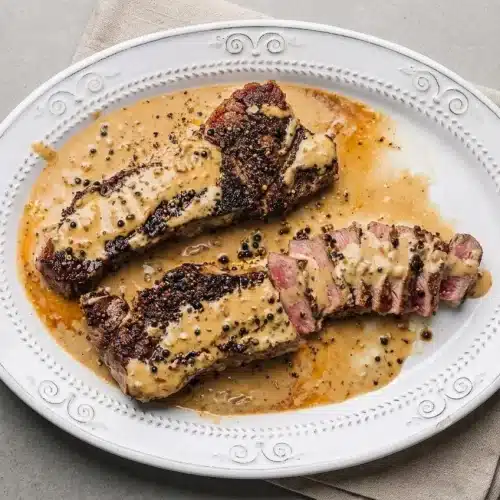
- Stir in the green peppercorns, if using, and season the sauce with salt to taste. Turn off the heat, whisk in the cold butter, then divide one-quarter of the sauce between two plates before adding the steaks and spooning over the rest. The finished sauce should look glossy and flow slowly around the steak rather than appear oily or thin.