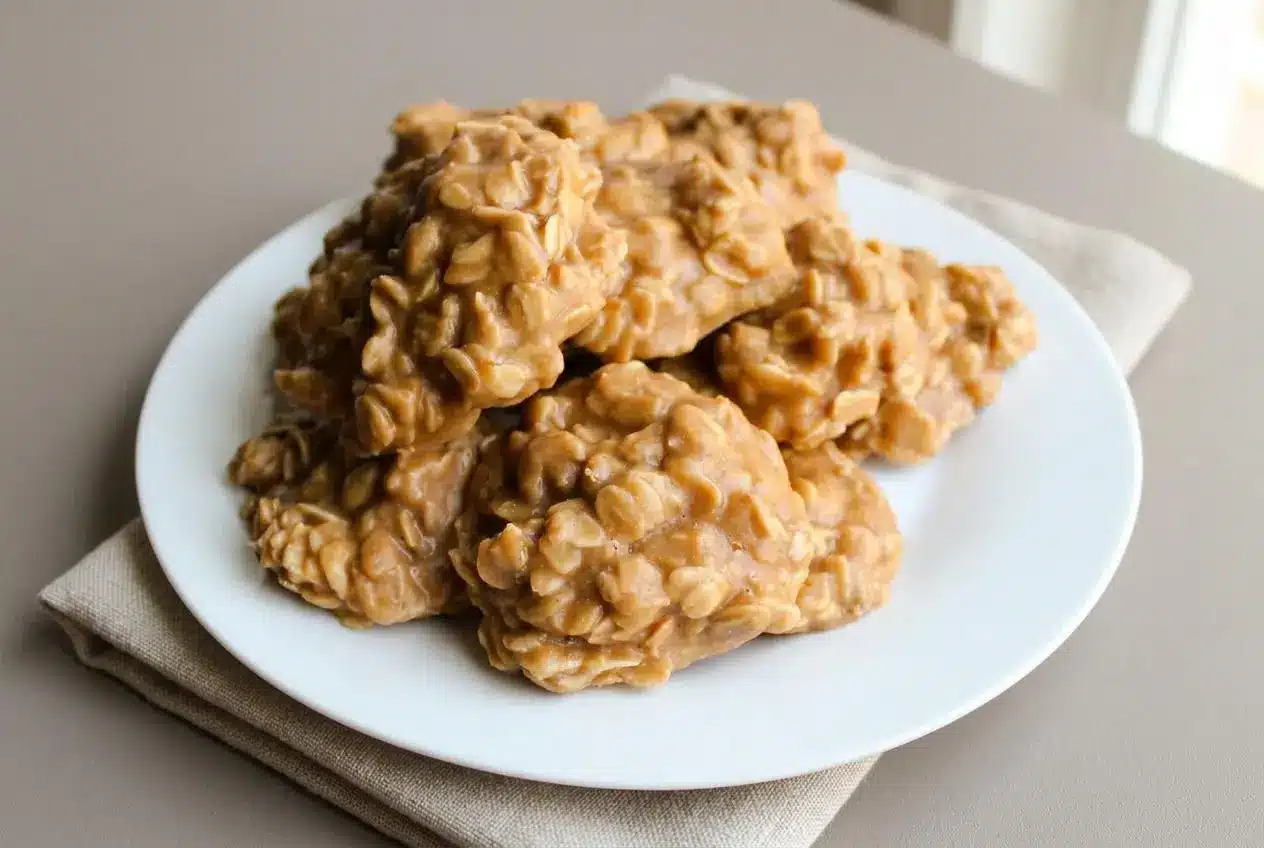
No bake peanut butter oatmeal cookies are chewy stovetop drop cookies made by boiling sugar, butter, and milk for one minute, then stirring in creamy peanut butter, vanilla, and oats before scooping.
These no bake peanut butter oatmeal cookies deliver sweet, nutty richness in about 30 minutes, with no oven to heat up. The peanut butter turns the hot syrup glossy, while the oats bring the familiar chewy bite.
The key is knowing exactly when to start the timer. A true rolling boil makes all the difference.
Line the baking sheet and measure the peanut butter, vanilla, and oats before turning on the burner, because the mixture moves quickly once it comes off the heat.
Key Ingredients and Their Culinary Roles
Each ingredient supports the finished texture and flavor: sugar provides structure, butter and milk create richness, peanut butter adds body, vanilla rounds out the sweetness, and oats give every cookie its chewy shape.
- 1½ cups granulated sugar
- ¼ cup butter
- ½ cup milk
- 1 cup creamy peanut butter
- 1 teaspoon vanilla extract
- 3 cups old fashioned oats
Granulated sugar forms the cooked syrup that helps the mounds firm as they cool. Butter softens the sweetness and gives the cookies their melt-in-your-mouth richness, while milk keeps the syrup fluid enough to coat the oats evenly.
Peanut butter does more than add flavor. It thickens the hot mixture into a smooth, glossy mass that clings to the oats. Vanilla adds a warm bakery-like aroma that keeps the peanut flavor from tasting flat.
Old fashioned oats hold their shape in the warm syrup, giving these cookies a hearty chew instead of a paste-like texture. When they hit the peanut butter mixture, you should notice a warm toasted-oat aroma almost immediately.
I reach for creamy commercial peanut butter here because its smooth, stable texture gives the syrup the most dependable finish.
Commercial Peanut Butter vs Natural Styles
Standard creamy peanut butter, including brands such as Jif or Skippy, is the most reliable choice for this method. It contains emulsifiers that keep the peanut solids and oils blended, so it melts smoothly into the cooked sugar mixture and helps the cookies set with an even texture.
Natural peanut butter can be unpredictable, especially if oil has separated at the top of the jar. That loose oil may disrupt the syrup and leave the cookies greasy, soft, or prone to spreading. Thorough stirring can improve it somewhat, but commercial creamy peanut butter remains the better option when you want firm, chewy mounds.
Choosing Between Rolled Oats and Quick Oats
Old fashioned rolled oats create the classic texture: chewy, substantial, and a little rustic. Their larger flakes absorb the syrup more slowly, so they retain a distinct oat bite after the cookies set.
- Old fashioned rolled oats: Choose these for a hearty, chewy cookie with visible oat flakes.
- Quick-cooking oats: Use these for a softer, denser, more fudge-like texture because their smaller pieces absorb syrup faster.
- Avoid steel-cut oats: They stay too hard for this warm drop-cookie mixture and will not give the intended chew.
How to Make No Bake Peanut Butter Oatmeal Cookies
This stovetop method works best when you stay close to the pan and move promptly after the syrup finishes boiling. The mixture should turn thick, shiny, and easy to scoop rather than loose or grainy.
- Prepare a baking sheet by covering it with wax paper and place it beside the stove.
Keep the lined sheet within reach so the warm oat mixture can be portioned without delay. - Combine the granulated sugar, butter, and milk in a large saucepan over medium heat, stirring often as the butter melts.
Continue heating until large bubbles rise across the entire surface, not just around the edges. - Once the mixture reaches a full rolling boil, count 60 seconds while it continues bubbling vigorously.
The syrup should look active and uniform across the center of the pan before the timer begins. - Remove the pan from the heat and stir in the creamy peanut butter until the mixture looks smooth and glossy, then mix in the vanilla extract.
The peanut butter should leave a thick ribbon behind the spoon instead of separating into oily streaks. - Fold in the old fashioned oats until every flake is coated, then scoop mounds onto the wax paper.
The mixture should be thick enough to sit in soft piles rather than flow into flat puddles. - Leave the cookies on the baking sheet until they are cool and firm enough to lift cleanly from the wax paper.
The surface loses its wet shine as the cookies set.
Setting Up Your Workstation
Measure the peanut butter, vanilla, and oats before heating the saucepan. Keep a spoon or cookie scoop ready, and line the baking sheet with wax paper or parchment paper. After the one-minute boil, there is no good time to hunt through a cabinet for supplies.
A large saucepan gives you enough room to stir without splashing hot syrup over the rim. Stir frequently while the sugar, butter, and milk heat so the bottom of the pan stays smooth and the butter melts evenly.
Resting the Dough Before Portioning
For thicker cookies, let the oat mixture sit in the saucepan for 2 to 3 minutes after you stir everything together. This optional pause gives the oats time to absorb some of the warm syrup, which helps the scooped mounds hold their shape.
Do not wait too long. The mixture will continue thickening as it cools, and it becomes harder to portion neatly once it starts to firm in the pan.
Mastering the One-Minute Boil and Doneness Signals
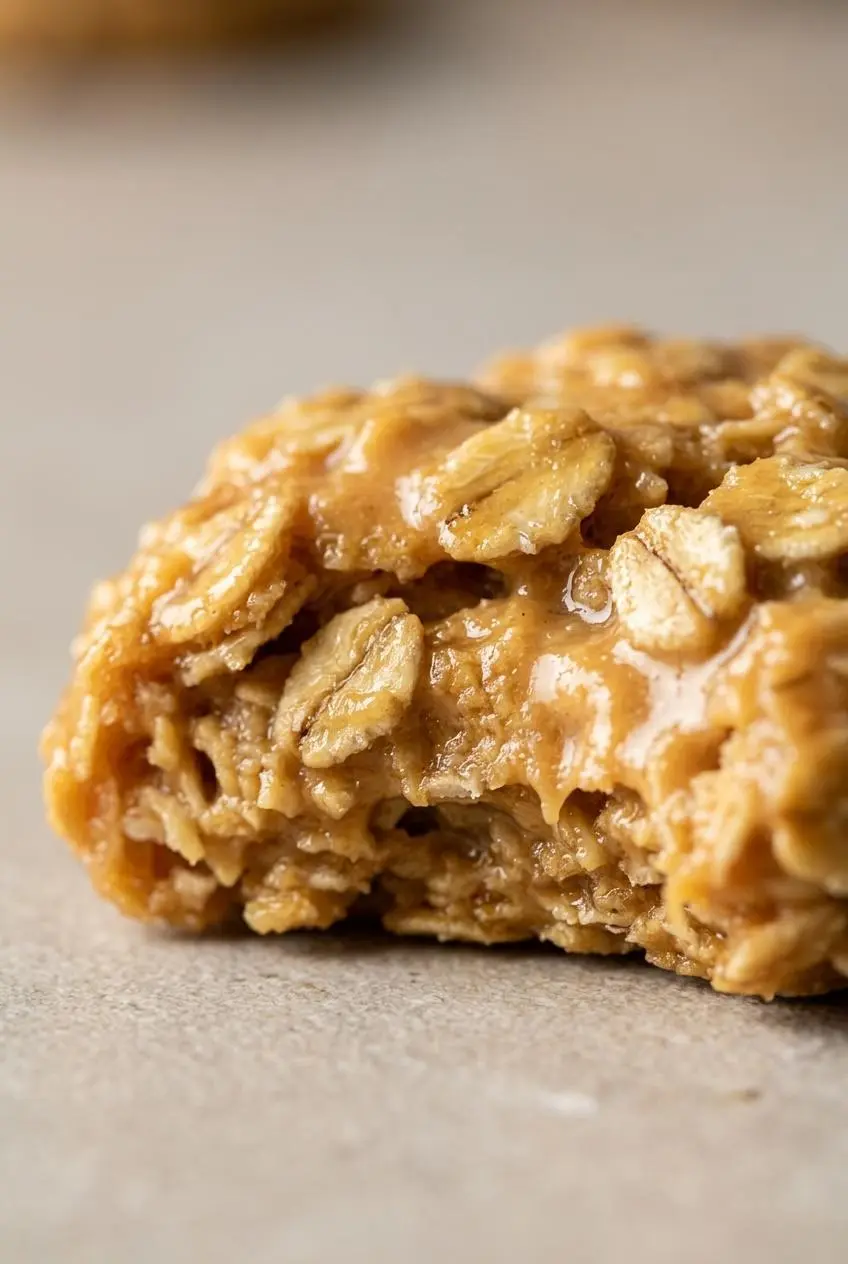
The one-minute boil is the make-or-break moment. Start the timer only when the syrup reaches a vigorous rolling boil that covers the whole surface of the pan.
A gentle simmer has small bubbles around the edge, with a calmer center. That is not the point to begin counting. Wait until large bubbles rise and break steadily in the middle as well as around the sides. The mixture should look lively enough that stirring briefly reveals bubbling underneath.
Boiling for the full minute gives the sugar syrup enough concentration to set as it cools. If you remove the pan too early, the cookies can remain sticky and loose. If you keep cooking far beyond the minute, too much moisture evaporates and the finished cookies can turn dry or sandy.
If you prefer an extra checkpoint, use a candy thermometer as a consistency guide alongside the visual rolling-boil cue. The timer remains the clearest method for this particular batch because the saucepan, burner strength, and stirring all affect how quickly the syrup heats.
Troubleshooting Common No-Bake Cookie Mistakes
Most texture problems trace back to the boil or the peanut butter. These quick checks can help you pinpoint what happened and make the next batch smoother.
- Cookies are soft and wet: The syrup likely came off the heat before it reached a full rolling boil for the full minute. Chill the baking sheet to encourage the butter and peanut butter to firm while the cookies cool.
- Cookies spread into thin puddles: The oat mixture may have been scooped immediately while still very loose. Letting it stand briefly off heat gives the oats time to absorb syrup and build more body.
- Cookies are dry, chalky, or crumbly: The mixture likely boiled too long and lost too much moisture. Keep the next batch strictly to the 60-second rolling-boil window, then remove it from the heat right away.
- Cookies look greasy: Natural peanut butter or poorly blended peanut butter can release excess oil into the syrup. Use creamy commercial peanut butter for a more cohesive mixture.
- Cookies set slowly on a humid day: Moist air can make sugar-based treats feel softer for longer. Keep the cookies in a cool, dry spot or chill them briefly until the surface firms.
Do not add water to a cooked mixture that has turned crumbly. Extra liquid changes the sugar balance and can make the texture even less predictable. It is better to use the dry batch as a crumbly snack topping and focus on a more accurate boil next time.
Flavor Variations and Easy Swaps
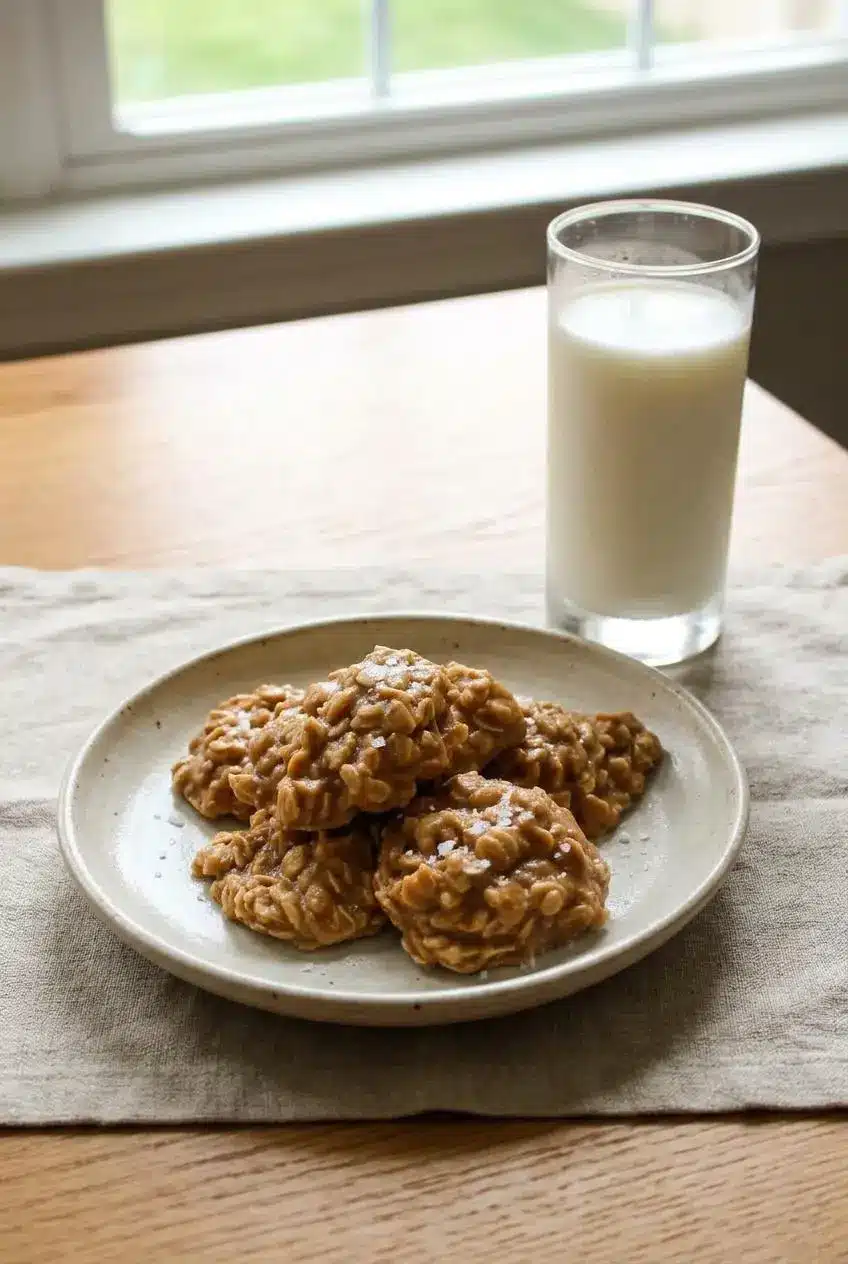
The classic version keeps the peanut butter front and center, but optional changes can shift the flavor and texture without changing the main method. Add any variation to a separate batch or treat it as a future experiment.
A pinch of ground cinnamon stirred into the warm mixture adds gentle spice, while a light sprinkle of flaky sea salt over the freshly scooped mounds gives the sweetness a welcome savory edge. A cold glass of milk or warm black coffee also balances the rich peanut butter flavor nicely.
Adding Cocoa for Chocolate Peanut Butter
For a chocolate peanut butter version, whisk ¼ cup unsweetened cocoa powder into the sugar, butter, and milk before heating the pan. The cocoa blends best before the syrup boils, helping it dissolve evenly rather than leaving dry pockets in the finished cookies.
Expect a deeper, fudge-like flavor and a darker color, while the oats and peanut butter still provide the familiar chew. Keep the same full rolling-boil timing so the chocolate variation sets properly.
Enhancing Chew with Brown Sugar and Salt
Swap half of the granulated sugar with packed light brown sugar for a warmer caramel flavor and a slightly softer chew. Brown sugar brings molasses notes that pair especially well with peanut butter, though the cookies may set with a less crisp surface.
Crunchy peanut butter adds small peanut pieces throughout the mounds, while chopped roasted peanuts create a firmer crunch. Finish with flaky sea salt if you enjoy a sweet-salty contrast.
Dietary Swaps and Quick Pantry Alternatives
- Gluten-free option: Choose certified gluten-free rolled oats when gluten avoidance is needed.
- Dairy-free option: Plant-based butter and almond milk can replace the dairy ingredients, though the final flavor and texture may vary by brand.
- Quick three-ingredient snack: Melted peanut butter, honey, and oats can be mixed into a no-boil oat bite, but it will have a different texture from the cooked syrup version.
If you enjoy peanut butter treats that set in a pan rather than as drop cookies, these peanut butter bars offer another satisfying direction for that flavor combination.
Keeping Cookies Fresh
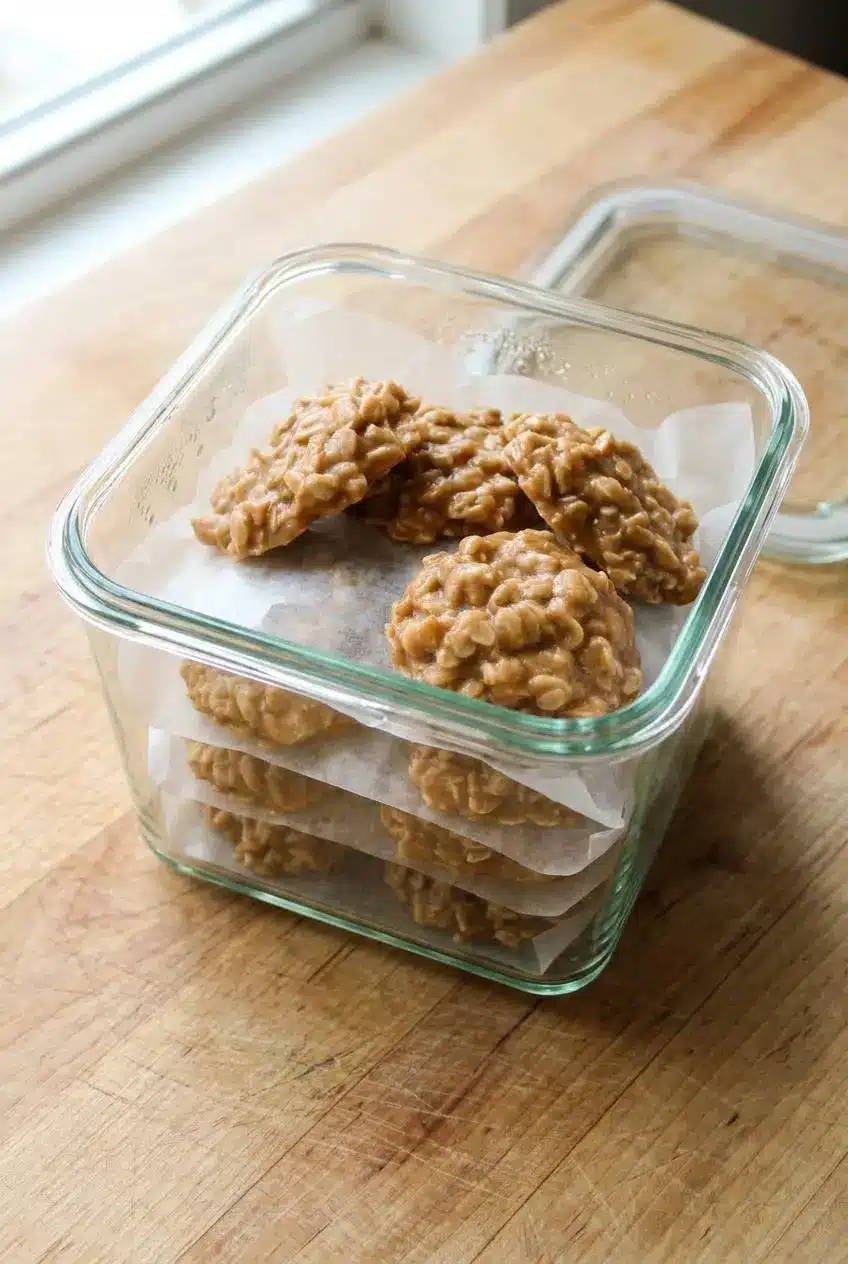
Let the cookies cool and fully set before transferring them to an airtight container. Place wax paper between layers if the cookies still feel tacky, which helps protect their shape and keeps the surfaces from sticking together.
Store the container in a cool, dry area away from humidity. Refrigeration gives the cookies a firmer bite, especially when the kitchen is warm. Bring chilled cookies toward room temperature before serving if you prefer a softer, chewier texture.
For the best texture, make these close to when you plan to serve them rather than relying on long-term preservation. Keep the container tightly closed so the oats stay pleasantly chewy instead of drying out.
Conclusion
These golden peanut butter oat cookies are all about a glossy syrup, a true rolling boil, and the cozy chew of old fashioned oats. Once you recognize the full-surface bubbling cue, the stovetop method feels wonderfully straightforward.
Try the flaky sea salt finish when you want to sharpen the sweet peanut butter flavor. A warm, chewy cookie and a little patience at the boil are a very good combination.
Frequently Asked Questions
What Is the Secret to Perfect No Bake Cookies?
The secret is accurate timing. Start counting only when the sugar, butter, and milk reach a full rolling boil across the center of the pan, then boil for exactly 60 seconds. Measure the peanut butter, vanilla, and oats before heating the syrup. Use creamy commercial peanut butter for a smoother, more dependable set. Remove the pan from the heat immediately after the minute is up.
Why Are My No Bake Cookies Soft and Not Setting?
Soft cookies usually mean the syrup did not boil long enough. A simmer around the pan edges does not provide the same setting power as a vigorous, full-surface rolling boil. Place the baking sheet in the refrigerator to help the butter and peanut butter firm. For the next batch, wait for strong bubbles across the center before starting the one-minute timer. Use commercial creamy peanut butter if natural peanut butter made the mixture oily.
Can I Use Natural Peanut Butter for No Bake Cookies?
You can, but it is less reliable. Natural peanut butter often separates into oil and solids, which can make the warm mixture greasy and prevent the cookies from firming evenly. For the most consistent texture, use a creamy commercial peanut butter. If natural peanut butter is your only option, stir it extremely well before measuring, knowing that the cookies may remain softer.
Can I Use Quick Oats Instead of Old-Fashioned Rolled Oats?
Yes. Quick oats absorb the syrup faster and create a softer, denser, more fudge-like cookie. Old fashioned rolled oats give the cookies a heartier chew and more distinct oat texture. Choose quick oats when you want a smoother bite, or stick with rolled oats for the classic chewy mound.
Can You Freeze No Bake Peanut Butter Oatmeal Cookies?
This method provides its best texture when the cookies are cooled, set, and kept in a tightly covered container. It does not include long-term preservation directions, so plan to enjoy them while their chewy oat texture is at its best.
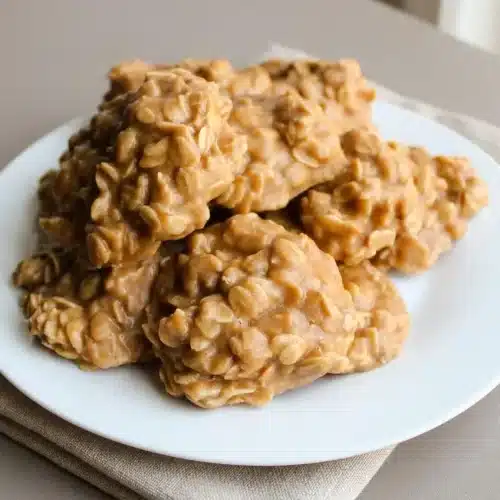
No Bake Peanut Butter Oatmeal Cookies

Equipment
- Large saucepan
- Baking Sheet
- Wax paper
- Cookie Scoop
Ingredients
- 1 1/2 cups granulated sugar
- 1/4 cup butter
- 1/2 cup milk
- 1 cup creamy peanut butter
- 1 teaspoon vanilla extract
- 3 cups old fashioned oats
Instructions
- Prepare a baking sheet by covering it with wax paper and place it beside the stove. Keep the lined sheet within reach so the warm oat mixture can be portioned without delay.
- Combine the granulated sugar, butter, and milk in a large saucepan over medium heat, stirring often as the butter melts. Continue heating until large bubbles rise across the entire surface, not just around the edges.
- Once the mixture reaches a full rolling boil, count 60 seconds while it continues bubbling vigorously. The syrup should look active and uniform across the center of the pan before the timer begins.
- Remove the pan from the heat and stir in the creamy peanut butter until the mixture looks smooth and glossy, then mix in the vanilla extract. The peanut butter should leave a thick ribbon behind the spoon instead of separating into oily streaks.
- Fold in the old fashioned oats until every flake is coated, then scoop mounds onto the wax paper. The mixture should be thick enough to sit in soft piles rather than flow into flat puddles.
- Leave the cookies on the baking sheet until they are cool and firm enough to lift cleanly from the wax paper. The surface loses its wet shine as the cookies set.