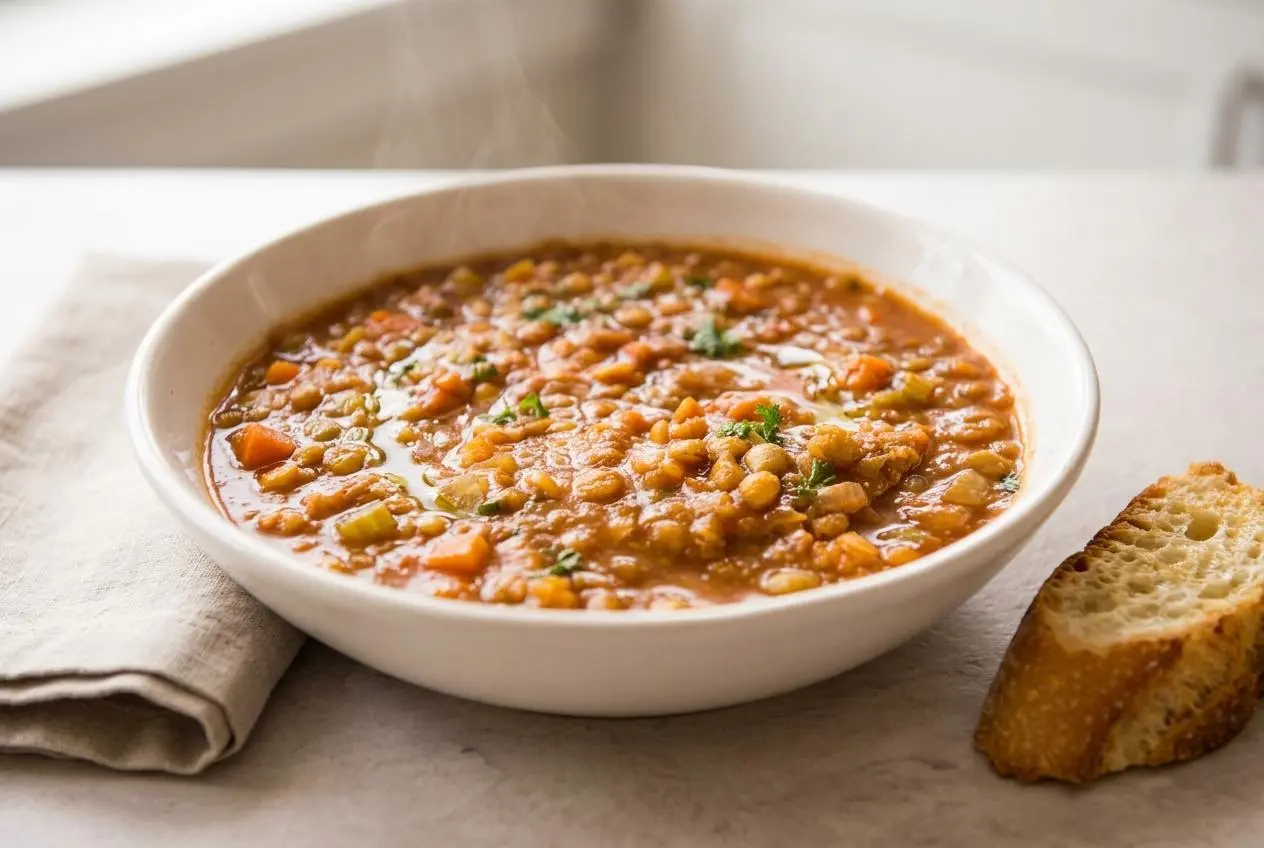
Classic lentil soup starts with dried brown or green lentils simmered with sautéed vegetables, broth, tomatoes, and warm spices until tender, then lightly blended and finished with lemon.
This lentil soup recipe makes a hearty stovetop meal with a naturally velvety broth, no pre-soaking, and plenty of earthy, savory flavor.
As the onion, carrot, and celery soften, the kitchen fills with a sweet golden aroma that makes the wait worthwhile. The partial blend is the trick to that spoon-coating finish.
Rinse the lentils in a fine-mesh strainer and pick out any stray debris before they go into the pot.
Essential Ingredients and Lentil Selection
Each ingredient earns its place: olive oil carries the spices, vegetables bring sweetness, lentils create body, broth adds savoriness, and lemon sharpens the finished soup.
Main Soup
- 2 tbsp olive oil
- 1 onion, chopped (white, brown, yellow)
- 2 garlic cloves, minced
- 1 large carrot, chopped (about 1 1/4 cups)
- 2 celery ribs, chopped (about 1 1/4 cups)
- 2 cups / 400 g dried lentils, green or brown, rinsed
- 400 g / 14 oz crushed tomato
- 1.5 litres / 1.5 quarts (6 cups) vegetable or chicken stock / broth, low sodium
- 1/2 tsp each cumin and coriander powder
- 1 1/2 tsp paprika powder
- 2 dried bay leaves
- 1 lemon (zest + juice)
- 1/4 tsp salt and pepper, each
To Serve
- Chopped fresh parsley, for garnish
- Warm bread, to serve
Tomato lends gentle acidity and a deep red color, while low-sodium broth gives you room to season at the end. Cumin, coriander, and paprika bring warm earthiness without overpowering the lentils. Lemon zest and juice wake up the whole pot just before serving.
I prefer a fresh, heavy lemon here because zest from a firm-skinned lemon gives the soup a cleaner citrus lift than juice alone.
Choosing Between Brown, Green, and Red Lentils
Brown lentils are the classic choice for a soft, thick soup. They become tender and break down around the edges, which helps the broth gain body as it simmers. Standard whole green lentils work well too, holding a little more shape while still thickening the pot.
Avoid French green Puy lentils for this style of soup. Their sturdy skins and firm center are excellent in salads, but they stay too distinct for a velvety, spoonable broth. Red lentils behave in the opposite way: they dissolve quickly and produce a smoother puree-like soup rather than the hearty texture intended here.
No soaking is needed for brown or green lentils. Once simmered in the broth, they soften in the same cooking window as the recipe, making this a practical dinner when you want comfort without advance prep.
Building Savory Depth With Mirepoix and Spices
Onion, carrot, and celery form a classic mirepoix. Give them time over moderate heat so they soften without browning deeply. Their natural sweetness rounds out the earthy flavor of the lentils and balances the tomato.
The spices matter most when they meet warm olive oil before the broth goes in. This brief blooming step releases their aroma, so the cumin, coriander, and paprika taste integrated rather than dusty. You should smell a warm, toasty fragrance before the pot begins to simmer.
How to Make Lentil Soup
Use a large pot or Dutch oven so the vegetables have room to soften evenly and the lentils can bubble gently without crowding.
- Warm the olive oil in a large pot over medium heat, then add the onion and garlic and cook for 2 minutes.
The onion should begin to soften and smell fragrant without taking on much color. - Stir in the carrot and celery and cook for 7 to 10 minutes.
Keep stirring occasionally until the vegetables are soft and the onion smells sweet and golden. - Add the rinsed lentils, crushed tomato, broth, cumin, coriander, paprika, and bay leaves, leaving out the lemon, salt, and pepper for now.
Stir well so the spices disperse through the liquid and no lentils cling to the bottom. - Bring the pot up to a simmer, skim away any foam that rises, cover, and reduce the heat to medium-low for 35 to 40 minutes.
Look for small, steady bubbles rather than a rolling boil, and cook until the lentils are soft when pressed against the side of the pot. - Lift out and discard the bay leaves.
The soup should now look thickened, with some lentils beginning to break apart in the broth. - Use an immersion blender for 2 or 3 quick pulses, or blend 2 cups of soup after letting it cool slightly and return it to the pot.
Stop while the soup still has visible lentils and vegetable pieces, with a fuller and silkier broth around them. - Adjust the consistency with a little water if needed, then season with salt and pepper and stir in the lemon zest and a squeeze of juice just before serving.
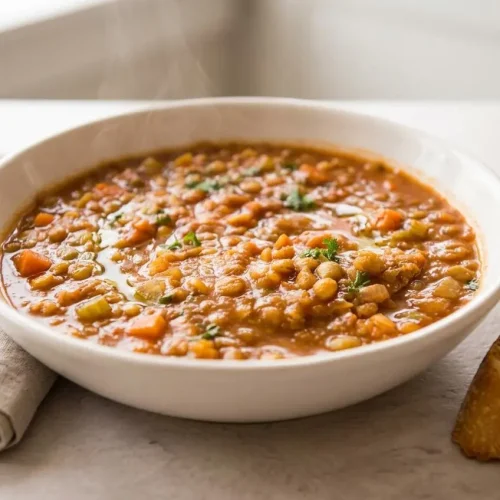
The finished soup should taste bright and savory, with a thick but pourable texture.
Mastering the Flavor Base and Simmering Technique
The first 8 to 10 minutes of vegetable cooking set up the flavor of the whole soup. Keep the heat controlled rather than rushing toward browning. Properly softened mirepoix looks glossy and tender, and it brings a mellow sweetness that makes the broth taste more complete.
Once the liquid is added, maintain a gentle simmer. A hard boil can knock lentil skins loose before the centers soften and can make the broth look rougher. Small bubbles and an occasional stir are enough. If foam gathers on top, skim it away for a cleaner-looking soup.
For thickness without cream or flour, blend only a portion of the finished soup. Two or three quick pulses with an immersion blender release starch from the lentils while leaving plenty of texture. The soup will also thicken further as it cools in the bowl, so stop blending before it turns into a completely smooth puree.
Add lemon only after the lentils are tender and the pot is off the heat. Early acid can slow softening, while a final squeeze preserves the bright flavor of the juice and the aromatic oils in the zest.
Pressure Cooker and Slow Cooker Adaptations
These are optional approaches for the same flavor profile, not replacements for the stovetop method.
- For a pressure cooker, sauté the onion, garlic, carrot, and celery first. Add the lentils, tomato, broth, spices, and bay leaves, then cook on high pressure for 12 to 15 minutes followed by a natural pressure release. Blend a portion and add lemon at the end.
- For a slow cooker, soften the aromatics first if possible for better flavor, then combine them with the remaining ingredients except lemon and seasoning. Cook on low for 7 to 8 hours or on high for 4 to 5 hours, until the lentils are fully tender.
Troubleshooting and Texture Adjustments
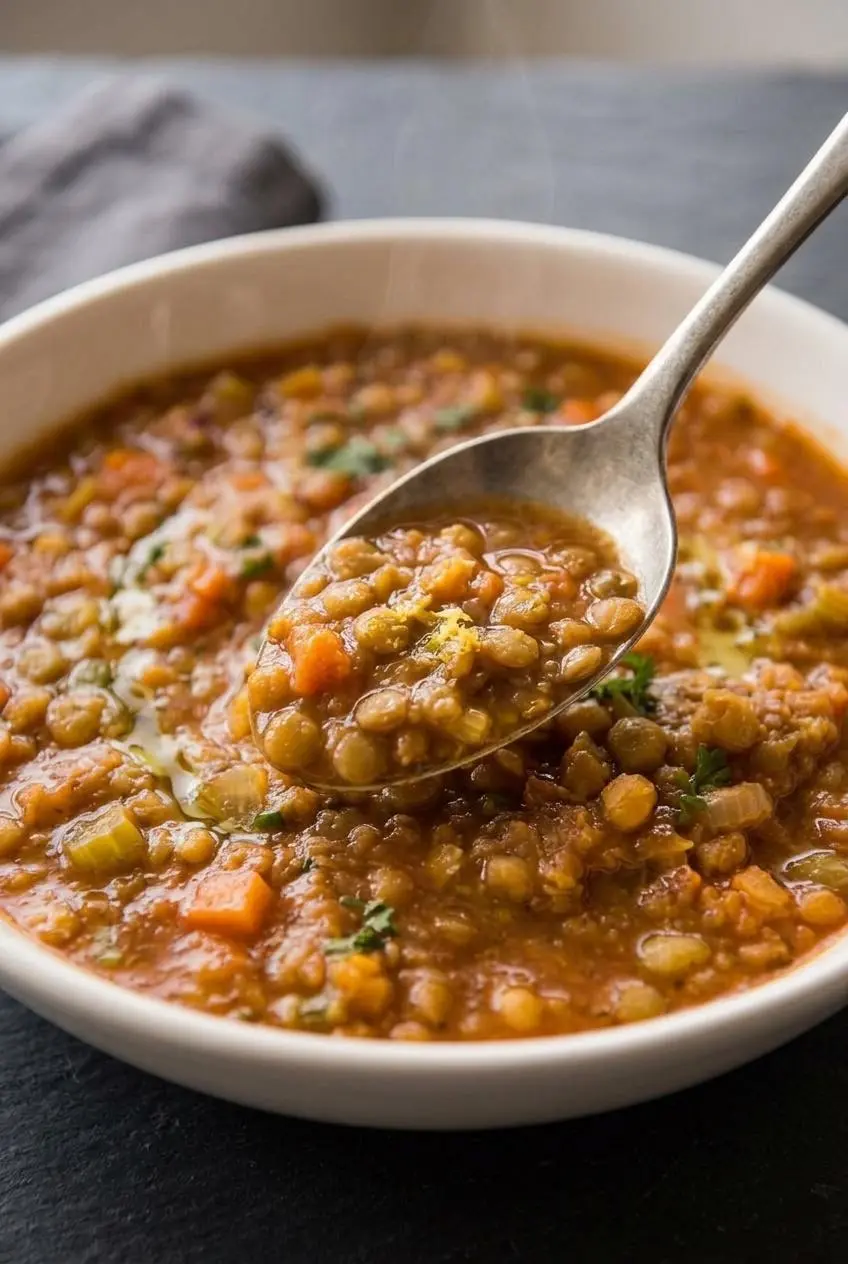
Lentil soup is forgiving, and most issues have a straightforward fix. Adjust it near the end, once the lentils have had time to soften and release their natural starch.
- The soup is too thick: Lentils continue absorbing broth as the soup rests. Stir in warm broth or water gradually while reheating until the consistency loosens.
- The soup seems thin: Give it a few more minutes at a gentle simmer, then blend a small portion. Avoid flour or heavy cream, since the lentils can create body on their own.
- The lentils are still firm: Older lentils can need extra cooking time. Keep the soup at a gentle simmer with a little additional liquid if needed, and wait to add lemon until the lentils soften.
- The flavor tastes flat: Add salt and pepper gradually, then finish with lemon zest and juice. The citrus often brings the spices and tomato back into focus.
- The spices taste muted: Next time, let the cumin, coriander, and paprika warm in the oil-coated vegetables before adding the broth. That small step makes a noticeable difference.
The same partial-blending approach works beautifully in a hearty black bean soup when you want a creamy texture without dairy.
Storing and Reheating Lentil Soup
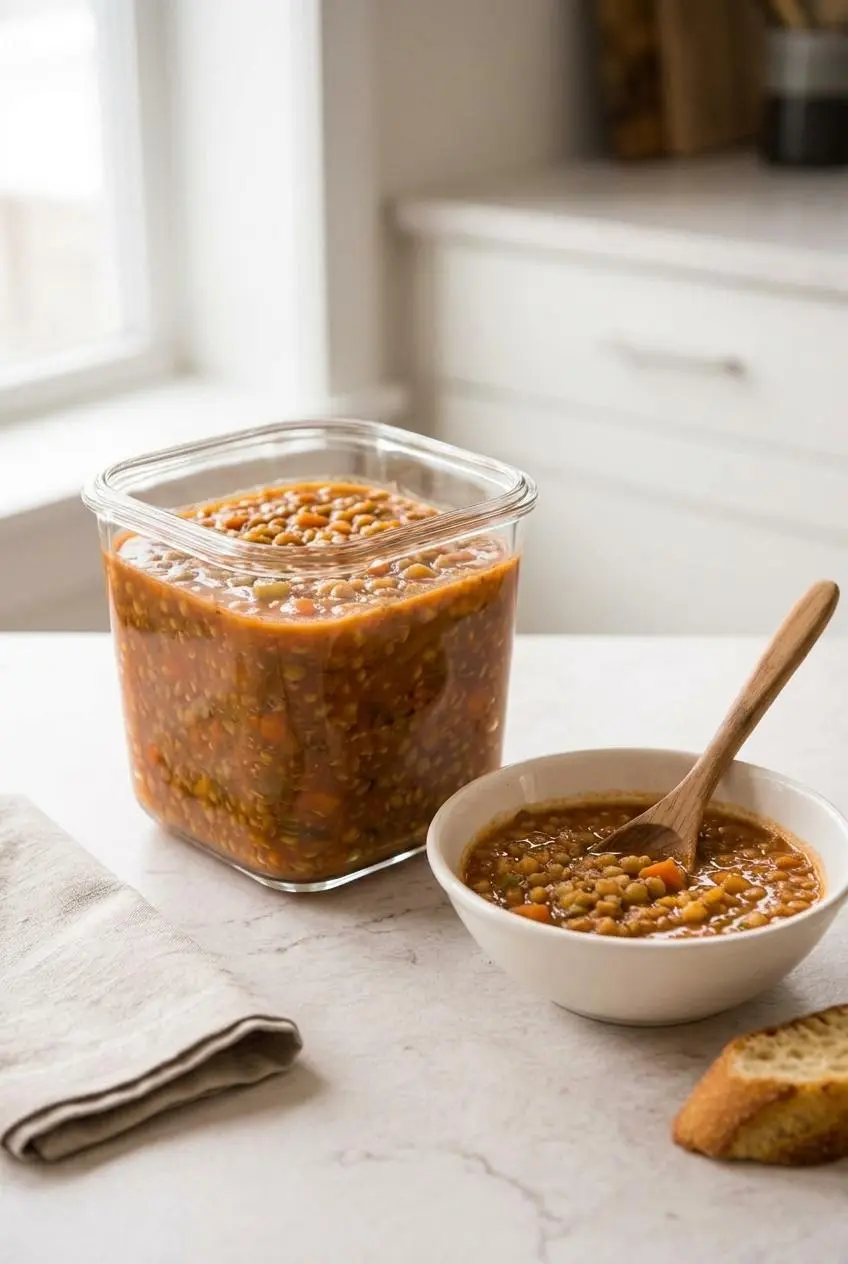
Let leftover soup cool, transfer it to airtight containers, and keep it chilled. Portioning it before storing makes reheating easier and limits how often the whole batch is warmed. Lentils absorb liquid as they sit, so a thicker texture later is expected.
Reheat gently on the stovetop, stirring often and adding a splash of water or broth as needed. Bring each portion back to a hot, even temperature before serving. Add a final little lemon juice after reheating if the flavor needs freshening.
For best quality, keep parsley and bread separate until serving. Fresh herbs stay brighter when scattered over each bowl, and warm bread keeps its crust instead of softening in the soup.
Flavorful Variations and Serving Suggestions
Keep the main pot as written, then make any of these changes as optional additions. Each one shifts the personality of the soup without losing its comforting lentil base.
Mediterranean Lentil Soup With Kale or Spinach
Fold chopped Tuscan kale, curly kale, spinach, or chard into the hot soup during the final 5 minutes of cooking. Kale and chard need that brief simmer to become tender, while baby spinach wilts quickly and should be stirred in near the end.
Finish this version with extra lemon zest, a drizzle of robust extra-virgin olive oil, and grated Parmesan if desired. For another rustic vegetable-and-legume meal, try this pasta e fagioli soup.
Smoky Bacon or Ham Variations
For a smoky version, crisp diced bacon or pancetta in the pot before cooking the vegetables, then use the rendered fat in place of some of the olive oil. A leftover ham bone can also simmer with the lentils for deeper pork flavor, then be removed before blending.
If you have leftover ham and want another filling legume supper, this ham and bean soup is a natural next choice.
Crusty Bread Pairings and Garnishes
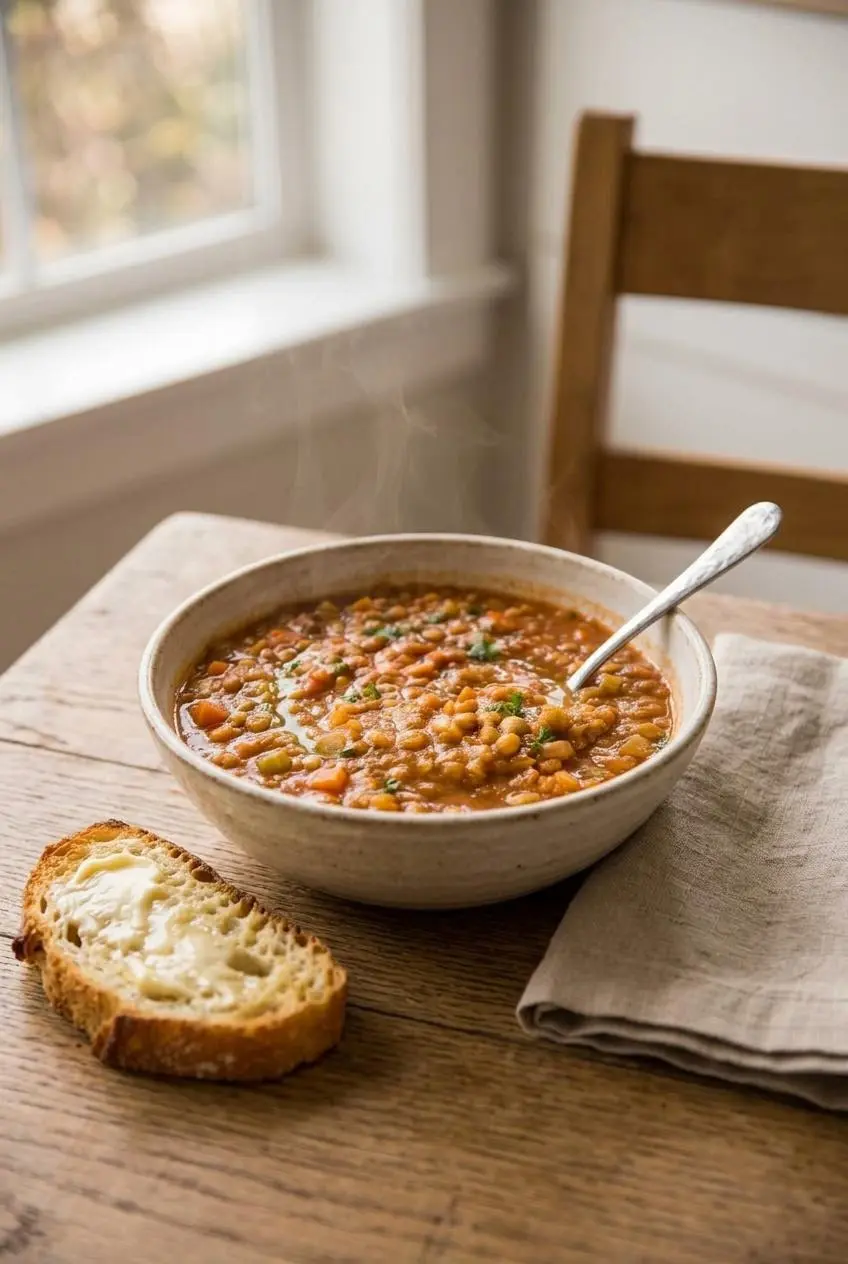
Serve the soup piping hot with thick slices of warm sourdough, a crusty baguette, or garlic toast for dipping. Salted butter on the bread makes a rich contrast to the bright lemon finish.
At the table, add chopped flat-leaf parsley, freshly cracked black pepper, and a drizzle of olive oil. Parmesan is optional but welcome when you want a salty, nutty finish.
Conclusion
Good lentil soup rewards patience at the beginning: soften the vegetables until sweet, let the lentils simmer gently, and blend only enough to create a velvety broth.
Finish each bowl with lemon zest and juice, then serve it while the bread is warm. That bright final touch keeps every spoonful lively.
Frequently Asked Questions
Do You Need to Soak Lentils Before Making Soup?
No. Dried brown and green lentils can cook directly in the simmering soup. Rinse and sort them before adding them to the pot. They become tender during the 35 to 40 minute simmering time. Soaking is unnecessary for this method.
What Kind of Lentils Are Best for Lentil Soup?
Standard brown or whole green lentils are the best choices for this soup. Brown lentils soften readily and give the broth a thick, hearty texture. Whole green lentils hold their shape slightly more while still helping thicken the soup. Avoid Puy lentils if you want a velvety result, and use red lentils only if you prefer a smoother texture.
Why Are My Lentils Still Hard After Cooking?
Firm lentils usually need more gentle simmering time or may have met acid too early. Hold the lemon juice until the lentils are fully tender. Older dried lentils can take longer to soften. Add a little extra broth or water if the pot is getting dry, then continue simmering gently.
How Long Does Homemade Lentil Soup Keep in the Fridge?
Store cooled soup in an airtight container and keep it chilled. Reheat only the amount you plan to eat, and add a splash of broth or water because the lentils will continue to absorb liquid during storage.
How Do You Fix Lentil Soup That Is Too Thick?
Warm broth or water is the easiest fix. Reheat the soup gently first. Stir in liquid a little at a time until the broth loosens. Taste again before serving, since extra liquid may call for another pinch of salt, pepper, or lemon.
Lentil Soup Recipe

Equipment
- Large pot or Dutch oven
- Stick blender or standard blender
Ingredients
Main Soup
- 2 tbsp olive oil
- 1 onion chopped (white, brown, yellow)
- 2 garlic cloves minced
- 1 large carrot chopped (about 1 1/4 cups)
- 2 celery ribs chopped (about 1 1/4 cups)
- 2 cups dried lentils green or brown, rinsed (or 400 g)
- 14 oz crushed tomato or 400 g
- 6 cups vegetable or chicken stock / broth low sodium (or 1.5 litres / 1.5 quarts)
- 1/2 tsp each cumin and coriander powder
- 1 1/2 tsp paprika powder
- 2 dried bay leaves
- 1 lemon zest + juice
- 1/4 tsp salt and pepper each
To Serve
- Chopped fresh parsley for garnish
- Warm bread to serve
Instructions
- Warm the olive oil in a large pot over medium heat, then add the onion and garlic and cook for 2 minutes. The onion should begin to soften and smell fragrant without taking on much color.
- Stir in the carrot and celery and cook for 7 to 10 minutes. Keep stirring occasionally until the vegetables are soft and the onion smells sweet and golden.
- Add the rinsed lentils, crushed tomato, broth, cumin, coriander, paprika, and bay leaves, leaving out the lemon, salt, and pepper for now. Stir well so the spices disperse through the liquid and no lentils cling to the bottom.
- Bring the pot up to a simmer, skim away any foam that rises, cover, and reduce the heat to medium-low for 35 to 40 minutes. Look for small, steady bubbles rather than a rolling boil, and cook until the lentils are soft when pressed against the side of the pot.
- Lift out and discard the bay leaves. The soup should now look thickened, with some lentils beginning to break apart in the broth.
- Use an immersion blender for 2 or 3 quick pulses, or blend 2 cups of soup after letting it cool slightly and return it to the pot. Stop while the soup still has visible lentils and vegetable pieces, with a fuller and silkier broth around them.
- Adjust the consistency with a little water if needed, then season with salt and pepper and stir in the lemon zest and a squeeze of juice just before serving. The finished soup should taste bright and savory, with a thick but pourable texture.