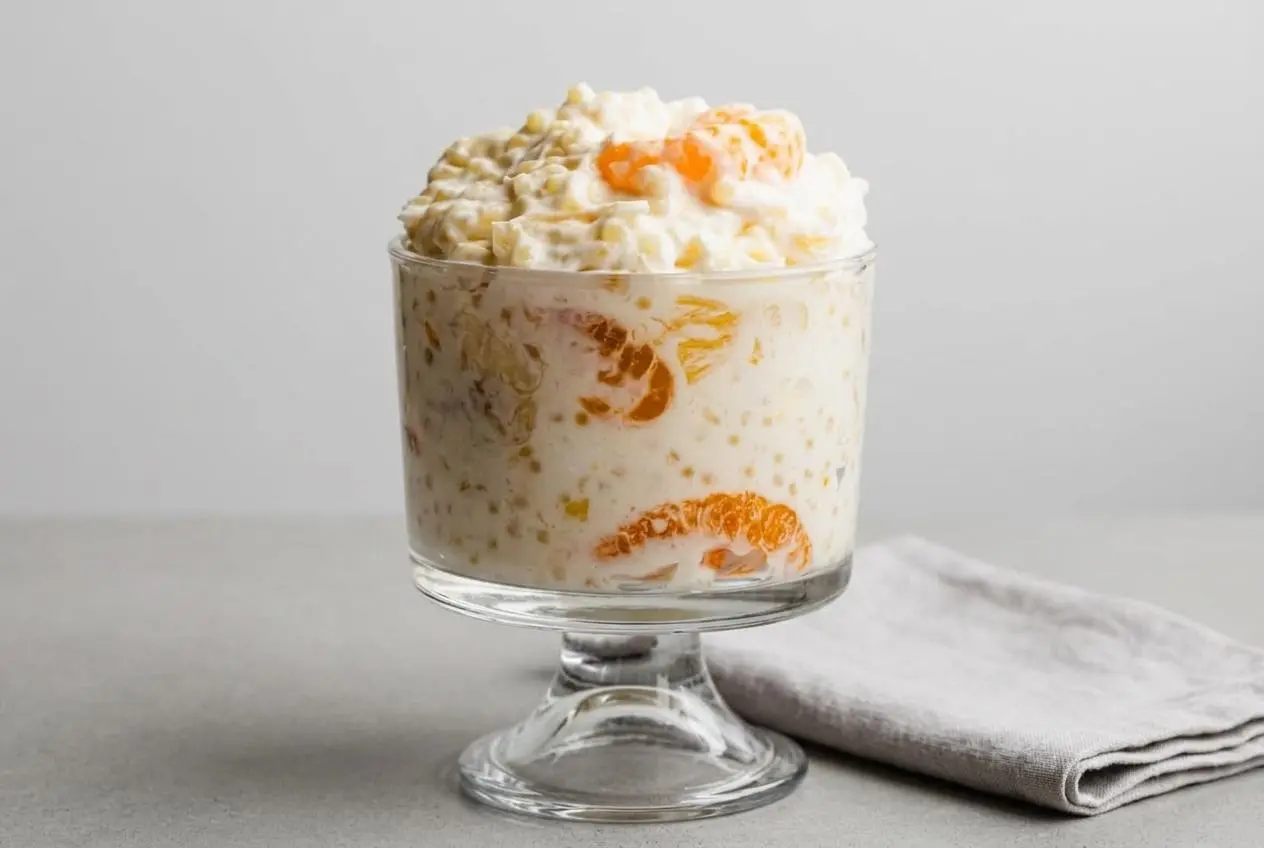
Frog eye salad is a sweet retro dessert salad made with tiny acini de pepe pasta, pineapple custard, canned fruit, mini marshmallows, banana, coconut, and whipped cream.
Frog eye salad brings sweet, creamy, fruity comfort to potlucks, holiday tables, and backyard cookouts. The tiny pasta pearls soak up pineapple custard, while whipped cream keeps every scoop light.
It has the nostalgic feel of a dessert salad, but texture makes all the difference. Drain the fruit well, chill the pasta mixture fully, and the fluff stays beautifully thick.
Set the drained fruit in a colander while you prepare the custard so excess juice has time to drip away.
What Is Frog Eye Salad and Why Is It Called That?
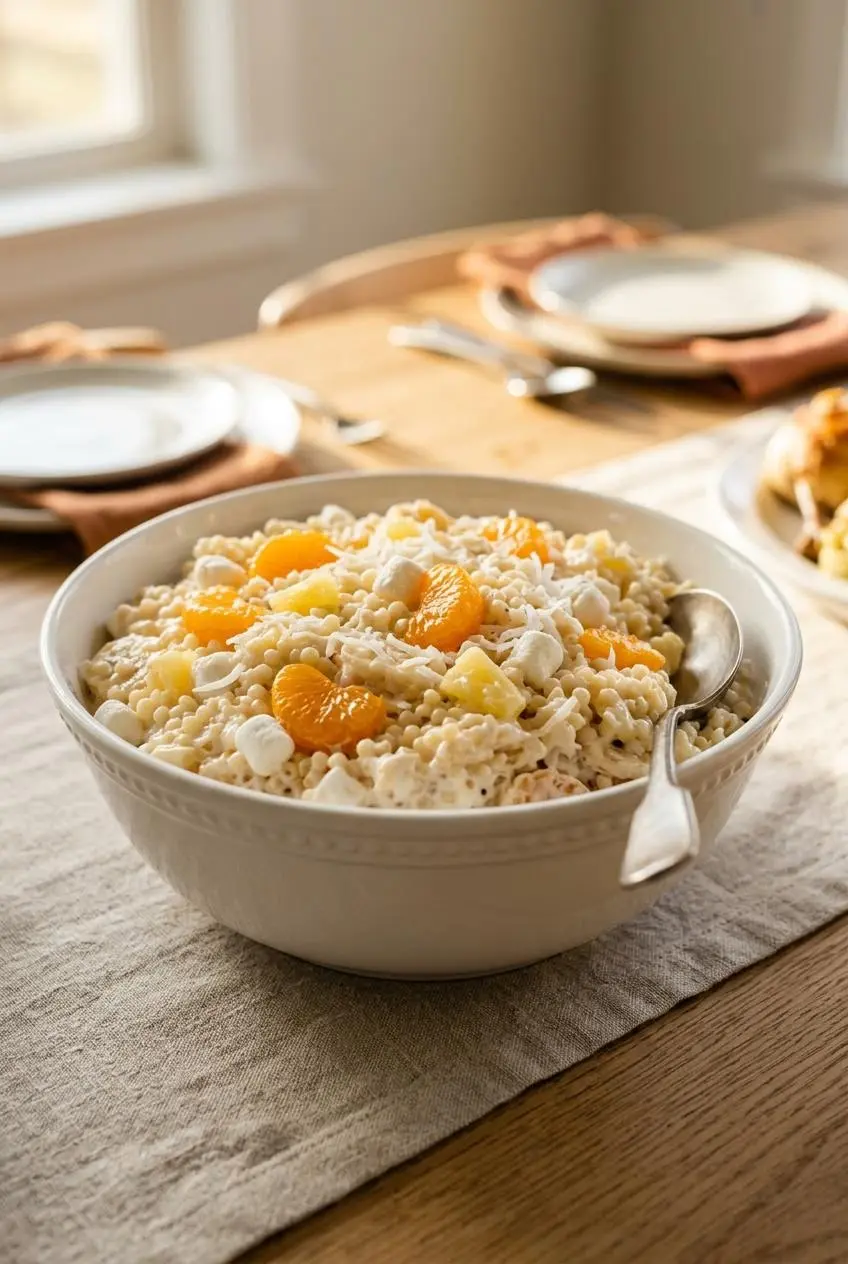
The name comes from acini de pepe, tiny round pasta that looks a bit like little frog eyes once it is coated in pale, creamy dressing. The name is quirky, but the flavor is pure potluck comfort.
This sweet pasta salad is especially tied to Midwestern and Western church suppers, holiday buffets, and family reunions. It belongs in the same cozy category as ambrosia and other whipped fruit salads, though the chilled pasta gives it a pleasantly chewy bite. If creamy fruit dishes are your kind of potluck tradition, creamy grape salad offers a similarly sweet, chilled option.
Unlike a savory pasta salad, this one leans into pineapple, mandarin oranges, coconut, and marshmallows. The cooked pineapple custard is what makes it feel more substantial than a bowl of fruit folded into whipped topping.
Ingredients for Frog Eye Salad
Every ingredient supports the finished texture: fruit brings brightness, custard creates a glossy coating, pasta adds structure, and whipped cream makes the salad airy and soft.
- 20 ounce can pineapple tidbits, drained and juice reserved
- 10 ounce can crushed pineapple, drained and juice reserved
- 1 cup reserved pineapple juice
- 1/2 cup granulated sugar
- 1 large egg yolk
- 1/4 teaspoon salt
- 1 Tablespoon cornstarch
- 1/2 cup acini di pepe noodles
- 15 ounce can mandarin oranges, drained
- 1/2 cup shredded sweetened coconut
- 1 cup mini marshmallows
- 1 banana, sliced
- 1 cup heavy whipping cream
- 1/4 cup powdered sugar
The egg yolk and cornstarch thicken the reserved pineapple juice into a smooth custard that clings to the pasta. Acini de pepe holds that sweetness without becoming heavy, while freshly whipped cream gives the finished salad a light, stable fluff.
I like to drain the pineapple and mandarin oranges separately, then gently press only the pineapple against the colander with a spoon so the fruit stays intact without carrying extra juice into the cream.
The Star Pasta and Smart Alternatives
Acini de pepe is the traditional choice because its tiny, round shape gives this dessert salad its signature look and texture. Cook it until tender to the bite, with no hard white center, but stop before the pearls collapse into mush. Cold pasta firms slightly, so it should be tender rather than aggressively al dente.
If acini de pepe is unavailable, use pastina stars or another tiny soup pasta with a similar size. Small tapioca pearls can work in a pinch, though they create a more slippery, pudding-like texture. Small orzo is a less ideal substitute because its larger, rice-shaped pieces change the classic look and make each bite feel more pasta-forward.
Canned Fruit and Sweet Custard Elements
Choose canned fruit packed in juice when possible. Heavy syrup can make an already sweet salad taste cloying and may loosen the custard once everything is stirred together. Reserve the pineapple juice before draining because it provides the fruity foundation for the stovetop custard.
The mandarin oranges need especially careful draining. Their delicate segments can release liquid after mixing, so let them sit in the colander until they no longer leave a wet trail beneath it.
How to Make Frog Eye Salad Step by Step
Build this salad in stages: cook and cool the pasta, make the pineapple custard, then let the two chill together before adding the fruit and whipped cream. That resting time gives the pasta flavor without sacrificing the fluffy finish.
- Drain both cans of pineapple, reserving 1 cup of the juice, and refrigerate the drained pineapple until assembly.
Keep the fruit cold and well drained so it does not dilute the finished custard. - Whisk the reserved pineapple juice, granulated sugar, egg yolk, salt, and cornstarch in a saucepan over medium heat until smooth, then cook until it reaches a low boil and thickens slightly.
The custard should look glossy and coat the back of a spoon like warm pudding before you take it off the heat to cool. - Cook the acini di pepe noodles according to the package directions, then drain and cool them completely.
The pasta should be tender through the center, with separate pearls rather than a sticky clump. - Stir the cooled acini di pepe into the cooled pineapple custard in a covered container.
Make sure the mixture is evenly coated, with no dry pockets of pasta remaining. - Refrigerate the pasta and custard mixture for a few hours or overnight, then transfer it to a large bowl and fold in the pineapple, mandarin oranges, coconut, mini marshmallows, and sliced banana.
The chilled custard should look thicker and cling closely to the pasta before the fruit goes in. - Beat the heavy whipping cream and powdered sugar in a separate bowl until stiff peaks form, then fold the whipped cream into the salad.
Stop folding when the mixture looks evenly fluffy and streak-free, without deflating the cream.
Cooking and Cooling the Acini de Pepe
Tiny pasta cooks quickly, so start checking it near the end of the package cooking time. A pearl should be tender all the way through, not chalky in the middle. Drain it promptly, then rinse under cold water to halt the cooking and wash away surface starch that could make the salad gummy.
Do not seal warm pasta in a plastic container. Steam can collect inside, drip back onto the pasta, and thin the custard later. Let the pasta cool completely before combining it with the custard.
Simmering the Pineapple Custard Base
Whisk continuously as the pineapple mixture heats so the egg yolk and cornstarch stay smooth. Keep the heat at medium and wait for gentle bubbles rather than a hard boil. Fast, aggressive bubbling can make an egg custard grainy instead of silky.
The right thickness is modest at first. It will continue to set as it cools and become even more substantial after chilling with the pasta. If it coats a spoon in a thin, glossy layer, it is ready to come off the heat.
Folding and Assembling the Salad
Fold rather than stir hard once the fruit and whipped cream are involved. Use a large spoon or spatula to scoop from the bottom of the bowl and turn the mixture over itself. This keeps the mandarin segments intact and preserves the whipped cream’s volume.
Add the sliced banana near serving time whenever possible. It stays fresher in color and releases less moisture into the creamy dressing. Add the marshmallows only after the pasta mixture is fully chilled, too, or they can soften into a sticky, slimy layer.
Essential Tips for the Best Fluffy Texture
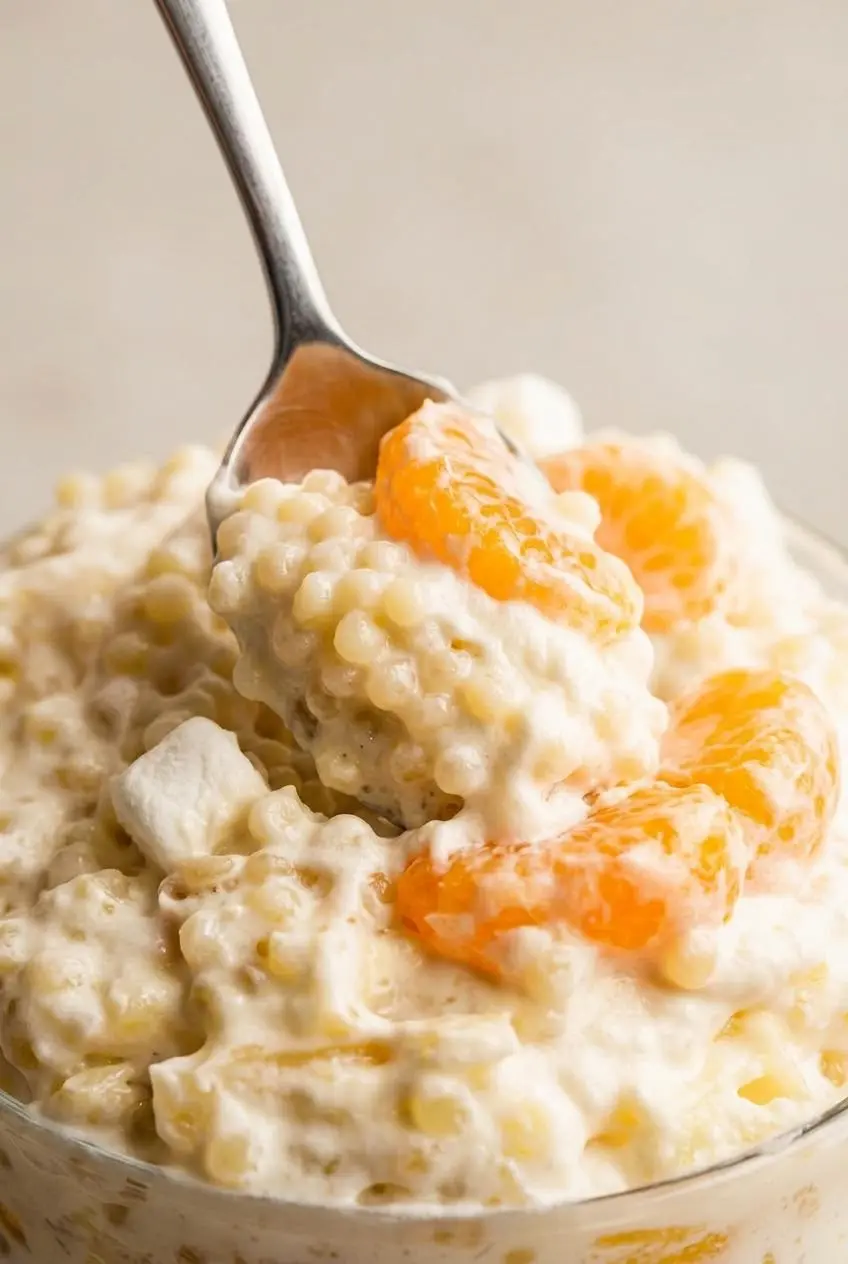
A thick, fluffy salad comes down to cool components and dry fruit. These small choices prevent the common problems that turn a creamy potluck dish into a soupy bowl.
- Runny dressing: Canned fruit likely carried in extra liquid. Drain the pineapple and oranges in a colander, then let them stand while the custard cools.
- Gummy pasta: The acini de pepe may have cooked too long or retained too much starch. Keep it tender, drain promptly, and cool it under cold water.
- Loose whipped cream: The pasta and custard mixture may still be warm. Chill it fully before folding in whipped cream so the salad stays cloudlike.
- Soft, disappearing marshmallows: They were added too early. Fold them into the cooled mixture close to serving for the best shape.
- Bruised banana slices: They were stirred too vigorously or added too far ahead. Fold them in gently just before the bowl goes out.
For a fluffier finish, use a wide bowl and fold in the whipped cream in broad strokes. It may feel slower than stirring, but that extra care keeps the dressing from turning dense.
Make-Ahead and Storage Guidelines
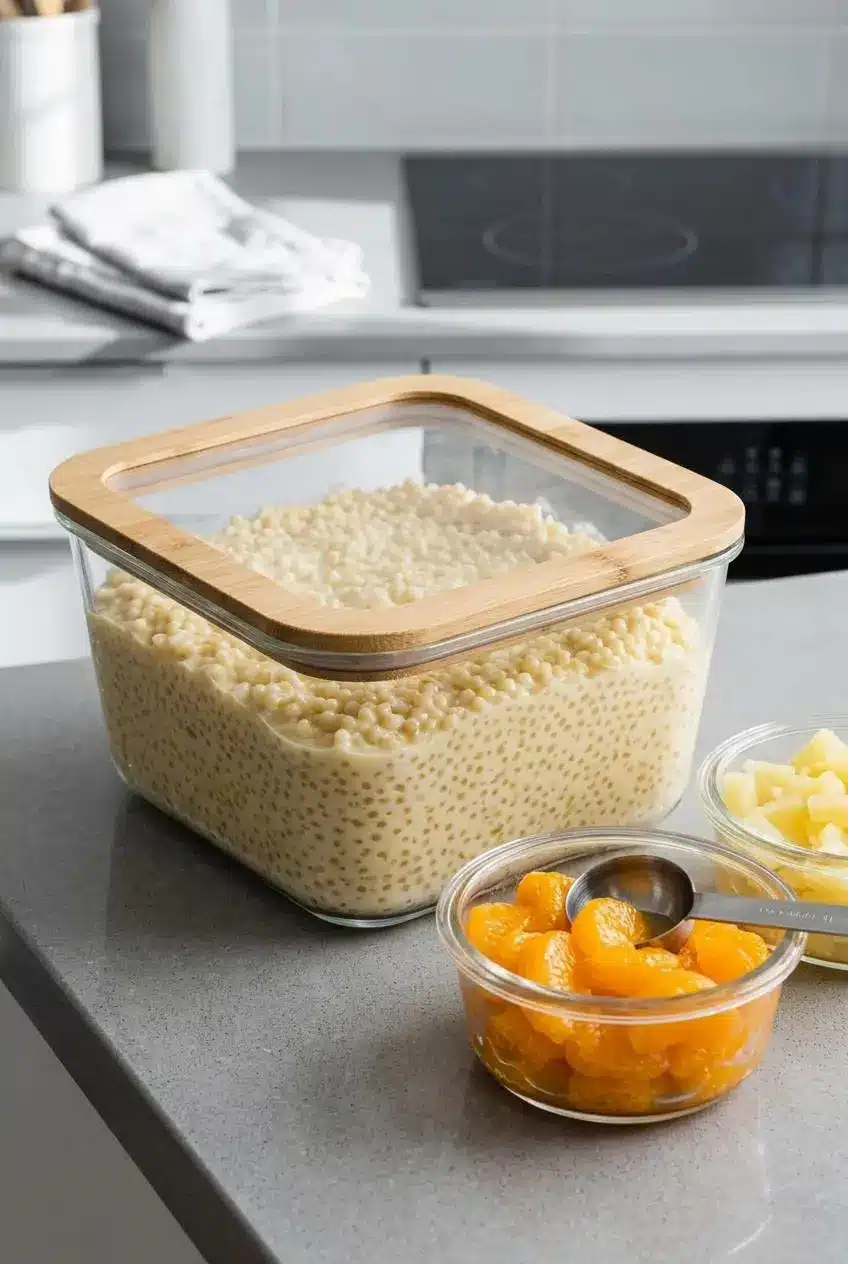
The pasta and pineapple custard are the parts to prepare ahead. Chill them together for a few hours or overnight, then add the drained fruit, marshmallows, banana, and whipped cream closer to serving. This approach gives the pasta time to absorb flavor while protecting the softer mix-ins.
Store leftovers in an airtight container in the refrigerator and keep the salad chilled until serving. For a potluck or cookout, pack the bowl in an insulated cooler with cold packs and return it to refrigeration after the meal. The fresh banana and marshmallows are usually the first parts to lose their best texture.
When planning a larger cold spread, a classic macaroni salad can be prepared as a savory counterpoint, while frog eye salad takes the dessert-salad spot beside ham, barbecue ribs, or a holiday buffet.
Flavor Variations and Add-Ins
Keep the classic version as written, then make optional changes in a separate bowl or for a special occasion. Each addition shifts the flavor or texture, so add only what suits the gathering.
Instant Pudding Dressing Shortcut
For a no-cook alternative, make an instant vanilla pudding dressing with pineapple juice, then chill it until thick before combining it with cooled pasta. The flavor will be more vanilla-forward and less custardy than the egg-yolk version, but it can be useful when you want to skip stovetop cooking.
A little lemon zest or a splash of vanilla can brighten the pudding-style dressing. Keep these additions optional, since they change the familiar pineapple-forward flavor.
Holiday Add-Ins and Textural Mix-Ins
- Maraschino cherries: Add a cheerful pop of color and a sweeter candy-like fruit flavor for holiday tables.
- Pastel mini marshmallows: Swap them for regular mini marshmallows when serving this salad at Easter or a spring gathering.
- Toasted coconut: Sprinkle it over individual portions for a nuttier aroma and a little contrast against the creamy dressing.
- Chopped pecans: Add them just before serving for crunch that stays distinct rather than softening in the custard.
Conclusion
This sweet, creamy pasta salad earns its place at potlucks because it brings fruit, custard, marshmallows, and fluffy whipped cream together in one nostalgic bowl.
Drain every canned fruit thoroughly and chill the pasta-custard mixture before folding in the cream. That is the small move that keeps each spoonful plush instead of watery.
Frequently Asked Questions
Why Is It Called Frog Eye Salad?
It gets its name from the tiny round acini de pepe pasta. Once coated in the pale, creamy dressing, the little pasta pearls resemble frog eyes, at least in the playful potluck sense.
Can Frog Eye Salad Be Made in Advance?
Yes. Prepare and chill the pasta with the pineapple custard ahead, then fold in the more delicate ingredients closer to serving. Adding banana and marshmallows later helps preserve their texture.
What Can I Substitute for Acini de Pepe Pasta?
Pastina stars and other tiny soup pasta make the closest substitute. Small tapioca pearls can also work, though they create a softer, more pudding-like texture. Avoid large pasta shapes because they overpower the fruit and cream.
How Do I Prevent the Salad From Becoming Runny?
Drain the pineapple and mandarin oranges thoroughly in a colander, cool the custard completely, and make sure the pasta is chilled before adding whipped cream. Fold the fruit and marshmallows in gently, then add banana close to serving.
Frog Eye Salad

Ingredients
- 20 ounce can pineapple tidbits, drained and juice reserved
- 10 ounce can crushed pineapple, drained and juice reserved
- 1 cup reserved pineapple juice
- 1/2 cup granulated sugar
- 1 large egg yolk
- 1/4 teaspoon salt
- 1 Tablespoon cornstarch
- 1/2 cup acini di pepe noodles
- 15 ounce can mandarin oranges, drained
- 1/2 cup shredded sweetened coconut
- 1 cup mini marshmallows
- 1 banana, sliced
- 1 cup heavy whipping cream
- 1/4 cup powdered sugar
Instructions
- Drain both cans of pineapple, reserving 1 cup of the juice, and refrigerate the drained pineapple until assembly. Keep the fruit cold and well drained so it does not dilute the finished custard.
- Whisk the reserved pineapple juice, granulated sugar, egg yolk, salt, and cornstarch in a saucepan over medium heat until smooth, then cook until it reaches a low boil and thickens slightly. The custard should look glossy and coat the back of a spoon like warm pudding before you take it off the heat to cool.
- Cook the acini di pepe noodles according to the package directions, then drain and cool them completely. The pasta should be tender through the center, with separate pearls rather than a sticky clump.
- Stir the cooled acini de pepe into the cooled pineapple custard in a covered container. Make sure the mixture is evenly coated, with no dry pockets of pasta remaining.
- Refrigerate the pasta and custard mixture for a few hours or overnight, then transfer it to a large bowl and fold in the pineapple, mandarin oranges, coconut, mini marshmallows, and sliced banana. The chilled custard should look thicker and cling closely to the pasta before the fruit goes in.
- Beat the heavy whipping cream and powdered sugar in a separate bowl until stiff peaks form, then fold the whipped cream into the salad. Stop folding when the mixture looks evenly fluffy and streak-free, without deflating the cream.