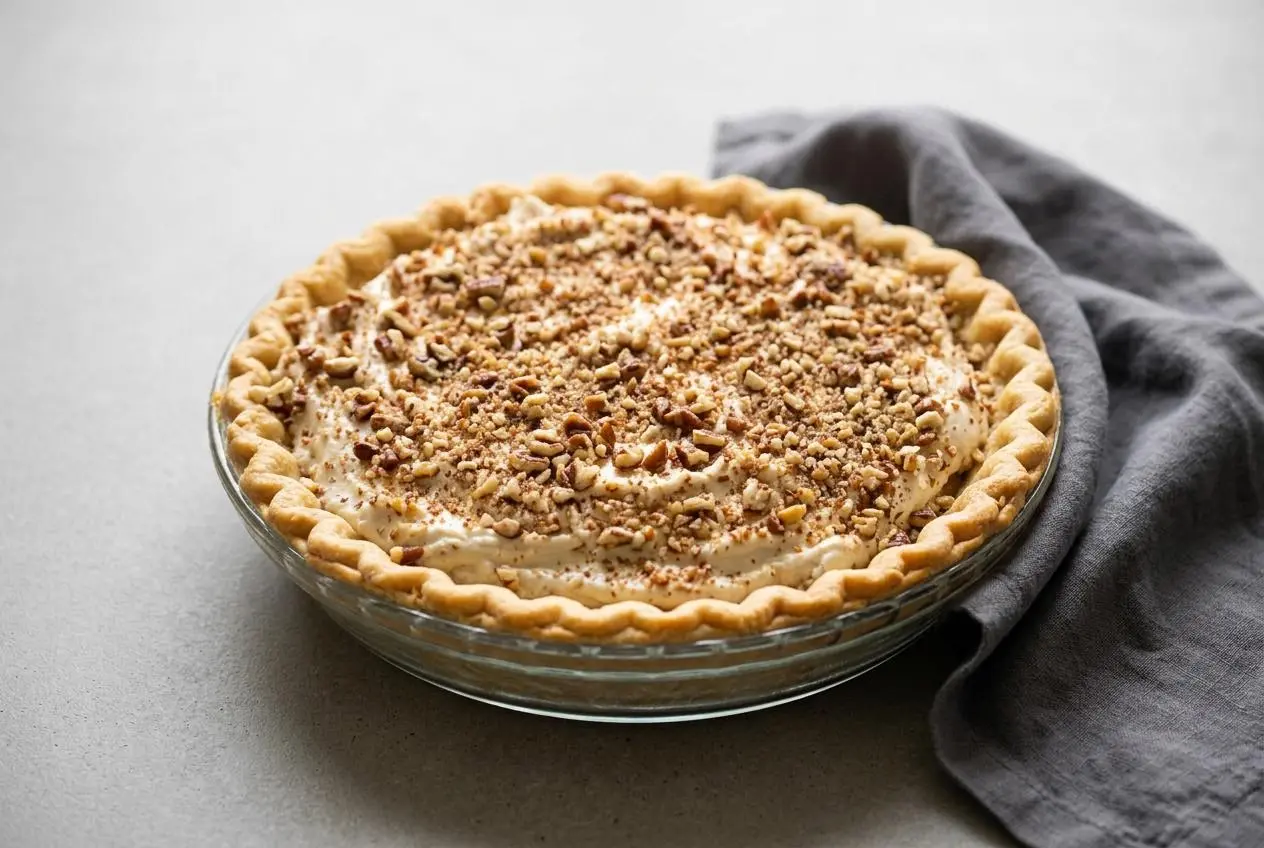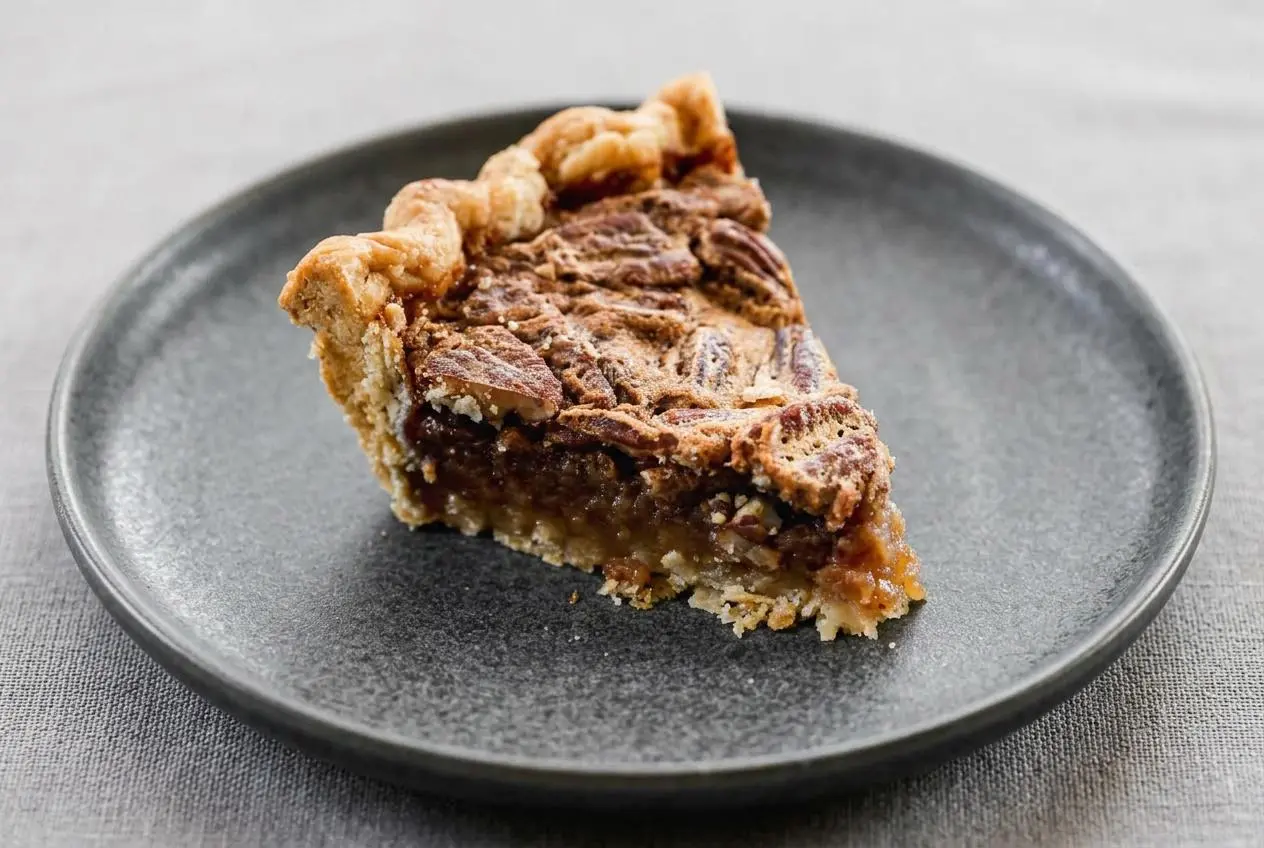
A classic pecan pie is made by whisking eggs, sugars, butter, vanilla, and syrup, then pouring the filling over pecans in an unbaked crust and baking until the center has a gentle wobble.
This pecan pie recipe delivers a buttery crust, glossy caramel filling, and a generous layer of nutty pecans. The key is baking until the custard is set without drying out the top.
As it bakes, toasted pecans and brown sugar fill the kitchen with a warm, almost toffee-like aroma. The clean-slice trick comes after the oven.
Set the pie plate on a rimmed baking sheet before filling it so it is easier to move without sloshing the custard.
Key Ingredients for Perfect Pecan Pie
Every ingredient has a job here: the crust provides structure, eggs set the filling, syrup keeps it smooth, and pecans bring crunch, aroma, and contrast to the caramel-like custard.
- 1 Homemade pie crust (, unbaked (my recipe makes 2 crusts, so you can freeze the other crust))
- 1 cup granulated sugar
- 3 Tablespoons light brown sugar
- 1/2 teaspoon salt
- 1 cup light corn syrup
- 3/4 teaspoon vanilla extract
- 1/3 cup salted butter (, softened or melted)
- 3 large eggs
- 1 1/2 cups pecan halves ((can chop the pecans or leave whole))
The eggs turn the sweet mixture into a sliceable custard as it bakes. Granulated sugar supplies clean sweetness, while light brown sugar adds a faint molasses depth. Light corn syrup gives the filling its glossy, silky texture and helps it stay smooth rather than grainy.
Salted butter adds richness and prevents the sweetness from tasting flat, while vanilla rounds out the caramel notes. The salt is small but essential, especially once the pie cools and the sugar flavor becomes more pronounced.
Choose pecan halves that smell fresh and nutty, not stale or dusty. For deeper flavor, toast raw pecans briefly until fragrant, then let them cool before adding them to the filling. Whole halves make a striking top, while chopped nuts create a more even bite.
I prefer pecan halves with a mix of golden and deep brown tones because they tend to look especially appealing once they rise through the filling.
Light corn syrup has a mild sweetness that lets vanilla and pecans lead. Dark corn syrup can be used for a more robust molasses flavor and a darker filling, though it will change the classic lighter caramel profile. If you have extra nuts after baking, they are excellent in sweet pecan bread.
How to Make Classic Pecan Pie
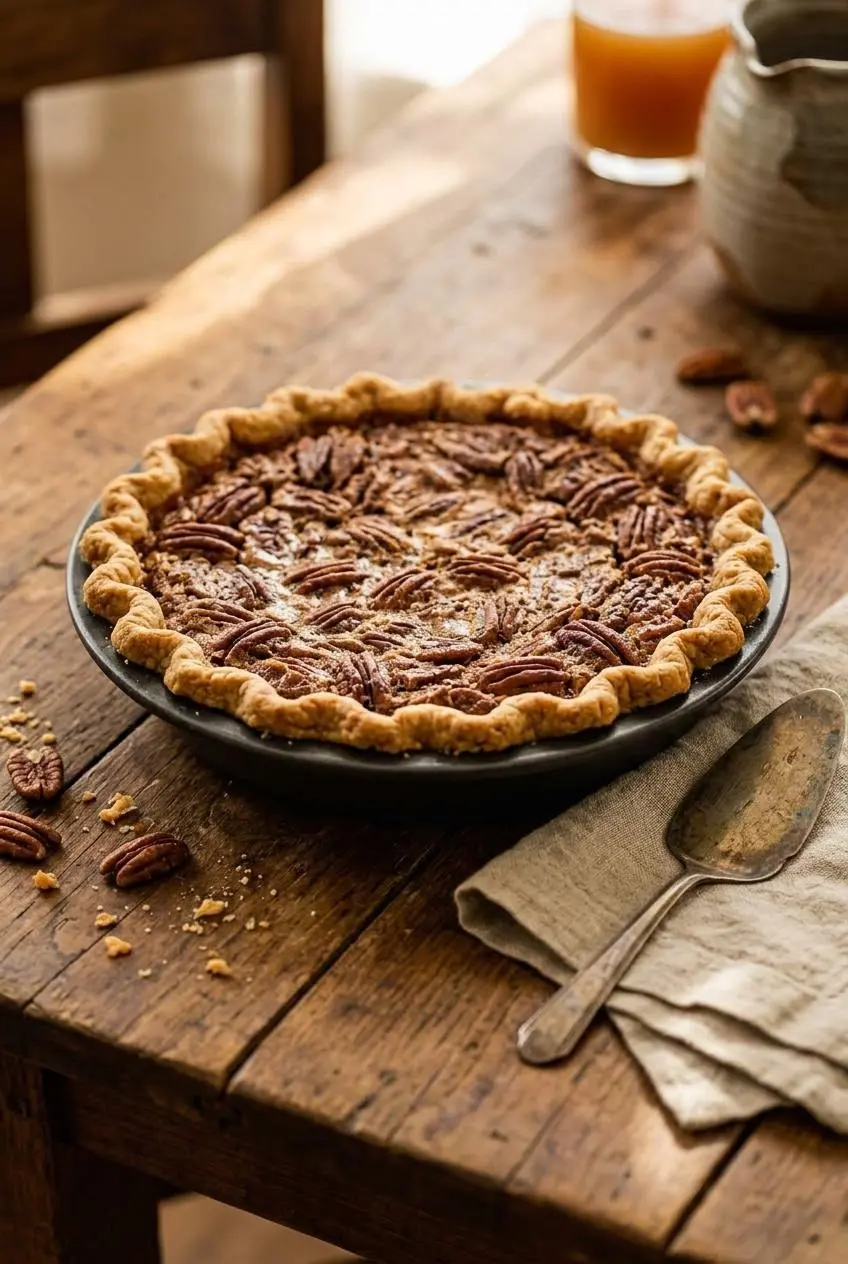
Keep the crust chilled while making the filling so the pastry stays firm enough to hold its shape when the hot oven hits it.
- Fit the pie dough into a deep-dish pie plate, then refrigerate it while preparing the filling.
Cold dough keeps the butter firm and helps the crust hold a defined edge during baking. - Combine the granulated sugar, brown sugar, salt, corn syrup, and softened or melted butter in a large bowl, then whisk in the eggs and vanilla.
The mixture should look smooth and glossy, with no visible streaks of egg or butter. - Set aside several pecan halves, then fold the remaining pecans into the filling and pour it into the chilled unbaked crust.
Place the reserved halves over bare spots and spoon filling over them so they are lightly coated. - Bake at 425 °F for 10 minutes, then reduce the oven to 350 °F and continue baking for about 50 minutes.
Halfway through, loosely dome greased foil over the pie without letting it touch the sticky filling, and allow the pecans to float naturally toward the surface. - Cool the pie completely for several hours before cutting, or refrigerate for 1-3 days until serving.
The filling firms as it cools, so the slices become much cleaner once the center is fully settled.
The first burst of high heat starts setting the crust structure before the syrupy filling has time to soak into the dough. After the temperature drops, the filling bakes more gently so the eggs can set without making the pecans overly dark.
Baking Time, Doneness Cues, and Cooling
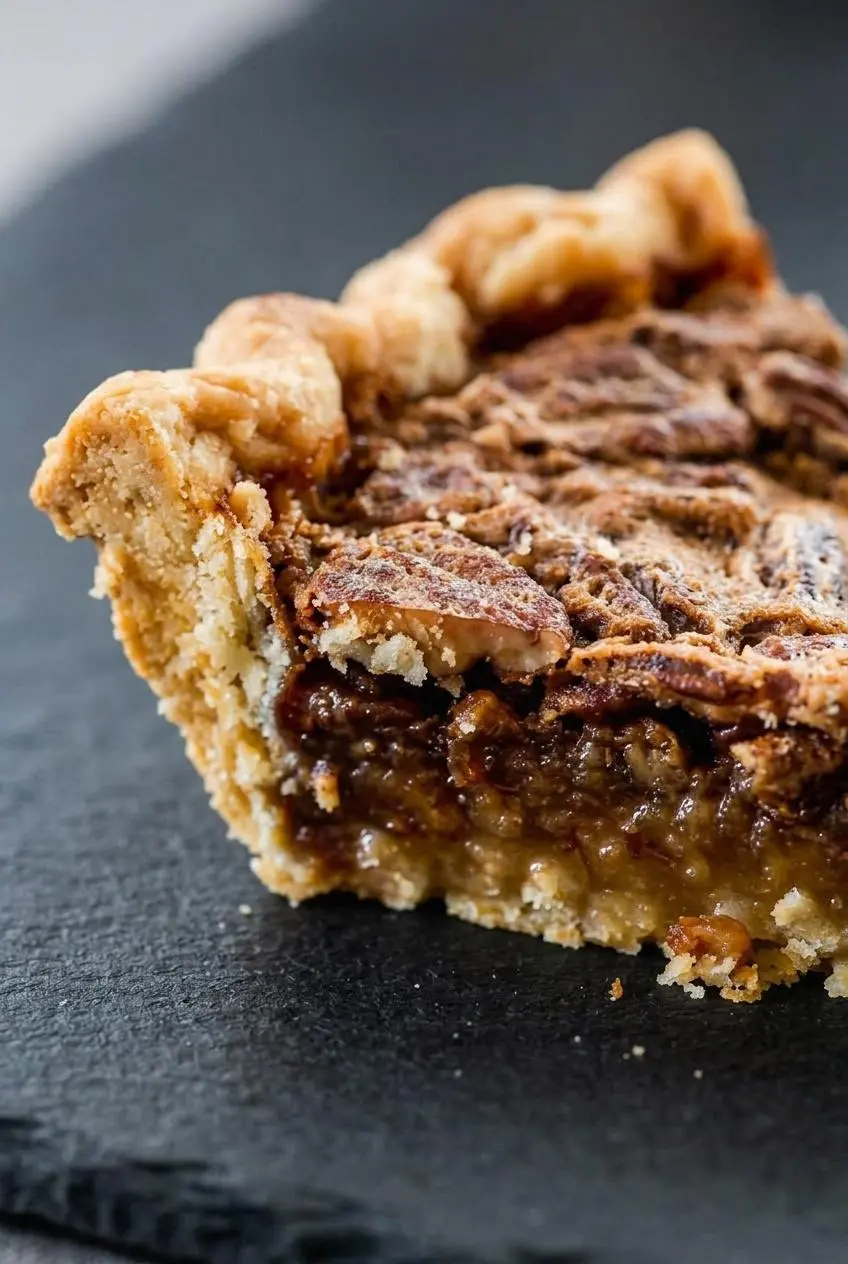
The most dependable pecan pie has firm edges and a center that moves like soft gelatin when the pan is nudged. A watery wave means the custard still needs more oven time.
- Underbaked: the center looks loose and fluid, and the whole filling ripples when the plate moves.
- Done: the outer ring is set, the center gives a small, slow wobble, and an instant-read thermometer inserted into the middle reaches 200 °F.
- Overbaked: the filling balloons dramatically, looks dry around the edges, or develops deep cracks as it cools.
Check the center rather than judging by the pecans alone. The nuts can look toasted long before the custard beneath them has finished setting. A spatula slipped under the crust edge should meet firm resistance, and the pie should smell warmly nutty rather than sharply sugary.
Let the pie stand at room temperature for 2 to 3 hours before slicing. During that time, the egg-and-syrup custard continues to settle into a cohesive filling. Cutting while it is warm releases the soft center, even when the pie was properly baked.
Pro Tips for a Crisp Bottom Crust
A crisp bottom starts with cold dough and strong heat beneath the pie plate. Place the pie on the lower-middle oven rack, where the base receives more direct heat than it would in the center of the oven.
- Preheat a heavy baking sheet with the oven, then carefully set the filled pie plate directly on it. The hot metal gives the crust bottom an immediate head start.
- Use a deep-dish pie plate for this filling. A standard-depth plate may be too shallow and can leave little room for the custard.
- Expect glass and ceramic plates to heat more gradually than metal. Either can work well, but the preheated baking sheet is especially helpful with thicker glass or ceramic.
- Keep the dough chilled until the filling is ready. Softened dough loses some of its ability to bake into distinct, flaky layers.
Blind baking is not necessary for this method. The high initial oven temperature and preheated baking sheet help the bottom crust begin cooking before the filling has a chance to weigh it down.
Troubleshooting Common Pecan Pie Issues
How to Fix a Runny Filling
A loose center usually points to underbaking or cutting too soon. If the pie has not cooled yet and the center still looks fluid, return it to a 350 °F oven with a high foil tent until the center is more set.
- The pie ripples like liquid: bake it longer, checking the center wobble rather than relying on browned pecans.
- The thermometer is below 200 °F: continue baking until the middle reaches the target temperature.
- The pie was sliced warm: refrigerate it until thoroughly chilled so the custard can firm up before serving.
Preventing a Soggy Crust
Chill the rolled dough right up until you fill it. Cold butter in the pastry creates steam and layers in the oven, while the initial 425 °F bake starts sealing the crust before the filling settles into it.
Use the lower-middle rack and the preheated baking sheet for more reliable bottom browning. Avoid placing the pie on a cold sheet pan, which can slow down the heat reaching the crust.
Stopping Crust and Pecans from Burning
Dark pecans and deeply browned crust edges need protection, not a lower oven temperature too early. About halfway through baking, form a loose foil dome over the pie, leaving room above the filling.
Grease the foil lightly and keep it raised. If foil touches the sugary surface, it can stick to the custard and pull away the top when removed.
Delicious Pecan Pie Variations
These additions are optional ways to shift the flavor while keeping the classic pie as the starting point. Make one change at a time so the filling keeps its familiar texture and baking behavior.
No Corn Syrup Maple Pecan Pie
Replace the corn syrup cup for cup with pure maple syrup for a woodsy sweetness and deeper maple aroma. Expect a slightly softer set than the corn syrup version, so use the center wobble and 200 °F thermometer cue rather than appearance alone.
Brown rice syrup is another option for a milder flavor, though its thicker texture and less pronounced sweetness will give the pie a different character. Honey is more assertive and can easily overshadow the pecans, so it is less suited to this particular flavor profile.
Brown Butter Pecan Pie
For richer toffee flavor, brown the butter gently until the milk solids turn golden and smell nutty, then cool it slightly before mixing it with the sugars. This optional change adds depth without changing the role of the butter in the custard.
Watch the butter closely near the end. Golden specks smell like hazelnuts; very dark specks can taste bitter and will distract from the pecans.
Chocolate Pecan Pie
Scatter bittersweet chocolate chips or finely chopped dark chocolate over the unbaked crust before pouring in the filling. The chocolate melts into a thin layer beneath the pecans and gives each slice a deeper, less sugary finish.
For another rich chocolate-and-pecan dessert, try this chocolate pecan butter cake when you want the same flavor direction in a softer bar-style bake.
Serve any version with unsweetened or maple whipped cream, vanilla bean ice cream, or a tiny pinch of flaky sea salt over each slice. Those additions balance the caramel sweetness without covering the toasted pecan flavor.
Make-Ahead and Storage Guide
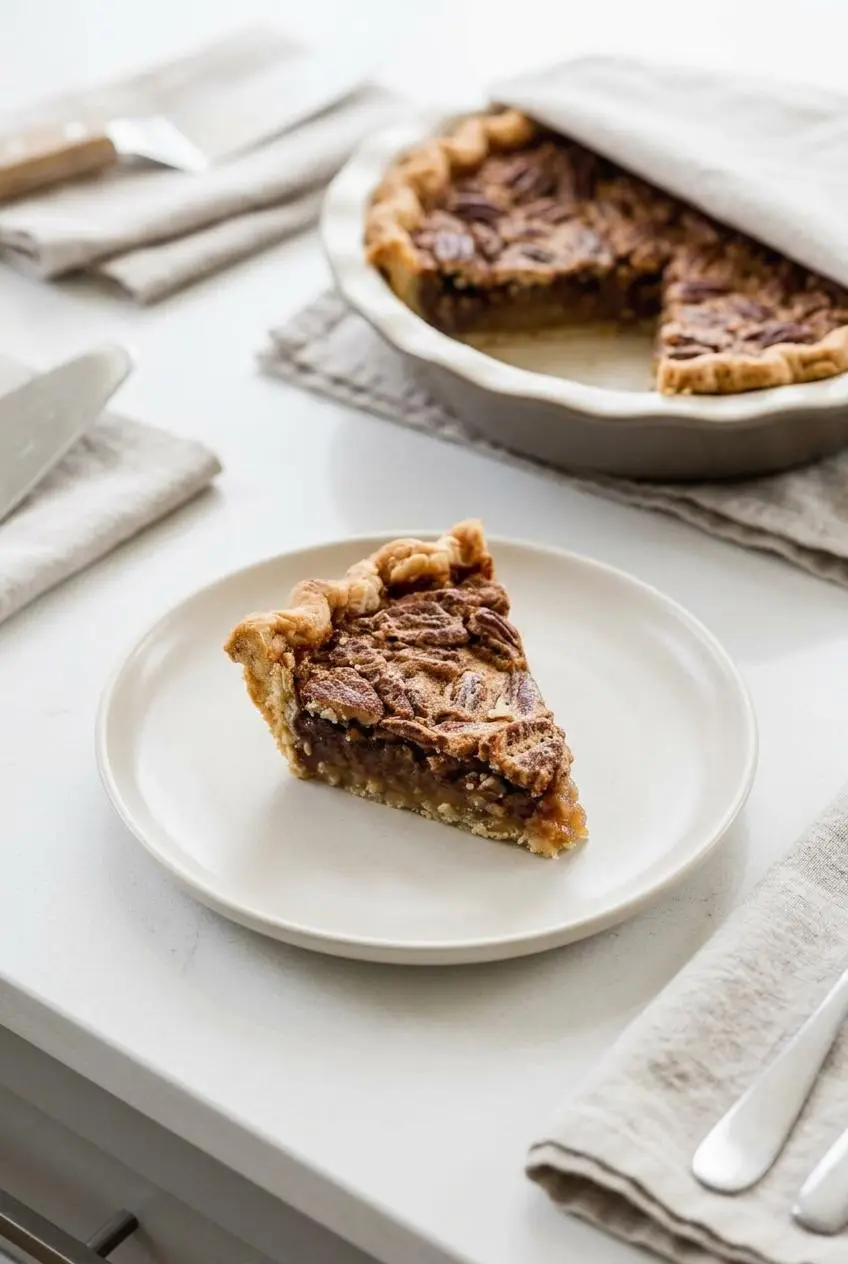
This pie works well for holiday planning because it needs a full cooling period before slicing. Bake it, let it cool completely, then cover and refrigerate it for the 1-3 days stated in the method.
Keep the pie covered so the filling does not pick up refrigerator odors and the crust stays as protected from moisture as possible. For the best texture, slice only what you plan to serve and leave the remaining pie covered in its plate.
To warm a chilled slice, use a low oven just until the filling loses its chill and the crust feels crisp again. Avoid reheating the whole pie in a microwave, which can soften the pastry and heat the custard unevenly.
Conclusion
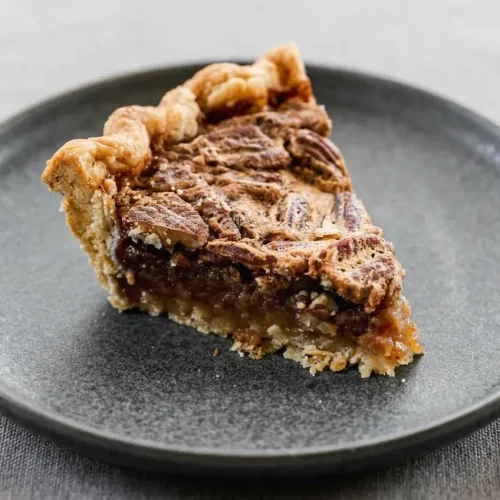
This pie brings together flaky pastry, crunchy toasted pecans, and a glossy caramel custard in every slice. The contrast is classic for a reason.
Watch for the gentle center wobble, confirm 200 °F when needed, and give the pie time to cool completely. That patience pays off at the cutting board.
Frequently Asked Questions
How Do You Know When Pecan Pie Is Completely Done?
The edges should look firm and set rather than wet. The center should wobble gently like gelatin, not move in a loose liquid wave. An instant-read thermometer inserted into the middle should reach 200 °F.
Why Did My Pecan Pie Turn Out Watery or Runny?
The custard was likely underbaked, especially if the center rippled when the pie was moved. Pulling the pie before the center reached 200 °F can leave the eggs insufficiently set. Slicing before the pie cooled for 2 to 3 hours can make a properly baked filling seem runny.
Does Pecan Pie Need to Be Refrigerated After Baking?
Yes. Once the pie has cooled completely, cover it and refrigerate it for extended storage. This method keeps the pie refrigerated for 1-3 days before serving. Let individual slices stand briefly before serving if you prefer a less-chilled filling.
Can I Substitute Maple Syrup for Corn Syrup in Pecan Pie?
Yes. Use pure maple syrup as a 1:1 replacement for corn syrup. The filling will have a more pronounced maple flavor and may set a little softer. Use the same doneness cues, especially the 200 °F center temperature, rather than judging by color alone.
Pecan Pie Recipe

Ingredients
- 1 Homemade pie crust , unbaked (my recipe makes 2 crusts, so you can freeze the other crust)
- 1 cup granulated sugar
- 3 Tablespoons light brown sugar
- 1/2 teaspoon salt
- 1 cup light corn syrup
- 3/4 teaspoon vanilla extract
- 1/3 cup salted butter , softened or melted
- 3 large eggs
- 1 1/2 cups pecan halves (can chop the pecans or leave whole)
Instructions
- Fit the pie dough into a deep-dish pie plate, then refrigerate it while preparing the filling. Cold dough keeps the butter firm and helps the crust hold a defined edge during baking.
- Combine the granulated sugar, brown sugar, salt, corn syrup, and softened or melted butter in a large bowl, then whisk in the eggs and vanilla. The mixture should look smooth and glossy, with no visible streaks of egg or butter.
- Set aside several pecan halves, then fold the remaining pecans into the filling and pour it into the chilled unbaked crust. Place the reserved halves over bare spots and spoon filling over them so they are lightly coated.
- Bake at 425 °F for 10 minutes, then reduce the oven to 350 °F and continue baking for about 50 minutes. Halfway through, loosely dome greased foil over the pie without letting it touch the sticky filling, and allow the pecans to float naturally toward the surface.
- Cool the pie completely for several hours before cutting, or refrigerate for 1-3 days until serving. The filling firms as it cools, so the slices become much cleaner once the center is fully settled.