Authentic Mexican refried beans are cooked from pinto beans with onion, garlic, epazote, and jalapeño, then mashed and fried until creamy. This refried beans recipe delivers that rich skillet finish with a smoky, savory aroma.
Frijoles refritos are deeply comforting beans cooked until tender, then fried after mashing. The name does not mean fried twice. In Spanish, refritos is closer to well-fried, which is exactly where the flavor comes from.
You get a creamy center, a little texture from the mash, and a big boost from onion, garlic, and chiles hitting hot oil. Save the bean broth and the whole pan comes together beautifully.
Keep the beans warm before mashing if you can, because hot beans break down more smoothly and absorb the oil and broth far better.
The Secret to Restaurant Style Refried Beans
The big difference is fat, patience, and bean broth. Restaurant-style beans taste fuller because the onions cook until golden and sweet, the beans fry instead of just getting mashed, and the reserved cooking liquid brings starch back into the pan.
Lard is the classic choice for deep savory flavor, and bacon fat gives a similar smoky richness. Olive oil, avocado oil, or vegetable oil still make excellent beans, just with a lighter finish and a cleaner bean flavor. If you want something closer to the restaurant texture while keeping the official recipe intact, stir in a little butter and a splash of evaporated milk at the end as an optional finish.
Onions matter more than people think. If they stay pale or raw-tasting, the beans can taste flat and a little harsh. Let them cook until they turn golden brown and slightly crisp at the edges so their natural sweetness rounds out the earthy beans.
Bean broth is the real texture insurance. It carries starch, salt, and the flavor of the pot, so it loosens thick beans without washing them out. Water can help in a pinch, but reserved bean broth gives a creamier texture and helps prevent that dry, chalky mouthfeel.
When the chiles de arbol hit the hot oil, the aroma turns toasty almost immediately. Then the beans go in and you should hear a steady sizzle, not a timid whisper. That sound tells you the frying step is doing its job.
If you want to serve them as a warm dip, this creamy finish pairs especially well with tortilla chips and homemade salsa.
Ingredients: Dry Beans vs. Canned Shortcuts
Each ingredient has a clear job here, from earthy depth and gentle heat to the starch and fat that create a creamy, spoonable finish.
- 2 cups pinto beans
- 1/4 small white onion
- 2 garlic cloves
- 4 leaves epazote herb
- 1 large jalapeño pepper
- 6 cups water
- 1 cup cooking bean broth
- 3 tablespoons olive oil
- 1/3 cup white onion, finely chopped
- 1 clove garlic
- 2 whole chiles de arbol
- large pinch sea salt
Pinto beans are ideal because they soften into a velvety mash while still holding enough body to keep the beans from turning soupy. Epazote gives the pot its distinctive earthy edge, and many cooks also value it as a traditional herb that makes beans feel easier on the stomach. Chiles de arbol bring a dry, toasty heat that wakes up the whole skillet.
I always spread dry beans out before rinsing them so I can spot any tiny stones or shriveled beans before they ever hit the pot.
If you need a faster route, canned pinto beans work well. Use about two 15-ounce cans, drain and rinse them, then add enough water or broth to mimic the looseness of freshly cooked beans. Start with 1/4 cup liquid when they go into the skillet, then add more a little at a time until the mash looks glossy and soft, not stiff.
The Role of Pinto Beans
Pinto beans are the classic choice because their skins soften nicely and their interiors turn creamy when mashed. They also bring natural starch, which is what makes the mixture thicken and hold together in the skillet without feeling heavy.
They are also satisfying beans to cook with because they offer fiber and plant protein along with that buttery texture. Fresh dry beans usually cook more evenly than older ones, and good-quality beans often become tender with less fuss.
If you ever want a head start with dry beans, a quick-soak can help. Cover them with water, bring them briefly to a boil, turn off the heat, and let them sit before cooking as usual. It will not replace flavor, but it can shorten the path to tender beans.
Essential Aromatics and Herbs
White onion and garlic build the savory base in two stages. The pieces cooked with the beans flavor the broth itself, while the chopped onion, extra garlic, and chiles fried in oil create that intense skillet aroma right before mashing.
Epazote is the herb that makes the flavor feel traditional. It has an earthy, slightly resinous character that gives pinto beans more depth than cilantro or oregano would here. The whole dried chiles add a subtle smoky edge and a little bite without turning the beans into a fiery side dish.
How to Make Refried Beans: Traditional Mashing and Frying Techniques
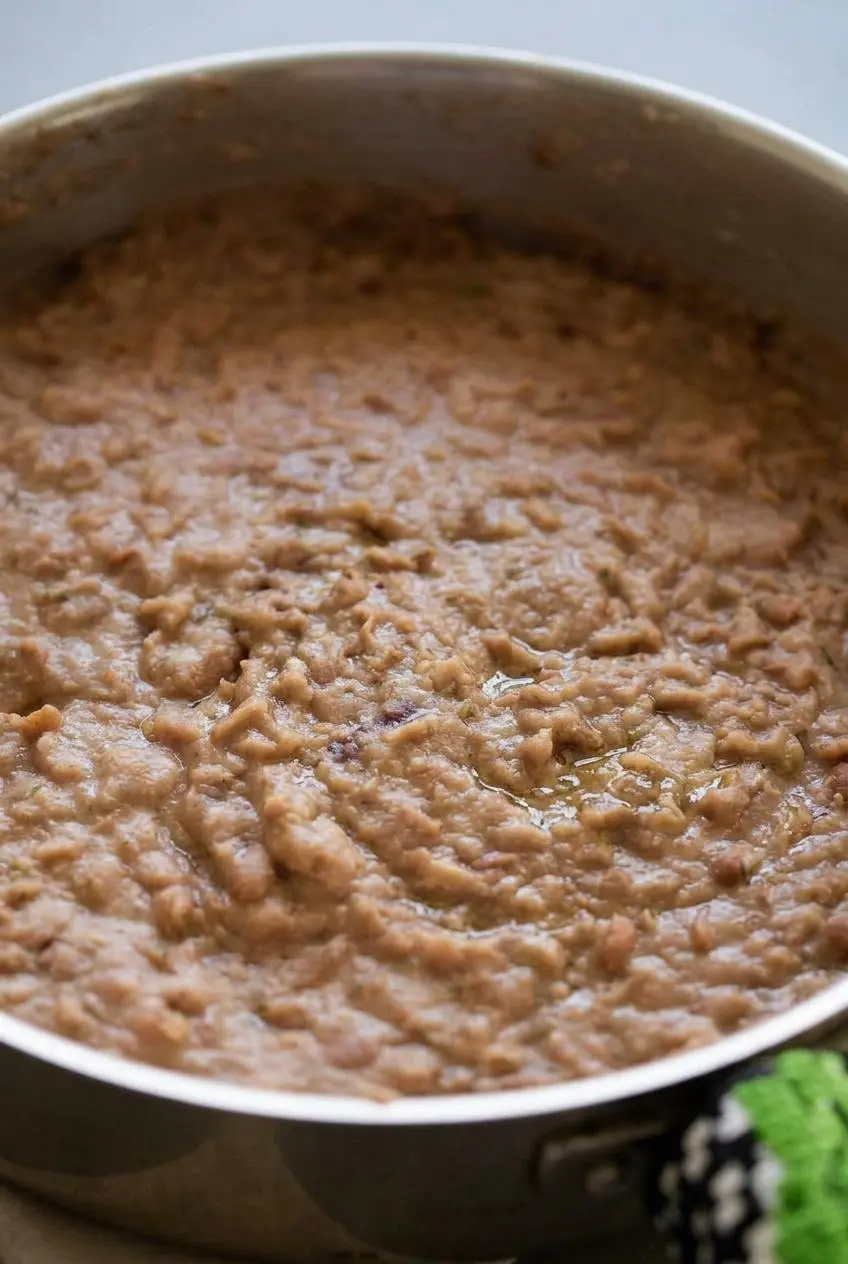
This method works because each stage builds texture on purpose. First the beans soften in an aromatic broth, then they hit a hot skillet where the mash absorbs fat, darkens slightly, and becomes creamy instead of watery.
- Sort the beans, rinse them well, and place them in a large pot with 1/4 small white onion, 2 garlic cloves, 4 leaves epazote herb, 1 large jalapeño pepper, and 6 cups water; cook until the beans are tender, then add the salt and cook 10 minutes more for a total of 1.5 to 2 hours.
The beans should mash easily between your fingers, and the broth will smell earthy and fragrant from the onion, garlic, and herbs. - Drain the beans and keep the cooking liquid nearby for the skillet stage.
Do not discard that broth because its starch helps the beans turn creamy instead of dry. - Set a large cast iron skillet over medium heat and add 3 tablespoons olive oil.
The oil should look fluid and shimmer lightly before anything else goes in. - Add 1/3 cup white onion, finely chopped, and cook until golden and a little crisp, then stir in 1 clove garlic and 2 whole chiles de arbol for 2 minutes.
The onions should smell sweet and savory, and the chiles should smell toasted but not burnt. - Add the cooked beans with 1/4 cup reserved bean broth, then mash them directly in the skillet with a potato masher and stir in the large pinch sea salt.
You should hear a lively sizzle at first, and the beans will start to darken slightly as they absorb the oil. - Lower the heat and cook for 8 minutes, stirring often and adding more broth as needed while continuing to mash until the texture suits you.
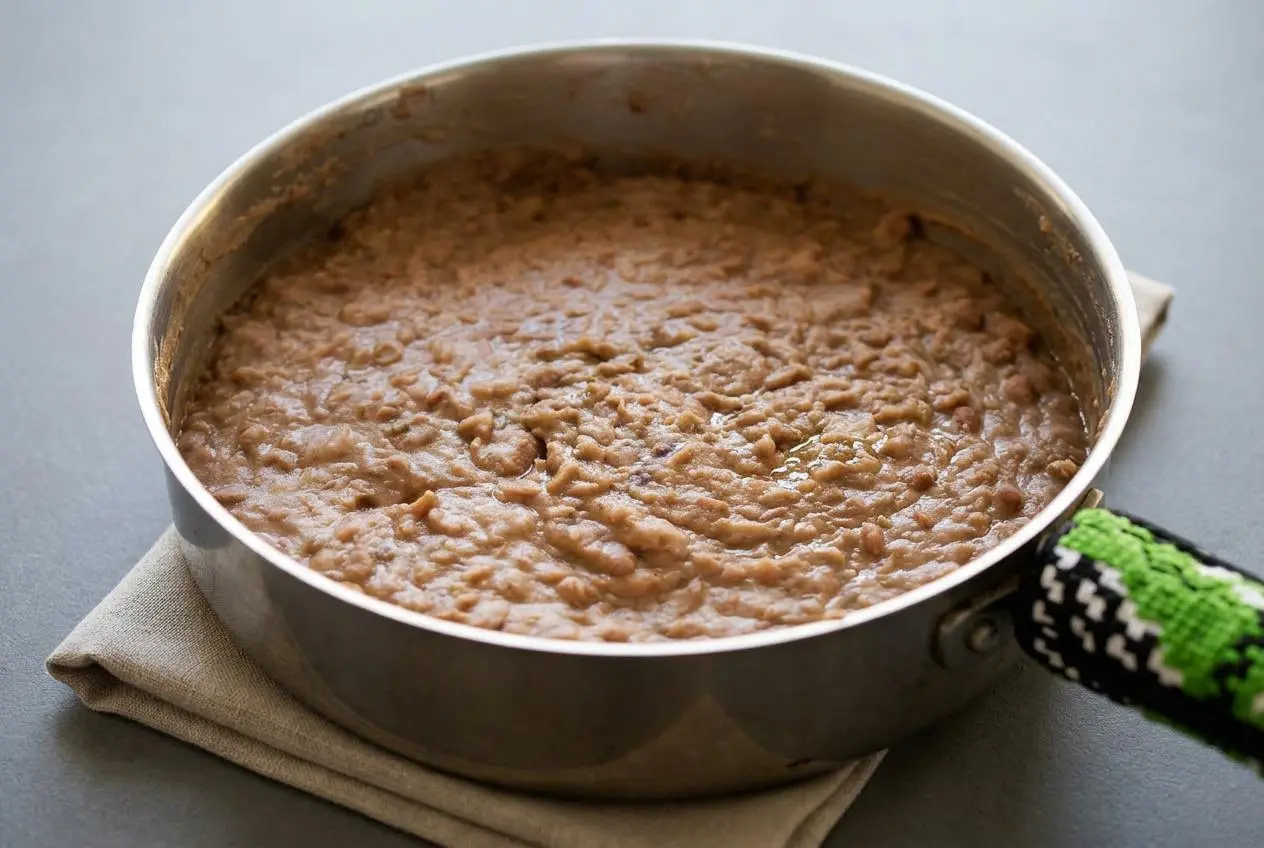
The finished beans should look creamy and glossy and pull away from the bottom and sides of the skillet when stirred. - Spoon the beans out while they are still hot and soft.
They will thicken a bit as they sit, so the skillet texture should look slightly looser than the final serving texture.
A potato masher gives you the classic rustic texture with some small bean pieces left behind. An immersion blender makes a smoother puree, but use it carefully and briefly. Too much blending can make the beans sticky and gummy, which is not the goal here.
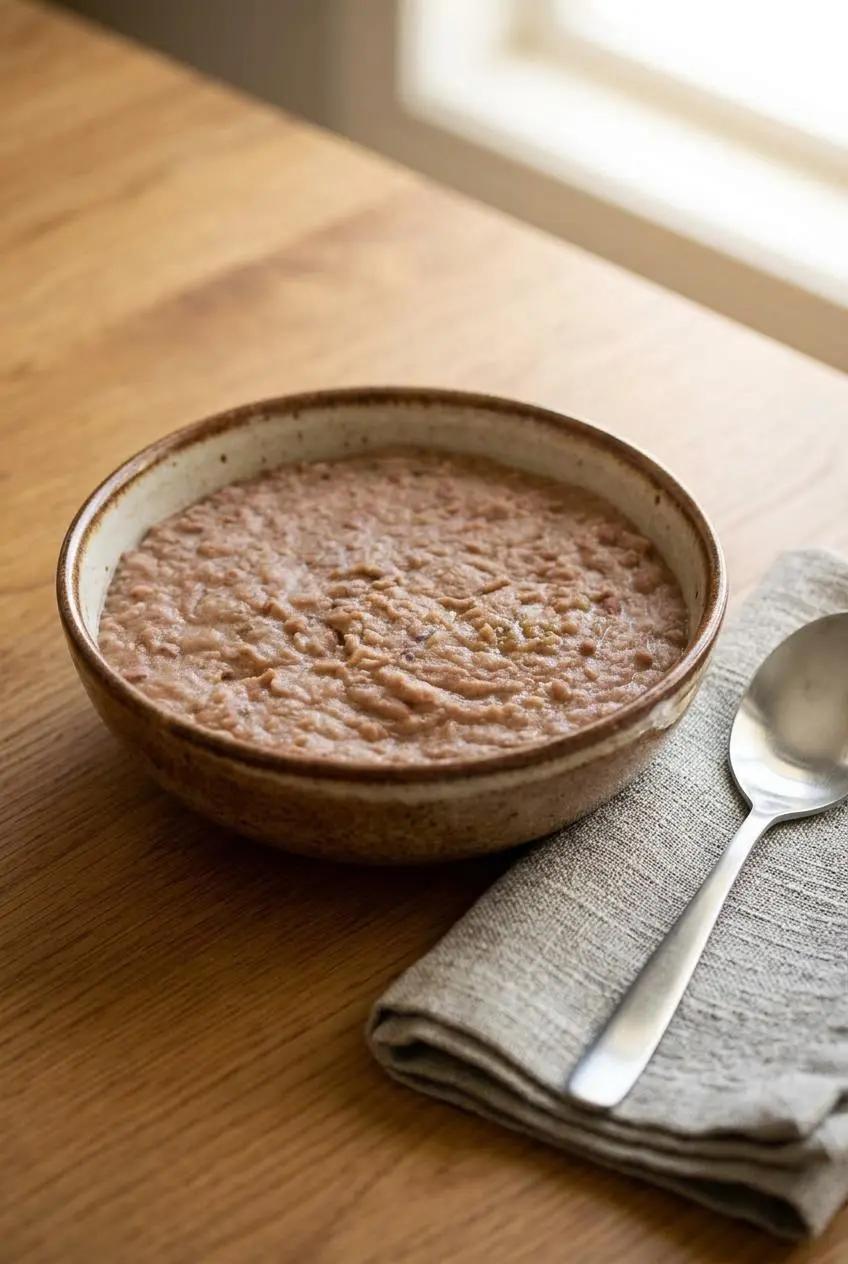
If the mixture turns too thick, add more reserved broth a splash at a time and stir well before adding more. If it looks loose, keep it over low heat and stir until the moisture cooks off. The right texture is thick enough to hold a spoon mark, but still soft enough to spread easily into tacos, burritos, or tostadas.
One common mistake is rushing the onions. Another is mashing cold beans. Both lead to a less creamy result. Warm beans, a hot skillet, and enough fat make a huge difference.
How to Store and Reheat Refried Beans
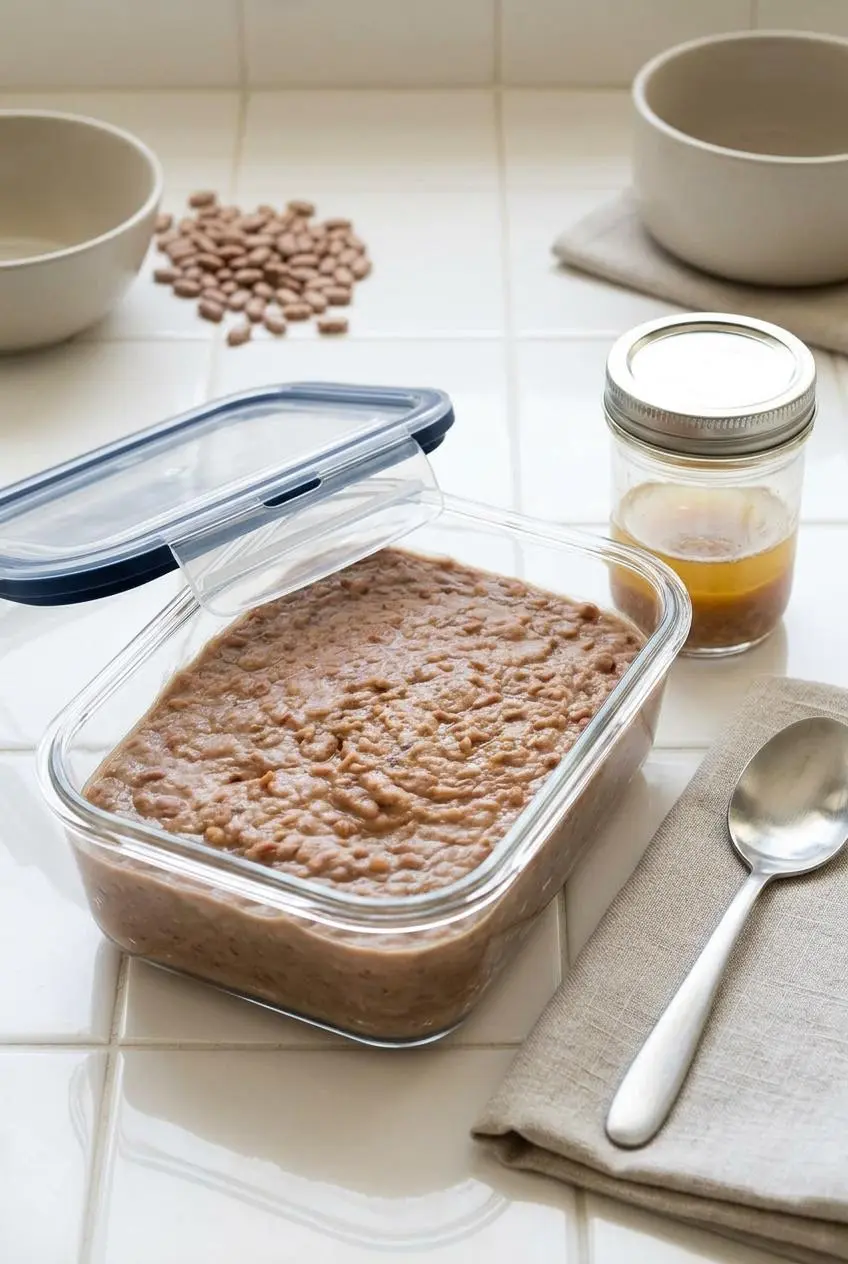
Refried beans hold well, but texture is what usually needs attention. Let them cool, transfer them to a covered container, and refrigerate promptly rather than leaving them out too long, since cooked beans can spoil faster at room temperature than many people expect.
When reheating, move the beans to a skillet or microwave-safe dish and add a little liquid before warming them. A good starting point is 2 tablespoons of water or reserved bean broth per cup of cold beans, then stir and adjust as needed until the texture turns creamy again.
Use gentle heat whenever possible. On the stove, warm them low and slow, stirring often so the bottom does not catch. In the microwave, cover the dish loosely and reheat in short bursts instead of blasting it on high the whole time, which can dry the top and make the center heat unevenly.
If the beans ever smell sour, look bubbly in an odd way after storage, or taste off, it is better to discard them. Beans are inexpensive. Dinner regrets are not.
Frijoles Refritos Variations
Once you have the core method down, it is easy to change the flavor without changing the structure of the recipe. Keep the original ingredient list and method as your base, then treat these as optional skillet variations.
Black Bean Refried Beans
Black beans make a darker, earthier version with a slightly smoother feel. Use the same cooking and frying method, and keep the mash a little looser at first because black beans can tighten up quickly as they cool.
A touch of cumin or a little fresh cilantro works nicely here as an optional finish. If you want a bright contrast against that deeper bean flavor, serve them with fresh mango salsa.
Chorizo Refried Beans
For frijoles con chorizo, cook Mexican chorizo in the skillet first, then use the rendered fat to sauté the onion, garlic, and chiles before adding the beans. That one change gives the whole pan a richer, spiced flavor and a slightly red-tinted finish.
Since chorizo adds both salt and fat, taste before adding extra salt at the end. This variation is especially good tucked into burritos or served next to rice and grilled meats.
Conclusion
Making refried beans from scratch gives you better texture, deeper flavor, and more control over the final consistency than anything from a can. The skillet step is what turns tender beans into something rich, savory, and actually memorable.
If you remember one thing, make it this: save the bean broth. It is the easiest way to keep the beans creamy all the way to the table.
Frequently Asked Questions
Is lard required for authentic Mexican refried beans?
No. Lard is traditional and gives the deepest savory flavor, but it is not required. Olive oil, avocado oil, or vegetable oil all work well. The beans will taste a little lighter, but they can still be creamy and flavorful.
How do I fix runny refried beans?
Keep them in a skillet over low heat and cook them uncovered while stirring often. That lets excess moisture evaporate without scorching the bottom. If they still seem loose, keep mashing as they cook. The texture should tighten and start pulling away from the pan.
Can I freeze homemade refried beans?
Yes, you can freeze them if you want to save a batch for later. Cool them fully first and pack them well so they are protected from air. After thawing, reheat gently with a splash of water or bean broth to bring back the creamy texture.
What herb gives refried beans their traditional flavor?
Epazote is the classic herb. It gives pinto beans an earthy, distinctive flavor that tastes like traditional Mexican home cooking. It is usually simmered with the beans rather than stirred in at the end. Many cooks also like it because it is traditionally thought to help with digestion.
Refried Beans Recipe

Equipment
- Large cooking pot
- Cast Iron Skillet
- Potato masher
- Measuring cup
Ingredients
- 2 cups pinto beans
- 1/4 small white onion
- 2 garlic cloves
- 4 leaves epazote herb
- 1 large jalapeño pepper
- 6 cups water
- 1 cup cooking bean broth
- 3 tablespoons olive oil
- 1/3 cup white onion finely chopped
- 1 clove garlic
- 2 whole chiles de arbol
- large pinch sea salt
Instructions
- Sort the beans, rinse them well, and place them in a large pot with 1/4 small white onion, 2 garlic cloves, 4 leaves epazote herb, 1 large jalapeño pepper, and 6 cups water; cook until the beans are tender, then add the salt and cook 10 minutes more for a total of 1.5 to 2 hours. The beans should mash easily between your fingers, and the broth will smell earthy and fragrant from the onion, garlic, and herbs.
- Drain the beans and keep the cooking liquid nearby for the skillet stage. Do not discard that broth because its starch helps the beans turn creamy instead of dry.
- Set a large cast iron skillet over medium heat and add 3 tablespoons olive oil. The oil should look fluid and shimmer lightly before anything else goes in.
- Add 1/3 cup white onion, finely chopped, and cook until golden and a little crisp, then stir in 1 clove garlic and 2 whole chiles de arbol for 2 minutes. The onions should smell sweet and savory, and the chiles should smell toasted but not burnt.
- Add the cooked beans with 1/4 cup reserved bean broth, then mash them directly in the skillet with a potato masher and stir in the large pinch sea salt. You should hear a lively sizzle at first, and the beans will start to darken slightly as they absorb the oil.
- Lower the heat and cook for 8 minutes, stirring often and adding more broth as needed while continuing to mash until the texture suits you. The finished beans should look creamy and glossy and pull away from the bottom and sides of the skillet when stirred.
- Spoon the beans out while they are still hot and soft. They will thicken a bit as they sit, so the skillet texture should look slightly looser than the final serving texture.