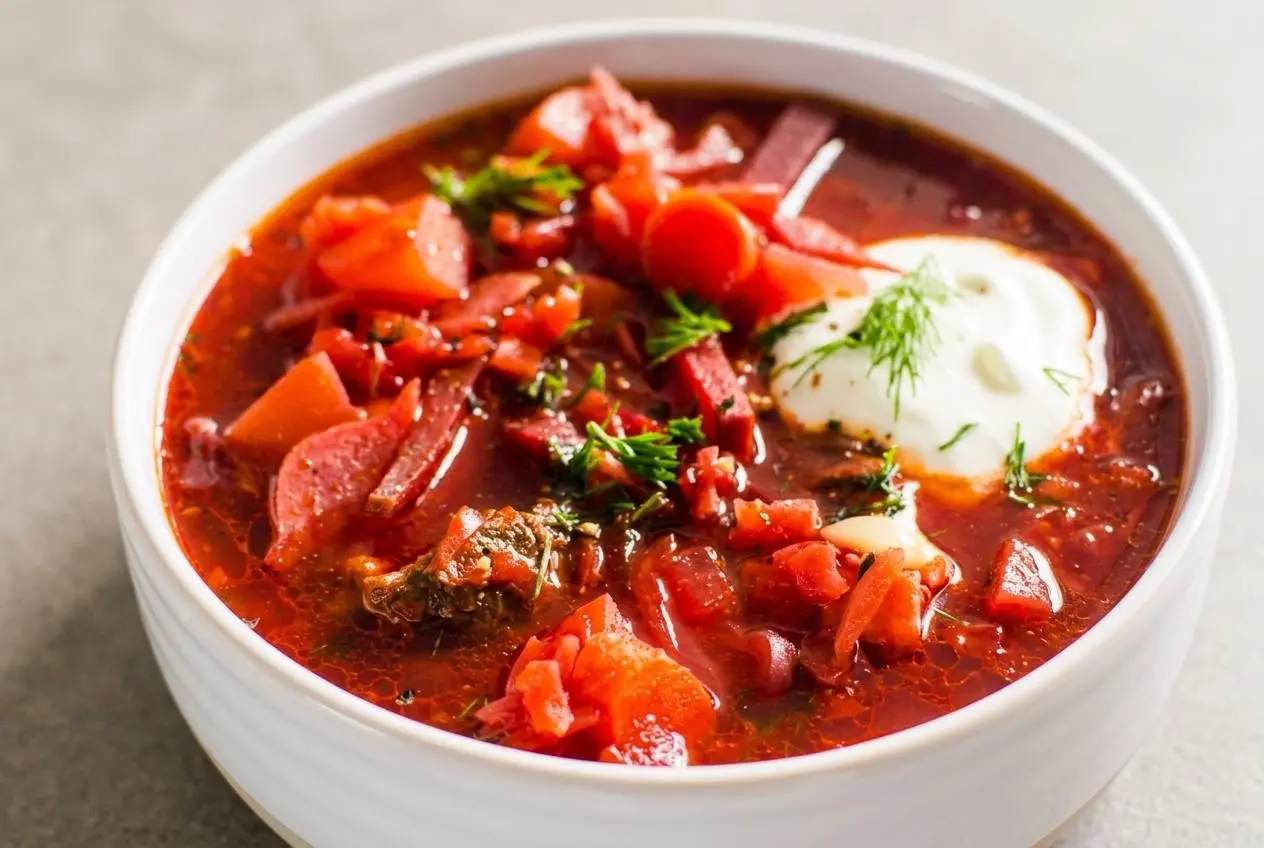
This borscht recipe makes a classic, hearty beet soup with beef broth, cabbage, potatoes, and a sweet tangy finish. The key to its ruby-red color is building a proper zazharka and using vinegar in two stages.
Borscht is one of those soups that tastes deep and comforting without being heavy. You get earthy beets, tender vegetables, savory broth, and a bright finish that keeps each spoonful lively.
If you want a pot of true Ukrainian-style borscht that looks vivid and tastes even better after it rests, you’re in the right place. The little color trick matters.
Wear gloves before cutting the beets unless you want bright pink fingertips for the rest of the day.
What Is Borscht?
Borscht is an Eastern European sour soup, most famous for its beet base and its vivid red color. A good bowl tastes earthy, lightly sweet, savory, and tangy all at once, with enough broth to feel soupy and enough vegetables to feel hearty.
It’s closely associated with Ukrainian cooking, and many people also know Russian versions. Polish barszcz is another well-known branch of the same family. The details change by region, but the soul of the dish stays recognizable: a beet-forward soup with balanced sweet and sour notes.
Ukrainian vs. Russian vs. Polish Borscht
The big differences come down to broth, vegetables, and texture.
| Characteristic | Ukrainian Borscht | Russian Borscht | Polish Borscht (Barszcz) |
|---|---|---|---|
| Broth Type | Often beef or pork broth, sometimes vegetable broth | Often meat broth or lighter broth variations | Usually a clear broth, often vegetable based or lightly meaty |
| Key Veggies | Beets, cabbage, potatoes, carrots, onions | Beets, carrots, onions, often cabbage and potatoes too | Beets are central, with fewer solids after straining |
| Consistency | Hearty and chunky | Can be hearty, but styles vary widely | Clear and lighter |
| Common Garnish | Sour cream and dill | Sour cream and fresh herbs | Often served plain or with a small garnish |
Key Ingredients for Authentic Borscht
Each ingredient pulls its weight here, from building savory depth to giving the soup its sweetness, texture, fresh herb lift, and bright red color.
- 12 cups low sodium beef broth (or beef bones + cold water)
- 5 cups green or red cabbage (thinly sliced)
- 1 large onion (chopped)
- 3 medium carrots (chopped)
- 2 tablespoons olive oil
- 3 large beets (peeled and cut into matchsticks)
- 4 large potatoes (peeled and cubed)
- 6 ounces can tomato paste (low sodium)
- 2 teaspoons salt
- 3 bay leaves
- 1 tablespoon white vinegar
- Pinch of sugar or maple syrup
- 3 large garlic cloves (grated)
- Ground black pepper (to taste)
- 1/4 cup dill or parsley (finely chopped)
- Yogurt, sour cream and rye bread (for serving)
The broth is the foundation, so beef gives this version its classic deep flavor. Beets and carrots bring earthy sweetness, cabbage and potatoes make it filling, and tomato paste plus vinegar sharpen the color and keep the soup from tasting flat. Garlic and dill wake everything up right at the end.
I always wear gloves when cutting the beets, and I like to grate the garlic so it melts into the hot soup instead of sitting in little sharp chunks.
Choosing Your Broth: Beef, Pork, or Vegetable
Beef broth gives the fullest, most classic result for this style of borscht. It has enough body to support the beets and cabbage without letting the soup taste thin. If you already love comfort dishes built on a rich beef base, you might also like classic cottage pie.
Pork broth, especially from ribs, gives a rounder richness and a slightly sweeter finish. Vegetable broth works well too, but it needs to be robust, or the soup can lose some of its depth. For a true beef borscht, stick with beef broth and let the vegetables do the brightening.
Preparing the Beets for Perfect Color and Texture
Julienned or matchstick beets give you a more traditional bite. They stay visible in the soup and make each spoonful feel a little more rustic. Grated beets soften faster and blend more into the body of the broth, which can be nice if you want a smoother texture.
Whichever cut you choose, the main color rule stays the same: add acid while the beets cook. That keeps the soup closer to ruby-red instead of drifting toward brownish orange.
Why Cabbage Is Essential in Classic Borscht
Cabbage is not filler here. It adds gentle sweetness, body, and a soft bite that bridges the broth and the beets. In classic Ukrainian-style and many Russian-style bowls, cabbage is one of the ingredients that makes borscht feel like a full meal rather than just beet soup.
How to Make Borscht
This method keeps the soup hearty and balanced while protecting the beet color. The separate sautéed vegetable base, called zazharka, is where much of the sweetness and depth develop.
- Bring the beef broth and bay leaves to a boil in a large pot, such as a 6-quart Dutch oven, while you wash, peel, and cut the vegetables.
The broth should be steaming and bubbling steadily by the time the vegetables are ready. - Add the sliced cabbage to the boiling broth, cover the pot, return it to a boil, then lower the heat and cook for 20 minutes.
The cabbage should soften and turn silky but still keep some shape. - While the cabbage cooks, heat a large skillet over medium heat with 1 tablespoon of olive oil, then sauté the onion and carrots for 5 minutes, stirring from time to time.
The onions should smell sweet and look translucent before you move on. - Add the beets and the remaining 1 tablespoon of olive oil, then add about half of the vinegar and cook for another 3 to 4 minutes.
The beets should look glossy and vivid, and the vinegar at this stage helps lock in that red color. - Transfer the sautéed vegetables to the pot, then add the potatoes, tomato paste, and salt; cover, bring the soup back to a boil, and cook on low heat for 20 minutes.
The potatoes should be easily pierced with a fork but not falling apart. - Turn off the heat and stir in the remaining vinegar, sugar or maple syrup, grated garlic, and black pepper, then let the soup rest for 10 minutes.
The broth should taste brighter and more rounded after the short rest, not harsh or sharp. - Stir in the dill or parsley, taste, and adjust the seasoning before serving hot with yogurt or sour cream and rye bread.
The herbs should stay fresh and green, and the finished soup should smell savory, tangy, and deeply beety.
Recipe Tips for the Best Borscht
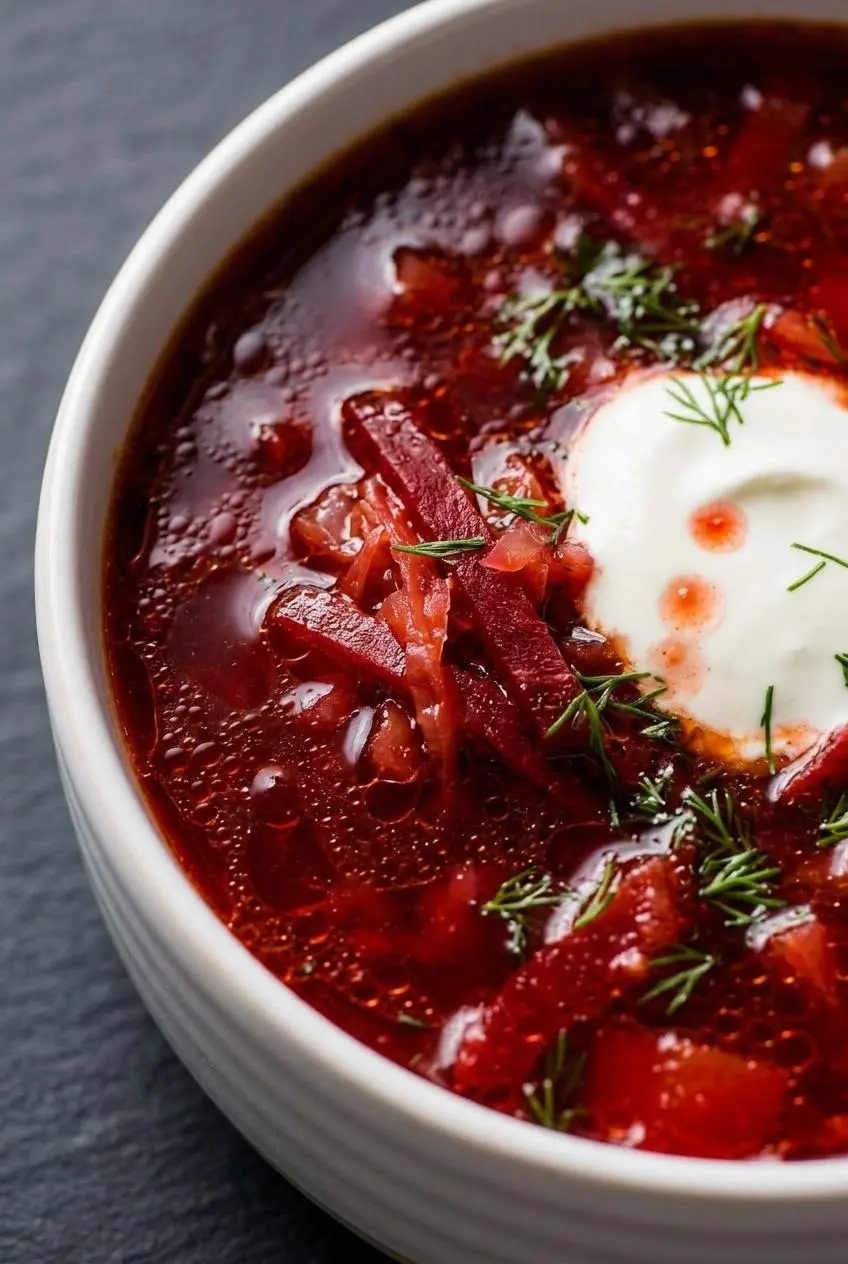
A few small choices make a big difference with borscht, especially if you want that deep flavor and bright red finish.
First, use the vinegar in two stages. Add part of it with the beets in the skillet to protect the color while they cook, then add the rest at the end so the soup tastes fresh and lively instead of muddy.
Second, keep the soup at a gentle simmer once the beets are in the mix. A hard boil can dull both the color and the flavor. Slow bubbling is enough.
Third, don’t skip the zazharka. Sautéing the onion, carrots, and beets separately creates a sweeter, richer base than tossing everything straight into the pot.
Last, let the finished soup rest before serving. Even 10 minutes helps the broth settle and deepen, and the flavor often gets even better after it sits chilled and is rewarmed gently later.
Borscht Troubleshooting Guide
If something feels off, the fix is usually straightforward.
| Problem | Likely Cause | Fix |
|---|---|---|
| My borscht is brown or orange, not red | The beets cooked without enough acid, or the soup boiled too hard | Add part of the vinegar with the beets and keep the soup at a gentle simmer |
| My soup is too bland | It needs more balance, not just more liquid | Add a little more salt, black pepper, or a touch more vinegar, then let it rest before tasting again |
| My soup is too sour | The tang overpowered the natural sweetness of the vegetables | Stir in a small pinch of sugar or maple syrup to round it out |
| My vegetables are mushy | They cooked too long or all went in too early | Follow the staged cooking order so the cabbage softens first and the potatoes finish just until tender |
How to Serve Borscht
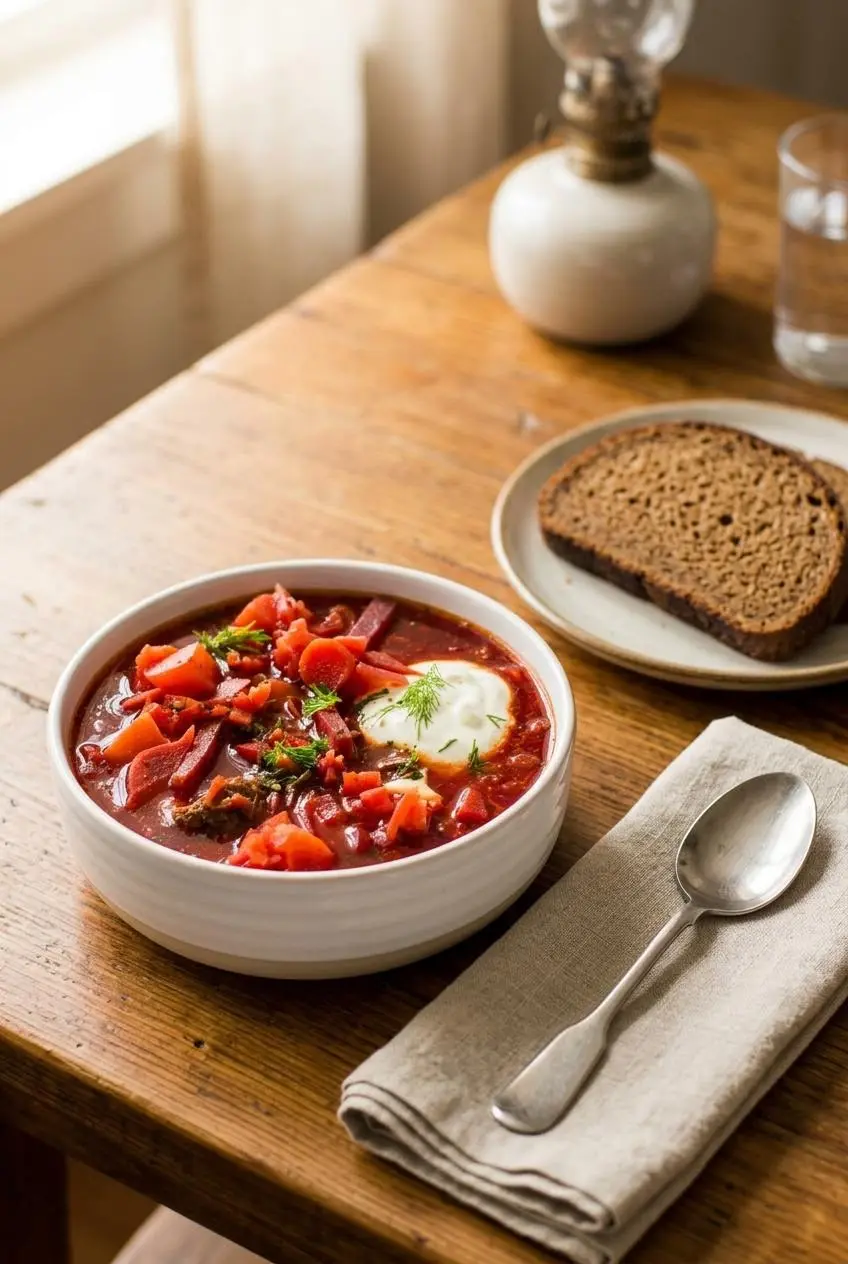
Borscht is best served hot, with something cool and creamy on top to soften the tang and tie the broth together. A generous spoonful of sour cream is the classic choice, but plain full-fat yogurt also works nicely if you want a lighter finish.
A shower of fresh dill makes the bowl smell brighter right away. Rye bread on the side is traditional and useful too, since it gives you something hearty to drag through the broth between spoonfuls. Pampushky, the soft Ukrainian garlic rolls, are also a great match if you want a fuller spread.
A raw garlic clove on the side is a very traditional touch. It’s optional, strong, and definitely not for every lunch meeting. If you love big-batch comfort soups, a pot of hearty cowboy soup is another cozy option for a cold day.
Borscht Variations
The main version here is classic and chunky, but borscht has plenty of room for different styles. These are all optional paths, not changes to the core recipe above.
| Variation | What to Change | Best For |
|---|---|---|
| Vegetarian & Vegan Borscht | Use a rich vegetable or mushroom broth and add beans or mushrooms for extra body | A meat-free version that still feels hearty |
| Clear Polish Christmas Borscht (Barszcz) | Strain the soup into a clear ruby broth with a sharper sour note | A lighter, holiday-style bowl or mug |
| Creamy Roasted Beet Borscht | Roast the vegetables first, then blend until smooth | A softer, modern texture with concentrated sweetness |
Vegetarian & Vegan Borscht
Swap the beef broth for a rich vegetable broth or mushroom broth. To replace some of the hearty feel that meat broth gives, add beans such as cannellini or kidney beans, or sautéed mushrooms for a meatier bite. The rest of the recipe can stay very close to the original, including the cabbage, potatoes, tomato paste, garlic, and herbs.
Clear Polish Christmas Borscht (Barszcz)
This version is quite different from the chunky soup above. Barszcz is usually a clear, strained, ruby-red broth served in cups or shallow bowls, often around Christmas Eve. Its sour note may come from beet kvass, which is fermented beet juice, giving it a more delicate and sharper finish than a full pot of vegetable-and-meat borscht.
Creamy Roasted Beet Borscht
For a smoother variation, roast the beets, carrots, and onions instead of sautéing and simmering them first. Roasting concentrates their sweetness, and blending the finished soup gives you a velvety texture that feels completely different from classic chunky borscht. This style can be served hot or chilled.
Storage and Reheating
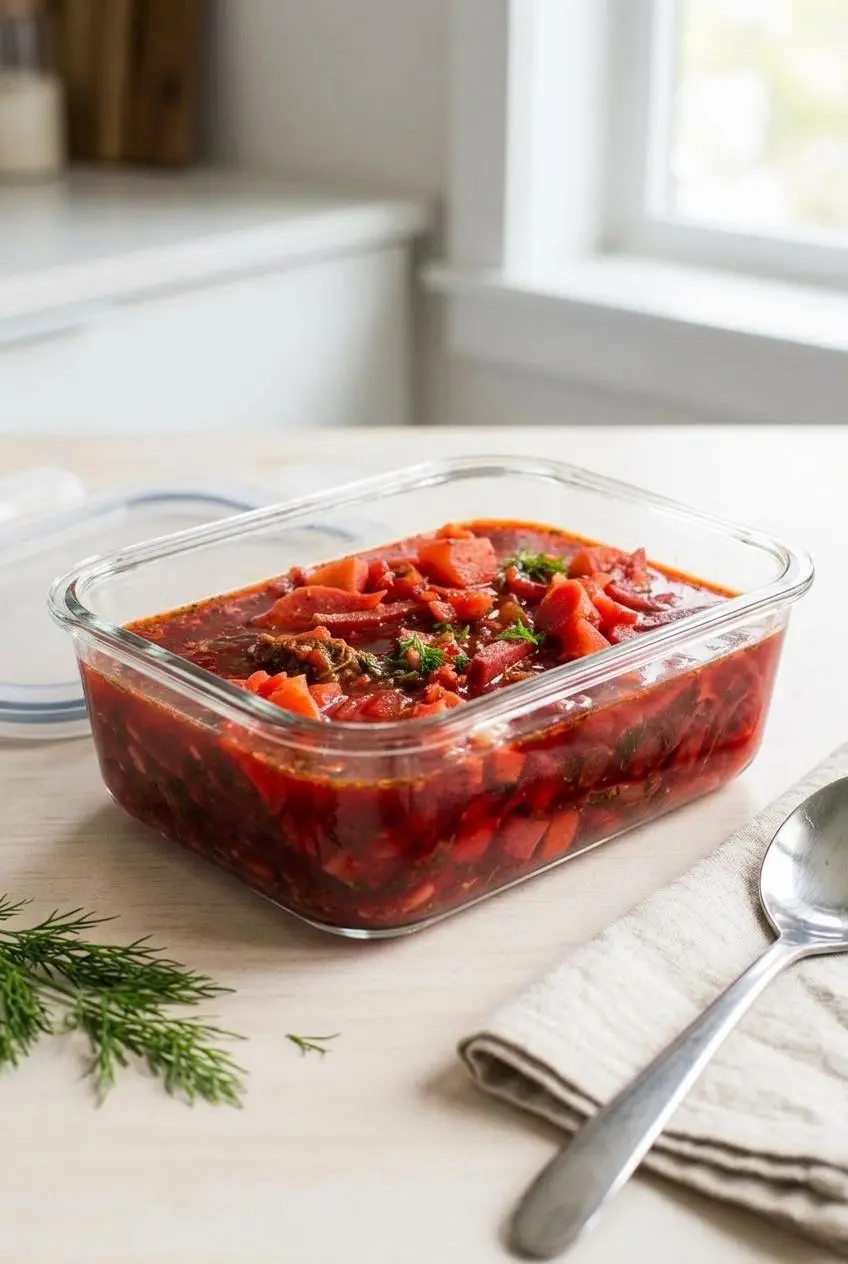
Borscht holds up well as leftovers, and the flavor often deepens after it rests. Cool it, transfer it to a covered container, and keep it chilled. For cooked leftovers, move them to the refrigerator promptly, since cooked leftovers should be refrigerated within 2 hours.
When you reheat borscht, warm it gently on the stove over medium-low heat rather than bringing it to a hard boil. That helps preserve the bright color and keeps the vegetables from softening too much further.
If you want to prep ahead, making the soup in advance works especially well for flavor. Just reheat only what you need, and stir in a little fresh dill at serving time if you want the bowl to taste newly made.
Conclusion
This borscht delivers the classic things people want: a rich broth, tender vegetables, balanced sweet tang, and that unmistakable ruby-red color.
Keep the simmer gentle, use the vinegar in two stages, and give the pot a short rest before serving. That’s when the soup really comes together.
Frequently Asked Questions About Borscht
What is borscht supposed to taste like?
Borscht should taste balanced, not aggressively sweet and not sharply sour. Earthy beets give it its signature flavor. Carrots and cabbage add mild sweetness. The broth makes it savory and hearty. Vinegar brings the tangy finish that keeps the soup lively.
Why did my borscht turn brown?
Two things usually cause this. The beets didn’t get acid early enough, so their color faded during cooking. The soup boiled too hard after the beets were added. Add part of the vinegar with the beets. Keep the pot at a gentle simmer instead of a rolling boil.
Can I use canned or pre-cooked beets?
Yes, with a couple of adjustments. Fresh beets still give the best flavor and strongest color. Pre-cooked beets work well for convenience. Add them near the end, since they only need to heat through. Avoid pickled beets here, because they can make the soup too sour.
Is it better to grate or chop the beets?
It depends on the texture you want. Grated beets cook faster and melt more into the soup. Chopped or julienned beets keep a more distinct bite. Traditional versions often lean toward julienned beets. Both work, as long as you protect the color with acid.
What is ‘zazharka’ and is it necessary for borscht?
Zazharka is the sautéed vegetable base, usually built from onions, carrots, and often beets. It develops sweetness before the vegetables go into the broth. It adds depth that plain boiling does not quite match. It is not absolutely required to make soup, but it is a big part of traditional borscht flavor. If you want a richer, fuller bowl, it’s worth the extra pan.

Borscht Recipe

Equipment
- Dutch oven
- Glass bowls
- Ceramic skillet
Ingredients
- 12 cups low sodium beef broth (or beef bones + cold water)
- 5 cups green or red cabbage thinly sliced
- 1 large onion chopped
- 3 medium carrots chopped
- 2 tablespoons olive oil
- 3 large beets peeled and cut into matchsticks
- 4 large potatoes peeled and cubed
- 6 ounces can tomato paste low sodium
- 2 teaspoons salt
- 3 bay leaves
- 1 tablespoon white vinegar
- 1 pinch sugar or maple syrup
- 3 large garlic cloves grated
- Ground black pepper to taste
- 1/4 cup dill or parsley finely chopped
- Yogurt, sour cream and rye bread for serving
Instructions
- Bring the beef broth and bay leaves to a boil in a large pot, such as a 6-quart Dutch oven, while you wash, peel, and cut the vegetables. The broth should be steaming and bubbling steadily by the time the vegetables are ready.
- Add the sliced cabbage to the boiling broth, cover the pot, return it to a boil, then lower the heat and cook for 20 minutes. The cabbage should soften and turn silky but still keep some shape.
- While the cabbage cooks, heat a large skillet over medium heat with 1 tablespoon of olive oil, then sauté the onion and carrots for 5 minutes, stirring from time to time. The onions should smell sweet and look translucent before you move on.
- Add the beets and the remaining 1 tablespoon of olive oil, then add about half of the vinegar and cook for another 3 to 4 minutes. The beets should look glossy and vivid, and the vinegar at this stage helps lock in that red color.
- Transfer the sautéed vegetables to the pot, then add the potatoes, tomato paste, and salt; cover, bring the soup back to a boil, and cook on low heat for 20 minutes. The potatoes should be easily pierced with a fork but not falling apart.
- Turn off the heat and stir in the remaining vinegar, sugar or maple syrup, grated garlic, and black pepper, then let the soup rest for 10 minutes. The broth should taste brighter and more rounded after the short rest, not harsh or sharp.
- Stir in the dill or parsley, taste, and adjust the seasoning before serving hot with yogurt or sour cream and rye bread. The herbs should stay fresh and green, and the finished soup should smell savory, tangy, and deeply beety.