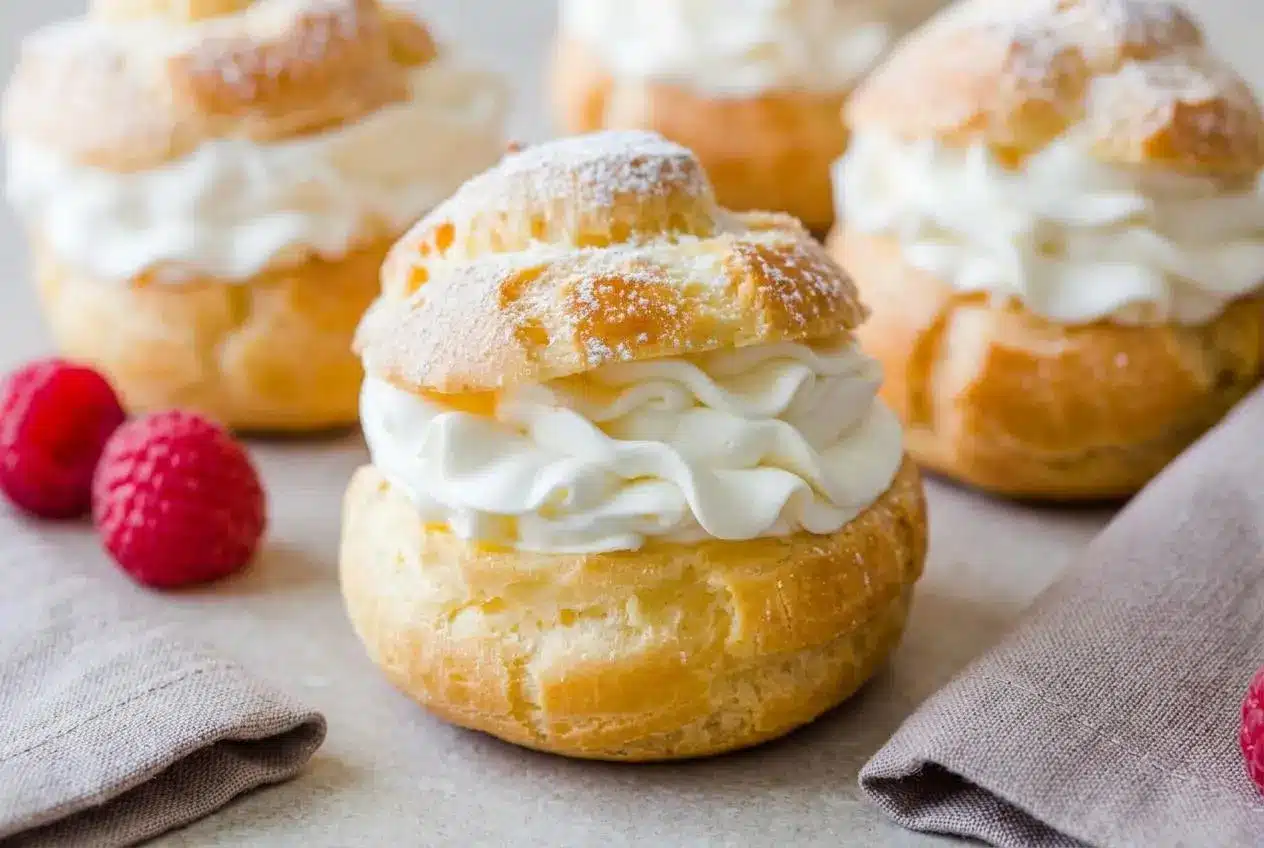
This cream puffs recipe makes crisp, airy choux pastry shells with a lightly sweet whipped cream filling. The key is cooking the dough long enough on the stove, adding the eggs gradually, and baking the puffs until deeply golden without opening the oven.
Cream puffs sound fancy, but they’re really a smart little steam-powered pastry. Once you understand what the dough should look like at each stage, they become much less mysterious.
You’ll love how light the shells feel, how hollow they bake, and how easily you can fill them with whipped cream, pastry cream, or even ice cream. The best part is that one small texture cue changes everything.
Set out the eggs before you start so they blend into the dough smoothly instead of fighting it.
What Are Cream Puffs?
Cream puffs are a classic French dessert made from choux pastry, also called pâte à choux. The dough is cooked first on the stovetop, then baked until it puffs into light, hollow shells that are ready to be filled.
They’re usually filled with whipped cream or pastry cream, and they can also be turned into profiteroles when filled with ice cream. A dusting of powdered sugar on top is all they need, though a chocolate finish is always welcome.
Key Ingredients for Perfect Cream Puffs
Each ingredient has a real job here, from building structure to creating steam, richness, and a filling that stays fluffy and smooth.
Ingredients for Choux Pastry
- 1/2 cup water
- 1/2 cup whole milk
- 8 Tbsp unsalted butter
- 1 tsp granulated sugar
- 1/4 tsp salt
- 1 cup all-purpose flour, measured correctly
- 4 large eggs, room temperature
Ingredients for Cream Filling and Garnish
- 2 cups heavy whipping cream, chilled
- 4 Tbsp granulated sugar
- 1 tsp vanilla extract
- 28 raspberries, optional
- 1 Tbsp powdered sugar, to garnish
Choux pastry puffs because of steam. The water and milk heat up in the oven and create the lift that opens the shells into that hollow center. Using both gives you a nice middle ground: water helps with a strong rise, while milk adds a bit more flavor and color.
Butter adds richness and tenderness, but it also helps the dough stay supple enough to pipe. Flour gives the shells their structure, which is why the stovetop cooking stage matters so much. You are drying the dough a bit and partially cooking the flour so the shells can hold their shape later.
Eggs do a lot of work here. They bind the dough, loosen it to the right piping consistency, and help the puffs expand in the oven. Room temperature eggs mix in more easily, which gives you a smoother dough and a better chance of getting that glossy ribbon stage without overworking it.
The filling ingredients are straightforward but important. Chilled heavy whipping cream traps air quickly, sugar sweetens without weighing it down too much, and vanilla rounds everything out so the finished dessert tastes fuller, not just sweet.
An optional upgrade for sturdier shells is to use bread flour instead of all-purpose flour. Its higher protein can give you a slightly crisper, stronger puff that is less likely to slump after baking.
I always make sure the eggs are truly at room temperature before starting, because cold eggs make the dough seize and take longer to come together.
How to Make Cream Puffs
The process is easier than it looks once you know the checkpoints. Choux pastry is cooked twice, first in the saucepan to build the dough, then in the oven where steam does the puffing.
How to Make Cream Puffs
- Heat the oven to 425 °F and line a rimmed baking sheet with Silpat or parchment paper.
The lined pan keeps the bottoms from sticking and helps the puffs bake evenly. - Put 1/2 cup water, 1/2 cup whole milk, 8 Tbsp butter, 1 tsp sugar, and 1/4 tsp salt in a medium saucepan and bring the mixture just to a boil over medium heat.
As soon as the butter melts and the liquid reaches a full boil, take the pan off the heat so the flour can go in all at once. - Stir in 1 cup flour all at once with a wooden spoon until no dry spots remain.
The mixture will quickly turn thick and shaggy, which is exactly what you want at this stage. - Return the pan to medium heat and stir constantly for 1 1/2 to 2 minutes.
The dough should pull into a smooth ball, and a thin film will form on the bottom of the pan as excess moisture cooks off. - Move the dough to a large mixing bowl and beat on medium speed for 1 minute to cool it slightly.
The dough should still be warm but not so hot that it cooks the eggs on contact. - Add the 4 eggs one at a time, beating well after each addition, then beat for 1 minute more.
At first the dough may look separated, but keep mixing until it turns smooth, glossy, and falls in a thick ribbon when lifted. - Transfer the dough to a piping bag fitted with a 1/2″ round tip and pipe 28 puffs that are 1 1/2” wide and 1/2” tall, spacing them 1″ apart.
If the tops have little points, smooth them gently with lightly wet fingertips so they bake more evenly. - Bake in the center of the oven at 425 °F for 10 minutes, then lower the heat to 325 °F without opening the oven and bake 20 to 22 minutes more.
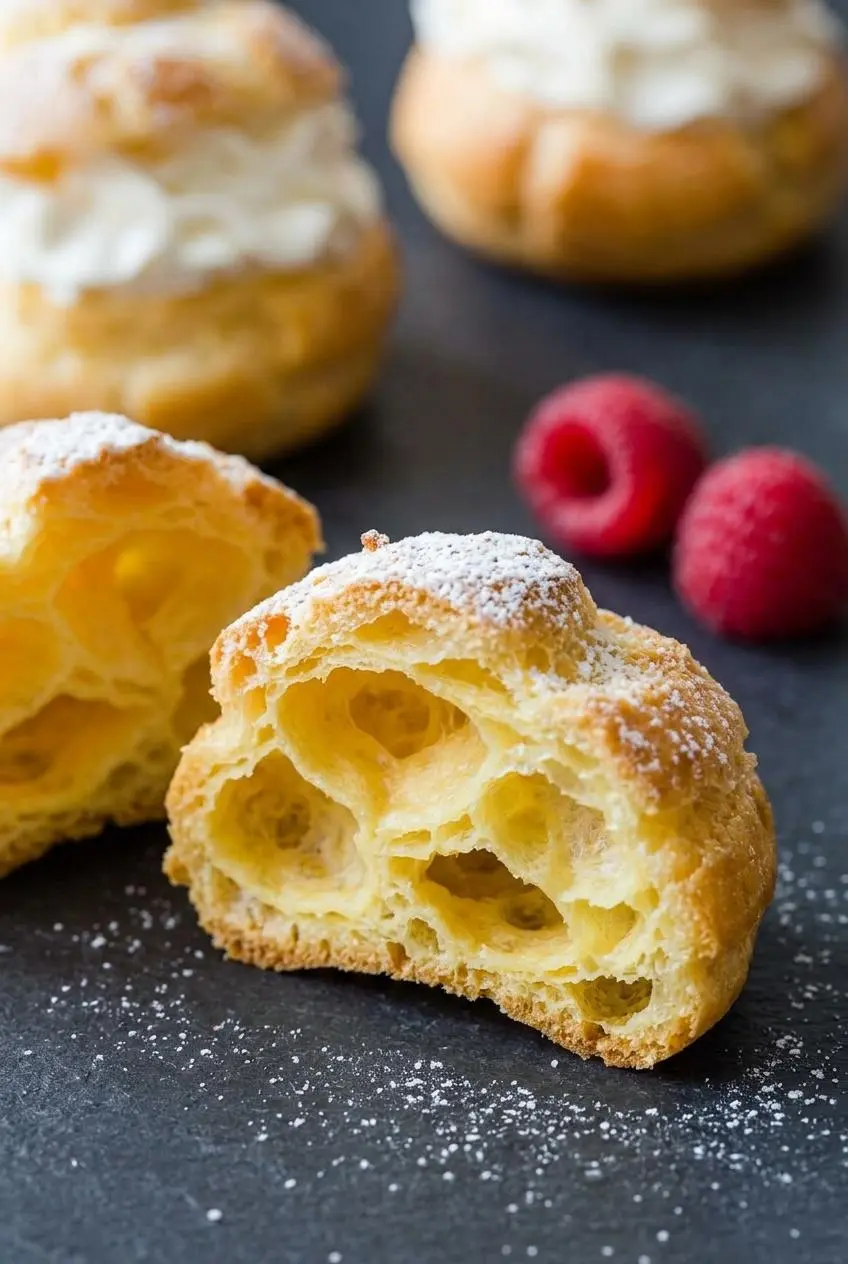
The shells are done when they are golden brown, feel very light, and sound hollow when tapped. - Transfer the baked shells to a wire rack and cool them completely.
They need to be fully cool before filling so the cream stays fluffy and the shells stay as crisp as possible.
How to Make Filling for Cream Puffs
- Combine 2 cups heavy whipping cream, 4 Tbsp sugar, and 1 tsp vanilla extract in a large mixing bowl, then beat on medium-high speed for 2 minutes.
Stop when the cream is fluffy and holds stiff peaks so it pipes cleanly instead of slumping. - Transfer the whipped cream to a piping bag fitted with a large open star tip and fill the cooled puffs.
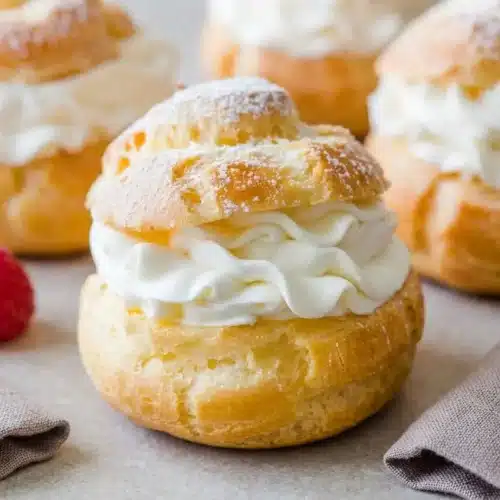
You can pipe through the side until the cream pushes back, or cut off the tops, add cream and an optional raspberry, then replace the tops and dust with powdered sugar.
Tips for Foolproof Cream Puffs
- Bring the liquid and butter mixture just to a boil before adding the flour so the dough forms properly from the start.
- Cook the flour mixture on the stove until a thin film appears on the bottom of the pan. That extra minute or two helps dry the dough and reduces the chance of soggy centers.
- Let the dough cool slightly before adding eggs. If it is too hot, the eggs can start to scramble and the texture will turn uneven.
- Add the eggs one at a time and fully mix each one in before adding the next. This helps you reach a smooth, glossy dough instead of a lumpy one.
- Use wet fingertips to flatten any piping peaks. Sharp points tend to overbrown before the rest of the shell catches up.
- Do not open the oven door during baking. The puffs depend on trapped heat and steam to rise and set.
- Bake until the shells are deeply golden, not pale blond. Color matters here because it tells you the interior has had time to dry out.
- A fully baked shell should feel light in your hand and sound hollow when tapped.
- If you want a shinier finish, lightly brush the piped tops with egg wash before baking. It is optional, but it can give the shells a more polished look.
- For the cleanest fill, slice off the tops, pipe in the cream, then place the lids back on. It is neater and makes it easy to tuck in a raspberry too.
Troubleshooting Common Cream Puff Problems
Even experienced bakers have the occasional wonky batch of choux pastry. The good news is that most cream puff problems come from just a few fixable points in the process.
| Problem | Likely Cause | Solution |
|---|---|---|
| Flat or deflated puffs | Underbaking or opening the oven door during baking | Bake until the shells are deep golden all over and keep the oven closed until the baking time is up. |
| Soggy shells | The dough was not cooked long enough on the stove or the baked puffs were pulled too early | Cook the panade until a thin film forms in the pan, then bake until the shells feel light and dry. If needed, crisp unfilled shells briefly in a 300 °F oven before filling. |
| Shells cracked badly | Oven heat was too aggressive at the start or the dough was too loose from excess egg | Add eggs one at a time and stop only when the dough turns glossy and ribbons thickly. Smooth piped peaks with a damp fingertip. |
| Burnt bottoms | Dark pan, hot spots, or overbaking on the lower rack | Bake in the center of the oven on a lined, light-colored baking sheet and watch for an even golden top rather than extra-dark bottoms. |
| Tough shells | Too much flour from inaccurate measuring or too little egg incorporated | Measure the flour carefully and beat until the eggs are fully absorbed so the dough stays supple. |
| Runny dough that will not hold shape | The eggs went in before the flour mixture had cooked enough, or too much egg loosened the dough | Make sure the dough dries on the stove first. The finished dough should pipe into mounds, not spread like batter. |
| Soft puffs after filling | They were filled too early | Fill them close to serving time so the shell stays crisp on the outside. |
Cream Puff Filling Variations
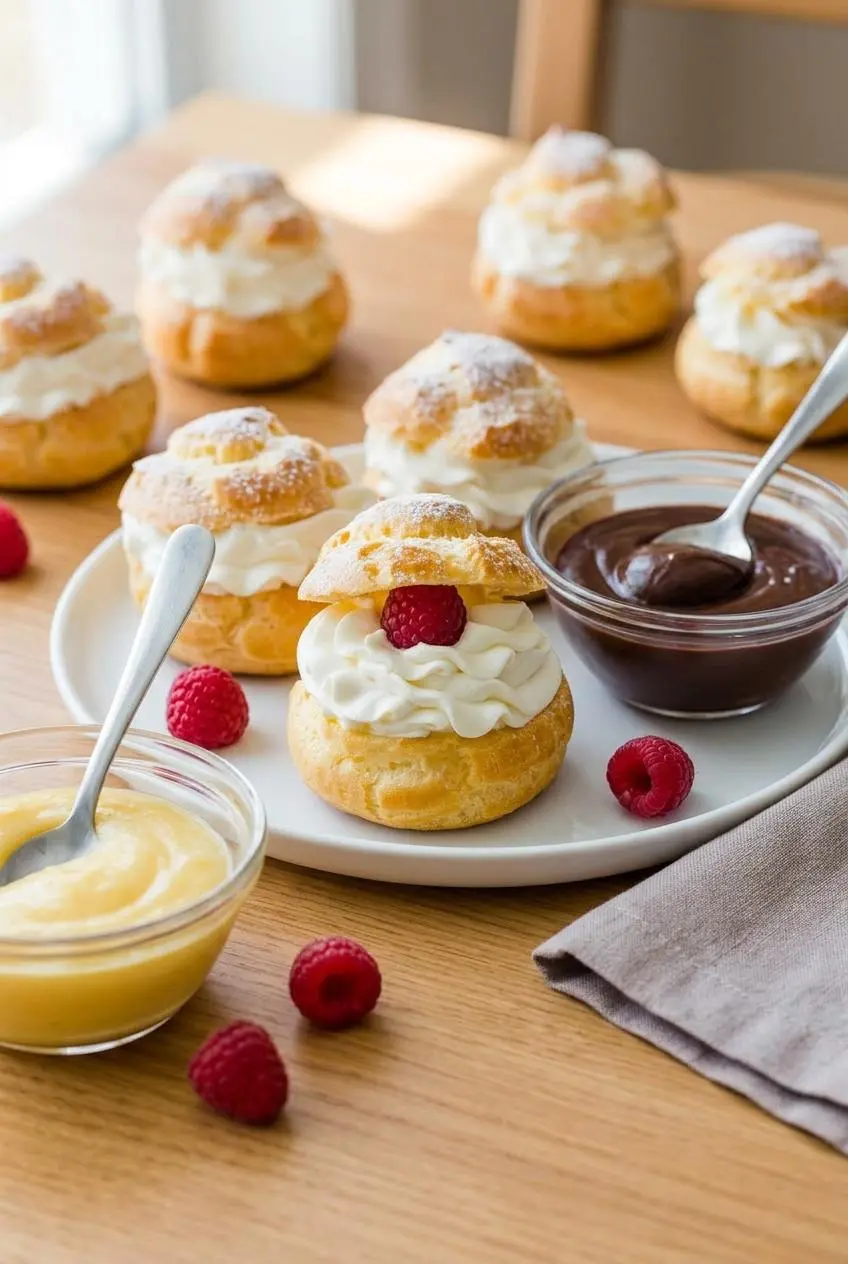
Whipped cream is the classic easy choice, but cream puffs are flexible. You can go richer with pastry cream, turn them into profiteroles with ice cream, or branch out with something like nutty pistachio cream when you want a more dressed-up filling.
| Filling Type | Texture | Sweetness | Make-Ahead Info? |
|---|---|---|---|
| Whipped Cream | Light and airy | Moderately sweet | Best piped shortly before serving |
| Pastry Cream | Rich and silky | Custardy and fuller | Can be made ahead and chilled before filling |
| Ice Cream | Cold and creamy | Depends on flavor | Fill just before serving so the shells do not soften |
Classic Whipped Cream Filling
This is the filling used in the main recipe, and it keeps the whole dessert light. It takes only a couple of minutes to whip, pipes beautifully, and pairs especially well with raspberries and a dusting of powdered sugar.
If you want to change it slightly, you can flavor the whipped cream with almond or coffee extract instead of vanilla. Keep it subtle so the shell still gets to shine.
Rich Pastry Cream (Crème Pâtissière)
Pastry cream makes cream puffs feel a little more traditional and a little more bakery-like. It is thicker than whipped cream, richer on the palate, and excellent if you want a more pronounced vanilla custard filling.
To make a simple version, heat milk until hot but not boiling. In a separate bowl, whisk egg yolks, sugar, and cornstarch until smooth, then slowly whisk in the hot milk. Return the mixture to the stove and cook gently, whisking, until thick and glossy. Stir in vanilla and a bit of butter if you like a silkier finish, then chill it fully before piping it into the shells.
Pastry cream is also the filling behind many Boston cream desserts, so it is a useful technique to keep in your dessert back pocket.
Quick Chocolate Ganache Topping
For a bakery-style finish, pour hot heavy cream over chopped chocolate and let it sit briefly, then stir until smooth. Spoon or drizzle the ganache over filled puffs and let it settle before serving.
This works well over puffs filled with whipped cream or pastry cream. If you prefer a tangy topping instead of chocolate, a tangy cream cheese glaze can take them in a completely different direction.
Make-Ahead, Storing, and Freezing Guide
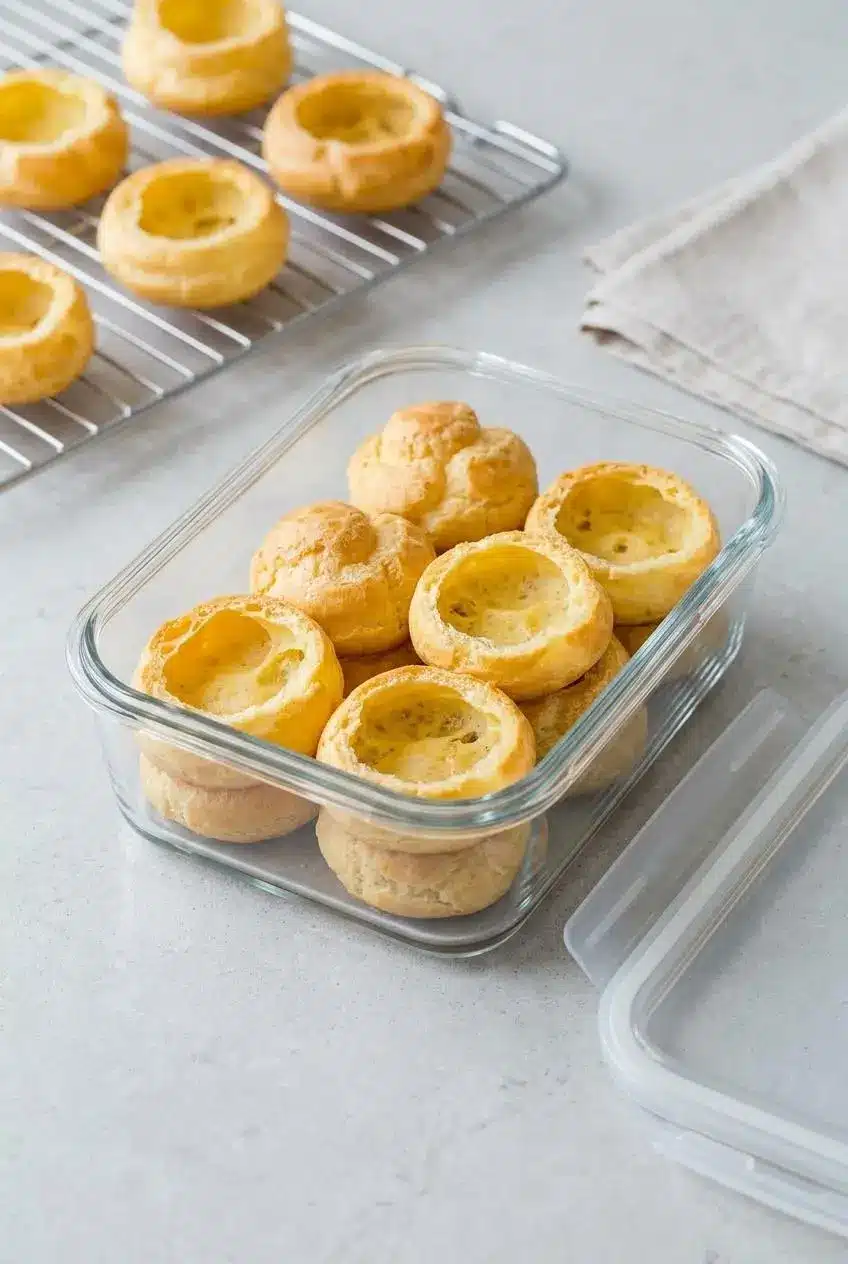
If you want the best texture, think of the shells and filling as separate parts until close to serving time. That one habit keeps the pastry crisp and the filling fresh.
- Unfilled baked shells can sit at room temperature for 1 to 2 days if they are completely cooled first and kept in an airtight container.
- Unfilled shells can also be frozen for up to 3 months. Thaw them at room temperature, then warm them in a 300 °F oven for 5 to 8 minutes to re-crisp before filling.
- Filled cream puffs should be refrigerated because of the dairy filling. Cream-filled pastries can keep for 3 to 4 days under refrigerated storage for cream-filled pastries, but for the best shell texture, serve them much sooner.
- For parties, bake the shells ahead, keep them unfilled, then re-crisp and fill closer to serving.
- Do not freeze filled cream puffs. The shells lose their crispness and the filling texture suffers after thawing.
Conclusion
Cream puffs are one of those desserts that feel impressive far beyond the actual effort. Once you learn the rhythm of choux pastry, they become a very doable home baking project.
The biggest win is patience in the oven. Let the shells bake until truly golden, and they’ll reward you with that crisp outside and airy center that makes cream puffs so satisfying.
Frequently Asked Questions
Why Are My Cream Puffs Flat and Soggy Instead of Puffed and Hollow?
Usually, two things cause this. The puffs were underbaked, or the oven door was opened during baking and let out the steam they needed to rise. Bake them until they are deep golden brown, not pale. That extra color usually means the inside has dried enough to hold its shape after cooling. It also helps to cook the dough properly on the stove first. If the panade stays too wet, the shells struggle from the start.
Can I Freeze Cream Puffs?
Yes, but freeze only the unfilled shells. Once thawed, warm them briefly in a 300 °F oven to bring back some crispness before adding the filling. Skip freezing after they are filled. The cream and the shell both lose texture, and the result is usually soft rather than airy.
What’s the Difference Between a Cream Puff and a Profiterole?
They’re made from the same choux pastry dough, so they look like close cousins. The difference is usually the filling and how they’re served. Cream puffs are commonly filled with whipped cream or pastry cream. Profiteroles are more often filled with ice cream and served with chocolate sauce, and they’re especially good with homemade vanilla ice-cream.
How Far in Advance Can I Fill Cream Puffs?
For the best texture, fill them no more than 1 to 2 hours before serving. Any longer than that, and the moisture from the filling starts softening the shells. If you need a head start, keep the shells and filling separate, then assemble closer to the table. That gives you the nicest contrast between crisp pastry and soft cream.
Cream Puffs Recipe

Equipment
- 3 Qt Medium saucepan
- Electric hand mixer
- Pastry bag
- 1/2″ Round Tip
- Baking Sheet
- Wire rack
Ingredients
Ingredients for Choux Pastry
- 1/2 cup water
- 1/2 cup whole milk
- 8 Tbsp unsalted butter
- 1 tsp granulated sugar
- 1/4 tsp salt
- 1 cup all-purpose flour, measured correctly
- 4 large eggs, room temperature
Ingredients for Cream Filling and Garnish
- 2 cups heavy whipping cream, chilled
- 4 Tbsp granulated sugar
- 1 tsp vanilla extract
- 28 raspberries, optional
- 1 Tbsp powdered sugar, to garnish
Instructions
How to Make Cream Puffs
- Heat the oven to 425 °F and line a rimmed baking sheet with Silpat or parchment paper. The lined pan keeps the bottoms from sticking and helps the puffs bake evenly.
- Put 1/2 cup water, 1/2 cup whole milk, 8 Tbsp butter, 1 tsp sugar, and 1/4 tsp salt in a medium saucepan and bring the mixture just to a boil over medium heat. As soon as the butter melts and the liquid reaches a full boil, take the pan off the heat so the flour can go in all at once.
- Stir in 1 cup flour all at once with a wooden spoon until no dry spots remain. The mixture will quickly turn thick and shaggy, which is exactly what you want at this stage.
- Return the pan to medium heat and stir constantly for 1 1/2 to 2 minutes. The dough should pull into a smooth ball, and a thin film will form on the bottom of the pan as excess moisture cooks off.
- Move the dough to a large mixing bowl and beat on medium speed for 1 minute to cool it slightly. The dough should still be warm but not so hot that it cooks the eggs on contact.
- Add the 4 eggs one at a time, beating well after each addition, then beat for 1 minute more. At first the dough may look separated, but keep mixing until it turns smooth, glossy, and falls in a thick ribbon when lifted.
- Transfer the dough to a piping bag fitted with a 1/2″ round tip and pipe 28 puffs that are 1 1/2” wide and 1/2” tall, spacing them 1″ apart. If the tops have little points, smooth them gently with lightly wet fingertips so they bake more evenly.
- Bake in the center of the oven at 425 °F for 10 minutes, then lower the heat to 325 °F without opening the oven and bake 20 to 22 minutes more. The shells are done when they are golden brown, feel very light, and sound hollow when tapped.
- Transfer the baked shells to a wire rack and cool them completely. They need to be fully cool before filling so the cream stays fluffy and the shells stay as crisp as possible.
How to Make Filling for Cream Puffs
- Combine 2 cups heavy whipping cream, 4 Tbsp sugar, and 1 tsp vanilla extract in a large mixing bowl, then beat on medium-high speed for 2 minutes. Stop when the cream is fluffy and holds stiff peaks so it pipes cleanly instead of slumping.
- Transfer the whipped cream to a piping bag fitted with a large open star tip and fill the cooled puffs. You can pipe through the side until the cream pushes back, or cut off the tops, add cream and an optional raspberry, then replace the tops and dust with powdered sugar.