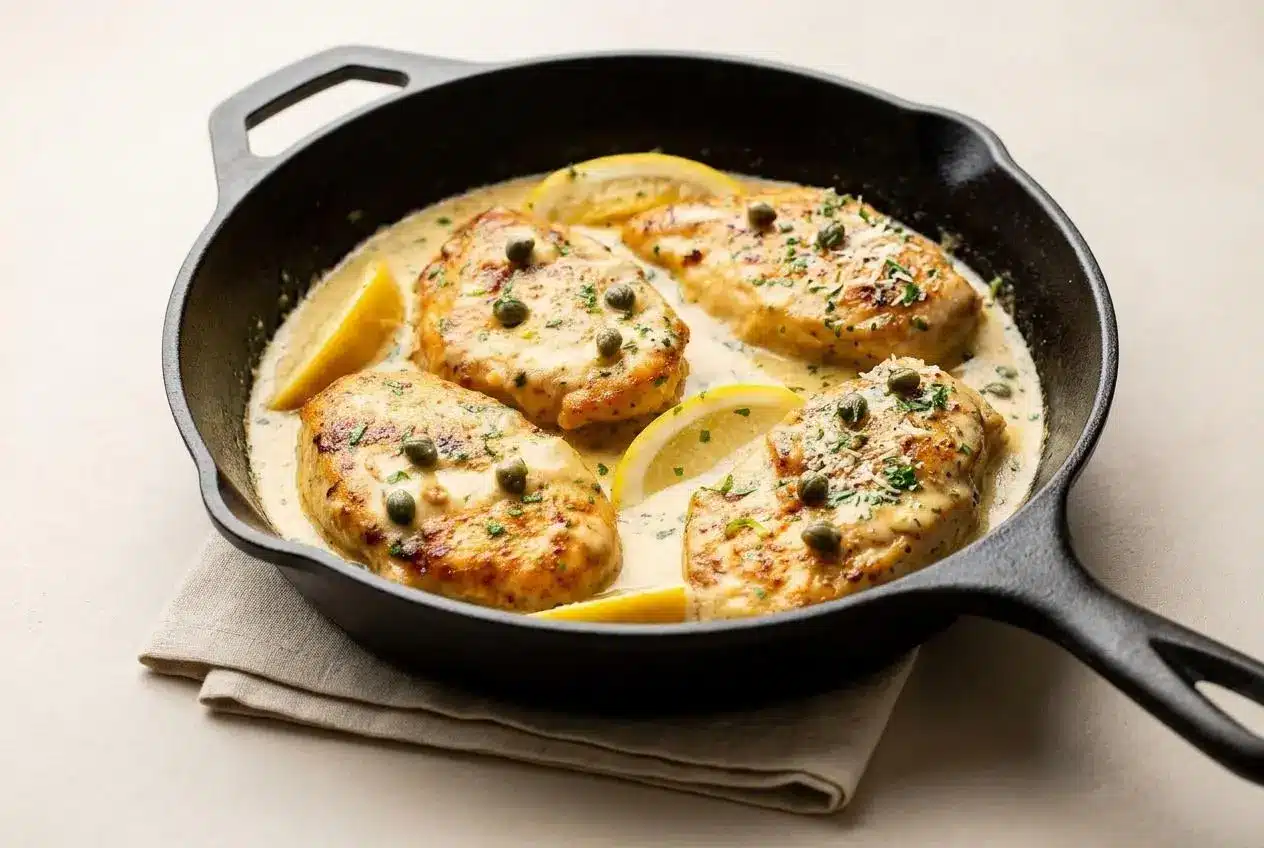
Chicken piccata is pan-fried chicken cutlets finished in a bright lemon butter sauce with capers, and this version adds cream for a richer, silky finish while staying quick enough for a weeknight.
Chicken piccata tastes fancy, but the method is very doable at home. Thin cutlets, a hot pan, and a sharp lemony sauce do most of the heavy lifting.
The sauce is buttery, briny, and full of fresh lemon, with just enough cream to soften the edges. The best part is how fast it all comes together once the chicken is sliced thin.
Slice the chicken before you heat the pan so the cooking moves quickly and the flour-coated cutlets go straight into hot fat.
What Is Chicken Piccata?
Piccata refers to a style of cooking thin cutlets that are lightly dredged in flour, pan-fried, and served with a sauce built from lemon, butter, and capers. In this case, the cutlets are chicken, and the sauce gets extra body from broth or wine plus a little cream.
If you have wondered what chicken piccata sauce is made of, the core flavors are lemon, butter, and capers. The flour on the chicken helps form a delicate crust and also gives the sauce a little help as it simmers in the pan.
Key Ingredients for Perfect Chicken Piccata
Each ingredient here has a job, whether that is building a golden crust, balancing acidity, adding richness, or giving the sauce its sharp, savory finish.
- 2 large chicken breasts
- Salt & pepper (to taste)
- 1/4 teaspoon garlic powder
- Flour (for dredging)
- 4 tablespoons butter (divided)
- 1 tablespoon olive oil
- 1/4 cup chicken broth (or dry white wine)
- 1 tablespoon lemon juice + zest of 1 lemon
- 1 tablespoon brined capers (drained)
- 1/2 cup heavy/whipping cream
- Garnish (optional) chopped parsley and/or freshly grated parmesan cheese
The flour matters more than it may seem. It gives the chicken a light coating that browns beautifully in the skillet, and that same coating helps the sauce take on a slightly silkier texture once the liquid goes in.
Fresh lemon juice is worth it here. Bottled juice can taste flat or a little harsh, while fresh juice and zest make the sauce taste brighter and cleaner.
Capers bring the classic piccata flavor. They add little salty, briny bursts that cut through the butter and cream so the dish stays lively instead of heavy.
Butter gives the sauce its rich finish, but olive oil helps with the sear because it tolerates heat better. Using both keeps the butter from browning too fast while the chicken turns golden.
Chicken broth makes the sauce savory and mellow. Dry white wine brings a little more depth and sharper acidity, so either works depending on the mood you want.
I always reach for fresh lemons here because the zest wakes up the whole pan sauce in a way bottled juice never quite does.
How to Make Chicken Piccata
- Slice the chicken breasts lengthwise to make 4 thin cutlets, trim off any fat, then season them with salt, pepper, and garlic powder before coating them in flour.
The cutlets should look evenly dusted rather than thickly coated, and thin pieces will cook quickly and stay more tender. - Add 2 tablespoons of the butter and the olive oil to a skillet over medium-high heat.
When the butter melts and foams with the oil, the pan is ready for searing. - Cook the chicken for about 4 to 5 minutes per side, then move it to a plate once both sides are golden.
The crust should be deep golden brown, and an instant-read thermometer should reach 165°F for poultry. - Take the skillet off the heat and add the chicken broth, lemon juice, lemon zest, remaining 2 tablespoons of butter, and capers, scraping up the browned bits from the bottom.
The pan will smell intensely lemony and buttery, and those browned bits melt into the sauce for extra flavor. - Stir in the cream, return the skillet to the heat, and once the sauce starts bubbling again, nestle the chicken back into the pan.
The sauce may look loose at first, but it will start to come together as it warms and simmers around the chicken. - Cook for another 5 minutes, lowering the heat if the sauce is boiling too hard, until the chicken is cooked through and the sauce has reduced to your liking.
The finished sauce should lightly coat a spoon, and a splash of extra broth will loosen it if it reduces too far. - Garnish with freshly chopped parsley and/or parmesan cheese if desired.
The fresh garnish adds color and a final hit of flavor right before serving.
This method works because each stage builds on the last. First you get color on the chicken, then you use the flavorful pan drippings to make a fast lemon butter sauce, and finally the chicken finishes gently in that sauce so everything tastes connected.
If the chicken is sliced thin enough, it should feel flexible rather than bulky before it hits the pan. That one detail makes the quick cooking time realistic and keeps the cutlets from drying out before the sauce is ready.
Tips for Restaurant-Quality Results
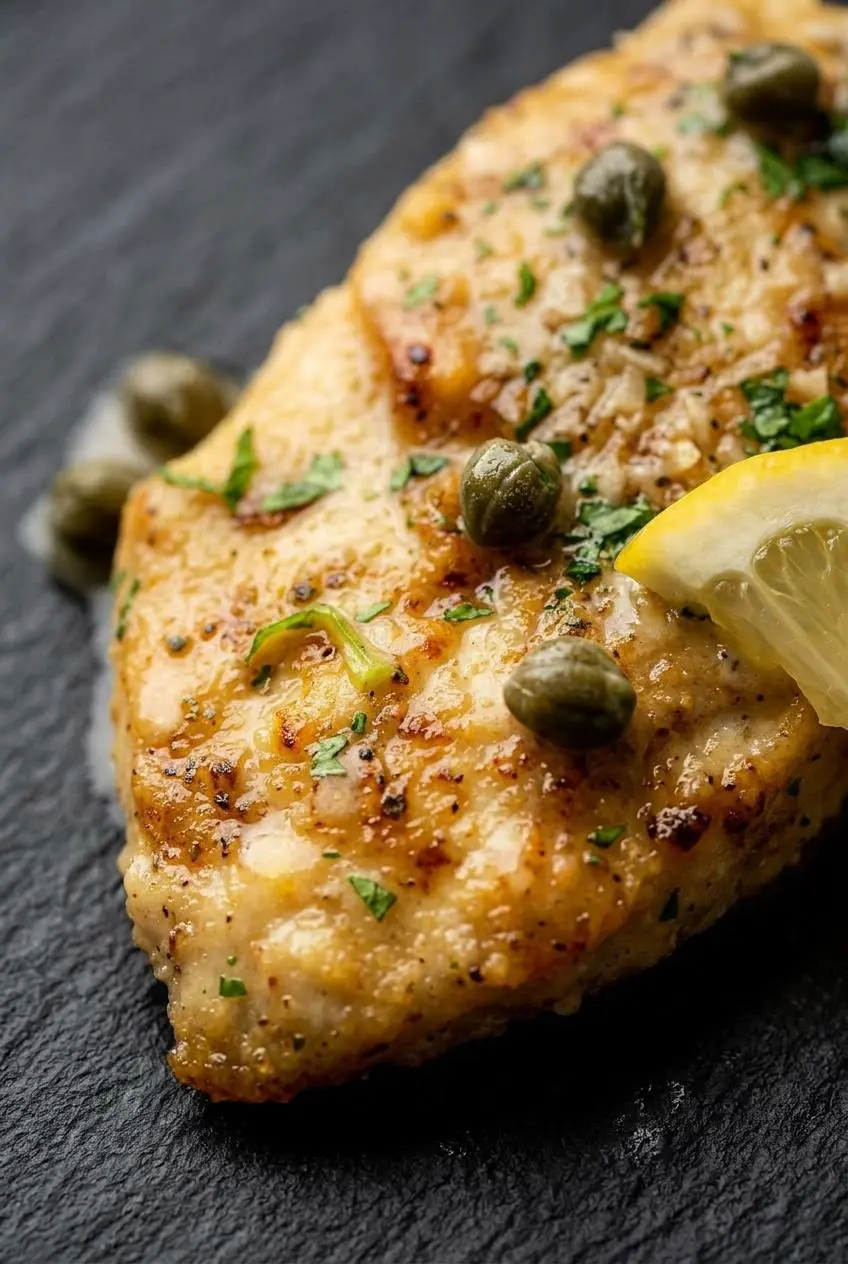
- Use thin cutlets. Thick chicken breasts cook unevenly and are more likely to dry out before the center is done. If needed, pound the cutlets lightly so they are even from end to end.
- Do not crowd the pan. If the pieces are packed too tightly, they steam instead of sear. Cook in batches if your skillet is on the smaller side.
- Use butter and oil together. The butter adds flavor, while the oil helps keep the fat from scorching too quickly over medium-high heat.
- Scrape up the fond. Those browned bits left behind after searing are exactly what make the sauce taste deep and savory instead of flat.
- Watch the heat after the cream goes in. A lively simmer is good. A hard boil is not. Too much heat can tighten the chicken and make the sauce harder to control.
- Choose fresh lemon over bottled. The sauce is built around lemon, so this is one of those times when fresh really shows.
- Use a thermometer if you have one. Thin cutlets can go from juicy to overdone fast, so checking the center takes the guesswork out.
- Use low-sodium broth if you are salt-sensitive. Capers, parmesan, and broth can stack salty flavors quickly.
Variations on Classic Chicken Piccata
The base idea stays the same, but the finish can lean creamy, bright, or a little richer depending on what you want for dinner.
| Style | What Changes | Flavor and Texture | Best With |
|---|---|---|---|
| Creamy | Add heavy cream as written | Richer, softer, velvety | Mashed potatoes, pasta, bread |
| Classic | Skip the cream and use more broth | Lighter, sharper, more lemon-forward | Simple vegetables, rice, lighter pasta |
Creamy Chicken Piccata
This is the version in the main recipe. The heavy cream rounds out the lemon and capers, giving you a smoother sauce that feels especially good over mashed potatoes or noodles.
If creamy lemon sauces are your thing, creamy herb chicken is another good direction for the same cozy, skillet-dinner mood.
Classic (Non-Creamy) Chicken Piccata
For a more traditional Italian-American style, leave out the cream and increase the chicken broth to 3/4 cup, just as noted in the method. The result is brighter, lighter, and more sharply lemony, with the capers standing out more clearly.
If you especially like that clean lemony profile, Lemon Chicken Pasta hits a similar note in a different format.
Using Chicken Thighs
Boneless, skinless chicken thighs work well if you want a richer bite and a little more forgiveness in the pan. They usually need a bit more cooking time than thin breast cutlets, so watch color closely and cook until the center is done.
Add Aromatic Depth With Shallots
For a subtle extra layer, sauté a finely chopped shallot in the skillet for about a minute after removing the chicken and before adding the sauce ingredients. It adds gentle sweetness and savory depth without changing the character of the dish.
If you like thin, pan-fried cutlets and want a related style without the lemon-caper sauce, classic Chicken Milanese is a useful comparison.
What to Serve With Chicken Piccata
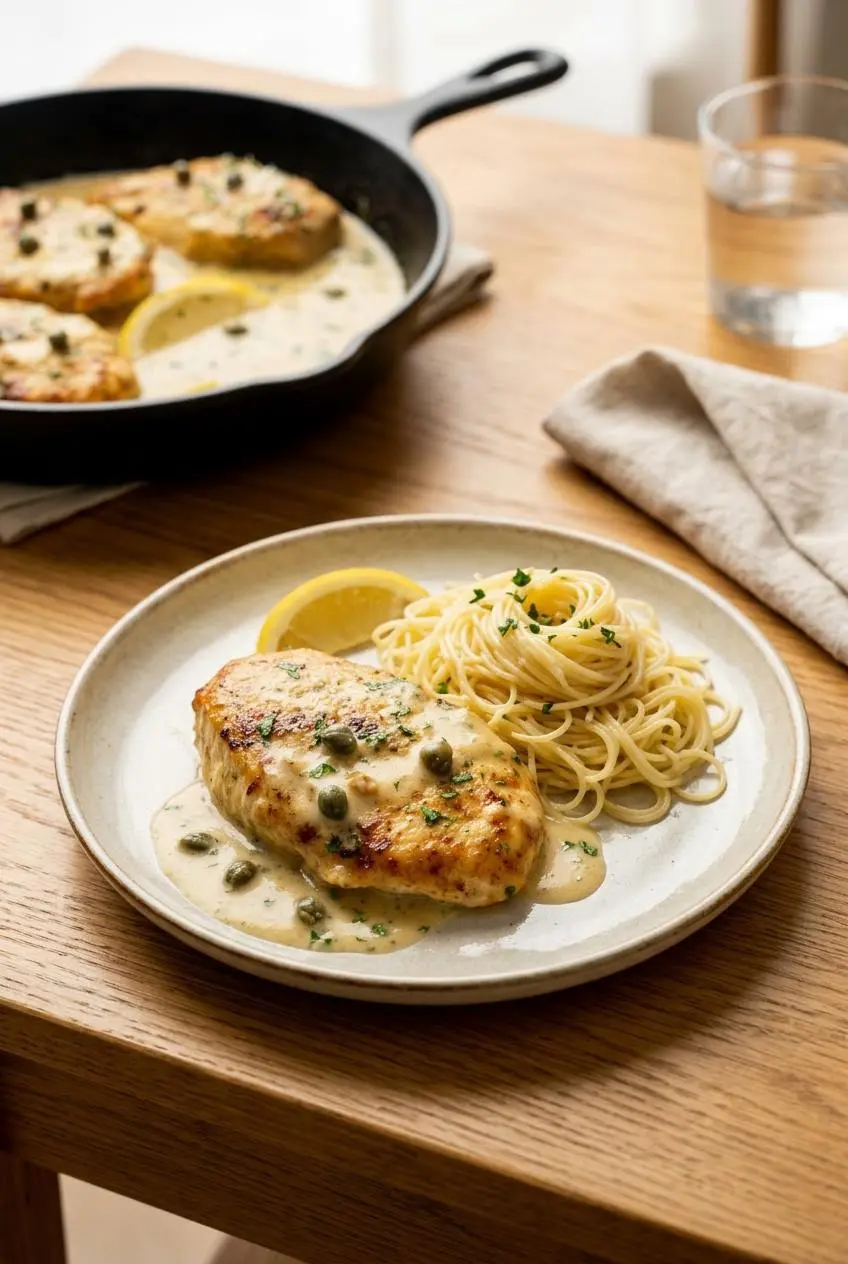
The sauce is the star, so the best sides either soak it up or balance it with something green and fresh.
- For soaking up the sauce: angel hair pasta, mashed potatoes, polenta, buttered noodles, risotto, or crusty bread.
- For vegetable sides: sautéed green beans with almonds, steamed asparagus, broccolini, or an arugula salad with a light vinaigrette.
- For a fuller pasta dinner: turn the pairing into one dish with Chicken Piccata Pasta.
Storage, Reheating, and Leftovers
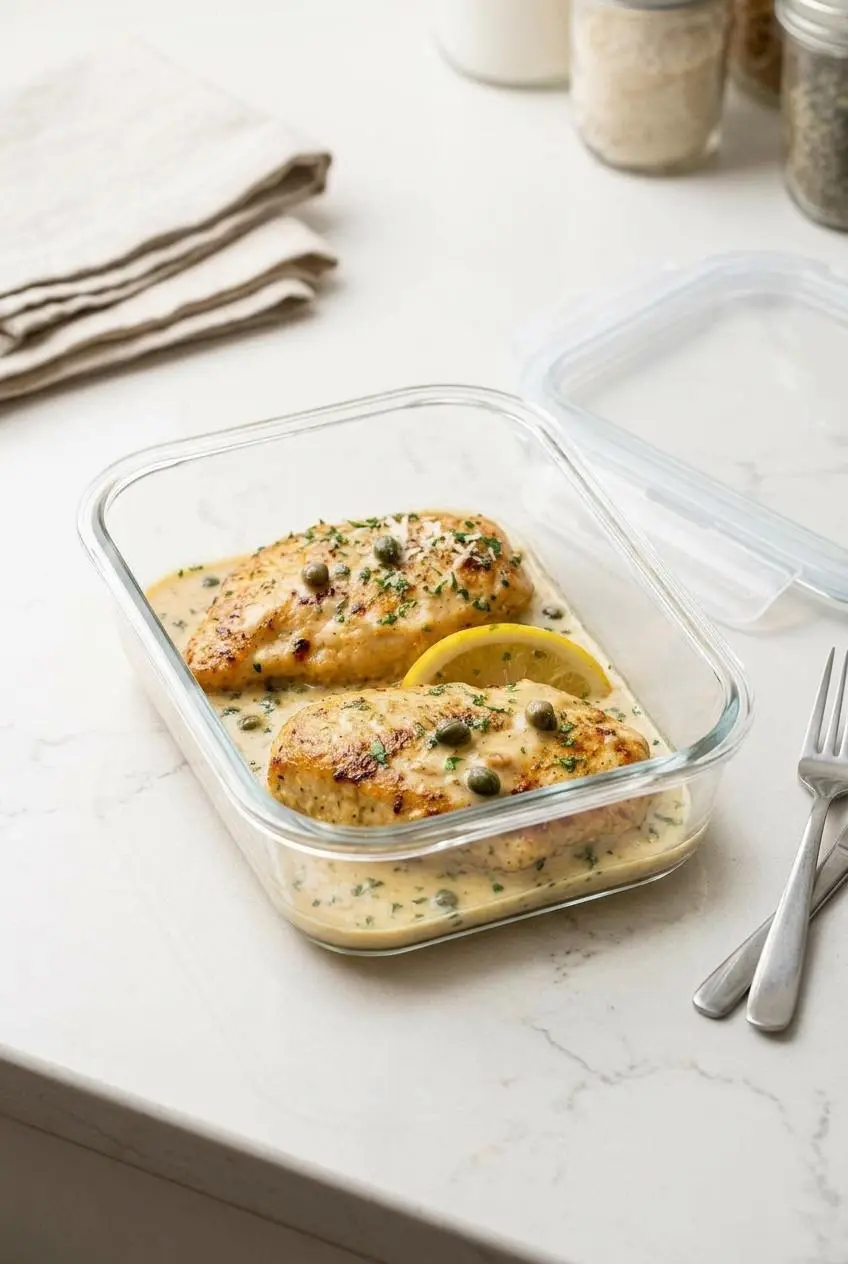
Chicken piccata is at its best right after cooking, when the crust is still lightly crisp and the sauce is glossy. Leftovers still work well, though the coating softens once it sits in the sauce.
Cool the dish, transfer it to a covered container, and keep it chilled. For leftovers, the USDA also advises getting cooked food refrigerated within 2 hours and keeping leftovers refrigerated promptly.
To reheat, warm the chicken and sauce gently in a skillet over low heat until heated through. Add a small splash of broth if the sauce has tightened in the fridge. The microwave works in a pinch, but it can make the chicken a little rubbery and the sauce less silky.
If you want to make it ahead, the best approach is to prepare it, chill it once cooled, and reheat softly on the stovetop before serving. Expect the crust to be softer than when freshly made.
The creamy version is the least freezer-friendly because dairy sauces can separate after thawing. If freezer storage matters to you, the classic non-creamy variation is the better choice, though the texture is still best when served fresh.
Troubleshooting Common Piccata Problems
Most piccata issues come down to heat, cutlet thickness, or sauce balance. This quick guide helps you fix the usual trouble spots.
| Problem | Likely Cause | How to Fix It |
|---|---|---|
| My sauce curdled. | The cream was cold or went into a very hot acidic pan too quickly. | Take the pan off the heat first, use room temperature cream, and whisk it in gradually. |
| My chicken is tough and dry. | The cutlets were too thick or cooked too long. | Slice the chicken thinner next time and pull it once the center is cooked through. |
| My sauce is too thin. | It did not simmer long enough to reduce. | Let it bubble gently a little longer until it lightly coats a spoon. |
| My sauce is too thick. | It reduced too far. | Whisk in a splash of chicken broth until it loosens back up. |
| My chicken did not brown well. | The pan was not hot enough or the skillet was crowded. | Wait for the butter and oil to heat fully and sear in batches if needed. |
Conclusion
Chicken piccata is one of those dinners that feels polished without asking for much time. The lemon butter sauce, capers, and golden chicken do a lot with a very straightforward skillet method.
Keep the cutlets thin, let the pan get properly hot, and the whole dish gets easier. Once that sauce hits the skillet, dinner smells pretty great.
Frequently Asked Questions (FAQ)
Why Did My Chicken Piccata Sauce Curdle?
Usually, cold cream hit a very hot acidic sauce. Take the pan off the heat, use room temperature cream, and whisk it in slowly. If the sauce is already looking split, lower the heat right away and whisk gently. Keeping the pan at a gentle simmer instead of a hard boil helps prevent it next time.
Can I Make Chicken Piccata Without Flour?
Yes, but it will cook a little differently. The chicken will not get the same delicate golden crust, and the sauce will usually be a bit thinner. If you need a gluten-free option, a 1-to-1 gluten-free flour blend is a good substitute for dredging.
What Is a Good Substitute for Capers in Chicken Piccata?
Finely chopped green olives are the closest swap if you still want that salty, briny contrast. They change the flavor a little, but the dish still makes sense. You can also leave capers out entirely if you prefer. Just know the finished dish will lose some of its classic piccata edge.
Can I Make Chicken Piccata a Day Ahead?
Yes, though it is best when freshly cooked. The main thing that changes is texture, since the flour coating softens as it sits in the sauce. If you make it ahead, cool it, keep it covered in the fridge, and reheat it gently on the stovetop so the chicken stays as tender as possible.
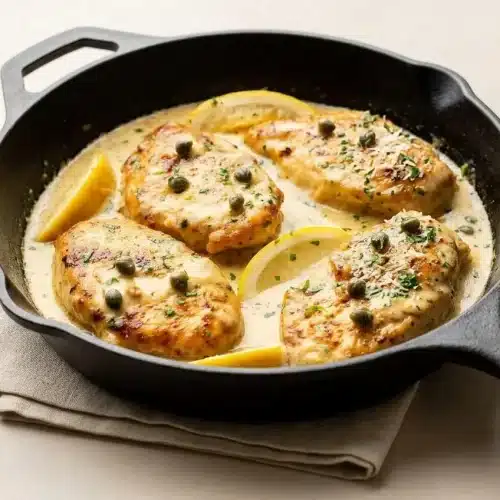
Chicken Piccata

Equipment
- Skillet
- Microplane zester/grater
- Instant-read thermometer
- Splatter guard
Ingredients
- 2 large chicken breasts
- Salt & pepper to taste
- 1/4 teaspoon garlic powder
- Flour for dredging
- 4 tablespoons butter divided
- 1 tablespoon olive oil
- 1/4 cup chicken broth (or dry white wine)
- 1 tablespoon lemon juice + zest of 1 lemon
- 1 tablespoon brined capers drained
- 1/2 cup heavy/whipping cream
- chopped parsley and/or freshly grated parmesan cheese for garnish, optional
Instructions
- Slice the chicken breasts lengthwise to make 4 thin cutlets, trim off any fat, then season them with salt, pepper, and garlic powder before coating them in flour. The cutlets should look evenly dusted rather than thickly coated, and thin pieces will cook quickly and stay more tender.
- Add 2 tablespoons of the butter and the olive oil to a skillet over medium-high heat. When the butter melts and foams with the oil, the pan is ready for searing.
- Cook the chicken for about 4 to 5 minutes per side, then move it to a plate once both sides are golden. The crust should be deep golden brown, and an instant-read thermometer should reach 165°F for poultry.
- Take the skillet off the heat and add the chicken broth, lemon juice, lemon zest, remaining 2 tablespoons of butter, and capers, scraping up the browned bits from the bottom. The pan will smell intensely lemony and buttery, and those browned bits melt into the sauce for extra flavor.
- Stir in the cream, return the skillet to the heat, and once the sauce starts bubbling again, nestle the chicken back into the pan. The sauce may look loose at first, but it will start to come together as it warms and simmers around the chicken.
- Cook for another 5 minutes, lowering the heat if the sauce is boiling too hard, until the chicken is cooked through and the sauce has reduced to your liking. The finished sauce should lightly coat a spoon, and a splash of extra broth will loosen it if it reduces too far.
- Garnish with freshly chopped parsley and/or parmesan cheese if desired. The fresh garnish adds color and a final hit of flavor right before serving.