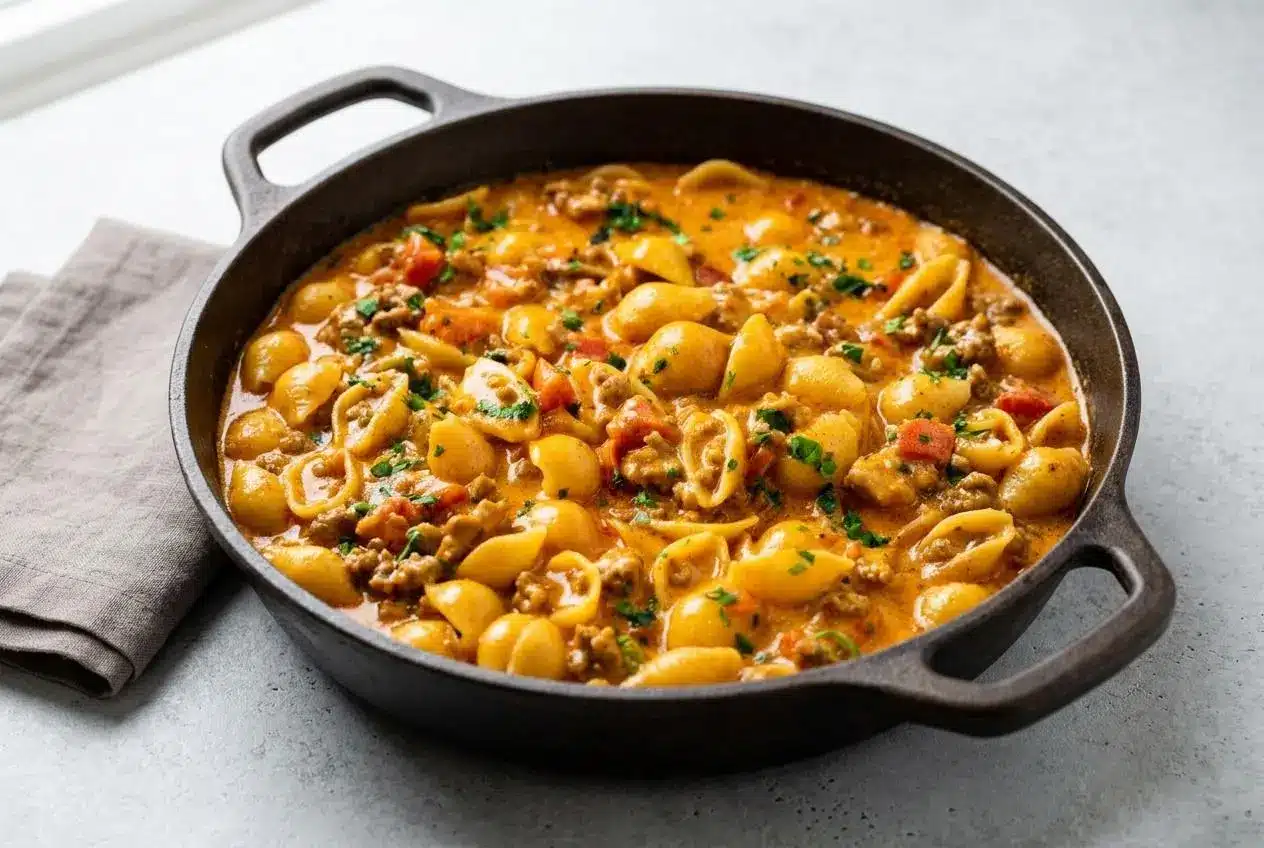
This taco pasta is a creamy one-pot dinner ready in about 30 minutes, with ground beef, shells, taco seasoning, tomatoes, milk, and melted cheese in every bite.
Taco pasta hits that sweet spot between weeknight easy and full comfort food. Everything cooks in one pot, so the pasta soaks up the savory broth and taco flavor as it softens.
You get a rich, cheesy sauce without juggling extra pans, and the whole thing is flexible enough for toppings and add-ins. The best part is the sauce trick.
Shred the cheese before you start cooking so it has a little time to lose its chill and melt more smoothly later.
Why This Taco Pasta Recipe Is a Winner
- Ready in about 30 minutes, which makes it a real weeknight meal.
- Made in one pot, so cleanup stays easy.
- The sauce turns creamy and cheesy instead of greasy or grainy.
- Family-friendly, hearty, and easy to adjust with toppings or add-ins.
Ingredients You’ll Need
Each ingredient pulls its weight here, from savory depth in the broth to creamy body from the milk and cheeses, plus pasta shells that hold onto the sauce instead of letting it slide away.
- 1 cup Cheddar cheese (shredded)
- 1 cup Monterey Jack Cheese (shredded)
- 4 oz. Velveeta cheese (cut into cubes (equal to 1/3 cup)* can sub with ¾ cup shredded cheese)
- 1 lb. Ground Beef (85% lean)
- 1 Tablespoon Butter
- 2 cloves Garlic (minced)
- 1 oz. packet Taco Seasoning
- 1 Tablespoon Worcestershire sauce
- 2 Tablespoons Tomato paste
- 1 cup Beef broth
- 1 cup Chicken broth
- 1 cup Whole milk (at room temp)
- 1 (10 oz.) can Rotel Tomatoes with green chilies (undrained)
- ½ lb. Medium pasta shells
The ground beef brings richness, while the butter and garlic build flavor right in the same pot after the beef is browned. Taco seasoning, Worcestershire, tomato paste, and Rotel create that familiar taco-style base with a little tang and warmth.
The mix of beef broth, chicken broth, and milk matters here. The broths add savory depth, and the milk gives the sauce a softer, creamier finish than water alone. Medium shells are especially good because they catch the sauce inside the curves.
Using three cheeses gives you a better texture than relying on one. Cheddar adds sharper flavor, Monterey Jack melts smoothly, and the Velveeta helps keep the sauce silky and cohesive.
I like to shred the cheese while the beef browns so it can warm up slightly before it hits the pot, which makes the final sauce much smoother.
Why Use Broth and Milk?
Broth gives this pasta a deeper, meatier flavor than water, and it seasons the shells as they cook. Milk rounds everything out and turns the liquid into a creamy pasta sauce, so the dish tastes richer and cheesier instead of thin or tomato-heavy.
Choosing the Best Cheese for This Pasta
If you want the sauce to melt smoothly and still taste bold, the cheese blend matters more than people think. For another extra-cozy, cheese-forward dinner, French Onion Pasta is a great next move.
| Cheese | Flavor Profile | Melt Quality |
|---|---|---|
| Cheddar | Sharp, savory, classic taco-night flavor | Melts well, but can turn oily if overheated |
| Monterey Jack | Mild, buttery, mellow | Very smooth and stretchy |
| Pepper Jack | Mildly spicy with extra kick | Smooth melt, slightly looser sauce |
| Velveeta or cream cheese option | Velveeta is mild and creamy, cream cheese is tangier | Velveeta stays extra smooth, cream cheese makes the sauce thicker and silkier |
For the creamiest result, keep the heat low when the cheese goes in. The sauce may look a little thin right before the cheese is added, but that is normal. Once the cheese melts and the pasta rests for a few minutes, it thickens into the right spoon-coating texture.
How to Make One-Pot Taco Pasta
- Shred the Cheddar and Monterey Jack from a block and set them aside before you begin cooking.
The cheese should be closer to room temperature than fridge-cold so it melts into a smoother sauce. - Cook and crumble the ground beef in a high-walled pot or Dutch oven over medium-high heat, then drain off the grease.
The beef should be browned with no large pink pieces left, and draining keeps the finished pasta from tasting oily. - Melt the butter in the same pot, then add the minced garlic and cook for 1 minute.
You should hear a gentle sizzle and smell the garlic bloom in the butter without letting it brown too far. - Stir in the taco seasoning, Worcestershire sauce, tomato paste, beef broth, chicken broth, whole milk, and Rotel tomatoes with green chilies, keeping the pasta and cheeses out for now.
The liquid should look well mixed and lightly reddish with the tomato paste fully worked in. - Bring the mixture to a gentle boil, add the pasta shells, and press them under the liquid.
Once covered, the pasta should cook according to the package directions while gentle bubbling continues across the surface. - About halfway through cooking, run a silicone spatula along the bottom of the pot to loosen anything that may be settling.
This keeps the shells from sticking, and the mixture should stay saucy rather than scorched or clumpy. - Remove the lid and taste a shell to check doneness, covering again briefly if the pasta needs more time.
The shells should look plump and have absorbed most of the liquid while a good amount of sauce still remains. - Lower the heat and stir in the cheeses a little at a time until fully melted.
The sauce should turn creamy and glossy as the cheese disappears instead of forming grainy bits. - Let the pasta stand briefly, then serve when the sauce reaches the consistency you like.
It will continue to thicken as it sits, so a slightly loose sauce in the pot is exactly where you want it.
Tips for Perfect One-Pot Taco Pasta
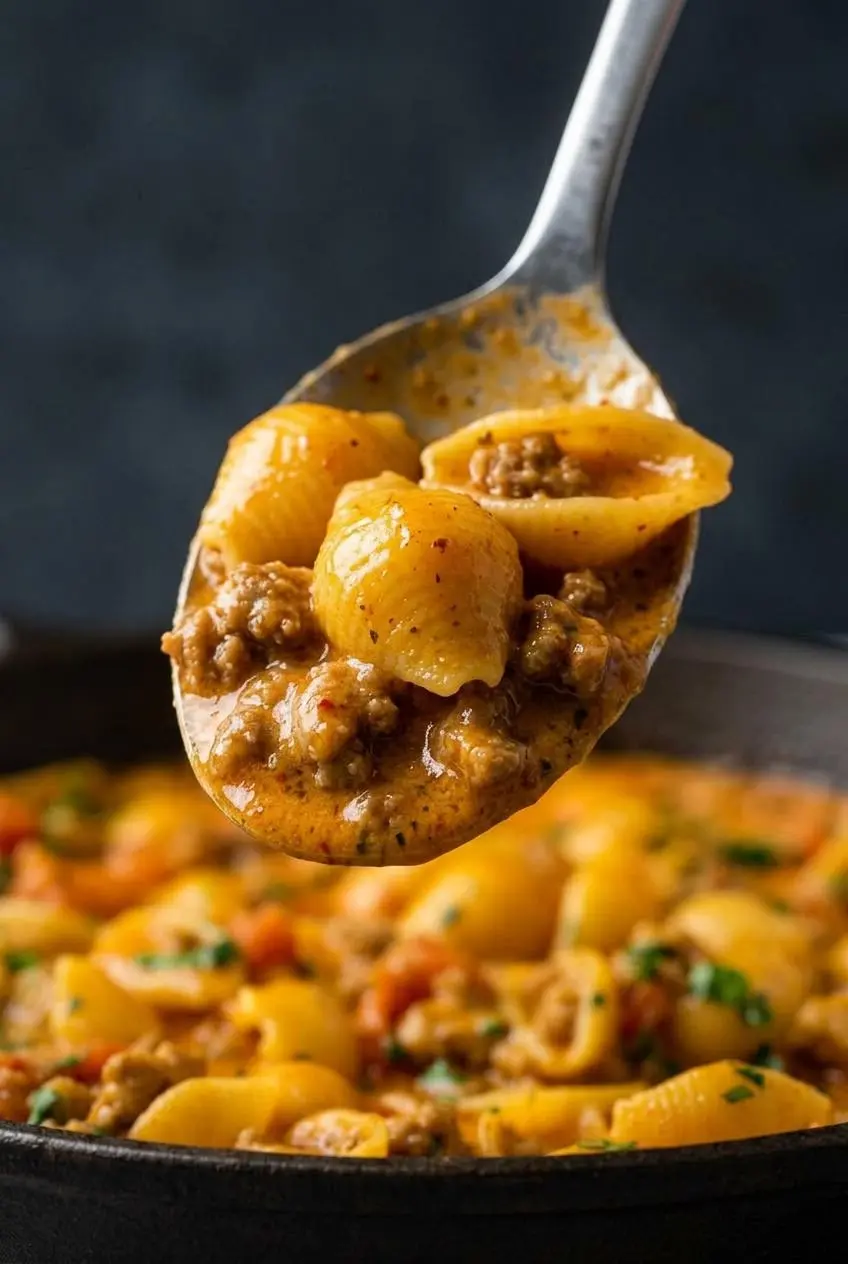
A few small choices make the difference between silky, saucy pasta and a pot that feels heavy or broken.
- Shred your own cheese. Pre-shredded cheese often contains anti-caking coatings that keep it from melting as smoothly.
- Use room-temperature milk and let the cheese lose some of its chill before adding it. Cold dairy is more likely to seize or turn grainy.
- Scrape the bottom of the pot partway through cooking. One-pot pasta loves to settle.
- Do not overcook the shells. They keep softening as they sit in the hot sauce.
- Let the pasta rest for a few minutes before serving. The sauce thickens up noticeably off the heat.
When something goes off track, it is usually fixable without starting over.
| Problem | Likely Cause | How to Fix It |
|---|---|---|
| Watery sauce | The pasta is done but the liquid has not reduced enough yet | Simmer uncovered for a bit longer, then let it rest before serving so the sauce can tighten naturally |
| Grainy sauce | Cheese was too cold, heat was too high, or pre-shredded cheese was used | Reduce the heat to low and stir in room-temperature cheese gradually |
| Mushy pasta | The shells cooked too long in the liquid or sat too long before serving | Check the pasta early, stop when it is just tender, and remember it keeps absorbing sauce off the heat |
Variations and Customizations
This is an easy skillet-style dinner to adapt, as long as the changes stay optional and you keep the main one-pot method intact.
Protein Swaps
Ground turkey and ground chicken both work well here. If you use very lean poultry, add a little oil to the pot so the meat browns instead of drying out, and start checking it a bit sooner since it often cooks faster than beef.
If you want a meatless version, black beans and corn make the best switch in spirit. The flavor lands a little softer and less rich, but the dish still feels hearty and satisfying.
Hearty Vegetable Add-Ins
Diced bell peppers can go in with the ground beef so they soften as the meat cooks. Corn and black beans are better added when the pasta goes in, since they only need to heat through while the shells cook.
If you like bold comfort-food mashups, Philly Cheesesteak Pasta plays the same fun game in a totally different direction.
Adjusting the Spice Level
For a milder version, use mild taco seasoning and swap the Rotel for plain diced tomatoes. For more heat, use a hotter taco seasoning, stir in chopped jalapeños, or add a pinch of cayenne when the liquids go in.
Gluten-Free and Dairy-Free Options
You can make this with a gluten-free short pasta and a gluten-free taco seasoning packet. Since gluten-free pasta can absorb liquid differently, watch the pot closely and be ready to add a small splash of broth if it tightens too quickly.
A fully dairy-free version changes the texture more noticeably, so treat it as a separate variation rather than expecting the exact same creamy finish. If bold one-pot flavor is your thing, Cajun Pastalaya is another great dinner idea.
For a richer optional spin, swap the Velveeta for softened cream cheese mixed with a little adobo sauce from canned chipotles. That version tastes tangier, smokier, and a touch more grown-up while still staying creamy.
Serving Suggestions
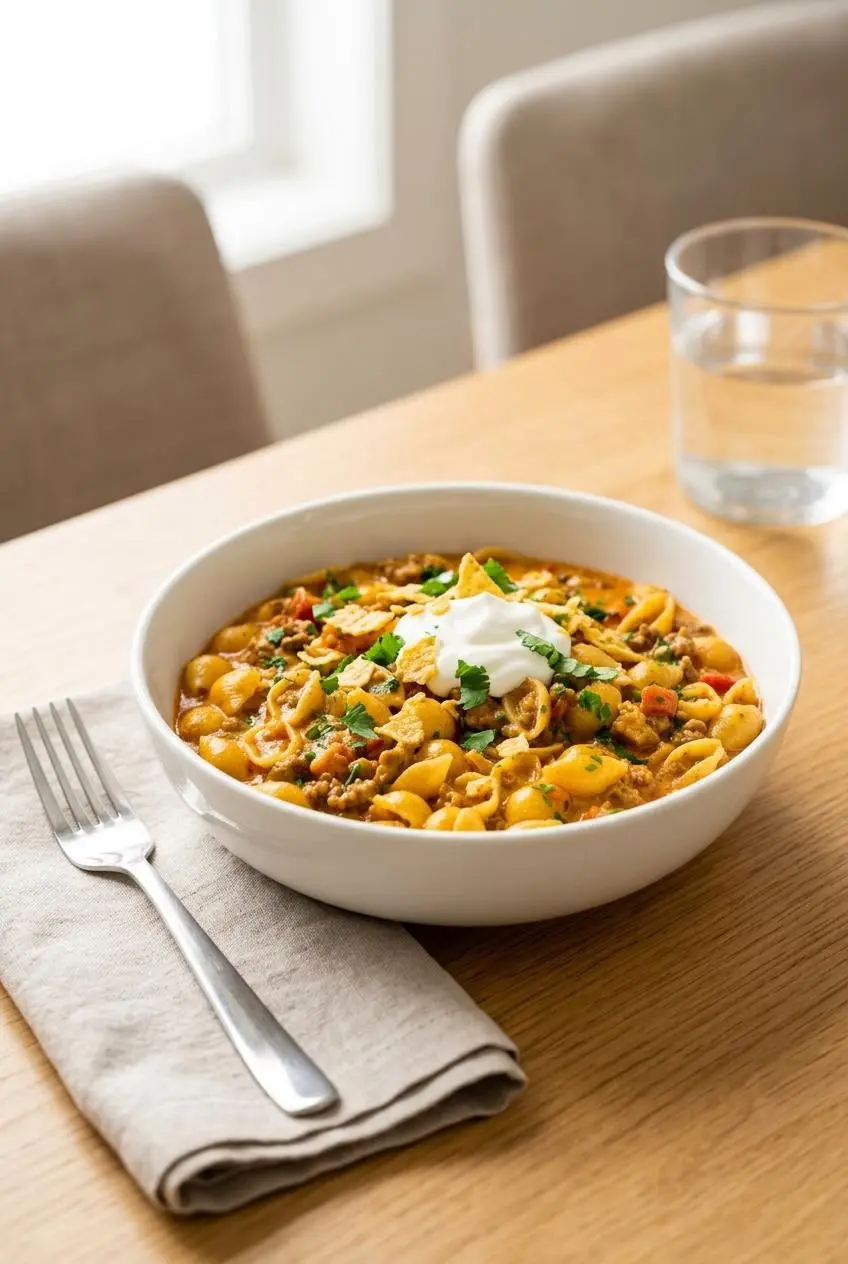
This pasta is hearty enough to stand on its own, but the right toppings and sides make it feel more like taco night in pasta form.
- Classic toppings: sour cream, chopped cilantro, sliced avocado, green onions, or black olives.
- Adding crunch: crushed tortilla chips or Fritos right before serving.
- Easy sides: a green salad with a limey dressing or warm cornbread.
A squeeze of fresh lime at the table is especially good if the cheese makes the dish feel very rich. It wakes everything up fast.
Storage, Reheating, and Leftovers
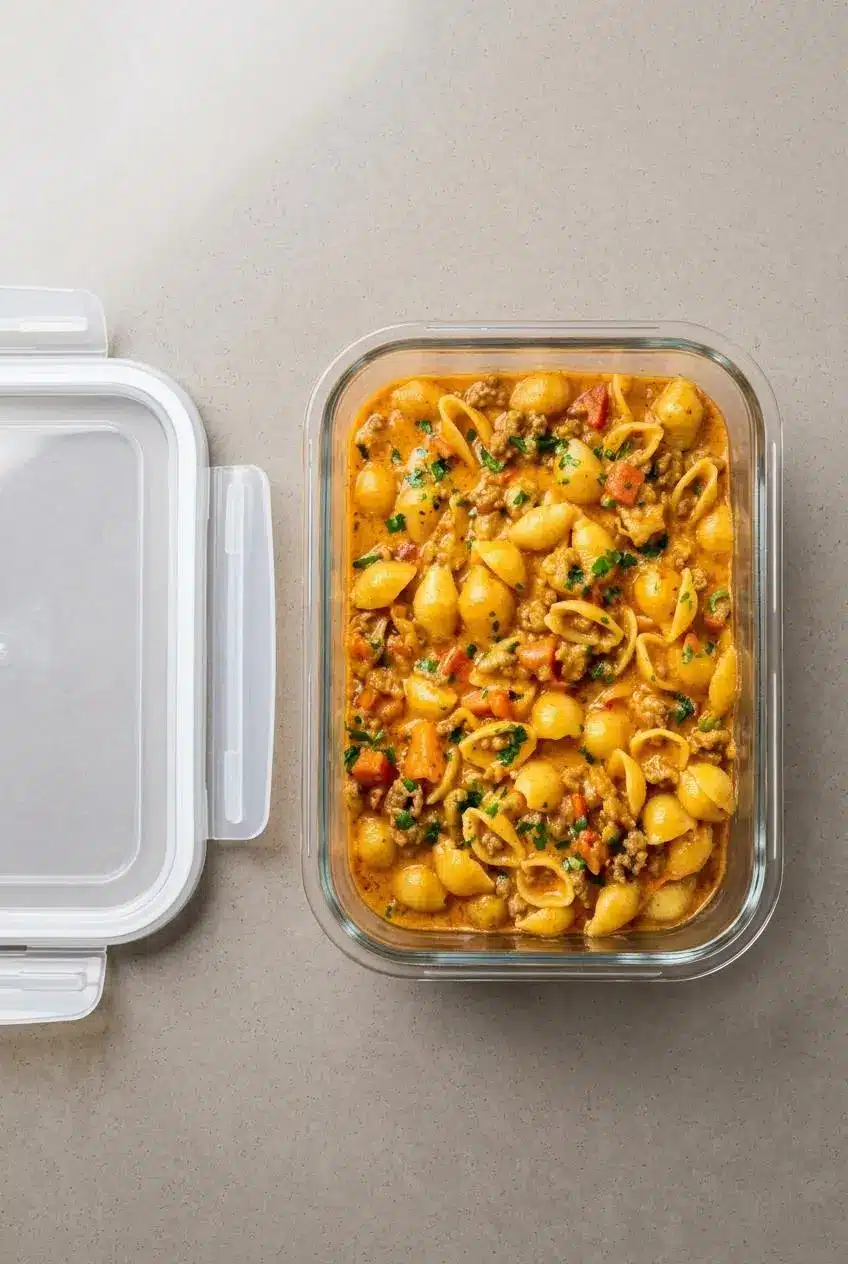
Leftover taco pasta holds up well when it is cooled and stored in a covered container in the refrigerator. The sauce will thicken as it sits, so expect it to look tighter the next day than it did fresh off the stove.
To reheat on the stovetop, warm it gently over medium-low heat and stir in a splash of milk or broth as needed. That loosens the sauce and helps the pasta heat more evenly without turning gluey.
For the microwave, use short bursts at reduced power and stir between each round. That slower reheating keeps the cheese sauce smoother and helps the pasta stay intact.
If you would rather turn leftovers into something new, a leftover pasta frittata is a smart save.
Conclusion
This taco pasta is fast, filling, and reliably creamy, which is exactly what a one-pot weeknight dinner should be.
If you remember one thing, make it this: shred your own cheese and add it over low heat. That small step makes the whole pot taste better.
Frequently Asked Questions
My taco pasta is watery. How do I fix it?
If the pasta is fully cooked, let it simmer uncovered a little longer so some of the extra liquid can reduce. Then give it a short rest off the heat, because the sauce thickens quite a bit as it stands. If it is still looser than you want, a small cornstarch slurry can help as a last resort. Usually, though, resting does more than people expect.
My sauce is grainy, how can I prevent it?
The two biggest causes are high heat and pre-shredded cheese. Use block cheese when possible, let the milk and cheese warm up a bit, and melt everything in over low heat instead of boiling the sauce once the cheese goes in.
Can I make taco pasta ahead of time?
It is best freshly made, but you can cook it ahead if needed. Just know the pasta will keep absorbing sauce as it sits, so plan to reheat it gently with a splash of milk or broth to bring back the creamy texture.
What’s the best pasta shape for this recipe?
Medium shells are the best match for the main recipe because they trap the sauce nicely. Rotini, penne, and elbow macaroni also work well because they hold onto the cheesy sauce better than long noodles like spaghetti.
Can I use ground turkey instead of ground beef?
Yes. Use 1 lb. of ground turkey and, if it is very lean, add a little oil so it browns well and does not dry out. The flavor will be a little lighter, but the taco seasoning and cheese still carry the dish beautifully.
Can I make this recipe gluten-free?
Yes, with a gluten-free short pasta and a gluten-free taco seasoning packet. Watch the liquid closely while it cooks, since different gluten-free pastas can soften faster or drink up the sauce at different rates.
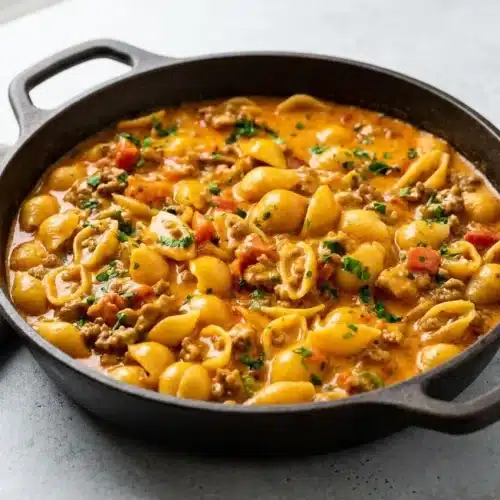
Taco Pasta

Equipment
- Dutch oven
- Box Cheese Grater
- Garlic Twister
Ingredients
- 1 cup Cheddar cheese shredded
- 1 cup Monterey Jack Cheese shredded
- 4 oz. Velveeta cheese cut into cubes (equal to 1/3 cup)* can sub with ¾ cup shredded cheese
- 1 lb. Ground Beef 85% lean
- 1 Tablespoon Butter
- 2 cloves Garlic minced
- 1 oz. packet Taco Seasoning
- 1 Tablespoon Worcestershire sauce
- 2 Tablespoons Tomato paste
- 1 cup Beef broth
- 1 cup Chicken broth
- 1 cup Whole milk at room temp
- 1 (10 oz.) can Rotel Tomatoes with green chilies undrained
- ½ lb. Medium pasta shells
Instructions
- Shred the Cheddar and Monterey Jack from a block and set them aside before you begin cooking. The cheese should be closer to room temperature than fridge-cold so it melts into a smoother sauce.
- Cook and crumble the ground beef in a high-walled pot or Dutch oven over medium-high heat, then drain off the grease. The beef should be browned with no large pink pieces left, and draining keeps the finished pasta from tasting oily.
- Melt the butter in the same pot, then add the minced garlic and cook for 1 minute. You should hear a gentle sizzle and smell the garlic bloom in the butter without letting it brown too far.
- Stir in the taco seasoning, Worcestershire sauce, tomato paste, beef broth, chicken broth, whole milk, and Rotel tomatoes with green chilies, keeping the pasta and cheeses out for now. The liquid should look well mixed and lightly reddish with the tomato paste fully worked in.
- Bring the mixture to a gentle boil, add the pasta shells, and press them under the liquid. Once covered, the pasta should cook according to the package directions while gentle bubbling continues across the surface.
- About halfway through cooking, run a silicone spatula along the bottom of the pot to loosen anything that may be settling. This keeps the shells from sticking, and the mixture should stay saucy rather than scorched or clumpy.
- Remove the lid and taste a shell to check doneness, covering again briefly if the pasta needs more time. The shells should look plump and have absorbed most of the liquid while a good amount of sauce still remains.
- Lower the heat and stir in the cheeses a little at a time until fully melted. The sauce should turn creamy and glossy as the cheese disappears instead of forming grainy bits.
- Let the pasta stand briefly, then serve when the sauce reaches the consistency you like. It will continue to thicken as it sits, so a slightly loose sauce in the pot is exactly where you want it.