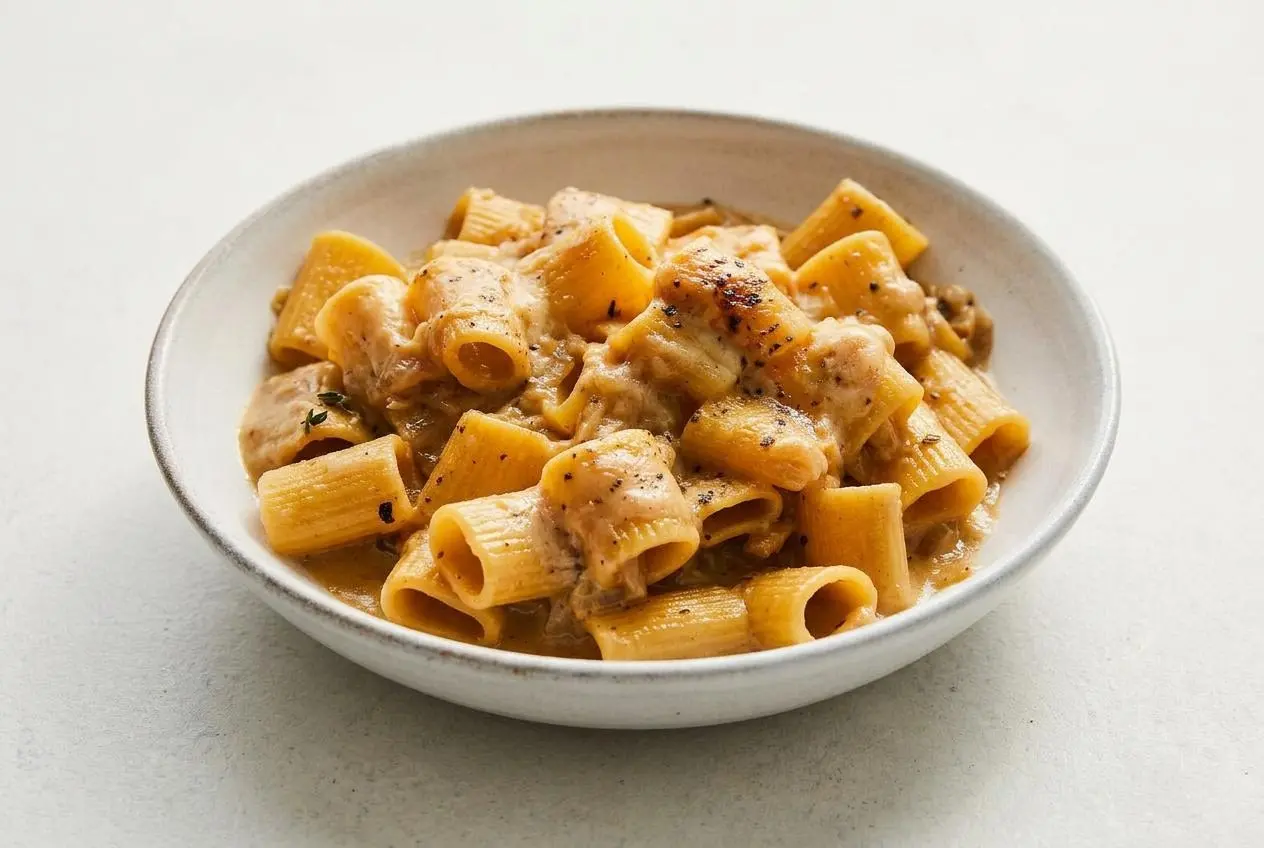
French Onion Pasta is a one-pot pasta dinner with deeply caramelized onions, savory broth, cream, and melted Gruyère. It tastes like French onion soup turned into a rich, cozy bowl of pasta, and it takes about 1 hour 15 minutes from start to finish.
French Onion Pasta gives you sweet jammy onions, a silky sauce, and plenty of cheesy pull without juggling a sink full of pans. It lands right between weeknight comfort food and dinner-party worthy.
The onions do most of the heavy lifting here, so give them time and the rest of the dish gets much easier.
Use a wide heavy pot if you can, because the onions brown more evenly when they have room to soften and concentrate.
Why You’ll Love This French Onion Pasta
If you love classic French onion soup, this pasta hits the same notes in a heartier form. It tastes rich, creamy, deeply savory, and slightly sweet from the onions, with beef broth bringing depth and Gruyère adding that nutty, melty finish that makes the whole pot feel extra cozy.
It also keeps the method practical. The pasta cooks right in the broth, so the starch helps build the sauce while you stir, and you end up with a dinner that feels slow-cooked even though the only truly patient step is the onion caramelization.
For anyone drawn to cheesy comfort-food pasta, Philly Cheesesteak Pasta scratches a similar rich and savory itch in a different way.
Ingredient Spotlight: What You’ll Need
Each ingredient has a clear job here, from building deep savory flavor to giving the sauce body, shine, and that classic French onion finish.
- 2 tablespoons unsalted butter
- 1 tablespoon olive oil
- 2 large yellow onions, thinly sliced
- Kosher salt (such as Diamond Crystal) and freshly ground black pepper
- 2 garlic cloves, minced
- 1 teaspoon fresh thyme leaves
- 2 teaspoons Worcestershire sauce
- ¼ cup dry white wine
- 5 to 6 cups broth (beef recommended for deeper flavor, chicken for a lighter profile; vegetable broth also works)
- 1 pound mezzi rigatoni or regular rigatoni
- ½ cup heavy cream
- 1 cup shredded Gruyère cheese (about 5 ounces)
- ½ cup finely grated Parmesan cheese (about 2 ounces), plus more for serving (optional)
Beef broth is the strongest choice if you want that unmistakable French onion soup flavor. Chicken broth works, but the result is lighter and less savory. Vegetable broth is possible too, though it shifts the dish away from the more classic profile.
Gruyère is the best match for this pasta because it melts smoothly and brings a nutty, slightly sweet flavor that fits the caramelized onions beautifully. Parmesan sharpens the finish and helps the sauce taste more layered instead of flat.
The dry white wine lifts all that richness with acidity and helps loosen the browned bits from the bottom of the pot. If you do not cook with wine, broth plus a small splash of vinegar or a little Dijon later on can bring back some of that brightness.
I always grate the cheese from a block for this one because it melts more smoothly and gives the sauce a glossier finish.
Choosing the Best Cheese
| Cheese | Flavor | Melting Quality |
|---|---|---|
| Gruyère | Nutty, savory, slightly sweet | Excellent melt with a smooth, classic finish |
| Comté | Nutty, buttery, a little more complex | Very good melt and a polished, rich sauce |
| Smoked Gouda | Smoky, sweet, bolder than classic | Melts well, though the flavor pulls the dish in a less traditional direction |
Gruyère is the traditional choice and the one that tastes most like the soup inspiration. Comté is a great substitute if you want something close, while smoked Gouda works best when you want a deeper, more assertive twist.
How to Make French Onion Pasta
The big idea is simple: slowly build flavor with onions, cook the pasta directly in the broth, then finish off the heat so the cheese stays smooth and glossy.
- Set a large Dutch oven or wide heavy-bottomed pot over medium-low heat and melt the butter with the olive oil, then add the sliced onions.
The onions should soften gradually and turn from sharp and pale to deep brown, very soft, and jammy in about 45 minutes. - Season the caramelized onions with ¾ teaspoon salt and several grinds of black pepper, then stir in the garlic, thyme, and Worcestershire sauce for about 30 seconds.
You should smell the onions shift from sweet and mellow to more savory and fragrant almost right away. - Pour in the white wine and scrape the bottom of the pot to loosen the browned bits.
When the wine is mostly reduced after about 30 seconds, the pot should look glossy rather than wet. - Add the rigatoni, then pour in enough broth to just cover the pasta and bring it to a boil.
Once it bubbles, the pasta should be mostly submerged in flavorful liquid with the onions distributed throughout. - Lower the heat to medium and cook uncovered, stirring every 1 to 2 minutes, until the pasta is just tender and the liquid has thickened into a sauce, 15 to 18 minutes.
If the pot starts looking dry before the pasta is ready, add more broth a splash at a time so the pasta cooks without sticking. - Reduce the heat and stir in the heavy cream, then take the pot off the heat and add the Gruyère in small handfuls, stirring until each addition melts before adding more; finish with the Parmesan and adjust salt and pepper as needed.
The sauce may look a little loose at first, but it should turn smooth, glossy, and well-coated as the cheese melts in. - Let the pasta stand for 5 to 7 minutes before serving, then spoon it out warm with extra Parmesan if desired.
That short rest helps the sauce tighten so it clings to the rigatoni instead of pooling at the bottom.
Tips for Perfect French Onion Pasta
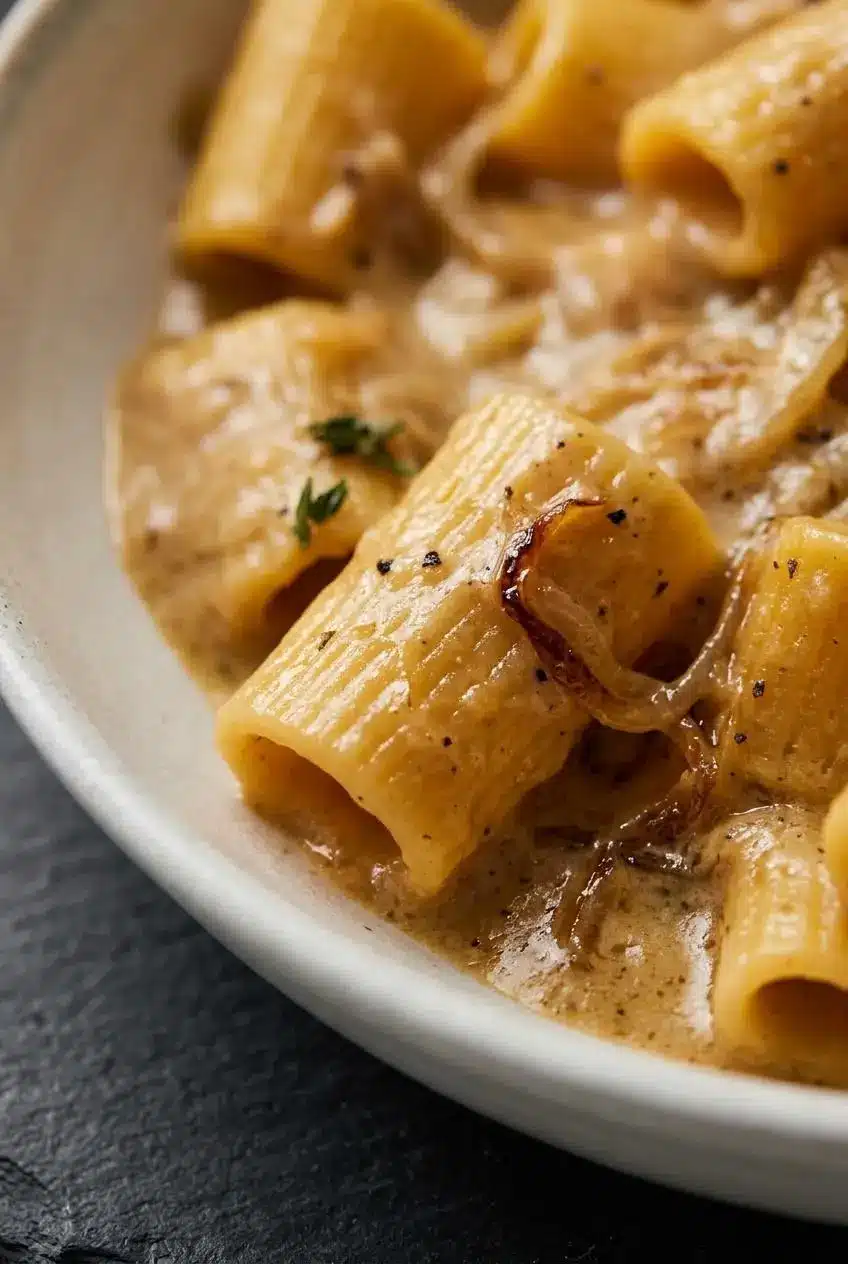
- Give the onions time. Deep caramelization is where the dish gets its sweetness, color, and real French onion character.
- Keep the heat at medium-low for the onion stage. If the pan gets too hot, the onions can burn on the edges before they turn soft and jammy.
- If the onions start sticking hard to the pot, loosen them with a small splash of water or broth and keep going. That saves the flavor instead of losing it.
- Scrape up the browned bits when you add the wine. That fond is pure savory flavor.
- Stir the pasta often while it cooks in the broth. One-pot pasta can stick quickly if it sits too long.
- Stop cooking when the pasta is just tender. It keeps softening a bit as it rests in the hot sauce.
- Add the cheese off the heat and in small handfuls. That is the easiest way to keep the sauce smooth instead of grainy.
- Let the finished pasta rest before serving. The sauce will seem loose at first, then settle into a creamier texture that coats the pasta much better.
Recipe Variations and Add-Ins
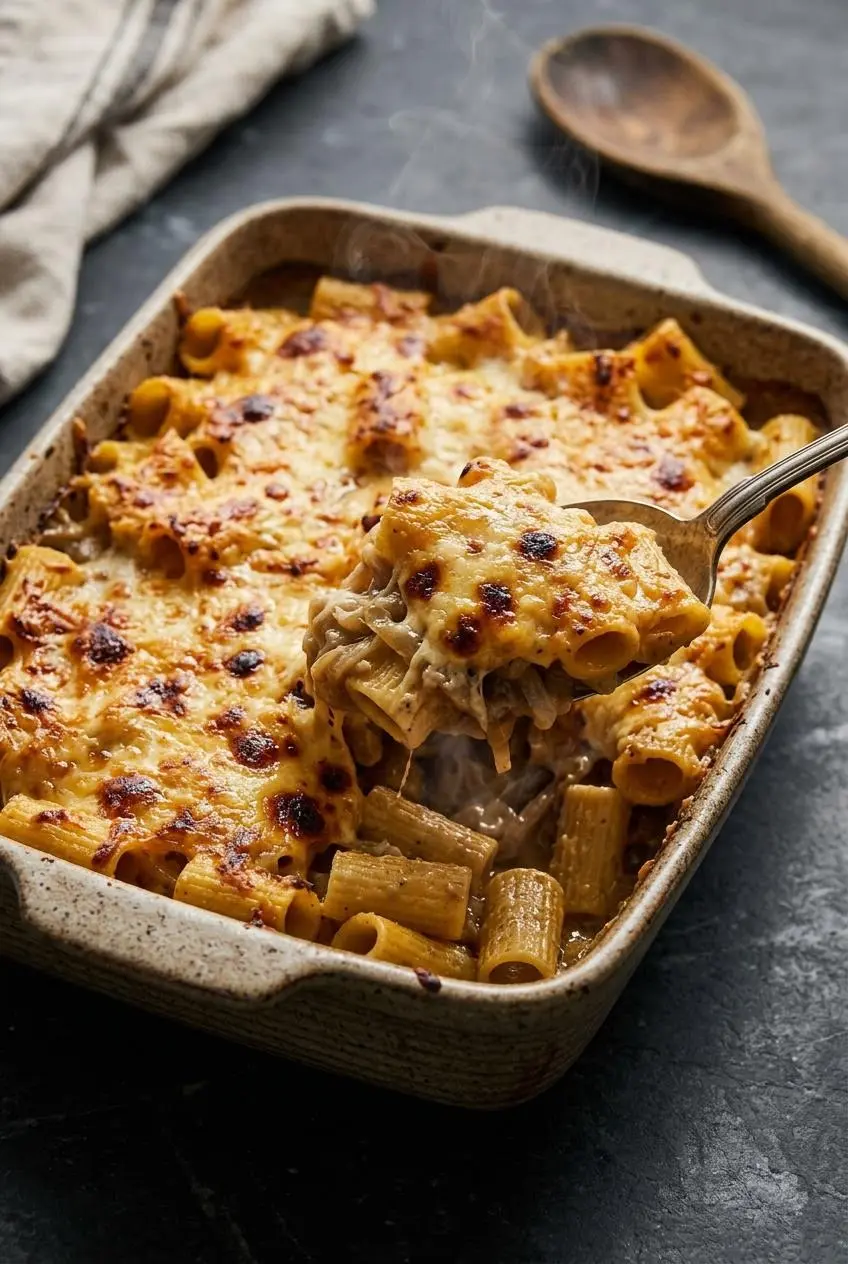
The classic stovetop version is the one to master first, but this dish is easy to customize once you know how the sauce should look and taste.
| Option | What It Adds | When to Add It |
|---|---|---|
| Baked finish | A bubbly, browned cheese top like classic soup | After the pasta is fully cooked |
| Chicken or beef | More heft and protein | At the end, so the meat stays tender |
| Mushrooms | Extra umami and earthy depth | With the garlic before deglazing |
| Breadcrumb topping | Crunch that echoes soup croutons | Just before serving |
Crunchy Garlic-Thyme Breadcrumb Topping
This is the topping I recommend most because it gives the pasta the missing crunchy note that French onion soup usually gets from toast. Toast breadcrumbs in a skillet with a little butter or olive oil until golden, then stir in a little minced garlic and thyme near the end so they do not scorch. Spoon the crumbs over each bowl right before serving for a crisp, savory finish.
Optional Baked Finish for a Crispy Cheese Top
If you want that broiled soup-shop feel, transfer the finished pasta to a baking dish, scatter extra Gruyère over the top, and broil until the cheese is melted, bubbling, and browned in spots. Keep an eye on it, because broilers move fast.
If baked pasta is your thing, creamy chicken pasta bake is another cozy route to the same golden, bubbly finish.
Hearty Protein Additions: Chicken or Beef
Cooked shredded chicken works best when stirred in right at the end, after the sauce is finished, so it warms through without drying out. For beef, seared ground beef is the easiest option. Brown it separately, drain if needed, and fold it in before serving so the onion flavor still leads.
If you want another beef-and-pasta dinner idea, hearty steak pasta is a good next stop.
For the Umami Lovers: Adding Mushrooms
Sliced cremini mushrooms fit naturally here. Add them along with the garlic, cook until they lose their moisture and start to brown, then continue with the wine. They make the dish earthier and even more savory without changing the overall spirit of the recipe.
Troubleshooting Common Problems
Most problems with this pasta come down to heat, timing, or sauce balance. Here is how to fix the common ones without guesswork.
| Problem | Likely Cause | How to Fix It |
|---|---|---|
| Sauce is too thin | The pasta needed a little more time, or there was more broth than necessary | Let it simmer a bit longer, stirring often, then rest the pasta before serving so the sauce can tighten |
| Sauce is too thick | The broth reduced too quickly while the pasta cooked | Stir in a splash of broth while the pot is still warm until the sauce loosens and coats the pasta |
| Cheese sauce is grainy or broken | The cheese went in over too much heat or too quickly | Take the pot off the heat before adding cheese and melt it in gradually, stirring between additions |
| Onions are burning instead of caramelizing | The heat is too high or the pan is too dry | Lower the heat and loosen the pan with a small splash of water or broth, then keep cooking slowly |
| Pasta is mushy | It cooked past al dente or sat too long in a very loose sauce | Start checking early, stop when the pasta is just tender, and avoid over-thinning the sauce at the end |
What to Serve With French Onion Pasta
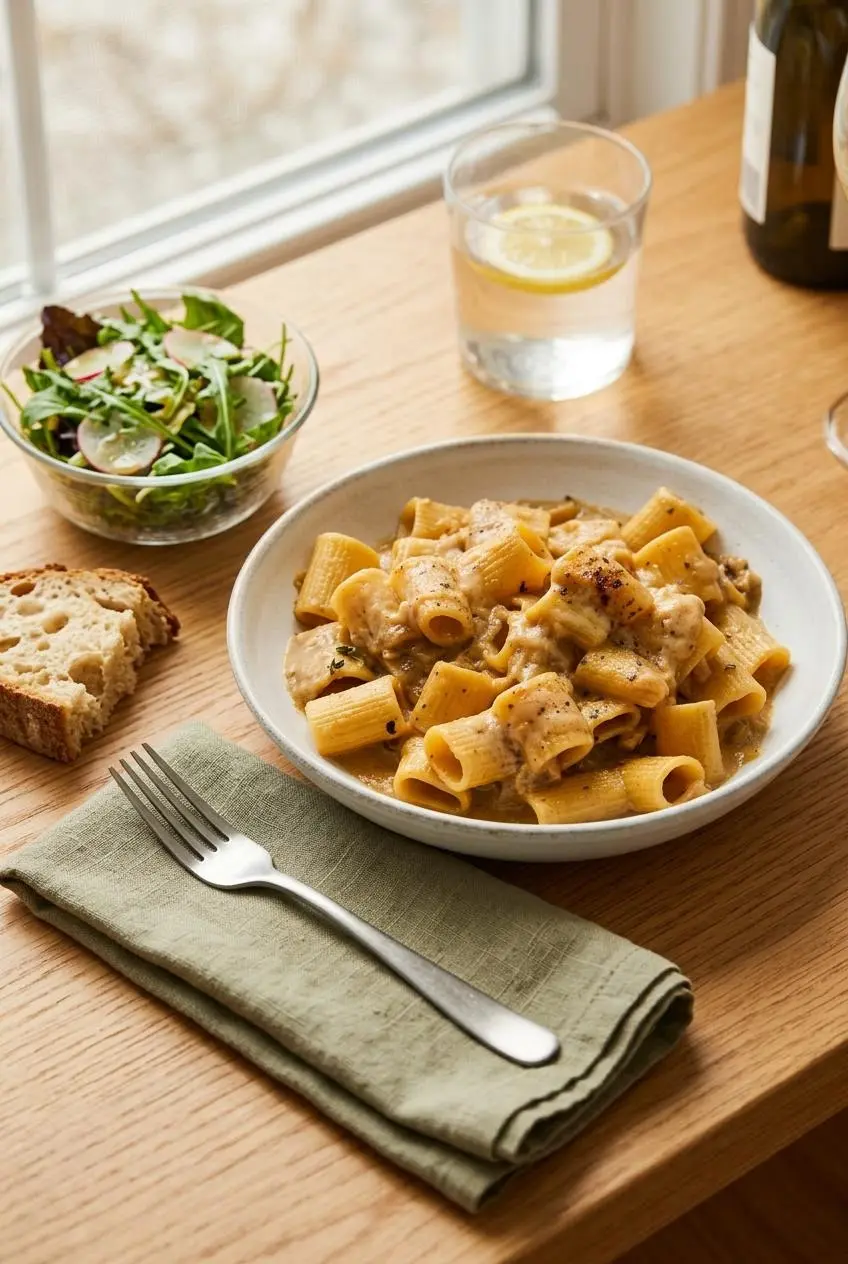
This pasta is rich, so it pairs best with sides that bring freshness or crunch. A simple green salad with a sharp vinaigrette is perfect because the acidity cuts through the cream and cheese.
Crusty bread works well too, especially if you want something to swipe through the extra sauce at the bottom of the bowl. And if you make the garlic-thyme breadcrumb topping, use it generously. It adds the crackly contrast this dish loves.
Storage and Reheating
Let leftovers cool, then pack them into a well-sealed container and refrigerate them promptly. The sauce will firm up as it chills, which is normal for a pasta finished with cream and cheese.
Reheat gently on the stovetop with a splash of broth or milk, stirring until the sauce loosens and turns creamy again. A microwave works too for small portions, but use lower power if possible and stir partway through so the cheese sauce stays smoother.
The onions can be made ahead and chilled in a sealed container, which takes the longest step off your plate when you are planning dinner for company. The finished pasta is at its best right after cooking, when the sauce is glossy and the noodles still have their ideal texture.
If you end up with extra, turning it into a leftover pasta frittata is a smart way to give it a second life.
Conclusion
This pasta delivers everything people love about French onion soup in a more filling, fork-friendly form. Sweet onions, savory broth, cream, and Gruyère do a lot together with very little fuss once the onions are ready.
Be patient with the caramelization, trust the rest step, and you will get a silky, deeply savory pot of pasta that feels like comfort food in the best way.
Frequently Asked Questions (FAQ)
What can I use as a substitute for white wine?
An equal amount of beef broth is the easiest substitute and keeps the flavor in the same savory direction. If you want a little brightness back, add a small splash of white wine vinegar or a little Dijon mustard. Balsamic vinegar also works, but use it lightly because it can darken the flavor.
How can I make this dish without heavy cream?
For a non-dairy version, full-fat canned coconut milk is the most reliable swap for body and richness, though it changes the flavor slightly. If you want a lighter dairy option, evaporated milk can work. The sauce will be a bit less rich and a little less plush, but still creamy enough to coat the pasta.
Can I make French onion pasta ahead of time for a party?
Yes, the best part to prep ahead is the caramelized onions. Once they are done, the rest of the dish comes together much faster. For the best texture, cook and finish the pasta close to serving time. That keeps the sauce glossy and the noodles from softening too much while they sit.
What are the best pasta shapes to use?
Short, sturdy shapes hold this sauce best. Rigatoni is excellent because the ridges and hollow center catch the onions and cheese. Ziti, penne, shells, and other shapes with grooves or curves also work well. Long thin pasta does not grab the thick sauce nearly as nicely.
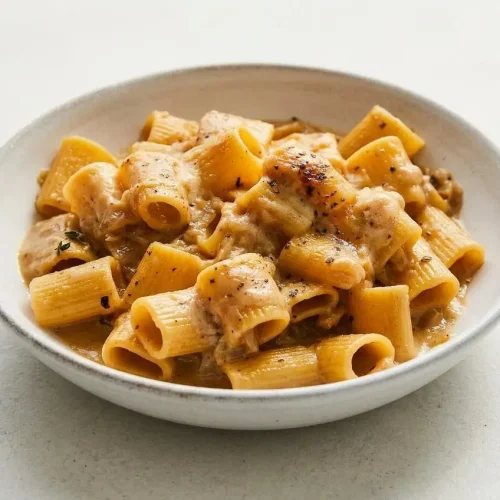
French Onion Pasta

Equipment
- Large Dutch oven or wide, heavy-bottomed pot
Ingredients
- 2 tablespoons unsalted butter
- 1 tablespoon olive oil
- 2 large yellow onions, thinly sliced
- Kosher salt (such as Diamond Crystal) and freshly ground black pepper
- 2 garlic cloves, minced
- 1 teaspoon fresh thyme leaves
- 2 teaspoons Worcestershire sauce
- ¼ cup dry white wine
- 5-6 cups broth (beef recommended for deeper flavor, chicken for a lighter profile; vegetable broth also works)
- 1 pound mezzi rigatoni or regular rigatoni
- ½ cup heavy cream
- 1 cup shredded Gruyère cheese (about 5 ounces)
- ½ cup finely grated Parmesan cheese (about 2 ounces), plus more for serving (optional)
Instructions
- Set a large Dutch oven or wide heavy-bottomed pot over medium-low heat and melt the butter with the olive oil, then add the sliced onions. The onions should soften gradually and turn from sharp and pale to deep brown, very soft, and jammy in about 45 minutes.
- Season the caramelized onions with ¾ teaspoon salt and several grinds of black pepper, then stir in the garlic, thyme, and Worcestershire sauce for about 30 seconds. You should smell the onions shift from sweet and mellow to more savory and fragrant almost right away.
- Pour in the white wine and scrape the bottom of the pot to loosen the browned bits. When the wine is mostly reduced after about 30 seconds, the pot should look glossy rather than wet.
- Add the rigatoni, then pour in enough broth to just cover the pasta and bring it to a boil. Once it bubbles, the pasta should be mostly submerged in flavorful liquid with the onions distributed throughout.
- Lower the heat to medium and cook uncovered, stirring every 1 to 2 minutes, until the pasta is just tender and the liquid has thickened into a sauce, 15 to 18 minutes. If the pot starts looking dry before the pasta is ready, add more broth a splash at a time so the pasta cooks without sticking.
- Reduce the heat and stir in the heavy cream, then take the pot off the heat and add the Gruyère in small handfuls, stirring until each addition melts before adding more; finish with the Parmesan and adjust salt and pepper as needed. The sauce may look a little loose at first, but it should turn smooth, glossy, and well-coated as the cheese melts in.
- Let the pasta stand for 5 to 7 minutes before serving, then spoon it out warm with extra Parmesan if desired. That short rest helps the sauce tighten so it clings to the rigatoni instead of pooling at the bottom.