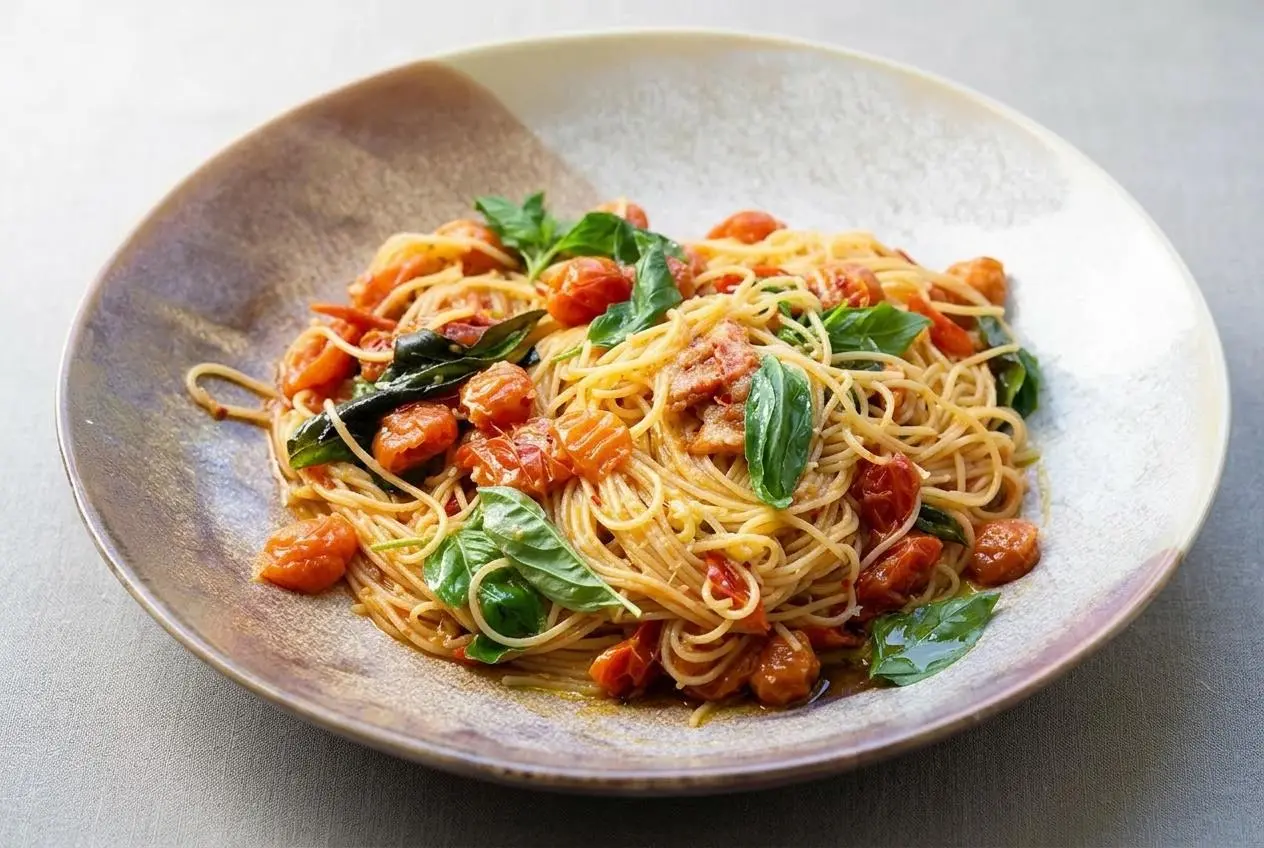
Tomato Basil Pasta is a quick fresh pasta made with blistered cherry tomatoes, garlic, basil, spaghetti, and pecorino. The sauce turns jammy in the pan, then silky and glossy once a little pasta water brings it all together.
Tomato Basil Pasta is the kind of dinner that feels light, bright, and actually doable on a busy night. Fresh cherry tomatoes burst into a sweet garlicky sauce, and the basil stays vivid and fragrant when you stir it in at the end.
It cooks fast, but it still tastes like you paid attention. The best part is that glossy tomato coating on every strand.
Before you drain the pasta, scoop out the pasta water first so the sauce stays silky instead of slippery.
Key Ingredients for the Best Tomato Basil Pasta
This dish works because each ingredient pulls real weight. The tomatoes bring sweetness and body, garlic builds depth, basil adds freshness, pasta water creates gloss, and pecorino gives the final salty bite that makes the whole bowl taste complete.
- 3 tbsp olive oil (+ extra to serve)
- 1 lb cherry tomatoes
- 4 garlic cloves (peeled)
- 1/2 cup fresh basil (tightly packed, finely sliced)
- salt and pepper
- 10 oz spaghetti
- 1/2 tsp chilli flakes (optional)
- 1/2 cup pecorino romano (to serve)
Ripe cherry tomatoes matter most here. They cook down faster than larger tomatoes, their skins soften nicely, and their natural sweetness helps the sauce turn jammy instead of sharp. If your tomatoes feel firm and bland, the sauce will taste flatter too.
Olive oil is more than a cooking fat in this recipe. It carries the garlic, rounds out the acidity of the tomatoes, and helps create that glossy coating once the pasta water is added. A little extra on top at the end gives the pasta a fuller finish.
Fresh garlic gives the sauce its backbone, but it needs a gentle touch. You want the cloves lightly golden and fragrant, not dark brown. Once garlic burns, the bitterness can travel through the whole pan.
Fresh basil is essential here. Dried basil has a place in long-simmered sauces, but this pasta depends on that late burst of bright herbal aroma. When fresh basil hits the hot pasta off the heat, the smell changes instantly and the whole dish wakes up.
Pecorino Romano brings a sharper, saltier finish than Parmesan. If you want a bolder edge, pecorino is perfect. Parmesan is a little nuttier and more mellow, so it works well if you want a softer finish. Both are good, but pecorino gives this pasta a more pointed, savory kick.
I always reach for cherry tomatoes that feel slightly soft and smell sweet at the stem, because they break down into a much better sauce.
Choosing Your Tomatoes: Fresh vs. Canned
If you’re wondering which tomatoes work best, the answer depends on the season and the texture you want. Cherry tomatoes give the freshest, jammiest result, but other options can still make a very good sauce.
| Tomato type | Flavor | Texture | Cook time and notes |
|---|---|---|---|
| Cherry tomatoes | Sweet, bright, and fresh | Jammy with soft bursts of tomato | Best for this recipe as written. They blister and collapse quickly. |
| Roma tomatoes | Less sweet, more classic tomato flavor | Fleshier and a bit less juicy | They need chopping and may take a little longer to soften into sauce. |
| Canned tomatoes | Deeper cooked flavor, less fresh | Saucier and more uniform | Use a 28-ounce can of whole or crushed tomatoes and simmer a bit longer for the best flavor. |
Fresh cherry tomatoes are the best match for a fast weeknight version because they pop in the pan and build flavor quickly. Roma tomatoes work when fresh cherry tomatoes are out of season, but they usually need a little more coaxing. Canned tomatoes are the backup option when convenience matters most, and they give you a fuller, more cooked tomato flavor instead of that fresh summer taste.
How to Make Tomato Basil Pasta
This is a very fast sauce, so the timing matters. Get the pasta going first, build the tomato base while it cooks, then bring everything together over low heat so the sauce clings instead of pooling at the bottom of the bowl.
- Bring a large pot of heavily salted water to a boil, then cook the spaghetti until it is al dente, draining it 1 to 2 minutes earlier than the package suggests and reserving up to 1/2 cup of the cooking water.
The pasta will finish in the sauce, and that reserved starchy water is what helps the final texture turn silky instead of dry. - While the pasta cooks, heat the olive oil in a large frypan and cook the garlic cloves for 2 to 3 minutes until lightly golden.
You should smell a mellow garlic aroma and see pale golden edges, not deep brown spots. - Add the cherry tomatoes to the pan and cook them for 7 to 10 minutes, stirring occasionally, until they burst and slump into a loose sauce, then season with salt and pepper and add the chilli flakes if using.
You’ll hear the tomatoes start to pop and blister, and the pan should look juicy and slightly jammy rather than watery. - Lift the garlic out of the pan, mash it into a paste with the back of a large knife, then stir it back into the tomatoes.
This spreads the garlic flavor through the sauce so you get depth in every bite instead of big chunks in a few bites. - Set the pan over low heat, add the drained pasta, and toss while slowly adding some of the reserved pasta water until the sauce lightly coats the spaghetti.
The sauce should turn glossy and cling to the strands, and you may not need all of the pasta water. - Turn off the heat and stir through two thirds of the basil.
The basil should smell fresh and vivid right away, and the leaves should stay bright instead of going dark. - Serve the pasta with pecorino romano, the remaining basil, and a drizzle of olive oil.
It is best when the cheese softens slightly on the hot pasta and the sauce still looks shiny.
If you want even more depth, let the tomatoes sit for short stretches without stirring so they blister before collapsing. That little bit of contact with the hot pan adds sweetness and richer tomato flavor without changing the recipe.
Tips for Perfect Sauce Every Time
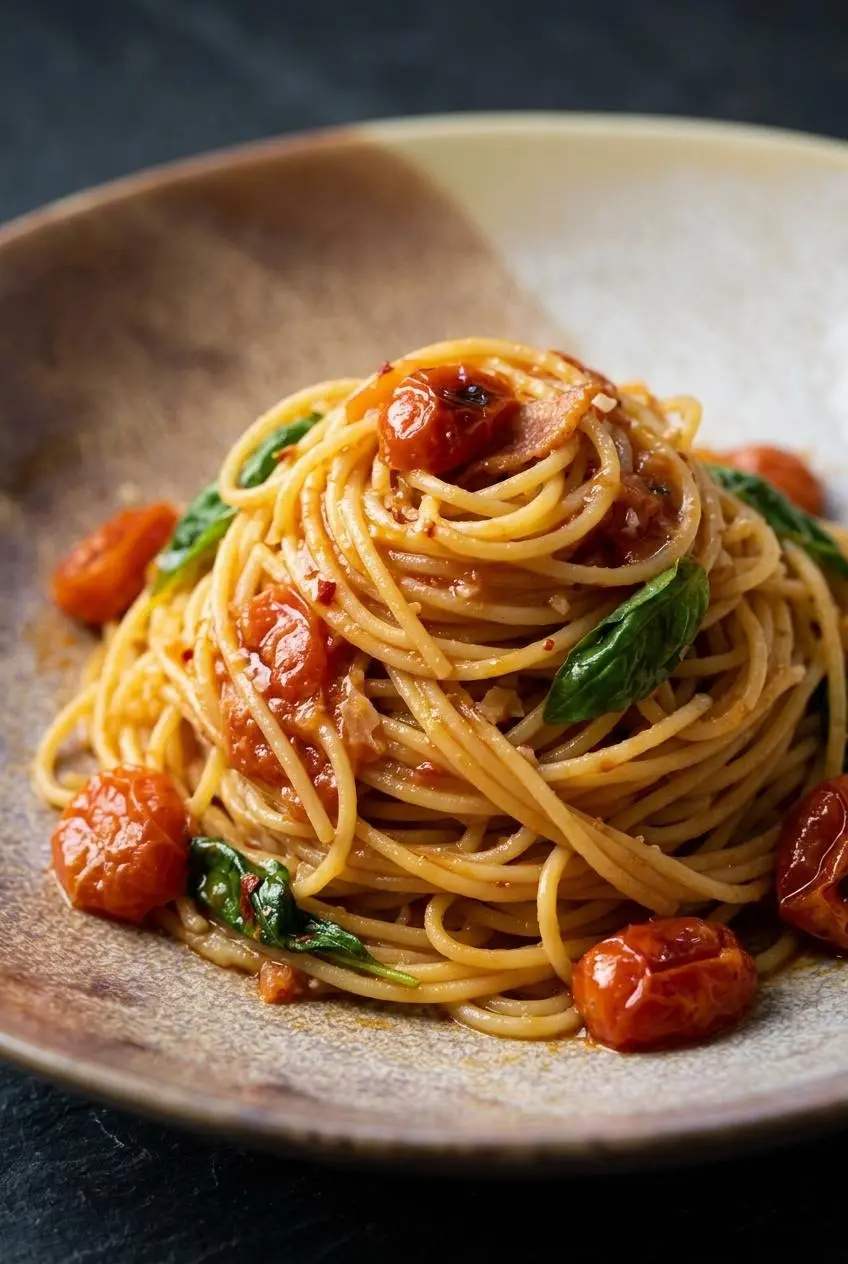
This recipe is simple, which means the little details matter a lot. A few good habits will give you a sweeter sauce, better texture, and pasta that tastes finished instead of rushed.
The Golden Rules
- Salt your pasta water. This is your best chance to season the pasta itself. The sauce is quick, so the pasta needs flavor from the start.
- Use ripe tomatoes. Very ripe cherry tomatoes cook into a sweeter, softer sauce. Less ripe ones can leave the pasta tasting more acidic than bright.
- Don’t burn the garlic. Stop at lightly golden. Dark garlic will make the whole pan taste bitter, and there is no easy fix for that.
- Add basil last. Stir it in off the heat so it keeps its fresh flavor and green color.
The Secret to a Silky Sauce: Pasta Water
Pasta water really is the trick here. As the spaghetti cooks, it releases starch into the water. When you add a little of that starchy water to the oil and tomatoes, it helps them bind together into a smooth, lightly creamy sauce without any cream. That is why plain water will loosen the sauce, but pasta water helps it hug the noodles.
Troubleshooting Common Sauce Problems
If the sauce looks off, it can usually be fixed quickly. The table below covers the most common issues with fresh tomato pasta sauces.
| Problem | Likely cause | Fix |
|---|---|---|
| Sauce is too watery | The tomatoes have not reduced enough, or too much liquid was added at once. | Let the tomatoes cook longer until they look jammy, then add pasta water gradually instead of all at once. |
| Sauce tastes too acidic | The tomatoes are under-ripe or not very sweet. | Add a tiny pinch of sugar and keep cooking briefly to round out the flavor. |
| Sauce feels oily instead of silky | The pasta and sauce were not tossed together with enough starch. | Add a small splash of reserved pasta water and toss over low heat until the sauce turns glossy. |
| Garlic tastes harsh | It cooked too fast or browned too much. | Use lower heat next time and pull it when it is lightly golden and fragrant. |
| Want deeper tomato flavor | You want more sweetness and concentration. | Roast the cherry tomatoes and garlic first, then mash and finish the sauce on the stove for a richer result. |
Recipe Variations
The classic version is the one to learn first, but this pasta also welcomes a few smart extras. Keep the original method the same, then adapt the finished sauce or add-ins based on what kind of dinner you want.
How to Make It Creamy
For a richer pink sauce, stir in a splash of heavy cream or a dollop of mascarpone at the end, off the heat. That keeps the sauce smooth and softens the sharpness of the tomatoes and pecorino. If you like this style of pasta, this creamy pink sauce takes that idea further.
How to Add Chicken or Shrimp
Chicken turns this into a heartier dinner without changing the feel of the dish. You can fold in shredded cooked chicken near the end, or sear diced chicken breast in the pan first, remove it, then continue with the sauce and return it before tossing in the pasta. If you want a fuller meal built around the same tomato, garlic, and basil profile, Bruschetta Chicken Pasta is a natural next stop.
Shrimp works well too because it cooks so quickly. Sauté it separately just until opaque, then add it to the finished pasta right before serving so it stays tender.
Adding More Vegetables
Spinach is the easiest addition. Stir in a handful at the end and let it wilt in the residual heat. Zucchini or bell peppers can go into the pan with the tomatoes so they soften while the sauce develops. If you want to lean even more into a vegetable-forward bowl, vegetable-packed Pasta Primavera gives you that same fresh pasta energy in a different direction.
Storage and Reheating
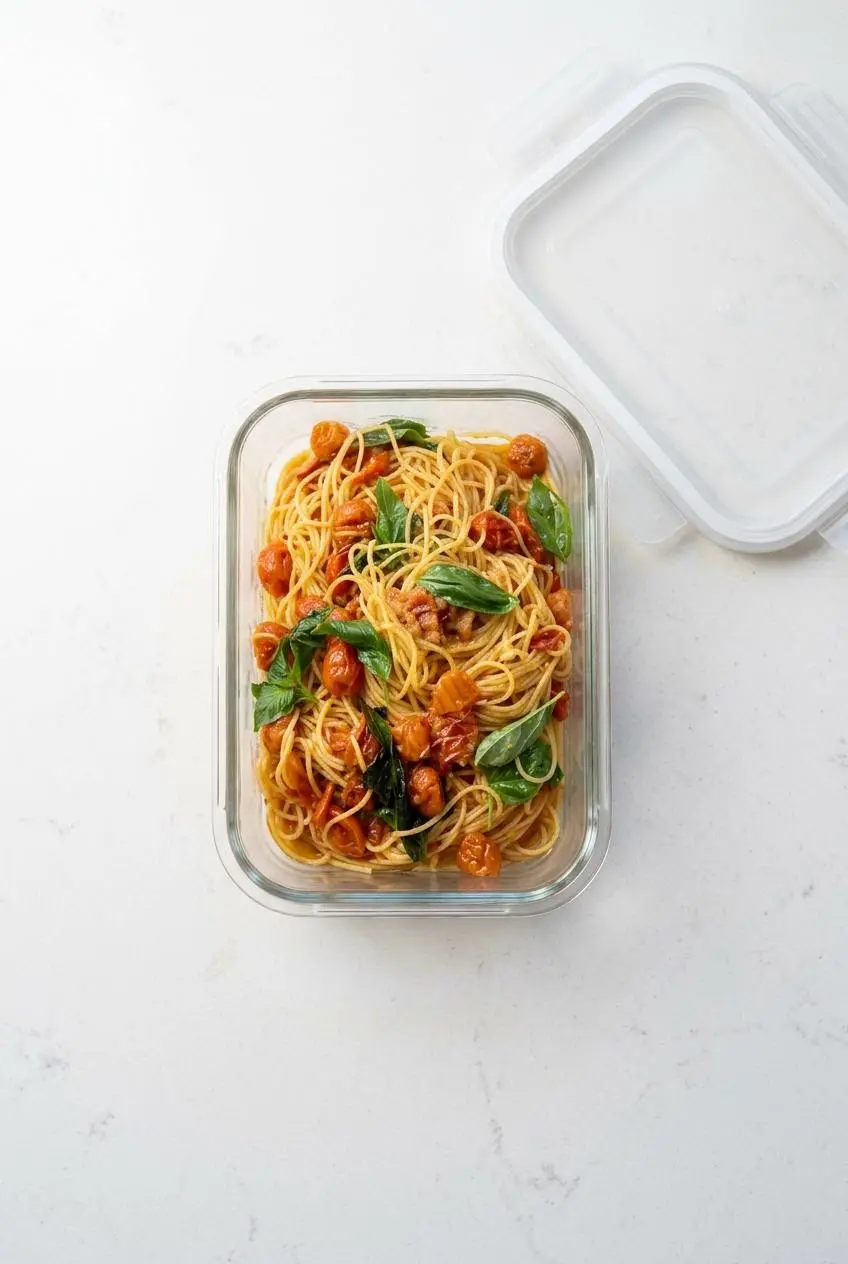
This pasta is at its absolute best right after tossing, when the sauce is glossy and the basil is still fresh. If you do have leftovers, cool them and transfer them to a covered container in the refrigerator.
To reheat, warm the pasta gently in a skillet over low heat with a small splash of water to loosen the sauce. Stir just until the pasta is hot and coated again. Microwaving works in a pinch, but the texture is usually better on the stove because you can bring the sauce back together more gently.
If you end up with extra pasta and want a second-life idea instead of reheating, a leftover pasta frittata is a smart way to use it up.
What to Serve with Tomato Basil Pasta
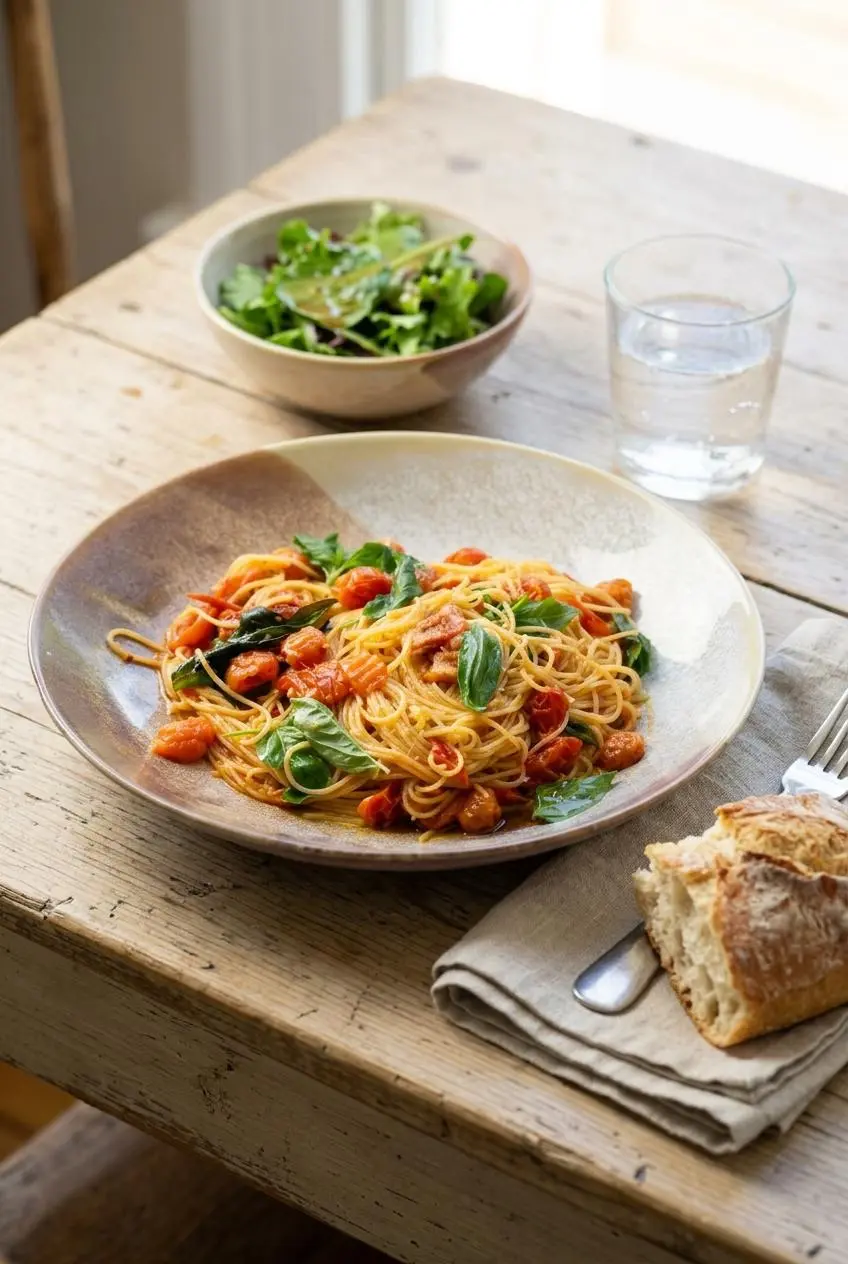
This pasta does not need much on the side, which is part of its charm. Warm crusty bread or garlic bread is perfect for swiping up the last bits of tomato and olive oil.
A crisp green salad with a light vinaigrette keeps the meal balanced and fresh. If you want to make dinner feel a little more special, top each bowl with burrata or torn mozzarella. For that extra creamy finish, creamy Burrata Pasta is a great companion idea.
Conclusion
This pasta earns a regular spot in the dinner rotation because it is fast, fresh, and built on ingredients that do a lot with very little fuss. Once you know what ripe tomatoes, gentle garlic, and pasta water can do together, the method feels easy.
Make it as written the first time, then play with the creamy or protein variations when you want a different mood. Either way, that glossy jammy sauce is worth repeating.
Frequently Asked Questions (FAQ)
How do you make tomato pasta sauce not watery?
Cook the tomatoes until they fully burst and their liquid reduces into a jammy sauce. Add the pasta water slowly, not all at once. Use starchy pasta water rather than plain water so the sauce clings to the pasta instead of sliding off.
Should you put fresh basil in pasta sauce while cooking?
No. Add fresh basil at the very end, after turning off the heat. That keeps its flavor bright and its color fresher.
What is the best pasta shape for tomato basil sauce?
Spaghetti is an excellent choice because the light sauce coats the strands well. Linguine or fettuccine also work nicely. If you prefer short pasta, ridged shapes like penne or fusilli catch the bits of tomato and garlic really well.
Can I use canned tomatoes instead of fresh?
Yes. A 28-ounce can of good whole or crushed tomatoes works well when fresh tomatoes are not at their best. Simmer the sauce a bit longer, and expect a deeper cooked flavor rather than the brighter taste you get from fresh cherry tomatoes.
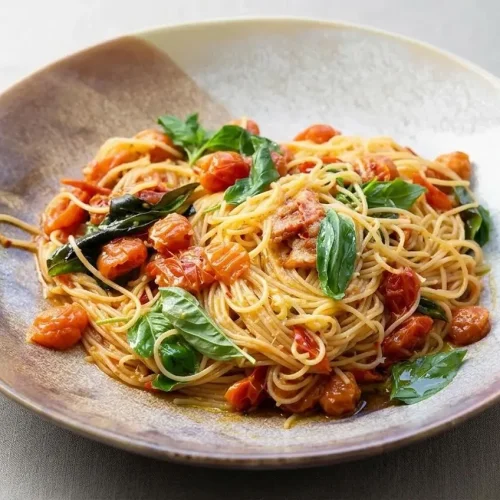
Tomato Basil Pasta

Equipment
- Large Pot
- Large frypan
- Knife
Ingredients
- 3 tbsp olive oil (+ extra to serve)
- 1 lb cherry tomatoes
- 4 garlic cloves (peeled)
- 1/2 cup fresh basil (tightly packed, finely sliced)
- salt and pepper
- 10 oz spaghetti
- 1/2 tsp chilli flakes (optional)
- 1/2 cup pecorino romano (to serve)
Instructions
- Bring a large pot of heavily salted water to a boil, then cook the spaghetti until it is al dente, draining it 1 to 2 minutes earlier than the package suggests and reserving up to 1/2 cup of the cooking water.
- While the pasta cooks, heat the olive oil in a large frypan and cook the garlic cloves for 2 to 3 minutes until lightly golden.
- Add the cherry tomatoes to the pan and cook them for 7 to 10 minutes, stirring occasionally, until they burst and slump into a loose sauce, then season with salt and pepper and add the chilli flakes if using.
- Lift the garlic out of the pan, mash it into a paste with the back of a large knife, then stir it back into the tomatoes.
- Set the pan over low heat, add the drained pasta, and toss while slowly adding some of the reserved pasta water until the sauce lightly coats the spaghetti.
- Turn off the heat and stir through two thirds of the basil.
- Serve the pasta with pecorino romano, the remaining basil, and a drizzle of olive oil.