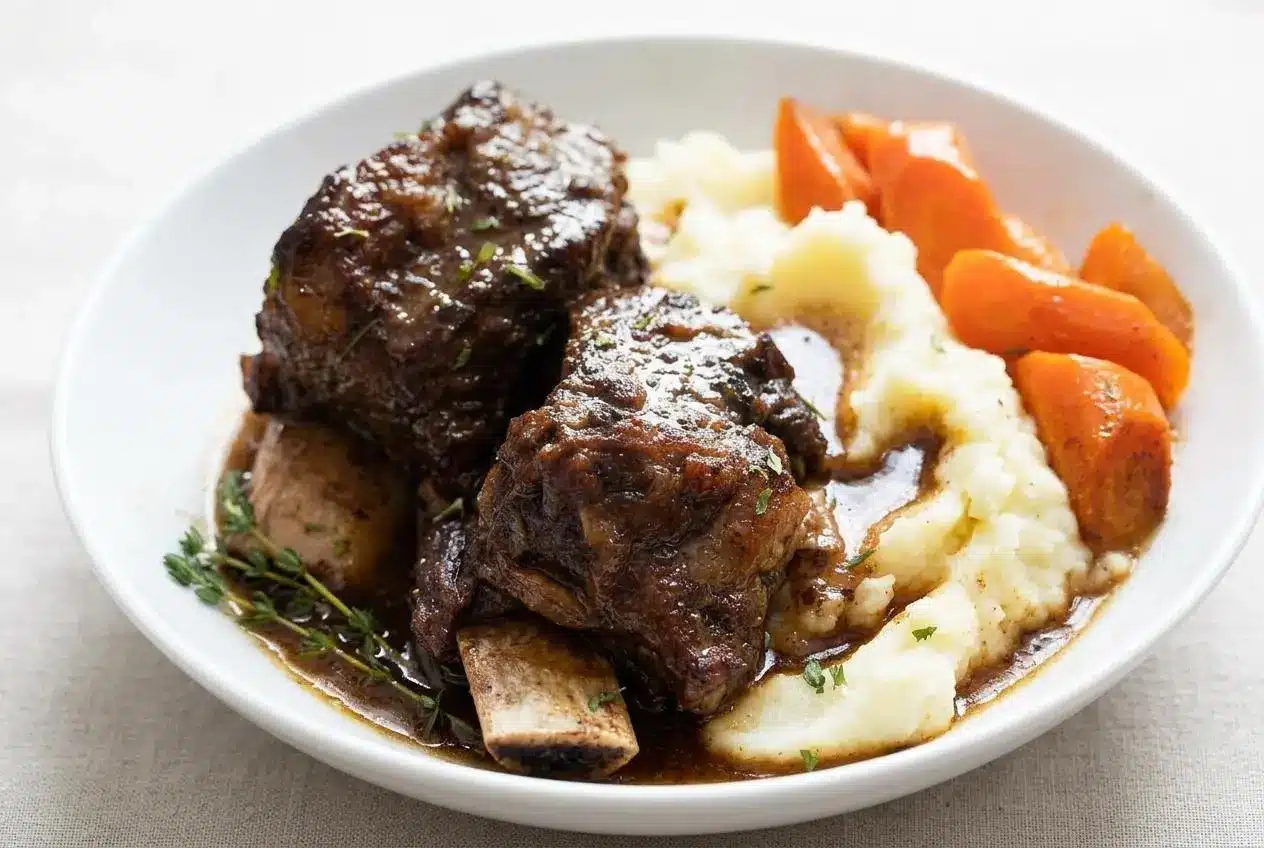
Slow Cooker Short Ribs turn out deeply savory and fork-tender when you sear them first, then let them cook low and slow in a rich red wine braising liquid until the meat nearly falls apart.
This is the kind of dinner that smells incredible long before it hits the table. You get rich beef, sweet carrots, soft onions, and a sauce that tastes like it simmered all day because it did.
The method is straightforward, and the slow cooker handles the heavy lifting. The best part is what happens to the drippings.
Patting the ribs completely dry before seasoning makes a big difference in how well they brown.
Why This Recipe Works
- Searing the ribs builds deep, browned flavor that the slow cooker alone cannot create.
- Low heat over several hours gives the connective tissue time to soften, so the meat turns tender instead of chewy.
- Red wine, broth, onion, garlic, and thyme create a braising liquid that tastes full and savory from the start.
- The cooking liquid can stay light like au jus or become a richer sauce or gravy, depending on how you finish it.
Key Ingredients for Rich Short Ribs
Each ingredient has a clear job here, from building savory depth and tenderness to balancing the sauce with sweetness, acidity, and aroma.
Seasoning
- Kosher salt
- ¾ teaspoon EACH: garlic powder, onion powder, paprika, brown sugar
- ½ teaspoon black pepper, chili powder (optional)
Meat/Veggies/Braising Liquid
- 3 ½ – 4 lbs. beef short ribs (bone-in or boneless.)
- 1-2 tablespoons olive oil
- 1 yellow onion (sliced)
- 5 whole garlic cloves (peeled)
- 1 cup dry red wine
- 1 beef bouillon cube
- 1 tablespoon Worcestershire sauce
- 2 teaspoons Dijon mustard
- 2 cups Beef broth
- 5 sprigs fresh thyme
- 2 lbs. carrots (cut into halves or thirds)
- 3 tablespoons cornstarch + 3 tablespoons COLD water
Short ribs are the star, and bone-in pieces usually give you the richest result because the bones and collagen help flavor the sauce as they cook. The dry red wine adds depth and a little acidity, which helps balance the richness of the beef. Onion, garlic, and thyme build the savory backbone of the braising liquid, while Dijon, Worcestershire, and bouillon round it out with saltiness and umami.
I always choose bone-in ribs when I can find them because the sauce ends up fuller, silkier, and a little more luxurious.
Bone-In vs. Boneless Short Ribs
| Type | Flavor | Texture | Cooking Time | Cost and Availability |
|---|---|---|---|---|
| Bone-in | Deeper beef flavor | Richer, more succulent feel | Usually right in the 7 to 8 hour range on low | Often pricier and sometimes harder to find |
| Boneless | Still flavorful, but slightly less rich | Very tender and easier to serve | Usually similar, but check a bit earlier for tenderness | Often easier to buy and simpler to portion |
Both work well in this recipe, but bone-in short ribs are the better pick when you want the most flavorful meat and sauce.
Choosing the Best Red Wine
A dry, full-bodied red works best here. Cabernet Sauvignon, Merlot, and Zinfandel all hold up well during the long cook and give the sauce a deeper, darker flavor. Use a wine you’d actually enjoy drinking, since the harsh edges of a poor bottle do not magically improve in the slow cooker. During cooking, the wine leaves behind flavor rather than a boozy finish.
How to Make Slow Cooker Short Ribs
- Pat the short ribs dry and season them all over with kosher salt, then rub on the garlic powder, onion powder, paprika, brown sugar, black pepper, and chili powder if using.
The drier surface helps the spices cling and lets the meat brown instead of steam. - Heat the olive oil in a large skillet over medium-high heat and sear the ribs in batches for about 1 minute per side, or 4 to 5 minutes per batch, then transfer them to the slow cooker.
Look for a deep brown crust on the outside while the center stays undercooked. - Add the sliced onion, peeled garlic cloves, and red wine to the skillet after turning off the heat, then set the pan over medium and scrape up the browned bits with a silicone spatula.
A rich, fruity steam will rise, and the bottom of the pan should loosen as the onions and garlic soften over 5 minutes. - Stir the bouillon cube, Worcestershire sauce, and Dijon mustard into the skillet mixture, then pour it into the slow cooker with the beef broth, thyme, and carrots.
The liquid should smell savory and balanced before the long cook begins. - Cover and cook on low for 7 to 8 hours.
The ribs are ready when a fork can shred the meat with almost no pressure. - Lift out the carrots, tent them loosely with foil, and skim excess fat from the surface of the cooking liquid, then switch the slow cooker to high if needed.
The broth will look clearer and less greasy once the top layer of fat is removed. - Shake the cornstarch and COLD water together in a small container until smooth.
The mixture should look fully blended with no dry pockets of starch. - Stir the cornstarch slurry into the hot cooking liquid, cover, and let it thicken for 3 to 5 minutes.
The sauce will stay fairly light, more like au jus than heavy gravy, but it should gain a little body. - Spoon the sauce over the short ribs and carrots when serving.
Use a bowl if you want to catch every bit of that savory braising liquid.
Searing matters here for more than color. That browned crust comes from the Maillard reaction, which creates the deep, roasty flavor that gives braised short ribs their unmistakable taste. Skipping it will still give you tender meat, but the overall dish will be lighter in flavor and paler in color.
Deglazing matters just as much. Those browned bits stuck to the skillet are concentrated flavor, and the wine helps lift them straight into your sauce instead of leaving them behind in the pan.
Tips for Fall-Off-The-Bone Tender Ribs
- Pat the ribs dry: Moisture is the enemy of a good sear. Dry meat browns faster and forms a better crust.
- Don’t crowd the pan: Give each piece space while searing. If the pan is packed, the ribs release steam and turn gray instead of brown.
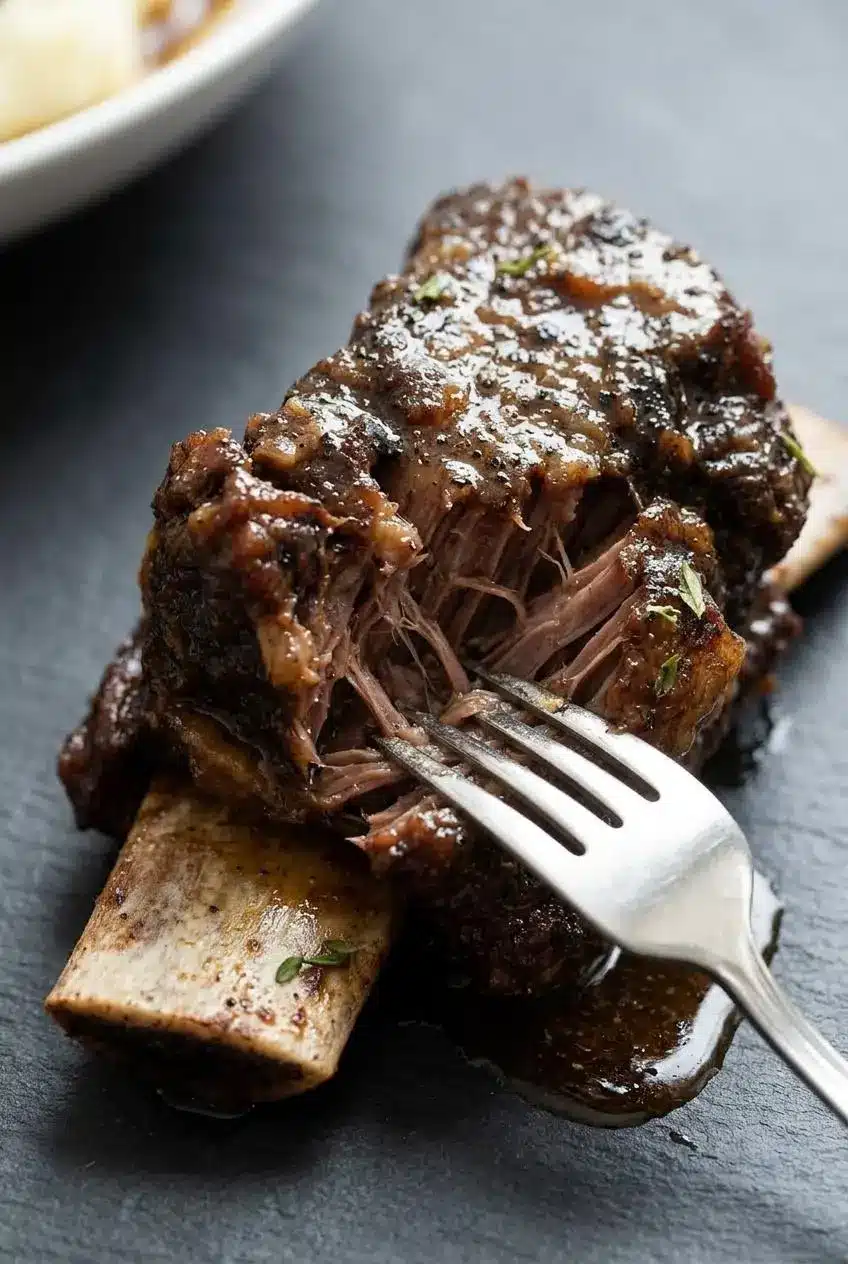
- Cook low and slow: This is where the magic happens. The tough connective tissue needs time to break down, so the low setting gives you the most tender result.
- Check tenderness, not just the clock: Cooking times are a guide. The real test is whether the meat yields easily to a fork.
- Skim the fat before finishing the sauce: Short ribs are rich by nature, and removing excess fat keeps the sauce from tasting heavy.
If you are tempted to use the high setting, it can work in a pinch, but the texture is usually better when you stay patient and let the ribs cook gently.
Guide to the Perfect Sauce and Gravy
The liquid left in the slow cooker is packed with beef flavor, aromatics, and drippings. Once you skim the fat, you can keep it light, reduce it into a richer sauce, or turn it into a true gravy.
How to Skim the Fat
After cooking, let the liquid settle for a moment, then use a large spoon to lift off the layer of fat from the top. If you own a fat separator, that works nicely too. This one step keeps the finished sauce from tasting slick or heavy.
Making a Reduced ‘Au Jus’
For the quickest option, use the cornstarch slurry from the recipe and let the sauce thicken just slightly in the slow cooker. It stays loose enough to spoon over mashed potatoes, polenta, or noodles.
If you want a stronger, more concentrated finish, pour the skimmed liquid into a saucepan and simmer it over medium heat until it reduces and tastes fuller. This creates a richer pan sauce without making it thick like gravy.
Making a Thicker Gravy
For a more traditional gravy, start with 2 tablespoons butter and 2 tablespoons flour in a saucepan. Cook them together briefly, then whisk in the skimmed cooking liquid little by little until the gravy turns smooth and thick enough to coat a spoon.
If you enjoy recipes centered around a rich gravy, slow cooker chicken and gravy is another comforting way to use the same idea.
An extra spoonful of concentrated beef base can deepen the flavor even more while the sauce simmers, especially if you want a bigger savory punch.
Variations and Substitutions
The classic version is hard to beat, but it adapts well if you need a different approach or want to change the flavor slightly.
Non-Alcoholic Method
Replace the 1 cup of red wine with the same amount of extra beef broth, then add a small splash of balsamic vinegar or red wine vinegar for acidity. The sauce will be a little less layered, but still rich and balanced.
Quick ‘No-Sear’ Method
If convenience matters most, you can skip browning the ribs and add everything straight to the slow cooker. The meat will still become tender, but the flavor will be less deep and the finished sauce will look lighter.
Dutch Oven Instructions
To make this in the oven, sear the ribs and soften the onion, garlic, and wine in a Dutch oven on the stovetop. Add the remaining braising ingredients, bring everything to a gentle simmer, cover, and cook in a 325 °F oven for 3 to 4 hours, until the ribs are fork-tender.
Slow Cooker Short Rib Bourguignon Style
For a Bourguignon-style twist, add sautéed mushrooms and frozen pearl onions along with the carrots. It nudges the dish in a more classic French braise direction without changing the core method.
If hearty slow-cooked beef dinners are your thing, Slow Cooker Pot Roast is another cozy option worth saving.
Serving Suggestions
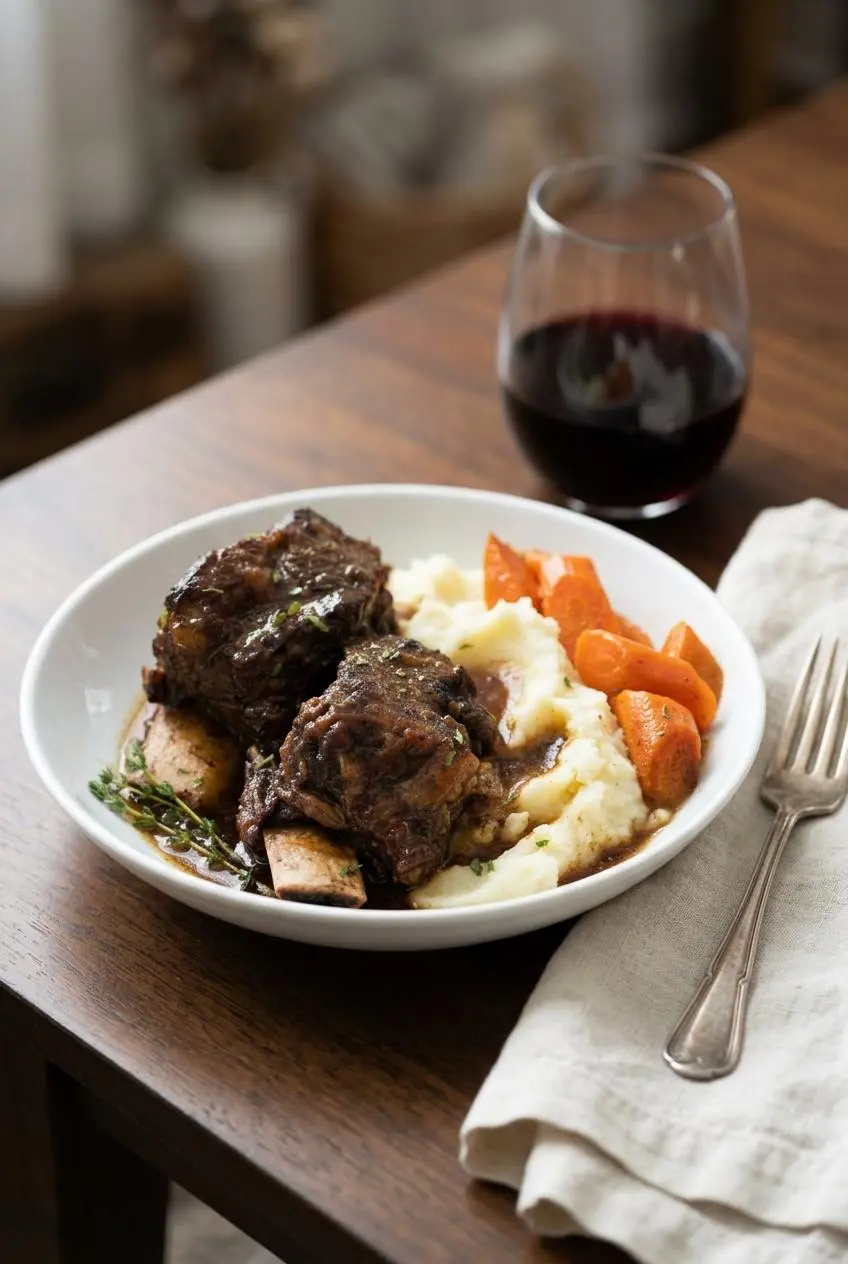
Short ribs really shine with something underneath them that catches the sauce. Creamy mashed potatoes are the classic move, but soft polenta, cheesy grits, buttered egg noodles, and crusty bread all do the job beautifully.
For balance, add something fresh and sharp on the side. A simple green salad with a punchy vinaigrette helps cut through the richness of the beef and gravy.
If you love beef-and-potato comfort food, classic Cottage Pie lands in the same cozy territory.
Storage and Reheating
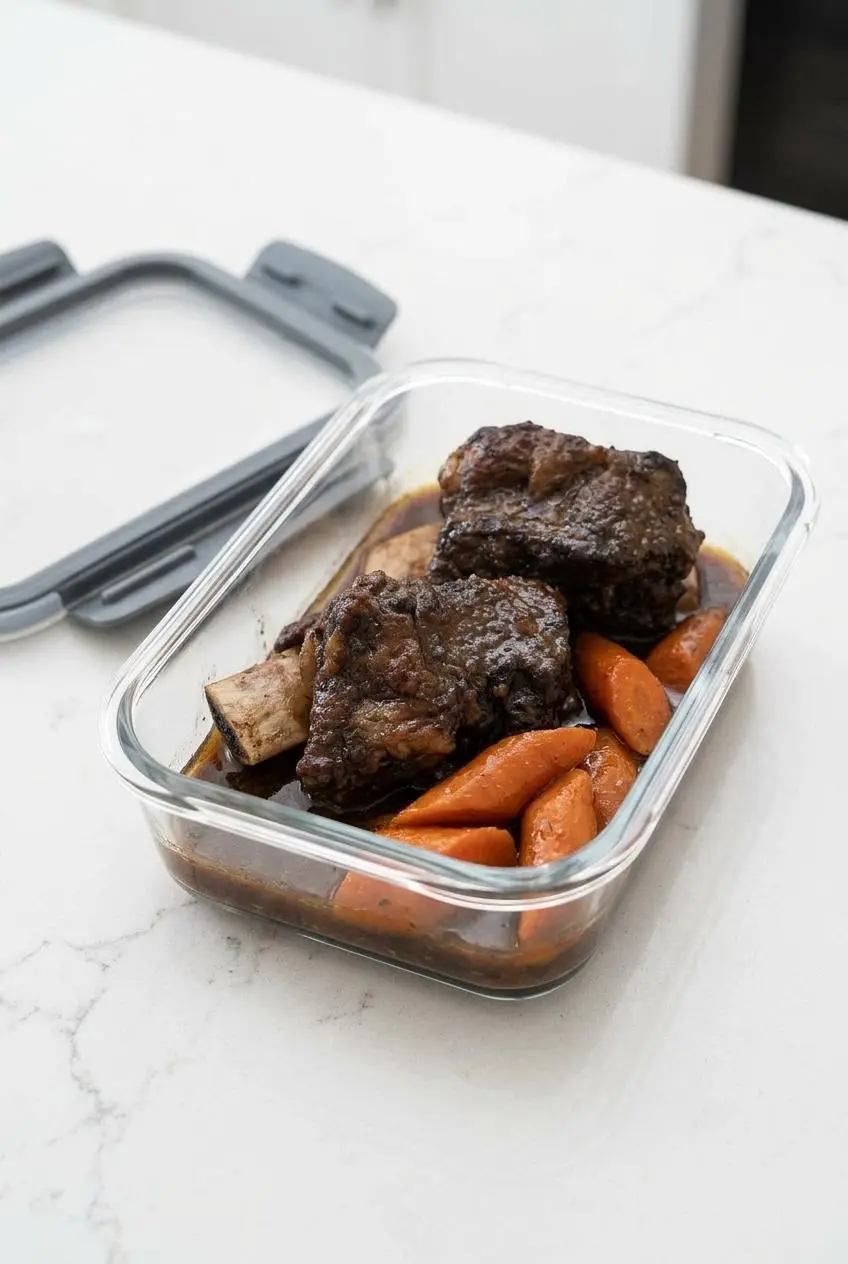
Leftovers hold up very well, and the flavor can taste even deeper the next day. Store cooled short ribs and sauce in an airtight container in the refrigerator for 3 to 4 days, following cold food storage guidance for cooked meat.
For reheating, warm the ribs gently on the stovetop over low heat with some of their sauce so the meat stays moist. The oven works well too if you cover the dish, and the microwave is fine for smaller portions when you heat them gradually.
If you have bone-in ribs left over, the bones can go into a small pot with water, onion scraps, and herb stems for a quick homemade beef stock. It is a nice bonus from a cut that already gives so much.
Troubleshooting Common Issues
Even a forgiving slow cooker recipe can hit a snag. These are the issues most likely to come up and the easiest ways to fix them.
| Problem | Why It Happened | How to Fix It |
|---|---|---|
| My ribs are tough. | They usually need more time for the connective tissue to break down. | Keep cooking on low until the meat is truly fork-tender. Time helps more than anything here. |
| My sauce is too thin. | Slow cookers hold in moisture, so the liquid does not reduce much on its own. | Simmer the skimmed sauce in a saucepan to reduce it, or thicken it with the cornstarch slurry or a roux-based gravy. |
| My sauce is greasy. | Short ribs have plenty of fat, and that fat rises to the surface while cooking. | Skim the top thoroughly before thickening or serving. |
| My ribs did not brown well. | The meat was likely damp or the pan was crowded. | Pat the ribs dry and sear in batches next time so the pan stays hot enough to brown. |
Conclusion
These short ribs are rich, savory, and wonderfully tender, with a sauce that feels just as important as the meat. Once you know how to sear well and finish the drippings, the whole recipe gets much easier.
Give the slow cooker the time it needs, and it will reward you with beef that practically shreds itself. Dinner does not need much more than that.
Frequently Asked Questions
What’s the difference between bone-in and boneless short ribs for this recipe?
Bone-in short ribs usually give you better flavor and a richer sauce because the bones and collagen add body as they cook. Boneless short ribs are easier to eat and slice, but the finished dish can taste a little less robust. This recipe works with either, though bone-in is the best choice if you can get them.
Why are my slow cooker short ribs tough?
The most common reason is undercooking. Tough short ribs have not had enough time for the connective tissue to soften, so keep cooking on low until the meat yields easily to a fork.
Can I cook this recipe on high in the slow cooker?
Yes, you can cook it on high for 4 to 5 hours. Still, the low setting for 7 to 8 hours gives you the most tender texture and the best overall result.
Can I overcook short ribs in a slow cooker?
It is harder to dry them out than with lean cuts, but they can eventually become too soft and mushy if left for far too long. Staying close to the recipe timing gives you tender meat that still holds its shape.
My sauce is too thin, how can I fix it?
You have two easy options. Simmer the sauce on the stovetop to reduce and concentrate it, or stir in a cornstarch slurry to thicken it more quickly.
What are the best side dishes for short ribs?
Go for sides that soak up the sauce well, such as mashed potatoes, creamy polenta, cheesy grits, buttered egg noodles, or crusty bread. A crisp green salad on the side helps balance the richness.
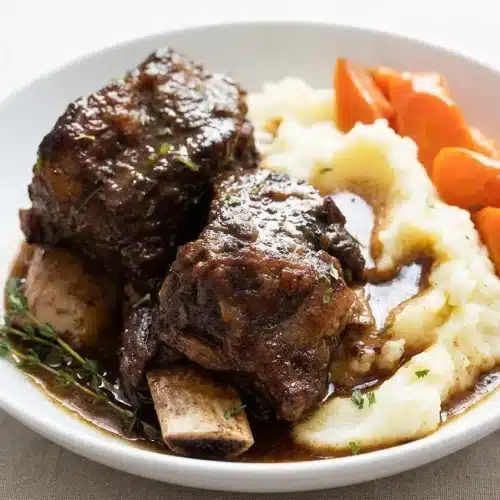
Slow Cooker Short Ribs

Equipment
- 6-quart slow cooker
- Large Skillet
Ingredients
Seasoning
- Kosher salt
- ¾ teaspoon EACH: garlic powder, onion powder, paprika, brown sugar
- ½ teaspoon black pepper, chili powder (optional)
Meat/Veggies/Braising Liquid
- 3 ½ – 4 lbs. beef short ribs (bone-in or boneless.)
- 1-2 tablespoons olive oil
- 1 yellow onion (sliced)
- 5 whole garlic cloves (peeled)
- 1 cup dry red wine
- 1 beef bouillon cube
- 1 tablespoon Worcestershire sauce
- 2 teaspoons Dijon mustard
- 2 cups Beef broth
- 5 sprigs fresh thyme
- 2 lbs. carrots (cut into halves or thirds)
- 3 tablespoons cornstarch
- 3 tablespoons COLD water
Instructions
- Pat the short ribs dry and season them all over with kosher salt, then rub on the garlic powder, onion powder, paprika, brown sugar, black pepper, and chili powder if using. The drier surface helps the spices cling and lets the meat brown instead of steam.
- Heat the olive oil in a large skillet over medium-high heat and sear the ribs in batches for about 1 minute per side, or 4 to 5 minutes per batch, then transfer them to the slow cooker. Look for a deep brown crust on the outside while the center stays undercooked.
- Add the sliced onion, peeled garlic cloves, and red wine to the skillet after turning off the heat, then set the pan over medium and scrape up the browned bits with a silicone spatula. A rich, fruity steam will rise, and the bottom of the pan should loosen as the onions and garlic soften over 5 minutes.
- Stir the bouillon cube, Worcestershire sauce, and Dijon mustard into the skillet mixture, then pour it into the slow cooker with the beef broth, thyme, and carrots. The liquid should smell savory and balanced before the long cook begins.
- Cover and cook on low for 7 to 8 hours. The ribs are ready when a fork can shred the meat with almost no pressure.
- Lift out the carrots, tent them loosely with foil, and skim excess fat from the surface of the cooking liquid, then switch the slow cooker to high if needed. The broth will look clearer and less greasy once the top layer of fat is removed.
- Shake the cornstarch and COLD water together in a small container until smooth. The mixture should look fully blended with no dry pockets of starch.
- Stir the cornstarch slurry into the hot cooking liquid, cover, and let it thicken for 3 to 5 minutes. The sauce will stay fairly light, more like au jus than heavy gravy, but it should gain a little body.
- Spoon the sauce over the short ribs and carrots when serving. Use a bowl if you want to catch every bit of that savory braising liquid.