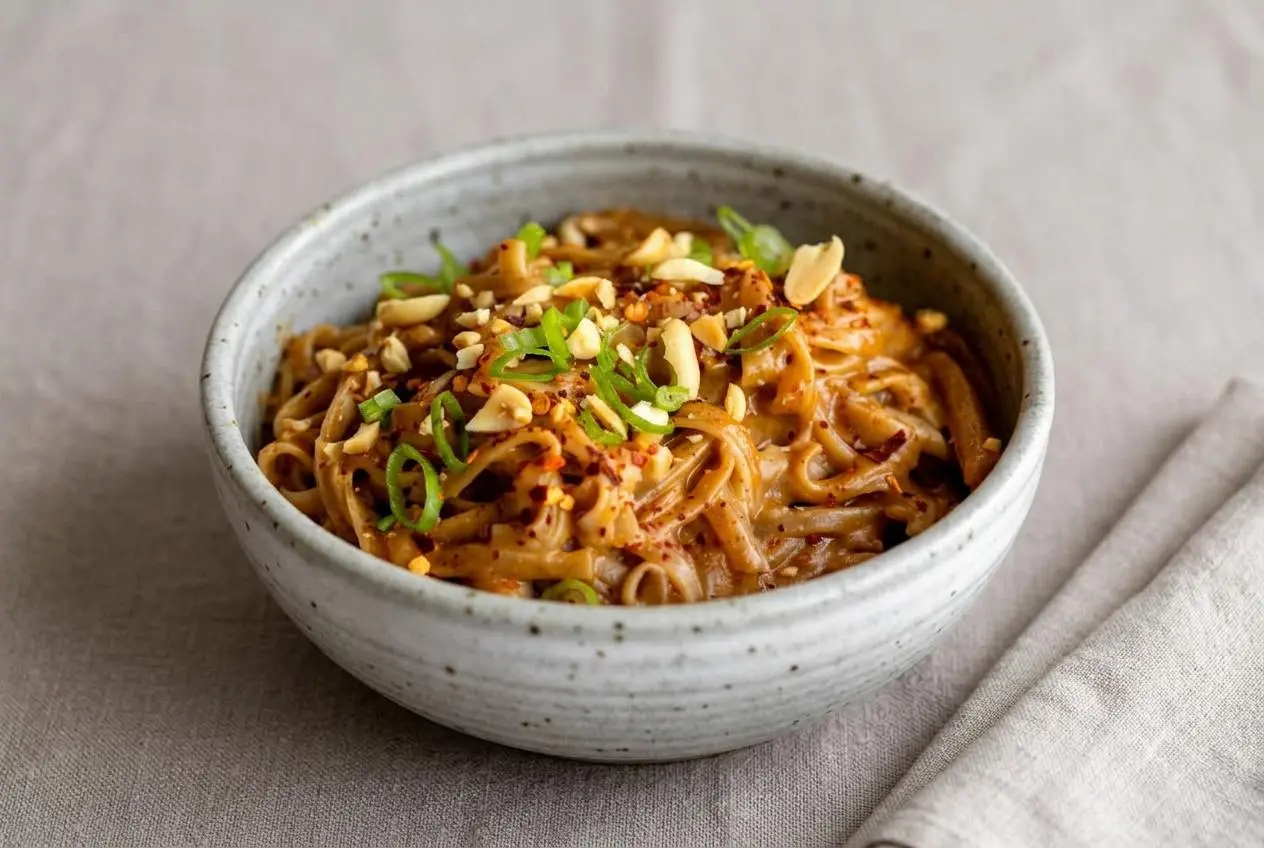
Peanut Butter Noodles are a quick, creamy noodle dish with a savory peanut sauce that comes together in about 15 minutes and works warm or cold.
These noodles are built for busy nights when you want something slurp-worthy without a complicated prep. The sauce hits that sweet spot between salty, nutty, tangy, and just spicy enough.
They’re also easy to tweak with different noodles, proteins, and vegetables. The trick is getting the sauce smooth and tossing it while the noodles are still hot.
Have the hot water ready before you start the sauce so it blends fast and stays silky.
Ingredients for Perfect Peanut Butter Noodles
Each ingredient pulls its weight here, building a sauce with richness, heat, aroma, and enough acidity to keep the noodles balanced instead of heavy.
- 16 ounces brown rice noodles
- 3 large cloves garlic or 4-5 small
- 1 tablespoon fresh grated ginger
- 1 tablespoon oil
- 2/3 cup creamy peanut butter
- 4 tablespoons low sodium tamari or soy sauce
- 1/3-1 cup hot water
- 1 tablespoon rice vinegar
- 1 tablespoon toasted sesame oil
- 1-2 tablespoons sriracha
- 1-2 tablespoons maple syrup or honey
- 1/2 teaspoon red pepper flakes
- 2 tsp chili garlic sauce (Optional)
Brown rice noodles keep the dish light and a little springy, while peanut butter gives the sauce its body and creamy finish. Tamari or soy sauce adds salt and umami, rice vinegar brightens the richness, and maple syrup or honey rounds out the sharp edges.
Garlic and ginger do a lot of the heavy lifting for aroma. Sesame oil adds that toasted finish that makes the sauce smell like dinner instead of just peanut butter stirred into noodles.
Key Ingredients for the Best Peanut Sauce
If you want better peanut sauce, focus on balance and texture first. This recipe works because every major ingredient has a job.
Peanut butter is the base, so the type matters. Creamy peanut butter gives you the smoothest sauce, and a natural drippy style usually blends more easily than a very stiff processed one. Crunchy peanut butter can work, but it gives the sauce a rougher texture and won’t coat the noodles as evenly.
Tamari or soy sauce brings the salty, savory backbone. Using a low-sodium version gives you more control, especially because peanut butter brands vary in saltiness. Rice vinegar cuts through the richness so the sauce tastes lively instead of flat, and the maple syrup or honey softens the edges with a little sweetness.
Garlic and ginger give the sauce its fresh punch. They keep it from tasting one-note and add that warm, fragrant base you smell the second they hit the pan. If you want a darker, more complex finish, you can swap the rice vinegar for the same amount of Chinese black vinegar. It adds a slightly malty tang that tastes a little more restaurant-style.
I always reach for natural peanut butter with some oil separation because it turns into the smoothest sauce with the least whisking.
How to Make Peanut Butter Noodles Step-by-Step
- Bring a large pot of water to a boil and cook the brown rice noodles according to the package directions.
The noodles should be tender but still pleasantly chewy, not mushy. - Mince the garlic, then place it in a saute pan with 1 tablespoon oil and cook over low heat for about 2 minutes.
Watch for the garlic to turn lightly golden and smell mellow, not sharp or burnt. - Add the fresh grated ginger and cook for 1 more minute, then take the pan off the heat.
The pan should smell warm, fragrant, and a little toasty from the garlic and ginger. - Add the creamy peanut butter, low sodium tamari or soy sauce, 1/3 cup hot water, rice vinegar, toasted sesame oil, sriracha, maple syrup or honey, red pepper flakes, and chili garlic sauce (Optional), then whisk until smooth.
The sauce should look glossy and pourable, like heavy cream, so add more hot water as needed. - Taste the sauce and adjust with more soy sauce, sriracha, or other seasonings if needed.
You want a balanced flavor that tastes savory, nutty, tangy, and just as spicy as you like. - Add about half of the sauce to the cooked noodles and toss to coat.
The sauce will look a little loose at first, then thicken quickly once it hits the hot noodles, so mix right away. - Serve the noodles with crushed peanuts, scallions, and extra red pepper flakes if you like.
The finished noodles should be glossy, well coated, and easy to slurp without a puddle of sauce at the bottom.
If you want to turn these into a fuller dinner, add cooked vegetables or a protein after tossing the noodles. Crispy tofu, shrimp, or chicken all fit well here.
Tips for Perfect Peanut Noodles
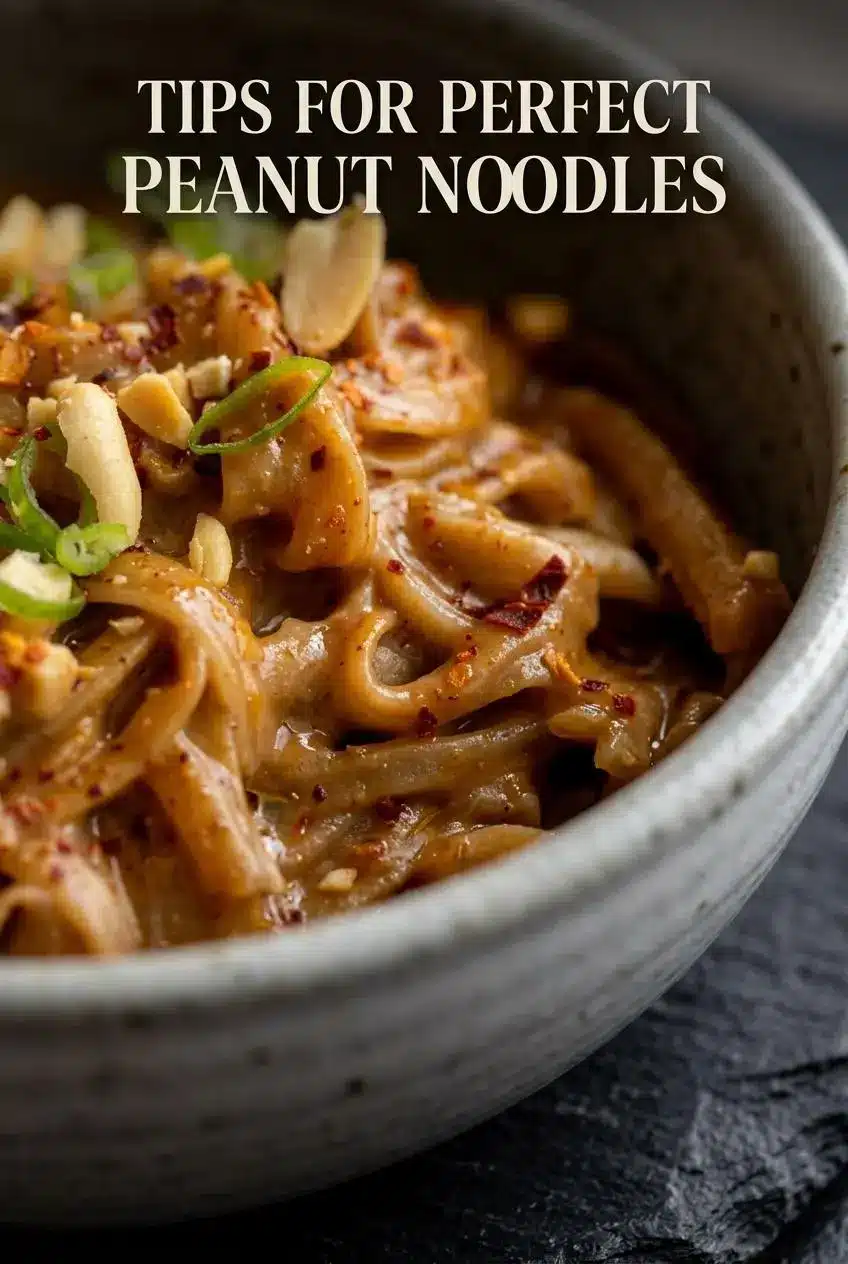
A few small choices make a big difference with this sauce. These are the ones that keep the noodles smooth, glossy, and well balanced.
- Use hot water for the sauce, not cold. It helps the peanut butter loosen quickly and prevents stubborn lumps.
- Start with less water and whisk before adding more. The sauce should be pourable, but not watery.
- Add only part of the sauce to the noodles at first. You can always toss in more, but it’s hard to fix noodles that are over-sauced or too salty.
- If you’re not serving the noodles right away, rinse them under cold water after cooking to stop the carryover cooking and reduce clumping.
- If you add vegetables, cook them in batches if needed. Crowding the pan traps steam and gives you soft vegetables instead of a little color and bite.
- Taste the sauce before it hits the noodles. That’s the easiest moment to adjust salt, sweetness, heat, or tang.
- Unsalted peanut butter and low-sodium soy sauce give you the most control over final seasoning.
Troubleshooting Your Peanut Noodles
| Problem | Likely Cause | Easy Solution |
|---|---|---|
| Sauce is lumpy | Cold water or stiff peanut butter | Whisk in hot water a little at a time until the sauce smooths out |
| Sauce is too thick | Not enough water or sauce sat too long before tossing | Add more hot water in small splashes and whisk again until pourable |
| Sauce is too thin | Too much water added too fast | Let it sit briefly or toss with hot noodles so it thickens as it coats them |
| Noodles are sticky or gummy | Overcooked noodles or they sat without rinsing | Cook just to tender, then rinse if serving later or serving cold |
| Dish tastes too salty | Too much sauce or a salty soy sauce and peanut butter combination | Toss with extra noodles or add a little more sweetener and hot water to rebalance |
| Flavor tastes flat | Needs more acid, salt, or heat | Add a small splash of rice vinegar, a little more tamari, or extra sriracha to wake it up |
Pro Tip Unlock More Flavor with a Garlic Sizzle
If you want a bolder sauce, try a quick garlic sizzle. Instead of sauteing the aromatics in the pan, put the minced garlic and grated ginger in a heatproof bowl, heat the oil separately, and pour the hot oil over them.
This wakes up the aromatics fast and gives the sauce a deeper roasted edge. It’s optional, but it adds a little drama in a very good way.
Variations and Customizations
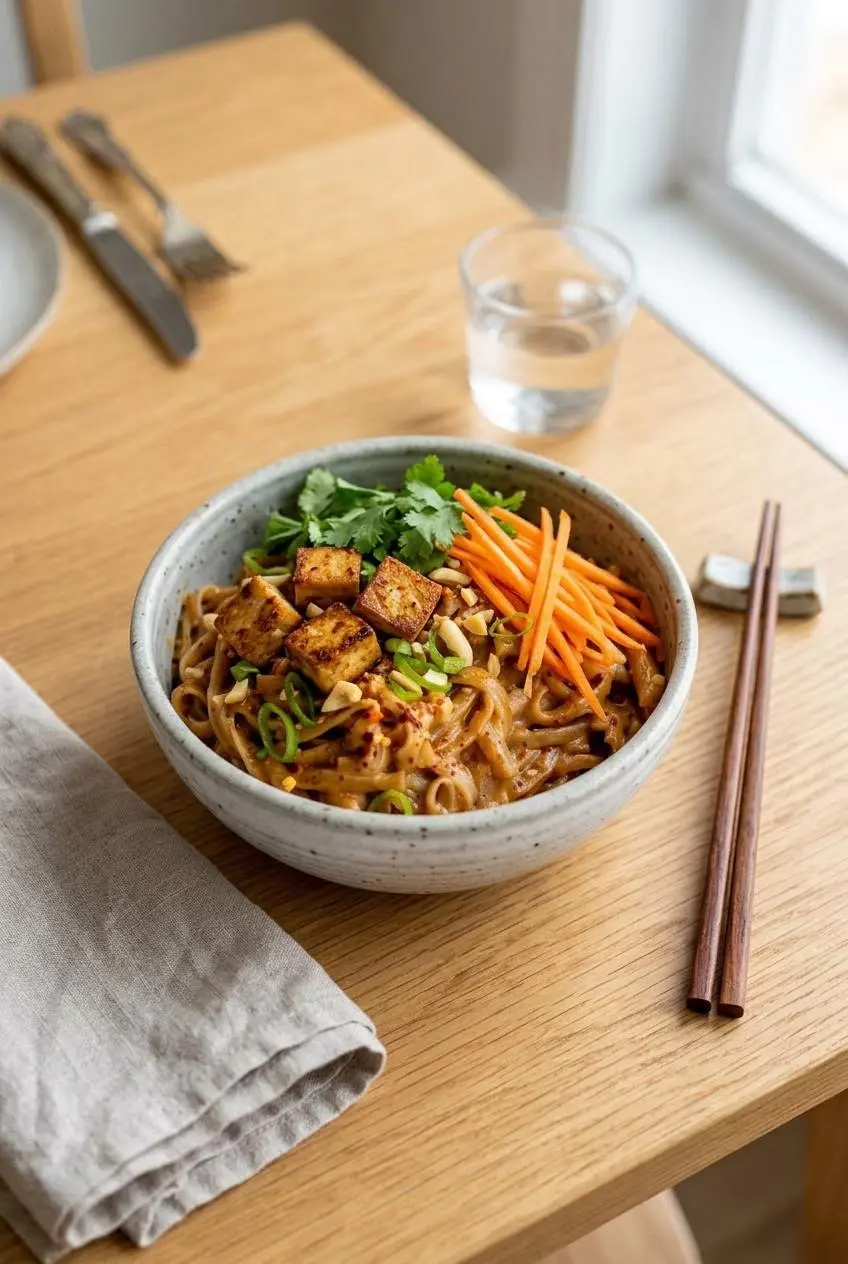
This is one of those dinners that bends easily around what you have. Keep the main recipe as written, then build from there.
Protein and Vegetable Add-ins
| Proteins | Vegetables | Crunchy Toppings |
|---|---|---|
| Crispy tofu | Shredded carrots | Crushed peanuts |
| garlic butter chicken bites | Bell peppers | Sesame seeds |
| Shrimp | Steamed broccoli | Fresh cilantro |
| Edamame | Sliced cucumber | Chili crisp |
For the best texture, add cooked proteins and vegetables after the noodles are coated so the sauce stays the star. If you like easy noodle dinners in general, Sticky Garlic Chicken Noodles are another good one to keep in rotation.
Adjusting the Spice Level
Start at the lower end with the sriracha and chili garlic sauce, then taste. It’s easier to build heat than back it down.
For mild noodles, leave out the chili garlic sauce and use less sriracha. For spicy peanut noodles, add more sriracha, extra red pepper flakes, or a spoonful of chili crisp at the end for heat and crunch.
Making It Vegan and Gluten-Free
This recipe is easy to adapt. Use maple syrup instead of honey for a vegan version, and choose tamari plus gluten-free noodles, like the brown rice noodles listed here, for a gluten-free bowl.
If you’re shopping noodles, it’s also worth checking the package when you need a strict vegan or gluten-free option, since brands can vary.
Nut-Free Alternative
If peanuts are off the table, use creamy sunflower seed butter or tahini in place of the peanut butter. The flavor changes, but the sauce still turns rich and silky.
Sunflower seed butter stays closest in body, while tahini tastes earthier and a little less sweet. Either one may need a little extra hot water to loosen properly.
Storage, Meal Prep, and Reheating
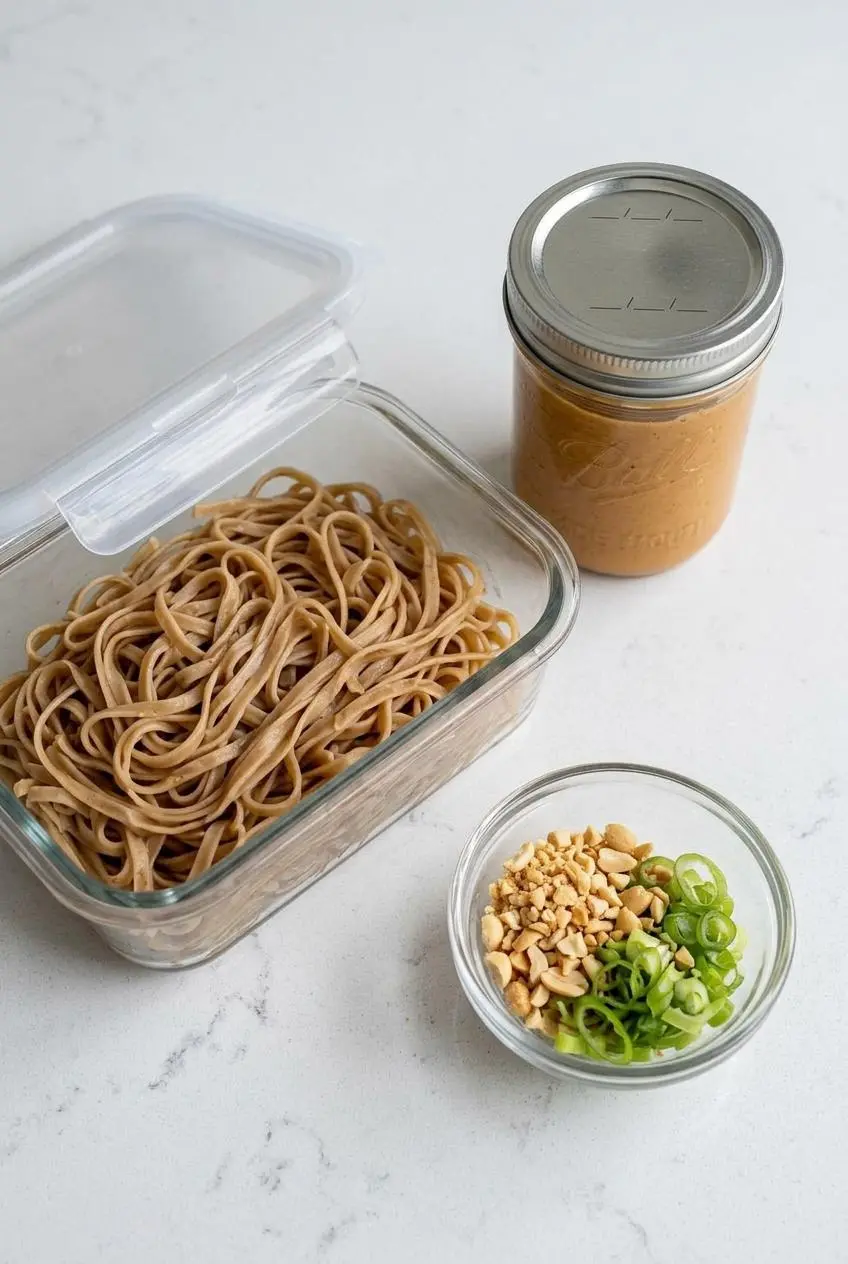
These noodles are good for meal prep, but the texture stays nicest if you think in components. Store the sauce and cooked noodles separately when you can, then toss them together before serving or reheating.
If you already mixed everything together, keep leftovers covered in the refrigerator. The sauce will firm up as it chills, so add a splash of water before reheating on the stove or in the microwave to loosen it back up.
For cold lunches, rinse the noodles after cooking so they don’t clump as they cool. Then pack toppings like peanuts, scallions, cilantro, or sesame seeds separately so they keep their crunch.
Let leftovers cool before refrigerating, keep them covered, and chill them promptly for better food safety and texture, in line with safe refrigeration practices for perishable foods.
Conclusion
Peanut Butter Noodles are the kind of fast dinner that still feels deeply satisfying. You get creamy sauce, bold flavor, and plenty of room to make the bowl your own.
If you remember one trick, make it the hot water in the sauce. That small step keeps everything smooth, glossy, and ready for serious slurping.
Frequently Asked Questions
What kind of noodles are best for peanut butter noodles?
Many noodles work well here. Brown rice noodles are great when you want a gluten-free option with a light bite. Udon gives you a chewier, thicker noodle that holds sauce beautifully. Soba adds an earthy flavor, while spaghetti or linguine work surprisingly well if that’s what you have. The best choice is usually the noodle you like eating with a creamy sauce.
Are peanut butter noodles served hot or cold?
Both work. Serve them warm right after tossing for the glossiest, creamiest texture. Serve them cold for a refreshing noodle salad style meal. If you plan to eat them cold, rinse the noodles after cooking so they don’t stick together.
How do you make peanut sauce creamy and not lumpy?
The key is heat and gradual mixing. Use creamy peanut butter, ideally a natural style that loosens easily. Whisk with hot water, not cold water. Add the water a little at a time so the sauce emulsifies instead of seizing. A smooth sauce should be pourable, glossy, and close to the consistency of heavy cream.
How do I store and reheat leftover peanut noodles?
Keep them chilled and reheat gently. Store leftovers covered in the refrigerator once cooled. The sauce will thicken as it sits, which is normal. Eat the noodles cold or warm them gently with a splash of water to loosen the sauce. If you’re planning ahead, storing the sauce and noodles separately gives you the best texture.
Peanut Butter Noodles

Equipment
- Large Pot
- Saute pan
Ingredients
- 16 ounces brown rice noodles
- 3 large cloves garlic or 4-5 small
- 1 tablespoon fresh grated ginger
- 1 tablespoon oil
- 2/3 cup creamy peanut butter
- 4 tablespoons low sodium tamari or soy sauce
- 1/3-1 cup hot water
- 1 tablespoon rice vinegar
- 1 tablespoon toasted sesame oil
- 1-2 tablespoons sriracha
- 1-2 tablespoons maple syrup or honey
- 1/2 teaspoon red pepper flakes
- 2 tsp chili garlic sauce Optional
Instructions
- Bring a large pot of water to a boil and cook the brown rice noodles according to the package directions. The noodles should be tender but still pleasantly chewy, not mushy.
- Mince the garlic, then place it in a saute pan with 1 tablespoon oil and cook over low heat for about 2 minutes. Watch for the garlic to turn lightly golden and smell mellow, not sharp or burnt.
- Add the fresh grated ginger and cook for 1 more minute, then take the pan off the heat. The pan should smell warm, fragrant, and a little toasty from the garlic and ginger.
- Add the creamy peanut butter, low sodium tamari or soy sauce, 1/3 cup hot water, rice vinegar, toasted sesame oil, sriracha, maple syrup or honey, red pepper flakes, and chili garlic sauce (Optional), then whisk until smooth. The sauce should look glossy and pourable, like heavy cream, so add more hot water as needed.
- Taste the sauce and adjust with more soy sauce, sriracha, or other seasonings if needed. You want a balanced flavor that tastes savory, nutty, tangy, and just as spicy as you like.
- Add about half of the sauce to the cooked noodles and toss to coat. The sauce will look a little loose at first, then thicken quickly once it hits the hot noodles, so mix right away.
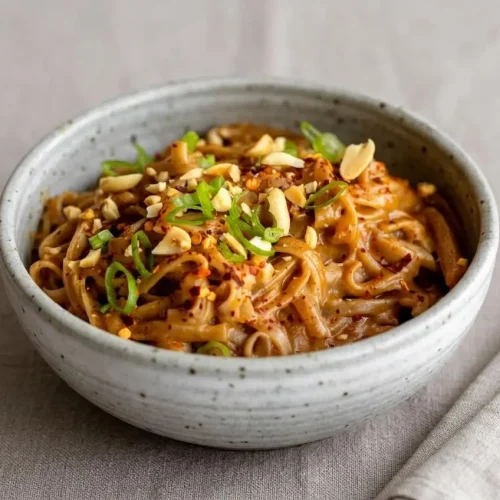
- Serve the noodles with crushed peanuts, scallions, and extra red pepper flakes if you like. The finished noodles should be glossy, well coated, and easy to slurp without a puddle of sauce at the bottom.