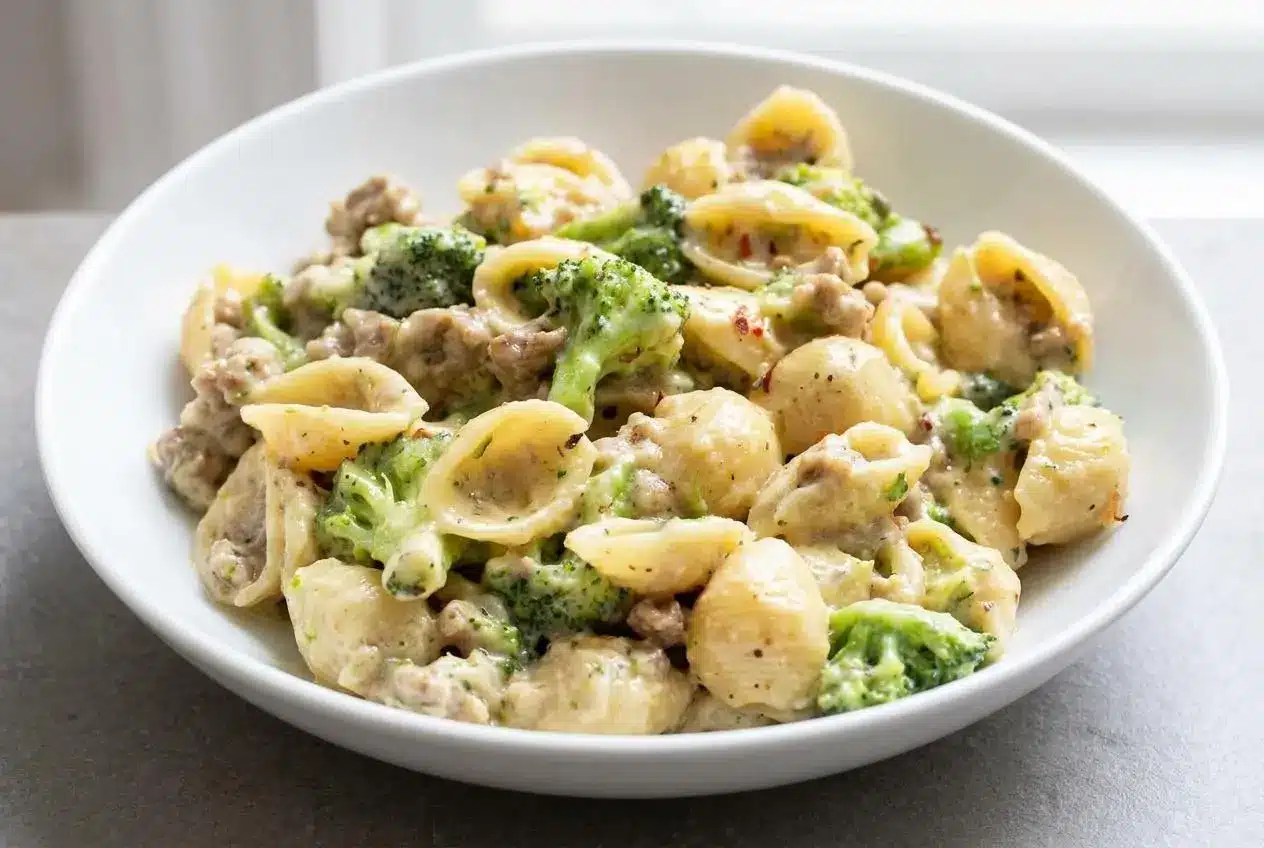
Sausage and Broccoli Pasta is a classic weeknight dinner that can lean creamy and cozy or a little lighter, depending on how you finish the sauce. This version gives you the full method, smart variations, and the little details that keep the pasta glossy and the broccoli crisp-tender.
This is the kind of pasta that feels hearty without being heavy in every bite. You get savory sausage, bright broccoli, plenty of Parmesan, and a little lemon to wake everything up.
If you like a dinner that smells amazing before it even hits the table, keep going.
Before you drain the pasta, scoop out some of the starchy water and set it near the stove so you can loosen the sauce fast if needed.
Key Ingredients for Sausage and Broccoli Pasta
Each ingredient has a job here, from building savory depth and creamy texture to adding brightness, body, and a little bite at the end.
Sauce
- ¾ cup half and half
- 1 ¼ cups chicken broth
- 1 teaspoon hot sauce
- 1 teaspoon Dijon mustard
- 1 teaspoon soy sauce
- ½ teaspoon EACH: onion powder, oregano, basil, parsley
- ¼ teaspoon garlic salt
Sausage/Pasta, etc.
- 1 teaspoon olive oil
- 1 lb. ground sausage (hot, sweet, or mild)
- ½ cup dry white wine
- 3 tablespoons butter
- 3 cloves garlic (minced)
- 3 tablespoons flour
- 1 tablespoon softened cream cheese (optional but recommended)
- ¾ cup parmesan cheese (grated)
- ½ pound medium shell pasta
- 3 cups broccoli (fresh or frozen)
- 2 teaspoons fresh lemon juice
For topping
- Red pepper flakes
- Freshly cracked pepper
The sausage does most of the heavy lifting for flavor, so choose one you really like. Italian pork sausage gives the most classic result, and the choice between hot, sweet, or mild changes the whole mood of the dish. Hot adds a gentle kick, sweet leans more savory and fennel-forward, and mild lands right in the middle. If you want something lighter, chicken or turkey sausage works well too, though the final sauce will taste a little less rich.
The broccoli brings freshness and balance. Standard broccoli gives you sturdy florets and a familiar flavor. Broccolini is more delicate and a little sweeter, with tender stalks that cook quickly. Broccoli rabe is leafier and pleasantly bitter, which pairs beautifully with sausage but gives the pasta a sharper edge. If you swap in broccolini or broccoli rabe, keep the cooking time a touch shorter so it stays lively.
Freshly grated Parmesan matters more than it may seem. A block of cheese melts more smoothly into the sauce, while pre-shredded cheese often stays a bit stubborn and can make the texture less silky. Since this sauce depends on a smooth melt, the extra minute with a grater pays off.
The pasta shape matters too. Medium shells are great because they catch little bits of sausage and sauce in each bite. Orecchiette does the same thing, and so do ridged shapes like rigatoni or sturdy twists like fusilli. Smooth spaghetti is fine, but you lose some of those sauce-catching pockets.
I always grate Parmesan from a block right before cooking because it melts more cleanly and gives the sauce a much silkier finish.
How to Make Creamy Sausage and Broccoli Pasta
This version builds a creamy, savory sauce in layers, so each step has a purpose. The biggest keys are browning the sausage well, adding the liquid slowly, and keeping the cheese gentle so the sauce stays smooth.
- Whisk together the half and half, chicken broth, hot sauce, Dijon mustard, soy sauce, onion powder, oregano, basil, parsley, and garlic salt in a large measuring cup with a spout, then measure the remaining ingredients before you start cooking.
The sauce mixture should look fully blended so it pours evenly into the skillet later. - Heat the olive oil in a large skillet over medium-high heat, add the ground sausage, and cook for about 7 minutes while breaking it into crumbles, then transfer it to a plate and turn off the heat.
The sausage should be cooked through, browned in spots, and sizzling as it finishes, with a rich garlic-and-sausage style aroma already building in the pan. - Bring a separate pot of well-salted water to a boil for the pasta while you work on the sauce base.
Getting the water going now keeps the timing smooth and helps dinner come together without a last-minute scramble. - Pour the white wine into the same skillet, set the heat to medium, and scrape up the browned bits from the bottom with a silicone spatula, then let the wine reduce for about 4 minutes.
The pan should smell deeply savory and the liquid should look slightly reduced, not watery. - Stir in the minced garlic and cook for 1 minute, then add the butter and gradually sprinkle in the flour while stirring constantly for 1 to 2 minutes.
The mixture should look smooth and paste-like, and the raw flour smell should disappear. - Add the shell pasta to the boiling water and cook by timer, then add the broccoli during the last 3 to 5 minutes if using fresh or the last 2 to 4 minutes if using frozen, and drain when both are tender.
The broccoli should stay bright and crisp-tender rather than soft and faded. - Pour the prepared sauce mixture into the skillet in small splashes, stirring the whole time, then bring it to a boil and lower the heat to low.
Adding the liquid gradually helps the sauce stay smooth, and it should thicken enough to coat the back of a spoon instead of looking thin. - Stir in the softened cream cheese, then add the grated Parmesan a little at a time, stirring until smooth, and partially cover the skillet while the pasta finishes.
The sauce should look creamy and clingy, not grainy or separated, and it should not pool heavily at the bottom of the pan. - Add the drained pasta, broccoli, and cooked sausage to the skillet, toss until everything is coated and heated through, then remove from the heat and stir in the fresh lemon juice.
The finished pasta should look glossy and creamy, with the sauce clinging to the shells and the lemon lifting the whole pan at the end.
The smell at the stove is one of the best parts here. First you get that deep sausage sizzle, then the wine loosens all the browned bits, and finally the garlic hits the warm pan and makes the whole kitchen smell like dinner is definitely handled.
If the sauce tightens up before serving, add a small splash of reserved pasta water and toss again. You want it creamy and clingy, not stiff.
The Perfect Finishing Touch: Toasted Breadcrumbs
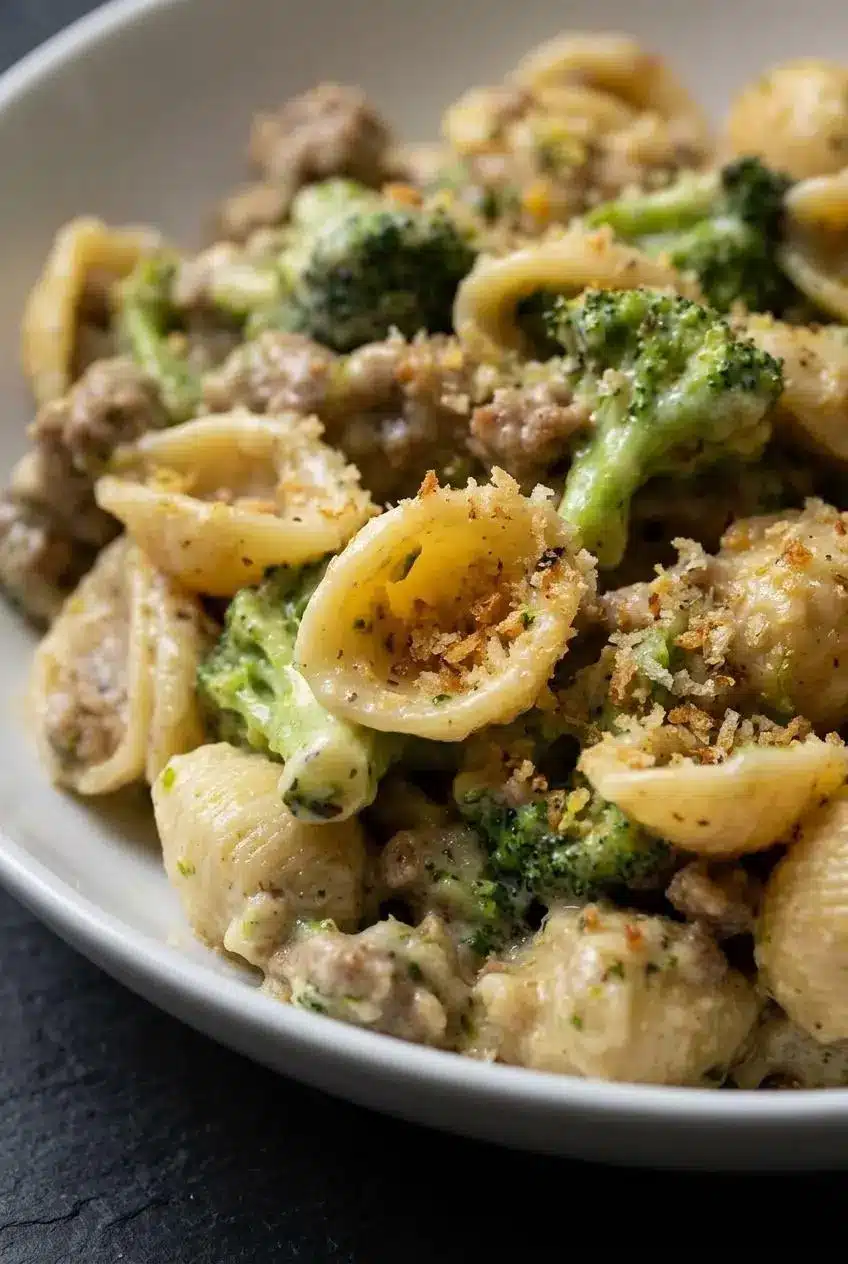
These are optional, but they bring a crunchy contrast that makes a creamy pasta feel more complete. That little crisp topping also helps cut through the richness of the sausage and cheese.
To make them, warm a little olive oil or butter in a small skillet over medium heat. Add panko breadcrumbs and stir until they start turning golden, then add a bit of minced garlic, chopped parsley, and fresh lemon zest. Keep stirring until the crumbs are evenly toasted and fragrant, then take them off the heat before the garlic darkens.
Spoon them over each serving right before eating so they stay crisp. They add exactly the kind of texture this pasta likes.
Recipe Variations and Lighter Options
This pasta is easy to adjust without losing what makes it satisfying. If you want a lighter pan sauce, a quicker one-pot route, or a smoked sausage version, here’s how to do it cleanly.
| Style | Key Ingredients | Flavor Profile |
|---|---|---|
| Creamy | half and half, broth, flour, Parmesan, optional cream cheese | Rich, savory, cheesy, and silky |
| Light | chicken broth, olive oil, lemon juice, Parmesan, pasta water | Brighter, looser, and less rich while still flavorful |
Lighter Sauce Variation (No Cream)
For a non-creamy version, keep the sausage, pasta, broccoli, wine, garlic, Parmesan, and lemon, but skip the half and half, flour, and cream cheese. Brown the sausage the same way, remove it from the skillet, then deglaze the pan with the wine and scrape up every flavorful bit from the bottom.
Add garlic, then pour in chicken broth and a little olive oil and let it simmer briefly. Cook the pasta and broccoli as directed, but be extra sure to save some pasta water before draining. Add the pasta, broccoli, and sausage back to the skillet, sprinkle in Parmesan, and toss hard with splashes of pasta water until the sauce turns glossy and lightly coats the pasta. Finish with lemon juice.
This version lands somewhere between a broth-based sauce and a silky pan sauce. If you enjoy that bright, lemony style, Lemon Parmesan Pasta is another good direction to try next.
One-Pot Method
You can turn this into a one-pot dinner if easy cleanup is the goal. Brown the sausage first, then build the sauce base in the same pot and add extra broth or water so the pasta can cook directly in the liquid.
Stir more often than you would with the standard method, since pasta cooked this way likes to stick if ignored. Add the broccoli once the pasta is partly tender so it doesn’t overcook. The finished sauce will usually be a little starchier, and the broccoli will be softer, but it still makes a very solid weeknight dinner.
Using Smoked Sausage
Pre-cooked smoked sausage, kielbasa, or smoked turkey sausage works well here if you want a faster shortcut. Slice it into coins, brown it in the skillet just long enough to develop color, then move on with the recipe. Since it’s already cooked, you only need to heat it through and render a little flavor into the pan.
If you like the creamy sausage side of this dish and want another cozy option, Creamy Italian Sausage Pasta fits the same comfort-food mood.
For a kid-friendlier version, use mild sausage and cut the broccoli into smaller pieces so each bite is easier to manage. You can also swap the sausage entirely if you’d rather go in a different direction with something like Chicken and Broccoli Bake.
Tips for Perfect Pasta Every Time
A few small choices make a big difference here. These are the ones that keep the sauce smooth, the broccoli green, and the final bowl from feeling heavy or flat.
- Salt the Water: Pasta water should taste well seasoned. That’s your first chance to season the shells and the broccoli from the inside out.
- The Magic of Pasta Water: Reserve a cup before draining. The starch helps the sauce emulsify so it looks creamy and clings to the pasta instead of sliding off.
- Crisp-Tender Broccoli: Add fresh broccoli only during the last few minutes of pasta cooking. It should stay bright green with a little bite, not drift into mushy territory.
- A Creamier Trick: Mash some of the cooked broccoli into the sauce if you want extra body without more dairy. It blends in surprisingly well.
- Go Easy With the Heat for Cheese: If the skillet is bubbling hard when the Parmesan goes in, the sauce can turn grainy. Lower heat and add the cheese gradually.
- Use the Right Pasta Shape: Shells, orecchiette, fusilli, and rigatoni all trap bits of sausage and sauce better than long smooth noodles.
- Finish With Crunch: Toasted breadcrumbs add a crisp top layer that keeps the dish from feeling one-note.
| Problem | Likely Cause | How to Fix It |
|---|---|---|
| Sauce is watery | Too much liquid or not enough simmering time | Let it simmer a bit longer, then toss with Parmesan and a little pasta water until it turns glossy and coats the pasta. |
| Sauce is grainy or broken | Cheese added over high heat or too quickly | Lower the heat, stir gently, and add a splash of warm pasta water to help smooth it back out. |
| Broccoli is mushy | Cooked too long in the pasta water | Add it only near the end of boiling time next round, and drain as soon as it reaches crisp-tender. |
| Pasta feels dry after tossing | Sauce reduced too much before serving | Add reserved pasta water a little at a time and toss until the sauce loosens and clings again. |
Serving Suggestions
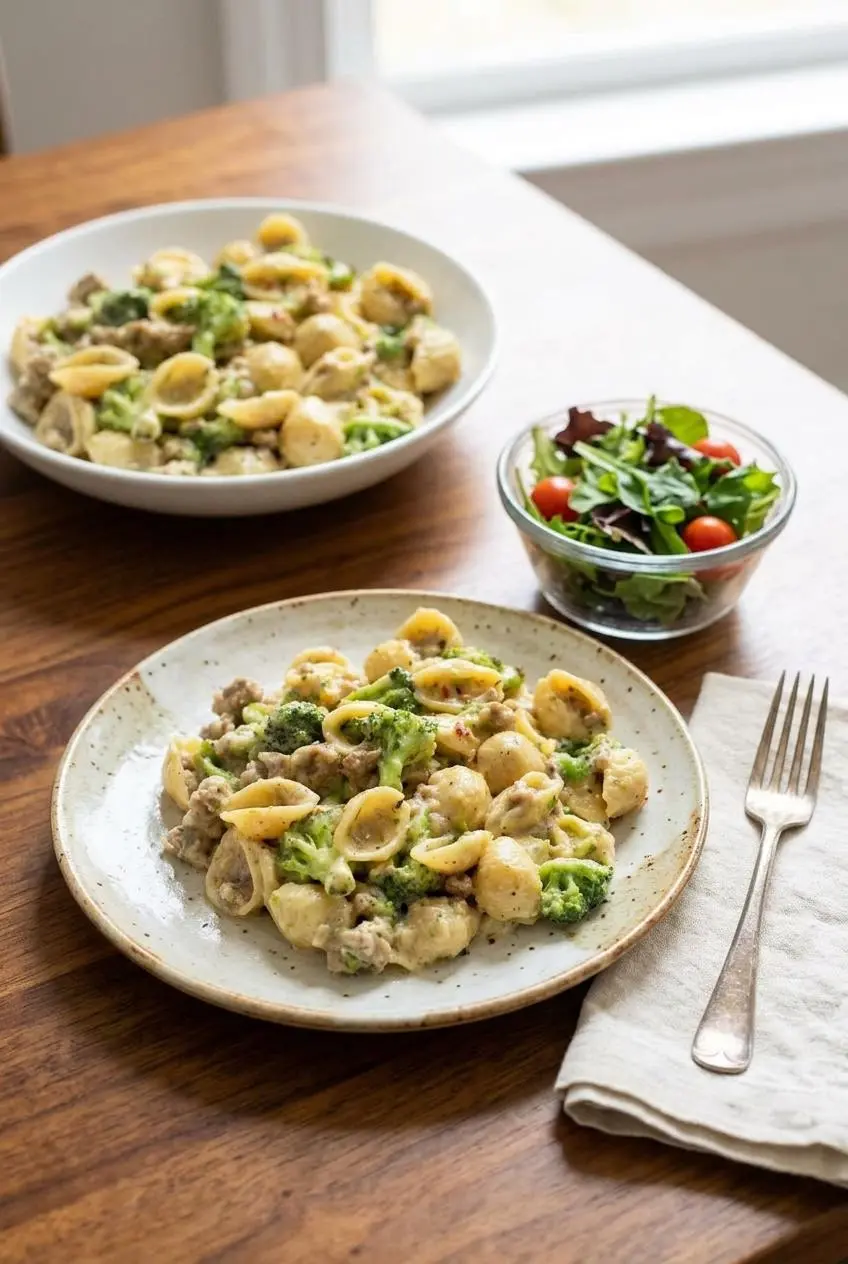
Serve this pasta right away while the sauce is still loose and glossy. A final shower of Parmesan, freshly cracked pepper, red pepper flakes, and those toasted breadcrumbs makes it feel finished without much extra work.
On the side, keep it simple. A crisp salad with vinaigrette works nicely against the creamy sauce, and crusty garlic bread is excellent for catching anything left in the bowl. No one complains about sauce insurance.
Storage and Reheating
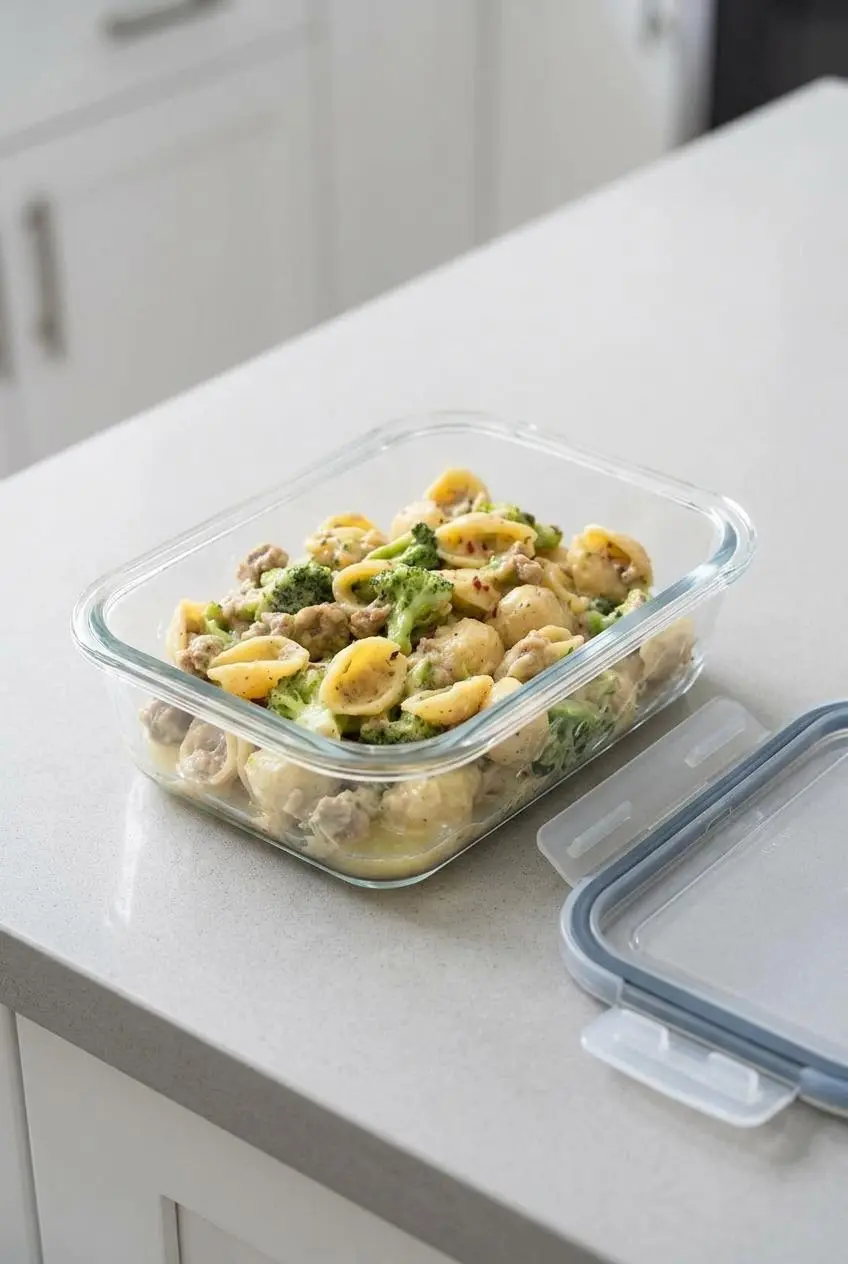
Leftovers are best kept in an airtight container in the refrigerator once the pasta has cooled. For the best texture, store the toasted breadcrumbs separately and add them only when serving.
To reheat, warm the pasta gently on the stovetop or in the microwave with a splash of milk, broth, or water. Stir a few times as it heats so the sauce loosens evenly instead of drying out around the edges.
If you know you’ll have leftovers, slightly undercooking the pasta the first time helps it hold up better later. And if reheating pasta doesn’t sound exciting, turning it into a Leftover Pasta Frittata is a smart save.
For safe handling at home, keep hot food moving through the cooling and chilling process without lingering too long on the counter, and follow the Clean, Separate, Cook, Chill basics from FoodSafety.gov food safety steps.
Conclusion
This pasta earns a spot in the regular dinner rotation because it’s flexible, filling, and full of flavor. You can keep it creamy and cozy, or shift it toward a lighter, lemony finish without changing the heart of the dish.
If you remember one thing, make it the pasta water. That little cup is often the difference between a sauce that sits in the pan and one that hugs every shell.
Frequently Asked Questions (FAQ)
What Is the Best Sausage to Use for Sausage and Broccoli Pasta?
Sweet or hot Italian pork sausage gives the most classic flavor. Mild works too if you want a gentler finish. Chicken or turkey sausage is a good lighter option, and either ground sausage or links with the casings removed will work.
How Can I Make the Sauce Creamy Without Using Heavy Cream?
You don’t need heavy cream for a creamy result. Use starchy pasta water, butter or olive oil, and finely grated Parmesan, then toss until the sauce emulsifies and turns glossy. Mashing some of the cooked broccoli into the pan also adds body and a softer, creamier texture.
Can I Use Frozen Broccoli in This Recipe?
Yes. Add it to the pasta water during the last 2 to 4 minutes of cooking. It’s convenient and works well, though it will usually be a bit softer than fresh broccoli.
What’s the Best Way to Store and Reheat Leftovers so They Don’t Get Dry?
Keep leftovers covered and chilled in an airtight container. Reheat gently with a splash of milk, broth, or water, and stir as it warms so the sauce loosens instead of tightening up.
What’s the Difference Between Broccoli, Broccolini, and Broccoli Rabe?
Broccoli is the classic choice here, with thicker florets and a mild flavor. Broccolini has thinner stalks, a more tender texture, and a slightly sweeter taste. Broccoli rabe is leafier and more bitter, which pairs especially well with sausage if you like a sharper, more assertive finish.
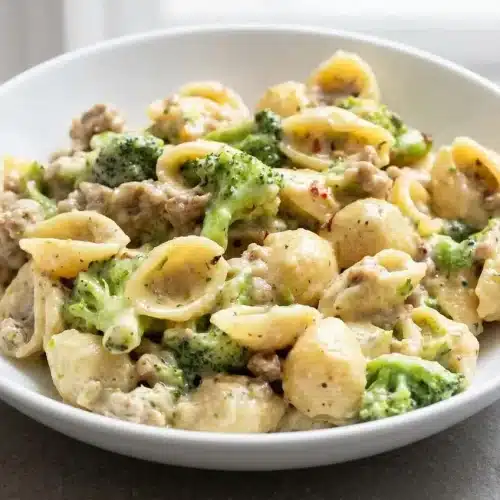
Sausage and Broccoli Pasta

Equipment
- Large Skillet
- Large measuring cup
- Whisk
- Silicone spatula
- Large Pot
- Cheese grater
Ingredients
Sauce
- ¾ cup half and half
- 1 ¼ cups chicken broth
- 1 teaspoon hot sauce
- 1 teaspoon Dijon mustard
- 1 teaspoon soy sauce
- ½ teaspoon onion powder
- ½ teaspoon oregano
- ½ teaspoon basil
- ½ teaspoon parsley
- ¼ teaspoon garlic salt
Sausage/Pasta, etc.
- 1 teaspoon olive oil
- 1 lb. ground sausage (hot, sweet, or mild)
- ½ cup dry white wine
- 3 tablespoons butter
- 3 cloves garlic (minced)
- 3 tablespoons flour
- 1 tablespoon softened cream cheese (optional but recommended)
- ¾ cup parmesan cheese (grated)
- ½ pound medium shell pasta
- 3 cups broccoli (fresh or frozen)
- 2 teaspoons fresh lemon juice
For topping
- Red pepper flakes
- Freshly cracked pepper
Instructions
- Whisk together the half and half, chicken broth, hot sauce, Dijon mustard, soy sauce, onion powder, oregano, basil, parsley, and garlic salt in a large measuring cup with a spout, then measure the remaining ingredients before you start cooking. The sauce mixture should look fully blended so it pours evenly into the skillet later.
- Heat the olive oil in a large skillet over medium-high heat, add the ground sausage, and cook for about 7 minutes while breaking it into crumbles, then transfer it to a plate and turn off the heat. The sausage should be cooked through, browned in spots, and sizzling as it finishes, with a rich garlic-and-sausage style aroma already building in the pan.
- Bring a separate pot of well-salted water to a boil for the pasta while you work on the sauce base. Getting the water going now keeps the timing smooth and helps dinner come together without a last-minute scramble.
- Pour the white wine into the same skillet, set the heat to medium, and scrape up the browned bits from the bottom with a silicone spatula, then let the wine reduce for about 4 minutes. The pan should smell deeply savory and the liquid should look slightly reduced, not watery.
- Stir in the minced garlic and cook for 1 minute, then add the butter and gradually sprinkle in the flour while stirring constantly for 1 to 2 minutes. The mixture should look smooth and paste-like, and the raw flour smell should disappear.
- Add the shell pasta to the boiling water and cook by timer, then add the broccoli during the last 3 to 5 minutes if using fresh or the last 2 to 4 minutes if using frozen, and drain when both are tender. The broccoli should stay bright and crisp-tender rather than soft and faded.
- Pour the prepared sauce mixture into the skillet in small splashes, stirring the whole time, then bring it to a boil and lower the heat to low. Adding the liquid gradually helps the sauce stay smooth, and it should thicken enough to coat the back of a spoon instead of looking thin.
- Stir in the softened cream cheese, then add the grated Parmesan a little at a time, stirring until smooth, and partially cover the skillet while the pasta finishes. The sauce should look creamy and clingy, not grainy or separated, and it should not pool heavily at the bottom of the pan.
- Add the drained pasta, broccoli, and cooked sausage to the skillet, toss until everything is coated and heated through, then remove from the heat and stir in the fresh lemon juice. The finished pasta should look glossy and creamy, with the sauce clinging to the shells and the lemon lifting the whole pan at the end.