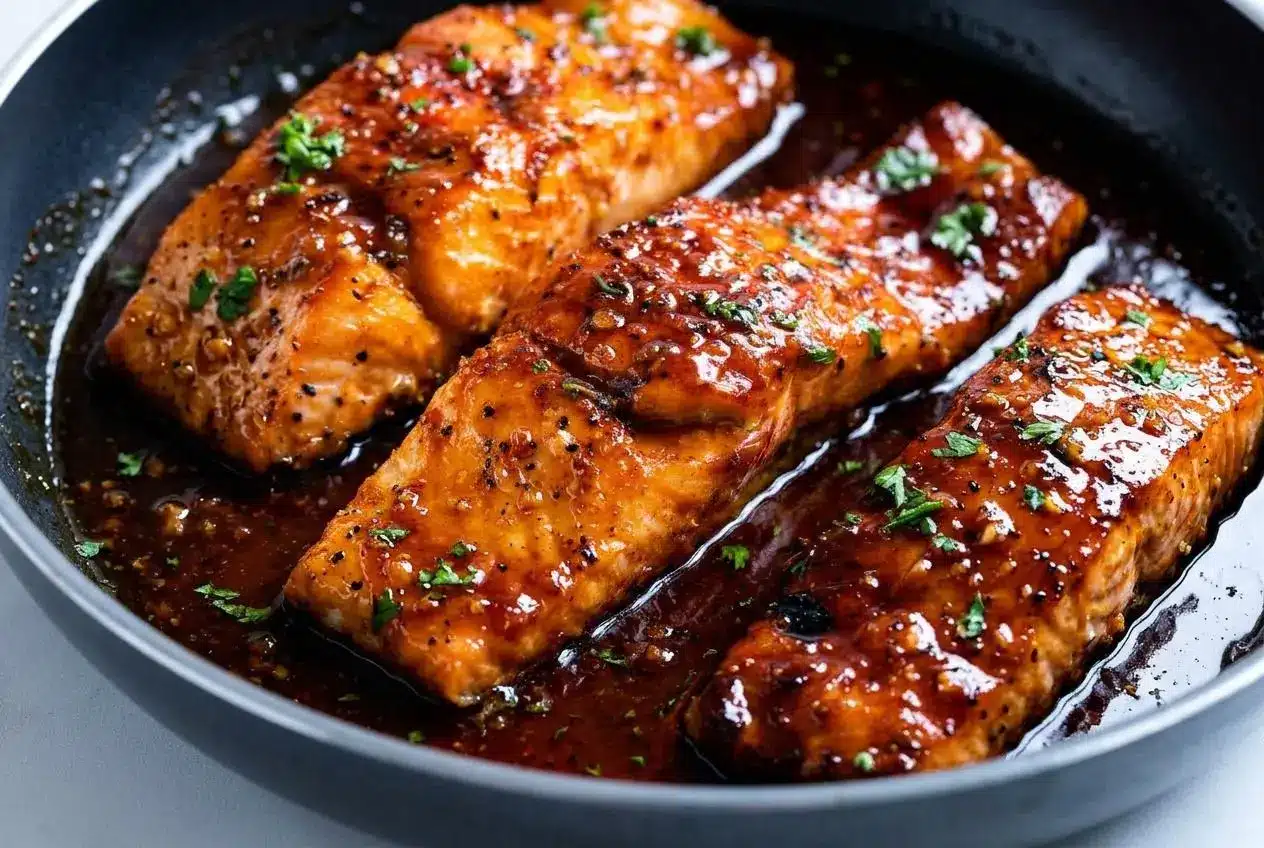
Honey Garlic Glazed Salmon is a fast, flavorful dinner with tender fillets coated in a sticky sweet-savory glaze made from honey, soy sauce, garlic, lemon, and a little heat.
This is the kind of salmon that feels restaurant-worthy without asking much from you. The glaze gets glossy, the fish stays tender, and the whole thing lands on the table fast.
It also gives you options: pan-sear it for crust, bake it for ease, or broil it for a caramelized top. The trick is simple and worth knowing.
Pat the salmon very dry before seasoning so it sears instead of steaming.
Why This Honey Garlic Salmon Recipe Works
This recipe works because each part of the sauce has a job. Honey brings sweetness and helps the glaze turn glossy and lightly caramelized. Soy sauce adds depth and savory balance so the honey does not taste flat. Garlic gives the sauce its warm, punchy aroma, and lemon juice sharpens the finish so every bite tastes lively instead of heavy.
The salmon itself needs one small but important bit of prep: dry it well before seasoning. Surface moisture gets in the way of browning, so a dry fillet gives you better color, better texture, and a cleaner sear in the pan.
It is also flexible. The same flavor profile works beautifully whether you want to pan-sear, bake, or broil. If you like this sweet-savory direction on other fast proteins, honey garlic shrimp follows a similar idea with a different texture and an even quicker cook.
Ingredients
Each ingredient contributes something useful here, from color and caramelization to richness, heat, and the bright finish that keeps the glaze balanced.
SALMON
- 4 (6 oz each) salmon filets
- 1/2 tsp kosher salt
- 1/2 tsp black pepper
- 1/2 tsp smoked paprika (or regular paprika)
- 1/4 tsp blackening seasoning (optional)
SAUCE
- 3 Tbsp butter
- 2 tsp olive oil
- 6 cloves garlic minced
- 1/2 cup honey
- 3 Tbsp water
- 3 Tbsp soy sauce
- 1 Tbsp sriracha sauce
- 2 Tbsp lemon juice
Honey is the backbone of the glaze, giving it shine and that sticky finish once it hits the heat. Soy sauce adds salty umami, garlic gives the sauce its unmistakable aroma, and lemon juice keeps the sweetness in check. Butter rounds everything out, while sriracha adds just enough edge to keep the glaze from tasting one-note.
I like to mince the garlic very finely here so it softens into the sauce quickly instead of sitting in larger bits that can scorch.
How to Make Honey Garlic Glazed Salmon
This is the main method I would use first because it gives you the best mix of sear, glossy glaze, and quick cooking.
- Pat the salmon dry and season it with kosher salt, black pepper, smoked paprika, and blackening seasoning, then set it aside.
Dry fish browns better, and the seasoning will cling more evenly to the surface. - Move an oven rack to the middle position and preheat the broiler.
Keeping the salmon lower in the oven helps the honey glaze caramelize instead of burning too fast. - Set a large oven-safe skillet over medium-high heat and add the butter and olive oil.
When the butter melts, the pan should look glossy and ready for the sauce. - Stir in the garlic, water, soy sauce, sriracha sauce, honey, and lemon juice, and cook briefly until heated through.
The garlic should smell fragrant almost immediately, and the glaze will loosen, then start bubbling across the surface. - Place the salmon in the skillet skin side down if using skin-on fillets and cook for 3 minutes, spooning the sauce over the top as it cooks.
It should hit the pan with a confident sizzle, and the glaze will bubble rapidly and darken toward a rich amber color. - Transfer the skillet under the high broiler, around 550°F if that is your oven’s high setting, and broil for 5 to 6 minutes, basting once during the broil.
The top should look caramelized and glossy, and the center of the fillet will shift from translucent to opaque as it finishes. - Take the skillet out and garnish with minced parsley if desired.
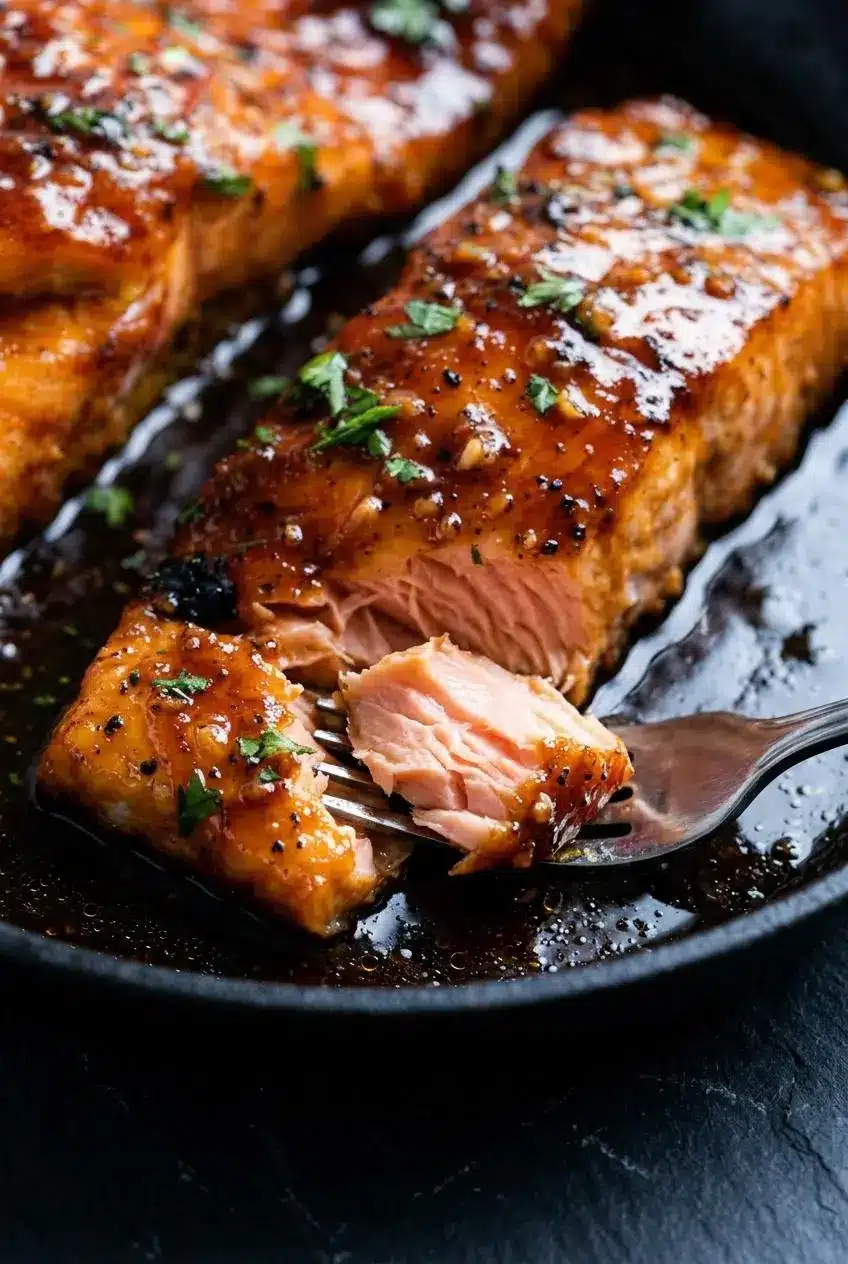
The salmon should flake easily at the thickest part while still looking moist inside.
In a hurry? Use fillets that are close in thickness so they finish at the same time, and keep the pan hot before the fish goes in. That alone solves a lot of weeknight salmon problems.
Pan-Sear vs. Bake vs. Broil: Which Method Is Best?
If you are wondering whether to bake, broil, or pan-sear salmon, the best choice depends on what matters most to you: crispness, easy cleanup, or speed. All three methods work with this glaze, but they produce noticeably different results.
For a Crispy Crust: The Pan-Sear Method
Pan-searing gives you the best exterior texture, especially with skin-on fillets. Start with a hot skillet, add the salmon skin side down, and leave it alone long enough for the surface to brown and release naturally. Finish it in the pan while basting with the glaze as it thickens around the fish.
This is the method for anyone who wants crisp edges and the deepest seared flavor. It does ask for more attention, though. You need room in the skillet, steady heat, and a close eye on the glaze so the honey does not go too far.
Crispy skin is most realistic here. Dry salmon and hot pan, no crowding, no fussing.
For an Easy, Hands-Off Meal: The Baking Method
Baking is the calmest option. Arrange the seasoned salmon in a baking dish or on a lined sheet pan, make the glaze separately in a small saucepan, then pour it over the fillets before baking. This approach gives you even cooking and keeps stovetop splatter to a minimum.
The tradeoff is texture. Baked salmon stays very moist and tender, but it will not build the same crust as a skillet method. If you want a little more color on top, a brief finish under the broiler can help, as long as you watch closely.
This is also the easiest method for doubling the recipe or getting dinner moving while you handle side dishes.
For a Quick, Charred Finish: The Broiling Method
Broiling is the fastest route to a caramelized top. In the main method above, the salmon starts in the skillet so the sauce comes together quickly, then finishes under high heat for that sticky, lacquered look.
The middle oven rack matters here. If the salmon sits too close to the heating element, the honey can jump from beautifully bronzed to burnt in a hurry. Keep a close eye on it during the final minutes.
If you love a slightly charred edge and glossy glaze, this is hard to beat.
| Method | Best For | Final Texture | Cleanup Effort |
|---|---|---|---|
| Pan-Sear | Crispy skin and strong browning | Crispy outside, tender center | Moderate |
| Bake | Easy dinner and even cooking | Very moist and soft | Easy |
| Broil | Speed and caramelized glaze | Sticky top with light char | Easy to moderate |
If you want to branch out beyond these three, cedar plank salmon is another great route for big flavor and a different texture altogether.
Tips for Perfect Glazed Salmon Every Time
This is where the little details matter. A few smart choices will give you better browning, a more balanced glaze, and salmon that stays tender instead of dry.
Choose the Right Salmon
Thickness matters more than the exact variety, but the type of salmon does affect flavor and cook time. Atlantic salmon is usually richer and a bit fattier, which gives you more wiggle room before it dries out. Sockeye is leaner and firmer, with a deeper red color, so it can cook a touch faster. Coho lands somewhere in the middle.
Try to buy fillets that are similar in size and thickness so they finish together. If one piece is much thinner than the others, pull it earlier instead of waiting for the whole pan.
Master the Glaze
The right glaze should look shiny and lightly thickened, not watery and not stiff. In the pan, it should bubble actively and coat the back of a spoon. If it still looks thin, give it a little more simmering time before relying on it for basting.
| Problem | Solution |
|---|---|
| Sauce is too thin | Let it simmer a bit longer so excess moisture cooks off and the honey can thicken the glaze. |
| Sauce is getting too dark | Lower the heat and keep it moving. Honey and garlic can brown fast once the pan gets too hot. |
| Garlic tastes bitter | Add the liquids quickly after the garlic so it turns fragrant without scorching. |
| Salmon sticks in the pan | Start with a properly heated skillet and let the fish cook undisturbed until it releases more easily. |
Don’t Overcook It
Salmon goes from luscious to dry pretty quickly, so checking doneness is worth the extra minute. For tender results, many home cooks aim for 135 to 140°F in the thickest part. If you prefer to follow the full 145°F safe minimum internal temperature, use an instant-read thermometer and pull the fish as soon as it gets there.
If you do not have a thermometer, look for visual cues. The center should turn opaque, the layers should separate easily with a fork, and the fillet should still look moist rather than chalky.
Recipe Variations
These are optional ways to change the flavor without touching the main recipe. Think of them as easy forks in the road, not required changes.
Spicy Honey Garlic Salmon
If you want more heat, increase the sriracha to taste or add a pinch of red pepper flakes to the glaze. That extra spice works especially well with the honey because the sweetness softens the edges without dulling the kick.
For a different spicy spin built around the same sweet-heat idea, a hot honey salmon bowl is a great next dinner.
Soy-Free and Gluten-Free Option
Swap the soy sauce for certified gluten-free tamari or coconut aminos. Tamari keeps a closer savory depth, while coconut aminos make the glaze a little sweeter and softer in flavor. Either way, the change is easy and the method stays the same.
Citrus and Herb Twists
You can trade the lemon for lime juice if you want a sharper citrus edge, or add fresh grated ginger for more warmth in the glaze. Maple syrup also works in place of honey if you want a slightly deeper, less floral sweetness.
If ginger is your thing, ginger soy glazed cod shows how well that flavor profile works with another flaky fish.
What to Serve with Honey Garlic Salmon
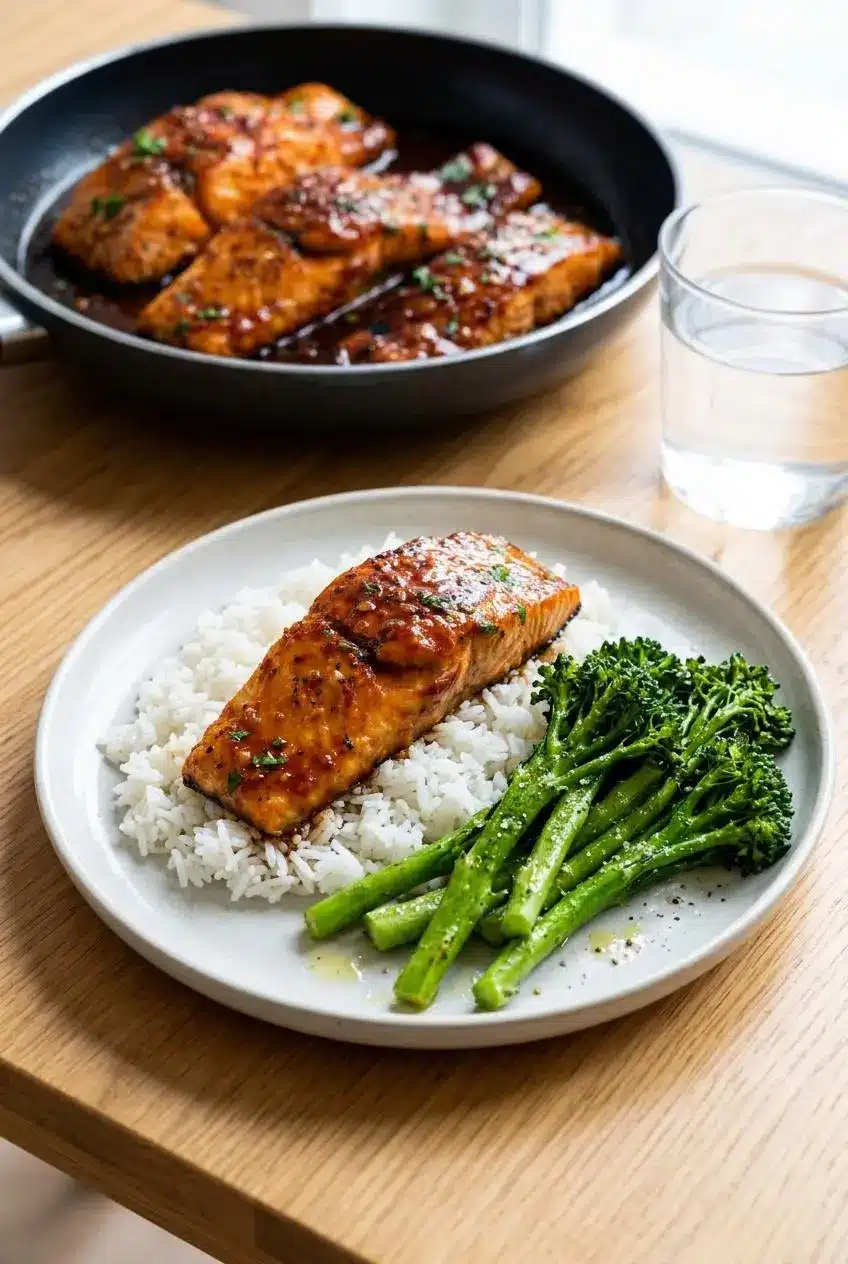
The glaze is bold and glossy, so the best sides either soak it up or bring something fresh and crisp to the plate.
Rice and Grains
White rice is the classic move because it catches every bit of extra sauce. Coconut rice adds a mellow sweetness that plays nicely with the honey, and cilantro-lime rice brings a brighter contrast. Quinoa works too if you want a grain with a little more texture.
For a side that really knows what to do with sauce, Garlic Butter Rice is a natural pairing.
Vegetable Pairings
Broccoli, asparagus, green beans, and bok choy all work well because they add freshness without fighting the glaze. Roast or steam them until just tender so they still have some bite. A soft vegetable next to soft salmon can get a little sleepy.
Fresh Salads
A simple green salad with a sharp vinaigrette balances the richness of the fish. A crunchy cucumber salad is especially good here because it cools down the sweetness and any lingering heat from the sriracha.
How to Store and Reheat Honey Garlic Salmon
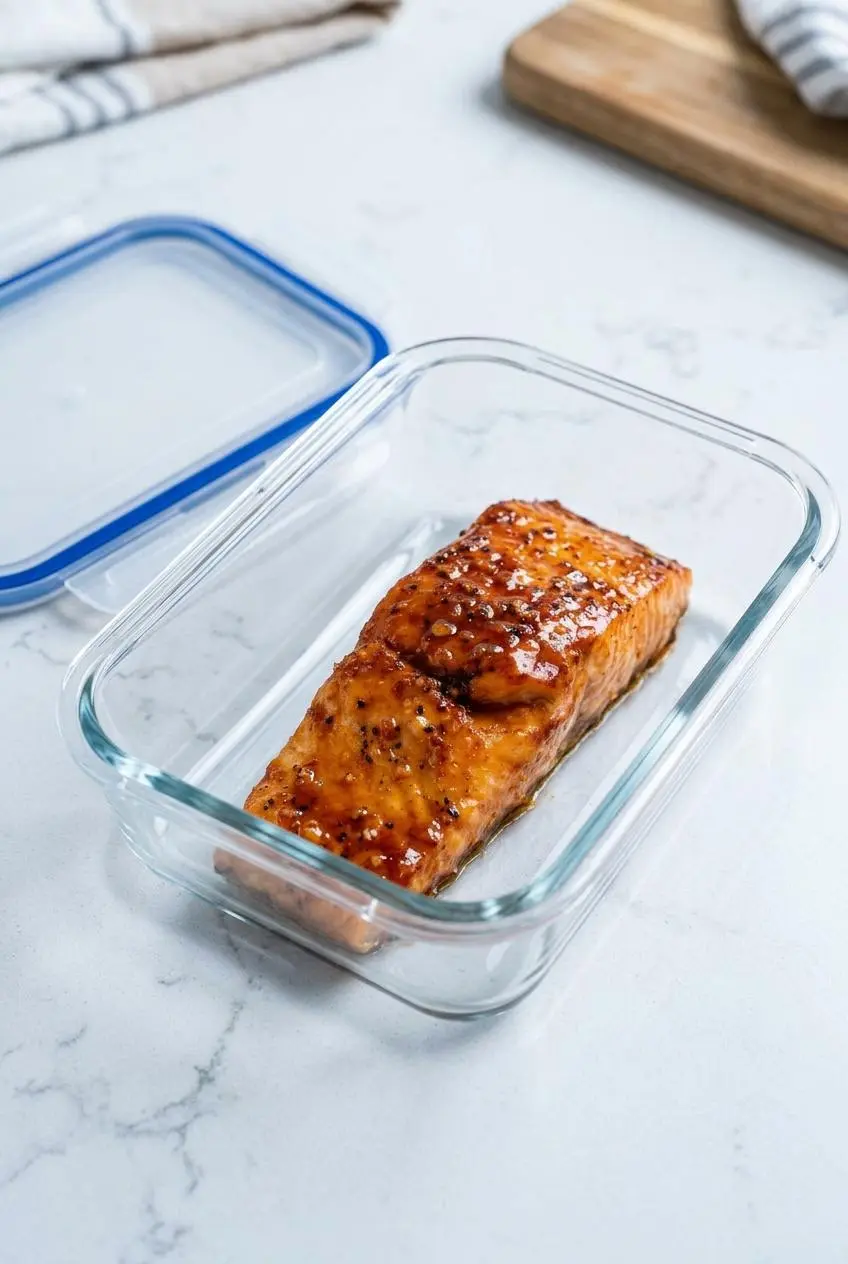
Leftovers can be excellent, but salmon is at its best when you handle it gently after cooking. Cool it before storing, keep it covered, and reheat just enough to warm it through.
Storing Leftovers
Place cooled salmon in an airtight container and refrigerate it for up to 3 days, which fits common seafood handling guidance for cooked fish when properly chilled and stored in a sealed container for cooked seafood storage and handling.
If you know you will eat it cold, that is often the best move for texture. Flake it over a salad or tuck it into a rice bowl instead of reheating it again.
Reheating for Best Results
Skip the microwave if you can. It tends to tighten the proteins too fast and turn the salmon rubbery.
Instead, warm the fillets in a 300°F oven or in a covered skillet over low heat until heated through. A spoonful of extra glaze or a splash of water in the pan can help keep the surface from drying out.
Conclusion
This is a great salmon dinner to keep in rotation when you want something fast that still feels polished. The fish stays tender, the glaze turns sticky and savory-sweet, and the method leaves plenty of room to choose your favorite finish.
If you remember one thing, make it this: pull the salmon before it dries out. A glossy pan and a moist center are the whole game, and dinner gets very good from there.
Frequently Asked Questions (FAQ)
How do I know when my honey garlic salmon is done cooking?
The easiest way is to check the thickest part with an instant-read thermometer. For tender salmon, aim for 135 to 140°F; visually, the center should look opaque and the fish should flake easily with a fork.
Can I use frozen salmon for this recipe?
Yes, but thaw it completely in the refrigerator before cooking so the fish cooks evenly and the glaze can cling properly. This gradual thawing method is recommended in seafood thawing guidance for frozen fish.
How do I prevent the honey garlic glaze from burning?
Keep the glaze at medium heat rather than pushing it too hard on the stove. If you are broiling, use the middle rack and watch closely, because honey can go from caramelized to too dark very quickly.
My glaze is watery. How can I fix it?
Let it simmer a bit longer before adding the salmon or before basting more aggressively. As the extra moisture cooks off, the glaze should thicken and turn shinier.
What’s the best way to store and reheat leftovers?
Cool the salmon, store it covered in the fridge, and reheat it gently in a low oven or covered skillet. That keeps the texture much better than blasting it in the microwave.
What can I substitute for soy sauce to make this gluten-free?
Use certified gluten-free tamari or coconut aminos as a direct swap. Tamari gives you the closest savory flavor, while coconut aminos make the glaze a little milder and sweeter.
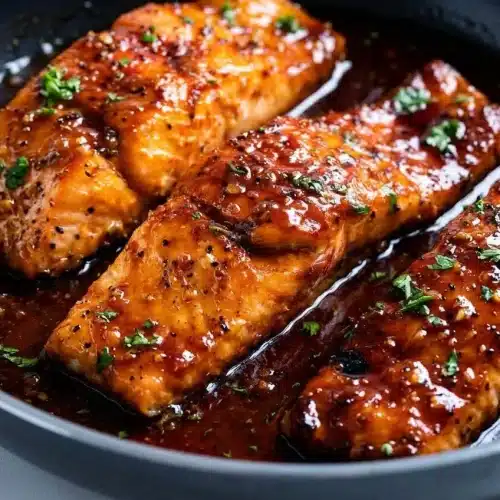
Honey Garlic Glazed Salmon

Equipment
- 12″ wide skillet
Ingredients
SALMON
- 4 (6 oz each) salmon filets
- 1/2 tsp kosher salt
- 1/2 tsp black pepper
- 1/2 tsp smoked paprika (or regular paprika)
- 1/4 tsp blackening seasoning (optional)
SAUCE
- 3 Tbsp butter
- 2 tsp olive oil
- 6 cloves garlic minced
- 1/2 cup honey
- 3 Tbsp water
- 3 Tbsp soy sauce
- 1 Tbsp sriracha sauce
- 2 Tbsp lemon juice
Instructions
- Pat the salmon dry and season it with kosher salt, black pepper, smoked paprika, and blackening seasoning, then set it aside. Dry fish browns better, and the seasoning will cling more evenly to the surface.
- Move an oven rack to the middle position and preheat the broiler. Keeping the salmon lower in the oven helps the honey glaze caramelize instead of burning too fast.
- Set a large oven-safe skillet over medium-high heat and add the butter and olive oil. When the butter melts, the pan should look glossy and ready for the sauce.
- Stir in the garlic, water, soy sauce, sriracha sauce, honey, and lemon juice, and cook briefly until heated through. The garlic should smell fragrant almost immediately, and the glaze will loosen, then start bubbling across the surface.
- Place the salmon in the skillet skin side down if using skin-on fillets and cook for 3 minutes, spooning the sauce over the top as it cooks. It should hit the pan with a confident sizzle, and the glaze will bubble rapidly and darken toward a rich amber color.
- Transfer the skillet under the high broiler, around 550°F if that is your oven’s high setting, and broil for 5 to 6 minutes, basting once during the broil. The top should look caramelized and glossy, and the center of the fillet will shift from translucent to opaque as it finishes.
- Take the skillet out and garnish with minced parsley if desired. The salmon should flake easily at the thickest part while still looking moist inside.