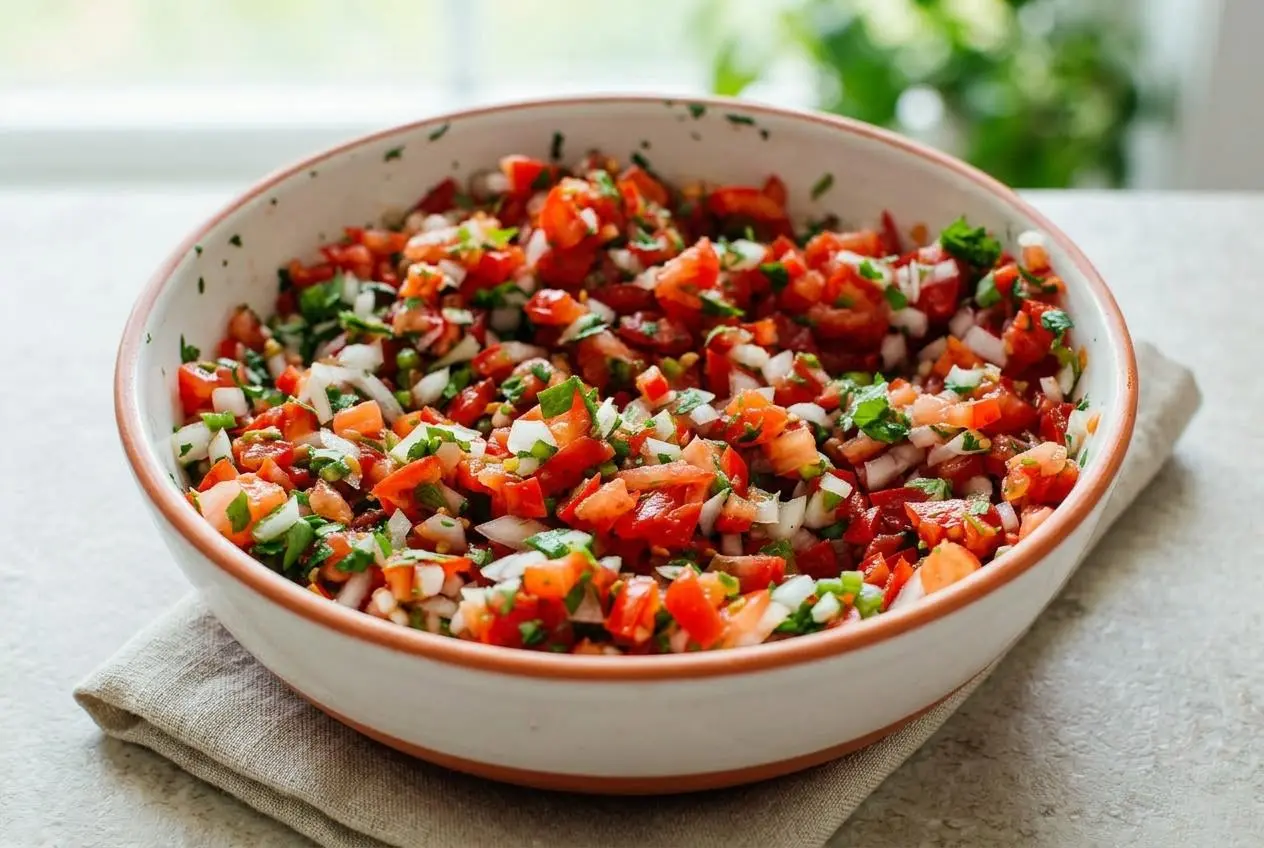
Classic Pico de Gallo is a fresh Mexican salsa made with chopped raw tomatoes, onion, cilantro, chile, lime juice, and salt. This version stays bright, chunky, and balanced, with practical tips to keep it from turning watery.
Classic Pico de Gallo, also called salsa fresca or salsa cruda, is all about clean flavor and crisp texture. Every bite should taste fresh, zesty, and lively instead of soupy or muddled.
It comes together fast, but a few smart choices make a big difference, especially your tomatoes, onion, and resting time. The payoff is huge.
Use a sharp knife and keep the dice fairly even so each scoop gets tomato, onion, cilantro, and pepper in one bite.
Pico de Gallo vs. Salsa: What’s the Real Difference?
This matters because the two are related, but they do not eat the same way. Pico de gallo is a type of salsa, but it is fresher, chunkier, and much less liquid.
| Feature | Pico de Gallo | Salsa |
|---|---|---|
| Texture | Chunky and diced | Often smoother or more blended |
| Preparation | Made with raw ingredients | Can be raw, blended, or cooked |
| Liquid level | Low and spoonable | Usually looser and more pourable |
| Best use | Topping, dip, relish | Dip, sauce, cooking ingredient |
If you want distinct bites of tomato, onion, cilantro, and chile, go with pico. If you want something smoother for drizzling or blending into a dish, salsa is usually the better fit.
Key Ingredients for Authentic Pico de Gallo
Great pico is mostly about choosing ingredients that taste fresh and hold their shape. Since nothing gets cooked, every ingredient shows up loud and clear.
The Best Tomatoes for Pico
Roma tomatoes are a favorite for a reason. They are usually firmer, meatier, and less watery than many slicing tomatoes, which helps your pico stay chunky instead of drifting into tomato soup territory.
Look for tomatoes that feel firm, smell fresh, and have a deep red color. If they feel soft or look pale inside, the flavor will usually fall flat. For the cleanest texture, scoop out the seeds and watery pulp before dicing, especially if your tomatoes are very juicy.
Choosing the Right Onion
White onion is the classic choice. It has a crisp bite and a sharp, clean flavor that stands up to lime and tomato without taking over the bowl.
Yellow onion works if that is what you have, but it tastes rounder and a little heavier. Red onion is absolutely usable, especially if you like a slightly sweeter bite and brighter color, but it changes the flavor profile in a noticeable way.
Jalapeño vs. Serrano: Pick Your Pepper
The pepper decides the heat level and a bit of the personality. Jalapeño is easiergoing and familiar, while serrano usually tastes brighter and hotter.
| Pepper | Flavor and Heat | Best For |
|---|---|---|
| Jalapeño | Milder, grassy, fresh | A crowd-friendly pico |
| Serrano | Hotter, sharper, punchier | A spicier, more assertive pico |
| Habanero | Much hotter and fruity | An optional fiery variation |
To keep the heat down, remove the seeds and white ribs well. For more kick, leave a little of that inner membrane or switch to serrano. If you have sensitive skin, handling hot peppers carefully is wise, and keeping fresh produce clean and chilled follows official guidance.
The Role of Fresh Cilantro and Lime
Fresh cilantro gives pico its unmistakable herbal lift. Lime juice brings acid, brightness, and the little spark that wakes up the tomatoes and onion.
Freshly squeezed lime juice tastes cleaner and more vibrant than bottled. And cilantro is best when it smells lively and green, not tired or damp. A lot of home cooks who think they do not like pico have really just had one made with dull lime juice and limp cilantro.
Ingredients
Each ingredient pulls its weight here, building crisp texture, juicy freshness, heat, herbal lift, and the sharp acid balance that makes pico taste alive.
- 1 cup finely chopped white onion (about 1 small onion)
- 1 medium jalapeño or serrano pepper, ribs and seeds removed, finely chopped
- ¼ cup lime juice
- ¾ teaspoon fine sea salt, more to taste
- 1 ½ pounds ripe red tomatoes (about 8 small or 4 large), chopped
- ½ cup finely chopped fresh cilantro (about 1 bunch)
I like to chop the cilantro last so it stays bright and fragrant instead of getting bruised while everything else is prepped.
How to Make Classic Pico de Gallo
- Combine the chopped onion, chopped jalapeño or serrano, lime juice, and salt in a medium serving bowl, then let the mixture sit for about 5 minutes while you prep the remaining ingredients.
The onion will start to soften slightly, and the bowl should smell sharp, citrusy, and fresh. - Add the chopped tomatoes and cilantro, then stir until everything is evenly mixed and taste for seasoning.
The pico should look colorful and chunky, with enough salt and lime to make the flavors pop. - Let the pico rest for 15 minutes before serving, or chill it longer if you want the flavors to mingle more deeply.
Some liquid will collect at the bottom, so spoon or scoop from the top if you want a less watery serving.
The Perfect Pico de Gallo Ratio: A Simple Guide
There is no single sacred ratio, but balance matters. A good starting point gives you enough tomato for juiciness, enough onion for crunch, and enough cilantro and chile to keep everything lively.
| Style | Tomato | Onion | Cilantro | Best For |
|---|---|---|---|---|
| Classic balance | 4 parts | 2 parts | 1 part | All-purpose dipping and topping |
| More tomato-forward | 5 parts | 1 to 2 parts | 1 part | A softer, juicier flavor |
| More onion kick | 4 parts | 3 parts | 1 part | A sharper, crunchier bite |
| Herbier and brighter | 4 parts | 2 parts | 1 ½ parts | Serving with grilled meats or fish |
The lime juice, salt, and pepper are the adjusters. Start with the classic balance, taste, and then nudge it toward what you like. More tomato softens the bite. More onion adds edge. More cilantro makes it taste greener and fresher.
Troubleshooting Common Pico de Gallo Problems
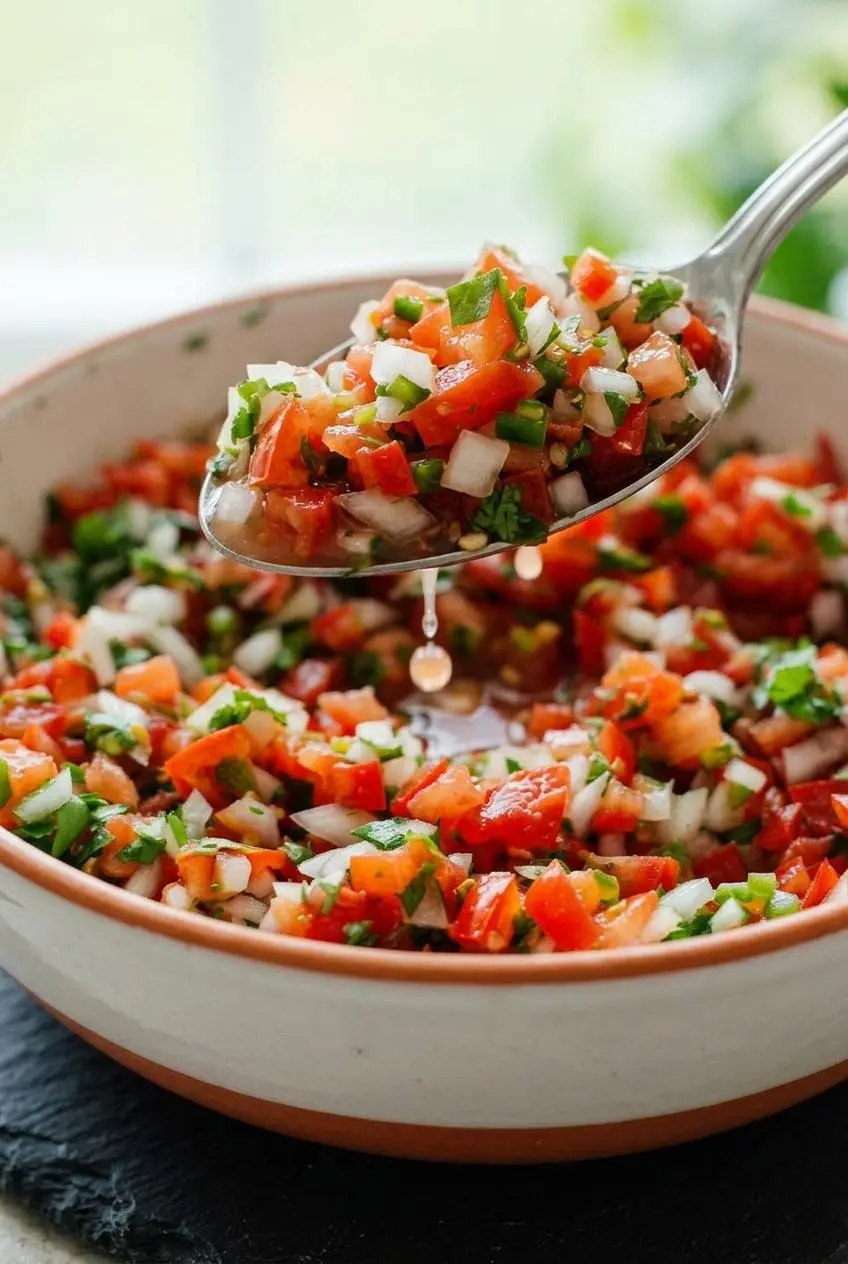
A lot of our readers ask the same thing: why did my pico look great at first and then turn watery, bland, or too hot? Most problems are easy to fix once you know the cause.
| Problem | Common Cause | Solution |
|---|---|---|
| Too watery | Juicy tomatoes, seeds and pulp left in, liquid pooling after resting | Use firmer Roma tomatoes, scoop out seeds and pulp, and serve with a slotted spoon if extra juice collects |
| Tastes bland | Not enough salt, not enough lime, or not enough resting time | Add a little more salt or lime juice and let the mixture sit until the flavors taste more connected |
| Too spicy | Too much pepper heat from seeds or ribs | Remove the seeds and inner ribs more thoroughly, then add extra tomato if needed to soften the heat |
| Not spicy enough | Mild pepper or too much tomato for the amount of chile | Use serrano instead of jalapeño, or leave in a bit of the inner membrane for more heat |
| Texture feels coarse | Ingredients chopped too large | Dice everything a bit smaller so each bite tastes balanced |
If watery pico is your recurring issue, the tomatoes are usually the culprit. Seeding them before chopping is the fix that changes everything.
Variations on Classic Pico de Gallo
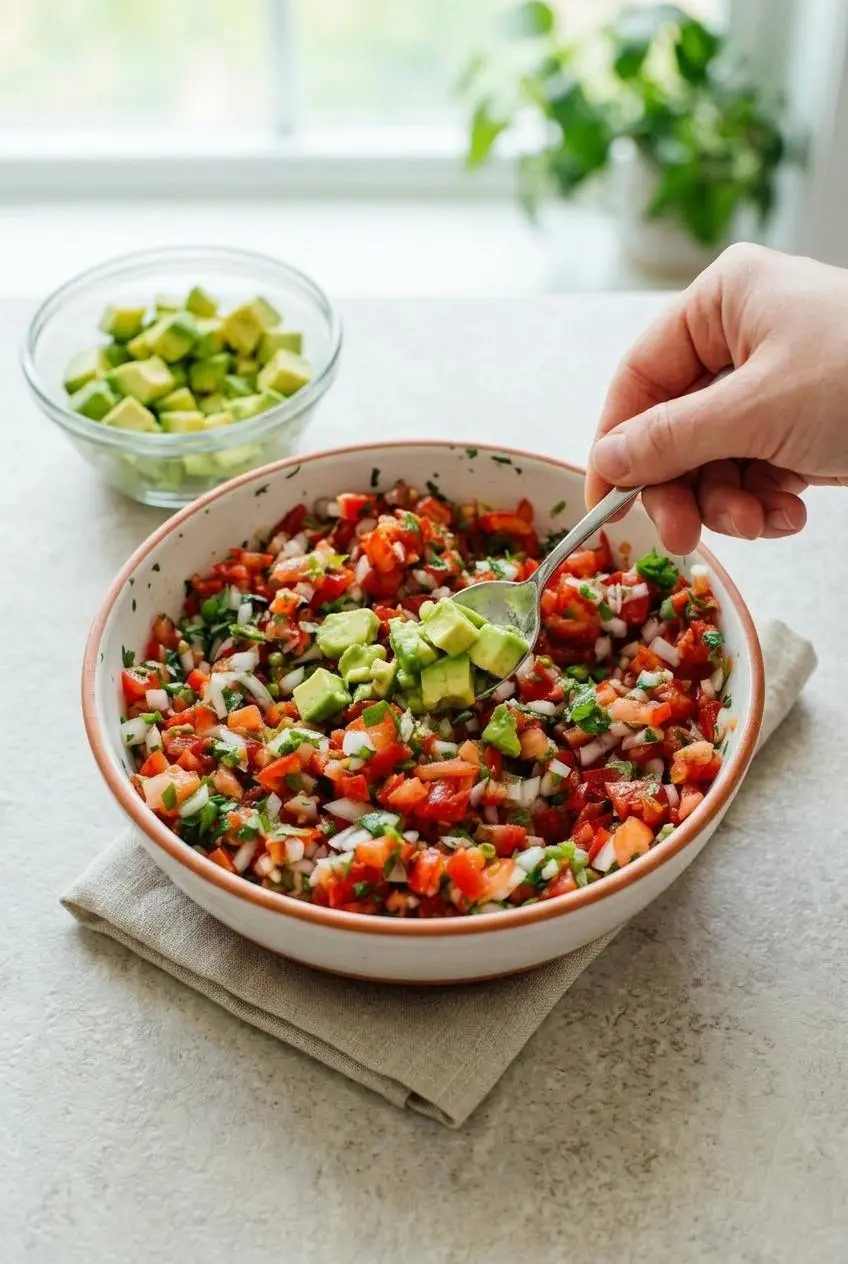
The classic version is the one to master first, but it is also a great base for small changes. Keep them optional so the fresh tomato flavor still leads.
Sweet and Savory: Fruit Pico de Gallo
Mango and pineapple are the most popular fruity add-ins because they bring sweetness and a little extra juiciness that plays well with lime and chile. Peach works too when it is ripe but still firm.
If mango is the direction you want, a delicious mango salsa is another great way to lean into that sweet-savory flavor profile.
Creamy and Rich: Avocado Pico de Gallo
Fold in diced avocado just before serving if you want a softer, richer version. It turns pico into something closer to a chunky topping for tacos, grilled chicken, or eggs, but it is best added at the last minute so it stays neat instead of mushy.
And yes, garlic sometimes shows up in modern versions, but it is better treated as an optional twist rather than part of a classic pico.
A Smoky Twist: Charred Jalapeño Pico
Char a jalapeño over a flame or under the broiler until the skin blisters, then peel, seed, and dice it before mixing it in. The result is smokier, slightly softer, and less raw-tasting than standard pico.
If you love heat, you can also swap in serrano for a spicier version or use a tiny amount of habanero for serious fire. If cilantro is not your thing, leave it out and use a little flat-leaf parsley instead. Different? Yes. Still fresh and punchy? Also yes.
How to Serve and Store Pico de Gallo
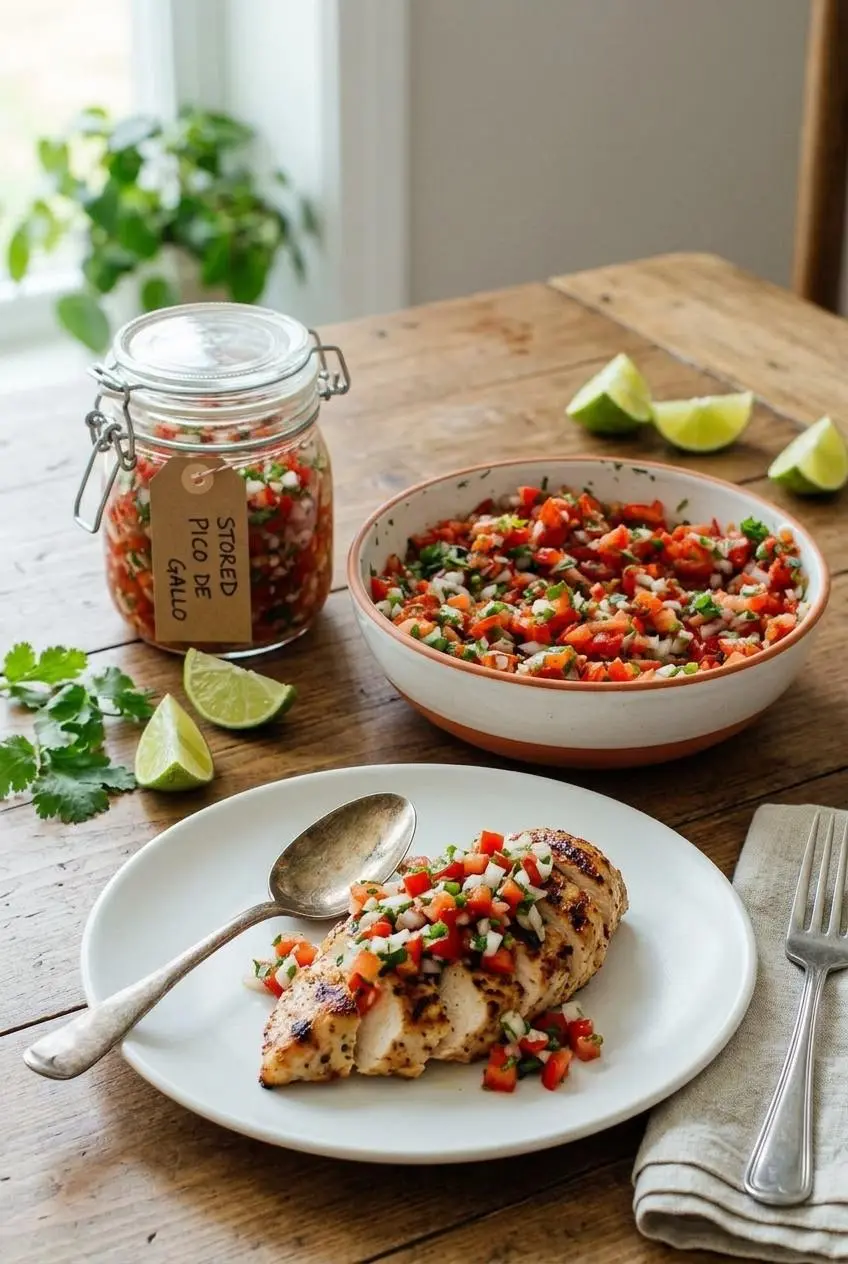
Pico is one of those condiments that can jump from snack to dinner without missing a beat. How you serve it, and how you hold it, makes a real difference in texture.
Creative Serving Suggestions
Spoon it over tacos, grilled chicken, fish, steak, scrambled eggs, or quesadillas. It also works beautifully as a topping for our salmon tacos, where the bright acidity cuts through rich, flaky fish.
For parties, serve it with tortilla chips and a slotted spoon so guests get more chunky salsa fresca and less tomato juice.
How to Store Leftovers
Store leftover pico in an airtight container in the refrigerator. It keeps well for up to 4 days, though it will soften and release more liquid as it sits. For raw produce like this, keeping it cold and handling it cleanly follows official guidance.
Make-Ahead Tips for Parties
If you want the freshest texture, chop the onion, pepper, and tomatoes ahead and keep them in separate airtight containers in the fridge. Then mix them with the cilantro, lime juice, and salt about 30 minutes before serving so the flavors meld without the tomatoes dumping all their liquid too early.
Conclusion
This is the kind of recipe that rewards small details. Use good tomatoes, keep the cuts even, and give the bowl a little time to rest so the flavors come together.
Once you know how to keep it chunky and bright, Classic Pico de Gallo becomes one of the handiest things you can make for tacos, eggs, grilled dinners, and snack boards. It disappears fast for a reason.
Frequently Asked Questions
Why is my pico de gallo so watery?
The usual cause is the tomato center. The seeds and watery pulp release a lot of liquid once the salt hits them. Use firm Roma tomatoes, scoop out the wet middle before dicing, and serve with a slotted spoon if extra juice gathers in the bowl.
Should I make pico de gallo ahead of time?
Yes. A short rest helps the flavors come together and taste more rounded. If you are making it well before serving, keep the chopped vegetables separate and mix in the cilantro, lime juice, and salt closer to serving time for the best texture.
How long does homemade pico de gallo last?
In an airtight container in the refrigerator, it lasts up to 4 days. The texture gets softer and more watery as it sits. Give it a stir before serving again, and drain off a little liquid if needed.
Can I freeze pico de gallo?
No, it is not a good candidate for freezing. The tomatoes and onions lose their fresh bite and turn mushy after thawing. If you want that crisp, vibrant texture, make it fresh instead.
What does ‘pico de gallo’ mean?
It literally means “rooster’s beak.” The exact origin is unclear, but two common explanations pop up again and again. Some people connect the bright colors to a rooster’s plumage, while others say it refers to the way it was once pinched and eaten with the fingers, like a pecking beak.
Can I use red onion instead of white?
Yes, you can. Red onion brings a slightly sweeter flavor and a more colorful look. White onion is still the traditional pick because it tastes crisper and sharper, which suits classic pico especially well.
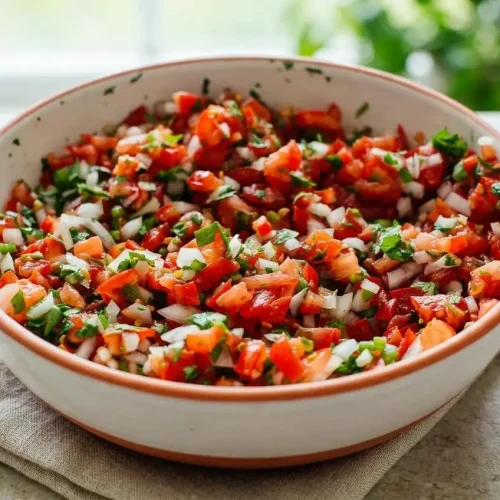
Classic Pico de Gallo

Equipment
- Medium bowl
- Sharp knife
- Cutting board
- Slotted spoon
Ingredients
- 1 cup finely chopped white onion (about 1 small onion)
- 1 medium jalapeño or serrano pepper, ribs and seeds removed, finely chopped
- ¼ cup lime juice
- ¾ teaspoon fine sea salt, more to taste
- 1 ½ pounds ripe red tomatoes (about 8 small or 4 large), chopped
- ½ cup finely chopped fresh cilantro (about 1 bunch)
Instructions
- Combine the chopped onion, chopped jalapeño or serrano, lime juice, and salt in a medium serving bowl, then let the mixture sit for about 5 minutes while you prep the remaining ingredients. The onion will start to soften slightly, and the bowl should smell sharp, citrusy, and fresh.
- Add the chopped tomatoes and cilantro, then stir until everything is evenly mixed and taste for seasoning. The pico should look colorful and chunky, with enough salt and lime to make the flavors pop.
- Let the pico rest for 15 minutes before serving, or chill it longer if you want the flavors to mingle more deeply. Some liquid will collect at the bottom, so spoon or scoop from the top if you want a less watery serving.