There is something about the smell of apples, butter, and cinnamon drifting through the kitchen that feels like a small-town bakery on a chilly morning. In my house, that scent usually means one thing, a loaf worth hovering around the oven for.
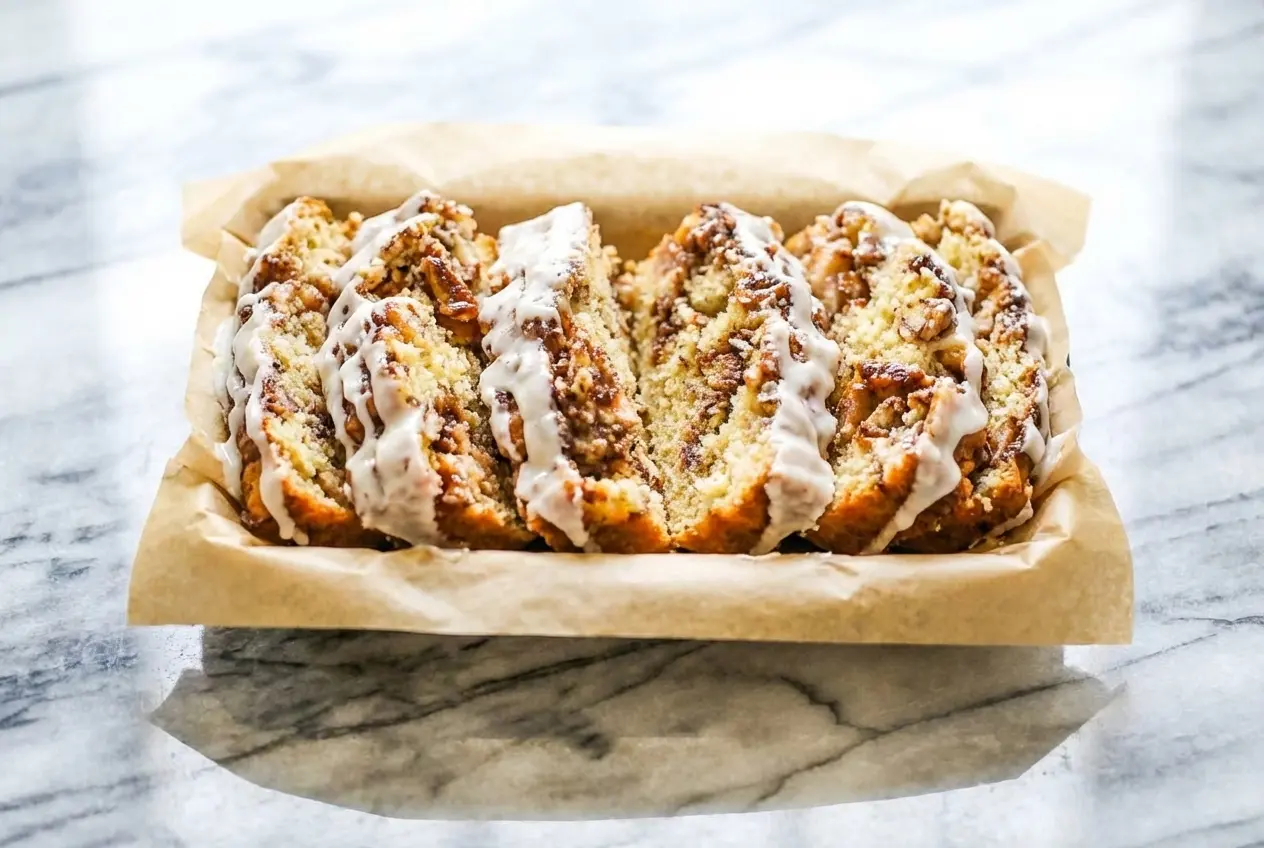
Famous Apple Fritter Bread is the kind of quick bread that lands right between coffee cake and an old-fashioned fritter, tender in the middle, ribboned with cinnamon sugar, and just a little crackly on top. This version leans on brown butter and a salted maple finish, so you get a deeper, more bakery-style flavor without any fussy steps.
Why You’ll Love This Recipe
Brown butter magic: I discovered early on that browning the butter gives this loaf the toasted, nutty depth that plain melted butter cannot touch. It echoes the rich flavor you get from a true bakery fritter and gives the crumb a more complex finish.
Sweet meets salty: The maple glaze is lovely on its own, but a pinch of salt wakes everything up. That contrast keeps the powdered sugar glaze from tasting flat and makes the apple flavor feel brighter and more autumnal.
Bakery-style texture: This quick bread bakes up soft and moist inside, while the cinnamon sugar swirl creates little caramelized edges throughout the loaf. Every slice gives you that contrast between tender crumb and sugary crust that makes apple fritters so irresistible.
Simple but special: Even with that polished flavor, the method is straightforward and pantry-friendly. If you already love the nutty depth of a good brown butter bread, this apple version feels like its cozy fall cousin with warm spices and fruit folded into the story.
Ingredients and Substitutions
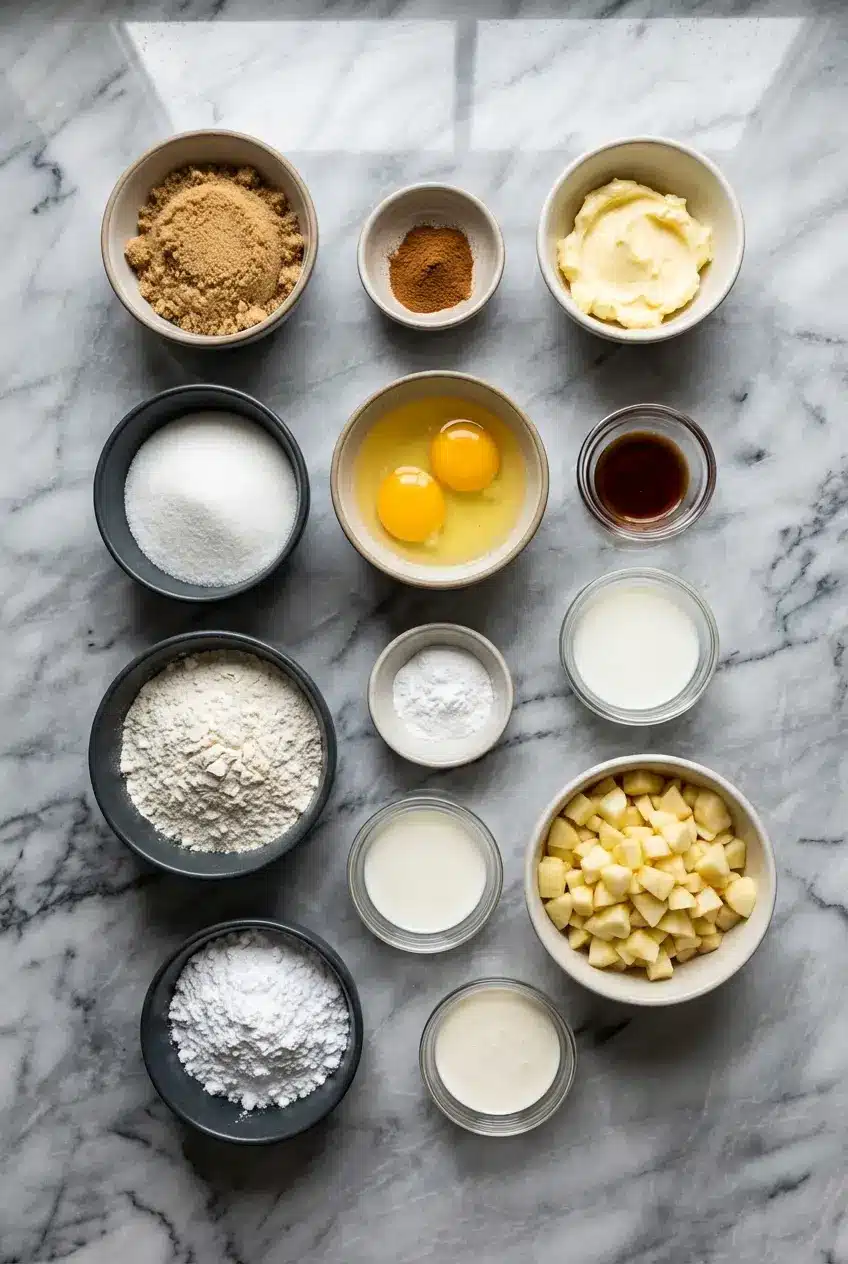
These ingredients are simple, familiar, and built to create a moist loaf with distinct cinnamon ribbons, tender apples, and a glaze that settles into every crack on top.
Ingredients
Brown Sugar/Cinnamon Mixture:
- 1/3 cup light brown sugar
- 1 teaspoon ground cinnamon
Apple Bread Loaf Recipe:
- 1/2 cup butter softened
- 2/3 cup granulated sugar
- 2 eggs room temperature
- 1 1/2 teaspoons vanilla extract
- 1 1/2 cups all-purpose flour
- 1 3/4 teaspoons baking powder
- 1/2 cup milk or almond milk room temp
Chopped Apple Mixture:
- 2 large apples like Granny Smith, peeled and chopped small, but not fine.
- 2 tablespoons granulated sugar
- 1 teaspoon cinnamon
Old-Fashioned Creme Glaze:
- 1/2 cup powdered sugar
- 1-3 tablespoons of milk or cream
Ingredient Notes & Substitutions
Apples: Granny Smith apples are still my first pick because they stay firm, taste pleasantly tart, and balance the sweetness of the cinnamon sugar swirl. Honeycrisp, Pink Lady, and Braeburn also work well if you want a slightly sweeter bite, but I would skip softer apples that collapse into mush.
Room temperature eggs and milk: When you are using the creaming method, cold ingredients can make the butter seize and leave the batter looking curdled. That is why I let the eggs and milk lose their chill first, because a smoother batter usually means a finer, more tender crumb.
Flour: All-purpose flour gives this loaf the best structure and keeps the apple pieces suspended nicely in the batter. If you need a gluten-free option, a good 1:1 baking blend is the swap I would reach for, though the texture may be a little softer.
Milk choices: Regular milk gives a classic bakery-style crumb, but almond milk works just fine here if that is what you keep in the fridge. For an even richer loaf, I have also replaced part of the milk with sour cream or Greek yogurt, which adds a little tang and extra moisture.
Warm spices and add-ins: Cinnamon is the backbone, but a tiny pinch of ginger or nutmeg in the apple mixture can deepen the fall flavor. If you like a little crunch, toasted chopped walnuts or pecans fold in beautifully without overpowering the apples.
How to Make Famous Apple Fritter Bread
Prep the Pan and the Mix-Ins
- Heat your oven to 350 degrees F and get a 9×5-inch loaf pan ready with non-stick spray. Then line it with parchment so the paper hangs over the long sides like little handles, this parchment sling makes lifting the finished loaf out clean and easy once those sticky cinnamon edges have set.
- In a small bowl, stir together the light brown sugar and ground cinnamon until the color is even and the mixture looks like damp sand. Set it aside, because this is what creates those lovely cinnamon ribbons through the loaf.
- In a separate bowl, whisk the flour and baking powder well so the leavening is evenly distributed. In another bowl, toss the peeled chopped apples with the granulated sugar and cinnamon until every piece is lightly coated and fragrant.
Build the Batter
- Place the butter in a small saucepan and cook it over medium heat until the milk solids turn golden and the butter smells deeply nutty. Let it cool until it returns to a softened, spreadable state, then beat it with the sugar until the mixture looks creamy and a little fluffy.
- Add the eggs one at a time, mixing well after each addition so the batter stays smooth and glossy. Stir in the vanilla extract and scrape down the bowl so everything is evenly combined.
- Add the flour mixture gradually, then pour in the milk, mixing just until the batter is smooth. Stop as soon as no dry streaks remain, because overworking a quick bread can leave the loaf tight instead of soft and tender.
Layer and Swirl
- Spoon half of the batter into the prepared loaf pan and spread it into the corners. Scatter half of the apple mixture over the top, then sprinkle on half of the brown sugar cinnamon mixture.
- Add the rest of the batter over that first layer and smooth it gently so you do not drag the apples around too much. Finish with the remaining apples and the rest of the cinnamon sugar mixture.
- Take a butter knife and drag it through the batter a few times with a light hand. You want distinct streaks and ribbons, not a fully blended brown batter, so think of two or three gentle passes rather than vigorous mixing.
Bake, Rest, and Glaze
- Bake the loaf for approximately 60 minutes, until a toothpick inserted into the center comes out clean. If the top is deeply golden before the center is ready, loosely tent the pan with foil during the last 15 minutes so the crust does not get too dark.
- For the most reliable doneness check, I like to look for an internal temperature of 200 degrees F, or 93 degrees C, right in the center. Once it is done, let the loaf sit in the pan for 15 minutes so the crumb can settle before you lift it out onto a cooling rack.
- Whisk the powdered sugar with 1 to 3 tablespoons of milk or cream until the glaze is smooth and pourable. Drizzle it over the loaf while it is still slightly warm, so a little glaze sinks into the cracks and the rest settles into a soft, glossy finish.
Secrets for a Perfect Apple Loaf
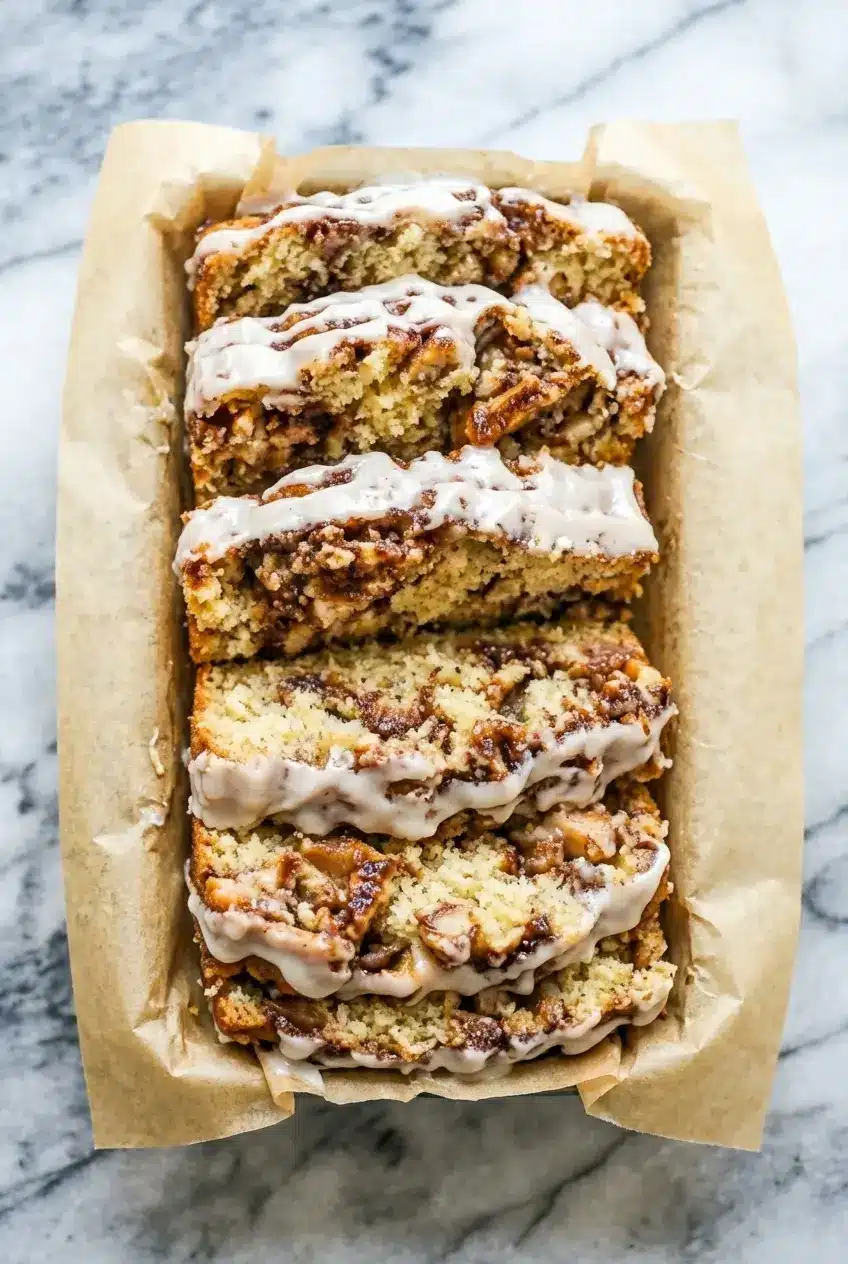
The 1/4-inch rule matters: When apple pieces are cut into small, even cubes, they soften at the same pace as the bread bakes. Big chunks release extra juice and leave gaps in the crumb, while a neat 1/4-inch dice gives you fruit in every bite without weakening the structure.
Temperature tells the truth: A toothpick test is helpful, but fruit-heavy loaves can fool you because pockets of steam and apple juices make the center tricky to judge. An instant-read thermometer takes out the guesswork, and 200 degrees F is the sweet spot where the middle is baked through without drying out.
The parchment sling is worth the minute it takes: Cinnamon sugar tends to get sticky where it meets the pan, especially along the edges and corners. With parchment hanging over the sides, you can lift the loaf out in one clean motion instead of prying and risking a torn side.
Choosing the Best Apples for Baking Science
Not all apples behave the same way once they hit the heat. Firm-fleshed apples such as Granny Smith, Honeycrisp, and Braeburn hold their shape better, which is exactly what you want in a loaf where the fruit should stay distinct instead of melting into the batter.
The reason comes down to texture and moisture. Apples that maintain their structural integrity have stronger cell walls and less of that collapse-prone softness, so they bake into tender pieces rather than turning watery and mushy.
Granny Smith apples are my gold standard because their tartness balances the rich batter and sweet glaze beautifully. Honeycrisp gives a juicier, sweeter result, while Braeburn lands in the middle with solid texture and a warm, balanced apple flavor.
Softer varieties, especially McIntosh, tend to break down too quickly in this kind of quick bread. When that happens, the loaf can lose structure, the center can stay gummy, and those pretty layers of cinnamon sugar swirl start to blur together.
Pro Tips & Troubleshooting
Pro Tips
- Tent the loaf loosely with foil in the final 15 minutes if the top is already well browned. This protects the sugary surface while the center finishes baking.
- Let the bread rest in the pan for 15 minutes before moving it. That short cooling window helps the crumb set so the loaf slices neatly instead of crumbling apart.
- Sift the powdered sugar before whisking the glaze if you want an extra smooth finish. It melts into the milk or cream much faster and gives the top a prettier sheen.
- Keep the apples small and even. That little bit of knife work is often the difference between a tender loaf and one with wet pockets through the center.
Common Mistakes to Avoid
- Over-swirling the batter blends the layers too much and erases the ribbons. A few light passes with the knife are all you need for that true fritter look.
- Using cold milk or eggs can make the butter tighten up and leave the batter uneven. In my kitchen, room temperature ingredients consistently produce a softer crumb and better rise.
- Adding too many apples creates excess moisture, which is a common cause of a sinking center. That same moisture balance matters in any fruit loaf bread, where too much juicy filling can weigh down the middle before the crumb has time to set.
- Pulling the loaf too early is another classic problem. If the deep center has not reached 200 degrees F, it may look done on top but still bake up gummy once cooled.
Serving & Storage
Serving Ideas
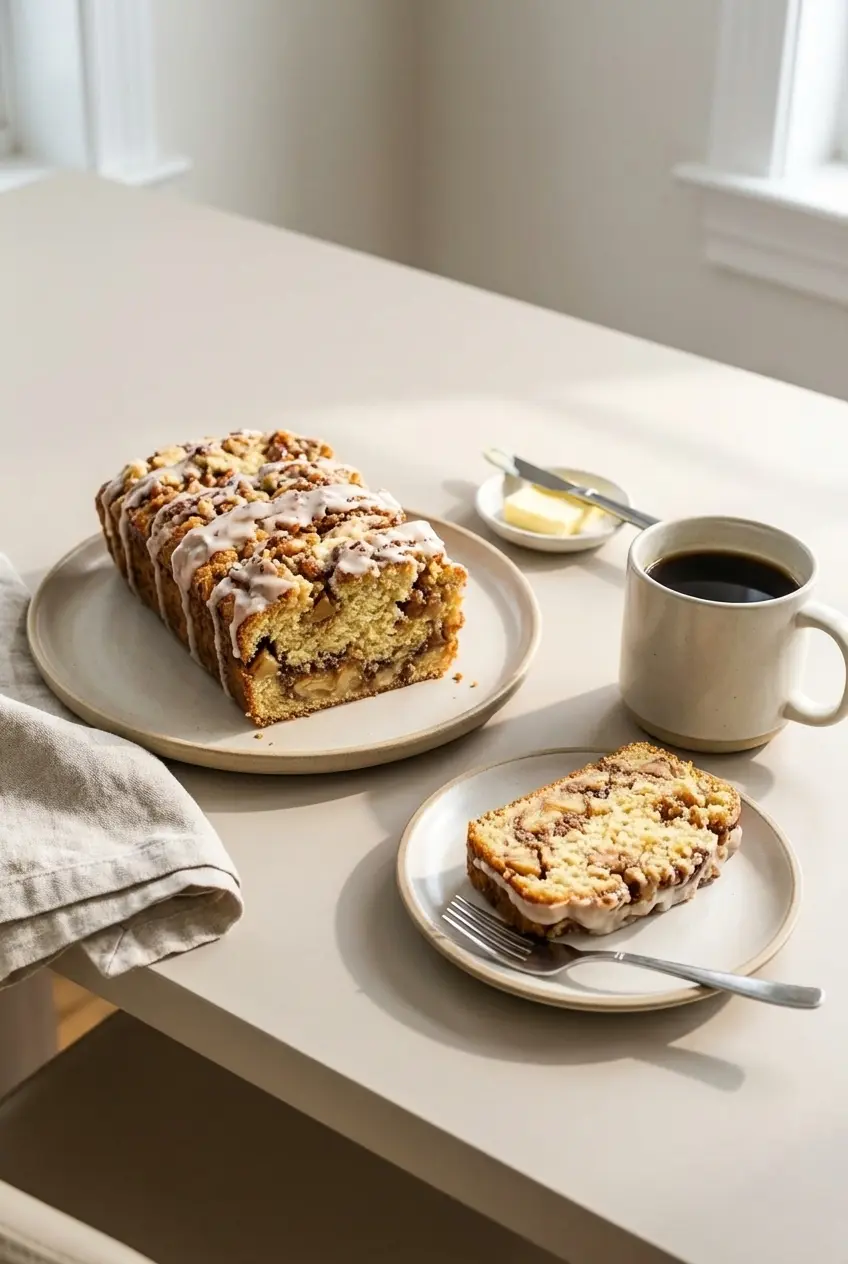
A slightly warm slice is my favorite way to serve this bread, especially with a little salted butter melting into the crumb. For dessert, it is wonderful with a scoop of vanilla bean ice cream, because the cold creaminess plays beautifully against the warm spices and apple pockets.
For drinks, I like to pair it with dark roast coffee or hot spiced apple cider. On extra cozy mornings, a mug of cookie butter latte also works beautifully, since its warm spice profile echoes the cinnamon swirl without competing with the maple glaze.
Storage & Make-Ahead
At room temperature, keep the loaf in an airtight container for up to 2 days. If your kitchen runs warm or humid, the glaze can soften and turn sticky, so the refrigerator is the better option for keeping the top neat and the apple pieces fresh.
To keep the loaf from getting soggy, I like to place a paper towel inside the container to catch excess humidity. That little trick helps a lot when the powdered sugar glaze starts pulling moisture from the air.
For longer storage, wrap individual slices tightly in plastic wrap and then in foil before freezing. They hold well for up to 3 months, and having a slice ready to grab on busy mornings feels like a small gift from your past self.
To reheat, give a slice about 10 seconds in the microwave, or warm it in a low oven until just heated through. That brief warmth brings back the aroma of the brown butter and softens the crumb without drying it out.
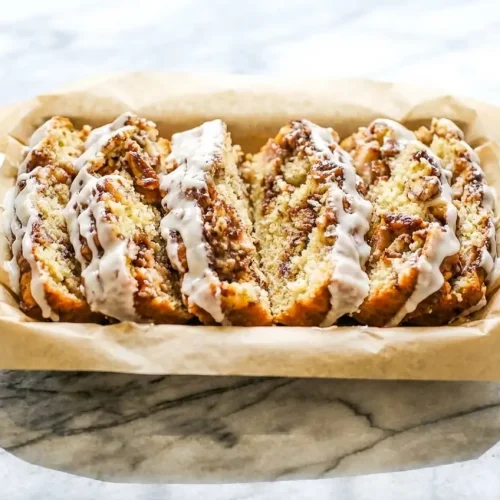
Famous Apple Fritter Bread

Equipment
- 9×5-inch Loaf Pan
- Parchment Paper
- Small saucepan
- Mixing Bowls
- Instant-read thermometer
Ingredients
Brown Sugar/Cinnamon Mixture:
- 1/3 cup light brown sugar
- 1 teaspoon ground cinnamon
Apple Bread Loaf Recipe:
- 1/2 cup butter softened
- 2/3 cup granulated sugar
- 2 eggs room temperature
- 1 1/2 teaspoons vanilla extract
- 1 1/2 cups all-purpose flour
- 1 3/4 teaspoons baking powder
- 1/2 cup milk or almond milk room temp
Chopped Apple Mixture:
- 2 large apples like Granny Smith, peeled and chopped small, but not fine.
- 2 tablespoons granulated sugar
- 1 teaspoon cinnamon
Old-Fashioned Creme Glaze:
- 1/2 cup powdered sugar
- 1-3 tablespoons of milk or cream
Instructions
Prep the Pan and the Mix-Ins
- Preheat your oven to 350 degrees F. Prepare a 9×5-inch loaf pan by spraying with non-stick spray and lining with a parchment paper sling that hangs over the long sides.
- In a small bowl, stir together the light brown sugar and ground cinnamon until it resembles damp sand; set aside.
- In a separate bowl, whisk together the flour and baking powder. In a third bowl, toss the peeled and chopped apples with granulated sugar and cinnamon until evenly coated.
Build the Batter
- Brown the butter in a small saucepan over medium heat until the milk solids turn golden and it smells nutty. Let it cool until it is softened and spreadable, then beat it with the granulated sugar until creamy and fluffy.
- Add the eggs one at a time, mixing well after each addition. Stir in the vanilla extract and scrape down the sides of the bowl.
- Gradually add the flour mixture followed by the milk. Mix just until the batter is smooth and no dry streaks remain, being careful not to overwork it.
Layer and Swirl
- Spoon half of the batter into the pan. Scatter half of the apple mixture and half of the brown sugar cinnamon mixture over the top.
- Add the remaining batter over the first layer, smoothing it gently. Top with the rest of the apples and the remaining cinnamon sugar mixture.
- Drag a butter knife through the batter two or three times in gentle passes to create distinct cinnamon ribbons.
Bake, Rest, and Glaze
- Bake for approximately 60 minutes. If the top browns too quickly, loosely tent the pan with foil for the last 15 minutes. The loaf is done when a toothpick comes out clean or the internal temperature reaches 200 degrees F (93 degrees C).
- Let the loaf sit in the pan for 15 minutes to settle before lifting it out onto a cooling rack.
- Whisk the powdered sugar with milk or cream until smooth. Drizzle over the loaf while it is still slightly warm.
Notes
Nutrition
Conclusion
This loaf earns its place on the counter with its deep brown butter base, tender apple layers, and sweet finish that tastes just a little more grown-up thanks to that salty maple idea. It also solves the two biggest apple bread headaches, a soggy center and mushy fruit, with a method that is easy to trust.
Once you bake it once, it becomes the kind of recipe you tweak and make your own, maybe with pecans, a pinch of ginger, or an extra cozy weekend coffee on the side. It is fall comfort, but honestly, I would never wait for fall to make it.
Frequently Asked Questions
Which apples hold up best during baking?
Why did my apple bread sink in the middle?
Can I make apple fritter bread in a Bundt pan?
Do I need to peel the apples first?
How do I store apple fritter bread so it doesn’t get soggy?