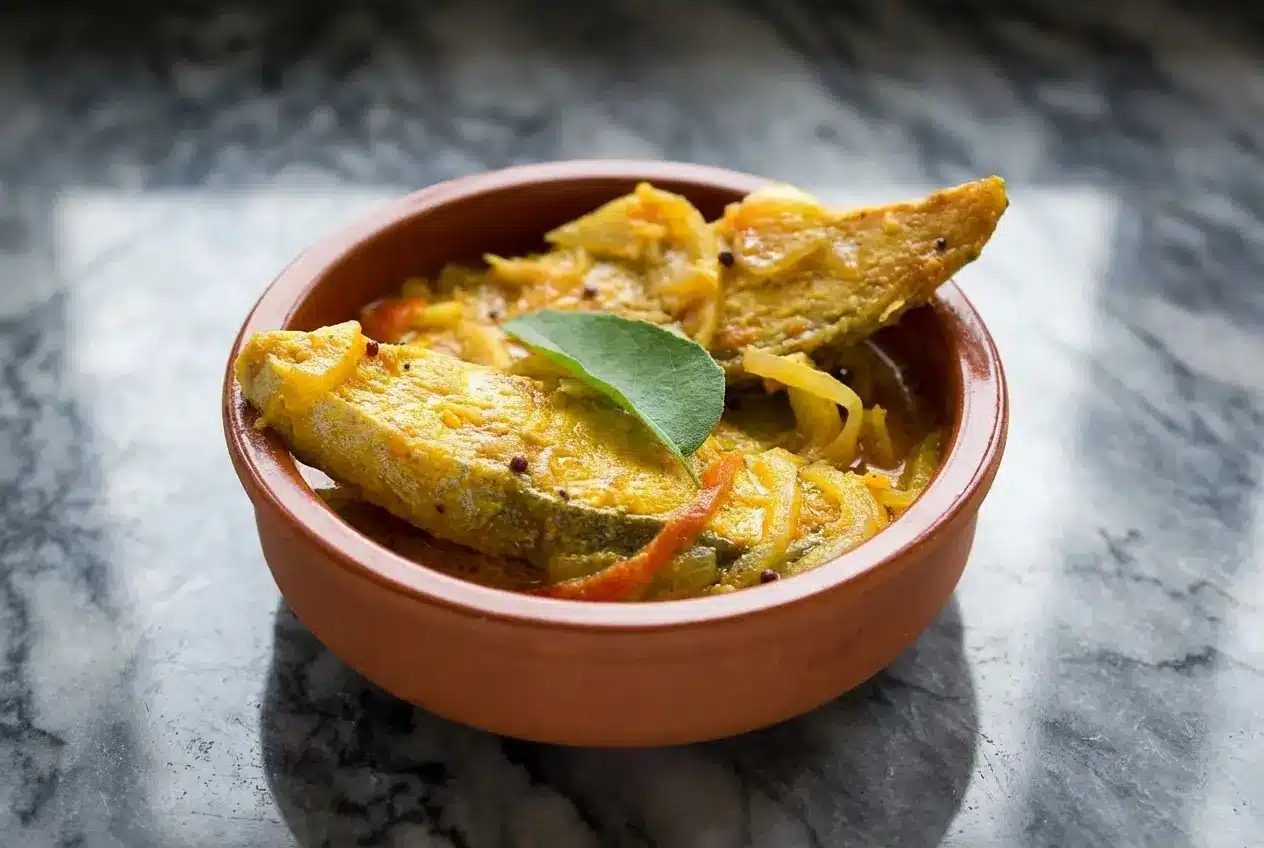
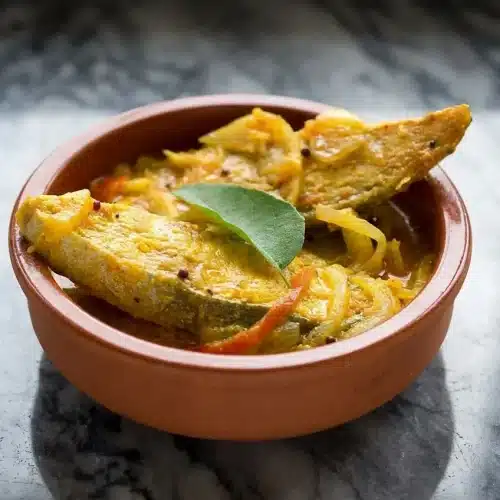
When the pan fills with the scent of ginger, curry leaves, and coconut milk, my kitchen starts to smell like a proper Kerala feast. This fish molly kerala recipe is one of those quiet, elegant dishes that feels special enough for company but simple enough for a weeknight when you want something soothing and a little luxurious.
It is a classic Syrian Christian recipe at heart, a creamy coconut milk fish stew with gentle spices, tender fish, and a silky gravy that never needs to shout. The little tricks here, rice flour in the marinade and a final swirl of virgin coconut oil, make it wonderfully reliable for home cooks in the US.
Why You’ll Love This Recipe
Silky but dependable: In my kitchen, the smartest little upgrade is adding rice flour to the fish marinade. It gives the fish a delicate coating that helps the pieces stay intact in the Kerala Fish Molee and lightly thickens the gravy as it simmers.
Big aroma, gentle heat: This Meen Moilee is creamy, subtly spiced, and fragrant rather than fiery. You get mustard seeds, curry leaves, garlic, and coconut milk in balance, so the stew tastes rich without feeling heavy.
The finishing touch matters: I always stir in a teaspoon of virgin coconut oil right after turning off the heat. That raw tempering brings back the fresh, tropical perfume that cooked coconut oil can lose, and it makes the whole pot smell irresistible.
Ingredients and Substitutions
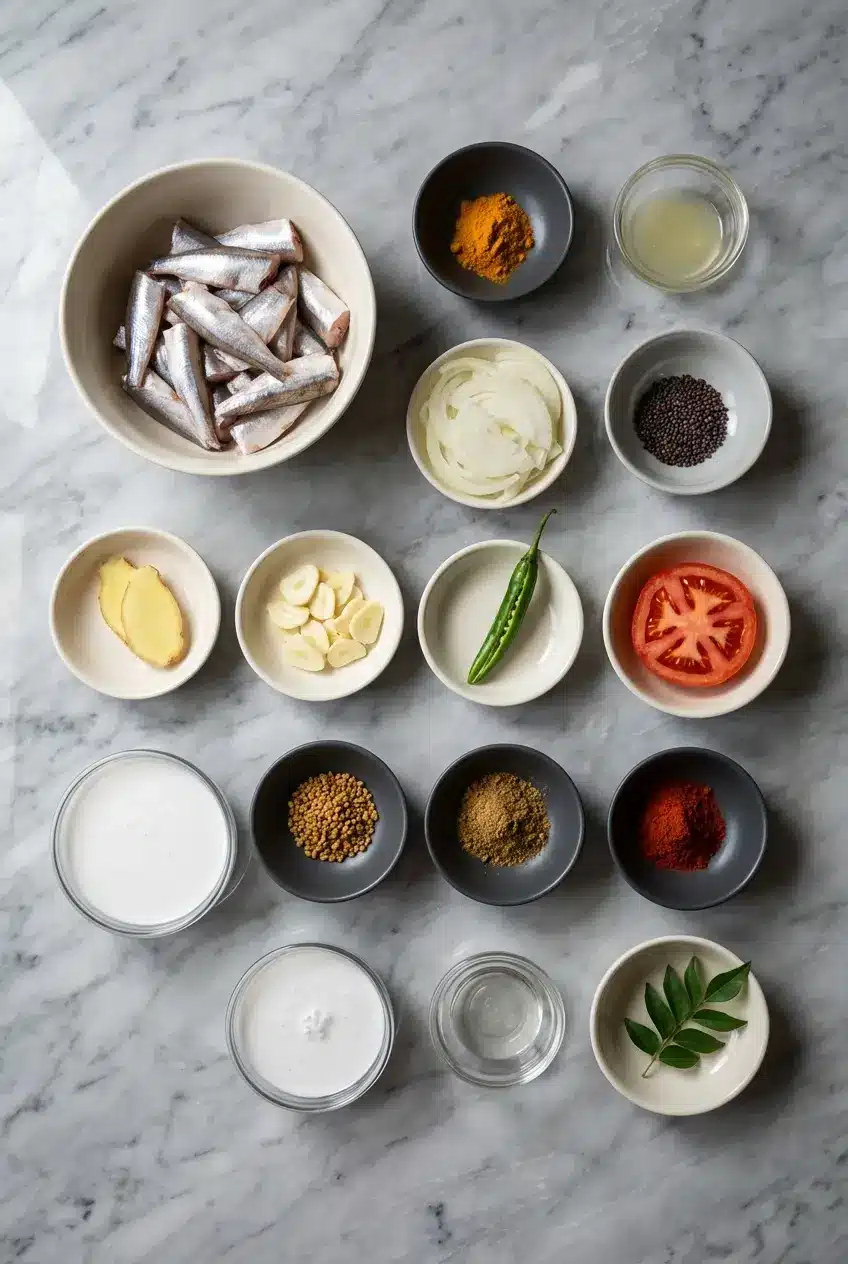
These ingredients build a stew that is delicate, aromatic, and deeply comforting, with just enough spice to lift the creamy coconut base without overpowering the fish.
Ingredients
- 500 g fish cut into small pieces
- 1/2 teaspoon ground turmeric
- 1/4 teaspoon ground black pepper
- 1 teaspoon lemon juice
- Salt to taste
Fry Fish:
- 1 tablespoon oil
Fish Molee:
- 2-3 tablespoon oil
- 1 teaspoon mustard seeds
- 1 large onion thinly sliced
- 3 cm piece fresh ginger thinly sliced
- 8-10 garlic cloves thinly sliced
- 1 large green chili slit
- 1 large tomato sliced
- 1/2 teaspoon ground turmeric
- 1/2 teaspoon ground fenugreek
- 1 teaspoon ground coriander
- 1 teaspoon red chili powder
- 2 cups thin coconut milk
- 1 cup thick coconut milk
- 1 teaspoon white vinegar
- 2 sprigs of curry leaves
- Salt to taste
Ingredient Notes & Substitutions
Fish: Traditional Seer fish or King fish is beautiful in this coconut milk fish stew, but in the US I often reach for halibut, mahi-mahi, or thick salmon fillets. The key is choosing a firm-fleshed fish that can handle shallow frying and gentle simmering without falling apart.
Curry leaves: Fresh curry leaves make a dramatic difference here. Dried leaves can add a little background flavor, but they do not give the bright, nutty aroma that makes South Indian seafood dishes taste truly authentic.
Coconut milk: If you are using canned coconut milk, choose a full-fat brand with a thick cream layer on top. That rich portion works best for thick coconut milk, while the more diluted portion is perfect for thin coconut milk.
Acid balancer: White vinegar gives the stew a clean, sharp finish that cuts through the richness. Fresh lime juice can be swapped in for a slightly sweeter, brighter profile, especially if you like a softer citrus note at the end.
Rice flour: The recipe method uses 1 tablespoon of rice flour in the marinade, and I would not skip it. It helps protect the fish during frying and stewing, and it quietly improves the body of the gravy without making it taste starchy.
How to Make fish molly kerala recipe
Marinate and Fry the Fish
- Place the fish pieces in a large bowl with the ground turmeric, ground black pepper, lemon juice, salt, and the 1 tablespoon rice flour. Toss until every piece is evenly coated, then cover and refrigerate for 30 minutes so the seasoning settles in and the surface dries slightly for a better sear.
- Heat 1 tablespoon oil in a frying pan over medium-high heat. Shallow fry the fish in batches until both sides take on a light brown color, just enough to seal the outside while the center stays moist. Do not let the fish cook through completely, because it will finish gently in the stew.
Build the Aromatic Base
- Pour 2 to 3 tablespoons oil into a large pan, ideally a claypot if you have one, and set it over medium-high heat. Once hot, add the mustard seeds and let them splutter, then add the sliced onion and cook for 1 to 2 minutes, stirring now and then, until the onion softens and turns glossy.
- Add the sliced ginger and garlic, and cook for 2 minutes until the raw edge disappears and the pan smells warm and fragrant. Toss in the slit green chili and one sprig of curry leaves, let them sizzle for a minute, then add the sliced tomato and cook for 2 to 3 minutes until it softens and begins to break down into the onions.
- Sprinkle in the ground turmeric, ground fenugreek, ground coriander, and red chili powder. Stir for 1 to 2 minutes until the spices bloom and smell toasty, then season with salt. Keep the turmeric measured, because too much will flatten the delicate flavor of the coconut milk and throw off the color.
Simmer the Stew Gently
- Pour in the thin coconut milk and bring the curry to a gentle simmer. Slide the fried fish pieces into the liquid carefully and let them cook for 5 to 6 minutes, so the fish absorbs the spiced coconut base without breaking apart.
- Lower the heat before adding the thick coconut milk. Let it simmer very gently for 2 to 3 minutes, never at a hard boil, then scatter in the remaining curry leaves and pour in the white vinegar so the stew stays creamy and bright.
Finish with the Final Aroma
Turn off the heat and immediately stir in 1 teaspoon of virgin coconut oil. That last raw swirl wakes up the whole pot with a fresh coconut fragrance, the kind that makes Fish Molee taste restaurant-worthy with almost no extra effort.
Chef’s Secrets for Perfection
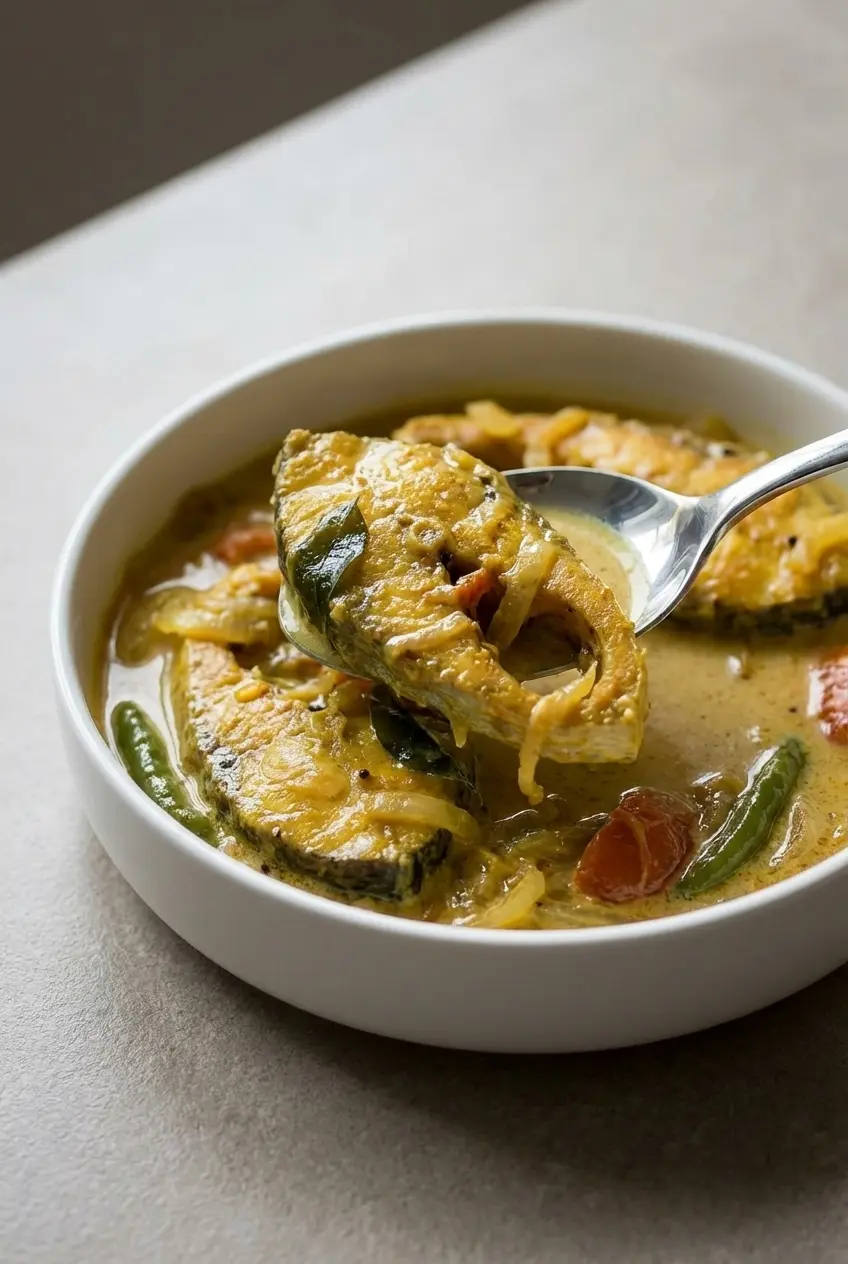
The rice flour trick sounds modest, but it does two important jobs. First, it forms a whisper-thin crust during shallow frying, which gives the fish more structural strength once it goes into the stew. Second, a little of that starch releases into the gravy, so the coconut milk feels plush and cohesive instead of thin.
Once the fish is in the pot, I follow one rule every time, swirl, do not stir. If you gently move the pan by the handles, the gravy circulates around the fish without tearing the pieces, and that same gentle handling is what also keeps the finish elegant, much like the smooth texture I love in a lighter coconut fish soup.
Temperature matters most at the end. Thick coconut milk should only be warmed through over a gentle simmer, never a rolling boil, because high heat can make the fat separate and leave the stew looking grainy instead of glossy.
Choosing the Best Fish for Stewing
For the best fish molly kerala recipe in the US, look for fish that is firm, moist, and not too flaky. Seer fish and pomfret are traditional choices in Kerala, but they are not always easy to find fresh here, so halibut, mahi-mahi, and salmon are the most practical stand-ins.
Halibut is especially good when you want neat, chunky pieces that hold their shape in a creamy stew. Its flaky, tender, and firm texture makes it a natural substitute for traditional Indian Ocean fish, especially when you want a clean, mild flavor that lets the coconut and spices shine.
Mahi-mahi also works beautifully because it stays pleasantly meaty after shallow frying and simmering. It is one of those versatile fish you will often see in grilled fish dishes for exactly the same reason, it keeps its bite and does not collapse under heat.
Salmon is less traditional, but I still recommend it for home cooks who want an easy supermarket option. Choose thick center-cut fillets, because the richer flesh pairs nicely with coconut milk and gives the stew a fuller, almost buttery finish.
Mastering Canned Coconut Milk Extractions
Traditional Kerala cooking often separates coconut milk into first extract and second extract, which is simply a smart way of controlling texture. The thinner milk goes in earlier for simmering, while the richer milk is added later for body and aroma.
When I use canned coconut milk, I recreate that same effect by diluting 1/2 cup of canned coconut milk with 1.5 cups of water to make thin coconut milk. Then I reserve the richer, undiluted creamy layer for the thick coconut milk stage, which gives the stew that signature velvety finish without making it too heavy.
This little bit of kitchen science is what keeps the gravy balanced. If both portions go in at full strength from the start, the stew can feel overly rich and the coconut flavor may taste cooked out rather than fresh and layered.
Pro Tips & Troubleshooting
Pro Tips
- Use coconut oil for frying and sautéing if you want the most authentic Kerala flavor profile. It gives the aromatics and the final gravy a deeper South Indian character.
- If the fish seems especially delicate, keep the pieces slightly larger so they are less likely to break during simmering.
- For extra insurance against splitting, whisk 1 teaspoon cornflour into the thick coconut milk before adding it to the pan. This is handy when using canned milk that tends to separate easily.
- Once the fish is added, swirl the pan gently instead of stirring with a spoon. That one habit protects the fish better than any fancy technique.
Common Mistakes to Avoid
- Boiling the curry hard after the thick coconut milk goes in. That is the fastest way to turn a silky stew into an oily, grainy one.
- Over-frying the fish until it is dry and tough. The shallow frying stage is only meant to lightly sear the outside and lock in moisture.
- Adding too much turmeric. Fish Molee should look softly golden, not bright yellow, and the coconut flavor should remain gentle and clear.
- Using a spoon too aggressively once the fish is simmering. Delicate fish chunks can break apart quickly in a hot coconut gravy.
Serving & Storage
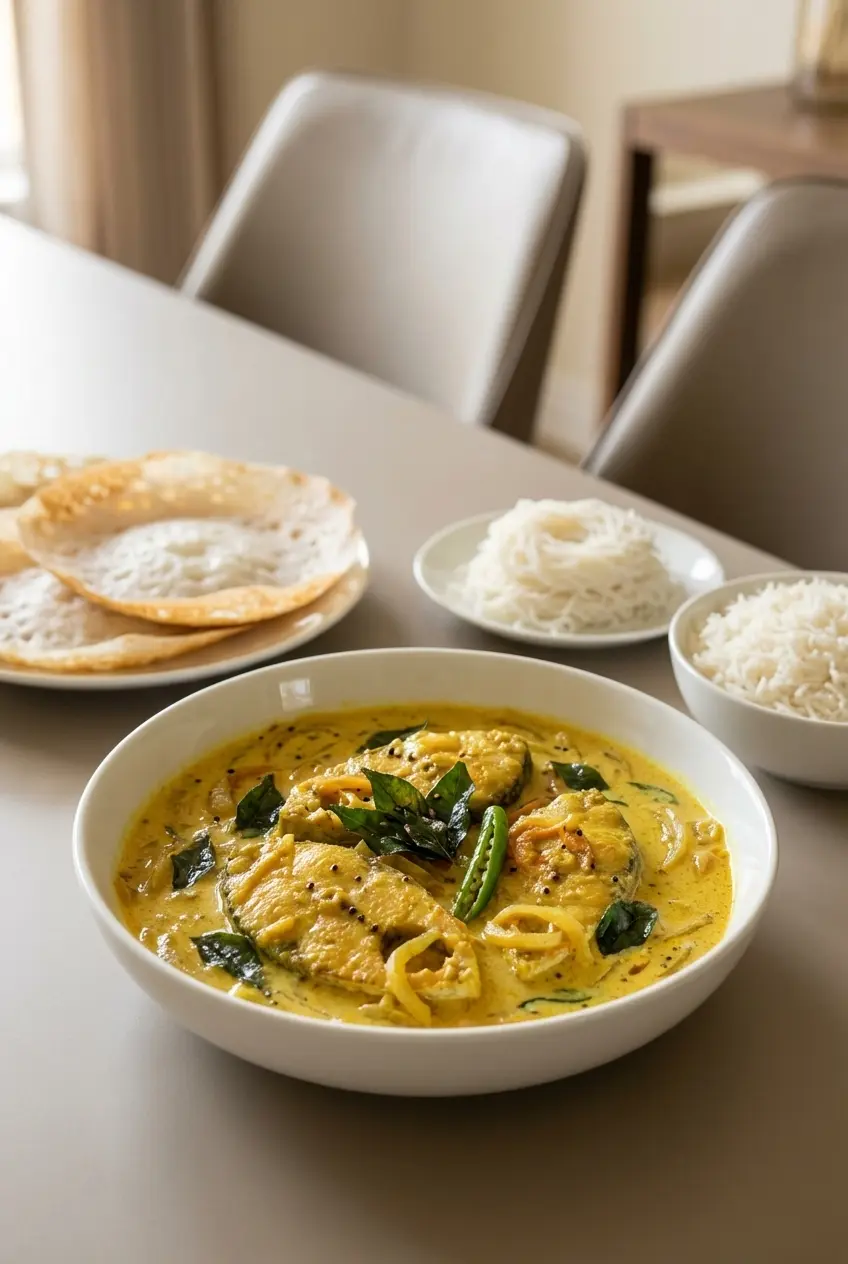
Serving Ideas
Meen Moilee is at its best with something that can soak up every drop of that creamy gravy. Warm appam, idiyappam, or freshly steamed basmati rice are the classic partners, and if your table leans rice-first, these kinds of comforting pairings fit right in with other fish rice recipes that let the seafood and sauce do the talking.
For a prettier finish, garnish with lightly fried curry leaves and a slit green chili. I also like to add something crisp and cool on the side, because a simple fresh cucumber salad balances the richness of the coconut milk with a clean crunch.
Storage & Make-Ahead
This stew thickens in the fridge because coconut milk contains saturated fat that firms up as it chills. That is completely normal, and the curry usually tastes even more rounded the next day once the fish and spices have had time to settle together.
To reheat, place it over low heat and add a small splash of water if the gravy looks too thick. Warm it gently until hot, avoiding a rapid boil so the coconut milk stays smooth instead of splitting.
If you want to get ahead, you can make the stew a few hours before serving and reheat it carefully. I would not freeze it if you can help it, because coconut milk sauces often lose their silky texture after thawing.
Classic Fish Molly Kerala Recipe

Equipment
- large bowl
- Frying pan
- Claypot or large pan
Ingredients
- 500 g fish cut into small pieces
- 1/2 teaspoon ground turmeric
- 1/4 teaspoon ground black pepper
- 1 teaspoon lemon juice
- Salt to taste
Fry Fish:
- 1 tablespoon oil
Fish Molee:
- 2-3 tablespoon oil
- 1 teaspoon mustard seeds
- 1 large onion thinly sliced
- 3 cm piece fresh ginger thinly sliced
- 8-10 cloves garlic thinly sliced
- 1 large green chili slit
- 1 large tomato sliced
- 1/2 teaspoon ground turmeric
- 1/2 teaspoon ground fenugreek
- 1 teaspoon ground coriander
- 1 teaspoon red chili powder
- 2 cups thin coconut milk
- 1 cup thick coconut milk
- 1 teaspoon white vinegar
- 2 sprigs curry leaves
- Salt to taste
Instructions
Marinate and Fry the Fish
- In a large bowl, toss the fish pieces with 1/2 teaspoon ground turmeric, ground black pepper, lemon juice, and salt. Cover and refrigerate for 30 minutes to allow the flavors to penetrate.
- Heat 1 tablespoon of oil in a frying pan over medium-high heat. Shallow fry the fish in batches just until the outside is lightly browned and sealed, keeping the center moist. Set aside.
Build the Aromatic Base
- In a large pan or claypot, heat 2 to 3 tablespoons of oil. Add the mustard seeds and let them splutter. Stir in the sliced onion and cook for 1 to 2 minutes until glossy and softened.
- Add the sliced ginger and garlic, cooking for 2 minutes until fragrant. Mix in the slit green chili and one sprig of curry leaves. Add the sliced tomato and cook for 2 to 3 minutes until softened.
- Sprinkle in the remaining 1/2 teaspoon ground turmeric, ground fenugreek, ground coriander, and red chili powder. Stir for 1 to 2 minutes to bloom the spices, then season with salt.
Simmer the Stew Gently
- Pour in the thin coconut milk and bring to a gentle simmer. Carefully slide the fried fish pieces into the liquid and cook for 5 to 6 minutes.
- Lower the heat and pour in the thick coconut milk. Simmer very gently for 2 to 3 minutes, ensuring it does not reach a hard boil. Scatter in the remaining sprig of curry leaves and stir in the white vinegar before turning off the heat.
Notes
Nutrition
Conclusion
This is the kind of fish stew that feels both comforting and refined, with soft spice, creamy coconut milk, and tender fish in every spoonful. The rice flour marinade and final splash of virgin coconut oil turn it into a dish that tastes far more polished than the short cooking time suggests.
Gather your fish, keep the heat gentle, and let the aromas do the heavy lifting. Once you make it once, you will see why this Syrian Christian favorite has earned such a permanent place in my kitchen.
Frequently Asked Questions
What are the best types of fish for Fish Molee?
How do I make thin and thick coconut milk from a can?
How can I prevent my coconut milk from curdling?
Is it absolutely necessary to fry the fish first?
What is the difference between Fish Molee and regular Kerala Fish Curry?
Can I make Fish Molee ahead of time?