Step into any old-school Italian bakery and you’ll spot the kind of cake that never needs a flashy introduction, just a dusting of sugar, a golden crust, and that sunny citrus perfume drifting through the room. This Italian Lemon Pound Cake follows that same ciambellone spirit, simple, bright, and meant for slow slices with coffee or a late afternoon chat.
In my kitchen, this is the loaf I bake when I want the brightest, most tender lemon crumb possible without leaning on heavy butter. The little trick is rubbing the lemon zest straight into the sugar, then building the batter with yogurt and a blend of neutral oil and extra-virgin olive oil for a moist, bakery-style finish.
Why You’ll Love This Recipe
Bright flavor in every bite: Rubbing the lemon zest into the sugar wakes up the citrus oils in a way plain mixing never does. I noticed the difference the first time I tried it, the whole batter smelled like a fresh lemon grove before it even hit the loaf pan.
The secret twist: Replacing half of the neutral oil with a mild extra-virgin olive oil brings a gentle Mediterranean note that feels true to an Italian-style lemon cake. It also gives the crumb texture a soft, tender quality that stays moist longer than many butter-based loaves.
Soft, fluffy, and reliable: Whole milk yogurt helps create a stable emulsion, so the batter bakes up light yet plush. The result is bright, incredibly moist, fluffy, and tender, exactly the kind of cake that tastes even better the next day.
Ingredients and Substitutions
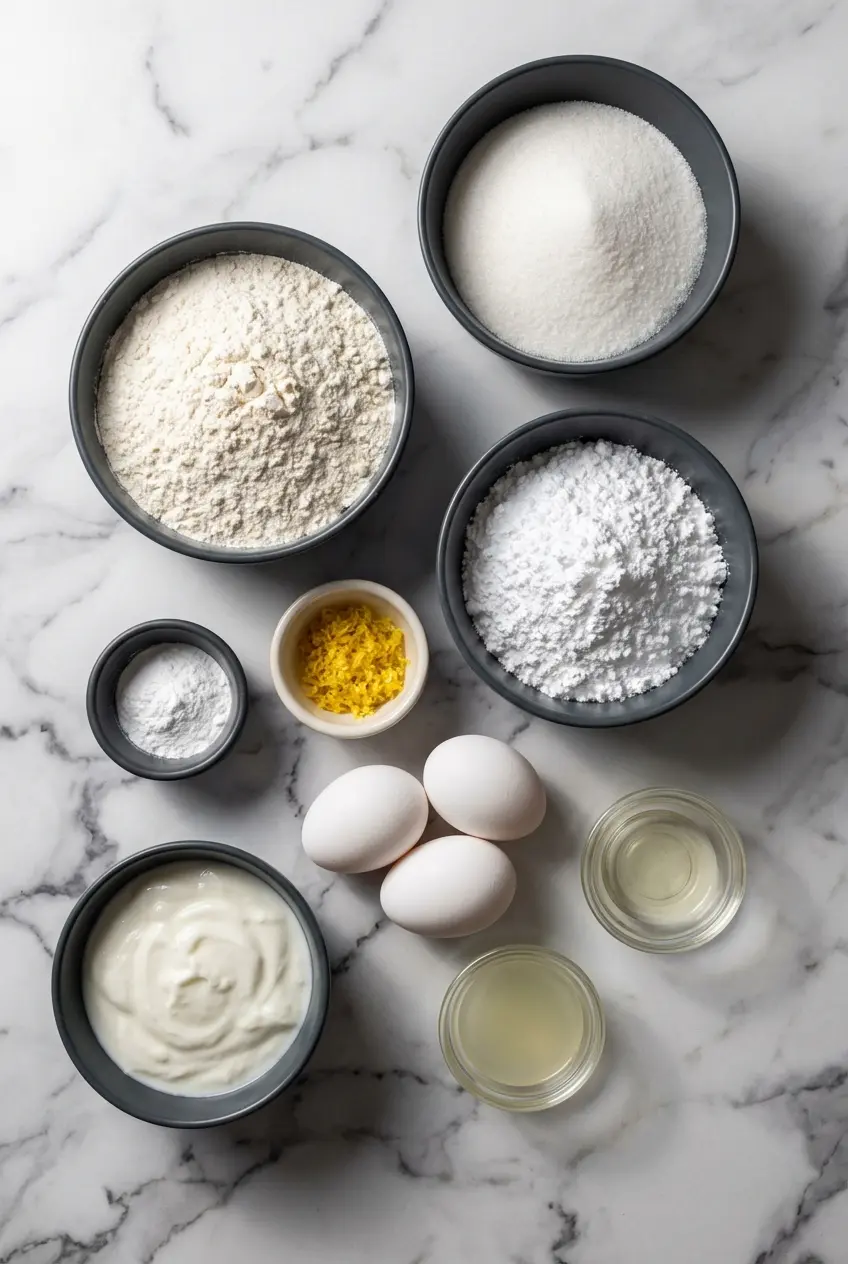
These pantry staples come together into a lemon loaf with deep citrus aroma, a tender crumb, and a glossy finish that sets beautifully over the cooled cake.
Ingredients
Lemon Pound Cake:
- 6 ounces yogurt either vanilla or lemon
- 3/4 cup oil
- 1 1/2 cups granulated sugar
- 3 large eggs
- 1 tablespoon lemon zest
- 2 teaspoons lemon extract
- 2 cups all purpose flour
- 2 teaspoons baking powder
- 1/2 tsp salt
Lemon Glaze:
- 1 cup Powdered Sugar
- 2 teaspoons lemon extract
- 6-8 teaspoons lemon juice
Ingredient Notes & Substitutions
Oil: For the best balance of flavor and softness, I use half neutral oil and half mild extra-virgin olive oil for the 3/4 cup total. A delicate olive oil gives authentic character without making the loaf taste grassy or overpowering.
Lemons: Standard lemons give a classic bright finish, but Meyer lemons are lovely when you want a softer, slightly floral citrus profile. They make the cake feel a touch more delicate and less sharp.
Lemon extract: If you have Fiori di Sicilia in the pantry, this is a beautiful place to use it. That traditional Italian citrus-vanilla extract gives the loaf a bakery aroma that feels especially true to a plumcake served with espresso.
Yogurt: Whole milk yogurt is my favorite here because it supports a smooth batter and moist interior. Vanilla or lemon yogurt both work, and either one adds a gentle richness that keeps the cake from feeling dry.
Room temperature ingredients: Eggs and yogurt must not go into the bowl straight from the fridge. When they are at room temperature, the batter emulsifies smoothly, traps air better, and bakes into a finer, more even crumb.
How to Make Italian Lemon Pound Cake
Prepare the Pan and Oven
- Heat your oven to 350℉. If you prefer a slightly denser, extra-tender loaf, you can bake at 325℉ instead, but keep the rest of the method exactly the same.
- Line a 9 inch loaf pan with parchment paper, then give it a light coat of cooking spray. That parchment sling makes it much easier to lift out this delicate, moist cake after it cools in the pan.
Mix the Batter
- In a large mixing bowl, add the 1 1/2 cups of granulated sugar and 1 tablespoon of lemon zest. Use your fingertips to rub them together until the sugar feels slightly damp and intensely fragrant, then whisk in the yogurt, oil, eggs, and lemon extract until the mixture looks smooth and glossy.
- In a separate medium bowl, whisk together the flour, salt, and baking powder so everything is evenly distributed. This small step helps the cake rise evenly and prevents pockets of salt or leavening in the finished loaf.
- Add the dry ingredients to the wet mixture and stir only until no dry streaks remain. Stop as soon as the batter comes together, because overworking it at this point encourages gluten development and turns a tender loaf dense and rubbery.
Bake and Cool
- Pour the batter into the prepared loaf pan and smooth the top. Bake for 50-60 minutes, until the top is golden, the center feels set, and a long cake tester or skewer comes out clean from the deepest part of the loaf.
- Let the cake cool in the pan for 20 minutes, then lift it out and allow it to cool completely before glazing. A fully cooled loaf keeps the lemon glaze on top instead of letting it melt and run down the sides.
Finish with the Lemon Glaze
Once the cake is completely cool, stir together half of the glaze ingredients, 1/2 cup powdered sugar, 1 tsp extract, and 3-4 teaspoons of lemon juice, until smooth and pourable. Spread it over the top, let it dry for 30 minutes, then repeat with the remaining half of the glaze so you get that neat, bakery-style layer instead of a glaze that slides away.
When I talk about an emulsified batter, this is exactly what I mean, a smooth mixture where the yogurt, eggs, and oil work together instead of separating. Room temperature ingredients make that much easier, and the finished loaf bakes with a finer, more even texture from edge to center.
Chef’s Secrets for a Perfect Crumb
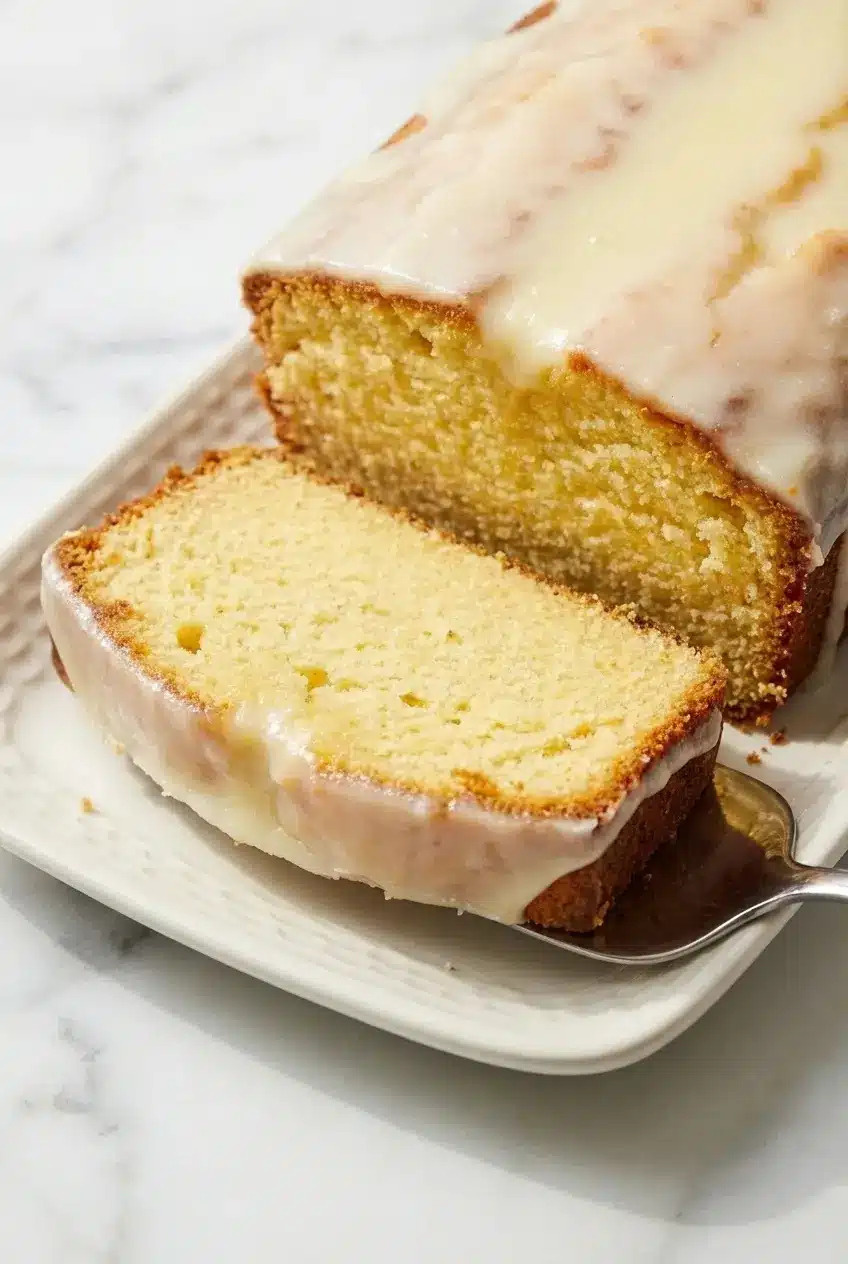
The tenderness of this cake is not luck, it is structure. The lipids in extra-virgin olive oil coat some of the flour proteins before they can absorb as much water, which helps with preventing gluten formation and keeps the crumb soft instead of chewy.
A long skewer matters more than most bakers think. This is a wet batter, and the deepest center can stay underbaked even when the top looks beautifully bronzed, so a short toothpick may give you a false sense that the loaf is done.
The moment flour meets the wet ingredients, restraint becomes the secret. I fold just until the batter is combined, because even an extra minute of mixing can tighten the structure and steal that fluffy, melt-in-your-mouth texture that makes this style of cake so special.
The Authentic Italian Approach to Baking Fats
What gives this loaf its Italian character is not just the lemon, it is the baking philosophy behind it. Traditional ciambellone and Italian plumcake recipes often lean on liquid fats, especially olive oil, rather than heavy butter, which creates a lighter mouthfeel and a more relaxed, everyday kind of elegance.
That choice also changes the crumb texture in the best way. An olive oil cake stays supple on the counter, and research on how olive-oil-based cakes retain moisture supports what many home bakers already know by experience, that it extends the countertop shelf life while slowing down staling.
The Science of Yogurt in Citrus Baking
Whole milk yogurt does more than add moisture. Its thickness helps keep the batter stable, while its acidity works with the baking powder to create a steady lift, which is why this loaf rises with a soft dome and a fine, tender interior rather than a coarse, crumbly one.
Sour cream can also create a rich, velvety cake, but it is usually heavier and fattier than yogurt, while buttermilk is thinner and brings more liquid to the bowl. In bakes like sour cream cakes, that extra richness is part of the charm, but for a lemon loaf with clean citrus definition, yogurt gives a brighter feel and a steadier emulsion.
Pro Tips & Troubleshooting
Pro Tips
- Bake at 325℉ instead of 350℉ if you want a slightly denser, more tender crumb and a gentler, slower rise with less browning on the crust.
- Add 1 teaspoon of minced fresh ginger to the batter for a subtle spicy note that plays beautifully with the lemon.
- At high altitude, reduce the baking powder slightly and keep a close eye on baking time, since oil-based cakes can rise quickly and then collapse if overleavened.
- Rub the zest into the sugar until the bowl smells intensely citrusy. That one minute of hands-on prep makes the lemon flavor taste deeper without adding extra juice.
- For bakers who love bright, sunny desserts, the same clean citrus profile also shines in bakes like lemon impossible pies, where acidity and sweetness need the same kind of balance to stay lively instead of harsh.
Common Mistakes to Avoid
- Overmixing the batter after the flour goes in, which creates too much gluten development and leaves the cake tough or rubbery.
- Using cold eggs or cold yogurt, which can break the oil mixture and keep the batter from blending into a smooth emulsion.
- Using baking soda instead of baking powder. They are not interchangeable in this recipe, and that swap can flatten the loaf.
- Pulling the cake from the oven too early because the top looks done. Always test the center with a long skewer, not just a short toothpick.
Serving & Storage

Serving Ideas
This cake feels right at home with a small chilled glass of Limoncello or a strong afternoon espresso. On a dessert tray, I also love serving it beside a few Italian wedding cookies, because the contrast between the soft lemon crumb and the tender cookie makes the whole spread feel straight out of an Italian bakery case.
For something a little dressier, top each slice with freshly macerated strawberries and a spoonful of vanilla bean mascarpone cream. If you prefer a more rustic presentation, skip the heavier glaze altogether and finish the loaf with a simple dusting of confectioners’ sugar.
Storage & Make-Ahead Guide
To keep the loaf moist at room temperature, let the glaze set completely, then wrap the cake well or store it in an airtight container. Thanks to the oil and yogurt, it holds beautifully on the counter for several days without losing that tender bite.
If you want to freeze it, the unglazed loaf is the easiest option. Wrap it tightly in plastic wrap and then foil, freeze, and thaw overnight on the counter before glazing, though a fully glazed cake can also be frozen if wrapped carefully and thawed uncovered so the topping stays as neat as possible.

Italian Lemon Pound Cake

Equipment
- 9 inch loaf pan
- Parchment Paper
- Large Mixing Bowl
- Long cake tester or skewer
Ingredients
Lemon Pound Cake:
- 6 ounces yogurt either vanilla or lemon
- 3/4 cup oil
- 1 1/2 cups granulated sugar
- 3 large eggs
- 1 tablespoon lemon zest
- 2 teaspoons lemon extract
- 2 cups all purpose flour
- 2 teaspoons baking powder
- 1/2 tsp salt
Lemon Glaze:
- 1 cup Powdered Sugar
- 2 teaspoons lemon extract
- 6-8 teaspoons lemon juice
Instructions
Prepare the Pan and Oven
- Preheat your oven to 350°F. If you prefer an extra-tender, slightly denser loaf, you can bake at 325°F instead. Line a 9-inch loaf pan with parchment paper and apply a light coat of cooking spray.
Mix the Batter
- In a large mixing bowl, combine the granulated sugar and lemon zest. Use your fingertips to rub them together until the sugar is damp and fragrant. Whisk in the yogurt, oil, eggs, and lemon extract until the mixture is smooth and glossy.
- In a separate medium bowl, whisk together the flour, salt, and baking powder. Add these dry ingredients to the wet mixture and stir just until no dry streaks remain. Be careful not to overmix, as this will make the cake dense.
Bake and Cool
- Pour the batter into the prepared loaf pan and smooth the top. Bake for 50-60 minutes, or until the top is golden and a long skewer inserted into the center comes out clean.
- Let the cake cool in the pan for 20 minutes, then lift it out using the parchment sling and allow it to cool completely on a wire rack before glazing.
Finish with the Lemon Glaze
- Stir together half of the powdered sugar, lemon extract, and lemon juice until smooth. Pour over the cooled cake and let it set for 30 minutes. Repeat with the remaining glaze ingredients for a thick, professional finish.
Notes
Conclusion
This loaf brings together everything I love about Italian-style home baking, bright lemon, a tender olive oil crumb, and a texture that stays moist long after the first slice. That small trick of rubbing zest into sugar makes the whole cake taste fuller and more aromatic.
Bake it for a weekend gathering, an afternoon coffee break, or just because your kitchen needs that fresh citrus smell. Once you taste how yogurt and olive oil transform an everyday lemon loaf, it is hard to go back.
Frequently Asked Questions
What makes this lemon pound cake specifically ‘Italian’?
Can I substitute olive oil for the neutral oil?
Why did my pound cake sink in the middle, and how do I prevent it?
How do I get a stronger lemon flavor without making the cake sour?
Can I bake this recipe in a bundt pan instead of a loaf pan?
How long does this cake stay moist, and can I freeze it?