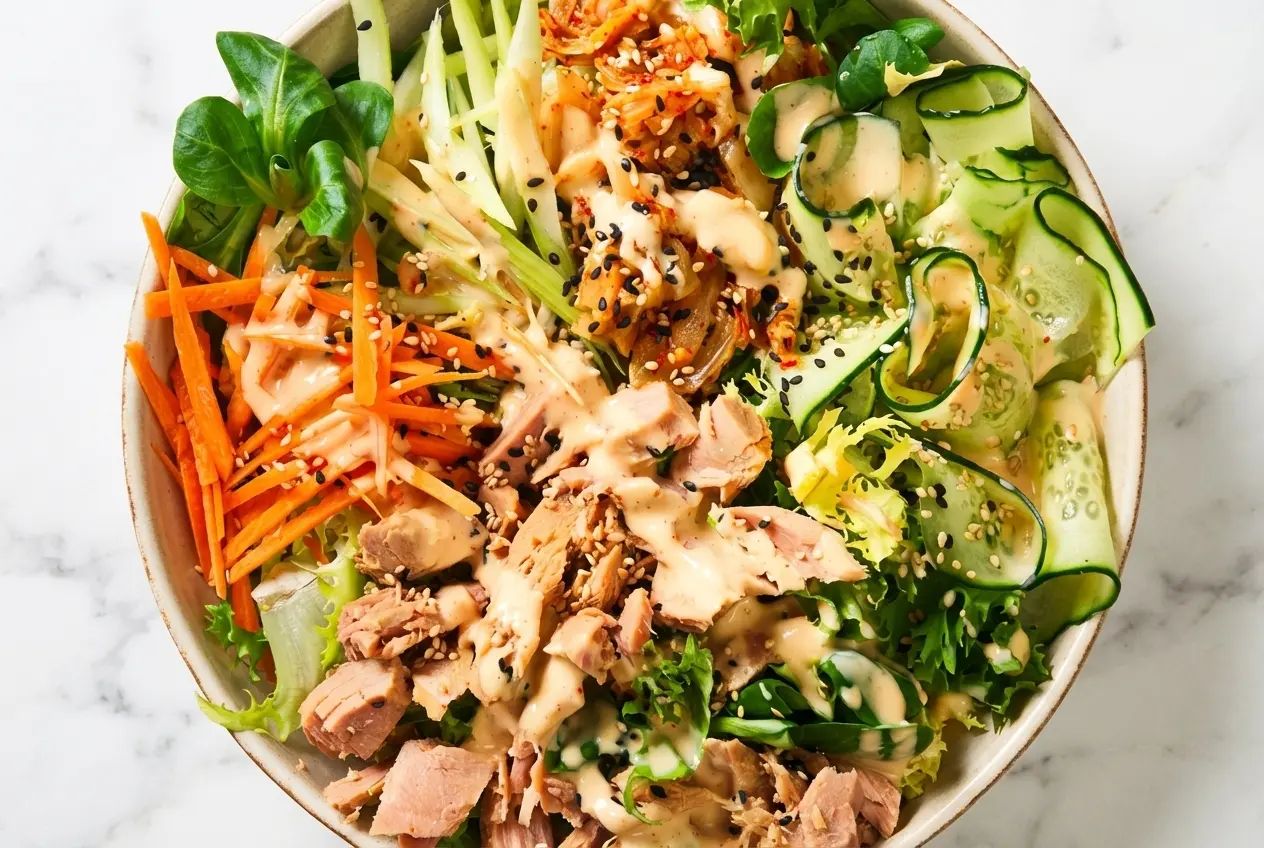
Some lunches wake you up more than they weigh you down, and this kimchi salad is exactly that kind of bowl. In my kitchen, it is the answer to busy weekdays when I want something cold, crunchy, and deeply satisfying without turning on the stove.
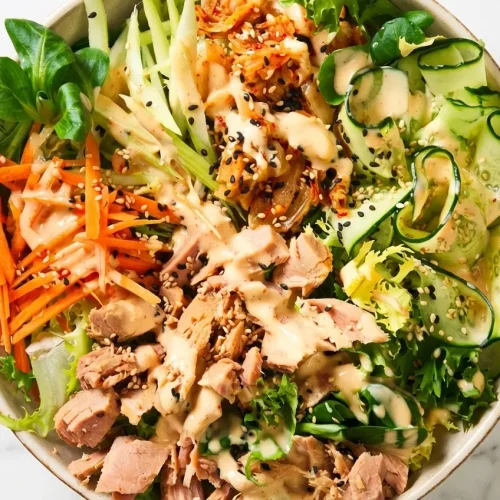
You get that lively collision of Korean fermented flavor and a fresh American-style salad bowl, with tender albacore tuna, crisp vegetables, and a creamy dressing that hits tangy, spicy, savory, and earthy all at once. It is a smart healthy lunch, a reliable meal prep option, and the kind of dish that keeps every bite interesting.
Why You’ll Love This Recipe
Big flavor, little effort: This is the kind of salad that tastes like you fussed, even though it comes together in 10 minutes. The kimchi, gochujang paste, and sesame oil do a lot of the heavy lifting, so every forkful feels layered and bold.
The secret twist: In my kitchen, I swap the usual mayonnaise base for a blend of white miso paste and tahini. It stays creamy, but the flavor turns deeper, earthier, and much better suited to the bright snap of fermented cabbage.
Crunch that actually matters: A shower of crushed toasted peanuts gives this bowl a hearty, structural crunch that black sesame seeds alone cannot quite deliver. That contrast between tender tuna and crisp vegetables is what makes the salad so hard to stop eating.
Smart umami balance: Tahini and miso create a smooth emulsified dressing with serious umami, and that richness naturally complements the lactic tang of kimchi. I discovered this swap keeps the salad vivid and lively instead of heavy.
Ingredients and Substitutions
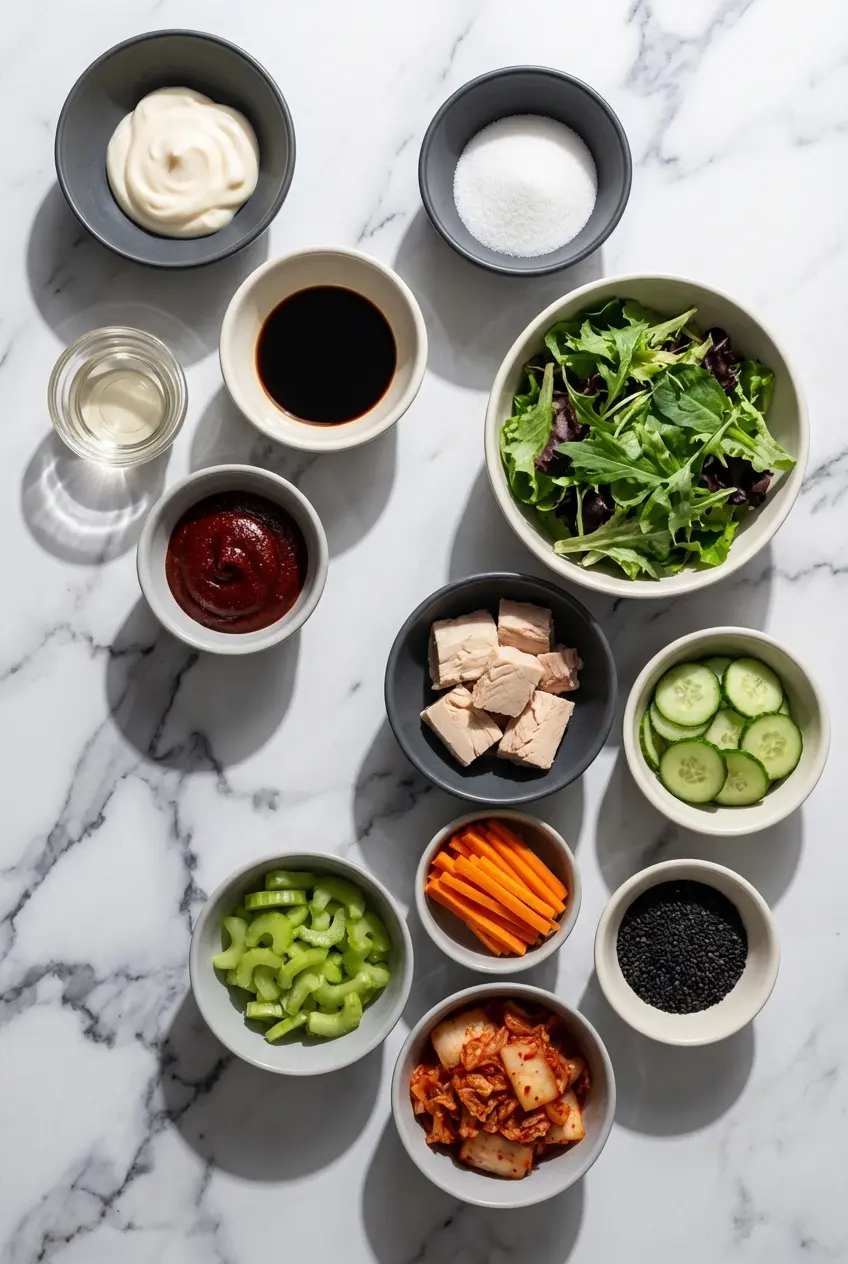
These ingredients build a fast, flavor-packed bowl with crisp texture, clean protein, and a punchy dressing that ties everything together.
Ingredients
For the Dressing:
- ½ cup mayonnaise
- 1 tablespoon rice vinegar
- 2 teaspoons soy sauce
- 2 teaspoons gochujang paste
- 2 teaspoons sesame oil
- 2 teaspoons sugar
For the Salad:
- 12 ounces solid white tuna, drained and broken into chunks
- 1 small cucumber, thinly sliced
- 1 cup carrots, cut into matchsticks or grated
- 4 cups mixed greens
- 1 cup celery, sliced
- ½ cup kimchi, drained well and coarsely chopped
- black sesame seeds, to garnish
Ingredient Notes & Substitutions
Dressing Base: For the signature twist, replace the ½ cup mayonnaise with an equal amount of a tahini and white miso blend. I like this better because it keeps the dressing creamy while adding earthy umami that flatters kimchi instead of dulling it.
Garnish: Add crushed toasted peanuts alongside the black sesame seeds at the end. They bring a firmer crunch and a roasted, nutty finish that makes the salad feel more complete.
Sugar: Do not skip it here. A little sweetness is mandatory because it rounds out the sharp acidity and heat from the fermented cabbage, gochujang paste, and rice vinegar.
Kimchi: Look for Napa cabbage kimchi with a clean, pleasantly sour aroma and plenty of crunch. If you are serving vegetarian or vegan guests, check the label closely because many store-bought versions include fish sauce or shrimp paste.
Protein Options: Albacore tuna gives this salad a quick, pantry-friendly backbone, but shredded rotisserie chicken, sautéed shrimp, or crispy tofu cubes all work beautifully. For a plant-based bowl, edamame is another easy addition that keeps the meal hearty.
Soy Sauce: If you need a gluten-free version, use tamari in the same amount. The flavor stays savory and balanced, especially with the richness of tahini and sesame oil in the dressing.
How to Make kimchi salad
Whisk the Dressing
In a small bowl, whisk together the dressing base, whether you are using the original mayonnaise or the tahini and white miso swap, with the rice vinegar, soy sauce, gochujang paste, sesame oil, and sugar. Keep whisking until the mixture looks smooth and glossy, with no streaks left behind, and you can smell that warm toasted aroma from the sesame oil. Set it aside while you build the salad.
Build the Salad Bowl
- Add the solid white tuna, sliced cucumber, carrots, mixed greens, celery, and the well-drained, coarsely chopped kimchi to a large bowl. If you are meal prepping or serving guests, you can divide everything evenly among 4 bowls instead so the presentation stays crisp and tidy.
- Toss gently with your hands or salad tongs just enough to distribute the tuna and vegetables without bruising the greens. You want the bowl to look abundant and colorful, with tender flakes of tuna tucked between crunchy vegetables.
Dress and Finish
- Drizzle the dressing over the salad right before serving, or pass it on the side if you want to keep the greens especially fresh. This small move makes a big difference because the wet ingredients can soften the leaves quickly.
- Scatter black sesame seeds over the top, then add the crushed toasted peanuts for the full twist. Serve immediately while the vegetables still snap and the creamy, spicy dressing clings to every bite.
Chef’s Secrets for Perfect Flavor
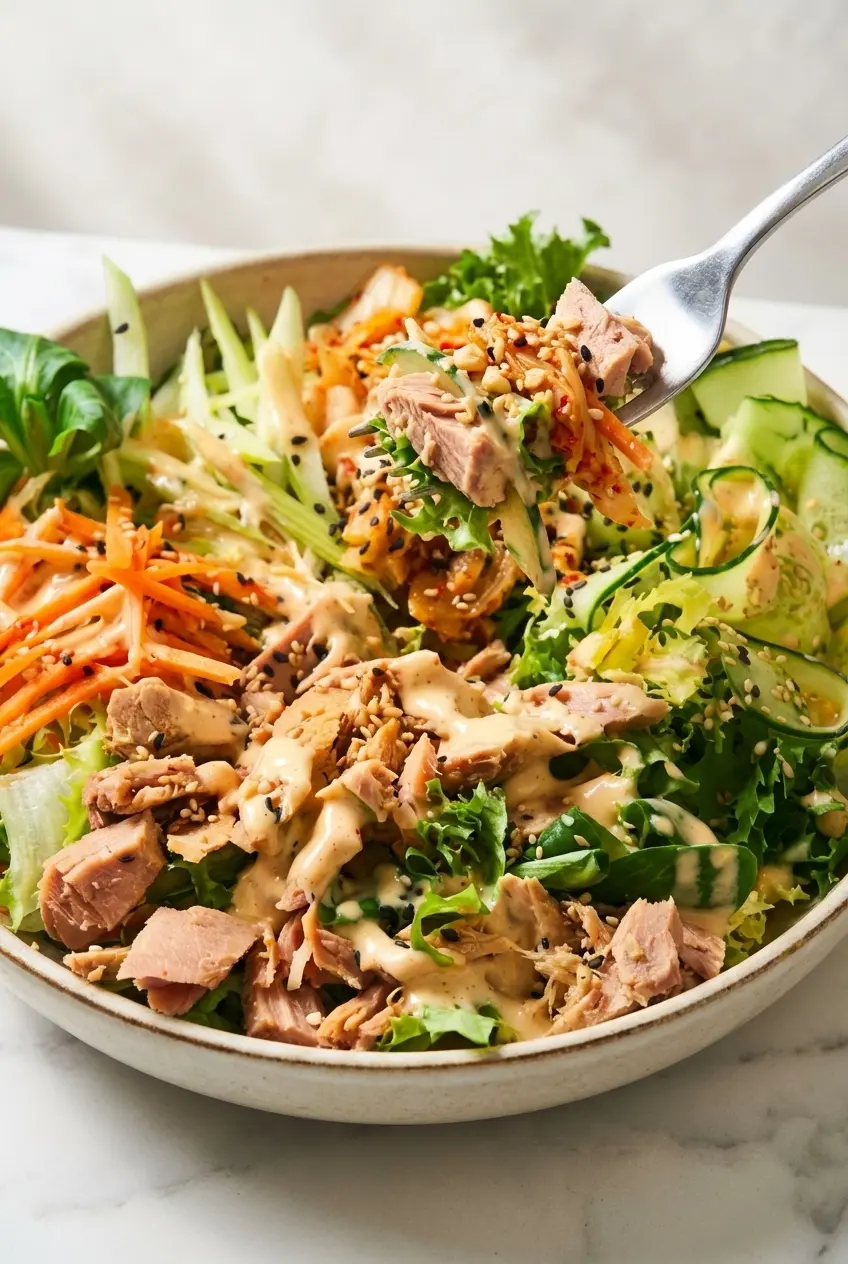
Mayonnaise certainly gives body, but I find it can blanket the brighter notes in a kimchi salad. White miso and tahini still emulsify into a creamy Asian dressing, yet they boost the umami and earthy depth in a way that lets the kimchi taste more alive on the palate.
The most important prep step is draining the kimchi in a fine mesh strainer before chopping it. If excess brine goes straight into the bowl, the salad turns watery fast, and the mixed greens lose that clean, crisp bite.
Black sesame seeds are lovely, but if you have a moment, toasting any sesame seeds in a dry pan for 2 minutes wakes them right up. Once they smell nutty and fragrant, you will notice a deeper flavor that makes the final garnish taste intentional rather than decorative.
Traditional Banchan Versus Modern Fusion Salads
Traditional Korean banchan are small, punchy side dishes meant to be eaten with rice and other parts of the meal, not usually as a giant standalone bowl. Their job is to bring contrast, salt, acidity, spice, and texture to the table, much the way a few bites of kimchi can brighten plain rice or a comforting bowl of chicken congee.
This salad takes that spirit and stretches it into a full healthy lunch. By folding Napa cabbage kimchi into mixed greens, cucumber, celery, and tuna, you get the deeply flavored backbone of Korean banchan with the volume and freshness of a modern main-course salad.
That bridge is exactly what makes the dish work so well for American home cooks. It respects the fermented punch of kimchi and fermented cabbage while adapting it into something cool, filling, and easy to pack for the workday.
How to Balance and Adjust the Spice Level
If standard kimchi feels a little fiery, start by reducing the gochujang paste slightly in the dressing and taste before adding more. A milder kimchi brand can also make a big difference, since some jars are much hotter and funkier than others.
The sugar is not there for sweetness alone, it acts like a buffer against the aggressive heat and acidity in the bowl. The fat from tahini and sesame oil also softens the edges, so the salad tastes rounded instead of harsh.
For a gentler version, use less kimchi and bulk up the bowl with more mixed greens or thinly shaved Napa cabbage. If you love heat, a spoonful of reserved kimchi brine stirred into the dressing will sharpen the spice and deepen the savory finish.
Pro Tips & Troubleshooting
Pro Tips
- Drain the kimchi in a fine mesh strainer before chopping so the salad stays crisp instead of watery.
- If you are skipping delicate greens and using only sturdy vegetables like cucumbers and onions, let the salad rest in the fridge for 1 to 2 hours so the flavors have time to mingle.
- Reserve the drained kimchi brine, because a small splash can add terrific depth to future dressings, marinades, or soups.
- Toast the sesame seeds in a dry pan for 2 minutes until fragrant to bring out more nuttiness and aroma.
Common Mistakes to Avoid
- Do not dress the mixed greens too early, and do not combine them with wet kimchi far ahead of time, or the leaves will wilt and turn limp.
- Do not skip the sugar, or honey if you are using a variation, because the dressing needs that hint of sweetness to balance the fermented acidity and spice.
- Do not forget to check the kimchi label if you are serving vegetarian or vegan eaters, since fish sauce and shrimp paste are common in traditional brands.
Serving & Storage
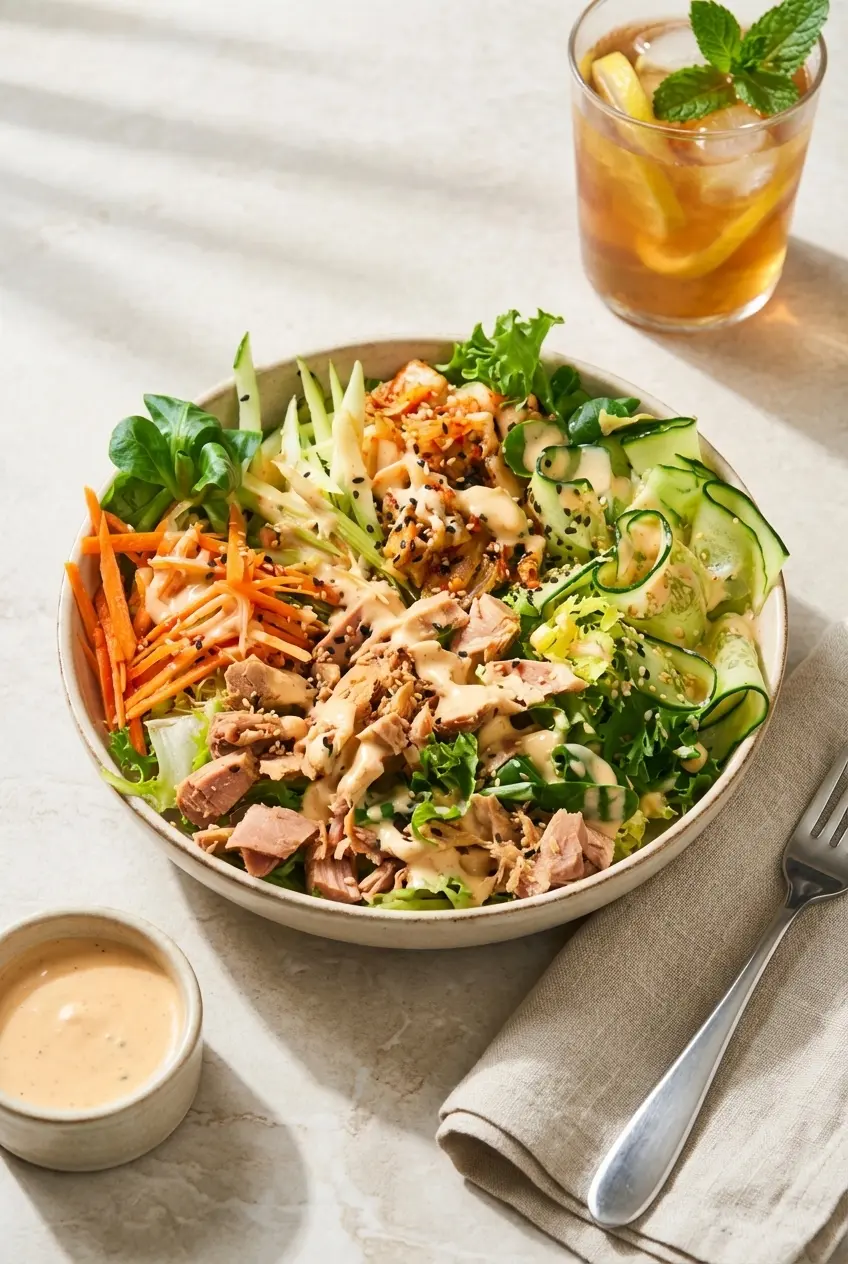
Serving Ideas
This bowl is especially good next to rich grilled meats like galbi or bulgogi, because the tangy crunch cuts through the fat beautifully. For a fuller spread, I also like pairing it with warm appetizers such as cabbage dumplings, which turn a light lunch into an easy dinner.
A sweet, juicy side like sliced pineapple or mango gives the salad a fresh contrast that works especially well with the heat of kimchi and gochujang. If you want another warm vegetable on the table, a plate of sautéed bok choy fits naturally beside Korean-inspired mains and keeps the meal balanced.
To make it heartier, turn the bowl into a noodle or grain lunch with chilled brown rice noodles, soba, or a scoop of warm quinoa. The dressing clings nicely to all of them, so the salad still tastes cohesive rather than patched together.
Storage & Make-Ahead
If the salad is fully assembled and dressed, it is best eaten right away, though it will hold for about 1 day in the fridge with some loss of crunch. Once the mixed greens absorb dressing and kimchi moisture, they soften quickly.
For meal prep, store the dressing, drained kimchi, tuna, and sturdy vegetables in separate airtight containers, and keep the mixed greens completely separate until serving. Packed this way, the components stay in good shape for about 2 days, and the final bowl tastes much fresher.
If you are building lunches ahead, place the wettest ingredients at the bottom of the container and the greens on top or in a separate bag. That little bit of separation is what keeps the texture lively instead of soggy.
Easy Kimchi Salad

Equipment
- Large Mixing Bowl
- Small bowl
- Whisk
- Fine mesh strainer
Ingredients
For the Dressing:
- ½ cup mayonnaise
- 1 tablespoon rice vinegar
- 2 teaspoons soy sauce
- 2 teaspoons gochujang paste
- 2 teaspoons sesame oil
- 2 teaspoons sugar
For the Salad:
- 12 ounces solid white tuna, drained and broken into chunks
- 1 small cucumber, thinly sliced
- 1 cup carrots, cut into matchsticks or grated
- 4 cups mixed greens
- 1 cup celery, sliced
- ½ cup kimchi, drained well and coarsely chopped
- black sesame seeds, to garnish
Instructions
Whisk the Dressing
- In a small bowl, whisk together the mayonnaise (or a tahini and white miso alternative) with the rice vinegar, soy sauce, gochujang paste, sesame oil, and sugar. Keep whisking until the mixture is smooth and glossy. Set it aside while you build the salad.
Build the Salad Bowl
- Add the solid white tuna, sliced cucumber, carrots, mixed greens, celery, and the well-drained, coarsely chopped kimchi to a large bowl. Alternatively, divide these ingredients evenly among 4 individual serving bowls.
- Toss gently with your hands or salad tongs just enough to distribute the tuna and vegetables evenly without bruising the mixed greens.
Dress and Finish
- Drizzle the dressing over the salad right before serving, or pass it on the side if you want to keep the greens exceptionally crisp.
- Scatter black sesame seeds over the top. Serve immediately while the vegetables still snap and the dressing clings to every bite.
Notes
Conclusion
This kimchi salad earns a regular spot in my rotation because it delivers so much texture and flavor in almost no time. The crunchy vegetables, tender tuna, and creamy tahini miso dressing bring that sweet spot of spicy, tangy, and savory in one bowl.
Once you make it, you can nudge it in all kinds of directions with tofu, chicken, noodles, or extra peanuts. It is the kind of quick, nutrient-packed meal that never feels boring, and that is why it is worth keeping close at hand.