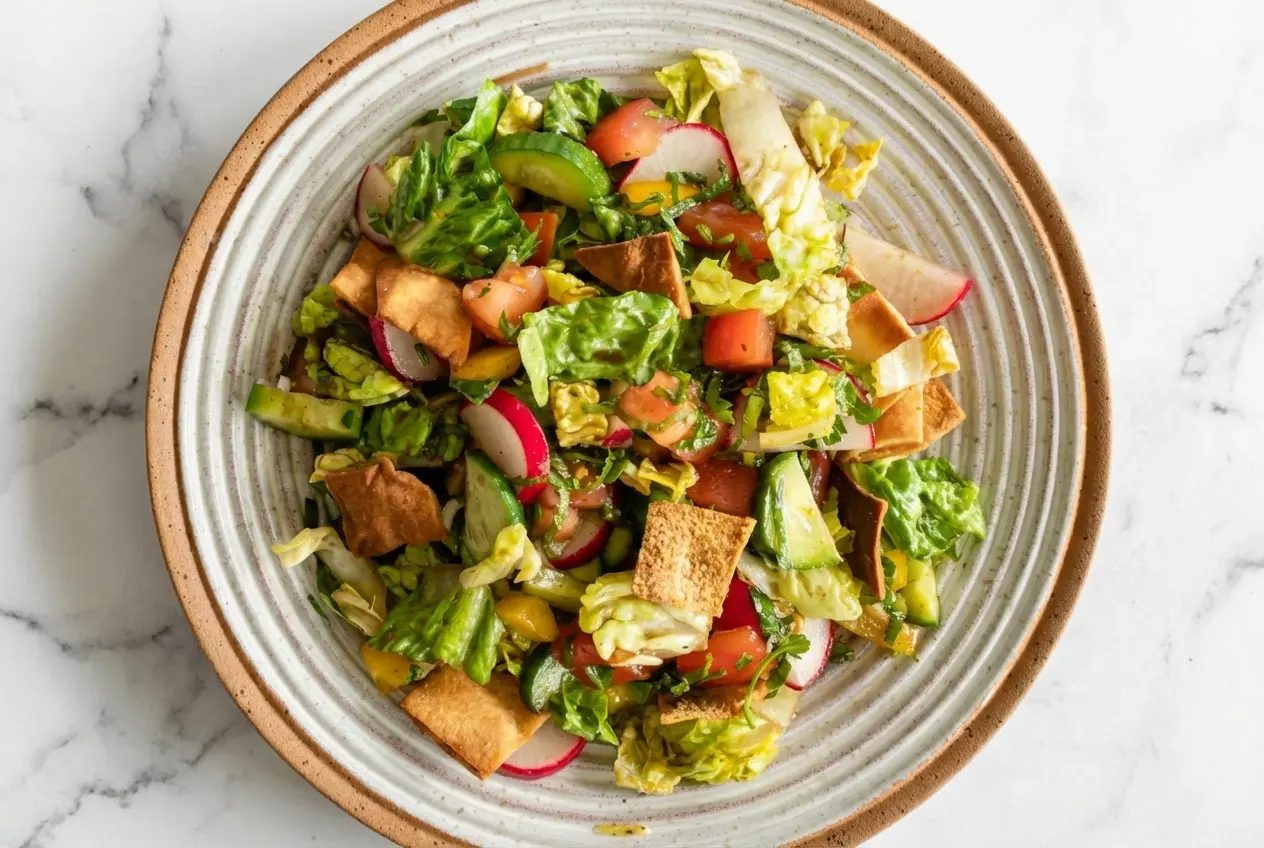
In my kitchen, fattoush is the salad that wakes everything up. One bite of crisp greens, tart dressing, and crackly pita, and the whole table suddenly feels brighter, a little louder, and a lot hungrier.
This lebanese fattoush salad recipe is perfect for weeknight dinners, mezze spreads, and sunny weekend lunches when you want something zesty, crunchy, bright, tangy, and refreshing. I use a simple pan-frying method for the pita, and that one small change gives the salad its most irresistible crunch.
Why You’ll Love This Recipe
Big Levantine flavor: This salad has that classic balance fattoush is loved for, sharp lemon, earthy Sumac, fresh mint, and plenty of crisp vegetables. Every forkful tastes lively and clean, never heavy.
The secret twist: In my kitchen, I pan-fry the Pita bread in extra virgin olive oil with a pinch of Za’atar and a little crushed garlic instead of dry-baking it. The result is deeper flavor and a shattering crunch that holds its own against the dressing.
A smarter tomato trick: I core the tomatoes before dicing, and it makes a real difference. You get all the sweet freshness without the extra liquid that can water down the dressing and soften the bread too quickly.
Easy but special: This Lebanese Peasant Salad comes together fast, yet it tastes like something you would be thrilled to find at a great neighborhood mezze table. It is simple enough for Tuesday night and pretty enough for company.
Ingredients and Substitutions
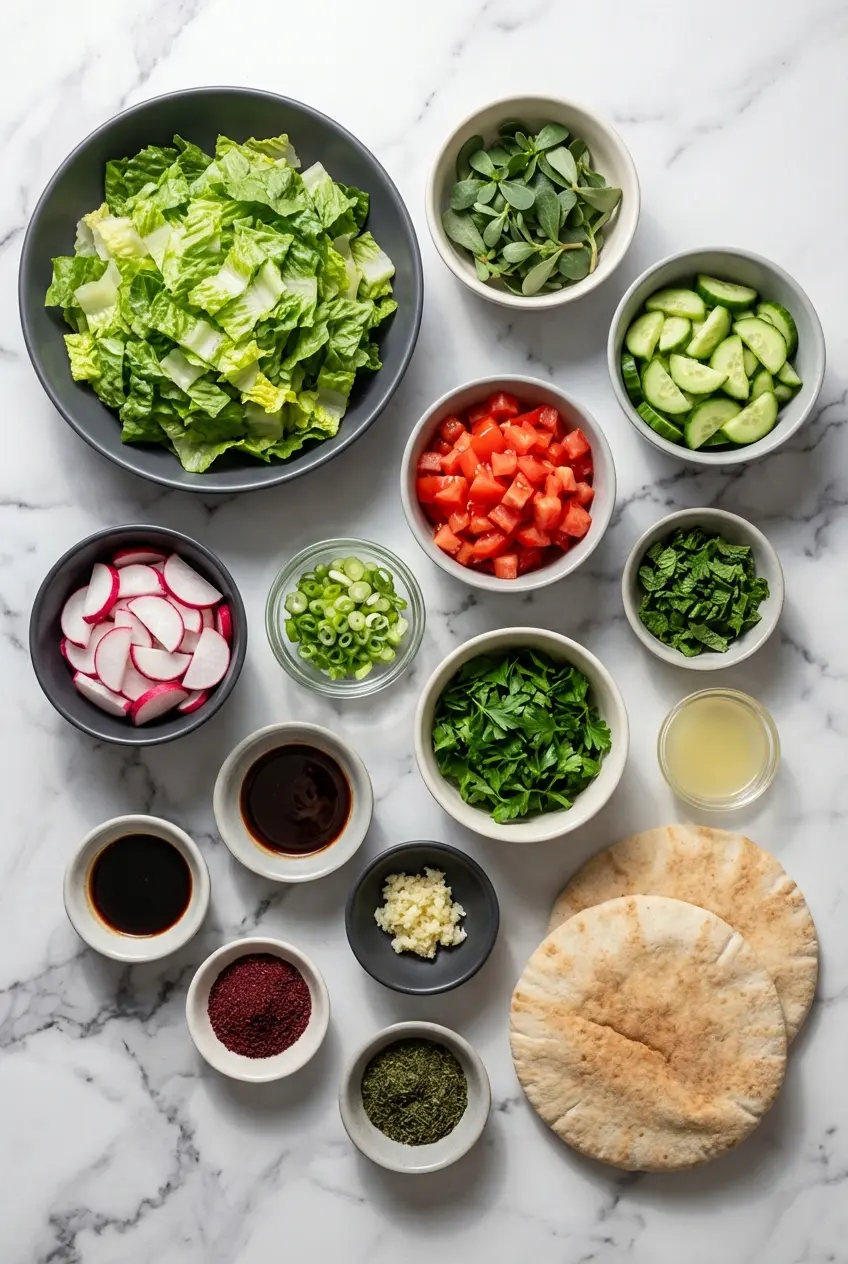
These ingredients build the classic contrast that makes fattoush so memorable, crisp vegetables, fragrant herbs, tart dressing, and crunchy pita chips that bring the whole bowl to life.
Ingredients
Salad:
- 1 head romaine lettuce, chopped
- 1 cup purslane leaves, stems removed
- 3 persian cucumbers, sliced into half moons
- 3 tomatoes, diced
- 4 radishes, sliced into half moons
- 1 bell pepper, any color, diced
- 3 green onions, thinly sliced (both white and green parts)
- 1 cup fresh mint, chopped
- 1 cup flat-leaf parsley, chopped
Dressing:
- 1/3 cup extra virgin olive oil
- 1/4 cup fresh lemon juice
- 2 tablespoons pomegranate molasses
- 1 garlic clove, grated or minced
- 2 teaspoons sumac
- 1 teaspoon dried mint
- 2 teaspoons kosher salt, adjust to taste
Pita Chips:
- 2 loaves thin pita bread
- 1 tablespoon olive oil
- 1/4 teaspoon kosher salt
Ingredient Notes & Substitutions
Purslane: Purslane is a tender, slightly succulent leafy green with a gentle lemony bite that is very traditional in Levantine cuisine. If you cannot find it, fresh watercress is an excellent substitute, and extra baby lettuce also works well for a softer, milder version.
Pomegranate molasses: This is one of the ingredients that gives fattoush its signature flavor, so I do not skip it when I want an authentic result. You can usually find it in Middle Eastern markets, well-stocked grocery stores, or international aisles, and a good bottle should taste tart, deep, and fruity rather than candy-sweet.
Sumac: Sumac brings a bright, tangy, almost citrusy edge that plain lemon juice cannot fully replace. For a true lebanese fattoush salad recipe, it is one of those non-negotiable pantry staples that makes the dressing taste complete.
Pita bread: Thin Lebanese flatbread is the best choice because it fries into delicate, crisp shards rather than thick, heavy chunks. If all you have is standard pocket pita, separate the layers if possible and use the thinnest parts.
Extra virgin olive oil: Since the dressing is simple and the pita is fried in oil, the flavor of the oil really shows. I like using a smooth, peppery extra virgin olive oil for the dressing and for pan-frying the pita so every bite tastes a little richer.
Pomegranate arils: If you want a lovely twist, add a handful of fresh pomegranate arils right before serving. They bring little bursts of sweetness and shine without taking away from the salad’s savory, tangy backbone.
How to Make lebanese fattoush salad recipe
Make the Crispy Pita
Cut the thin pita bread into 1-inch squares. Warm 1 tablespoon olive oil in a skillet over medium heat, add a lightly crushed bit of garlic and a pinch of Za’atar, then fry the pita pieces in batches until deeply golden and intensely crisp, turning as needed so they color evenly. Sprinkle with the 1/4 teaspoon kosher salt while still warm, then transfer to a plate and let them cool completely.
Prep the Vegetables and Herbs
- Core the tomatoes first, then dice them so the watery seed pockets do not thin out the salad later. Slice the Persian cucumbers and radishes into half moons, dice the bell pepper, thinly slice the green onions, and chop the romaine into medium, rustic pieces rather than a tiny dice.
- Add the romaine lettuce, purslane, cucumbers, tomatoes, radishes, bell pepper, green onions, fresh mint, and flat-leaf parsley to a large bowl. The bowl should already look bright and full, with plenty of texture and color before the dressing even goes in.
Whisk the Dressing
In a small bowl, whisk together the extra virgin olive oil, fresh lemon juice, pomegranate molasses, grated or minced garlic, Sumac, dried mint, and kosher salt until the mixture looks glossy and lightly thickened. If you like a slightly softer tartness, you can whisk in a small squeeze of honey, but keep the dressing lively and sharp.
Toss and Serve
- A few minutes before serving, pour the dressing over the vegetables and toss until everything is evenly coated. Letting the salad sit briefly helps the vegetables absorb that tangy, herby flavor, then taste and adjust the salt if needed.
- At the exact moment of serving, gently fold in the fried pita chips, or set them on the side so everyone can add their own. That final-minute step is what keeps the pita beautifully crisp instead of softening too soon.
Secrets for Perfection
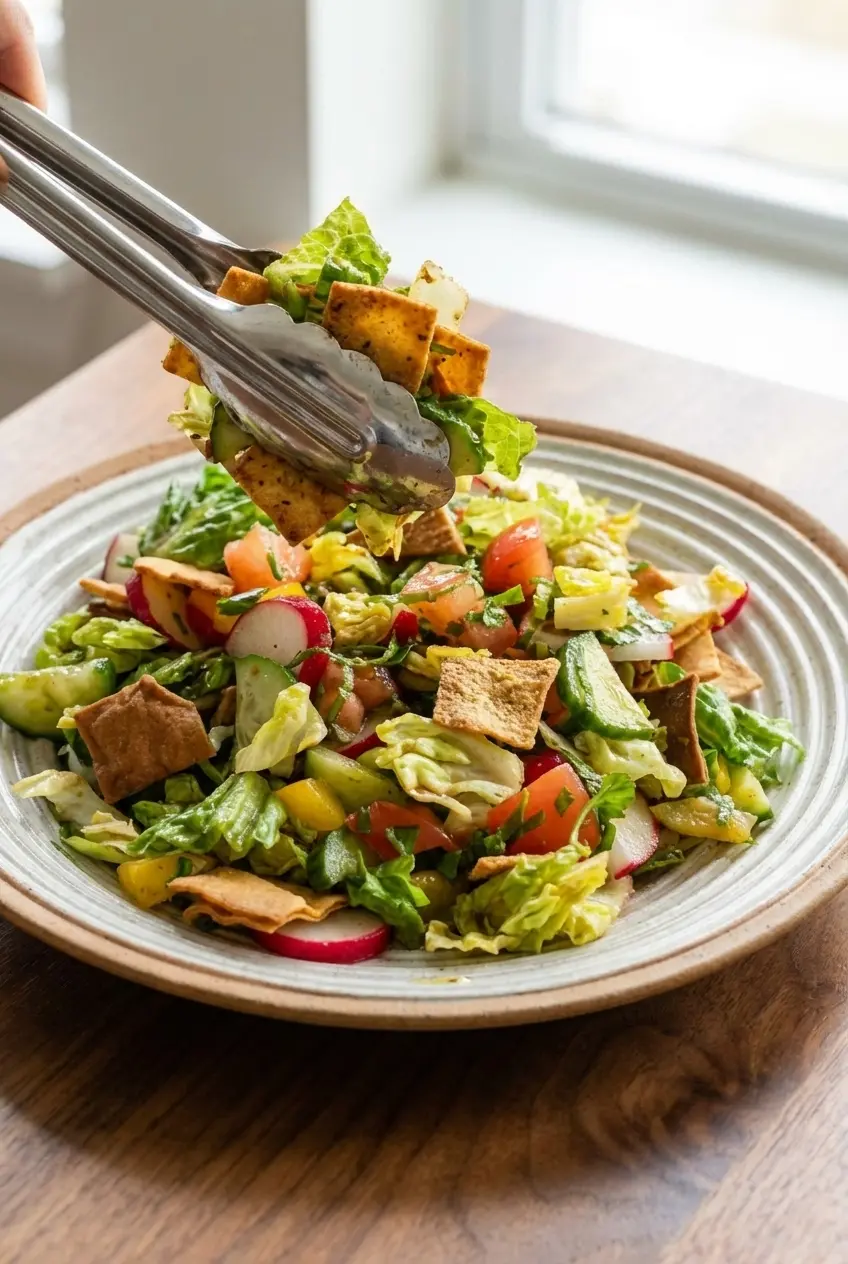
Pan-frying the pita in flavored fat works differently than dry-baking it. The olive oil creates a richer, more brittle crunch, and it also carries the fat-soluble flavor of the garlic and Za’atar into every corner of the bread, so the crispy pieces taste seasoned all the way through.
The tomato step matters just as much. When you core the tomatoes before dicing, you remove a good part of the loose juice that would otherwise dilute the dressing and start softening the pita early, which keeps the salad bright, balanced, and crisp for longer.
Choosing the Right Pita Bread
If you want authentic texture, look for very thin Lebanese flatbread rather than the thick pocket pitas common in many American grocery stores. Thin Levantine bread crisps quickly, stays light, and shatters gracefully when you bite into it.
Thicker Greek-style or fluffy pocket pita tends to turn hard and dense once fried, which can make the salad feel bulky instead of lively. The beauty of good fattoush is that the bread acts more like delicate glassy crunch than chewy crouton.
The Role of Pomegranate Molasses
Pomegranate molasses does two jobs at once, and that is why it is so important here. It brings sharp acidity for brightness, but it also has a syrupy body that helps the dressing emulsify and cling to the romaine lettuce, herbs, and chopped vegetables instead of slipping to the bottom of the bowl.
That sticky-tart texture is part of what makes fattoush taste so distinctive. Lemon juice gives freshness, but Pomegranate molasses adds depth and that unmistakable sweet-sour edge that makes the whole salad taste more rounded and more authentically Lebanese.
Pro Tips & Troubleshooting
Pro Tips
- Chop the vegetables into medium, rustic pieces rather than a fine dice. Fattoush should feel generous and crunchy, with each ingredient still easy to taste.
- Toss the vegetables with the dressing exactly 15 minutes before serving if you want a little marination without losing that fresh snap. Keep the pita completely separate until the very end.
- Use your clean hands to toss the salad when possible. They are gentler than metal tongs and help protect the fresh mint and flat-leaf parsley from bruising.
- Choose very thin pita bread for the best texture. It fries faster and gives you the delicate crispness that makes this salad feel authentic.
Common Mistakes to Avoid
- Skipping pomegranate molasses or Sumac is the quickest way to lose the signature tang that defines fattoush. The salad may still be good, but it will not have that classic flavor profile.
- Adding the pita chips too early leads straight to soggy salad. It is the same crunchy-rule logic that makes a dish like frito taco salad work best when the crisp elements stay separate until the last minute, so hold the bread back until serving.
- Using thick, fluffy pita creates heavy, overly hard chips instead of airy crisp shards. Thin flatbread makes all the difference.
- Under-salting the dressing is a common problem. Salt is not just seasoning here, it balances the acidity of the lemon and sumac so the salad tastes bright rather than harsh.
Serving & Storage
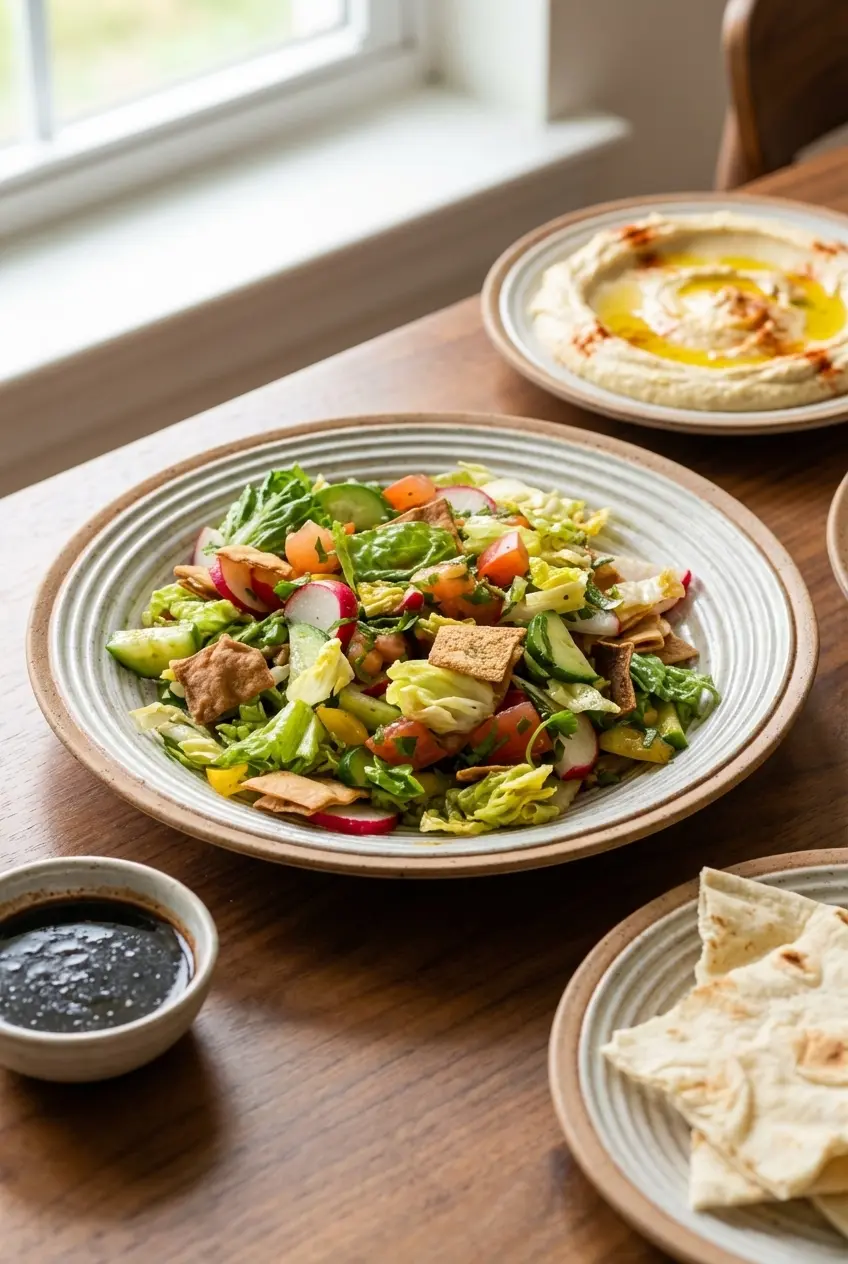
Serving Ideas
This salad is wonderful beside Lebanese lemon garlic chicken, beef koobideh, or lamb shawarma, especially when you want something cool and crunchy next to warm, savory meat. It also fits beautifully into a mezze spread with hummus, baba ganoush, toum, and a platter of crispy eggplant fries for a table that feels abundant without being complicated.
If you want to turn it into a main course, add grilled chicken skewers or roasted chickpeas. A spoonful of marry me chickpeas works especially well here because the creamy, savory flavor plays nicely against the tart dressing and crisp vegetables.
Storage & Make-Ahead
If you are prepping ahead, the best trick is to salt and drain the tomatoes and cucumbers in a colander for 10 minutes before assembling. That simple step pulls out excess moisture through the process of osmosis, which helps keep the salad from turning watery and protects the texture of the herbs and lettuce.
Store the chopped vegetables, the dressing, and the fried pita chips in completely separate airtight containers until you are ready to eat. Keep the vegetables and dressing in the fridge, keep the pita chips at room temperature if your kitchen is cool and dry, or in a loosely covered container so they stay crisp.
Once dressed and mixed with the pita, fattoush is best eaten right away. If you know you will have leftovers, only dress the portion you plan to serve so the rest stays fresh and crunchy for later.
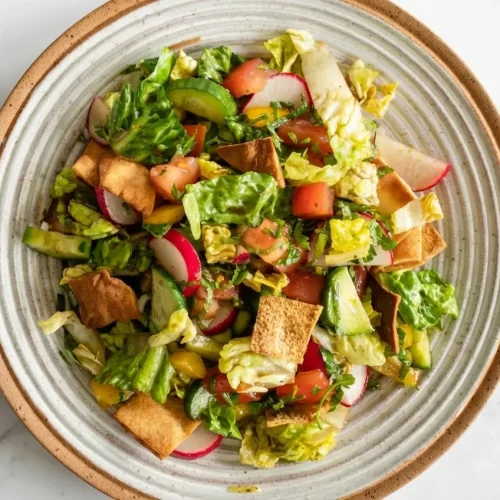
Lebanese Fattoush Salad Recipe

Equipment
- Skillet
- large bowl
- Whisk
Ingredients
Salad:
- 1 head romaine lettuce, chopped
- 1 cup purslane leaves, stems removed
- 3 persian cucumbers, sliced into half moons
- 3 tomatoes, diced
- 4 radishes, sliced into half moons
- 1 bell pepper, any color, diced
- 3 green onions, thinly sliced (both white and green parts)
- 1 cup fresh mint, chopped
- 1 cup flat-leaf parsley, chopped
Dressing:
- 1/3 cup extra virgin olive oil
- 1/4 cup fresh lemon juice
- 2 tablespoons pomegranate molasses
- 1 garlic clove, grated or minced
- 2 teaspoons sumac
- 1 teaspoon dried mint
- 2 teaspoons kosher salt, adjust to taste
Pita Chips:
- 2 loaves thin pita bread
- 1 tablespoon olive oil
- 1/4 teaspoon kosher salt
Instructions
Make the Crispy Pita
- Cut the thin pita bread into 1-inch squares. Warm 1 tablespoon olive oil in a skillet over medium heat, add a lightly crushed bit of garlic and a pinch of Za’atar, then fry the pita pieces in batches until deeply golden and intensely crisp, turning as needed so they color evenly. Sprinkle with the 1/4 teaspoon kosher salt while still warm, then transfer to a plate and let them cool completely.
Prep the Vegetables and Herbs
- Core the tomatoes first, then dice them so the watery seed pockets do not thin out the salad later. Slice the Persian cucumbers and radishes into half moons, dice the bell pepper, thinly slice the green onions, and chop the romaine into medium, rustic pieces rather than a tiny dice.
- Add the romaine lettuce, purslane, cucumbers, tomatoes, radishes, bell pepper, green onions, fresh mint, and flat-leaf parsley to a large bowl. The bowl should already look bright and full, with plenty of texture and color before the dressing even goes in.
Whisk the Dressing
- In a small bowl, whisk together the extra virgin olive oil, fresh lemon juice, pomegranate molasses, grated or minced garlic, sumac, dried mint, and kosher salt until the mixture looks glossy and lightly thickened.
Toss and Serve
- A few minutes before serving, pour the dressing over the vegetables and toss until everything is evenly coated. Let the salad sit briefly to absorb the flavors, then taste and adjust the salt if needed.
- At the exact moment of serving, gently fold in the fried pita chips, or set them on the side so everyone can add their own. That final-minute step is what keeps the pita beautifully crisp instead of softening too soon.
Notes
Conclusion
This is the kind of salad that proves simple ingredients can still steal the show. With the pan-fried za’atar pita and the extra care of coring the tomatoes, you get a Lebanese fattoush that stays crunchy, bold, and deeply satisfying.
I hope you bring it to your next gathering or set it beside dinner on an ordinary weeknight. Once you taste that bright dressing and hear that first crisp bite of pita, it is hard not to make it again.