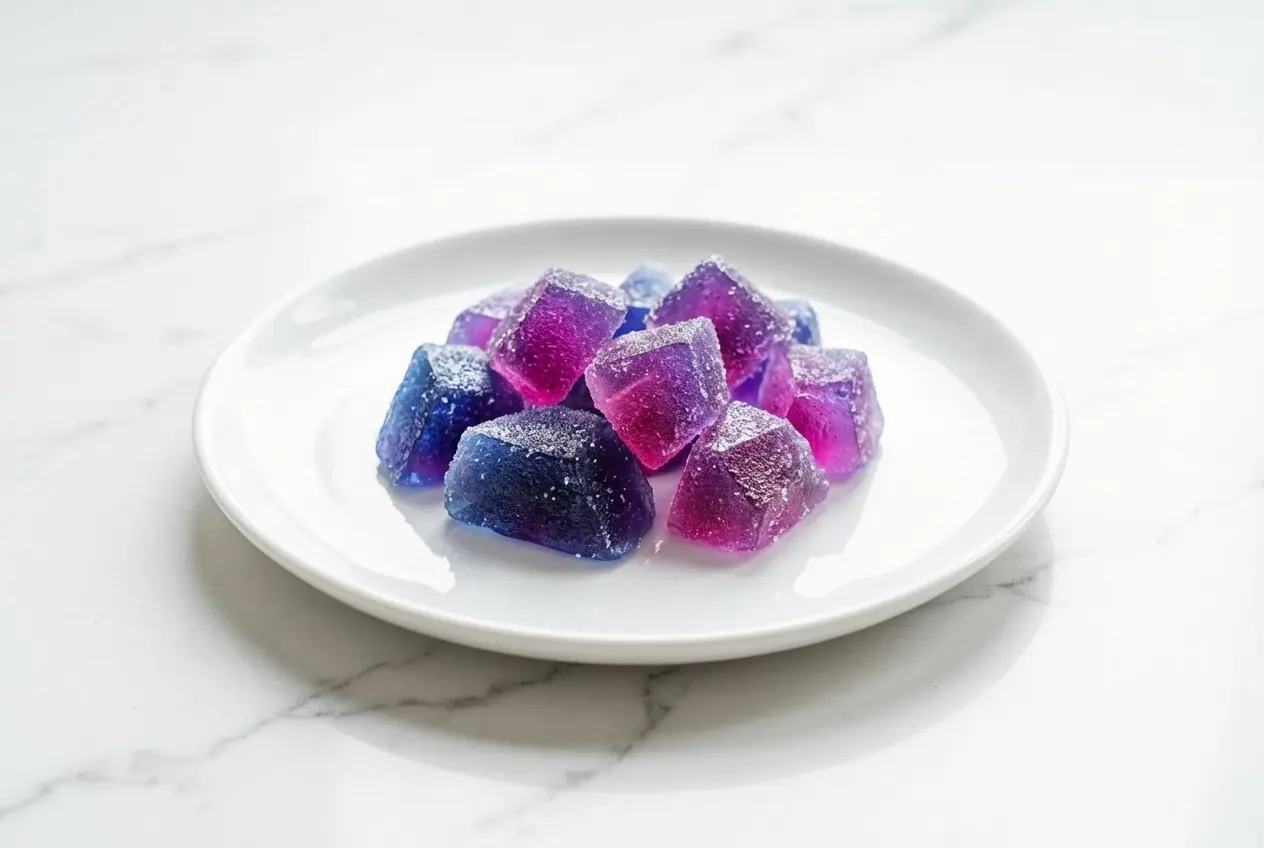
The first time I heard that viral ASMR crackle, I’ll admit it, I sprinted to my pantry like it was a dinner service emergency. These sparkling little wagashi are called Kohakutou, Japanese crystal candy that looks like edible gemstones and eats like magic, a crunchy, sugary shell with a soft jelly heart.
If you’re looking for a japanese jelly candy recipe that actually crystallizes at home, this is the one I make when I want reliable crunch and jaw dropping color. The process looks mysterious, but with the right sugar ratio, a patient dry, and a tiny science trick, it’s completely doable in a home kitchen.
Why You’ll Love This Recipe
Color that feels like sorcery: I steep Butterfly Pea Flower tea in the water first, so the base turns a deep ocean blue, then the tiniest micro-pinch of citric acid makes it bloom into purple or pink like a sunset trapped in sugar.
Sweetness with balance: Kohakutou needs a bold amount of sugar for the crystallization process, but the floral tea keeps it from tasting flat, and that tiny acid note cuts the sweetness the way contrast saves rich desserts like miso caramel.
That signature crunch: When agar agar powder sets properly, you get Japanese crystal candy with a shattering shell and a tender center, the exact ASMR candy bite people chase online.
Ingredients and Substitutions
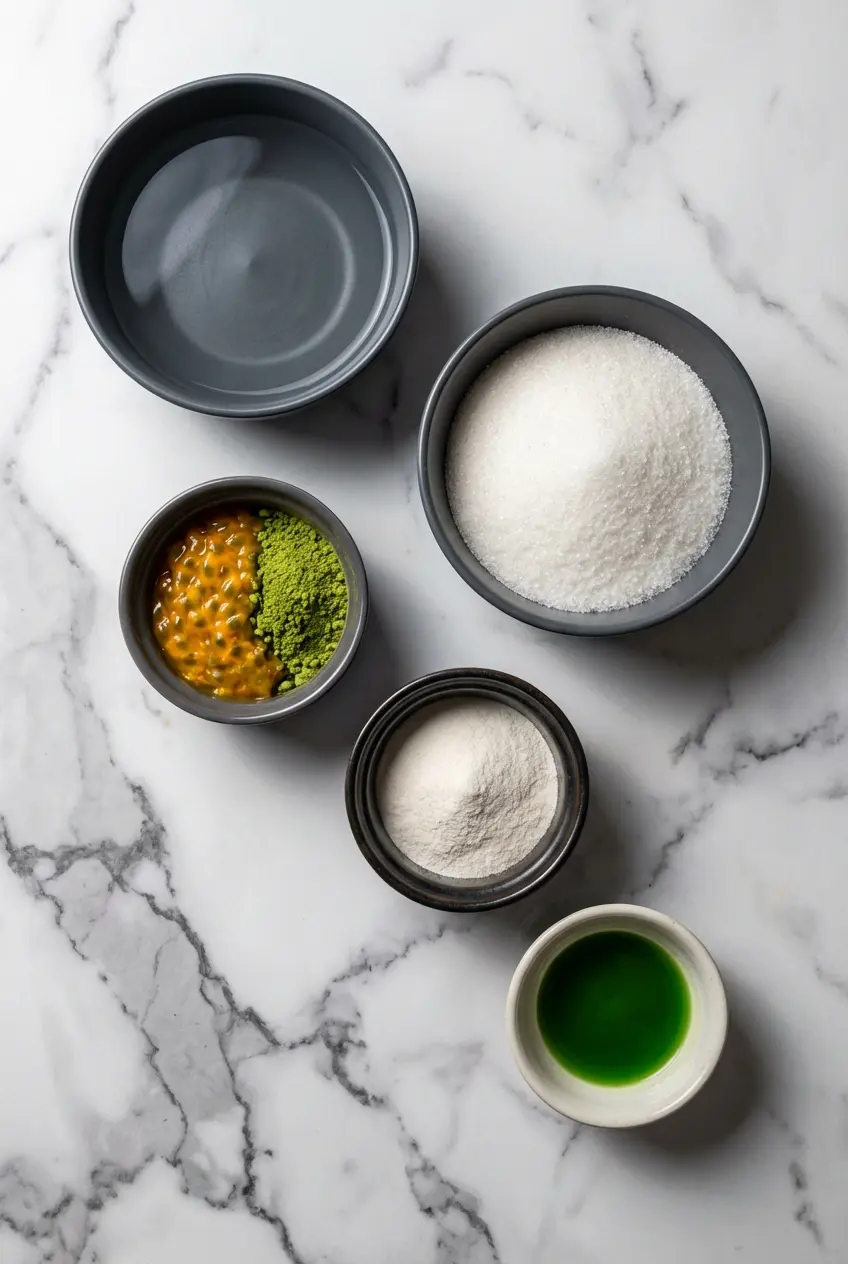
These few ingredients do big work, sugar builds the crust, agar builds the structure, and your flavoring makes the gems taste as good as they look.
Ingredients
- 1 cup water
- 1 tablespoon passion fruit pulp or matcha powder
- 1.5 cups granulated sugar
- 1 tablespoon agar agar powder
- 1 teaspoon Pandan extract
Ingredient Notes & Substitutions
Agar agar powder: This is the backbone of Kohakutou, a vegan gelatin substitute made from red algae, and it sets firm even at room temperature, which is exactly what you need before the sugar shell can form.
Gelatin: I don’t recommend swapping it in here, gelatin softens and melts too easily at room temperature, so you’ll miss the stable jelly that’s required for true edible gemstones and a proper crystalline crust.
Water: For the twist, I infuse the water with Butterfly Pea Flower tea, then strain it, and use that tinted water as your “1 cup water” so the color is natural and vibrant without food dyes.
1 tablespoon passion fruit pulp or matcha powder: Passion fruit gives a bright, tropical tang that plays beautifully with the sugar, matcha turns the sweetness more grown-up and bittersweet, especially nice if you love wagashi that isn’t one-note.
1 teaspoon Pandan extract: Pandan reads like vanilla’s leafy cousin, fragrant and cozy, but be mindful that some extracts contain alcohol, and that can interfere with setting if you go heavy-handed.
How to make japanese jelly candy recipe
Build the Jelly Base
- If you’re using the Butterfly Pea Flower twist, steep the tea in your measured water first until it’s a saturated blue, then strain, and keep the amount at exactly 1 cup water so the set stays reliable.
- In a small saucepan, whisk together the water, 1 tablespoon passion fruit pulp or matcha powder, 1 tablespoon agar agar powder, and 1.5 cups granulated sugar until you don’t see dry pockets of agar, the mixture will look cloudy and a bit grainy at this stage.
Boil, Then Simmer to Activate the Agar
- Set the pan over medium-low heat and warm it patiently for about 6 minutes until it reaches a true boil, you’ll smell the sugar turn syrupy and see steady bubbles across the surface.
- Reduce the heat and simmer for about 4 more minutes, stirring so nothing sticks, and watch for the moment the syrup “hangs” on your spoon, it should cling and sheet off slowly rather than dripping like water.
Pour, Color, Set, Shape, Then Dry
- Pour the hot mixture into a flat, heatproof container, aiming for at least 1 inch of depth so you can tear chunky, 3D crystal shapes later, not thin shards that dry too fast.
- Add a micro-pinch of citric acid now for the color shift, and stir gently with a toothpick or skewer, you’ll see the blue move toward violet or pink depending on how much acid touches the tea pigments.
- If you want a marbled look, let the surface sit for about 1 minute so it thickens slightly, then swirl tiny streaks of color with a toothpick, keeping it delicate so you don’t create muddy puddles.
- Refrigerate the container for about one hour, the jelly should feel firm and cool, with a clean bounce when you press the center.
- Run a knife around the edges to loosen, lift the slab out, and tear it by hand into jagged, glassy pieces, pressing any small fragments onto bigger pieces to build chunky “geodes.”
- Lay the pieces on parchment paper at room temperature for about one week, and cover loosely with tented parchment so air can circulate, the outside should become dry and crunchy while the inside stays softly chewy.
Secrets for Perfect Crystallization
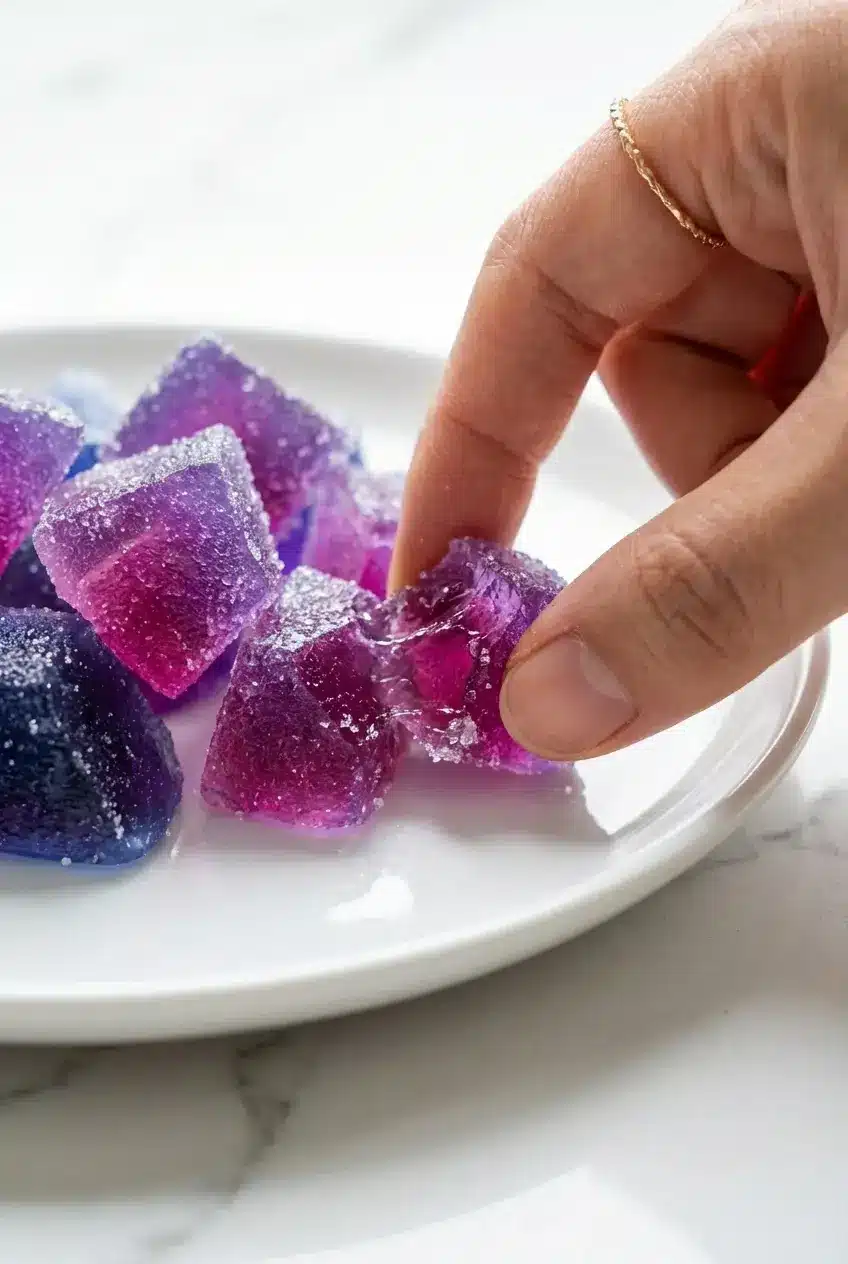
Kohakutou is basically a lesson in sugar physics, you need enough dissolved sugar to form a crisp shell as moisture slowly leaves the candy. In this recipe, the sugar-to-water ratio is intentionally high at 1.5 cups sugar to 1 cup water, and that concentration is what creates the “glass” finish instead of a sticky gumdrop.
The candy dries best around 20 to 24°C (68 to 75°F) with relative humidity ideally about 35 to 50%. Above that, the surface struggles to dry, and you can end up with tacky edges that never truly crunch.
For the deeper science, candy makers talk about supersaturation and how evaporation drives crystals to form, and the scientific ratio of sugar to water explains why you should not dilute the base if you want that signature shell.
Be cautious with flavor extracts that contain alcohol, even a small amount can stress the agar network and leave you with a weaker set that slumps during drying. If you’re using extracts, keep them measured and avoid adding extra splashes “for aroma.”
In humid or cold homes, airflow is your best friend, a small fan nearby can shave days off the cure. A dehydrator can also help, but keep it below 65 degrees Celsius so you dry gently rather than melting the surface into syrup.
Pro Tips & Troubleshooting
Pro Tips
- Tear the jelly by hand for the most authentic edible gemstones look, the rough edges catch light and sparkle like real quartz.
- Loose coverage matters, tightly sealed plastic wrap traps moisture and blocks the crust from ever forming.
- Brush fully dried edges with food-grade glitter for a geode effect, edible silver and gold look especially dramatic on purple gems.
- Aim for at least 1 inch depth in your mold so your Japanese crystal candy has a juicy center and a thick crunch layer.
Common Mistakes to Avoid
- Too much citric acid can break down agar, if your mix tastes sharply sour or sets weak, reduce the acid next time to a true micro-pinch and add it only after you pour.
- If the jelly does not set after about one hour in the fridge, scrape everything back into the saucepan, bring it back up to a boil, then simmer for about 4 minutes again to fully activate the agar before repouring.
- Under-simmering is a classic problem, agar needs sustained heat, so keep that simmering window (3 to 4 minutes) to avoid a wobbly set that tears like pudding.
- Adding large globs of coloring or extract can create wet pockets that bleed, use a toothpick and swirl lightly so streaks stay crisp.
Serving & Storage
Serving Ideas
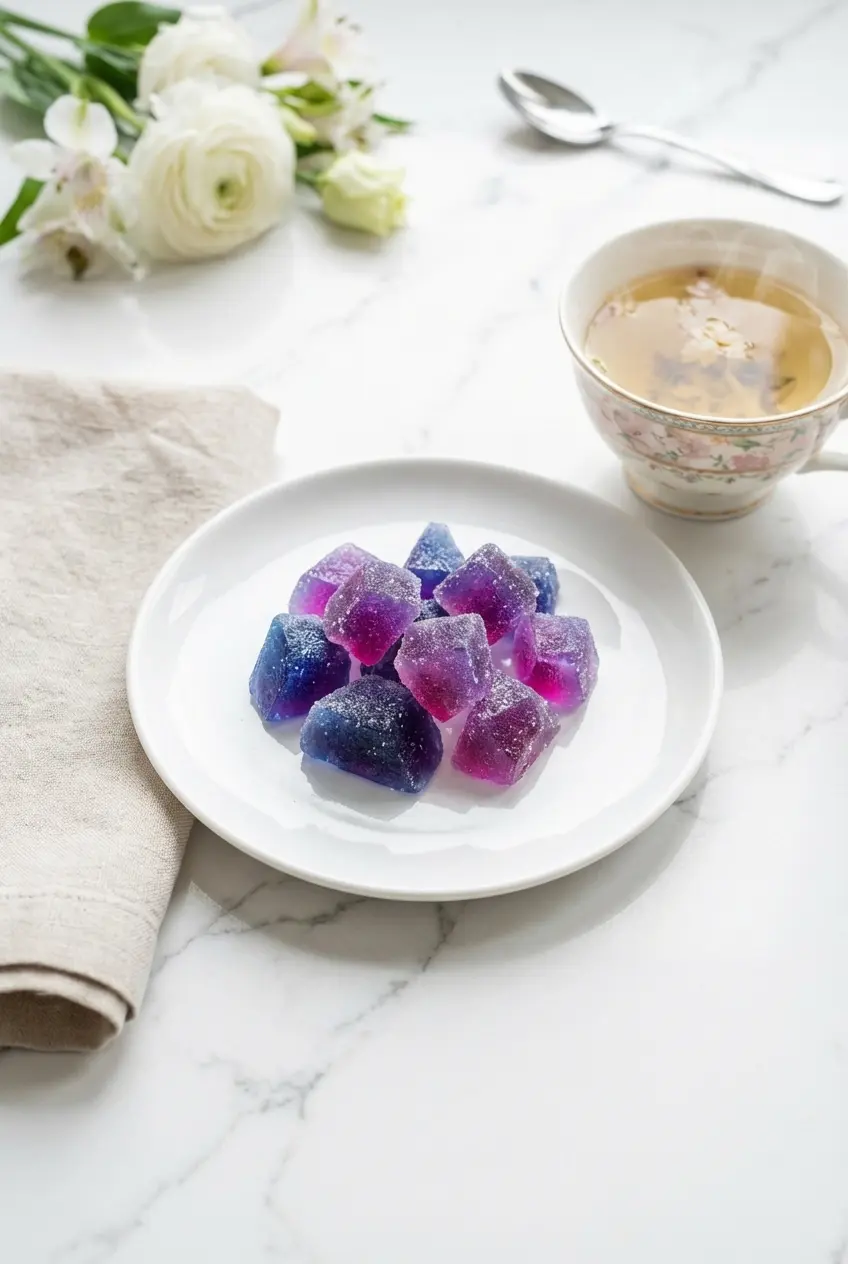
I love scattering Kohakutou over frosted cupcakes, the crunch against soft buttercream is pure pleasure. On a dessert table, these gems look gorgeous plated beside fluffy souffle pancakes, especially with fresh fruit and tea.
For gifting, clear glass jars show off the gemstone colors beautifully, and cellophane bags tied with ribbon feel like a little festival treat. If you add a touch of food-grade glitter, they look like edible jewelry.
Storage & Make-Ahead
Once the pieces are fully dried, Kohakutou does not need refrigeration, cold air can actually invite condensation when you take it out. Store in an airtight container at room temperature, and they’ll keep their crunch and soft centers for up to one month.
Stunning Japanese Jelly Candy Recipe

Ingredients
- 1 cup water
- 1 tablespoon passion fruit pulp or matcha powder
- 1.5 cups granulated sugar
- 1 tablespoon agar agar powder
- 1 teaspoon Pandan extract
Instructions
Build the Jelly Base
- If you are using the Butterfly Pea Flower twist, steep the tea in your measured water first until it is a saturated blue, then strain, and keep the amount at exactly 1 cup water so the set stays reliable.
- In a small saucepan, whisk together the water, 1 tablespoon passion fruit pulp or matcha powder, 1 tablespoon agar agar powder, and 1.5 cups granulated sugar until you do not see dry pockets of agar. The mixture will look cloudy and a bit grainy at this stage.
Boil, Then Simmer to Activate the Agar
- Set the pan over medium-low heat and warm it patiently for about 6 minutes until it reaches a true boil. You will smell the sugar turn syrupy and see steady bubbles across the surface.
- Reduce the heat and simmer for about 4 more minutes, stirring so nothing sticks. Watch for the moment the syrup hangs on your spoon, it should cling and sheet off slowly rather than dripping like water.
Pour, Color, Set, Shape, Then Dry
- Pour the hot mixture into a flat, heatproof container, aiming for at least 1 inch of depth so you can tear chunky, 3D crystal shapes later.
- Add a micro-pinch of citric acid now for the color shift, and stir gently with a toothpick or skewer. You will see the blue move toward violet or pink depending on how much acid touches the tea pigments.
- If you want a marbled look, let the surface sit for about 1 minute so it thickens slightly, then swirl tiny streaks of color with a toothpick, keeping it delicate so you do not create muddy puddles.
- Refrigerate the container for about one hour. The jelly should feel firm and cool, with a clean bounce when you press the center.
- Run a knife around the edges to loosen, lift the slab out, and tear it by hand into jagged, glassy pieces, pressing any small fragments onto bigger pieces to build chunky geodes.
- Lay the pieces on parchment paper at room temperature for about one week, and cover loosely with tented parchment so air can circulate. The outside should become dry and crunchy while the inside stays softly chewy.
Notes
Nutrition
Conclusion
When you bite into a finished piece, that clean ASMR snap followed by a tender jelly center feels like the whole point of wagashi, simple ingredients transformed into something enchanting. Keep the Butterfly Pea Flower infusion and the micro-pinch of citric acid in your back pocket, it’s my favorite way to make natural, jewel-toned edible gemstones.
If you enjoy playful, old-school candy projects, the same curiosity that leads you to Kohakutou often leads you to nostalgic treats like potato candy, and both are surprisingly fun to share.