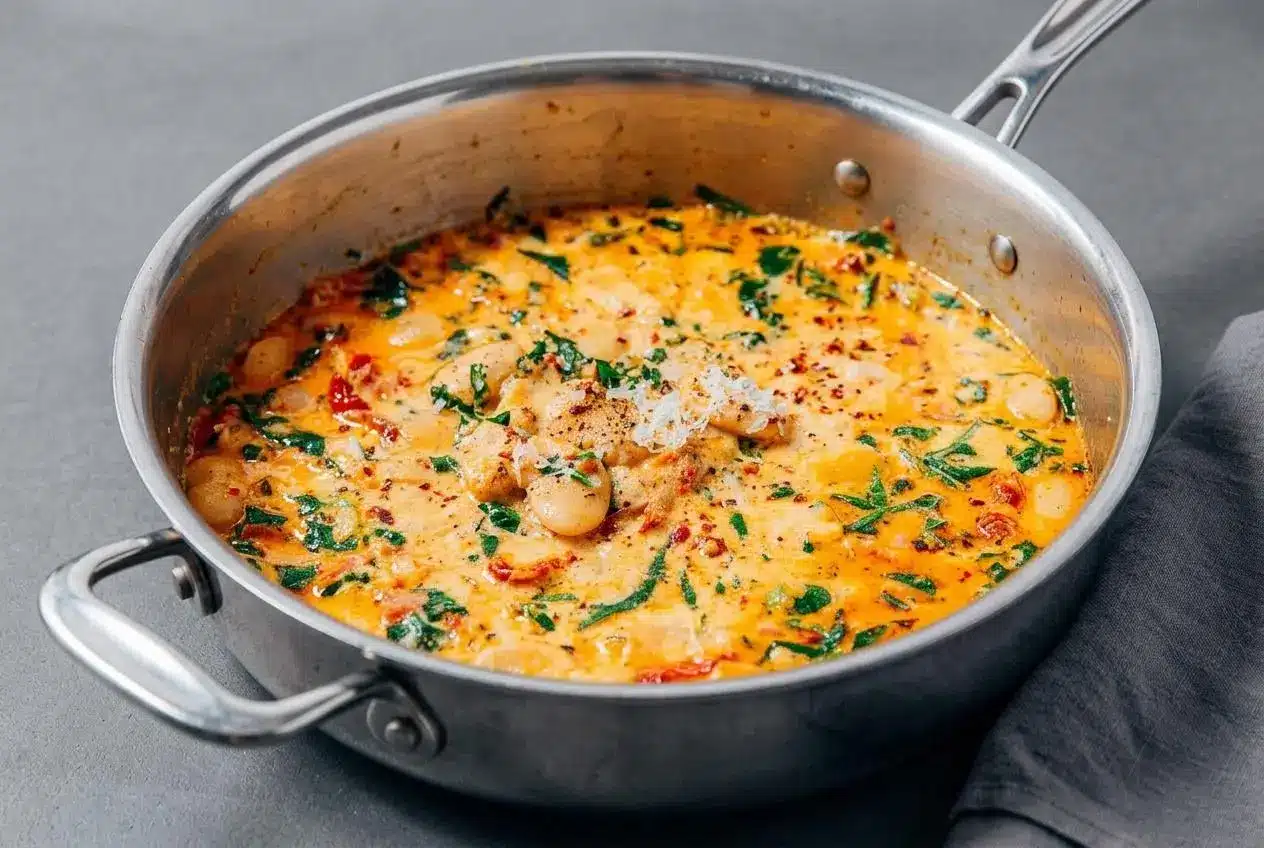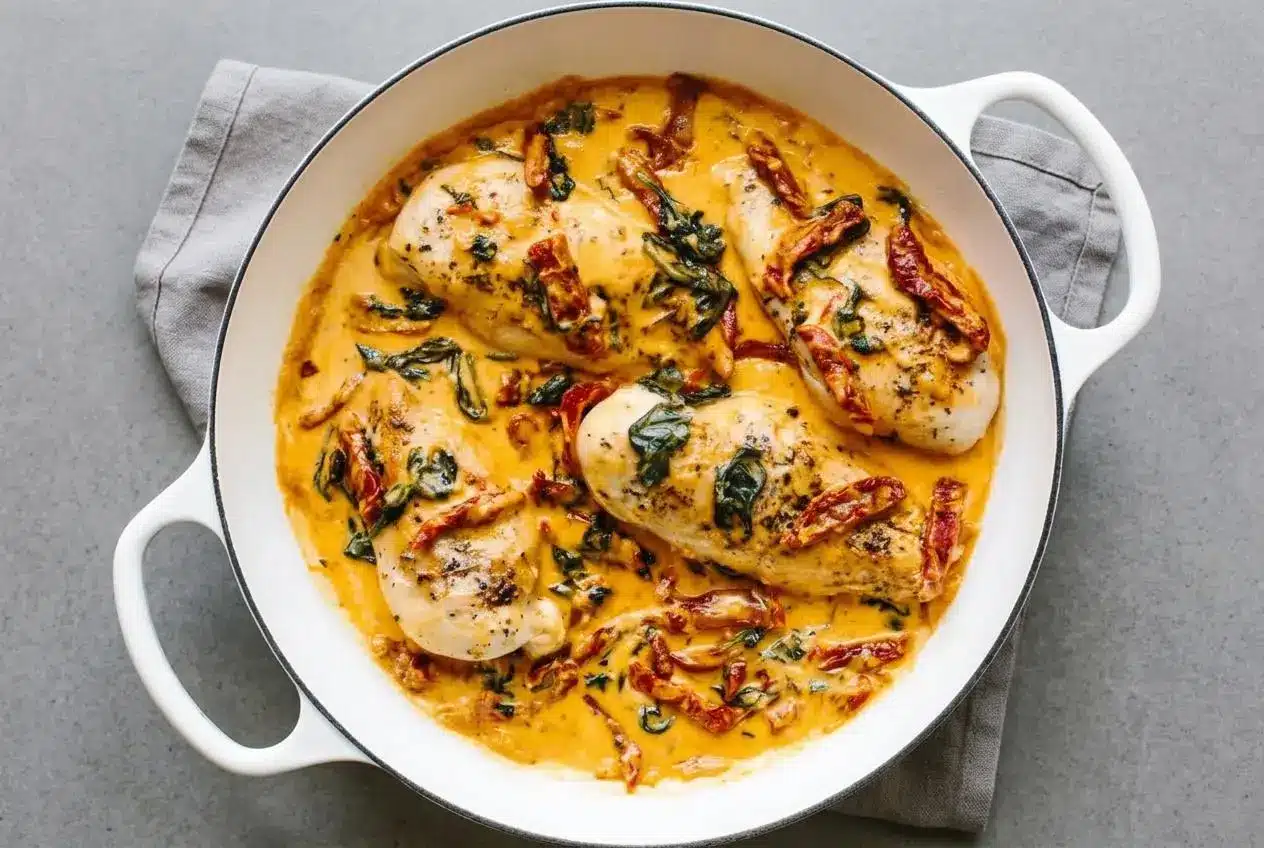
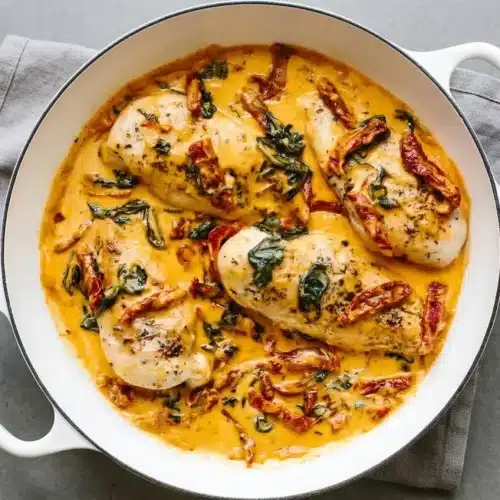
This Tuscan chicken recipe is a 35-minute skillet dinner of golden-seared chicken breasts simmered in garlic parmesan cream sauce with sun-dried tomatoes and baby spinach.
The tuscan chicken recipe brings together tender chicken cutlets, savory Italian seasoning, and a rich sauce that clings beautifully to every bite.
Garlic and sun-dried tomatoes bloom in warm olive oil before the cream goes in, filling the kitchen with a deep, savory aroma. The gentle simmer is the whole trick.
Pat the chicken dry before seasoning so it browns instead of steaming in the skillet.
Essential Ingredients for Tuscan Chicken
Every ingredient has a job here: chicken provides substance, aromatics build depth, spinach adds freshness, and cream with parmesan creates the sauce’s glossy richness.
- 4 (6-ounce) boneless skinless chicken breasts
- 1 teaspoon Italian seasoning (or a mix of individual spices such as oregano, thyme, basil, and rosemary)
- 1 teaspoon kosher salt
- ½ teaspoon freshly ground black pepper
- 3 tablespoons extra virgin olive oil
- 4 garlic cloves (minced)
- ¼ cup finely chopped yellow onion
- ½ cup sun-dried tomatoes (thinly sliced)
- 2 cups baby spinach
- 1 ½ cups heavy cream
- ¼ cup freshly grated parmesan
Italian seasoning gives the chicken an herby backbone, while yellow onion softens into the pan juices and rounds out the garlic. Heavy cream makes a stable, velvety base, and baby spinach brings a welcome fresh contrast to the savory sauce.
I like to blot oil-packed sun-dried tomatoes with a paper towel before slicing so their concentrated flavor comes through without making the sauce overly oily.
Choosing Chicken Breasts and Cutting Cutlets
Look for breasts that are close in thickness, or slice thicker pieces horizontally into cutlets. You can also gently pound them to about ½ inch thick between sheets of parchment. Even cutlets cook quickly across the whole surface, so the edges do not dry out while the center finishes.
A wide skillet works best because the chicken needs breathing room. If the pan is crowded, moisture builds up and the chicken steams rather than developing the browned crust that adds flavor to the sauce.
Sun-Dried Tomatoes vs Fresh Cherry Tomatoes
Sun-dried tomatoes are the signature choice for a bold sweet-tart flavor that holds its own against cream and parmesan. Oil-packed tomatoes tend to be softer and more flavorful, while dry-packed tomatoes are firmer and may need soaking before use.
Fresh cherry tomatoes create a lighter, juicier result, but they do not offer the same concentrated flavor. If you want to add them as an optional variation, use them alongside the sun-dried tomatoes rather than replacing them completely.
Why Freshly Grated Parmesan Is Essential
Freshly grated parmesan melts gradually into warm heavy cream and helps make the sauce smooth. Pre-shredded cheese often contains anti-caking ingredients that can leave a grainy texture or cause clumps when it hits the hot skillet.
Grate the cheese finely so it disappears into the sauce with gentle stirring. Parmigiano-Reggiano has especially nutty, savory flavor, though any good-quality wedge of parmesan will work well.
How to Make Tuscan Chicken
This one-pan method moves quickly once the skillet is hot. Keep the heat moderate after the chicken comes out, because the browned bits left in the pan become the savory foundation for the cream sauce.
- Rub both sides of the chicken breasts with the Italian seasoning, kosher salt, and black pepper.
Coat the surface evenly so the herbs season the chicken rather than sitting in patches. - Warm 2 tablespoons of olive oil in a large skillet over medium heat, then cook the chicken for 3 to 4 minutes per side.
Turn the pieces when they release easily and show a deep golden-brown crust, then transfer them to a plate. - Add the remaining tablespoon of olive oil to the same skillet and cook the yellow onion for 2 to 3 minutes.
Stir until the onion softens and the browned bits begin loosening from the pan. - Stir in the sun-dried tomatoes and minced garlic, then cook for 1 minute.
The garlic should smell fragrant and mellow without taking on dark color. - Add the baby spinach and stir it through the hot pan for 1 minute.
Stop when the leaves have just wilted and still look bright green. - Pour in the heavy cream and add the freshly grated parmesan, stirring until combined, then bring the sauce to a gentle simmer.
Look for small, lazy bubbles and a smooth sauce beginning to coat the skillet. - Return the chicken and any accumulated juices to the skillet and simmer for about 5 minutes.
The chicken should be heated through and reach 165°F in the thickest section.
Searing the Chicken for Golden Crust
Wait until the olive oil looks fluid and lightly shimmering before adding the chicken. Place each piece in the skillet with space around it, then resist moving it too early. The first side needs time to form a browned surface that gives the finished dish its savory, roasted flavor.
If the chicken sticks firmly when you try to turn it, give it another moment. A properly seared cutlet usually releases when its crust has developed.
Building the Garlic and Sun-Dried Tomato Base
Once the chicken is out, the skillet holds flavorful browned bits and rendered seasoning. The onion softens first, then the garlic and sun-dried tomatoes go in briefly so they perfume the oil without scorching.
Scrape gently with a wooden spoon as the aromatics cook. Those browned bits dissolve into the cream later, which gives the sauce more depth than cream and cheese alone.
Simmering the Cream Sauce and Wilting Spinach
Keep the sauce at a low to medium-low simmer rather than a hard boil. Heavy cream should bubble gently as it thickens into a glossy coating sauce, not churn aggressively around the edges.
Add parmesan gradually while stirring so it melts smoothly. Return the chicken only after the sauce looks unified, then check that the thickest part reaches 165°F. Following safe handling, cooking, and chilling practices for poultry helps reduce food safety risks.
Pro Tips for Foolproof Cream Sauce and Tender Chicken
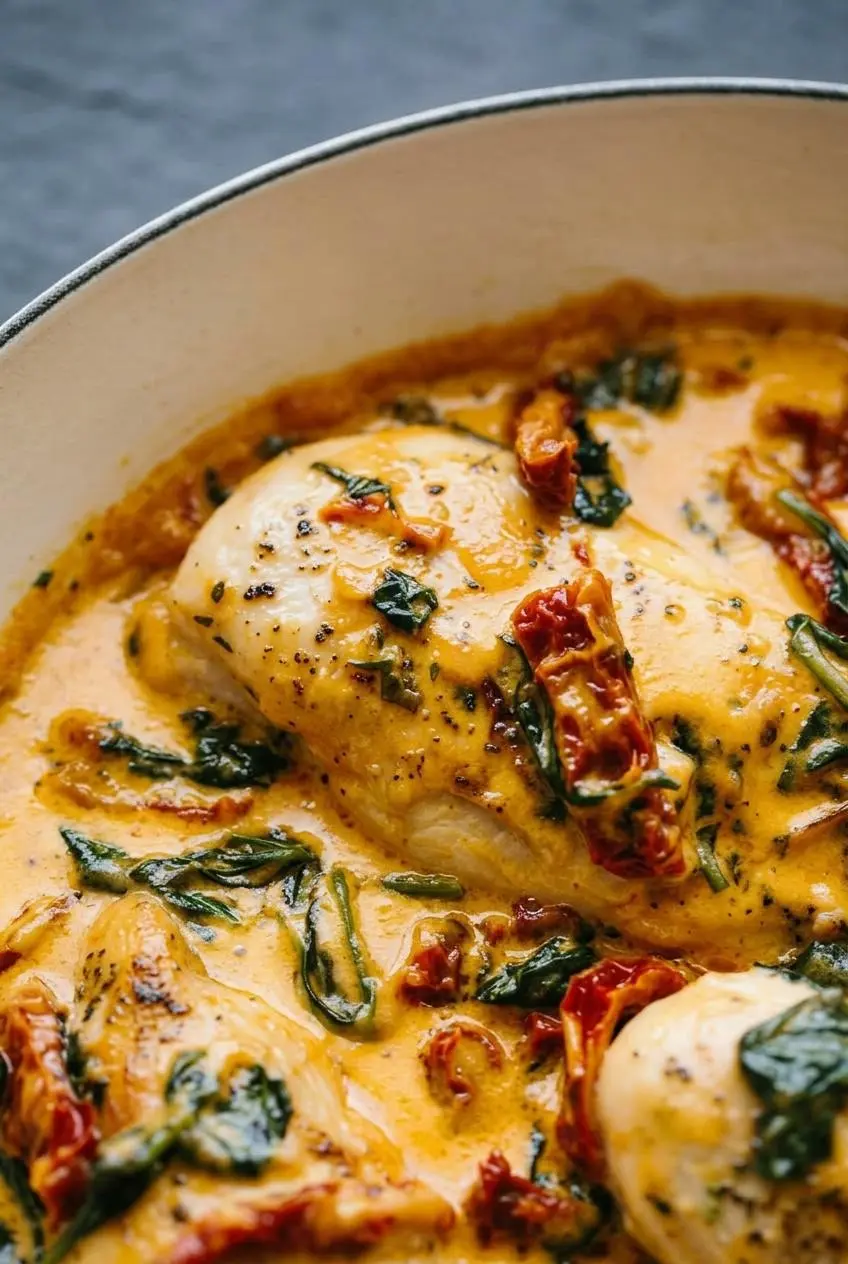
A creamy skillet sauce is forgiving when you watch the heat and respond early to texture changes. These small adjustments prevent the most common problems before dinner turns into a rescue mission.
- Grainy or separated sauce: High heat can make the dairy fat split from the liquid. Lower the heat immediately and stir gently until the bubbling calms down.
- Broken sauce: Add a gentle splash of warm chicken broth and stir slowly over low heat. This can help bring the sauce back together without shocking it with cold liquid.
- Cheese clumps: Use finely grated parmesan and add it gradually. Pre-shredded cheese is more likely to create a rough texture.
- Thin sauce: Let it simmer gently without a lid until it lightly coats the back of a spoon. Avoid raising the heat to speed it up.
- Dry chicken: Start with evenly sized cutlets and remove them after the initial sear. They finish gently in the sauce instead of overcooking in a dry skillet.
- Pale chicken: Do not crowd the pan. Cook in batches if needed, keeping the sear rather than settling for steamed chicken.
For another dinner that uses the same calm, low-heat approach to creamy pan sauces, try this creamy herb chicken.
Storage and Gentle Reheating
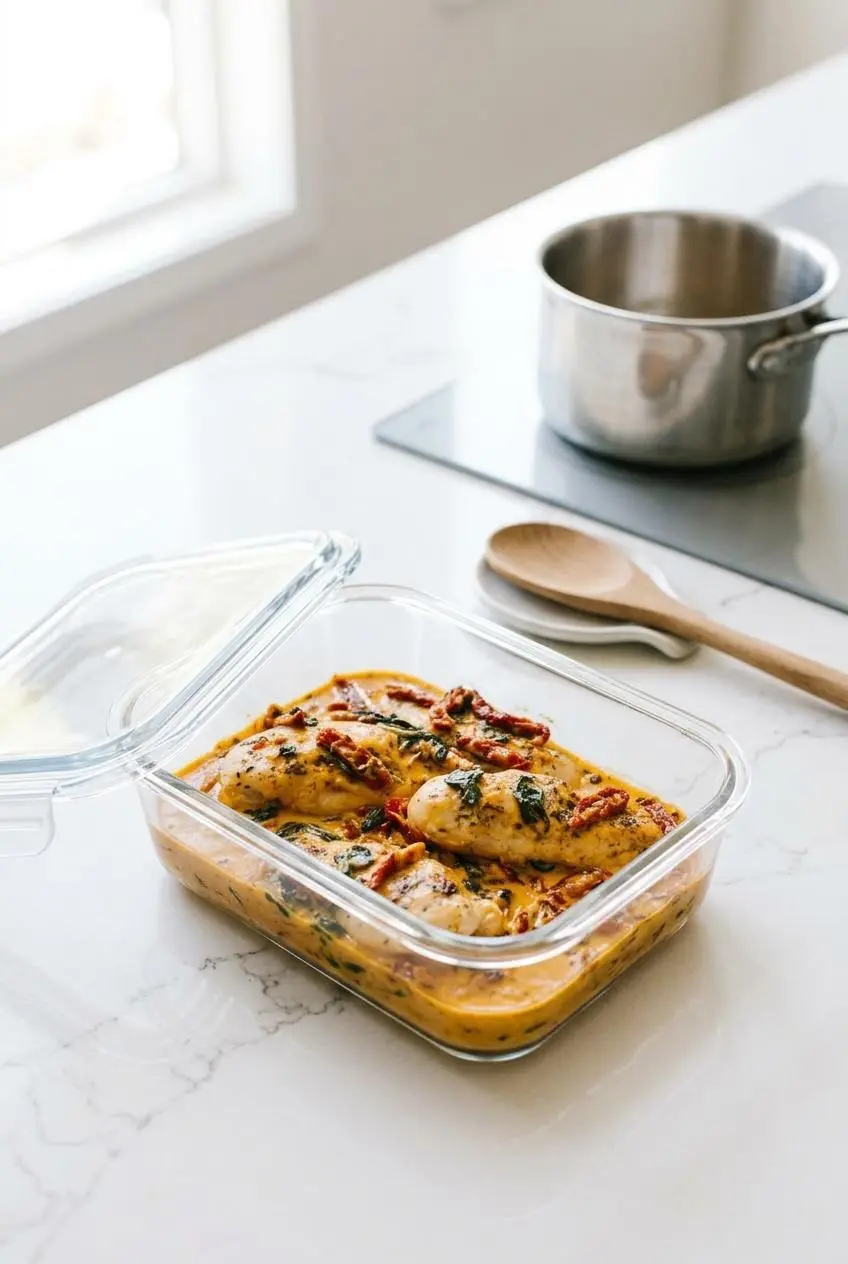
Cool leftovers promptly, transfer them to an airtight container, and keep them chilled. Cream sauces can thicken as they sit, so reheat only the portion you plan to eat instead of repeatedly warming the whole batch.
Warm the chicken and sauce in a covered skillet over low heat, stirring occasionally. Add a small splash of heavy cream or broth if the sauce looks too thick, and stop heating once it is warmed through. High heat can cause the sauce to separate.
If the spinach has softened considerably after storage, the flavor will still be savory, though the sauce may be less vibrant than when freshly made. Gentle reheating gives it the best chance of staying smooth.
What to Serve With Creamy Tuscan Chicken
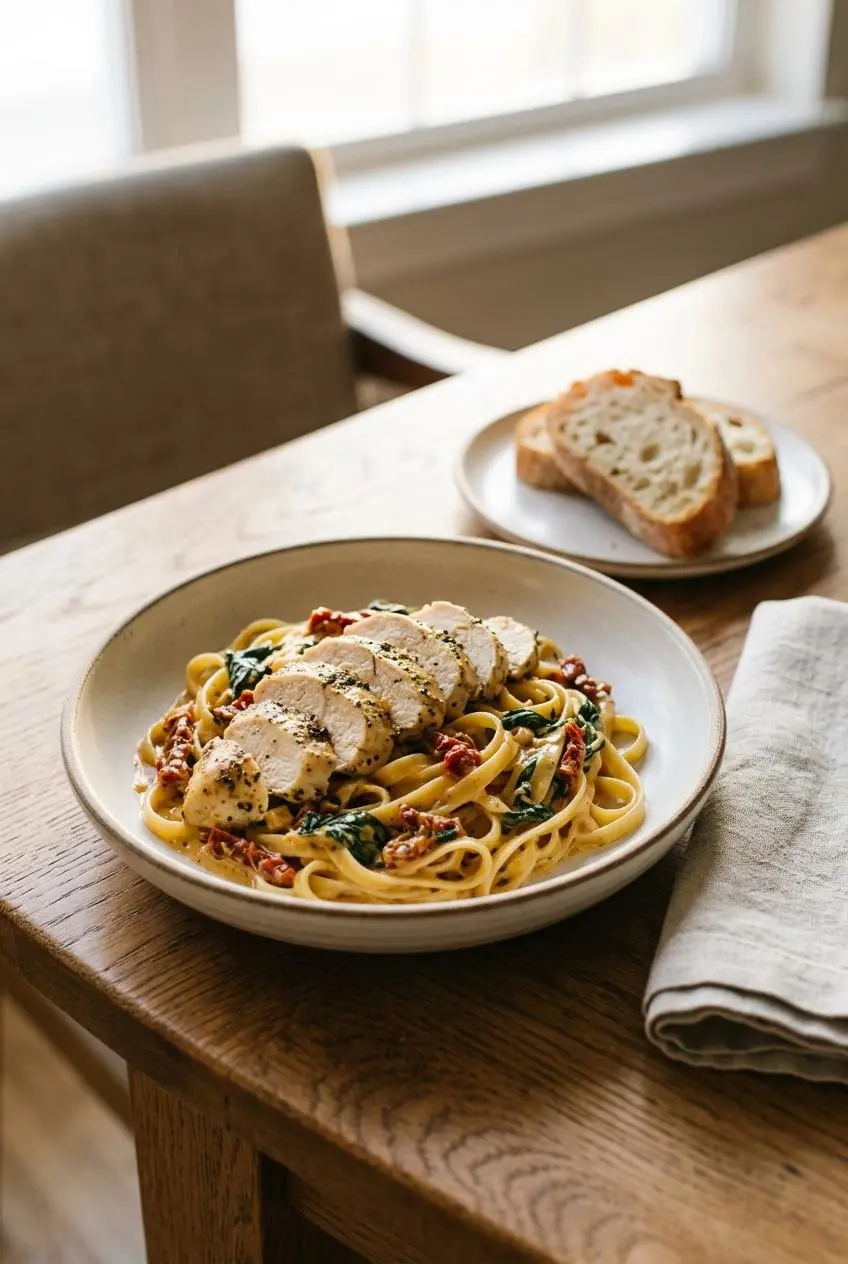
The rich garlic parmesan sauce needs something ready to catch every spoonful. Choose a base that suits the meal you want, from cozy pasta night to a lower-carb plate.
- Fettuccine, pappardelle, or penne: Toss cooked pasta with a spoonful of sauce first, then arrange the chicken on top so every bite gets some cream sauce.
- Crusty Italian bread: Serve warm bread alongside the skillet for dipping into the garlic and sun-dried tomato sauce.
- Zucchini noodles: A light, low-carb option that works best when briefly warmed just before serving.
- Cauliflower rice: Its mild flavor lets the parmesan sauce take center stage without adding more richness.
- Steamed garlic broccoli: The crisp-tender florets add color and a welcome vegetal bite against the creamy chicken.
- Arugula salad: Dress it with lemon vinaigrette for a peppery, bright side that balances the sauce.
If you want a bright pasta dinner for another night, lemon chicken pasta offers a zesty contrast to this richer skillet meal.
Tuscan Chicken Variations and Dietary Swaps
Keep the main skillet method intact, then make one optional change at a time so the sauce and chicken remain easy to manage. A little lemon zest and a pinch of crushed red pepper flakes stirred in before the final simmer can brighten the rich sauce with citrus and gentle heat.
For a fresh tomato accent, add halved cherry tomatoes alongside the sun-dried tomatoes. They soften into the sauce and bring a juicy pop without taking away the deeper tomato flavor.
Dairy-Free Tuscan Chicken
For a dairy-free version, use full-fat canned coconut milk or cashew cream in place of the heavy cream, then use nutritional yeast instead of parmesan. The sauce will still feel velvety, though coconut milk can add a subtle sweetness and coconut aroma.
Keep the heat low and stir steadily while the sauce thickens. Cashew cream generally gives the most neutral flavor, while coconut milk makes a richer but slightly different version of the dish.
Juicy Chicken Thighs Variation
Boneless skinless chicken thighs are a flavorful substitute for chicken breasts and stay especially tender in the cream sauce. Sear them for 5 to 6 minutes per side before finishing them in the skillet sauce.
Thighs may need a little more attention because their thickness can vary. Check the thickest part with an instant-read thermometer and cook until it reaches 165°F.
For a hands-off version with a different cooking approach, try crockpot Tuscan chicken.
Conclusion
This 35-minute skillet dinner turns chicken, spinach, sun-dried tomatoes, and parmesan into a rich meal that feels right at home over pasta, vegetables, or warm bread.
Keep the chicken cutlets even, let the sauce bubble gently, and grate the parmesan fresh for the smoothest finish. Dinner will smell wonderful long before it reaches the table.
Frequently Asked Questions
What Is the Difference Between Tuscan Chicken and Marry Me Chicken?
Both dishes feature chicken in a creamy sun-dried tomato sauce, but Tuscan chicken usually centers garlic and baby spinach. Marry Me chicken often leans more heavily on herbs such as oregano and thyme, with red pepper flakes commonly included. The spinach gives Tuscan chicken its signature green, savory character.
How Do I Keep the Heavy Cream Sauce From Curdling?
Keep the skillet at low to medium-low heat once the cream goes in. Use full-fat heavy cream, avoid a rapid boil, and stir freshly grated parmesan in gradually. If the sauce starts looking oily or grainy, lower the heat and slowly stir in a splash of warm broth.
Can I Use Chicken Thighs Instead of Chicken Breasts?
Yes. Boneless skinless chicken thighs make a flavorful, tender substitute. Sear them for 5 to 6 minutes per side, then let them finish in the cream sauce until the thickest portion reaches 165°F.
How Do I Store and Reheat Leftover Tuscan Chicken?
Transfer cooled leftovers to an airtight container and keep them chilled. Reheat gently in a skillet over low heat with a small splash of broth or cream to loosen the sauce. Avoid high heat, which can make the dairy sauce separate.
Tuscan Chicken Recipe

Equipment
- Le Creuset Braiser
Ingredients
- 4 (6-ounce) boneless skinless chicken breasts
- 1 teaspoon Italian seasoning or a mix of individual spices such as oregano, thyme, basil, and rosemary
- 1 teaspoon kosher salt
- 1/2 teaspoon freshly ground black pepper
- 3 tablespoons extra virgin olive oil
- 4 cloves garlic minced
- 1/4 cup yellow onion finely chopped
- 1/2 cup sun-dried tomatoes thinly sliced
- 2 cups baby spinach
- 1 1/2 cups heavy cream
- 1/4 cup freshly grated parmesan
Instructions
- Rub both sides of the chicken breasts with the Italian seasoning, kosher salt, and black pepper. Coat the surface evenly so the herbs season the chicken rather than sitting in patches.
- Warm 2 tablespoons of olive oil in a large skillet over medium heat, then cook the chicken for 3 to 4 minutes per side. Turn the pieces when they release easily and show a deep golden-brown crust, then transfer them to a plate.
- Add the remaining tablespoon of olive oil to the same skillet and cook the yellow onion for 2 to 3 minutes. Stir until the onion softens and the browned bits begin loosening from the pan.
- Stir in the sun-dried tomatoes and minced garlic, then cook for 1 minute. The garlic should smell fragrant and mellow without taking on dark color.
- Add the baby spinach and stir it through the hot pan for 1 minute. Stop when the leaves have just wilted and still look bright green.
- Pour in the heavy cream and add the freshly grated parmesan, stirring until combined, then bring the sauce to a gentle simmer. Look for small, lazy bubbles and a smooth sauce beginning to coat the skillet.
- Return the chicken and any accumulated juices to the skillet and simmer for about 5 minutes. The chicken should be heated through and reach 165°F in the thickest section.