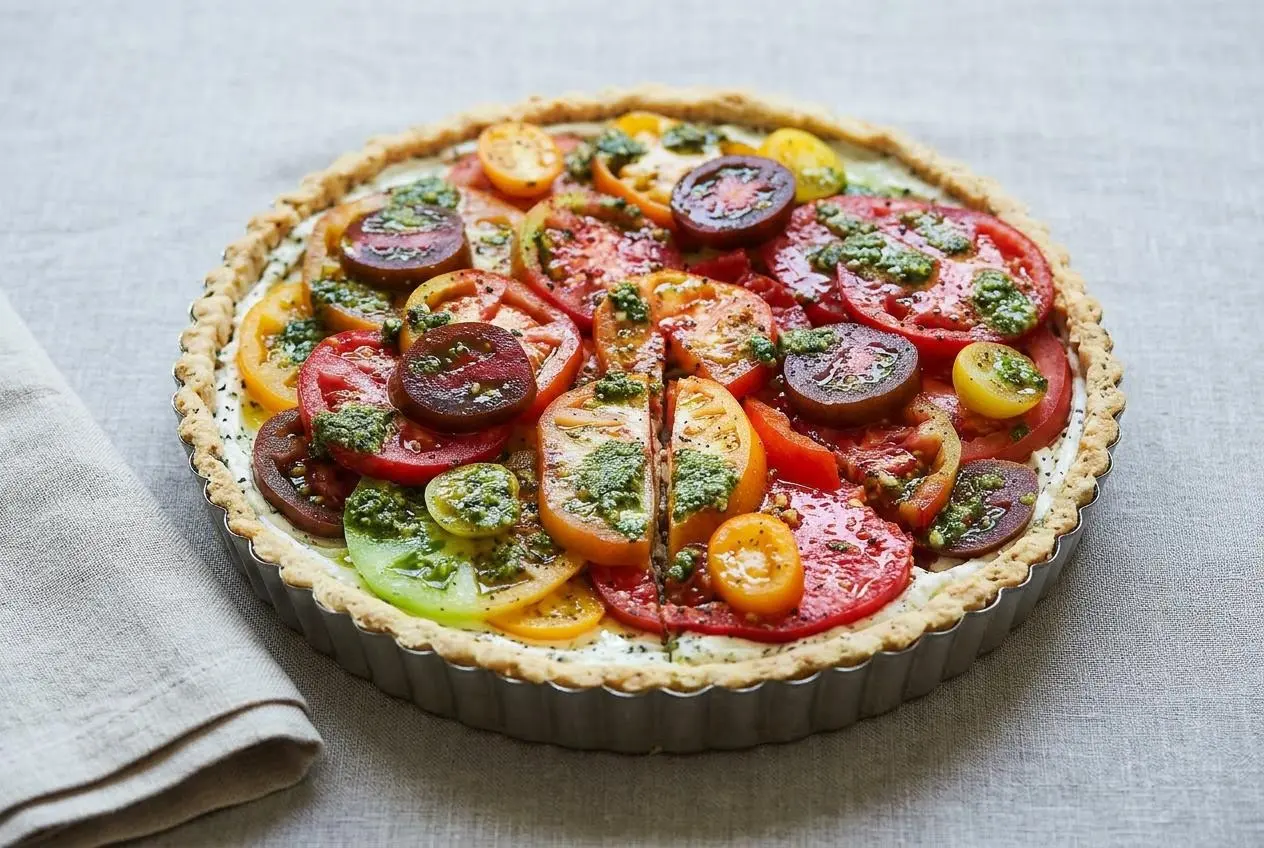
This Tomato Tart Recipe gives you a flaky crust, creamy goat cheese filling, and juicy tomatoes without the dreaded soggy bottom. It uses a classic herbed crust, plus a few smart tricks that keep the tart crisp and beautifully sliceable.
A tomato tart is one of those dishes that looks a little fancy but feels easygoing on the table. This version leans savory, buttery, and herby, with pesto and goat cheese doing a lot of delicious heavy lifting.
You’ll like it because it covers the part that trips up most home cooks: too much tomato moisture. And yes, there’s room for puff pastry and other easy swaps. Crisp crust ahead.
Slice and salt the tomatoes while the dough chills so both are ready at the same time.
Why This Tomato Tart Recipe Works
This tart works because every layer has a job. The herbed crust brings structure and flavor, the goat cheese filling adds richness, and the tomatoes stay bright instead of turning the whole thing watery.
A lot of home cooks ask the same question here: how do you keep a tomato tart from getting soggy? The answer is a mix of technique, not one magic trick. You blind-bake the crust, drain the tomatoes, and add a moisture barrier before the filling goes in. That combination makes a real difference.
It’s flexible, too. You can stick with the classic all-butter crust, go French-style with Dijon and Gruyère in a variation, or take the easy route with puff pastry when time is tight. Honestly, it’s a very forgiving tart once you understand the moisture game.
Ingredients for a Perfect Tomato Tart
Each ingredient adds something useful here, from flaky structure and herbal aroma to creamy richness, bright acidity, and the fresh color of ripe tomatoes.
For the herbed crust
- 1 1/2 cups all-purpose flour
- 1 tablespoon finely chopped rosemary leaves
- 1 tablespoon thyme leaves
- 3/4 teaspoon kosher salt
- 12 tablespoons (6 oz) unsalted butter, cold, and cut into 1/2-inch (12-mm) cubes
- 4 to 6 tablespoons ice water
For the tomato tart filling
- 1 cup goat cheese, or a combo of goat and Boursin cheeses
- 1/2 cup heavy cream
- Freshly ground black pepper
- 3 tablespoons store-bought or homemade pesto
For the pesto vinaigrette
- 1/4 cup store-bought or homemade pesto
- 2 tablespoons white wine vinegar
- 1 tablespoon olive oil
For the tomatoes
- 1 pound heirloom tomatoes, any color, large and small, sliced about 1/4 inch (6 mm) thick
I always keep the butter and water as cold as possible, because warmer dough gets sticky fast and loses that lovely flaky texture.
How to Make the Best Tomato Tart
Make the herbed crust
- Pulse the flour, rosemary, thyme, and kosher salt in a food processor until the herbs are evenly distributed.
The mixture should look uniform and smell lightly woodsy from the fresh herbs. - Add the cold butter and pulse in short bursts until the texture looks sandy with pea-size butter pieces throughout.
Stop before it turns into a paste, because those small butter bits create flakiness. - Transfer the mixture to a large bowl and drizzle in 4 tablespoons ice water.
The dough will look dry at first, which is exactly right. - Mix gently with a fork until a shaggy dough starts to form, adding more water 1 tablespoon at a time only if needed.
It should hold together when squeezed but still look rough rather than smooth or wet. - Shape the dough into a disc, wrap it well, and chill for at least 1 hour.
Cold dough is easier to roll and helps the crust keep its shape in the oven. - Heat the oven to 400°F (204°C) with a rack in the middle position.
Give the oven time to fully preheat so the crust gets an immediate blast of heat. - Roll the dough on a lightly floured surface into a 13-inch (33-cm) circle, then fit it into an 11-inch (28-cm) tart pan and trim the excess.
Press it snugly into the corners so the shell bakes evenly and doesn’t slump. - Prick the bottom with a fork, line the shell with aluminum foil, and fill it with pie weights or beans.
The weights should reach the edges to help prevent shrinking. - Bake for 20 minutes, then remove the foil and weights and bake 5 to 10 minutes more until pale golden.
The crust should look dry on the bottom with edges just starting to color.
Make the tomato tart filling
- Stir the goat cheese and heavy cream together in a medium bowl until smooth.
The mixture should loosen into a spreadable filling without lumps. - Season with freshly ground black pepper and stir in the pesto.
The filling should look creamy and lightly green-flecked.
Make the pesto vinaigrette
- Combine the pesto, white wine vinegar, and olive oil in a medium bowl and stir until smooth.
The vinaigrette should look loose enough to drizzle easily.
Assemble the tomato tart
- Arrange the sliced tomatoes on towels, sprinkle them lightly with salt, and let them drain while the crust cools.
You’ll see beads of moisture collect on the surface, which is exactly what you want. - Sprinkle a thin layer of finely grated Parmesan cheese and plain breadcrumbs over the bottom of the cooled crust.
This moisture barrier helps protect the base from juicy tomatoes. - Spread the goat cheese and pesto filling evenly over the crust.
Keep the layer smooth so the tomatoes sit flat and bake evenly. - Arrange the tomatoes on top in slightly overlapping layers.
The tart should look full but not piled so high that liquid pools as it bakes. - Bake the assembled tart until the tomatoes soften and the filling is warmed through.
The tomatoes should look slightly slumped and a little jammy around the edges. - Drizzle with the pesto vinaigrette just before serving and finish with salt and pepper.
The top should look glossy, fresh, and ready to slice.
The Secret to a Perfectly Crisp Tomato Tart
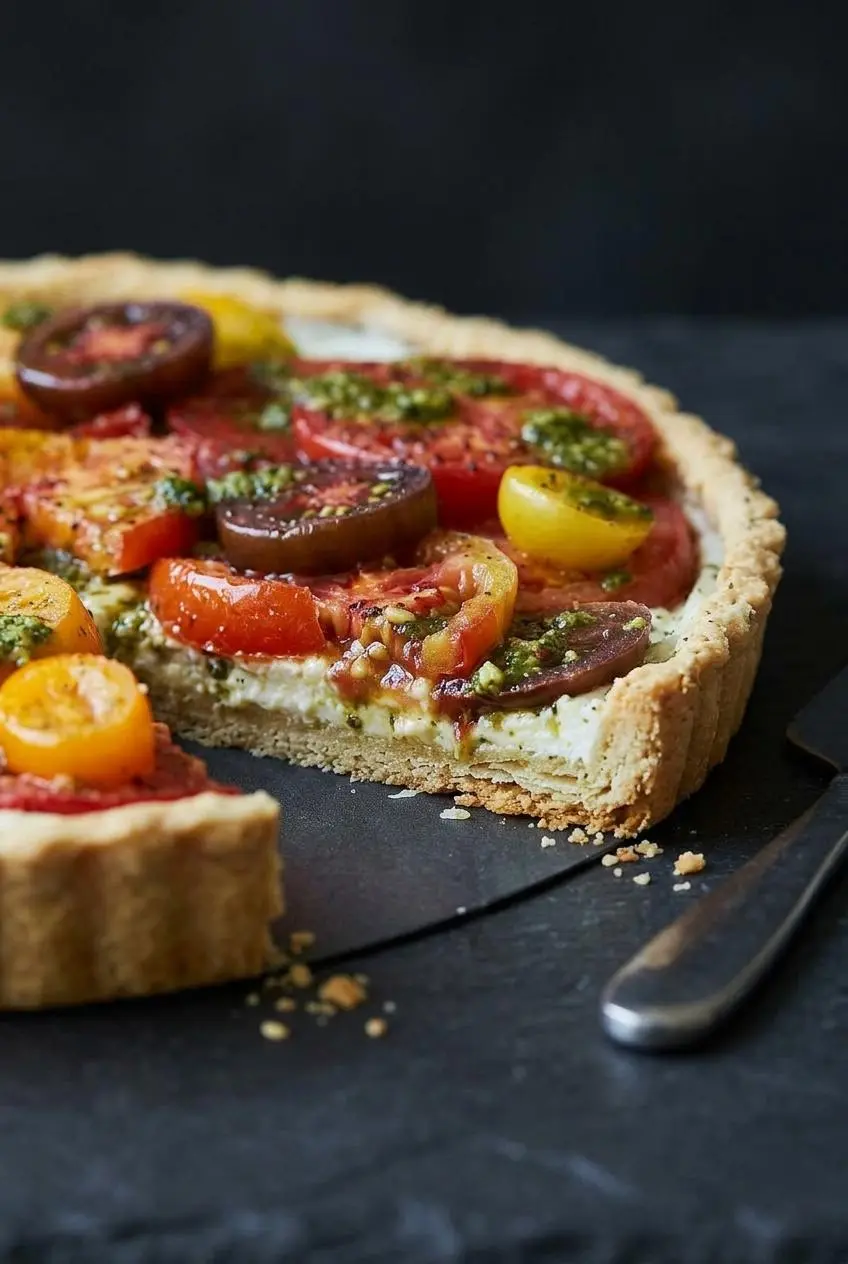
If you want a crisp tomato tart, this is the part that matters most. Tomatoes are naturally full of water, and a tart shell is basically waiting to absorb it. The good news is that you can stay ahead of that with a few smart steps.
First, salt and drain the sliced tomatoes before they ever touch the crust. Salt draws moisture to the surface, which means less liquid ends up trapped inside the tart. Pat them dry before layering them in. If you skip this, the filling may still taste great, but the base is much more likely to soften.
Second, blind-bake the crust until it looks dry and lightly golden, not merely set. A pale underbaked shell won’t stand up to creamy filling and juicy tomatoes. You want the bottom to feel sandy and firm after that first bake, with the edges just starting to color.
Third, add a barrier layer. Some cooks use Dijon mustard, which gives a sharp French-style edge and helps separate the tomatoes from the crust. I prefer a light layer of Parmesan and breadcrumbs for this tart because it adds savory depth and quietly absorbs extra juices without taking over the flavor.
And finally, make sure the oven is fully preheated before the tart goes in. That first strong burst of heat helps the crust stay crisp instead of steaming. A metal tart pan also gives you a little extra help here, since it transfers heat faster than ceramic.
Choosing Your Crust: A Quick Guide
The best crust depends on how you like to cook. Some days you want the full buttery tart-pan experience, and some days you want dinner to happen with minimal rolling and zero drama.
| Crust Option | Prep Time | Difficulty | Final Texture |
|---|---|---|---|
| Classic all-butter crust | Longest | Moderate | Sturdy, flaky, rich |
| Puff pastry crust | Fastest | Easy | Light, airy, very flaky |
| No-roll press-in crust | Quick | Beginner-friendly | Crisp, crumbly, slightly crunchy |
Option 1: The Classic All-Butter Crust
This is the traditional choice, and it gives the best balance of flavor and strength. It holds creamy filling well, slices neatly, and tastes deeply buttery with the herbs baked right in.
It does ask for chilling and rolling, so it’s a little more hands-on. But if you want that classic savory tart feel, this is the one. Trust me, the flavor payoff is real.
Option 2: The Quick & Easy Puff Pastry Crust
If you want an easy tomato tart with puff pastry, store-bought puff pastry works beautifully. Roll or unfold it onto a sheet pan, score a border, and fold the edges slightly to create a rim. Dock the center with a fork and bake it briefly before adding toppings so it doesn’t puff wildly in the middle.
The result is lighter and more delicate than the tart shell above. It’s especially good when you want a casual lunch tart rather than a structured centerpiece.
Option 3: The No-Roll Press-In Crust
This is the easiest route for beginners or for anyone who doesn’t feel like wrestling with a rolling pin. A press-in crust made with flour, cornmeal, butter, and Parmesan gets packed directly into the pan and baked until firm.
It won’t be as flaky as pâte brisée, but it gives you a crisp, savory base with great crunch. For a more advanced twist, some bakers also use a sourdough discard crust, which adds tang and a little extra chew.
Ingredient Notes and Substitutions
The tart is simple to adjust, but the swaps do change texture and flavor. That’s especially true with tomatoes and cheese, so it helps to choose on purpose rather than just using whatever lands on the counter.
Choosing the Best Tomatoes
Heirloom tomatoes give this tart the prettiest look and the most layered flavor. They’re sweet, tangy, and colorful, but they can be juicy, so draining them well really matters.
Roma tomatoes are meatier and hold less water, which makes them a smart choice if crispness is your top priority. Cherry or grape tomatoes are sweeter and a little tidier to arrange when halved, especially for a more rustic look.
If you want to lean into that sweeter tomato flavor, marinated cherry tomatoes can inspire a nice variation outside the main recipe. For this tart itself, just keep any small tomatoes well drained before they go on top.
The Best Cheeses for a Tomato Tart
Goat cheese gives the filling its tangy, creamy backbone. It stays soft and spreadable, which works well against the flaky crust and juicy tomatoes.
If you want a milder profile, Boursin makes the filling softer and more herb-forward. Gruyère or Comté turn the tart nuttier and more French in style, especially with caramelized onions. Mozzarella gives broad, mellow coverage, but it can release more moisture, so use it with a lighter hand. Parmesan works best as a supporting player, especially in the barrier layer.
Fresh Herbs and Flavorings
Rosemary and thyme give the crust a savory backbone that makes the whole tart smell amazing as it bakes. Fresh herbs are brighter, while dried herbs taste a little more concentrated and earthy.
Oregano and marjoram also work well if you want a softer Mediterranean note. Dijon mustard is another classic flavoring for tomato tart. Spread thinly under the filling, it adds tang and helps create a buffer between the crust and the tomatoes.
Troubleshooting Common Tart Problems
Most tart problems come down to moisture, temperature, or dough handling. Here’s the quick fix chart that saves a lot of frustration.
| Problem | Likely Cause | How to Fix It |
|---|---|---|
| Soggy bottom | Tomatoes were too wet, or the crust was underbaked | Salt and drain the tomatoes, blind-bake until the shell is dry and lightly golden, and use the Parmesan-breadcrumb barrier |
| Shrunken crust | Dough was too warm or not weighed down well enough | Chill the dough thoroughly and fill the lined shell fully with pie weights or beans during blind baking |
| Watery filling | Too much tomato moisture collected during baking | Pat the tomatoes dry after salting and avoid piling them too thickly in the shell |
| Burnt cheese on top | The tart sat too close to the heat or baked too long after assembly | Bake on the middle rack and pull the tart once the tomatoes soften and the top just starts to color |
Ways to Customize Your Tomato Tart
This tart is a great base for extra flavor, as long as the add-ins stay optional and don’t swamp the crust. Think in layers, and keep moisture in check.
Add a Layer of Caramelized Onions
Sweet caramelized onions or shallots tucked under the cheese filling add deep savory sweetness. This is one of the best ways to turn the tart a little more dinner-worthy.
It pairs especially well with Gruyère, giving you that classic tomato, Gruyère, and caramelized onion tart vibe. Just cook the onions down until soft and jammy before using them so they don’t add extra water.
Incorporate Savory Accents
If you like a saltier, sharper tart, try a scattering of capers, chopped Kalamata olives, or a few anchovies. The best part? You don’t need much. These accents should wake up the tomatoes, not bulldoze them.
Keep them light and add them as a finishing layer or tuck them between tomato slices. That way the tart still tastes balanced, not briny.
Finishing Touches
A little balsamic glaze after baking adds sweetness and shine. A tiny drizzle of honey also works surprisingly well, especially if your tomatoes are more tart than sweet.
Fresh basil leaves, extra black pepper, or a few thyme leaves right before serving can make the whole tart feel brighter and more finished.
Make-Ahead, Storage, and Reheating
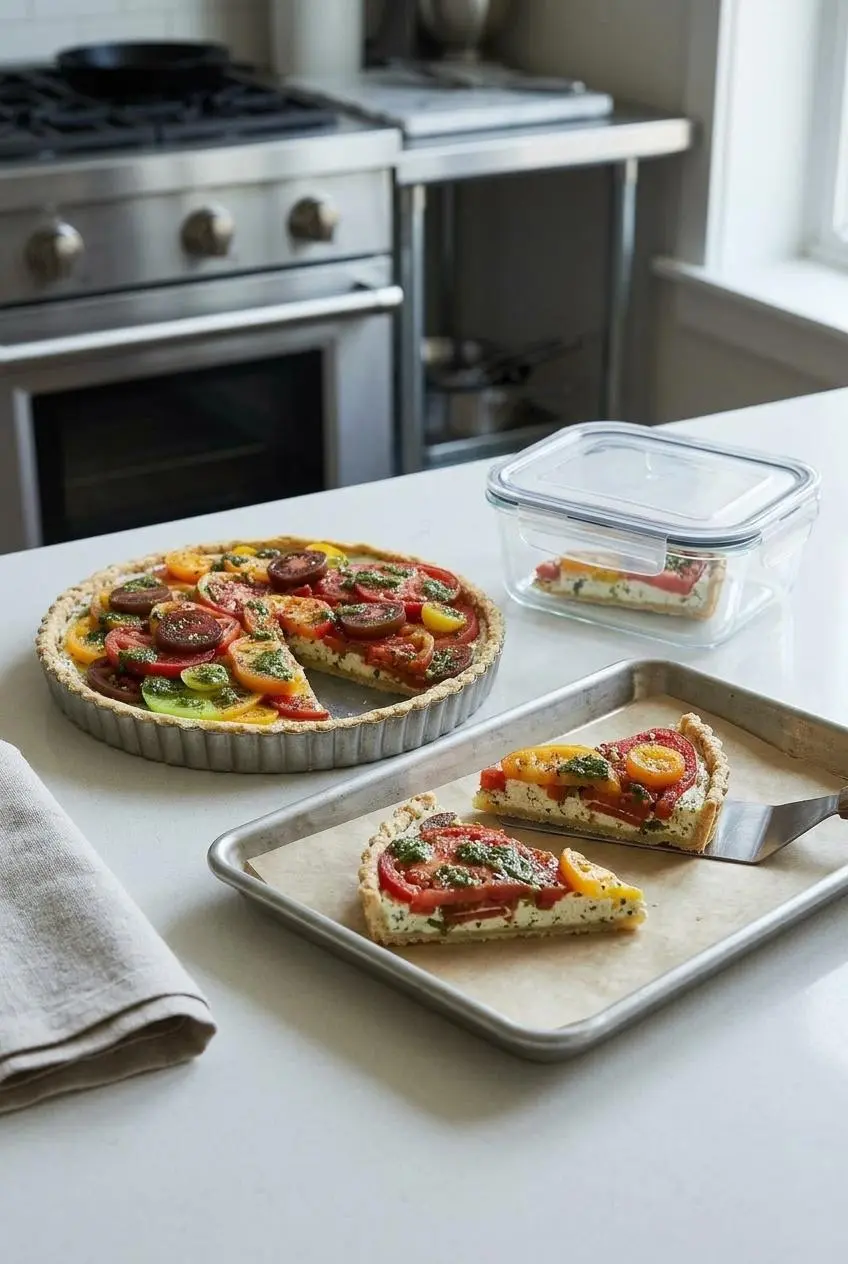
This tart is at its best the day it’s baked, but you can absolutely make parts of it ahead. Prepare the dough, the cheese filling, and the vinaigrette separately, then keep them chilled until you’re ready to assemble. You can also blind-bake the crust in advance and let it cool completely before storing it.
For leftovers, cool the tart completely, wrap it well, and refrigerate it for up to 3 days for best quality and handling, following official guidance for fresh produce and careful chilled storage.
To reheat, use the oven or air fryer so the crust has a chance to crisp again. The microwave softens the base quickly, so it’s the least satisfying option here. Warm slices just until the filling loosens and the crust perks back up.
You can freeze the tart if needed, though the tomato texture is usually better when fresh. If you do freeze it, cool it first, wrap it tightly, and reheat from cold in the oven so the crust dries out a bit as it warms.
What to Serve with Tomato Tart
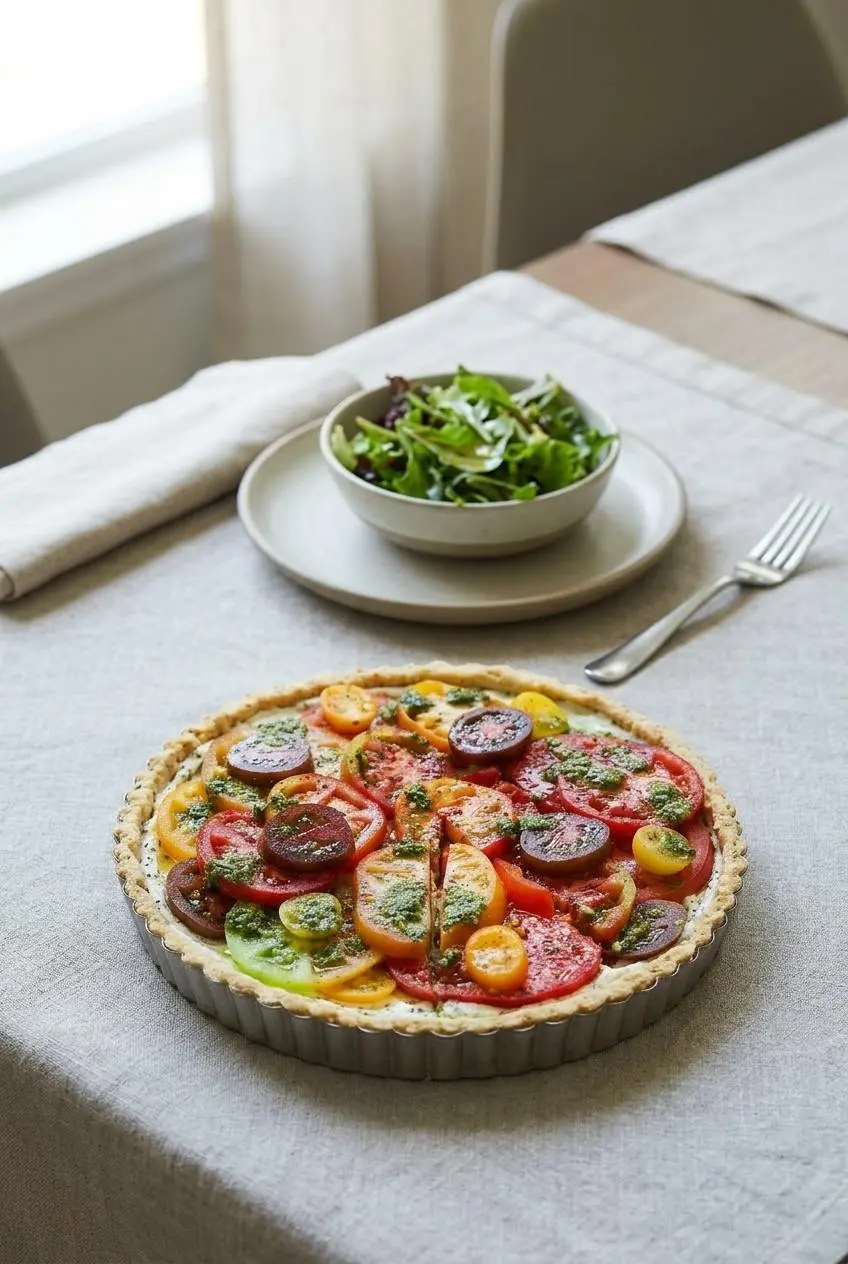
Tomato tart loves simple sides. A green salad with lemon vinaigrette is the cleanest match, because it cuts the richness without competing with the tomatoes and herbs.
For a light lunch, serve it with a bowl of classic tomato basil soup. If you want something cooler and crunchier on the side, a fresh cucumber tomato salad also fits the tart’s savory summer feel.
It also works well next to grilled chicken or fish, or all by itself for brunch. I especially like it at room temperature, when the flavors settle in and the herbs come forward.
Conclusion
This tart delivers exactly what you want: buttery crust, creamy filling, and tomatoes that taste bright instead of watery. The key is simple but important: drain the tomatoes well and blind-bake the shell until it’s truly ready.
Once you’ve made it once, it becomes the kind of savory tart you can riff on all season. Bake it, slice it, and enjoy the crisp edges.
Frequently Asked Questions (FAQ)
What is the absolute best way to prevent a soggy bottom on my tomato tart?
Use a three-part approach. Salt and drain the sliced tomatoes first, blind-bake the crust until it’s lightly golden, and add a moisture-absorbing layer such as Parmesan and breadcrumbs before the filling. Those three steps do the heavy lifting.
Can I use a regular pie plate instead of a tart pan?
Yes. A standard 9-inch pie plate works fine. The sides will slope more, and you’ll serve the tart straight from the dish instead of lifting it out of a removable ring, but the recipe still works well.
Can I make the whole tomato tart ahead of time?
You can, but the crust is at its crispest when baked the day you plan to serve it. The better move is to prepare the dough and filling ahead, keep them separate, and assemble the tart closer to serving time.
How do I keep my homemade crust from shrinking when I blind bake it?
Keep the dough very cold before it goes into the oven, and don’t skimp on the pie weights. Filling the lined shell all the way up helps support the sides while the butter melts and the crust sets.
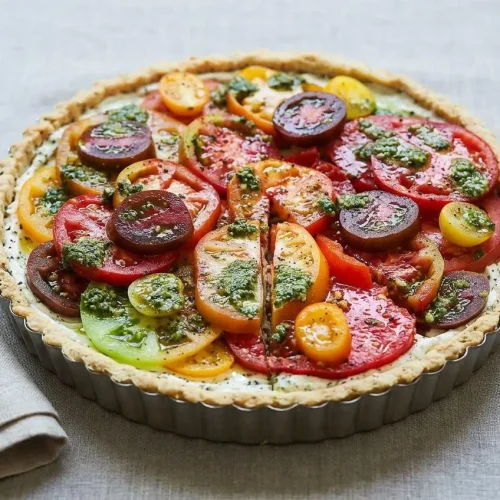
Tomato Tart Recipe

Equipment
- 11-inch removable-bottom tart pan
- Pie weights or dried beans
Ingredients
For the herbed crust
- 1 1/2 cups all-purpose flour
- 1 tablespoon finely chopped rosemary leaves
- 1 tablespoon thyme leaves
- 3/4 teaspoon kosher salt
- 12 tablespoons unsalted butter, cold, and cut into 1/2-inch (12-mm) cubes (6 oz)
- 4-6 tablespoons ice water
For the tomato tart filling
- 1 cup goat cheese, or a combo of goat and Boursin cheeses
- 1/2 cup heavy cream
- Freshly ground black pepper
- 3 tablespoons store-bought or homemade pesto
For the pesto vinaigrette
- 1/4 cup store-bought or homemade pesto
- 2 tablespoons white wine vinegar
- 1 tablespoon olive oil
For the tomatoes
- 1 pound heirloom tomatoes, any color, large and small, sliced about 1/4 inch (6 mm) thick
Instructions
Make the herbed crust
- Pulse the flour, rosemary, thyme, and kosher salt in a food processor until the herbs are evenly distributed. The mixture should look uniform and smell lightly woodsy from the fresh herbs.
- Add the cold butter and pulse in short bursts until the texture looks sandy with pea-size butter pieces throughout. Stop before it turns into a paste, because those small butter bits create flakiness.
- Transfer the mixture to a large bowl and drizzle in 4 tablespoons ice water. The dough will look dry at first, which is exactly right.
- Mix gently with a fork until a shaggy dough starts to form, adding more water 1 tablespoon at a time only if needed. It should hold together when squeezed but still look rough rather than smooth or wet.
- Shape the dough into a disc, wrap it well, and chill for at least 1 hour. Cold dough is easier to roll and helps the crust keep its shape in the oven.
- Heat the oven to 400°F (204°C) with a rack in the middle position. Give the oven time to fully preheat so the crust gets an immediate blast of heat.
- Roll the dough on a lightly floured surface into a 13-inch (33-cm) circle, then fit it into an 11-inch (28-cm) tart pan and trim the excess. Press it snugly into the corners so the shell bakes evenly and doesn’t slump.
- Prick the bottom with a fork, line the shell with aluminum foil, and fill it with pie weights or beans. The weights should reach the edges to help prevent shrinking.
- Bake for 20 minutes, then remove the foil and weights and bake 5 to 10 minutes more until pale golden. The crust should look dry on the bottom with edges just starting to color.
Make the tomato tart filling
- Stir the goat cheese and heavy cream together in a medium bowl until smooth. The mixture should loosen into a spreadable filling without lumps.
- Season with freshly ground black pepper and stir in the pesto. The filling should look creamy and lightly green-flecked.
Make the pesto vinaigrette
- Combine the pesto, white wine vinegar, and olive oil in a medium bowl and stir until smooth. The vinaigrette should look loose enough to drizzle easily.
Assemble the tomato tart
- Arrange the sliced tomatoes on towels, sprinkle them lightly with salt, and let them drain while the crust cools. You’ll see beads of moisture collect on the surface, which is exactly what you want.
- Sprinkle a thin layer of finely grated Parmesan cheese and plain breadcrumbs over the bottom of the cooled crust. This moisture barrier helps protect the base from juicy tomatoes.
- Spread the goat cheese and pesto filling evenly over the crust. Keep the layer smooth so the tomatoes sit flat and bake evenly.
- Arrange the tomatoes on top in slightly overlapping layers. The tart should look full but not piled so high that liquid pools as it bakes.
- Bake the assembled tart until the tomatoes soften and the filling is warmed through. The tomatoes should look slightly slumped and a little jammy around the edges.
- Drizzle with the pesto vinaigrette just before serving and finish with salt and pepper. The top should look glossy, fresh, and ready to slice.