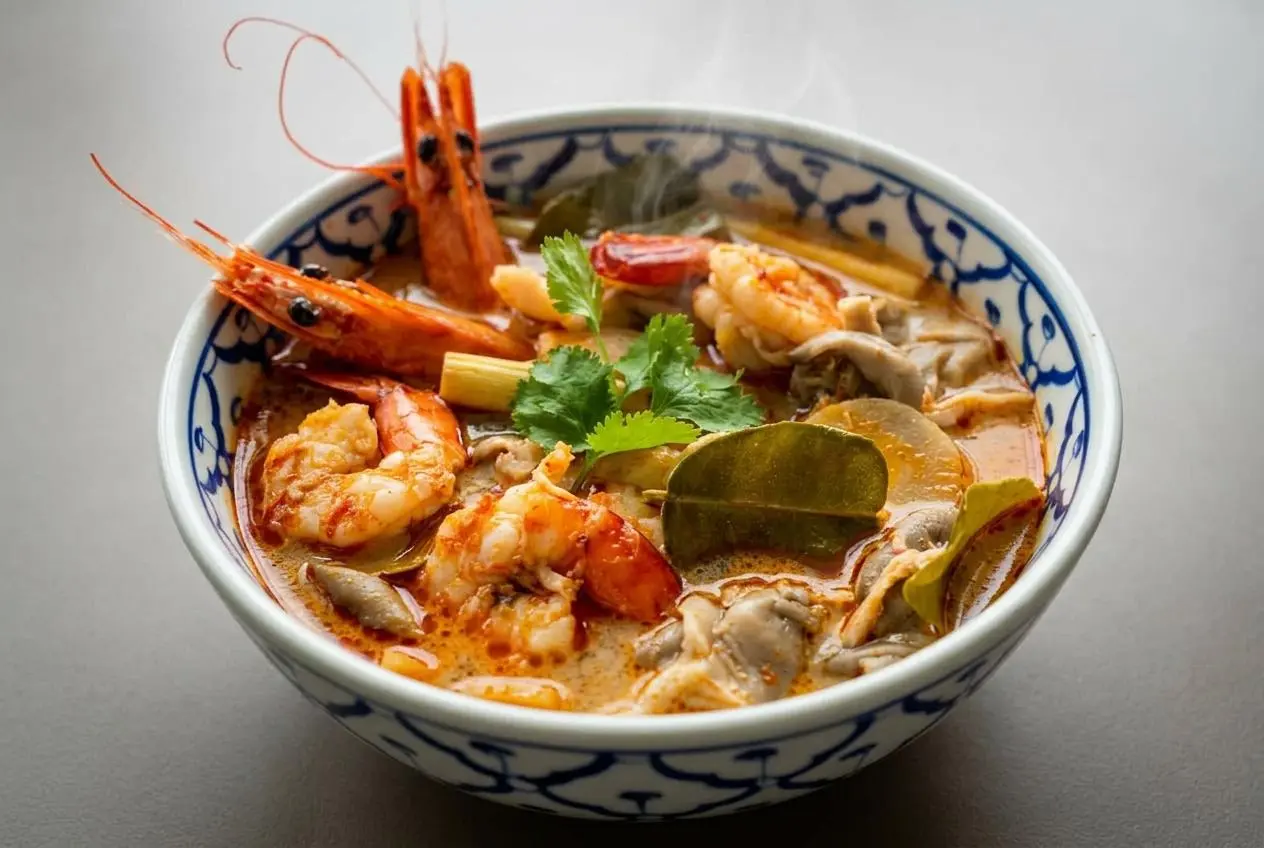
Authentic Thai tom yum is a spicy, sour shrimp soup built on fragrant stock infused with lemongrass, galangal, and makrut lime leaves, then balanced with fish sauce, chili paste, and fresh lime juice.
This tom yum soup recipe starts with shrimp shells for deep savory flavor, then finishes the shrimp gently so they stay tender in the vibrant broth.
Steam carries the sharp citrus perfume of the herbs through the kitchen before the first spoonful. The loose C-shape shrimp trick makes all the difference.
Prep the lime juice before heating the broth so it is ready to stir in as soon as the shrimp finish cooking.
Ingredients for Authentic Tom Yum Soup
Each ingredient brings a distinct job: shrimp builds depth, herbs provide fragrance, mushrooms add tenderness, and fish sauce, chili paste, lime, and sugar create the signature hot-sour balance.
Tom Yum Soup
- 4 cups shrimp stock or unsalted chicken stock
- 12-15 medium or large shrimp (head-on, shell-on if making shrimp stock)
- 2 stalks lemongrass (bottom half only, smashed until broken and cut in 2 inch pieces)
- 6 makrut lime leaves
- 8 slices galangal
- 2-5 Thai chilies (to taste, pounded into a rough paste or finely minced)
- 7 oz oyster mushrooms (tear large ones into bite-sized pieces)
- ¼ cup Thai chili paste
- 3 Tbsp fish sauce
- ½ cup fresh lime juice
- 1 tsp sugar
- Chopped cilantro (or sawtooth coriander, for garnish)
- Jasmine rice (for serving)
Shrimp Stock
- Shrimp shells and heads from above
- 1 Tbsp neutral oil
- 4 ¼ cups water
- ¼ cup finely chopped daikon (optional)
- ¼ cup finely chopped onion (optional)
Lemongrass gives the broth its clean lemony lift, while galangal adds a peppery, pine-like bite that ginger cannot fully duplicate. Makrut lime leaves bring floral citrus aroma. Thai chili paste, or nam prik pao, adds smoky sweetness and body; fish sauce supplies savory depth; lime juice keeps the finish bright. Head-on shrimp are especially valuable because the shells and heads enrich the broth.
I choose shrimp with intact heads whenever possible because the orange richness from the heads gives the finished broth a fuller, more rounded flavor.
How to Make Authentic Tom Yum Soup
Build flavor in layers: first the shrimp stock, then the infused herbs, then the brief final cook for shrimp and seasoning.
For the Shrimp Stock
- Heat the oil in a stock pot over medium-high heat, then add the shrimp shells and heads with the daikon and/or onion, if using; press the heads with a spatula as they cook.
The shells should turn deep orange and release fragrant oil into the pot. - Pour in the water once browned bits form on the bottom, scraping the pot clean as the liquid goes in; bring it to a simmer and cook for 5 minutes.
The broth should smell intensely shrimpy and look lightly golden. - Lift out and discard the shells with a wire skimmer, leaving any vegetable bits behind if desired; measure 4 cups of stock for the soup and add water only if needed to reach that amount.
A little extra stock is fine, but the broth should remain full-flavored rather than diluted.
For the Tom Yum Soup
- Add the stock, lemongrass, galangal, chilies, and mushrooms to the pot; twist and tear the lime leaves, discard their center ribs, then add the leaves and simmer for about 5 minutes.
The bruised herbs should release a sharp citrus aroma as the broth gently bubbles. - Bring the soup to a boil, loosen the Thai chili paste with a ladleful of hot broth, then stir it into the pot with the fish sauce and shrimp; cook the shrimp for 30-50 seconds, depending on size, then turn off the heat and leave them in the broth for another minute.
The shrimp are ready when opaque and curled into a loose C-shape, not a tight O-shape. - Stir in the fresh lime juice after the heat is off, then taste and add the sugar if the broth needs more balance.
The flavor should lead with limey sourness, followed by savory depth, chile heat, and a subtle sweet edge. - Fold in the cilantro and serve the soup with jasmine rice on the side or in the bowl.
The herbs should stay bright green and fresh against the hot broth.
Essential Aromatic Trinity and Ingredient Roles
The defining flavor of tom yum comes from fresh lemongrass, galangal, and makrut lime leaves. They work together, each bringing a different kind of citrusy, peppery fragrance that dried ground spices cannot reproduce.
Understanding Lemongrass, Galangal, and Makrut Lime Leaves
Use the pale lower half of each lemongrass stalk, then strike it firmly with the back of a knife or mallet until it cracks. That bruising opens the fibers and releases more aromatic oil into the broth.
Slice galangal thinly so it can infuse quickly. Its flavor is sharper and more floral than ordinary ginger, with a peppery finish. Tear makrut lime leaves after removing the tough center ribs, which lets their citrus scent bloom in the simmering stock.
These herbs are meant to perfume the soup rather than become a bite of it. Leave the tough lemongrass, galangal slices, and lime leaves in the bowl for fragrance, then set them aside while eating.
Practical Ingredient Swaps and Sourcing
Look for the fresh herb trio at Southeast Asian markets or in the freezer section of well-stocked international grocers. Frozen makrut lime leaves are a strong backup and often hold their fragrance well. Dried leaves can work in a pinch, though they give a gentler aroma.
If galangal is unavailable, fresh ginger with a pinch of black pepper can stand in temporarily, but the broth will taste warmer and less piney. If head-on shrimp are not available, use unsalted chicken stock and peeled shrimp; a small amount of shrimp paste can restore some seafood depth. Keep any substitution optional and taste before adding more fish sauce or lime.
Tom Yum Variations: Clear Broth vs Creamy Style
Both versions share the same hot, sour, herbal character, but the broth texture changes the whole experience.
Tom Yum Nam Sai (Classic Clear Herbal Broth)
Tom yum nam sai is the clear version. It highlights the clean perfume of the herbs, direct lime acidity, and fresh chile heat. Skip the milk for a broth that stays light and bright, much like a delicately infused Japanese clear soup, though tom yum is far bolder and more sour.
Tom Yum Nam Khon (Creamy Style With Evaporated Milk)
Tom yum nam khon has a silky, fuller broth from canned unsweetened evaporated milk and extra roasted chili paste. Stir the milk in near the end over low heat or just after turning off the burner, so it blends smoothly without losing its fresh flavor.
Creamy tom yum is different from tom kha, which relies on coconut milk. Coconut milk makes a pleasant soup, but it changes the dish into a softer, sweeter coconut-based style rather than traditional tom yum nam khon.
Protein Swaps: Chicken, Seafood Mix, and Vegetarian Mushrooms
- For tom yum gai, use thin pieces of boneless chicken breast or thigh and cook them gently in the simmering broth until done.
- For a seafood version, add firm white fish and squid near the end so each piece stays tender rather than overcooked.
- For tom yum hed, use vegetable stock and a mushroom mix such as oyster, king oyster, and straw mushrooms for a deeply savory vegetarian bowl.
Sawtooth coriander makes an aromatic optional garnish when available. A little charred chile oil can add deeper roasted heat, but add it sparingly so it does not bury the lime and herb flavors.
Pro Secrets for Perfect Flavor Balance and Texture
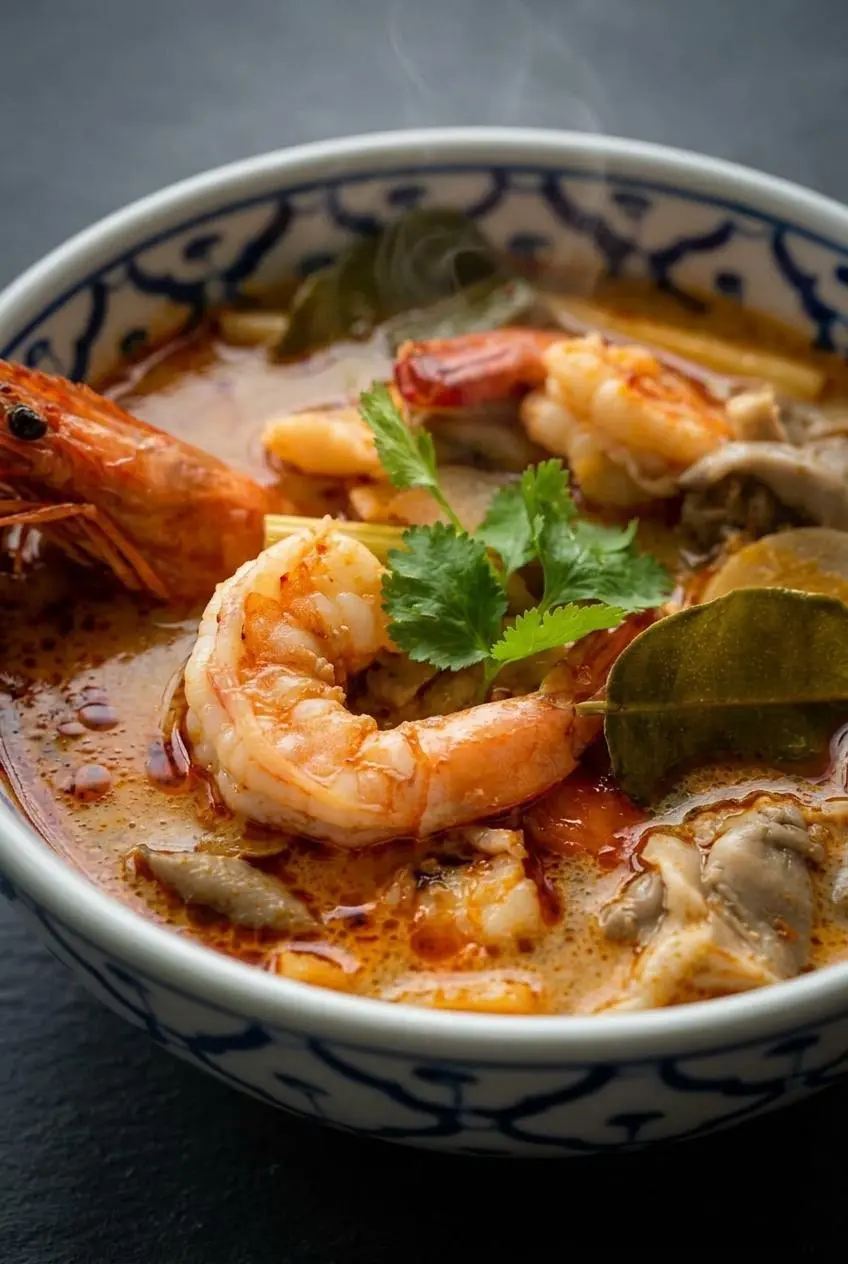
Tom yum tastes best when sour, salty, spicy, and sweet stay in conversation rather than competing for attention. Taste after the lime juice goes in, because that is when the broth shows its true character.
- Too sour: The lime is overpowering the broth. Add the sugar gradually until the tartness tastes lively rather than harsh.
- Too spicy: The chilies have taken over. Add more warm broth, then reassess the fish sauce and lime so the flavor does not become watery.
- Too salty: Fish sauce varies by brand. Dilute with a little broth rather than water, then restore brightness with lime only if needed.
- Flat flavor: The herbs may not have been bruised enough, or the broth may need a little more fish sauce for savory backbone.
- Bitter broth: Avoid boiling lime juice and remove the thick ribs from the lime leaves. Fresh lime belongs at the end, off the heat.
- Rubbery shrimp: Boiling continued too long. Turn off the burner while the shrimp are still slightly underdone and let residual heat finish the job.
The balancing act resembles a good hot and sour soup, but tom yum gets its brightness from fresh lime and Thai herbs rather than vinegar. Fish sauce should create the savory baseline, while sugar rounds the edges without making the soup sweet.
Storage and Gentle Reheating
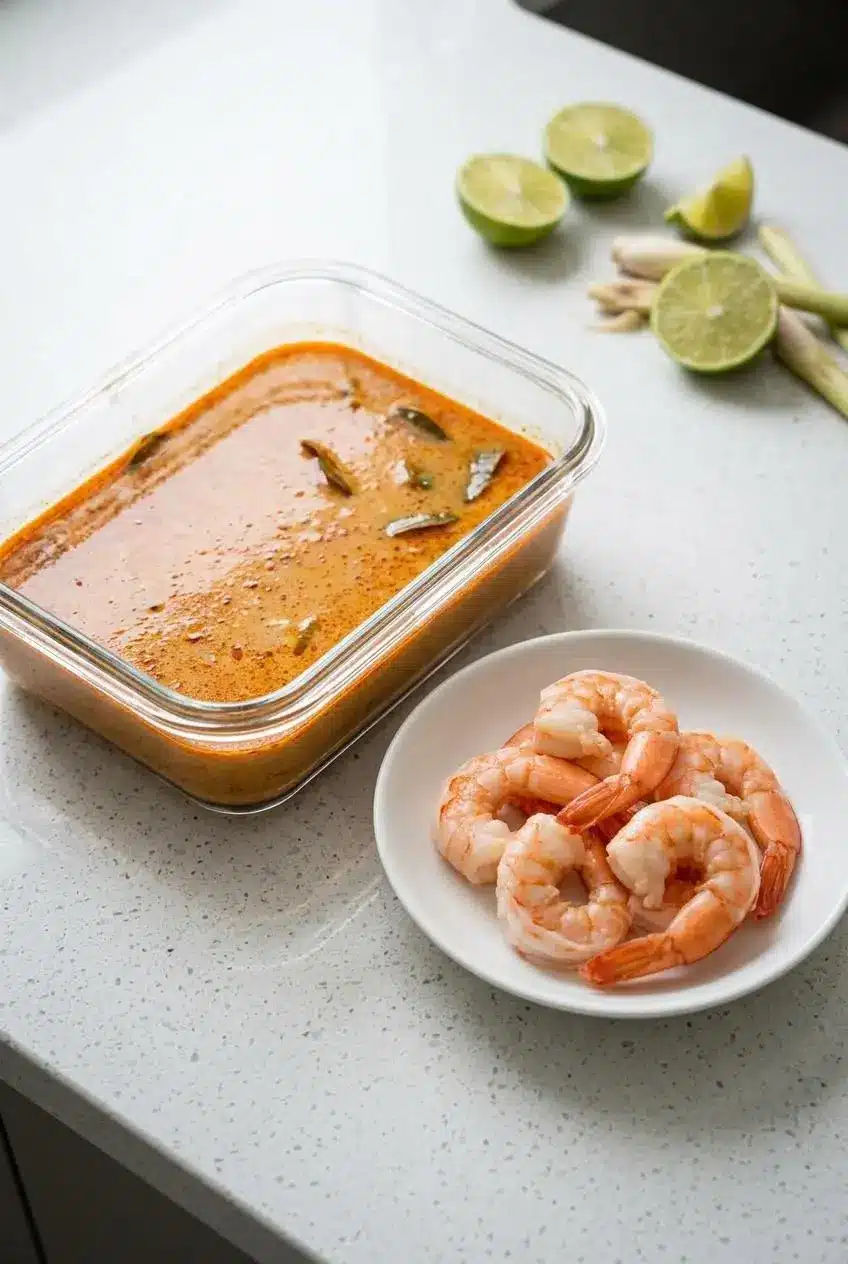
For the best leftover texture, separate cooked shrimp from the broth before chilling them in covered containers. Keep seafood chilled and avoid letting raw shrimp juices contact ready-to-eat ingredients while preparing the soup.
Warm the broth to a gentle simmer, turn off the heat, then return the shrimp and let them sit in the hot liquid for about one minute. This warms them without prolonged boiling, which is the main cause of tough leftover shrimp.
If making part of the meal in advance, prepare the aromatic broth and keep the shrimp separate until close to serving. Add cilantro and lime juice at the end so the soup retains its lively fragrance and acidity.
How to Serve Tom Yum Like in Thailand
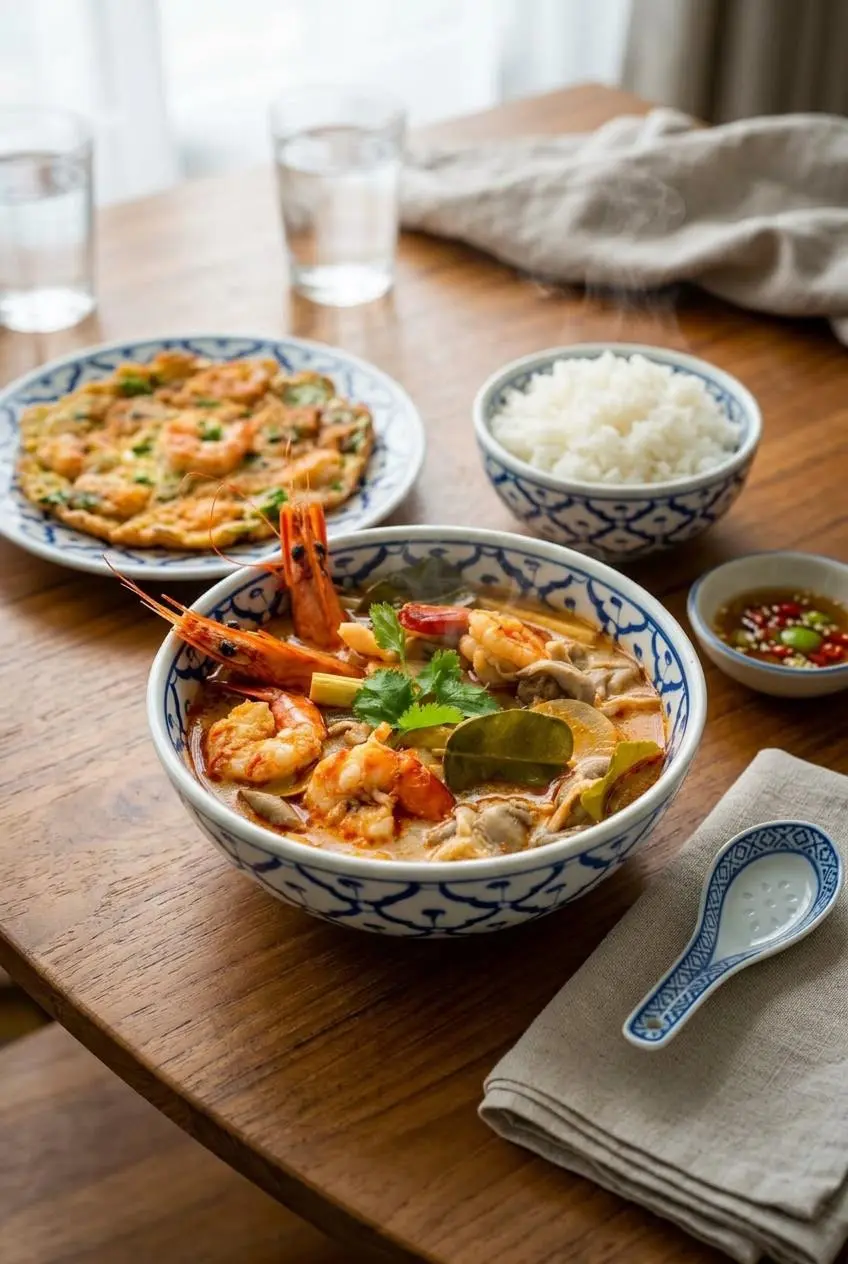
Tom yum is especially good served family-style as part of a meal, with the hot soup placed at the center of the table and warm jasmine rice served in individual bowls or on plates.
- Serve jasmine rice alongside the soup to soften the heat and soak up the savory broth.
- Add a fluffy Thai herb omelet, or kai jeow, for a mellow, crisp-edged contrast to the spicy soup.
- Pour the hot broth over cooked thin rice noodles for a satisfying one-bowl lunch.
Offer extra lime wedges and chopped cilantro at the table if desired. That way, each bowl can lean sharper, herbier, or milder without changing the main pot.
Conclusion
Scratch-made tom yum rewards a little attention to the details: brown the shrimp heads well, bruise the herbs firmly, and let their fragrance steep into the broth.
Finish with lime juice off the heat and let residual warmth take care of the shrimp. The result is a bowl with real depth, bright energy, and tender seafood in every spoonful.
Frequently Asked Questions
What Gives Tom Yum Soup Its Authentic Flavor?
Fresh lemongrass, galangal, and bruised makrut lime leaves create the unmistakable aromatic foundation. Shrimp stock gives the soup savory depth, while fish sauce adds umami. Thai chili paste and fresh lime juice bring the smoky-spicy and bright-sour finish.
How Do I Make Creamy Tom Yum Soup Without Coconut Milk?
Use canned unsweetened evaporated milk for traditional tom yum nam khon texture. Stir it in with roasted Thai chili paste near the end of cooking. Keep the heat low or turn it off before adding the milk for a smooth, silky broth.
Can I Use Frozen or Pre-Peeled Shrimp for This Soup?
Yes. Thaw frozen peeled shrimp completely and pat them dry before adding them to the soup. Use unsalted chicken stock when shells and heads are unavailable. A little shrimp paste can help replace some of the depth that shrimp shells would provide.
How Do I Reheat Leftover Tom Yum Without Overcooking the Shrimp?
Remove the shrimp before reheating the broth. Bring the broth to a brief simmer, then turn off the heat. Submerge the shrimp in the hot broth for one minute, just until warmed through.
Tom Yum Soup Recipe

Equipment
- stock pot
- wire skimmer
- pestle or mallet
- Ladle
Ingredients
Tom Yum Soup
- 4 cups shrimp stock or unsalted chicken stock
- 12-15 medium or large shrimp head-on, shell-on if making shrimp stock
- 2 stalks lemongrass bottom half only, smashed until broken and cut in 2 inch pieces
- 6 makrut lime leaves
- 8 slices galangal
- 2-5 Thai chilies to taste, pounded into a rough paste or finely minced
- 7 oz oyster mushrooms tear large ones into bite-sized pieces
- 1/4 cup Thai chili paste
- 3 Tbsp fish sauce
- 1/2 cup fresh lime juice
- 1 tsp sugar
- Chopped cilantro or sawtooth coriander, for garnish
- Jasmine rice for serving
Shrimp Stock
- Shrimp shells and heads from above
- 1 Tbsp neutral oil
- 4 1/4 cups water
- 1/4 cup finely chopped daikon optional
- 1/4 cup finely chopped onion optional
Instructions
For the Shrimp Stock
- Heat the oil in a stock pot over medium-high heat, then add the shrimp shells and heads with the daikon and/or onion, if using; press the heads with a spatula as they cook. The shells should turn deep orange and release fragrant oil into the pot.
- Pour in the water once browned bits form on the bottom, scraping the pot clean as the liquid goes in; bring it to a simmer and cook for 5 minutes. The broth should smell intensely shrimpy and look lightly golden.
- Lift out and discard the shells with a wire skimmer, leaving any vegetable bits behind if desired; measure 4 cups of stock for the soup and add water only if needed to reach that amount. A little extra stock is fine, but the broth should remain full-flavored rather than diluted.
For the Tom Yum Soup
- Add the stock, lemongrass, galangal, chilies, and mushrooms to the pot; twist and tear the lime leaves, discard their center ribs, then add the leaves and simmer for about 5 minutes. The bruised herbs should release a sharp citrus aroma as the broth gently bubbles.
- Bring the soup to a boil, loosen the Thai chili paste with a ladleful of hot broth, then stir it into the pot with the fish sauce and shrimp; cook the shrimp for 30-50 seconds, depending on size, then turn off the heat and leave them in the broth for another minute. The shrimp are ready when opaque and curled into a loose C-shape, not a tight O-shape.
- Stir in the fresh lime juice after the heat is off, then taste and add the sugar if the broth needs more balance. The flavor should lead with limey sourness, followed by savory depth, chile heat, and a subtle sweet edge.
- Fold in the cilantro and serve the soup with jasmine rice on the side or in the bowl. The herbs should stay bright green and fresh against the hot broth.