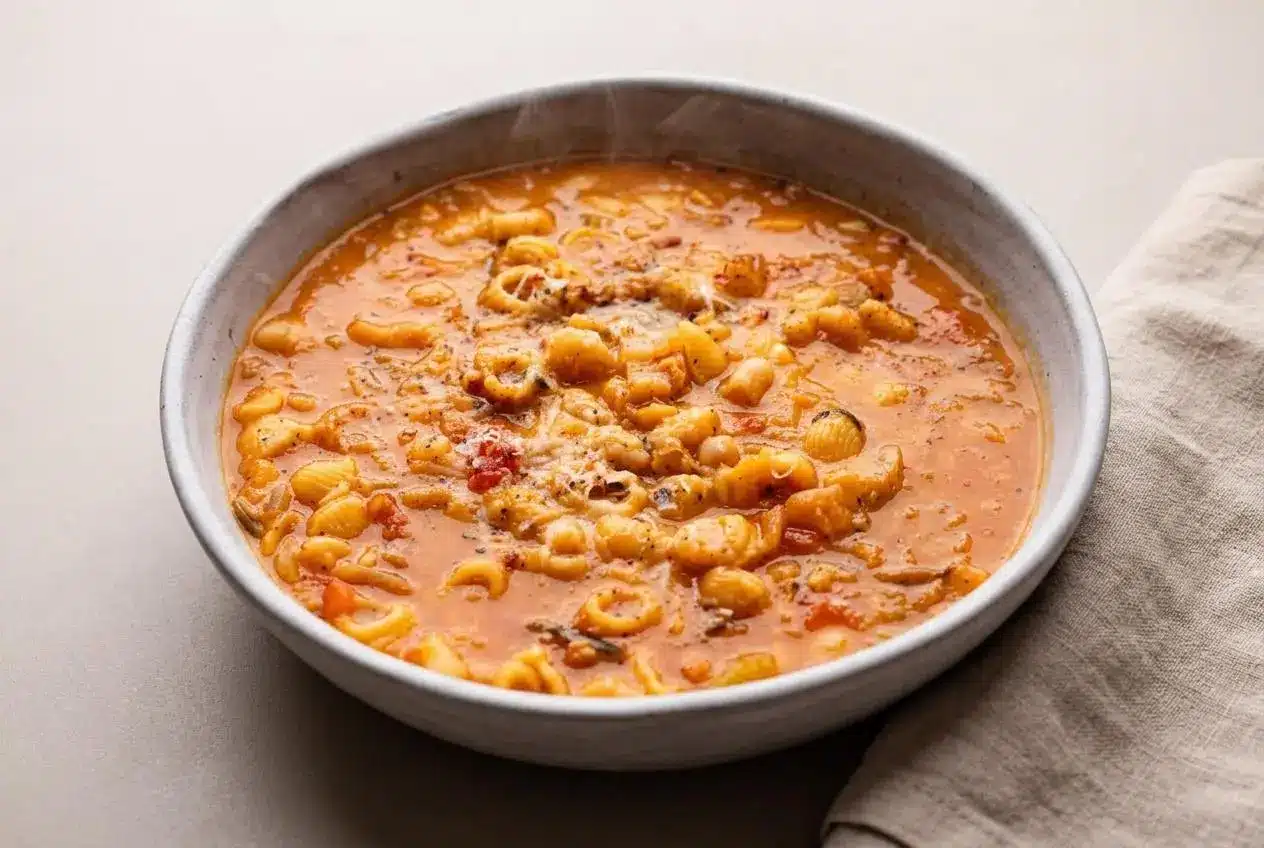
This pasta fagioli recipe is a traditional Italian soup of white beans, small pasta, savory aromatics, and rich broth, thickened naturally by blending part of the beans.
A good pasta fagioli recipe starts with pancetta sizzling in olive oil, followed by rosemary, garlic, creamy cannellini beans, and ditalini pasta. It lands somewhere between a brothy soup and a comforting spoon-thick stew.
Fresh rosemary gives the warm pancetta fat a woodsy, pine-like aroma that makes the whole kitchen smell inviting. The blended beans are the trick worth knowing.
Dice the onion and celery evenly so they soften at the same pace and disappear smoothly into the finished broth.
Essential Ingredients for Authentic Pasta Fagioli
Every ingredient contributes something important: pancetta builds savory richness, beans create body, tomatoes bring brightness, and Parmigiano rounds out the broth with deep, aged flavor.
- 1 Tablespoon olive oil
- 4 oz diced pancetta, (you can also swap for pork bacon)
- 1 large yellow onion, (finely diced)
- 1 large celery stalk, (diced small)
- 5 garlic cloves, (minced)
- 1/4 teaspoon red pepper flakes
- 1 large fresh rosemary sprig
- 5 cups chicken stock
- 2 14 oz cans cannellini beans, (rinsed and drained)
- 1 cup canned whole plum tomatoes with the juices, (hand-crushed into really small pieces)
- 1/4 cup freshly grated Parmigiano Reggiano cheese
- 1/4 teaspoon black pepper
- 1/2 teaspoon salt, (plus more for seasoning the aromatics)
- 1 cup dried pasta, (I like to use ditalini or small shells)
- 1 Parmigiano Reggiano rind
Pancetta brings salty, porky depth before any broth enters the pot. Cannellini beans break down into a creamy texture when blended, while hand-crushed plum tomatoes keep the broth rustic rather than overly smooth.
I prefer grating Parmigiano from a wedge because it melts more smoothly than pre-shredded cheese and gives the finished soup a cleaner flavor.
The Aromatic Base and Cured Meats
Rendering diced pancetta slowly gives you more than crisp bits of pork. Its flavorful fat coats the onion, celery, and garlic, creating a soffritto-style foundation that tastes rounded instead of sharply oniony. Pork bacon works well when pancetta is unavailable, though it may bring a smokier flavor.
Pancetta is also excellent in classic pasta carbonara, where rendered pork fat similarly forms the backbone of the dish. Here, the fat carries rosemary and red pepper flakes through every spoonful of broth.
Choosing the Best Beans and Pasta Shapes
Cannellini beans are a strong choice because their thin skins and creamy centers blend easily into the soup. Borlotti beans, also called cranberry beans, have a nuttier flavor and hold their shape a little more firmly. Great Northern beans make a practical substitute when cannellini beans are not available.
Ditalini is ideal because the tiny tubes scoop up neatly with the beans. Small shells work too, catching a little broth inside each curve. Larger pasta can overwhelm the beans and make the bowl feel more like pasta with sauce than pasta e fagioli.
The Power of the Parmigiano-Reggiano Rind
A Parmigiano-Reggiano rind turns a pot of stock into something fuller and more savory as it simmers. This old-school use for a leftover cheese rind adds depth throughout the broth without cream. Remove the softened rind before serving, along with the rosemary sprig.
How to Make Authentic Pasta e Fagioli Step-by-Step
The key to this soup is building flavor in layers, then blending only part of the beans. You want a broth that looks opaque and silky, with enough body to lightly cling to the ditalini.
- Warm the olive oil in a large pot or Dutch oven, then cook the diced pancetta for about 3 to 4 minutes until browned.
The pancetta should release its fat and develop browned edges without becoming hard. - Add the finely diced onion, celery, and a generous pinch of salt, then cook for about 3 to 4 minutes.
Stir until the vegetables soften and pick up some golden color from the bottom of the pot. - Stir in the minced garlic and cook for about 60 seconds, then add the red pepper flakes and rosemary sprig for 30 to 60 seconds.
The garlic should smell fragrant, while the rosemary releases a warm, piney aroma into the rendered fat. - Pour in the chicken stock, crushed tomatoes, cannellini beans, Parmigiano rind, 1/2 teaspoon salt, and 1/4 teaspoon black pepper, then partially cover and simmer gently for 25 minutes.
Give the pot an occasional stir as the broth takes on a richer color and the beans become very tender. - Use an immersion blender to pulse the soup until about half of the beans are blended, leaving the rosemary and cheese rind intact.
The broth should turn silky and opaque while still showing whole beans and small pieces of tomato. - Add the dried pasta and cook it in the soup for about 10 to 15 minutes, stirring frequently.
Run the spoon gently across the Dutch oven floor as you stir so the ditalini does not settle, catch, or scorch. - Stir in the freshly grated Parmigiano Reggiano, taste, and add salt if needed before removing the rosemary sprig and Parmigiano rind.
The finished soup should be thick enough to feel substantial but loose enough to settle back into the bowl.
If you use a countertop blender instead, carefully blend part of the soup without the rosemary sprig or cheese rind, then return it to the pot. The goal is not a completely smooth puree. Whole beans give pasta e fagioli its satisfying, rustic texture.
Pro Tips for Broth Consistency and Texture Troubleshooting
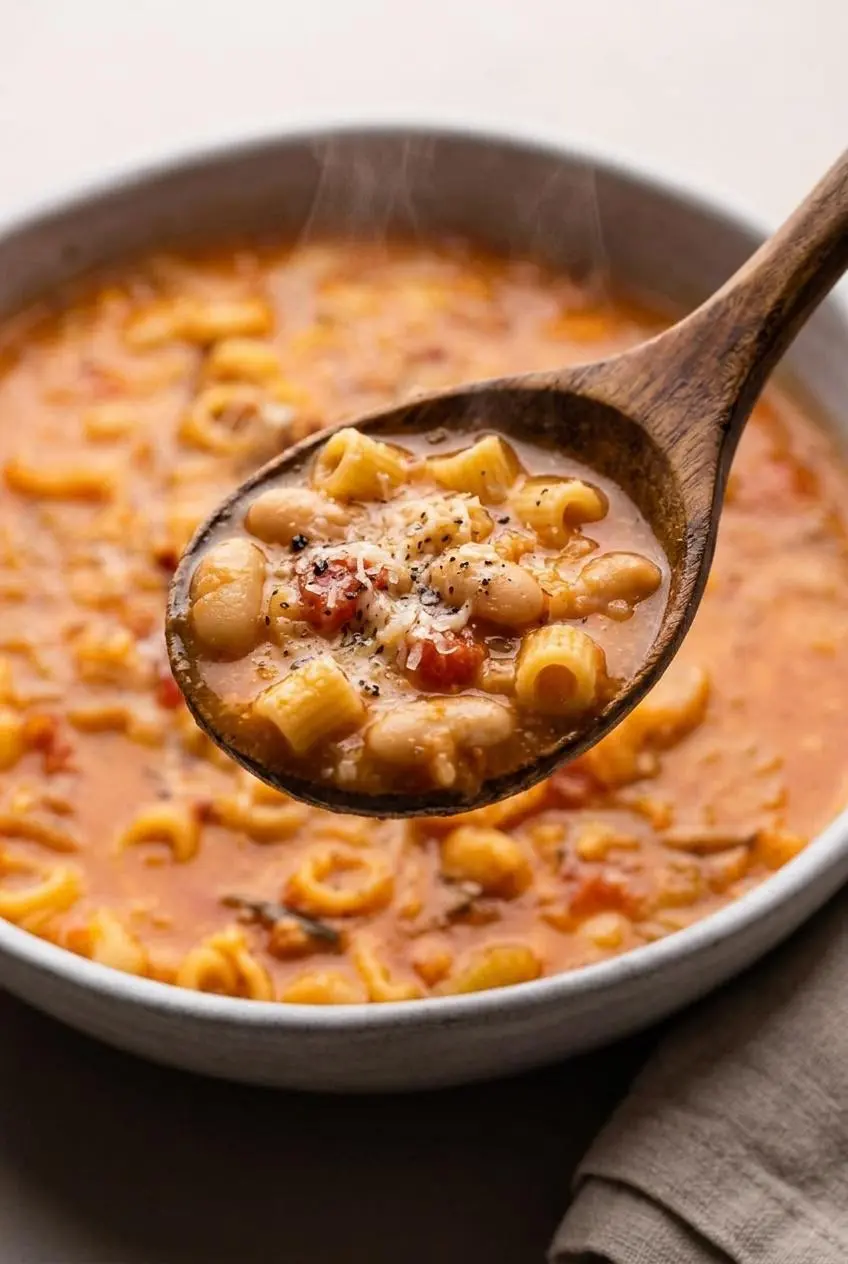
Pasta e fagioli changes texture as it sits because the pasta keeps absorbing broth. That is useful when serving right away, but it can turn a silky soup unusually thick if the pot rests for too long.
- The soup is too thick: Pasta starches and blended beans have tightened the broth. Reheat gently and stir in warm chicken stock or warm water a little at a time until it is spoonable again.
- The soup is too thin: The bean puree has not had time to settle into the broth. Let it simmer gently for a little longer, uncovered if needed, while stirring to prevent sticking.
- The pasta is mushy: It has cooked beyond al dente or sat in the hot broth too long. Serve promptly, or use the separate-pasta approach below for leftovers.
- The flavor seems flat: Add salt cautiously after the cheese rind and pancetta have done their work. Both ingredients bring salinity, so taste before adding more.
- The cheese looks grainy: Use freshly grated Parmigiano and stir it in after the pasta is tender. Pre-shredded cheese can resist melting smoothly.
Single-Pot Cooking vs. the Separate Pasta Method
Cook the pasta directly in the soup when the whole pot will be served right away. The starch released by ditalini gives the broth a naturally thick, almost creamy finish.
For leftovers, cook the pasta separately and add it to each bowl. Keep the bean broth and pasta apart until reheating so the noodles stay firmer and the soup does not become overly dense. Extra cooked pasta can also become a leftover pasta frittata instead of lingering in the refrigerator unused.
Rescuing Overly Thick Leftover Soup
Warm leftover soup over low heat, stirring often so the blended beans do not cling to the pan. Add warmed chicken stock or water gradually until the broth returns to a velvety, spoon-coating consistency. Taste again at the end because thinning the broth can soften the seasoning.
Delicious Variations for Every Kitchen
Keep the main pot as written when you want the classic pancetta and rosemary version. These optional paths shift the flavor or texture without changing the character of the soup.
Vegetarian and Plant-Forward Adaptations
For vegetarian pasta e fagioli, omit the pancetta and start with extra virgin olive oil. Add a spoonful of tomato paste with the garlic, then use vegetable stock in place of chicken stock. The tomato paste adds darker, savory depth that helps fill the gap left by cured pork.
For a fully plant-forward bowl, leave out the Parmigiano cheese and rind as well. The bean puree still creates a thick, satisfying broth. For another vegetable-centered dinner, try fresh pasta primavera.
Adding Hearty Tuscan Kale or Spinach
Fold chopped Lacinato kale, Swiss chard, or baby spinach into the soup near the end of cooking. Kale and chard need time to become tender, while spinach wilts quickly and should stay bright green. The greens make the bowl feel heartier without taking attention away from the beans.
If tomato and greens are already a favorite combination in your kitchen, tomato spinach pasta is another useful weeknight option with the same comforting flavor direction.
Restaurant Style and Quick Weeknight Tweaks
For a restaurant-style finish, add a pinch of dried oregano or a light drizzle of lemon-infused olive oil just before serving. Both brighten the rich bean broth without turning it into a different dish.
When time is tight, keep the canned cannellini beans and use ditalini for fast, even cooking. The important steps are still the same: brown the pancetta, let the garlic and rosemary bloom briefly in the fat, and blend part of the beans for body. An Olive Garden-style bowl is typically brothier and more tomato-forward, while this version leans into creamy beans and rosemary.
Storage and Reheating for Better Leftovers
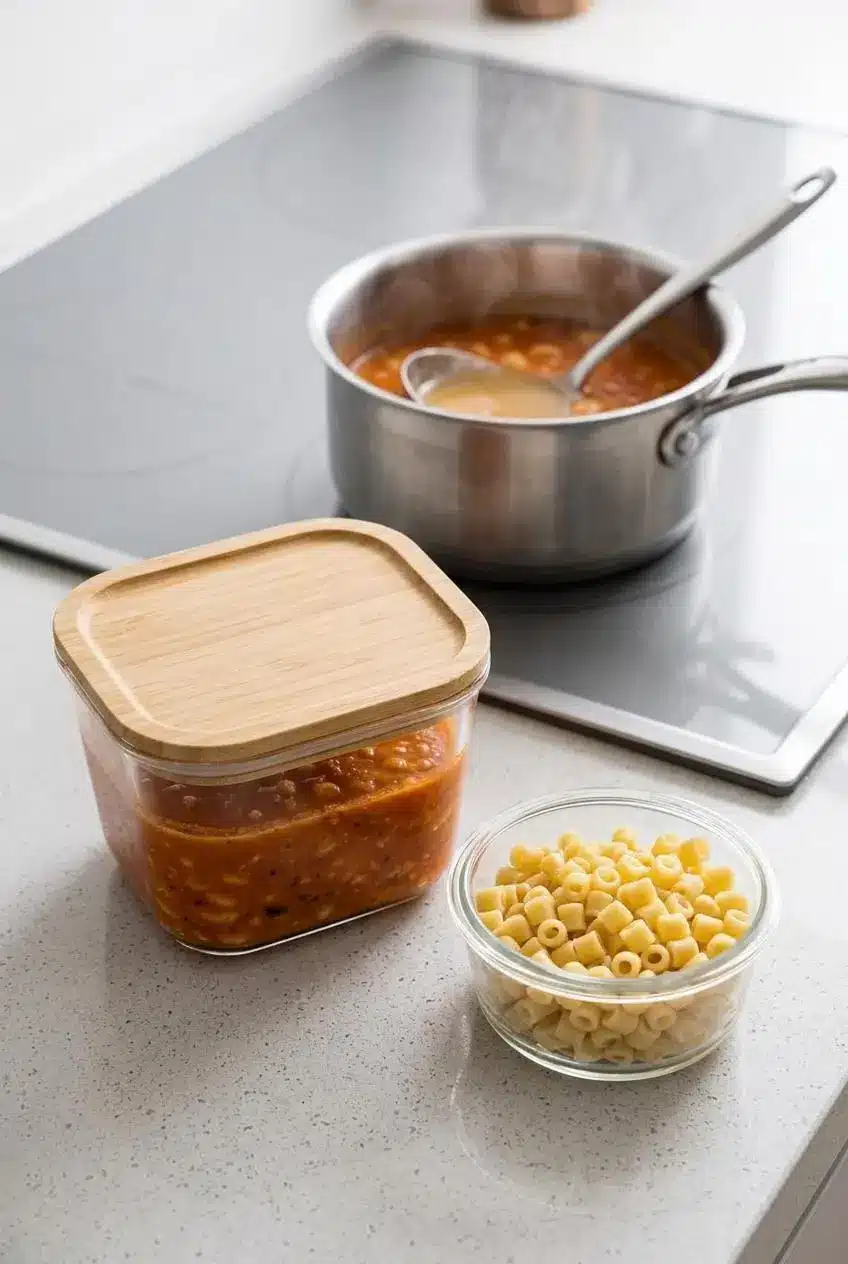
For the best leftover texture, cool the soup and transfer it to covered airtight containers before refrigerating. If possible, keep cooked pasta separate from the bean broth so it does not continue drinking up liquid and softening in storage.
Reheat only the portion you plan to serve in a saucepan over medium-low heat. Stir regularly and add small splashes of warm stock or water as needed to loosen the broth. Finish with a little freshly grated Parmigiano after warming rather than boiling the cheese into the soup.
Keeping Pasta and Bean Broth Separate
The bean and tomato broth holds its texture better when pasta is added close to serving time. Store any extra ditalini separately, then warm it briefly in the broth or add it directly to the bowl before ladling over hot soup.
If the pasta has already been cooked in the soup, expect a thicker texture when reheating. This is normal, and warm stock is the best way to restore a looser consistency without dulling the flavor.
Gentle Stovetop Reheating
Use medium-low heat and stir from the bottom of the saucepan to keep the blended beans from sticking. Avoid a hard boil, which can make the pasta break down faster and leave the broth too thick.
Once the soup is hot and fluid again, taste it before serving. A final grind of black pepper and a little Parmigiano bring back the fresh, savory finish.
What to Serve with Pasta Fagioli
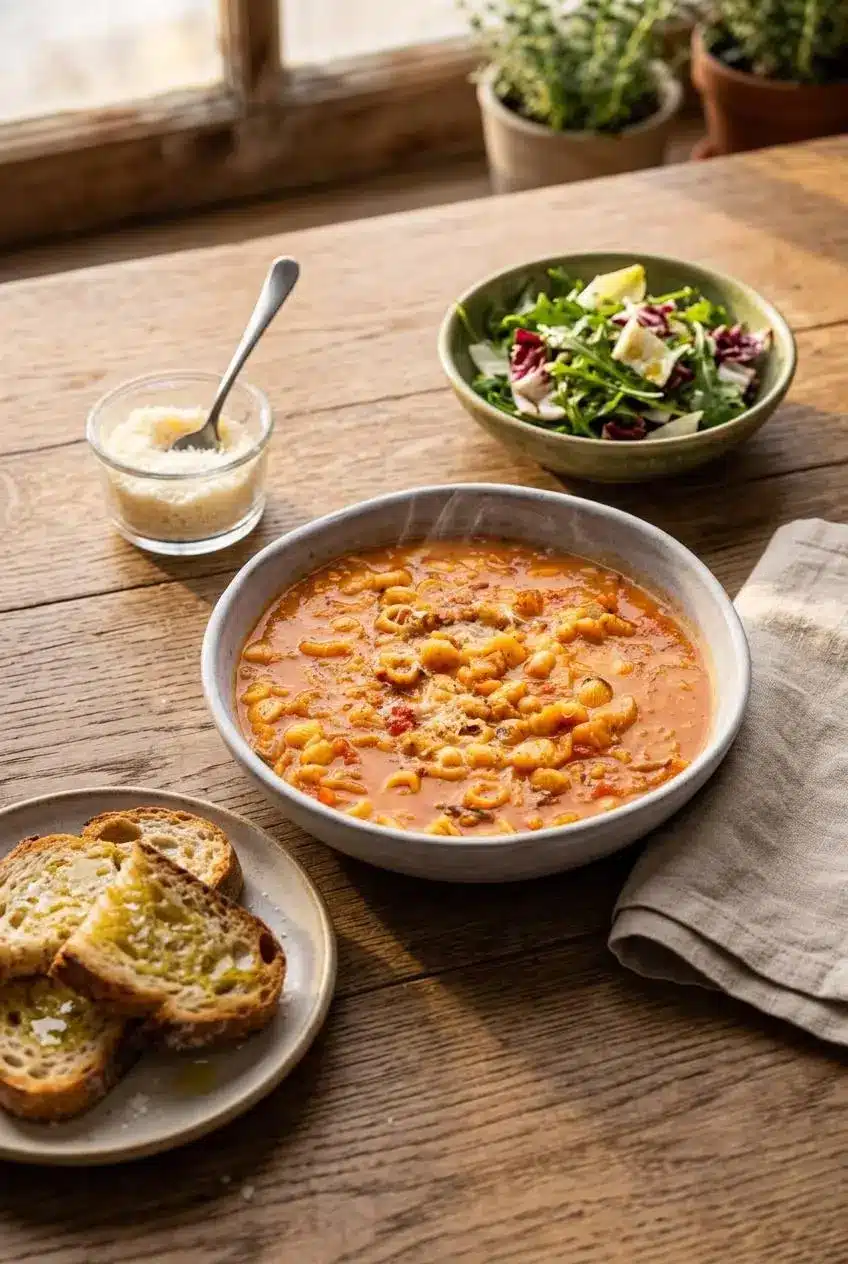
Pasta e fagioli is filling enough to stand on its own, but a crisp, bright side keeps the meal balanced.
- Serve warm crusty sourdough rubbed with fresh garlic and brushed with olive oil for scooping up the thick bean broth.
- Pair it with a chopped Italian-style salad dressed in a sharp red wine vinaigrette or lemony dressing to cut through the richness.
- Pass freshly grated Parmigiano-Reggiano, cracked black pepper, and peppery extra virgin olive oil at the table for finishing each bowl.
The bread matters here. A chewy crust and open crumb are especially good for catching the last spoonfuls of beans, tomatoes, and ditalini.
Conclusion
This pasta e fagioli brings together browned pancetta, fragrant rosemary, tender beans, and tiny pasta in one deeply comforting pot. Blending part of the beans gives the broth its velvety body without relying on cream.
Keep an eye on the pasta, stir along the bottom of the pot, and adjust the broth with warmth and patience when reheating. That small bit of care makes every bowl feel generous and satisfying.
Frequently Asked Questions
What Is the Difference Between Pasta e Fagioli and Minestrone?
Pasta e fagioli centers on beans, small pasta, and savory aromatics in a rich broth. Minestrone is usually more vegetable-focused, often including a changing mix of seasonal produce along with beans and pasta.
Should I Cook the Pasta in the Soup or Separately?
Cook pasta directly in the soup when serving the full batch right away. It releases starch into the broth and creates the thickest, creamiest texture. Cook pasta separately when planning leftovers. Add it to individual bowls so the noodles stay firmer and the broth stays fluid.
Can You Freeze Pasta Fagioli?
For the best texture, avoid relying on stored cooked pasta in the soup because the noodles soften and absorb broth. Keeping the pasta separate from the bean broth is the most reliable approach when you want a fresh-tasting bowl later.
What Are the Best Beans to Use for Pasta Fagioli?
Cannellini beans are a classic choice because they turn especially creamy when partially blended. Borlotti beans offer a nuttier, firmer alternative. Great Northern beans or navy beans can also work when cannellini beans are unavailable.
Pasta Fagioli Recipe

Equipment
- Dutch oven
- Immersion blender or regular blender
Ingredients
- 1 Tablespoon olive oil
- 4 oz diced pancetta (you can also swap for pork bacon)
- 1 large yellow onion (finely diced)
- 1 large celery stalk (diced small)
- 5 garlic cloves (minced)
- 1/4 teaspoon red pepper flakes
- 1 large fresh rosemary sprig
- 5 cups chicken stock
- 2 14 oz cans cannellini beans (rinsed and drained)
- 1 cup canned whole plum tomatoes with the juices (hand-crushed into really small pieces)
- 1/4 cup freshly grated Parmigiano Reggiano cheese
- 1/4 teaspoon black pepper
- 1/2 teaspoon salt (plus more for seasoning the aromatics)
- 1 cup dried pasta (I like to use ditalini or small shells)
- 1 Parmigiano Reggiano rind
Instructions
- Warm the olive oil in a large pot or Dutch oven, then cook the diced pancetta for about 3 to 4 minutes until browned. The pancetta should release its fat and develop browned edges without becoming hard.
- Add the finely diced onion, celery, and a generous pinch of salt, then cook for about 3 to 4 minutes. Stir until the vegetables soften and pick up some golden color from the bottom of the pot.
- Stir in the minced garlic and cook for about 60 seconds, then add the red pepper flakes and rosemary sprig for 30 to 60 seconds. The garlic should smell fragrant, while the rosemary releases a warm, piney aroma into the rendered fat.
- Pour in the chicken stock, crushed tomatoes, cannellini beans, Parmigiano rind, 1/2 teaspoon salt, and 1/4 teaspoon black pepper, then partially cover and simmer gently for 25 minutes. Give the pot an occasional stir as the broth takes on a richer color and the beans become very tender.
- Use an immersion blender to pulse the soup until about half of the beans are blended, leaving the rosemary and cheese rind intact. The broth should turn silky and opaque while still showing whole beans and small pieces of tomato.
- Add the dried pasta and cook it in the soup for about 10 to 15 minutes, stirring frequently. Run the spoon gently across the Dutch oven floor as you stir so the ditalini does not settle, catch, or scorch.
- Stir in the freshly grated Parmigiano Reggiano, taste, and add salt if needed before removing the rosemary sprig and Parmigiano rind. The finished soup should be thick enough to feel substantial but loose enough to settle back into the bowl.