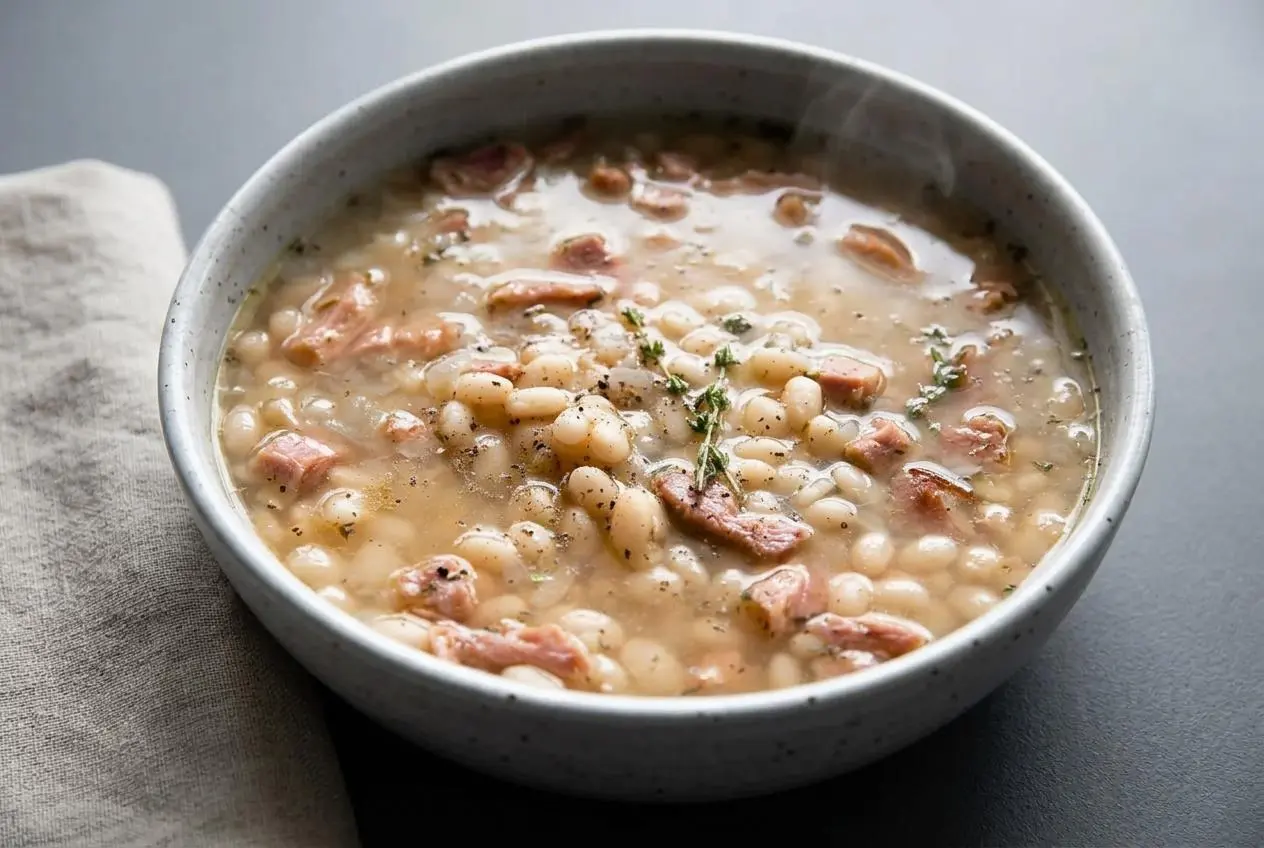
Navy bean soup is a hearty stovetop meal of tender white beans simmered with smoky ham, onion, garlic, and herbs until the broth turns savory and naturally creamy.
This navy bean soup starts with dried beans and a ham bone, then lets a gentle simmer do the important work. The beans soften, the ham seasons the broth, and the herbs bring a warm woodsy aroma to the pot.
It is especially satisfying when the onions melt into the broth and the beans begin to break at the edges. A quick mash near the end makes all the difference.
Keep the heat low once the pot reaches a boil so the beans become creamy inside without shedding all their skins.
Essential Ingredients for Rich Navy Bean Soup
Each ingredient contributes something useful: beans give the soup body, ham builds smoky richness, herbs add aroma, and the cooking liquid carries those flavors into a silky broth.
- 1 lb dried navy beans
- 1 tablespoon olive oil
- 1 large onion, diced
- 8 cloves garlic, minced
- 1 tablespoon fresh thyme
- 1 teaspoon fresh rosemary
- ½ teaspoon crushed red pepper
- salt and pepper, to season
- 1 bay leaf
- 1 ham bone, with scraps
- 8-12 cups water, or half water half low-sodium chicken broth
Dried navy beans absorb the seasoned cooking liquid as they soften, creating a creamier texture than beans added at the end. The ham bone and scraps lend smoke, salt, and savory depth, while thyme, rosemary, bay leaf, and red pepper keep the broth from tasting flat.
Water makes a clean-tasting bean broth, while low-sodium chicken broth adds more savory character without piling on salt. Since cured ham can vary widely in saltiness, start lightly with seasoning and adjust only after the bone has simmered.
I prefer a ham bone with visible bits of meat still attached because those scraps become tender enough to fold back into the soup after simmering.
Choosing Your Beans: Dried vs Canned
Dried navy beans are the best choice for the official stovetop method because they release starch gradually as they cook, giving the soup its naturally thick, creamy body. One pound of dried navy beans equals about two cups dry and yields roughly six cups once cooked.
Canned navy beans are convenient for a faster meal, but their texture is softer from the start and they will not enrich the broth in quite the same way. Rinse and drain them well before using so their canning liquid does not muddy the flavor.
Selecting the Right Ham: Bones, Hocks, or Diced Ham
A leftover ham bone gives the broth the most traditional character. As it simmers, the attached meat and connective tissue enrich the liquid with savory flavor and a fuller mouthfeel. This is the same comforting approach used in ham and bean soup.
A smoked ham hock is a good alternative when no leftover bone is available. It offers deeper smoke and a rich broth, though it may need a little more trimming before serving. Diced ham steak works for a meatier bowl, but it will not create quite as much body as a bone or hock.
The Aromatic Mirepoix and Herb Blend
Classic mirepoix usually includes onion, carrot, and celery. This version keeps the base focused on onion and garlic, which gives the beans and ham plenty of room to stand out. Cook the onion slowly in olive oil until it looks translucent and soft, not browned or crisp at the edges.
Add the garlic, thyme, rosemary, and crushed red pepper after the onion has softened. Their fragrance should bloom quickly in the warm oil. That brief step builds a savory foundation before the water, beans, and ham enter the pot.
How to Make Navy Bean Soup Step by Step
A soaked bean cooks more evenly and gives you better control over the final texture. Plan the soaking stage first, then let the soup simmer gently until every bean is tender.
- Place the dried navy beans in a large bowl and cover them with water by about 3 inches, then leave them to soak overnight or up to 24 hours.
The beans should look plumper and smoother once they have absorbed water. - Heat the olive oil in a large pot or Dutch oven over medium heat, then cook the diced onion for 6 to 8 minutes, stirring now and then.
Stop when the onion is soft and translucent, with no deep browning. - Stir in the garlic, thyme, rosemary, crushed red pepper, and a pinch of salt and pepper, and cook for 1 to 2 minutes.
The herbs should smell fragrant and the garlic should stay pale rather than darkening. - Add the bay leaf, drained beans, ham bone, ham scraps, and 10 cups of water, then bring the pot to a boil.
Once bubbling, lower the heat, cover the pot, and maintain a quiet simmer for at least 1 to 2 hours, adding more water if needed. - Lift out the ham bone when the beans are very soft, let it cool slightly, then remove any remaining meat with a fork or knife and discard the bone.
A tender bean should crush easily when pressed against the side of the pot. - Return the removed ham to the soup and season with additional salt and pepper to taste before serving.
The finished broth should taste smoky and savory, with beans beginning to split slightly around their edges.
If you need a quicker soaking route, bring the dried beans and water to a brief boil, take the pot off the heat, and let the beans stand covered until they look plump. Drain them before continuing with the stovetop method. This approach helps when an overnight soak was not possible, though the final simmer may still vary with the age of the beans.
Expert Tips for the Best Texture and Flavor
The best pot of bean soup tastes rounded rather than salty, and thick rather than pasty. A few small adjustments make that easier to achieve.
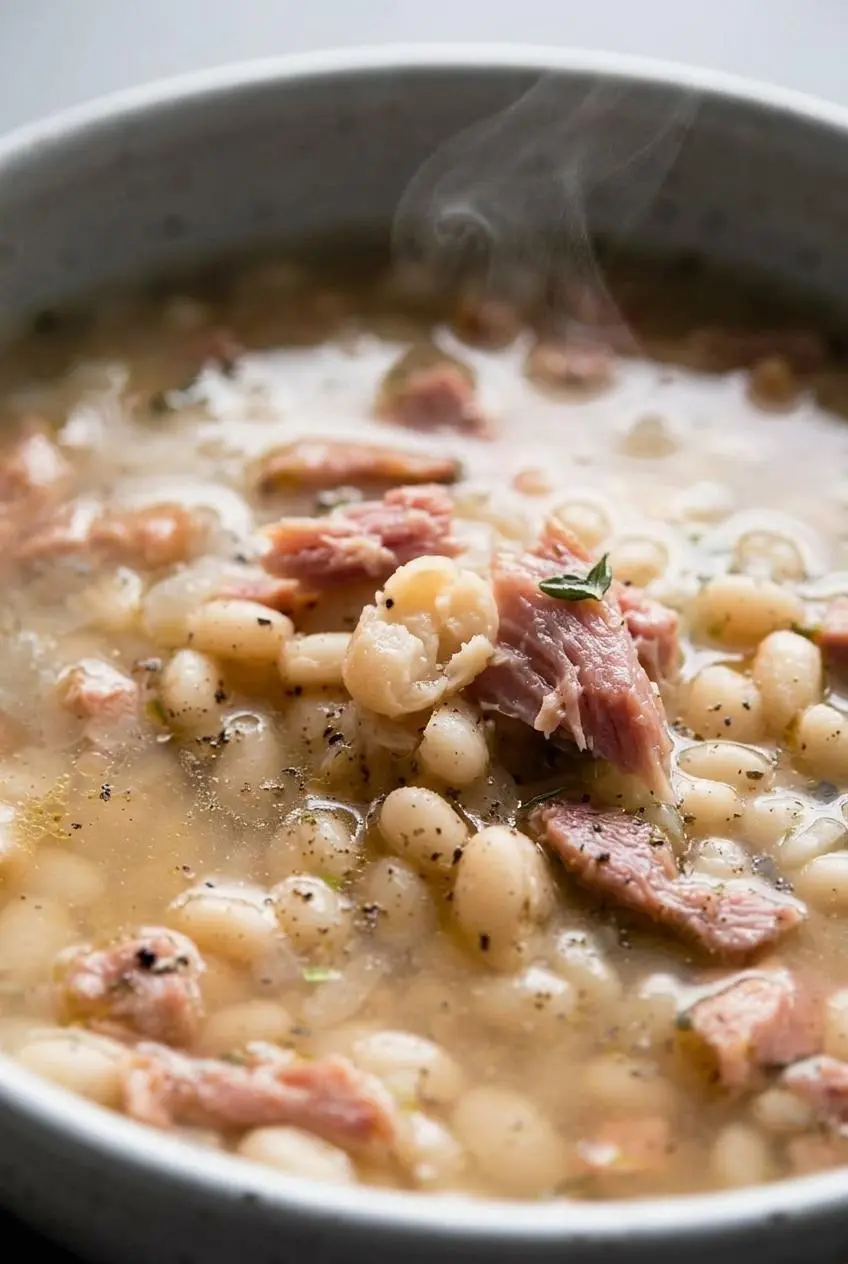
- For a thicker broth: Scoop up a ladle of fully cooked beans and press them against the side of the pot with the back of the ladle. Stir the mashed beans back in to release their natural starches without flour or dairy.
- For a thinner broth: Add water or low-sodium broth gradually while the soup is hot. Stir well before deciding whether it needs more liquid.
- For balanced salt: Wait until the ham bone has had time to season the pot before adding more salt. Cured pork can make the broth saltier as it cooks and reduces.
- For stubborn beans: Keep simmering gently with enough liquid to cover the beans. Older beans and hard tap water can slow softening, so patience works better than raising the heat.
- For beans that stay firm: Avoid vinegar, lemon juice, tomatoes, or other acidic additions until the beans are fully tender. Acid added early can slow down softening.
- For a brighter finish: Stir in a small splash of apple cider vinegar right before serving if the ham broth tastes especially rich. It sharpens the flavor without changing the soup’s smoky character.
A vigorous boil can burst bean skins before the centers turn tender. Keep the surface moving in slow, steady bubbles instead. The soup should smell deeply herbaceous and smoky, not aggressively boiled down.
Delicious Recipe Variations and Swaps
These options change the flavor or cooking approach while keeping the cozy white-bean character intact. Treat each one as a separate version rather than adding it to the main pot.
Vegetarian Smoky Navy Bean Soup
For a meatless version, use vegetable broth instead of the ham bone and add smoked paprika for the smoky edge usually supplied by cured pork. An optional Parmesan cheese rind can simmer with the beans for savory depth, then be removed before serving.
For a vegan bowl, skip the Parmesan rind and lean on smoked paprika, onion, garlic, thyme, rosemary, bay leaf, and a well-seasoned vegetable broth. Mash some cooked beans near the end to give the soup more body.
Slow Cooker Navy Bean Soup Method
For a hands-off version, soften the onion first with the garlic and herbs in olive oil, then transfer that mixture to a slow cooker with the soaked beans, ham bone, bay leaf, and cooking liquid. The quick stovetop sauté adds a deeper savory flavor than adding raw aromatics directly to the cooker.
Use enough liquid to keep the beans covered as they cook, checking occasionally because slow cookers vary in heat and evaporation. Cook until the beans crush easily and the ham pulls from the bone without resistance. Unsoaked beans can also work, but they need a longer cook and should be checked for tenderness before serving.
Healthier and Lean Protein Options
Smoked turkey wings can bring savory depth with a different flavor profile, while turkey bacon offers a lighter smoky note. Diced lean ham steak is another practical option when you want visible pieces of meat but do not have a bone.
- Quick canned-bean version: Use four rinsed 15-ounce cans of navy beans, reduce the liquid to about 6 cups, and simmer for 25 to 30 minutes so the herbs and ham flavor the broth.
- Smoky sausage variation: For a heartier white-bean dinner with seasoned meat, try this sausage white bean soup.
- Bacon option: Crisp diced bacon first, then use the rendered fat to cook the onion for a more pronounced smoky finish.
Storage and Reheating Guide

Let leftover soup cool, transfer it to covered containers, and keep it chilled. Thick bean soup is best divided into smaller portions so it cools more efficiently and is easier to reheat as needed.
Cold navy bean soup thickens substantially as its starches settle. Reheat it gently over medium-low heat and stir in a splash of water or broth until the consistency loosens. Heat only the portion you plan to serve, and keep the remaining soup chilled in its container.
For a supported refrigerator timeline, cooked soups and stews can be kept refrigerated for 3 to 4 days at 33°F to 40°F under food storage guidance for cooked soups and stews.
What to Serve with Navy Bean Soup

This soup needs something sturdy enough to catch the creamy broth. Warm skillet cornbread is a classic choice, especially with a little butter melting into the crumb. Crusty sourdough or a thick slice of country bread works just as well.
- Serve a crisp green salad with a tangy dressing to balance the rich ham broth.
- Add chopped flat-leaf parsley and a drizzle of extra-virgin olive oil for freshness at the table.
- Offer sliced scallions or extra black pepper for anyone who wants a sharper finish.
Conclusion
This hearty stovetop soup turns navy beans, smoky ham, and fresh herbs into a deeply satisfying meal with a naturally creamy broth.
Mash a few tender beans for extra body, then finish with a small splash of apple cider vinegar if the flavor needs lift. Serve it hot with good bread and enjoy every spoonful.
Frequently Asked Questions
What Gives Traditional Navy Bean Soup Its Flavor?
Traditional flavor comes from a few layered elements: Softened onion and garlic build the savory foundation. Fresh thyme, rosemary, bay leaf, and red pepper add herbal warmth. A ham bone or ham hock releases smoky, salty richness as it simmers. Slow-cooked beans add their own mellow, earthy flavor and naturally thicken the broth.
Do Navy Beans Need to Be Soaked Before Making Soup?
Soaking is highly useful because it helps dried beans cook more evenly and can shorten the simmering stage. Soaked beans also tend to soften more predictably. You can cook unsoaked beans, but expect them to need more time and check them carefully for tenderness.
How Do You Fix Navy Beans That Stay Hard After Simmering?
Keep the beans at a gentle simmer and add more water if the pot looks dry. Check that the beans are not especially old, since older dried beans can take much longer to soften. Also make sure acidic ingredients were not added before the beans became tender.
Can You Make Navy Bean Soup Using Canned Beans Instead of Dried?
Yes. Use four rinsed and drained 15-ounce cans of navy beans in place of the dried beans, reduce the liquid to about 6 cups, and simmer for 25 to 30 minutes. The soup will come together faster, though it may have a slightly lighter body than the dried-bean version.

Navy Bean Soup

Equipment
- Large pot or Dutch oven
- large bowl
- Ladle
- Wooden Spoon
Ingredients
- 1 lb dried navy beans
- 1 tablespoon olive oil
- 1 large onion diced
- 8 cloves garlic minced
- 1 tablespoon fresh thyme
- 1 teaspoon fresh rosemary
- 1/2 teaspoon crushed red pepper
- salt and pepper to season
- 1 bay leaf
- 1 ham bone with scraps
- 8-12 cups water or half water half low-sodium chicken broth
Instructions
- Place the dried navy beans in a large bowl and cover them with water by about 3 inches, then leave them to soak overnight or up to 24 hours. The beans should look plumper and smoother once they have absorbed water.
- Heat the olive oil in a large pot or Dutch oven over medium heat, then cook the diced onion for 6 to 8 minutes, stirring now and then. Stop when the onion is soft and translucent, with no deep browning.
- Stir in the garlic, thyme, rosemary, crushed red pepper, and a pinch of salt and pepper, and cook for 1 to 2 minutes. The herbs should smell fragrant and the garlic should stay pale rather than darkening.
- Add the bay leaf, drained beans, ham bone, ham scraps, and 10 cups of water, then bring the pot to a boil. Once bubbling, lower the heat, cover the pot, and maintain a quiet simmer for at least 1 to 2 hours, adding more water if needed.
- Lift out the ham bone when the beans are very soft, let it cool slightly, then remove any remaining meat with a fork or knife and discard the bone. A tender bean should crush easily when pressed against the side of the pot.
- Return the removed ham to the soup and season with additional salt and pepper to taste before serving. The finished broth should taste smoky and savory, with beans beginning to split slightly around their edges.