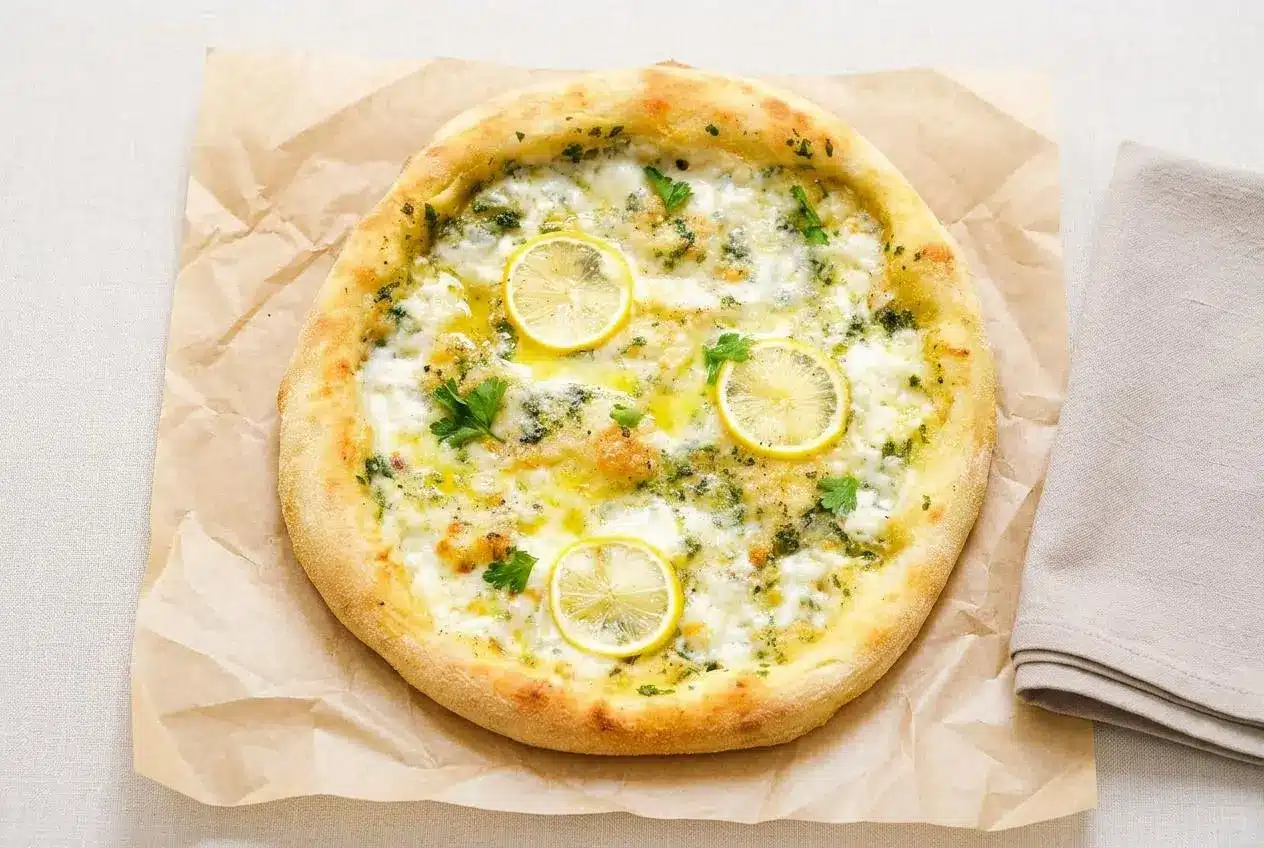
Lemon pizza is a bright white pizza with citrusy flavor, creamy cheese, and a crisp crust. The key is using paper-thin lemon and a hot oven so the flavor stays fresh, not bitter or soggy.
Lemon Pizza tastes fresh, savory, and zesty rather than sharp or sour. It’s a pizza bianca style, so there’s no tomato sauce, just a lemony olive oil base, cheese, and a few finishing touches.
It’s also one of those recipes that feels a little unexpected until you take the first bite and get why it works. The thin lemon, melty cheese, and black pepper are the whole trick.
Bring the dough to room temperature before stretching so it relaxes easily instead of springing back.
Why This Is the Only Lemon Pizza Recipe You Need
This version gives you the classic bright, cheesy lemon pizza first, then shows you how to branch out without turning the whole thing into a project. You get the base method, the ingredient logic, and the fixes for the two problems that usually ruin it: bitterness and a soft middle.
The flavor lands in a sweet spot between pizza bianca and something a little more summery. Lemon brings fragrance and lift, the cheese adds richness, and the parsley keeps everything tasting fresh instead of heavy.
If you’ve wondered what lemon pizza tastes like, think creamy, savory, peppery, and citrusy with no tomato sauce in the way. Done right, it feels restaurant-worthy but still very doable on a weeknight.
Key Ingredients for Lemon Pizza
Each ingredient here has a real job, from building a crisp base to adding creamy melt, bright aroma, and a clean finish that keeps the pizza balanced.
Pizza dough
- 1 ball Easy pizza dough (or store-bough dough)
Lemon Brine
- 2 tablespoon extra virgin olive oil
- 1 tablespoon water
- 1 tablespoon fresh parsley, chopped
- 1 small garlic clove, grated
- 1 teaspoon lemon zest
- 1 teaspoon lemon juice
- ¼ teaspoon fine salt
- ¼ teaspoon black pepper
Mozzarella
- 5 oz (150 grams) fresh mozzarella (or from ½ to ⅓ cup shredded firm mozzarella)
To finish
- 1 tablespoon lemon juice
- 2 tablespoon grated parmesan cheese
- 1 tablespoon fresh parsley
- Freshly ground black pepper, to taste
The lemon brine acts like a light sauce, giving the dough flavor without weighing it down. Olive oil softens the sharpness of the lemon, garlic adds depth, and parsley keeps the whole pizza tasting green and lively. Mozzarella gives you that mellow melt, while Parmesan adds the salty, nutty edge that makes citrus feel even brighter.
Choosing Your Lemons
Meyer lemons are the gentlest option here. They’re a little sweeter and less acidic, so the finished pizza tastes rounder and softer. If you can find them, they’re especially good when you want to add thin lemon slices as a topping in one of the variations below.
Regular lemons work well too, but they need a little more care. Slice them as thinly as possible, remove any seeds, and keep the amount restrained so the flavor stays bright instead of harsh. Thin slices caramelize in the oven and taste much more balanced than thick ones.
The Best Cheeses
Mozzarella is the main melt here, and mild cheese is exactly what this pizza wants. It softens the citrus and gives you creamy pockets without competing with the lemon. Fresh mozzarella tastes lovely, but it carries more moisture, so blotting it well matters if you want a crisp crust.
Parmesan goes on at the end for a sharper finish. It adds salt, nuttiness, and a dry, savory note that keeps the pizza from tasting flat. If you want an optional variation later, ricotta is another natural partner for lemon because it adds richness without overwhelming the brightness.
I always take an extra minute to pat fresh mozzarella dry with paper towels because that small step makes the crust noticeably crisper.
Pizza Dough Options
This pizza works with homemade dough or a good store-bought ball of dough. The main thing is handling it gently so it keeps some air and bakes up with better texture.
The recipe is built around Easy pizza dough, but store-bought dough is completely fine if that’s what fits dinner tonight. Whichever you use, let it come to room temperature before shaping so it stretches easily with your fingertips rather than fighting back.
How to Make Lemon Pizza
This method is straightforward, but the details matter. A well-heated baking surface, a loose lemon brine, and properly dried mozzarella are what keep the pizza crisp and bright.
Pizza dough
- Prepare the Easy pizza dough through step 5, including shaping the dough and fully preheating the oven with your pizza stone inside.
A hot baking surface should be ready before the topped pizza goes in so the bottom starts crisping right away.
Lemon pizza
- Cut the fresh mozzarella into ½ inch thick pieces if needed, and blot away excess moisture with paper towels when it looks very wet.
The cheese should feel moist but not dripping, which helps it melt without pooling water on the crust. - Set the dough on a sheet of parchment paper and press it outward from the center with your fingertips until it reaches about 9×13 inches, then move it onto a pizza peel or the back of a rimmed baking sheet.
The dough should look evenly stretched with a little thickness left around the edges, not rolled flat and dense. - Combine the lemon brine ingredients in a glass jar with a lid and shake until the mixture looks smooth and blended.
When it emulsifies, the oil, lemon, garlic, and herbs distribute more evenly instead of separating on the dough. - Dimple the surface of the stretched dough with your fingers, spoon or pour the brine evenly over the top, and scatter the mozzarella over it.
The brine should settle lightly into the dimples rather than forming heavy puddles. - Slide the pizza onto the preheated pizza stone and bake until the crust is nicely browned and the cheese is bubbling and golden in spots, about 8 to 10 minutes in a fan oven.
You’ll notice the aroma turn sweeter and toastier as the lemon and garlic cook, which is a good sign it’s nearly done. - Finish the hot pizza with the lemon juice, parmesan cheese, parsley, and black pepper, then slice and serve right away.
The final hit of lemon should smell fresh and lively against the browned cheese and crust.
If you like a little heat, chili flakes are great on top after baking. Keep them optional so the lemon still stays front and center.
Tips for Perfect Lemon Pizza

Lemon pizza is easy once you know what can go wrong. Most problems come down to moisture, heat, or lemon prep, and all three are easy to control.
The No-Soggy-Pizza Solution
A crisp bottom starts before the toppings ever touch the dough. Use a baking surface that’s fully heated, keep wet ingredients under control, and don’t treat the lemon brine like a heavy sauce.
| Problem | Likely Cause | Fix |
|---|---|---|
| Soft center | Baking surface not hot enough | Preheat a pizza stone or an inverted baking sheet well before baking |
| Watery top | Fresh mozzarella too wet | Pat the cheese dry before adding it |
| Limp slices | Too much topping or brine | Use a thin, even layer and keep the topping light |
| Dense crust | Dough rolled out too hard | Stretch it gently with your fingers instead of using a rolling pin |
The brine should coat the dough, not soak it. Think sheen, not puddles. That one visual check saves a lot of frustration.
How to Stop Lemons From Tasting Bitter
Bitterness almost always comes from slices that are too thick. Thin lemon softens, caramelizes, and tastes pleasantly tart. Thick lemon stays chewy and pushes the pith to the front.
If you’re using whole slices in a variation, slice them paper-thin and remove the seeds before they go on the pizza. A mandoline helps with even slices, but use it carefully and work slowly. Once baked, the lemon should look slightly translucent at the edges and smell floral instead of sharp.
Meyer lemons give you more wiggle room because they’re naturally sweeter. With regular lemons, extra-thin slicing matters even more, and a small drizzle of honey after baking can help round out the tartness.
Popular Lemon Pizza Variations
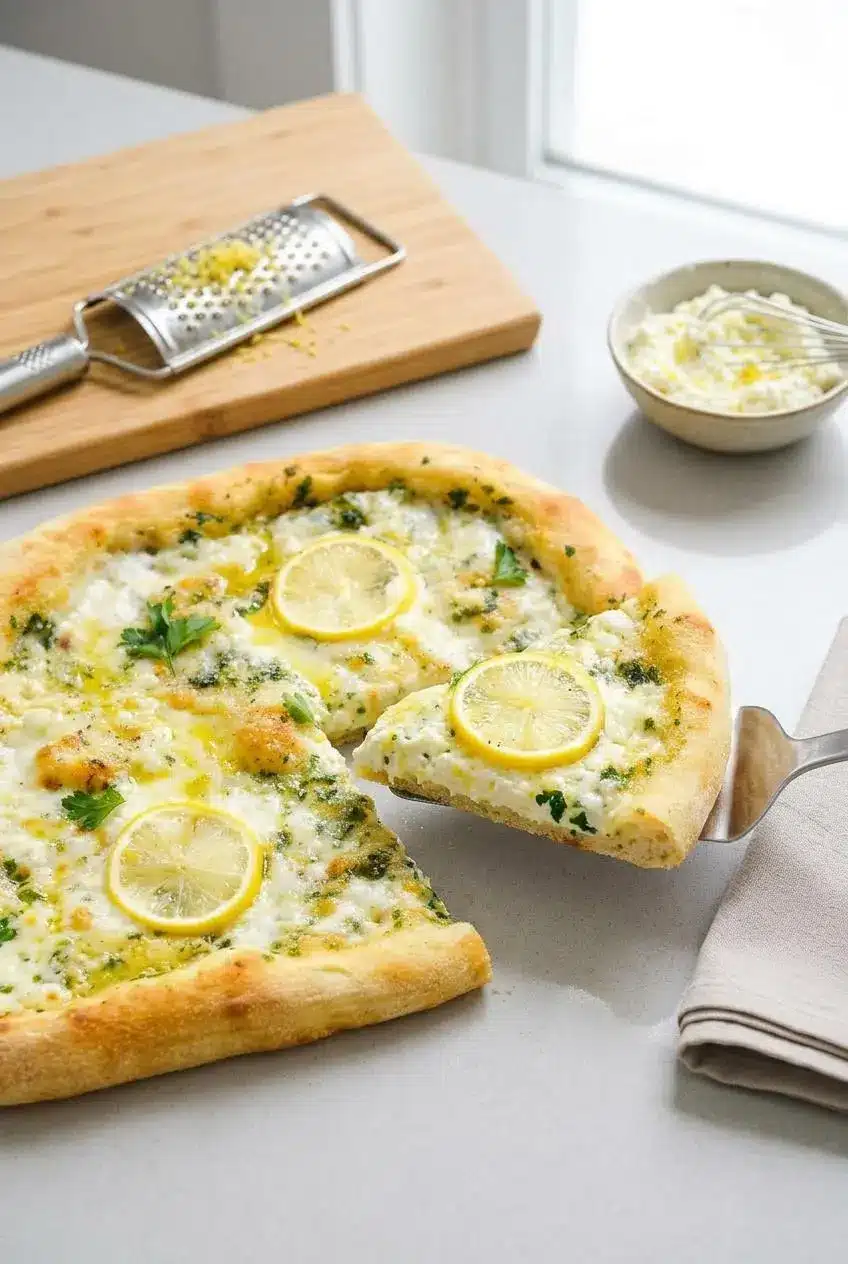
The brine-based version is a great starting point, but lemon pizza has a few popular paths. Some are creamier, some fresher, and some lean into sweet heat.
| Variation | Base | Toppings | Flavor Profile |
|---|---|---|---|
| Creamy Lemon Ricotta Pizza | Ricotta with lemon zest | Mozzarella, Parmesan | Rich, mellow, creamy |
| Fresh Lemon and Arugula Pizza | Base recipe | Arugula, lemon juice, olive oil | Peppery, bright, fresh |
| Spicy Lemon Pizza with Hot Honey | Base recipe | Hot honey after baking | Sweet, tart, spicy |
| Zesty Lemon and Pesto Pizza | Pesto instead of brine | Cheese, thin lemon slices | Herby, bold, savory |
Creamy Lemon Ricotta Pizza
This is the move if you want a softer, richer lemon pizza without baking whole lemon slices. Spread a thin layer of whole-milk ricotta mixed with lemon zest and a pinch of salt over the dough before adding the mozzarella.
The ricotta should be smooth and spreadable, not watery. This version tastes rounder and creamier than the brine-based pizza, and it pairs especially well with extra black pepper or a little basil on top.
Fresh Lemon and Arugula Pizza
For a lighter salad-style finish, bake the pizza first, then pile fresh arugula on top right before serving. Add a squeeze of lemon juice and a light drizzle of olive oil so the greens just barely soften from the heat.
This version gives you more crunch and a peppery contrast that works really well with the melted cheese. It’s especially good for a warm-weather dinner with a simple green salad on the side.
Spicy Lemon Pizza with Hot Honey
A drizzle of hot honey after baking changes the whole mood of the pizza. The sweetness calms the tart lemon, while the heat wakes up the cheese and black pepper.
Use it lightly at first, then add more if you want a stronger sweet-spicy finish. This variation feels a little bolder and a little fancier, but it still starts with the same easy base.
Zesty Lemon and Pesto Pizza
Swap the lemon brine for a thin layer of pesto if you want a greener, more intense flavor. Then add the cheese and, if you like, a few paper-thin lemon slices over the top before baking.
This one tastes more herb-forward and savory, with basil and lemon doing most of the heavy lifting. Store-bought pesto works well here, so it’s an easy way to change the flavor without changing the method.
Serving and Storage
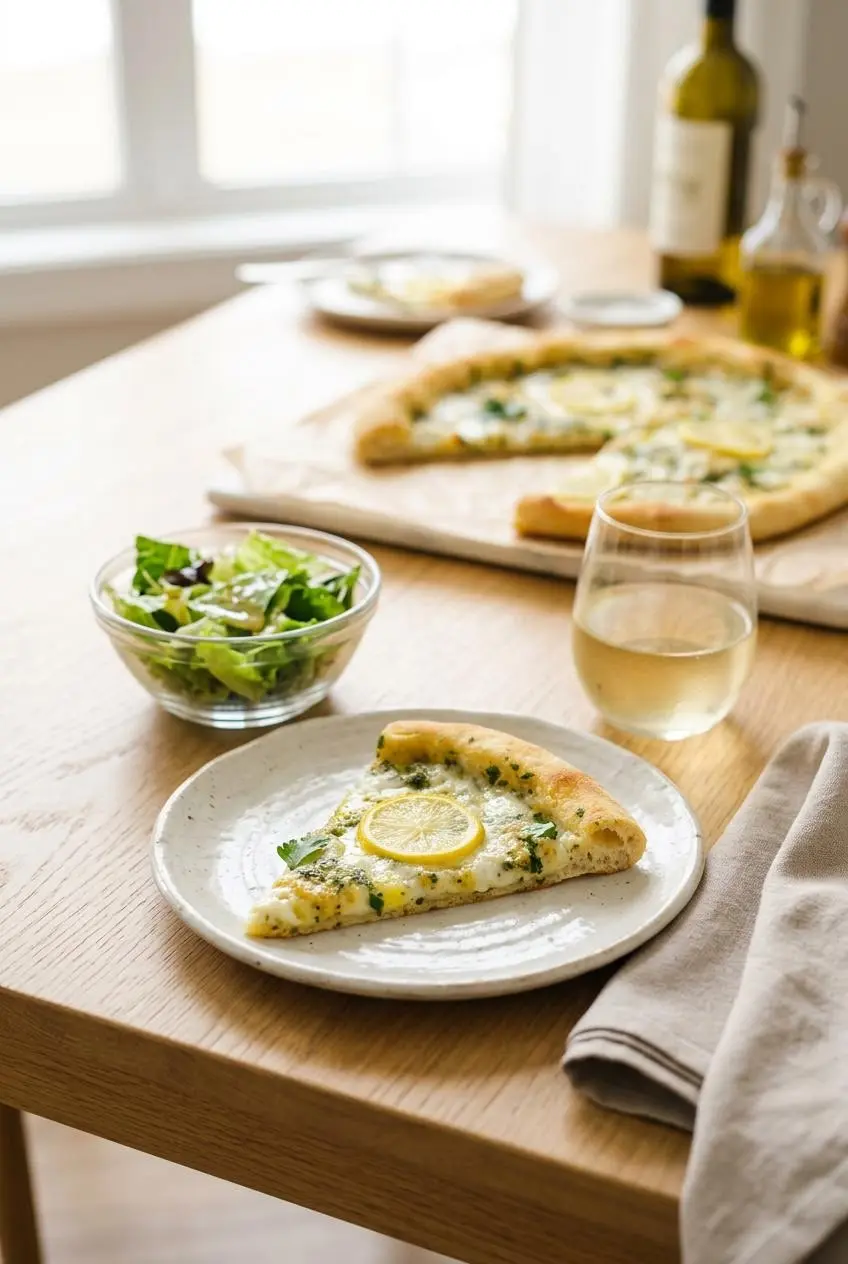
Lemon pizza shines when it’s served hot, while the crust still has crackle and the lemon smells fresh. If you do have leftovers, a little care helps keep the texture in good shape.
What to Serve with Lemon Pizza
A simple green salad with a light vinaigrette is the cleanest pairing because it keeps the meal fresh and balanced. If you want to keep the same lemon-and-cheese mood going another night, Lemon Parmesan Pasta makes a natural follow-up dinner.
For something a bit more elegant, cut the pizza into small squares and serve it as an appetizer. You can also top the baked crust with a little crème fraîche and smoked salmon for a more dressed-up party version.
How to Store and Reheat Leftovers
Let leftover slices cool, then store them in an airtight container in the refrigerator. For food safety, pizza leftovers keep for 3 to 4 days when properly chilled, as noted in the cold food storage chart for pizza leftovers.
To reheat, use the oven or an air fryer so the crust can crisp again. The microwave will warm it through, but it tends to soften the bottom and dull the texture.
Conclusion
Lemon pizza is a smart little twist on pizza bianca that delivers a lot of flavor without a complicated topping list. Once the dough is hot and the cheese is properly handled, the whole thing comes together fast.
If you remember one thing, make it this: keep the lemon very thin and the pizza lightly topped. Start with the base version, then play with ricotta, arugula, hot honey, or pesto when you want a different mood.
Frequently Asked Questions About Lemon Pizza
Can You Eat the Lemon Slices on Pizza?
Yes. When the slices are paper-thin, the rind and pith soften in the oven and taste tender rather than harsh. They also caramelize a bit as they bake, which makes the flavor less bitter and slightly sweeter. Thick slices are the problem, not lemon itself.
How Do You Keep Lemon Pizza From Getting Soggy?
Start with a very hot pizza stone or baking surface. That helps the bottom set quickly instead of steaming. Also pat the mozzarella dry, keep the lemon brine thin, and avoid piling on extra wet toppings. Lemon pizza does best when it stays light.
What Is the Best Cheese for Lemon Pizza?
Mozzarella and Parmesan are the best core pair for this recipe. Mozzarella melts smoothly, and Parmesan adds salty depth that balances the citrus. Ricotta is also excellent as an optional variation when you want a creamier style. Provolone or fontina can work too, but keep them as swaps rather than additions to the main recipe.
Should I Use Meyer Lemons or Regular Lemons?
Meyer lemons are the gentler choice because they’re sweeter and less acidic. They make the pizza taste softer and a little more rounded. Regular lemons are still great, but slice them extra-thin so they bake up tender. If they taste especially tart, a little honey after baking can help balance them.
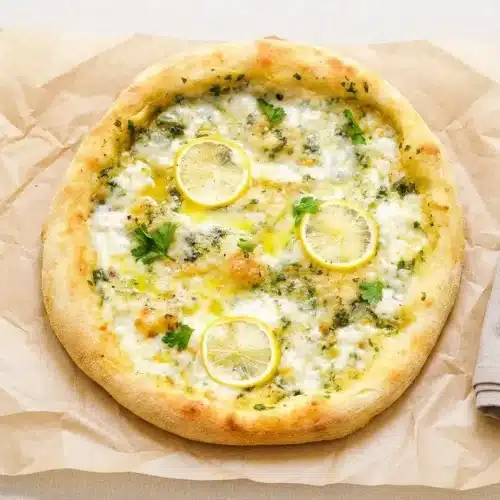
Lemon Pizza

Equipment
- Pizza stone
- Pizza Peel
- Parchment Paper
Ingredients
Pizza dough
- 1 ball Easy pizza dough (or store-bough dough)
Lemon Brine
- 2 tablespoon extra virgin olive oil
- 1 tablespoon water
- 1 tablespoon fresh parsley, chopped
- 1 small garlic clove, grated
- 1 teaspoon lemon zest
- 1 teaspoon lemon juice
- ¼ teaspoon fine salt
- ¼ teaspoon black pepper
Mozzarella
- 5 oz fresh mozzarella (150 grams) (or from ½ to ⅓ cup shredded firm mozzarella)
To finish
- 1 tablespoon lemon juice
- 2 tablespoon grated parmesan cheese
- 1 tablespoon fresh parsley
- Freshly ground black pepper, to taste
Instructions
Pizza dough
- Prepare the Easy pizza dough through step 5, including shaping the dough and fully preheating the oven with your pizza stone inside. A hot baking surface should be ready before the topped pizza goes in so the bottom starts crisping right away.
Lemon pizza
- Cut the fresh mozzarella into ½ inch thick pieces if needed, and blot away excess moisture with paper towels when it looks very wet. The cheese should feel moist but not dripping, which helps it melt without pooling water on the crust.
- Set the dough on a sheet of parchment paper and press it outward from the center with your fingertips until it reaches about 9×13 inches, then move it onto a pizza peel or the back of a rimmed baking sheet. The dough should look evenly stretched with a little thickness left around the edges, not rolled flat and dense.
- Combine the lemon brine ingredients in a glass jar with a lid and shake until the mixture looks smooth and blended. When it emulsifies, the oil, lemon, garlic, and herbs distribute more evenly instead of separating on the dough.
- Dimple the surface of the stretched dough with your fingers, spoon or pour the brine evenly over the top, and scatter the mozzarella over it. The brine should settle lightly into the dimples rather than forming heavy puddles.
- Slide the pizza onto the preheated pizza stone and bake until the crust is nicely browned and the cheese is bubbling and golden in spots, about 8 to 10 minutes in a fan oven. You’ll notice the aroma turn sweeter and toastier as the lemon and garlic cook, which is a good sign it’s nearly done.
- Finish the hot pizza with the lemon juice, parmesan cheese, parsley, and black pepper, then slice and serve right away. The final hit of lemon should smell fresh and lively against the browned cheese and crust.