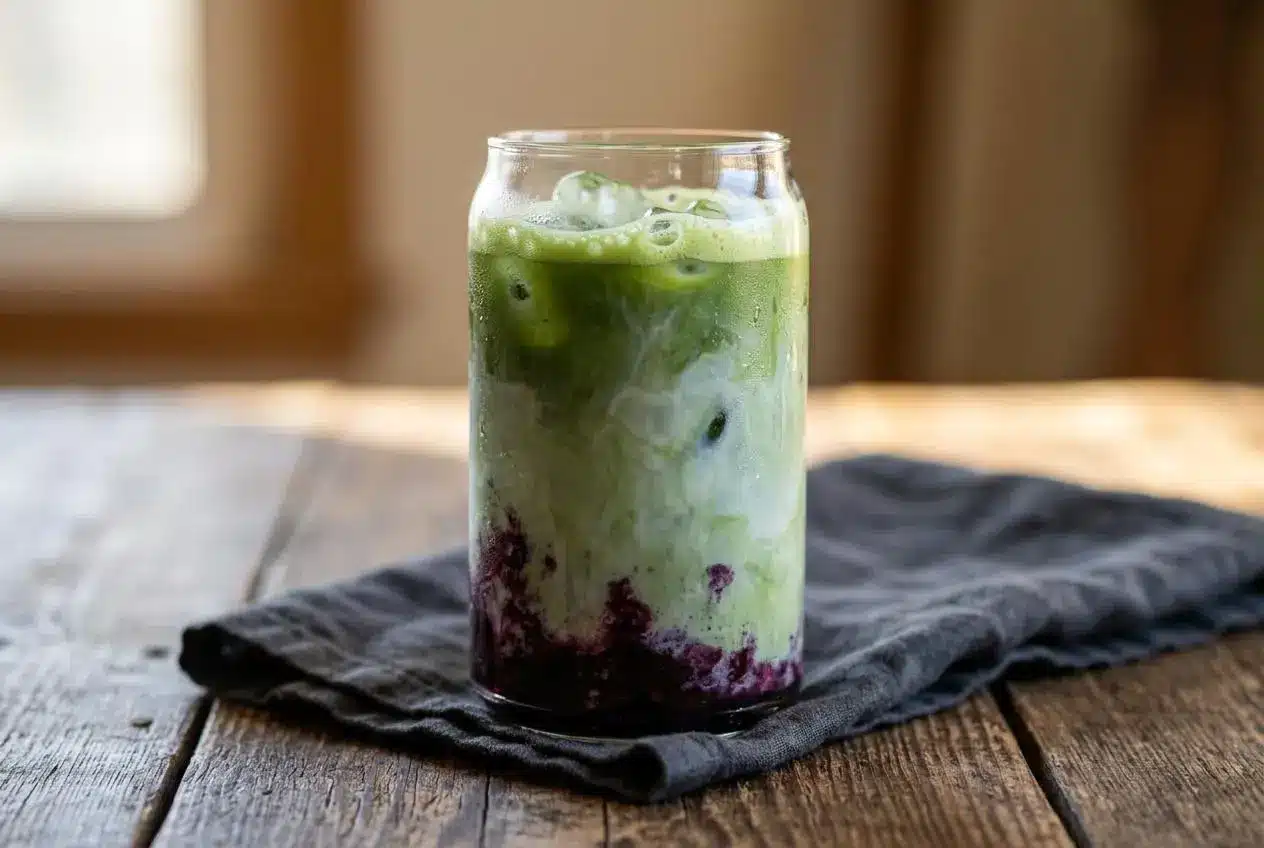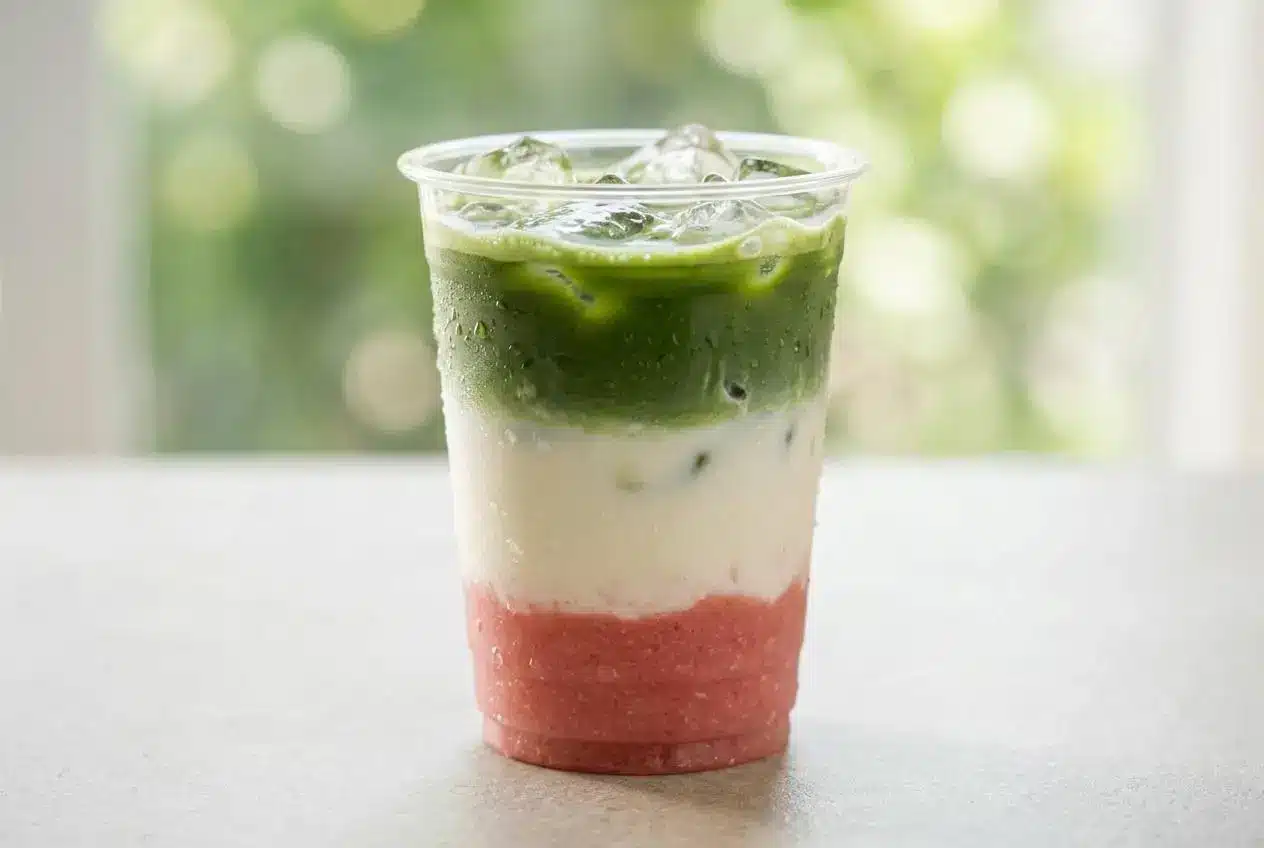
A Guava Matcha Latte is a layered iced drink made with sweet guava, earthy matcha, and creamy milk. It tastes tropical and refreshing, with a mellow green tea finish and a beautiful café-style look.
Guava Matcha Latte brings together fruity pink guava, whisked matcha, and cold milk in one creamy, lightly earthy drink. It’s the kind of iced latte that feels a little fancy but is very doable at home.
The flavor lands somewhere between tropical fruit milk and a matcha latte, with guava softening matcha’s grassy edge. The best part is the layered pour, and the small tricks that make it work.
Sift the matcha before you do anything else, and the whole drink gets easier.
What Is a Guava Matcha Latte?
This drink is a cold layered latte made with guava, matcha, milk, and ice. The guava brings sweetness and tropical aroma, the matcha adds an earthy green tea note, and the milk rounds everything out so the flavor feels smooth instead of sharp.
What does it taste like? Think creamy tropical fruit with a gentle savory finish from the tea. Some people compare it to a guava creamsicle with a greener, more grown-up edge. If you already like Japanese tea drinks, the earthy side lands in the same family as a Hojicha Latte, though this one is brighter and fruitier.
It’s also a popular café-style drink for good reason. The layers look striking at first, then they swirl together as you drink, which is part of the fun.
Choosing Your Ingredients
Each ingredient pulls its weight here, building color, creaminess, sweetness, aroma, and that clean earthy finish that keeps the drink balanced.
- 1½ tsp matcha powder
- ¼ cup water
- 1 tbsp guava jam or puree
- 1 cup milk
- 1 cup ice
- A pinch of salt
Matcha gives the latte its bold green color and earthy backbone. Guava jam or puree brings the tropical sweetness and that rosy fruit layer at the bottom of the glass. Milk softens the matcha, adds body, and helps the whole drink taste creamy and rounded instead of intense.
I always run matcha through a fine-mesh strainer first because even tiny clumps can turn a smooth latte gritty fast.
The Best Matcha for Lattes
If you’re wondering whether to buy ceremonial grade or culinary grade matcha, this is the quick answer: for lattes, a good culinary grade is usually the better choice.
Ceremonial grade matcha is more delicate, a little sweeter, and best when whisked with water and enjoyed on its own. In a latte, especially one with guava, some of those subtle notes can get lost. Culinary grade matcha has a stronger flavor that stands up better to milk and fruit, so the drink still tastes like matcha after everything is combined.
A high-quality culinary matcha also makes more sense for everyday use. It’s usually more budget-friendly, and you can use the rest in bakes like this Matcha Brownie Recipe if you want another way to use the tin.
Whatever grade you choose, look for a vibrant green powder rather than a dull olive one. Fresh color usually means fresher flavor.
Guava: Jam, Puree, or Syrup?
You can make this latte with jam, puree, or syrup. The best option depends on how sweet you want it, how strong you want the guava flavor to be, and how clean you want the layers to look.
| Guava form | Flavor intensity | Sweetness | Texture | Best for layering |
|---|---|---|---|---|
| Jam | Strong and fruity | Usually the sweetest | Thick, needs loosening | Very good once stirred with a little warm water |
| Puree | Fresh and natural | Less sweet | Soft and pulpy | Good, though it can look cloudier |
| Syrup | Depends on how it’s made | Easy to control | Pourable and smooth | Best for crisp, even layers |
Jam is the easiest starting point because it’s widely available and gives strong guava flavor fast. If you stir it with a little warm water, it turns into a syrup that is thin enough to pour but thick enough to coat a spoon. Puree tastes more like fresh fruit, but it may settle differently in the glass. Syrup gives the cleanest look and the most control, especially if you want a more polished copycat-style drink.
How to Make a Guava Matcha Latte (Step-by-Step)
- Sift the matcha powder into a bowl, pour in the water, and whisk for 20 to 30 seconds in a quick zig-zag motion.
The matcha should look smooth and lightly foamy, with tiny uniform bubbles across the top like jade-colored froth. - Spoon the guava jam or puree into the bottom of a glass, then stir in a small splash of warm water until it loosens into a syrupy layer; add the pinch of salt here if you want the salted version.
The guava mixture should pour easily but still cling lightly to the spoon instead of looking watery. - Fill the glass with ice, pour in the milk, then slowly top with the whisked matcha, pouring over the back of a spoon or onto an ice cube for clearer layers.
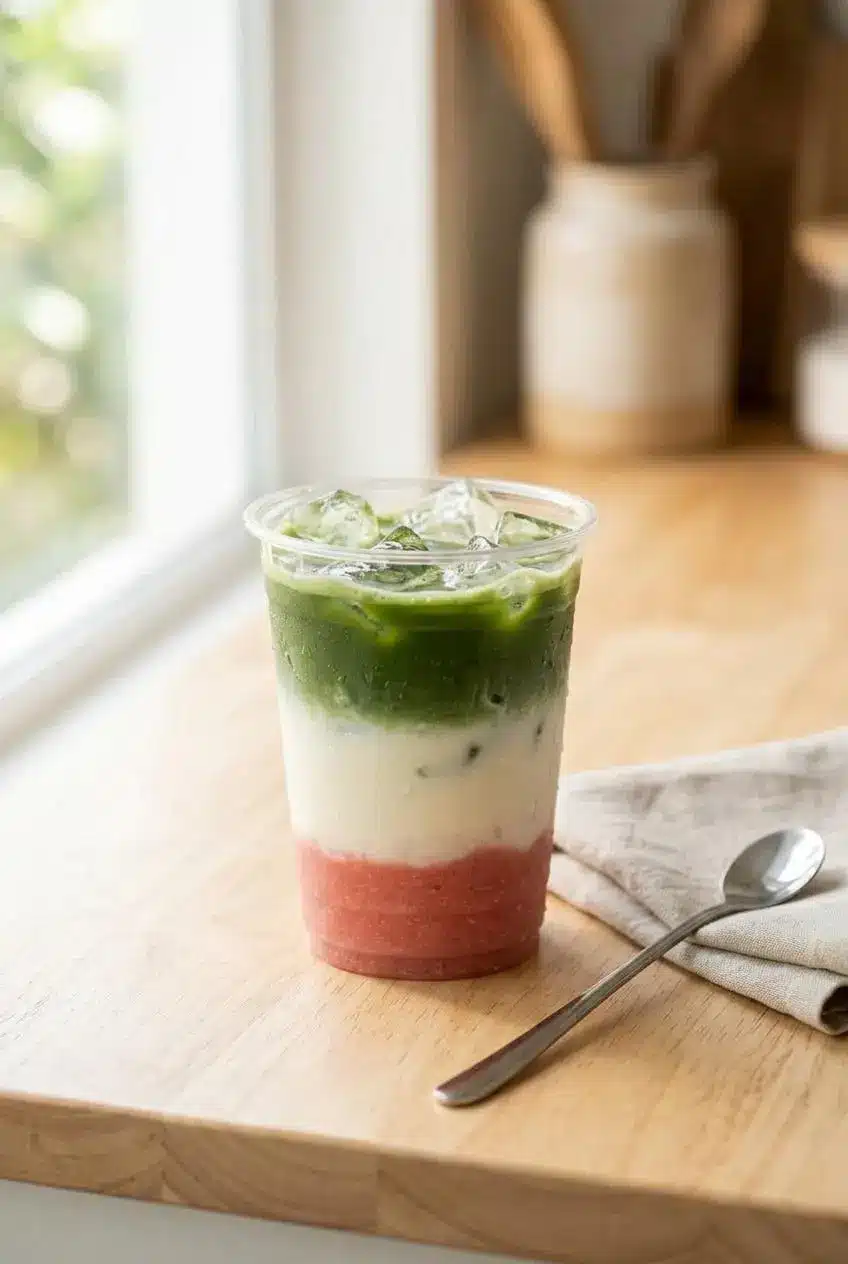
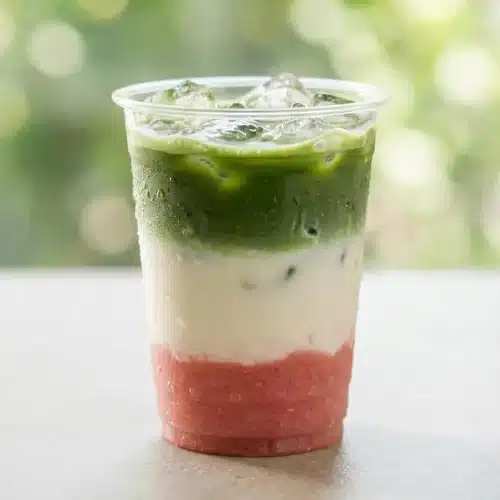
You should see distinct bands of pink guava, pale milk, and green matcha before they start to mingle. - Stir the drink before sipping and serve right away.
The final latte should taste creamy, fruity, and earthy with no jam lumps hiding at the bottom.
If you want the prettiest layered look, serve it as soon as it’s assembled. If you wait too long, the colors naturally start to blur, which is normal for this kind of drink.
Tips for a Perfect Latte
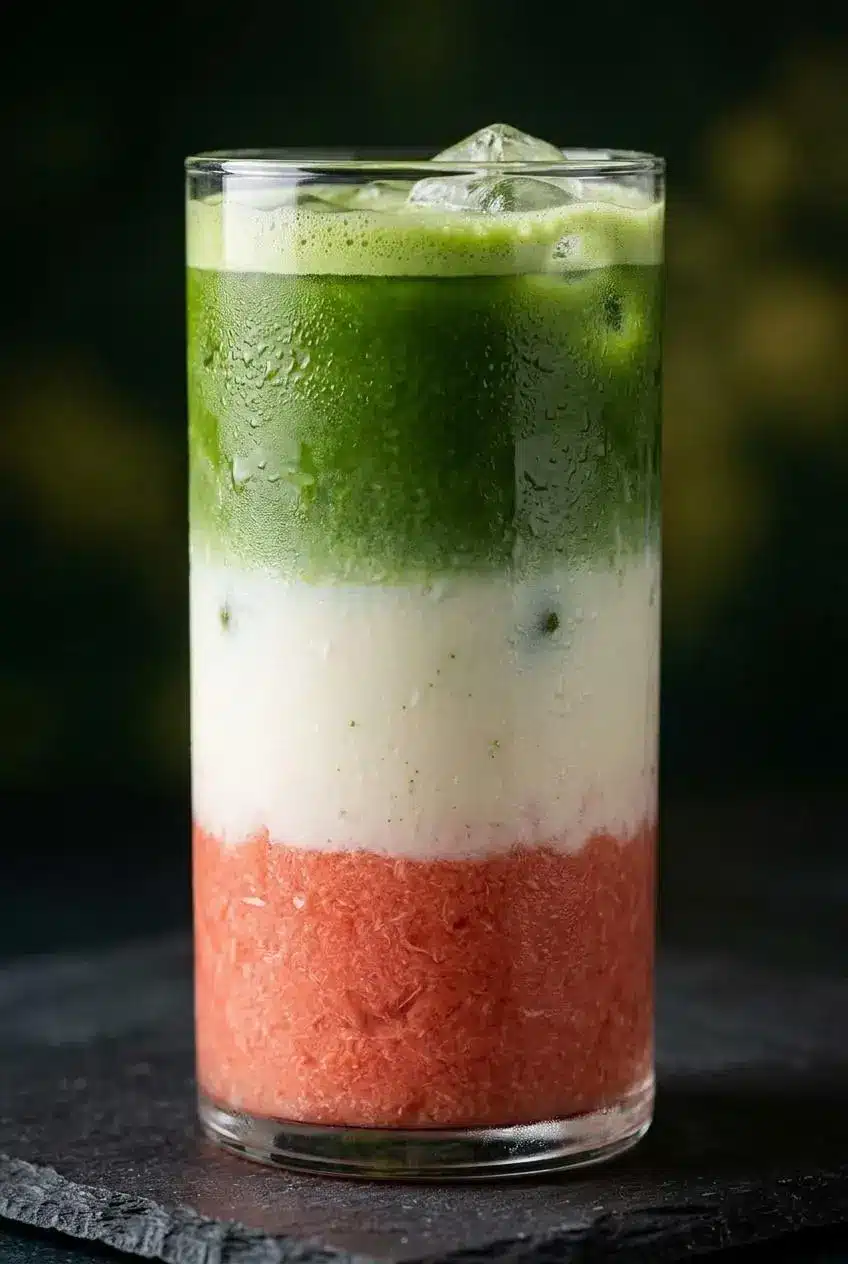
Small details make a big difference here. A smoother matcha, a better guava layer, and a slower pour are what turn a good homemade drink into one that feels café-quality.
How to Get Clean, Beautiful Layers
Layering works because the ingredients move at different speeds through the glass. Start with the densest layer first, which is the guava. Then add ice so the milk has something to settle around instead of crashing into the bottom layer.
Pour the milk slowly, close to the ice. Then add the matcha last, and pour it gently over the back of a spoon or directly onto an ice cube. That slows the matcha down so it rests on top instead of diving straight into the milk.
Do not worry if the layers begin to mix as you drink. That’s exactly what should happen.
Troubleshooting Common Latte Problems
Most problems come down to one of four things: clumps, water temperature, pouring speed, or sweetness balance.
| Problem | Likely cause | Fix |
|---|---|---|
| My matcha is clumpy or gritty | The powder was added without sifting or whisked too gently | Sift the matcha first and whisk briskly in a W or M motion |
| My latte tastes bitter | The water was too hot or the matcha quality is harsh | Use hot water rather than boiling water and choose a better quality matcha |
| My layers look muddy | The milk or matcha was poured in too fast | Pour each layer slowly and use ice to soften the drop |
| It’s not sweet enough | The guava layer is too light for the amount of milk | Add a bit more guava jam or use a sweeter guava syrup next time |
If your guava layer sits in stubborn chunks at the bottom, loosen it more before building the drink. That one fix solves a lot.
Variations and Customizations
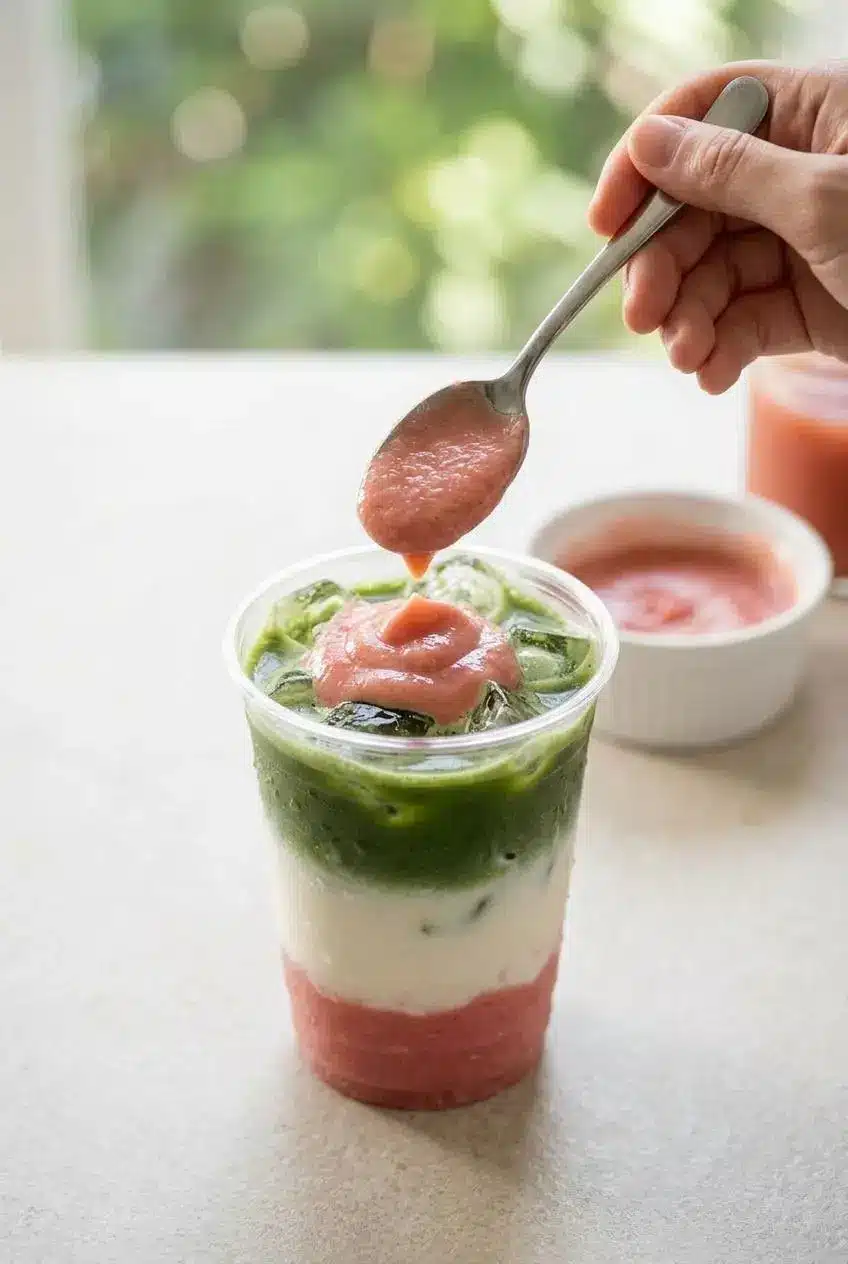
This drink is very flexible once you have the basic method down. Keep the original recipe as your starting point, then change the milk, temperature, or finish to suit your mood.
Hot Guava Matcha Latte
To make a hot version, warm the milk gently until steaming but not boiling. Stir the guava jam directly into the hot milk until fully dissolved, then pour it into a mug. Whisk the matcha separately with the water and pour it over the top just before serving.
This version tastes softer and more rounded than the iced latte. The guava feels jammier, and the matcha comes through as a warm earthy finish instead of a bright top note.
Vegan & Dairy-Free Options
This latte is easy to make dairy-free. Oat milk is the closest match for a creamy coffee-shop style texture, and it pairs especially well with pink guava because it has a mild, slightly sweet flavor of its own.
Almond milk gives a lighter drink and lets the guava stand out more. Soy milk makes a fuller, richer latte and holds up well against stronger matcha. If you like experimenting with other fruity matcha drinks, a Yuzu Matcha Latte is another bright option worth trying.
Unique Twist: Salted Guava Cream Foam
If you want a more luxurious finish, top the latte with a salted guava cream foam. Whip heavy cream with a spoonful of guava puree and a pinch of salt until it forms a soft, spoonable foam, then float it over the drink.
The flavor is sweet, salty, creamy, and tropical all at once. It also softens the matcha’s edge in a really pleasant way. For another creamy matcha idea with a different base, Matcha Horchata takes things in a totally different but equally fun direction.
Make It a Pret Copycat
For a café-style version closer to the popular oat milk guava matcha drinks, use oat milk and swap the jam for a smooth homemade guava compote or syrup. Simmer guava with a little sugar and water just until it becomes thick and pourable, then strain it if you want the cleanest texture.
This version tastes fresher and gives you more control over sweetness. If you enjoy fruitier matcha drinks, banana is another natural pairing, and this Banana Matcha Latte leans extra creamy.
How to Store Leftovers
This latte is best right after you make it, when the layers are clear and the ice is still crisp. Once mixed, it loses some of that contrast and fresh texture.
If you want to prep ahead, keep the components separate and chilled. Store any milk-based part in the refrigerator, and keep your fridge at 40°F or below for perishable ingredients like milk, as explained in refrigeration and food safety. Stir the guava layer again before assembling, since thicker fruit mixtures can settle as they sit.
For the best texture, assemble the final drink just before serving rather than storing it fully mixed.
Conclusion
This is an easy iced latte with a lot going for it: creamy milk, bright guava, earthy matcha, and a layered look that feels a little special without being fussy.
If you remember one thing, make it this: sift the matcha first. That single step keeps the drink smooth, and the salted guava cream foam is a very good excuse to make it again.
Frequently Asked Questions (FAQ)
What’s the best type of matcha for a guava matcha latte?
A high-quality culinary grade matcha is usually the best fit for this latte. It has enough strength to stand up to milk and guava. It’s more cost-friendly for lattes than ceremonial grade. Ceremonial grade is better when you want to drink matcha mostly on its own with water.
My matcha is clumpy, what did I do wrong?
Clumps usually start before the whisking even begins. Sift the powder first to break up static-packed lumps. Whisk briskly in a W or M motion, not in lazy circles. If the matcha still looks grainy, it may need a bit more whisking time.
Can I make a big batch of this ahead of time?
It’s best made fresh, especially if you want the layered look and the cold, clean texture. Prep the guava mixture and matcha separately. Keep them chilled and combine with fresh ice and milk when ready to serve. Avoid storing the fully assembled latte if presentation matters.
What can I use if I can’t find guava jam?
You have a few good options. Guava puree works well and tastes more like fresh fruit. Guava nectar can work, though it’s thinner and may give a softer flavor. You can also make a quick guava syrup with fresh or frozen guava, sugar, and water.
Guava Matcha Latte

Equipment
- bowl
- Whisk
- Fine mesh strainer
- Glass
- Spoon
Ingredients
- 1½ tsp matcha powder
- ¼ cup water
- 1 tbsp guava jam or puree
- 1 cup milk
- 1 cup ice
- 1 pinch salt
Instructions
- Sift the matcha powder into a bowl, pour in the water, and whisk for 20 to 30 seconds in a quick zig-zag motion. The matcha should look smooth and lightly foamy, with tiny uniform bubbles across the top like jade-colored froth.
- Spoon the guava jam or puree into the bottom of a glass, then stir in a small splash of warm water until it loosens into a syrupy layer; add the pinch of salt here if you want the salted version. The guava mixture should pour easily but still cling lightly to the spoon instead of looking watery.
- Fill the glass with ice, pour in the milk, then slowly top with the whisked matcha, pouring over the back of a spoon or onto an ice cube for clearer layers. You should see distinct bands of pink guava, pale milk, and green matcha before they start to mingle.
- Stir the drink before sipping and serve right away. The final latte should taste creamy, fruity, and earthy with no jam lumps hiding at the bottom.