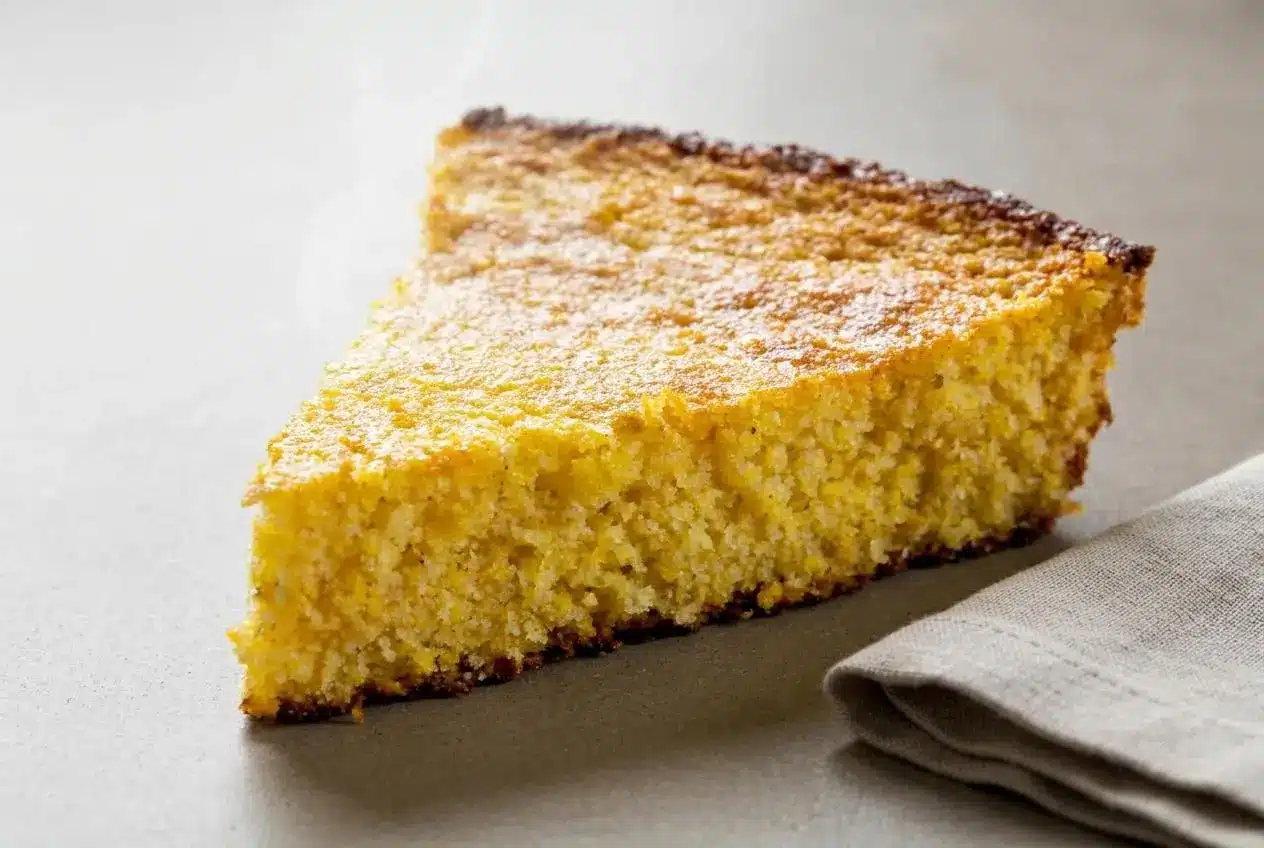
This gluten free cornbread recipe uses certified gluten-free cornmeal, room-temperature yogurt and egg for tenderness, and a hot buttered pan for golden edges and a cohesive crumb.
Warm, buttery cornbread with a crisp edge is completely possible without wheat flour. This version bakes into a golden square or skillet round with a rustic cornmeal texture and enough moisture to stay pleasantly tender.
The batter comes together quickly, while a short rest smooths out the coarse cornmeal texture. That sizzling skillet crust is worth the wait.
Set the yogurt, egg, and cooled melted butter on the counter before mixing so the batter stays smooth and evenly blended.
Essential Ingredients for Gluten-Free Cornbread
Every ingredient supports the finished loaf, from the cornmeal’s hearty texture to the yogurt’s moisture, the egg’s structure, and the honey’s rounded sweetness.
- 2 cups coarsely ground yellow cornmeal
- 2 teaspoons baking powder
- 1 teaspoon baking soda
- 1 teaspoon kosher salt
- 1 1/2 cups plain yogurt, at room temperature
- 4 tablespoons unsalted butter, melted and cooled
- 1 egg, at room temperature, beaten
- 4 tablespoons honey
Coarsely ground yellow cornmeal gives the bread its familiar grainy bite and sunny color. Baking powder and baking soda work together to lift the batter, while kosher salt keeps the honey and corn flavor from tasting flat.
Plain yogurt brings moisture and gentle acidity, which softens the coarse cornmeal and helps the baking soda do its job. The egg supplies binding structure that gluten would usually provide, and melted butter adds richness while helping the crumb stay tender. Honey rounds out the corn flavor without making the bread taste like cake.
I let melted butter cool until it is warm rather than hot, since very hot butter can make room-temperature yogurt tighten into little lumps during mixing.
Cornmeal Selection and Grind Types
For this cornbread, coarsely ground cornmeal delivers the best traditional texture. It bakes into a sturdy but tender crumb with noticeable corn flavor, rather than a smooth cake-like interior.
Medium-grind cornmeal makes a finer, softer crumb, but it loses some of that rustic bite. Corn flour is much more finely milled and behaves more like flour, so it produces a softer, less textured result. Masa harina is treated corn flour used for tortillas and tamales; its distinct flavor and absorbency make it a poor direct substitute here.
Corn is naturally gluten-free, but cornmeal can be handled on shared grain equipment. Choose packages marked certified gluten-free, especially for celiac baking, and avoid bulk-bin cornmeal when cross-contact is a concern.
Binders and Moisture Keepers
This batter does not need xanthan gum. The egg sets into a gentle framework as the cornbread bakes, while yogurt, butter, and honey support a moist, cohesive crumb. Together, they give the cornmeal enough structure to slice without turning it into a chewy bread.
Room-temperature yogurt and egg are especially helpful because they blend evenly with the butter. Cold dairy can firm up the butter before it disperses, leaving uneven pockets of fat and a less consistent crumb.
Mastering the Gluten-Free Cornbread Method
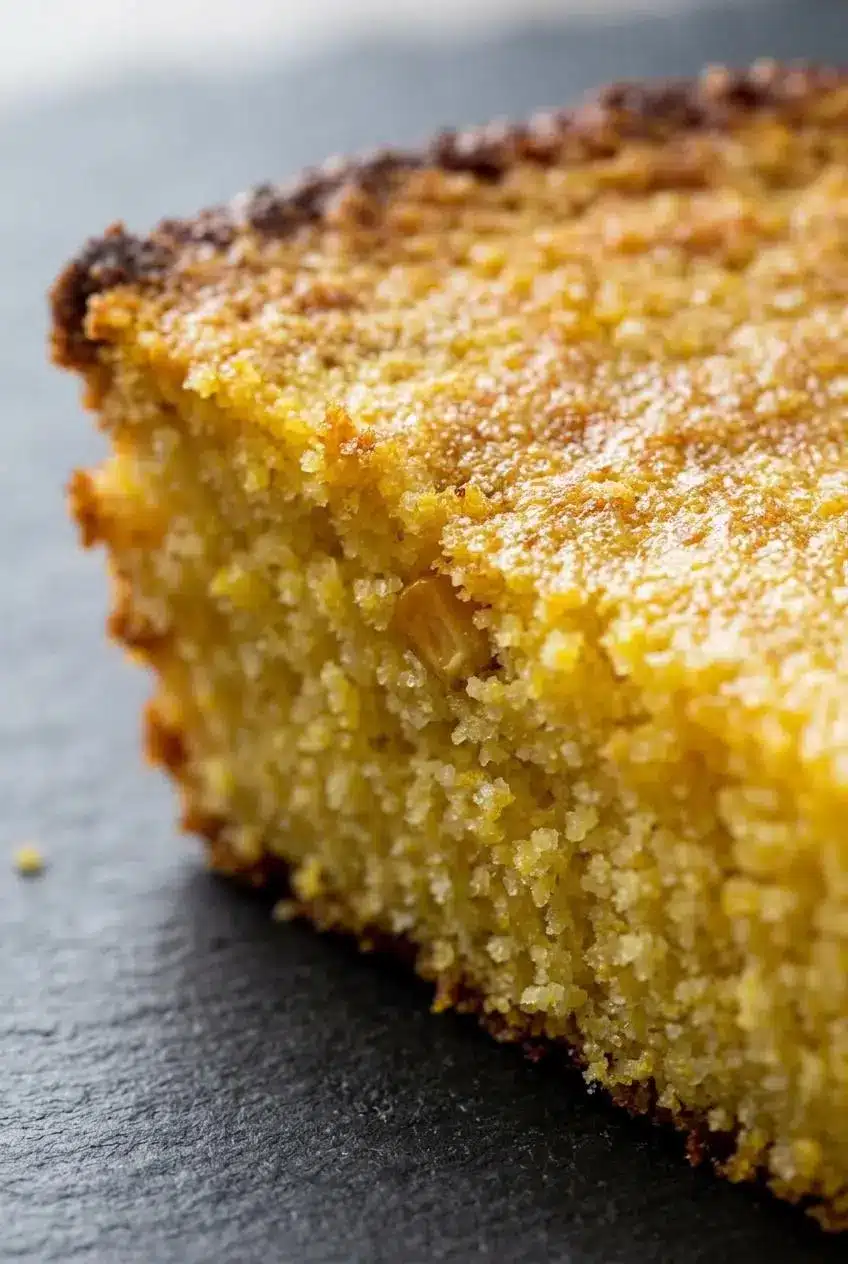
A steady oven and gentle mixing matter more than aggressive stirring. Keep the batter thick but pourable, then watch for a firm center and a deep golden ring around the pan edges.
- Heat the oven to 375°F, then butter an 8-inch square baking pan or 9-inch cast iron skillet.
Coat the bottom and sides thoroughly so the baked cornbread releases cleanly and browns evenly. - Whisk the cornmeal, baking powder, baking soda, and kosher salt in a large bowl.
Break up any clumps so the leaveners distribute evenly through the dry mixture. - Add the yogurt, cooled melted butter, beaten egg, and honey to the center of the dry ingredients, then stir just until no dry cornmeal remains.
Stop once the batter looks uniform, since vigorous mixing can make the center dense. - Transfer the batter to the prepared pan and place it on the center oven rack.
The batter should settle into an even layer without needing extended stirring or pressing. - Bake until the cornbread feels firm in the center and a toothpick inserted in the middle comes out clean, about 20 to 25 minutes.
A cast iron skillet often finishes near the 20-minute mark, with a golden ring pulling slightly from the sides. - Let the cornbread sit in the pan briefly before cutting and serving warm.
As the steam settles, the tender crumb becomes sturdy enough for cleaner slices.
Why Preheating the Skillet Matters
For the crispest bottom crust, use a cast iron skillet and place the buttered skillet in the oven as it heats. Carefully pour the batter into the hot pan just before baking. You should hear an immediate sizzle, which signals that the batter has begun forming its crisp outer layer.
A preheated skillet gives the batter a fast burst of heat, creating a buttery crust and helping prevent sticking. For more cast iron technique, this skillet cornbread method is a useful comparison.
- Cast iron: Retains heat well and produces the darkest, crunchiest bottom and edge crust. Check it around the 20-minute mark.
- Light metal square pan: Heats quickly and bakes a little more gently at the edges. Expect the full 20 to 25 minute range.
- Ceramic dish: Holds heat after baking but browns more slowly. Watch the center closely and do not assume it will bake like cast iron.
- 12-cup muffin tin: Grease the cups well and bake individual portions for 14 to 16 minutes, until their tops are set and lightly golden.
The Crucial Batter Resting Step
For a softer crumb, let the mixed batter rest in the bowl for 10 minutes before transferring it to the pan. This optional pause gives coarse cornmeal time to absorb the yogurt and butter, which reduces a gritty texture and helps the bread bake more evenly.
Do not use the resting time to keep stirring. Once the liquid meets the leaveners, a few gentle folds are enough. The batter should look thick, glossy, and evenly moistened before it goes into the pan.
Troubleshooting Common Cornbread Mistakes
Gluten-free cornbread is forgiving when you know what the crumb is telling you. These fixes target the problems that most often stand between a tender slice and a pan of loose crumbs.
- Crumbly cornbread: Cutting while the loaf is still steaming can break the fragile starch structure before it sets. Let it rest in the pan for 10 to 15 minutes, then use a sharp knife and gentle downward cuts.
- Dense or gummy center: Overmixing can make the batter heavy after the leaveners hydrate. Stir only until combined, and check oven accuracy with an oven thermometer if the center repeatedly stays underbaked.
- Dry or sandy texture: Coarse cornmeal needs enough time to hydrate. Measure the yogurt and cornmeal carefully, use the 10-minute batter rest, and remove the bread once the toothpick is clean rather than continuing to bake for extra color.
- Pale, soft edges: A cool pan will not build the same crust. Preheat a buttered cast iron skillet, or allow a metal pan to heat fully with the oven before baking.
- Burning bottom: Cast iron holds heat long after it comes from the oven. Begin checking early, especially if your skillet is dark or heavy, and move the pan to a rack promptly after baking.
Storing and Reheating Cornbread
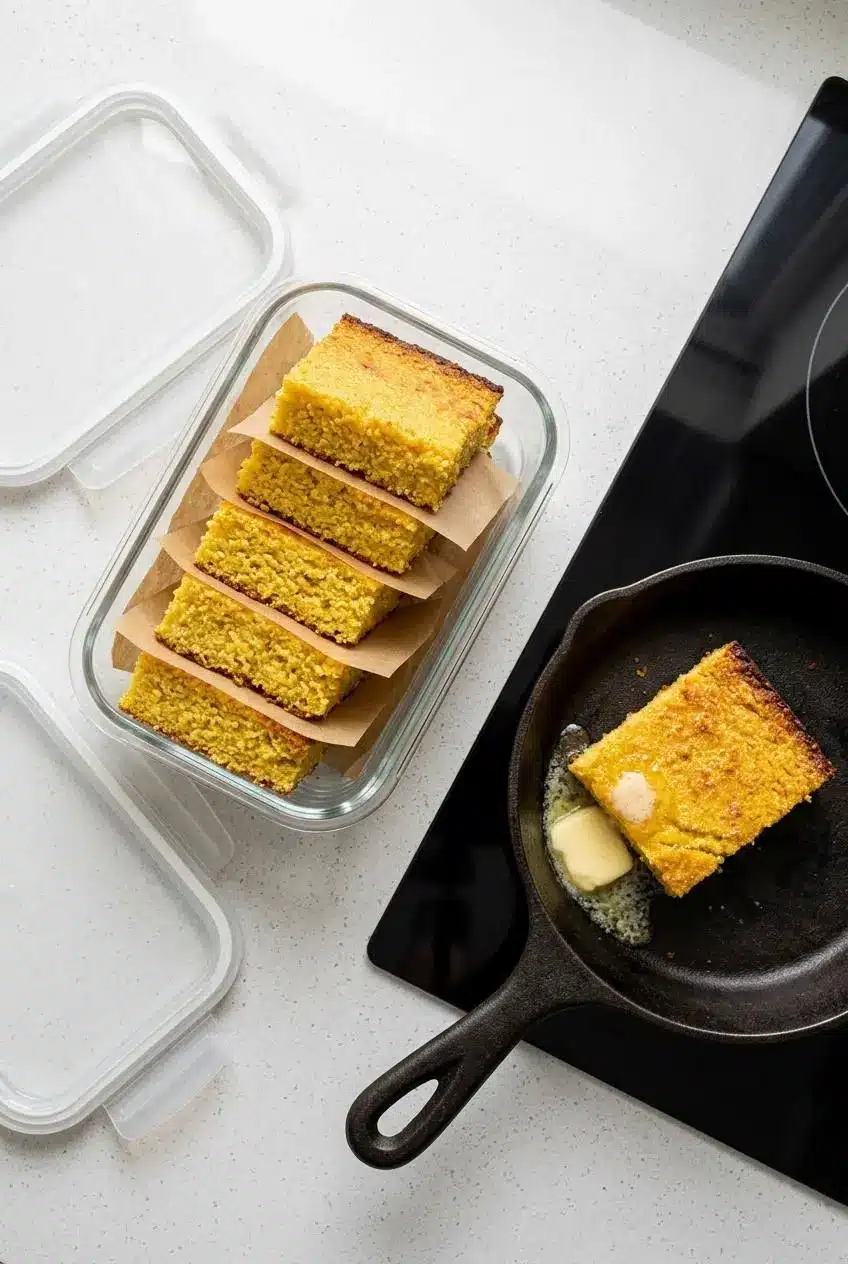
Cool the cornbread completely before storing it in an airtight container with a paper towel to absorb surface moisture. Keep it in a cool, dry spot and reheat only the slices you plan to serve, which helps the remaining cornbread keep its tender texture.
Avoid chilling the whole pan unless necessary, since cold storage can make the crumb feel firmer and drier. If you do chill leftovers, let a slice lose its chill before warming so the center heats more evenly.
To revive the crust, warm a slice in a toaster oven or a dry skillet over gentle heat. Add a light dab of butter if desired, then heat until the surface is warm and the edges regain a little crispness. A microwave can soften the crust and leave the cornmeal crumb chewy.
If you need to hold individual portions, separate fully cooled slices with parchment in a tightly sealed container to keep their cut surfaces from sticking together.
Flavor Variations and Easy Add-Ins
Keep the main batter as written, then choose one optional direction when you want a different style of cornbread. Fold add-ins in gently after the batter is combined so the leavening can still lift the bread.
Dairy-Free and Plant-Based Swaps
For a dairy-free version, replace the plain yogurt with unsweetened plain dairy-free yogurt. Canned coconut milk mixed with a small amount of apple cider vinegar can also provide the tang that helps balance the cornmeal.
Use melted vegan baking butter or a neutral avocado oil in place of dairy butter. Plant-based versions may have a slightly different richness, but the hot skillet and rested batter still help create a tender center with crisp edges.
Savory Cheddar Jalapeño Option
For a savory version, fold 3/4 cup of sharp shredded cheddar cheese and 2 tablespoons of finely diced fresh jalapeños into the mixed batter. Reduce the honey to 2 tablespoons to let the pepper and cheese stand out beside barbecue, beans, or braised greens.
The cheese adds salty pockets through the crumb, while jalapeño brings fresh heat without overwhelming the corn flavor. For another peppery variation, try this jalapeño cornbread.
Sweet Honey Butter Glaze
For a shiny sweet finish, warm 2 tablespoons of melted butter with 1 tablespoon of raw honey and a tiny pinch of flaky smoked sea salt. Brush it across the top crust during the final 2 minutes of baking.
The glaze deepens the buttery aroma and gives the top a soft sheen while the skillet keeps the bottom crisp. Use it when you want cornbread that leans sweet enough for a holiday table or a bowl of spicy chili.
Serving Suggestions and Delicious Pairings
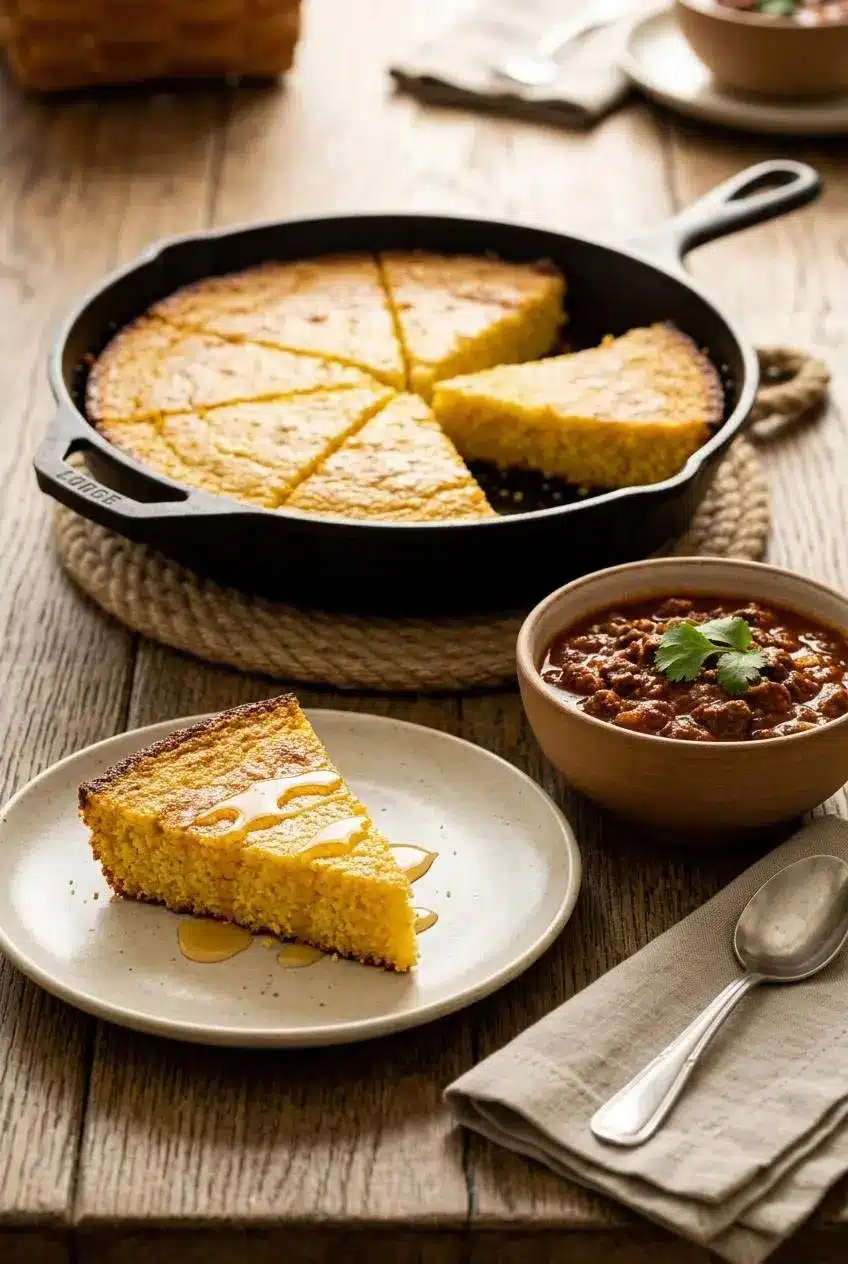
The tender, buttery crumb is especially good with saucy or smoky meals because it catches flavorful juices without immediately falling apart.
- Serve warm with smoky beef chili, slow-simmered bean stew, or a hearty vegetable stew.
- Pair a savory cheddar jalapeño version with pulled pork, barbecue chicken, or collard greens.
- Offer honey-glazed slices beside spicy chili when you want sweet heat in the same bite.
- Cube slightly dry leftover cornbread, toast it in a skillet with butter, and use the crisp pieces as croutons for soups or salads.
- Turn cubed cornbread into a savory gluten-free stuffing base with sautéed aromatics and broth until the pieces soften and hold together.
For a comforting meal that puts cornbread front and center, serve it alongside a hearty chili cornbread casserole.
Conclusion
This cornbread brings together crisp skillet edges, a golden top, and a tender cornmeal crumb held together by yogurt, egg, butter, and honey.
Give the loaf a brief rest before slicing so the steam can settle and the crumb can set cleanly. That small pause makes every warm slice easier to serve.
Frequently Asked Questions
Is All Cornmeal Gluten-Free?
Corn itself does not contain gluten, but cornmeal may be milled or packaged around wheat and other gluten-containing grains. Choose cornmeal labeled certified gluten-free when baking for someone with celiac disease or a gluten-related medical need. Avoid assuming that standard cornmeal is suitable without checking the package.
Why Did My Gluten-Free Cornbread Crumble So Easily?
Without gluten, this cornbread relies on egg, fat, and hydrated cornmeal to hold its shape. Cutting it while it is steaming hot can cause the soft crumb to break. Let it rest briefly, measure the yogurt and butter carefully, and avoid overbaking.
Can I Make This Cornbread Without Dairy?
Yes. Use unsweetened dairy-free yogurt in place of plain yogurt, then swap the butter for melted vegan baking butter or neutral avocado oil. A little apple cider vinegar stirred into a dairy-free milk or coconut milk option can add the gentle tang normally supplied by yogurt.
How Do I Reheat Leftover Gluten-Free Cornbread So It Is Not Dry?
Warm slices in a toaster oven or dry skillet over gentle heat, adding a small dab of butter if desired. This refreshes the crust while warming the middle gradually. Skip the microwave when possible because it can make the crumb rubbery.
What Baking Pan Produces the Crispiest Crust?
A heavy cast iron skillet gives the crispiest bottom and edges because it holds heat well and starts browning the batter quickly. A buttered aluminum cake pan makes a softer, more even crust. For the strongest crunch, preheat the cast iron skillet before adding the batter.
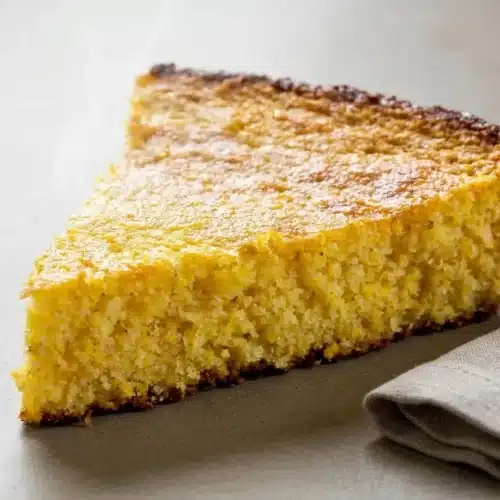
Gluten Free Cornbread Recipe

Equipment
- 8-inch square baking pan or 9-inch cast iron skillet
- large bowl
- Whisk
Ingredients
- 2 cups coarsely ground yellow cornmeal
- 2 teaspoons baking powder
- 1 teaspoon baking soda
- 1 teaspoon kosher salt
- 1 1/2 cups plain yogurt at room temperature
- 4 tablespoons unsalted butter melted and cooled
- 1 egg at room temperature, beaten
- 4 tablespoons honey
Instructions
- Heat the oven to 375°F, then butter an 8-inch square baking pan or 9-inch cast iron skillet. Coat the bottom and sides thoroughly so the baked cornbread releases cleanly and browns evenly.
- Whisk the cornmeal, baking powder, baking soda, and kosher salt in a large bowl. Break up any clumps so the leaveners distribute evenly through the dry mixture.
- Add the yogurt, cooled melted butter, beaten egg, and honey to the center of the dry ingredients, then stir just until no dry cornmeal remains. Stop once the batter looks uniform, since vigorous mixing can make the center dense.
- Transfer the batter to the prepared pan and place it on the center oven rack. The batter should settle into an even layer without needing extended stirring or pressing.
- Bake until the cornbread feels firm in the center and a toothpick inserted in the middle comes out clean, about 20 to 25 minutes. A cast iron skillet often finishes near the 20-minute mark, with a golden ring pulling slightly from the sides.
- Let the cornbread sit in the pan briefly before cutting and serving warm. As the steam settles, the tender crumb becomes sturdy enough for cleaner slices.