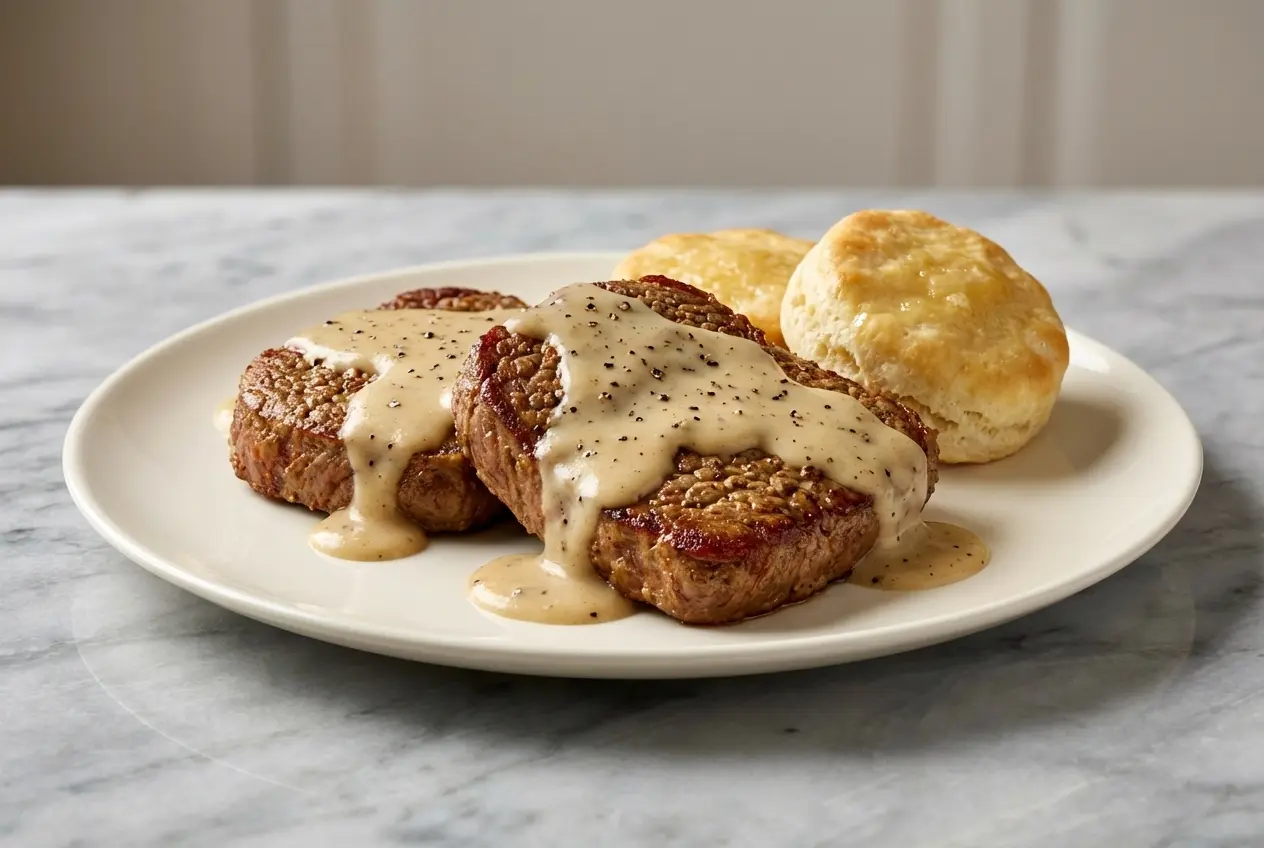
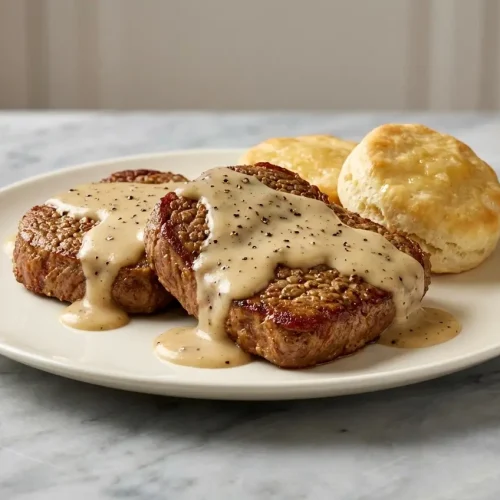
In my kitchen, cube steak always brings back the kind of dinner that makes the whole house smell like Sunday afternoon. This Cube Steak Recipe leans into that old-school comfort, but with a richer, deeper pan gravy that feels just a little more special than the version many of us grew up with.
If you have ever thought cube steak was destined to be tough or bland, this method changes that fast. With a good dredge, a hot cast-iron skillet, and a simple Worcestershire-Dijon touch in the gravy, you get beef that stays tender and a sauce worthy of a biscuit swipe.
Why You’ll Love This Recipe
Big Southern comfort: This is the kind of smothered steak supper that lands on the table with real presence, creamy pan gravy, golden edges, and plenty of cozy flavor in every bite.
The secret twist: I discovered that a small spoonful of Worcestershire and Dijon wakes up milk gravy beautifully. It adds umami, a touch of acidity, and just enough sharpness to keep the sauce from feeling heavy.
Reliable tenderness: Because cube steak is mechanically tenderized, it responds best to quick searing and careful simmering. In my kitchen, that balance keeps the beef juicy instead of rubbery.
That beautiful crust: A seasoned flour dredging plus steady heat gives you the deep browning that comes from the Maillard reaction. Those browned bits in the skillet, the fond, become the backbone of the gravy.
Ingredients and Substitutions
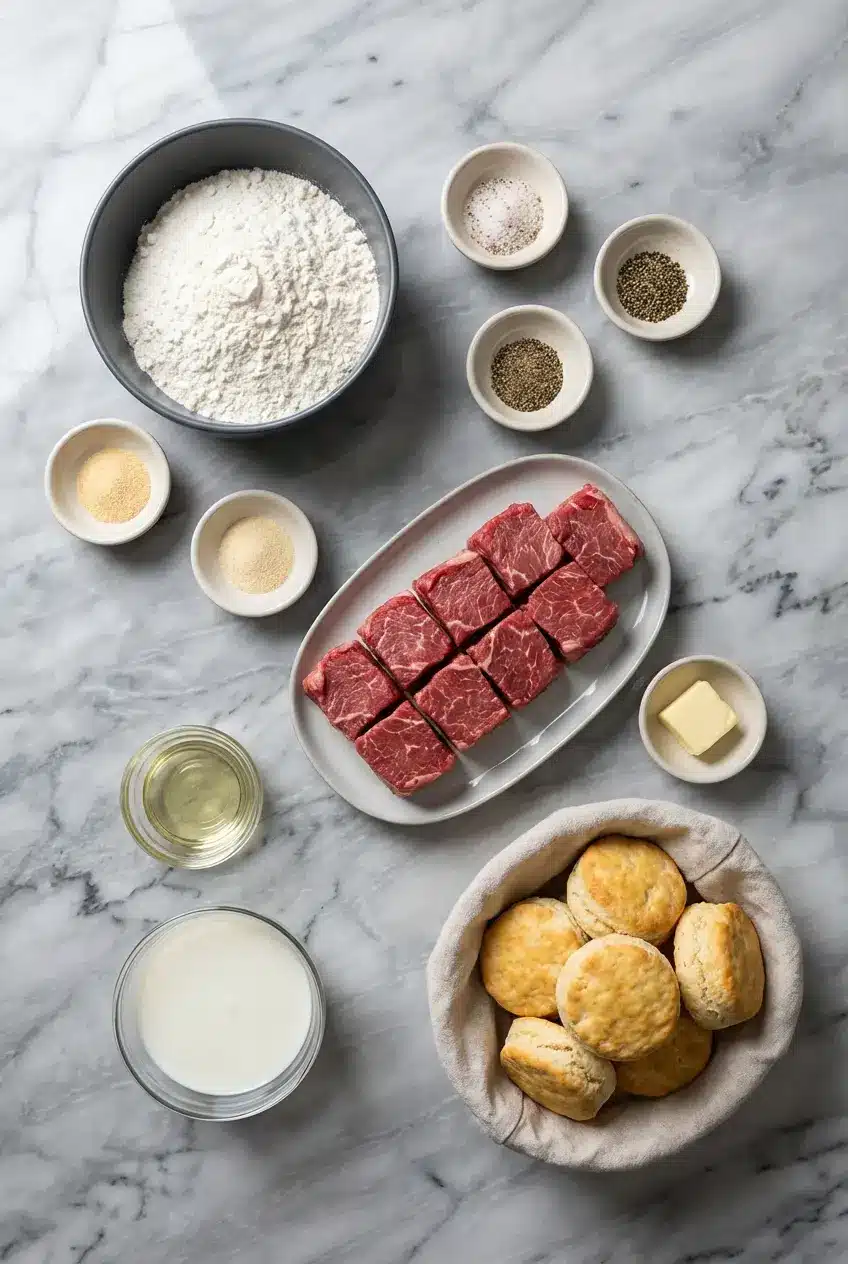
These are simple pantry staples, but each one pulls its weight, from the seasoned coating to the silky gravy and warm biscuits on the side.
Ingredients
- 3/4 cup self-rising flour (or 1 cup all-purpose flour and 1 teaspoon baking powder)
- 1 1/2 teaspoons Lawry’s Seasoned Salt or 1 teaspoon kosher salt
- 1 teaspoon ground black pepper
- 1/2 teaspoon garlic powder
- 1/2 teaspoon onion powder
- 6 cube steaks (about 4 ounces each)
- 3 tablespoons vegetable shortening or vegetable oil
- 3 tablespoons butter
- 2 cups whole milk, warmed
- Hot biscuits: for serving
Ingredient Notes & Substitutions
Cube steak: Look for steaks that are evenly pounded and mechanically tenderized, with the familiar dimpled surface. Top Round beef is usually a little leaner and tends to pan-fry especially well, while bottom round can have a slightly beefier chew.
Flour: Self-rising flour gives the coating a light, delicate finish, but the all-purpose flour and baking powder option works nicely too. If you need a gluten-free version, a 1:1 gluten-free flour blend is the easiest swap and still creates a good crust.
Butter and shortening: I like using both because butter brings flavor and shortening helps with a higher smoke point. That combination gives the skillet enough heat for a proper sear without sacrificing that rich Southern taste.
Milk: Whole milk makes the creamiest gravy and gives the roux a smoother body. If you want a slightly lighter finish, 2% milk works, though the gravy will be a bit less lush.
Seasoning: Lawry’s Seasoned Salt gives this dish that familiar diner-style depth, but kosher salt is perfectly fine if that is what you keep on hand. A final pinch of black pepper in the gravy is especially nice if you love a peppery pan gravy.
How to Make Cube Steak Recipe
Season and Dredge
- Set a large plate or shallow dish in front of you and whisk together the flour, seasoned salt, black pepper, garlic powder, and onion powder until the mixture looks evenly speckled. This seasoned coating is what builds that savory crust and later helps flavor the gravy too.
- Coat each cube steak on both sides, pressing the flour mixture into the meat so it clings well to the tenderized surface. Lay the steaks aside in a single layer, then hold back 4 tablespoons of the flour mixture for the gravy.
Sear the Steaks
- Place a large cast-iron skillet over medium-high heat and add the shortening and butter. When the fats are fully melted and the surface turns foamy, the pan is hot enough to start building color.
- Add the steaks in one layer and let them brown for about 3 minutes per side, working in batches if your skillet is crowded. You want a deep golden crust, not steaming, because that browning is where the flavor starts, and the Maillard reaction is what gives the meat its savory edge.
- Transfer the browned steaks to a plate and cover them loosely with foil so they stay warm while you turn the drippings into gravy.
Build the Pan Gravy
- Lower the heat to medium and sprinkle the reserved flour into the skillet drippings. Stir constantly for 2 minutes, scraping up the fond from the bottom of the pan, until the flour turns lightly golden and smells toasted instead of raw.
- Slowly whisk in the warmed milk, stirring gently but constantly so the gravy stays smooth. Let it come to a boil and thicken, about 3 minutes, then stir in 1 teaspoon Worcestershire sauce and 1/2 teaspoon Dijon mustard for that extra savory lift.
- Taste the gravy and add another pinch of pepper, plus a little salt if needed. It should be creamy, glossy, and able to coat the back of a spoon.
Finish and Serve
- Return the steaks to the skillet, reduce the heat to low, and partially cover the pan. Let everything simmer gently for about 2 minutes, just until the meat is warmed through and the gravy settles into the coating.
- Serve right away with plenty of gravy spooned over the top and hot biscuits alongside for soaking up every last bit.
Secrets for Perfection
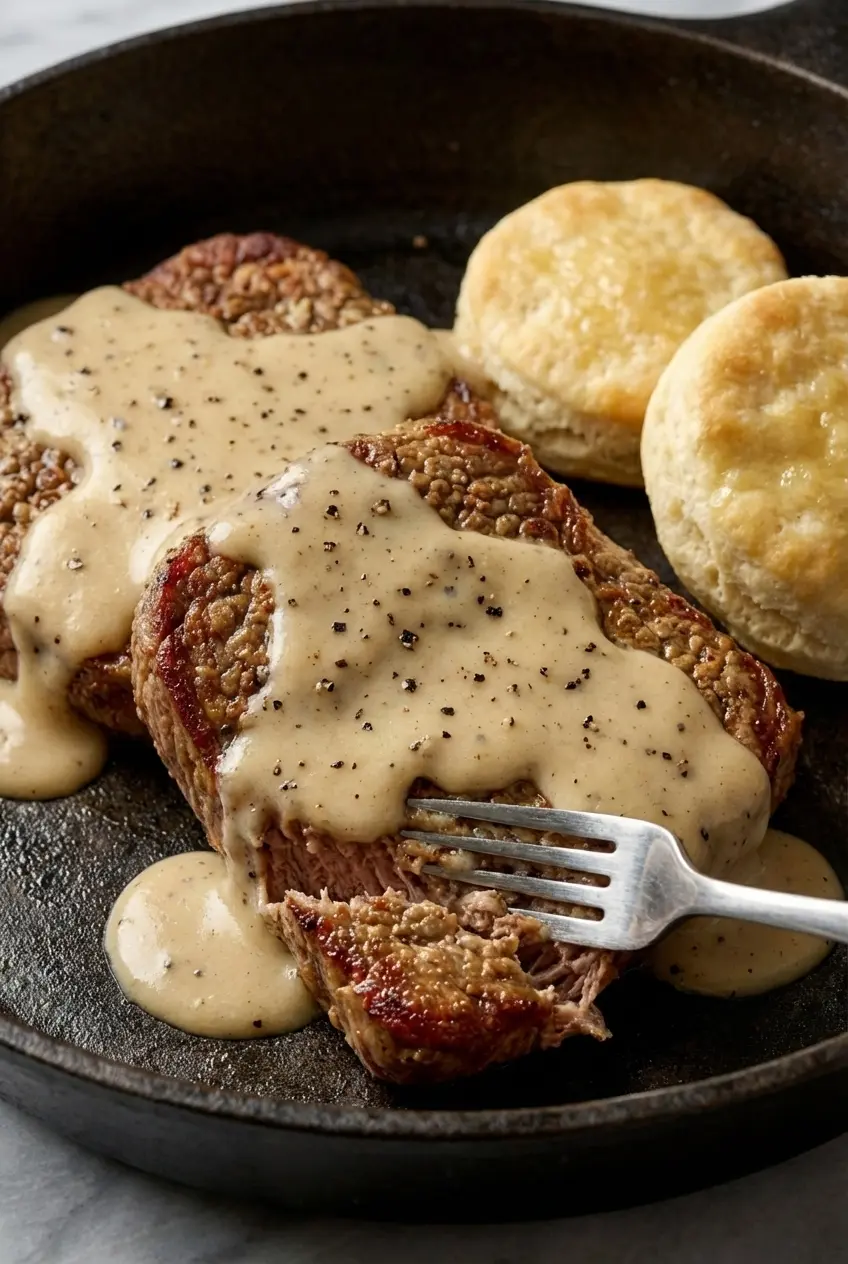
Temperature control is what separates tender cube steak from the chewy kind that gives this cut a bad reputation. I like to pull the steaks around 145°F for medium-rare or 160°F for medium, because cooking much past that can make the meat tighten up fast.
Warm milk matters more than people think. When cold milk hits a hot roux, lumps form in a hurry, but warmed milk blends in smoothly and gives you the silky pan gravy this dish is known for.
The fond left in the cast-iron skillet is pure flavor, so do not rush past it. As you stir the roux, scrape those browned bits loose so the gravy picks up every bit of that beefy, peppery depth.
Choosing the Right Cut: Top Round vs. Bottom Round
Most cube steak comes from either top round or bottom round, both lean cuts that benefit from tenderizing. In general, Top Round is generally leaner, which is one reason it is often preferred for quick pan-frying like this.
Bottom round can still work beautifully, but it tends to have a slightly firmer bite and benefits from especially careful cooking. That is why cube steak is usually mechanically tenderized before it ever reaches the skillet, creating those signature little indentations that help break down muscle fibers.
If your butcher only has round steak that has not been cubed, you can do the job at home with a meat mallet. Pound the meat evenly on both sides until it thins slightly and the texture loosens, then dredge and cook as directed.
This is the same kind of kitchen logic that makes other beef dinners turn out better, too. A good corned beef recipe also depends on choosing the right cut and giving it the treatment that suits its structure, rather than forcing one method on every piece of beef.
Caloric Impact of Cooking Fats
The cooking fat you choose changes both flavor and feel. Butter adds richness and a round dairy note, shortening gives a crisp exterior that many Southern cooks swear by, and vegetable oil keeps the flavor more neutral while still helping the crust brown well.
Lard, if you use it instead of shortening, brings a traditional flavor and a very crisp finish, but it is also a richer option. For a lighter overall profile, vegetable oil is usually the easiest swap, while butter alone can brown quickly and is best balanced with a higher-smoke-point fat.
In practical terms, the difference is less about turning this into a light meal and more about choosing where you want the richness to land. My own preference is the butter-and-shortening blend because it gives you the best balance of flavor, browning, and old-fashioned texture.
Pro Tips & Troubleshooting
Pro Tips
- Let the cooked steaks rest for 5 minutes before serving when you can. That short pause helps the juices settle back into the meat instead of spilling onto the plate.
- If your skillet is small, brown the meat in batches. A crowded pan traps steam and keeps you from getting that crisp, browned coating.
- Use a thermometer if you want the most consistent texture. Around 145°F to 160°F keeps cube steak tender without pushing it into rubbery territory.
- Warm the milk before it goes into the roux. It is one of the simplest tricks for a smooth gravy with no stubborn lumps.
Common Mistakes to Avoid
- Skipping the full 2 minutes on the roux leaves the gravy tasting pasty. You want the flour to smell lightly toasted before the milk goes in.
- Crowding the pan drops the heat too quickly and prevents proper browning. Instead of a crust, you end up with pale meat and less flavorful drippings.
- Cutting into the steaks too quickly lets their juices run out. Even a brief rest makes a noticeable difference in tenderness.
- Using the microwave for leftovers often turns the meat tough. Gentle reheating in a skillet is kinder to both the cube steak and the gravy.
Serving & Storage
Serving Ideas
This dish belongs with comforting sides that catch the gravy well, like garlic mashed potatoes, buttered egg noodles, or sautéed green beans. For something a little different but still cozy, I also love serving it with mashed potato pancakes, which turn all that savory gravy into a full-on supper plate.
If you want to balance the richness, add something bright and crisp on the side. A sharp coleslaw or roasted Brussels sprouts cuts through the creamy sauce beautifully, while hot buttermilk biscuits keep things firmly in Southern comfort-food territory.
Storage & Reheating
Store leftover cube steak and gravy in an airtight container in the refrigerator for up to 3 days. If you want to freeze it, let everything cool first, then pack it tightly so the gravy protects the meat from drying out.
For reheating, I skip the microwave because it tends to make mechanically tenderized beef firm and chewy. A skillet over low heat with a splash of milk or water brings the gravy back to life and warms the steaks gently without losing tenderness.
Classic Cube Steak Recipe

Equipment
- Large cast-iron skillet
- Whisk
- Shallow dish
Ingredients
- 3/4 cup self-rising flour (or 1 cup all-purpose flour and 1 teaspoon baking powder)
- 1 1/2 teaspoons Lawry’s Seasoned Salt or 1 teaspoon kosher salt
- 1 teaspoon ground black pepper
- 1/2 teaspoon garlic powder
- 1/2 teaspoon onion powder
- 6 cube steaks (about 4 ounces each)
- 3 tablespoons vegetable shortening or vegetable oil
- 3 tablespoons butter
- 2 cups whole milk warmed
- Hot biscuits for serving
Instructions
Season and Dredge
- In a large plate or shallow dish, whisk together the flour, seasoned salt, black pepper, garlic powder, and onion powder until the mixture is evenly specked.
- Coat each cube steak on both sides, pressing the seasoned flour mixture firmly into the meat surface. Set the steaks aside in a single layer and reserve 4 tablespoons of the leftover flour mixture for the gravy.
Sear the Steaks
- Heat a large cast-iron skillet over medium-high heat and melt the shortening and butter together until the mixture is foamy.
- Add the steaks in batches to avoid crowding the pan. Sear for about 3 minutes per side until a deep golden-brown crust forms.
- Transfer the browned steaks to a plate and cover loosely with foil to keep warm.
Build the Pan Gravy
- Reduce the heat to medium. Sprinkle the 4 tablespoons of reserved flour into the pan drippings and stir constantly for 2 minutes to cook out the raw flour taste and scrape up the browned bits (fond).
- Slowly whisk in the warmed milk, stirring constantly until the gravy reaches a boil and thickens, about 3 minutes.
- Stir in 1 teaspoon of Worcestershire sauce and 1/2 teaspoon of Dijon mustard. Taste and adjust seasoning with extra salt or pepper if desired.
Finish and Serve
- Return the steaks to the skillet. Reduce heat to low, partially cover, and simmer for 2 minutes to warm the meat through and let the coating settle into the gravy.
- Serve immediately, spooning plenty of gravy over the steaks with hot biscuits on the side.
Notes
Conclusion
This Cube Steak Recipe stands out because it turns a budget-friendly cut into something deeply comforting and full of flavor, especially once that Worcestershire-Dijon gravy hits the pan. It is simple food, but it tastes like you fussed far more than you did.
If your family loves old-fashioned beef dinners, this one deserves a place in the rotation, right alongside cozy meals like shipwreck casserole. A few small variations are easy, but the heart of the dish stays the same, tender steak, rich gravy, and a plate worth slowing down for.
Frequently Asked Questions
What exactly is cube steak?
Why is my cube steak so tough?
Can I make cube steak without flour?
What is the difference between Cube Steak and Salisbury Steak?
How do I keep the breading from falling off?
Can I use an air fryer for cube steak?