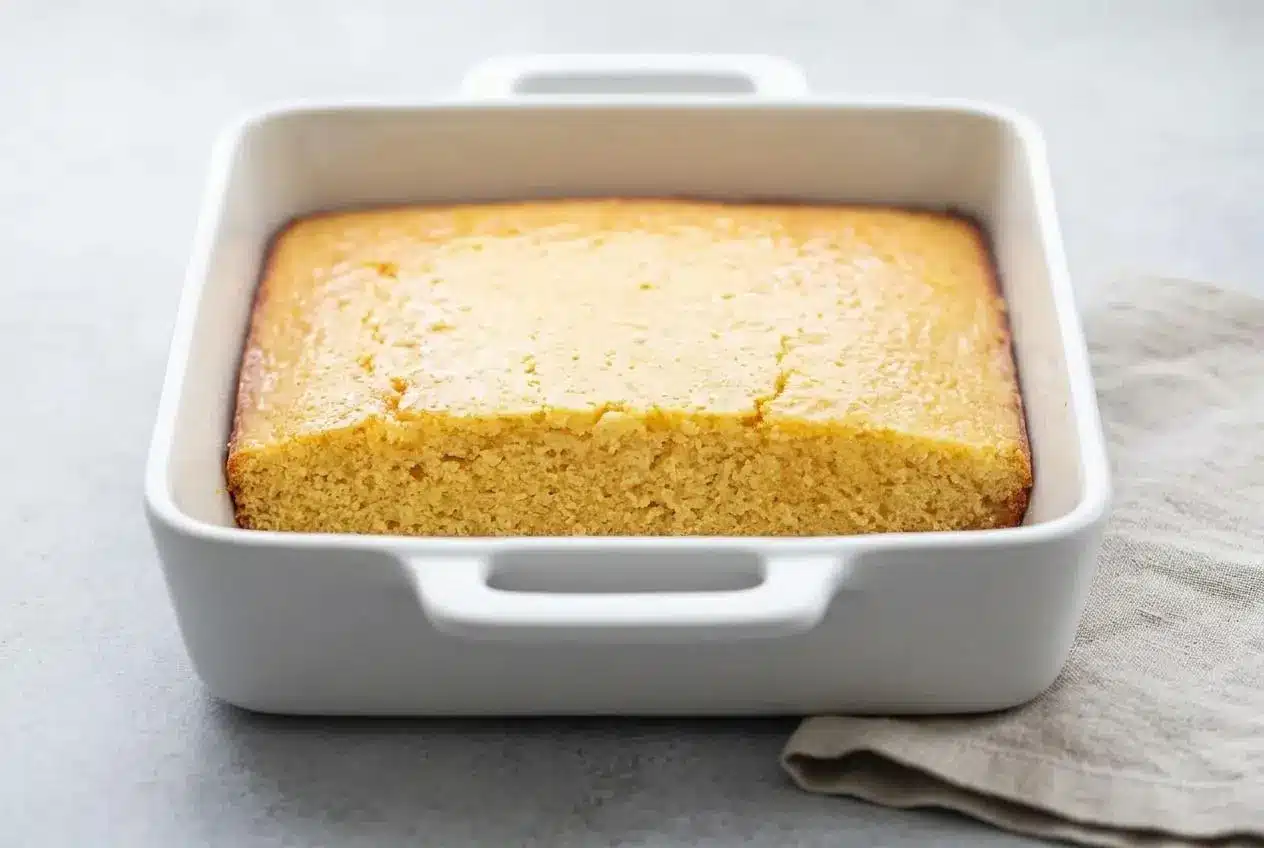
A balanced blend of flour and cornmeal, plus melted butter and oil, makes tender, sliceable cornbread that stays moist instead of dry.
This cornbread recipe bakes into a golden, buttery pan of sweet corn bread with enough structure for neat squares. It is a dependable side for chili, barbecue, and cozy weeknight dinners.
As it bakes, the kitchen fills with a warm sweet-corn aroma and the edges turn lightly crisp. The 15-minute rest makes all the difference.
Set the eggs and milk out before you melt the butter so the wet mixture blends smoothly.
Key Ingredients for Ultra Moist Cornbread
Each ingredient supports the finished crumb: flour builds structure, cornmeal brings flavor, fats create tenderness, and eggs hold the slices together.
- 2 cups flour
- 1 cup cornmeal
- 1 cup sugar
- 1 ½ tablespoons baking powder
- 1 teaspoon salt
- ½ cup (8 tablespoons) butter, melted
- ½ cup oil
- 1 ¼ cups milk
- 3 large eggs
- honey and extra butter for serving, optional
Flour gives the bread a gluten network that supports clean slices, while yellow cornmeal provides its signature corn flavor and gentle graininess. Sugar rounds out the corn flavor, salt sharpens it, and baking powder lifts the batter into a soft crumb. Baking powder creates carbon dioxide pockets as the batter bakes, while melted butter helps tenderize the flour structure and adds steam lift, as explained in this breakdown of cornbread leavening and butter’s role.
I prefer room-temperature eggs and milk here because cold dairy can make melted butter seize into little firm bits before the batter is mixed.
Cornmeal Grind and Flour Balance
The two-to-one flour-to-cornmeal balance is what keeps this cornbread tender enough to cut neatly without losing its distinct corn flavor. Fine or medium-grind yellow cornmeal works especially well because it hydrates quickly and gives the crumb a pleasant texture.
Coarse stone-ground cornmeal has a bigger bite, but it needs more time in the batter to soften. If it goes straight into the oven without enough hydration, the finished bread can taste gritty rather than pleasantly rustic. Letting the mixed batter stand briefly before baking helps the cornmeal absorb moisture.
Butter vs Oil for Maximum Moisture
Melted butter brings rich dairy flavor and a deeper golden color. Oil stays fluid after the bread cools, so it helps the crumb remain softer instead of becoming firm and dry.
Using both gives you the best balance: buttery flavor from the butter and lasting tenderness from the oil. This is especially helpful in a larger 9×13-inch pan, where overbaking can dry the outer pieces before the center is ready.
Milk and Buttermilk Options
Milk makes a mild, sweet crumb that lets the corn flavor come through. Whole milk gives the richest result, though the recipe’s milk measurement also works with buttermilk if you prefer a subtle tang.
For a buttermilk-style flavor, swap the milk with the same amount of buttermilk. You can also stir fresh lemon juice into whole milk, let it sit until lightly curdled, then use it in the batter for a similar tangy effect.
How to Make Cornbread
Gentle mixing and close attention near the end of baking keep the crumb soft. The batter should look thick but pourable, with no dry patches of flour.
- Heat the oven to 350°F and thoroughly grease a 9×13-inch pan.
Coat the corners and sides well so the baked bread releases cleanly. - Whisk the flour, cornmeal, sugar, baking powder, and salt in a large bowl until evenly blended.
Break up any visible clumps of baking powder so the rise is even throughout the pan. - Combine the melted butter, oil, milk, and eggs in a medium bowl.
The mixture should look smooth and unified before it meets the dry ingredients. - Pour the wet mixture into the dry mixture and fold just until the flour streaks disappear.
Stop mixing once combined to avoid developing a tough, tight crumb. - Pour the batter into the greased pan and bake for 35 to 45 minutes.
The top should be golden, the edges should pull away slightly, and a toothpick in the center should come out clean or with a few moist crumbs but no wet batter. - Leave the cornbread in the pan for 15 to 20 minutes before cutting it into squares.
The center should feel springy when lightly pressed, and the crumb will set as the steam settles.
A sweet corn aroma is a useful signal near the end of baking, but trust the center test over aroma alone. Start checking at the early end of the baking range, especially if your oven tends to run hot.
Cornbread Troubleshooting and Crumb Secrets
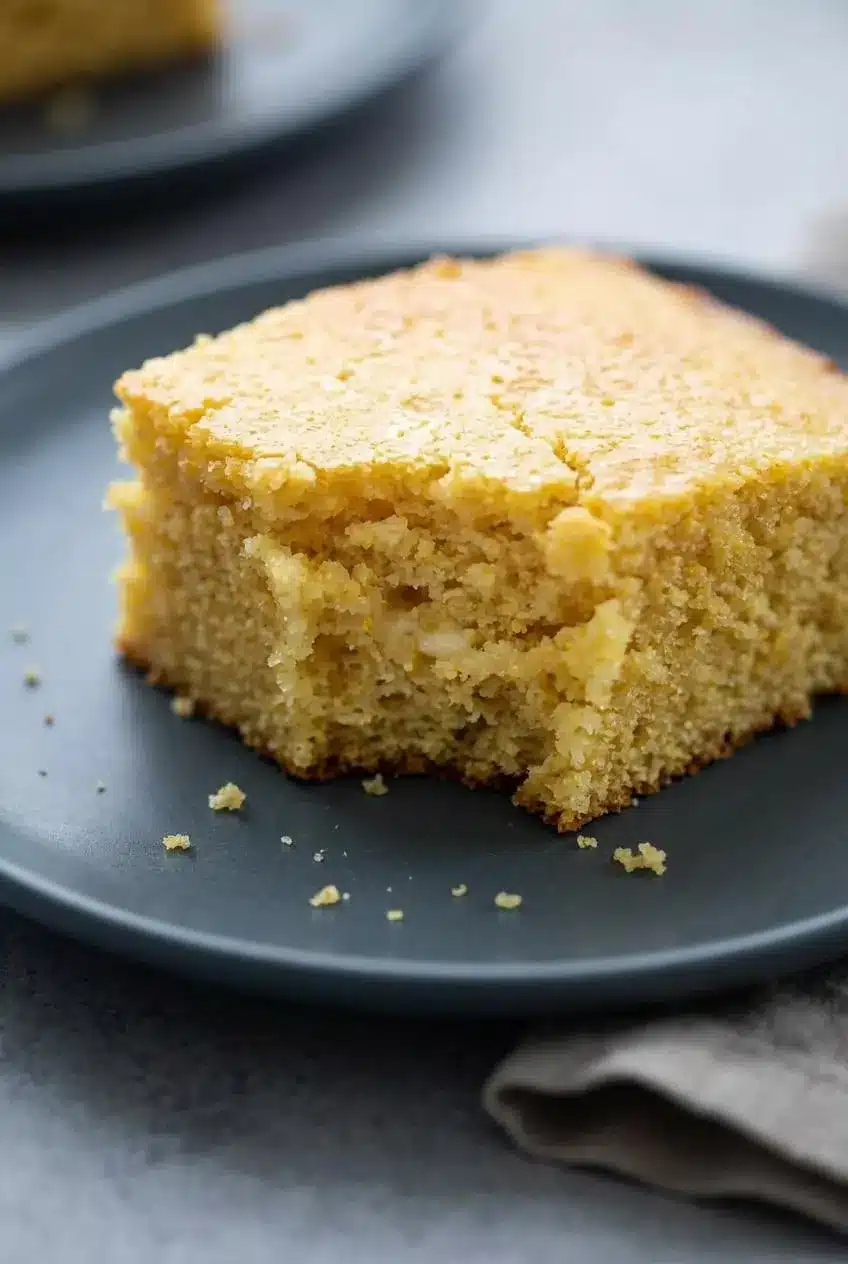
Most cornbread problems come down to mixing, bake time, or pan choice. These quick fixes help protect the tender center and clean-cut texture.
- Dry cornbread: Overbaking pulls moisture from the crumb quickly, especially around the pan edges. Begin checking at 35 minutes and remove the pan once the center passes the toothpick test.
- Crumbly squares: Too much cornmeal weakens the flour structure, while cutting hot bread breaks apart the still-soft interior. Keep the flour-to-cornmeal balance and let the pan rest for the full 15 to 20 minutes.
- Dense texture: Heavy stirring develops more gluten and can knock out some of the air created by the leavening. Fold only until the batter comes together.
- Uneven browning: A shiny metal pan usually bakes evenly. A glass dish holds heat longer, so check the edges and center a little earlier. Cast iron gives the deepest color and crispest crust.
- Gritty cornmeal: Coarse cornmeal needs extra time to absorb liquid. Let the mixed batter stand briefly before it goes into the oven.
If the middle looks baked but feels loose when pressed, give it more time rather than cutting into it early. A springy center, lightly browned edges, and a clean toothpick work together as the most reliable cues.
Delicious Flavor Variations and Mix-Ins
Keep the main batter as written, then choose an optional direction that fits the meal. Fold add-ins in gently at the end so the crumb stays light.
Cast Iron Skillet Cornbread
For crisp, deeply browned edges, bake the batter in a preheated 10-inch or 12-inch cast iron skillet. Melt butter in the hot skillet before adding the batter so it sizzles at the edges on contact. The pan holds heat strongly, so watch the center closely for doneness.
Jalapeno Cheddar Variation
For a savory, spicy version, gently fold shredded sharp cheddar and seeded diced jalapeños into the finished batter before it goes into the pan. Fresh peppers taste bright and grassy, while pickled jalapeños bring a tangier heat. For a bolder pepper-forward bake, try this spicy jalapeno cornbread.
Southern vs Northern Cornbread Style
This version leans Northern-style because it includes sugar and a higher proportion of flour, creating a sweeter, more cake-like crumb. Traditional Southern cornbread is usually more savory, relies more heavily on cornmeal, and is often baked in a hot skillet with butter or bacon drippings.
- Sweet honey finish: Brush warm squares with melted butter and honey for a glossy, dessert-like edge.
- Fresh corn kernels: Fold in corn kernels for pops of sweetness and a juicier bite.
- Smoked sea salt: Add a light sprinkle over warm buttered slices for a savory contrast to the sweet crumb.
Serving Suggestions and What to Pair With Cornbread
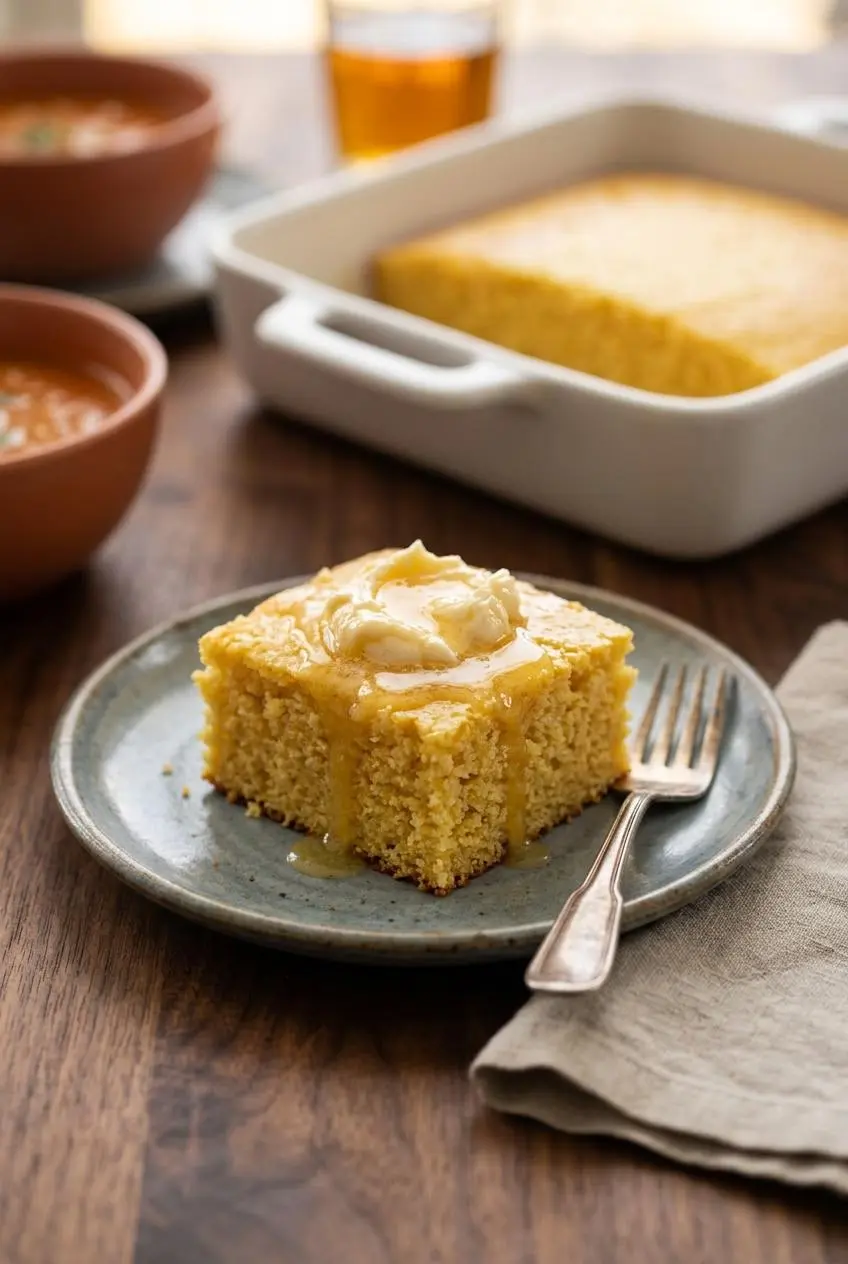
Warm cornbread belongs beside meals with plenty of broth, sauce, or smoky richness. Its sweet, buttery crumb is especially good for soaking up the last spoonful of dinner.
- Serve it with hearty beef chili, where the crisp edges and soft center contrast with the thick, spiced bowl.
- Pair it with smoky barbecue pulled pork and braised greens for a cookout-style plate.
- Offer it alongside Brunswick stew or bean-heavy soups when you want a filling cold-weather meal.
- Turn the chili-and-cornbread combination into a full comfort dinner with this chili cornbread casserole.
For a sweet-savory finish, whip softened butter with honey and a small pinch of smoked salt, then spread it over warm squares. The butter melts into the crumb while the salt keeps the honey from tasting overly sweet.
Storage and Reheating Instructions
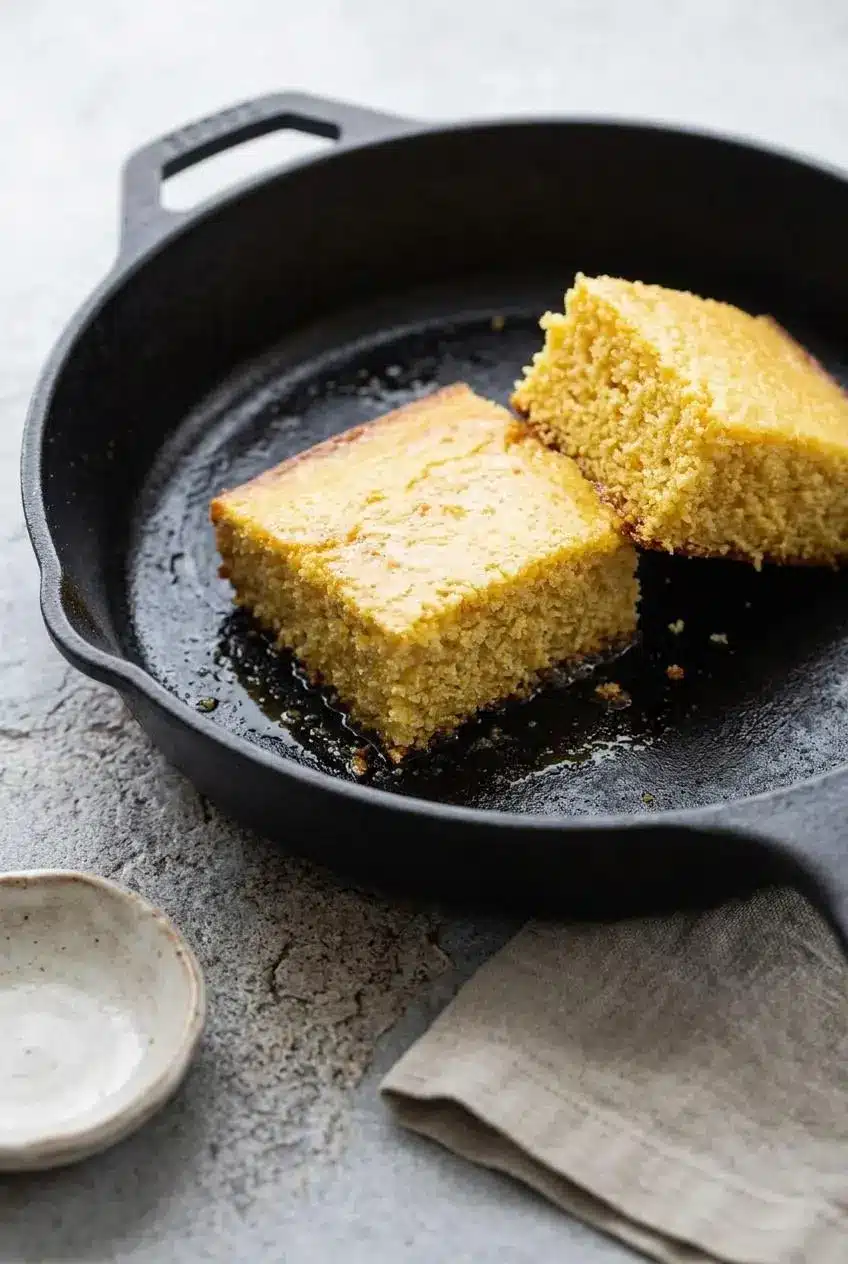
Cool the cornbread completely before storing it so trapped steam does not soften the crust. Keep it in an airtight container at room temperature for up to 3 days, or refrigerate it for up to 1 week.
To bring back a lightly crisp edge, warm a square in a 350°F oven until heated through, or toast it gently in a buttered skillet. Avoid relying on the microwave when possible because it can leave the crust soft and rubbery.
If the bread seems dry after storage, split a square across the middle and warm it cut-side down in a buttered skillet. The added surface contact restores some crispness while the butter adds back richness.
Conclusion
This cornbread delivers a tender golden crumb, balanced sweetness, and buttery flavor without sacrificing clean, sturdy slices. The butter and oil work together to keep each square soft and satisfying.
Give the pan its full 15-minute rest before cutting, then serve the warm squares with honey butter if you like. A crisp edge and soft center are worth the wait.
Frequently Asked Questions
What Is the Secret to Super Moist Cornbread?
Use both melted butter and neutral oil. Butter adds rich flavor, while oil helps the crumb stay soft after cooling. Also, mix gently and avoid baking past the point where the center is set.
Why Does My Cornbread Fall Apart and Crumble?
Cornbread can crumble when there is too much cornmeal for the amount of flour, when the eggs are not fully incorporated, or when it is cut while still steaming hot. Letting it cool in the pan for 15 to 20 minutes gives the crumb time to firm up.
What Is the Difference Between Southern and Northern Cornbread?
Southern cornbread is typically savory, less sweet, and more cornmeal-forward. Northern cornbread usually contains more flour and sugar, giving it a sweeter, softer, cake-like texture.
Can I Bake Cornbread in a Glass Baking Dish?
Yes. A glass baking dish works well, but it retains heat differently than metal, so the edges may brown sooner. Start checking for a springy center and clean toothpick slightly earlier than you would with a metal pan.
Can I Substitute Buttermilk for Regular Milk in This Recipe?
Yes, use buttermilk in the same amount as the milk. It adds a pleasant tang and can make the corn flavor taste more pronounced while keeping the crumb tender.
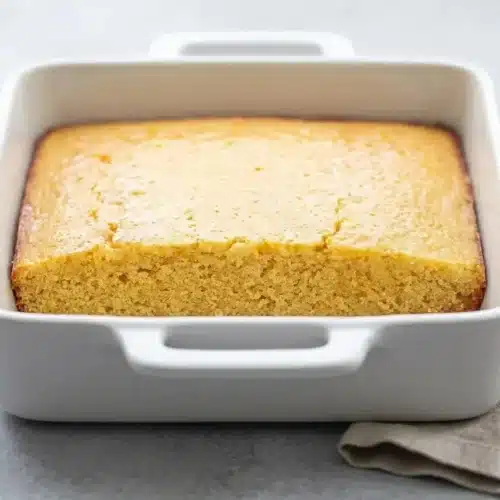
Cornbread Recipe

Equipment
- 9×13-inch Pan
- Large Mixing Bowl
- Medium mixing bowl
- Whisk
Ingredients
- 2 cups flour
- 1 cup cornmeal
- 1 cup sugar
- 1 ½ tablespoons baking powder
- 1 teaspoon salt
- ½ cup butter, melted 8 tablespoons
- ½ cup oil
- 1 ¼ cups milk
- 3 large eggs
- honey and extra butter for serving, optional
Instructions
- Heat the oven to 350°F and thoroughly grease a 9×13-inch pan. Coat the corners and sides well so the baked bread releases cleanly.
- Whisk the flour, cornmeal, sugar, baking powder, and salt in a large bowl until evenly blended. Break up any visible clumps of baking powder so the rise is even throughout the pan.
- Combine the melted butter, oil, milk, and eggs in a medium bowl. The mixture should look smooth and unified before it meets the dry ingredients.
- Pour the wet mixture into the dry mixture and fold just until the flour streaks disappear. Stop mixing once combined to avoid developing a tough, tight crumb.
- Pour the batter into the greased pan and bake for 35 to 45 minutes. The top should be golden, the edges should pull away slightly, and a toothpick in the center should come out clean or with a few moist crumbs but no wet batter.
- Leave the cornbread in the pan for 15 to 20 minutes before cutting it into squares. The center should feel springy when lightly pressed, and the crumb will set as the steam settles.