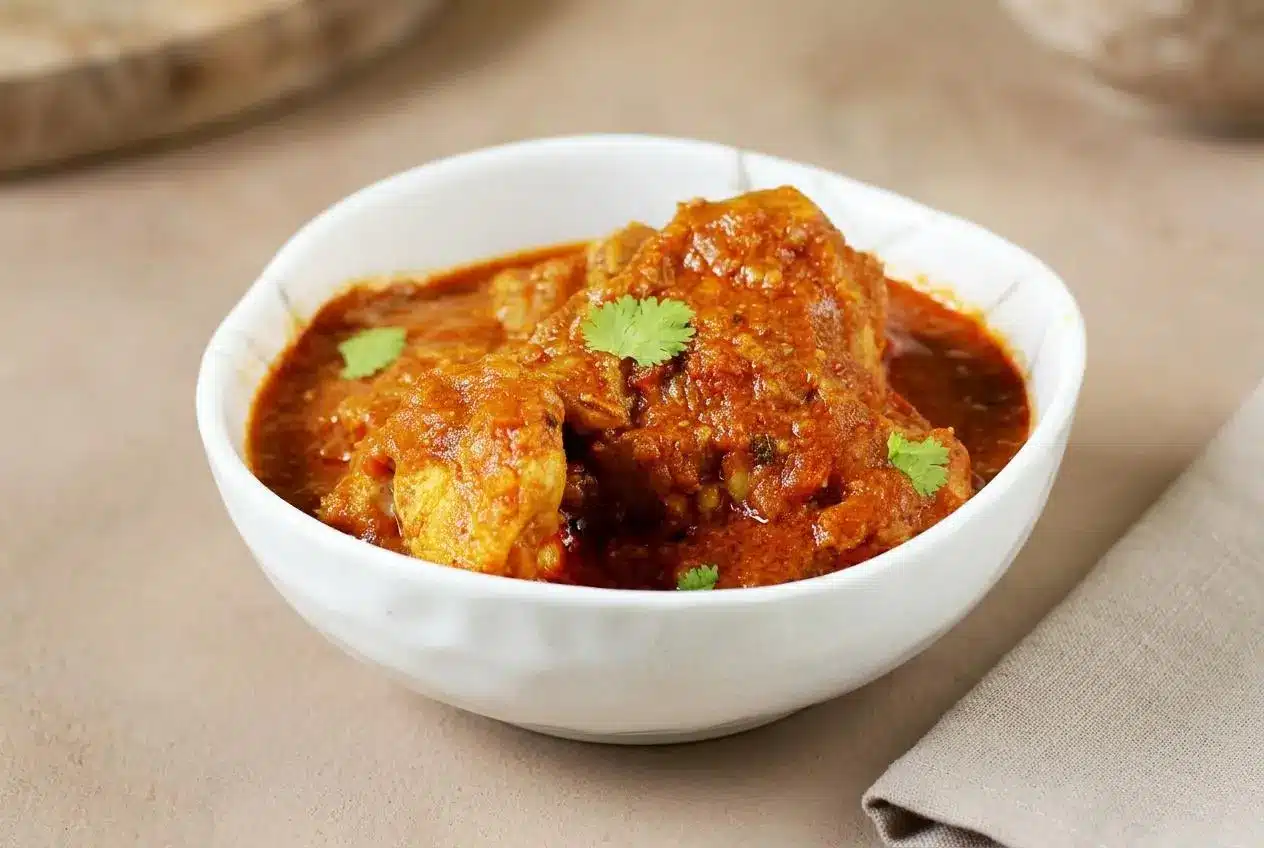
Authentic chicken curry starts by blooming whole spices in oil, deeply browning finely chopped onions, and simmering chicken in a thick tomato and yogurt gravy until tender and aromatic.
This chicken curry builds flavor in layers: sweet jammy onions, ginger garlic paste, warm spices, and a savory gravy that clings to every piece of chicken.
The kitchen smells incredible once the spices meet the browned onions. That glossy gravy is worth the wait.
Keep a small pot of water warming while the onions cook so it is ready when the chicken needs liquid.
Essential Ingredients and Spice Breakdown
Each ingredient contributes something important, from the fragrant fat infused with spices to the onions that give the gravy body, tomatoes that bring brightness, and yogurt that adds gentle richness.
Main Ingredients
- ½ kg (1.1 lbs.) chicken (preferably bone-in, boneless is okay)
- 2 to 3 tablespoons oil
- 1 cup (3 medium) onions (fine chopped)
- 1 to 2 green chilies (slit, omit for less spicy, Thai or Indian chili peppers or serrano peppers)
- 1 tablespoon ginger garlic paste or ¾ inch ginger, 3 cloves garlic minced
- ½ cup (2 medium) tomatoes (pureed or finely chopped)
- ¼ cup yogurt (or 1½ tbsp cashew butter or 12 cashews powdered & pureed with ¼ cup water)
- ½ to ¾ teaspoon salt (adjust as needed)
- ½ to 1 cup hot water (or light coconut milk)
- 2 tablespoons coriander leaves or mint leaves finely chopped
Spice Powders
- ¼ teaspoon turmeric powder
- 1 teaspoon Kashmiri red chili powder or smoked paprika (½ tsp for less spicy)
- 1 teaspoon garam masala (½ tsp more if needed, adjust to taste)
- 1 teaspoon coriander powder
Whole Spices
- 1 bay leaf or 1 sprig curry leaves
- 4 cloves
- 2 inch cinnamon piece
- 3 green cardamom
The oil carries the aroma of the whole spices through the entire pan. Onions melt into the gravy as they brown, while tomatoes bring acidity that keeps the richness from tasting heavy. Yogurt gives the sauce a soft, rounded finish without covering the garam masala.
I prefer finely chopping the onions rather than slicing them because they cook down into the gravy more evenly and leave no distracting onion chunks.Whole Spices vs Ground Spice Blends
Whole spices and ground spices do different jobs. Bay leaf, cloves, cinnamon, and green cardamom need to hit warm oil first. Their aroma should become noticeable within moments, but they should not darken or scorch.
Add turmeric, Kashmiri chili powder, coriander powder, and garam masala later, once the tomatoes and yogurt or cashew mixture are in the pan. Ground spices can burn quickly in bare hot oil, which creates bitterness instead of warmth. Garam masala is especially fragrant, so reserve the optional extra ½ tsp for the end if the curry needs more aroma.
Choosing the Right Cut: Bone-In Thighs vs Breasts
Bone-in thighs, drumsticks, or curry-cut chicken give the gravy a deeper, meatier character and stay moist through a longer simmer. The chicken is ready when it feels tender and, for bone-in pieces, pulls away from the bone easily.
Boneless chicken works well too. Boneless thighs are forgiving, while boneless skinless breasts need gentler heat and a shorter simmer. Cut breast meat into bite-sized pieces and simmer it for 10 to 12 minutes rather than cooking it until the sauce becomes aggressively bubbly.
Aromatics and Flavor Base Essentials
Finely chopped onions are the structure of this curry. Cook them until deeply golden and soft enough to look almost jammy. Pale onions leave a sharp, raw edge in the finished gravy.
Fresh ginger garlic paste brings savory heat after the onions are ready. Slit green chilies add a clean, direct warmth, while deseeding them or using fewer chilies keeps the spice level gentler without losing the fragrance of the other spices.
Mastering Chicken Curry Step by Step
The key is patience at the beginning, then a calm simmer at the end. Watch for three reliable signals: deeply golden onions, a fragrant spiced tomato mixture with tiny oil droplets at the edges, and chicken that turns opaque before the hot water goes in.
Preparation
- Warm the oil in a deep pan over medium heat, then add the bay leaf or curry leaves, cloves, cinnamon, and green cardamom.
Stir until the spices smell fragrant and the oil takes on their aroma without letting them burn. - Add the finely chopped onions and slit green chilies, then cook for 7 to 8 minutes.
Keep stirring until the onions turn a deep golden brown and look soft rather than crisp. - Stir in the ginger garlic paste or minced ginger and garlic, and cook for about 1 minute.
The sharp raw smell should fade into a warm, savory aroma. - Add the tomatoes, turmeric powder, and salt, then cook the mixture until the tomatoes break down.
The pan should hold a soft, thick paste with no firm pieces of tomato remaining. - Lower the heat and stir in the yogurt or cashew mixture, Kashmiri red chili powder or smoked paprika, garam masala, and coriander powder.
Mix steadily so the dairy or cashew mixture blends smoothly into the tomato base. - Keep the heat low and cook the spice mixture until it smells rounded and fragrant.
Look for small droplets of oil separating around the edges of the thick masala. - Add the chicken and chopped coriander or mint leaves, then fry over medium heat for about 3 minutes.
The chicken should lose its raw pink color and turn pale or opaque on the outside. - Cover the pan and cook over low heat for 3 to 4 minutes.
This brief covered cook lets the chicken take on the flavor of the spiced onion mixture before liquid is added. - Heat 1 cup water in a separate pot while the chicken cooks.
Use hot water so the pan keeps a steady simmer when the gravy is loosened.
How to Make Chicken Curry
- Add about ½ cup hot water, using only enough to form a thick gravy, and add more as needed while the chicken releases its juices.
The sauce should coat the chicken rather than look thin or soupy. - Cover and cook over medium heat until the chicken is tender and the gravy thickens.
Bone-in chicken should feel very tender and release easily from the bone when fully cooked. - Taste the curry and adjust the salt, adding another ½ tsp garam masala only if the flavor needs more fragrance.
The finished gravy should taste savory, warm, and balanced rather than harshly spicy. - Scatter over the coriander leaves, cover the pan, and turn off the heat.
Let the trapped steam carry the fresh herb aroma through the curry before serving.
Expert Tips and Common Mistakes to Avoid
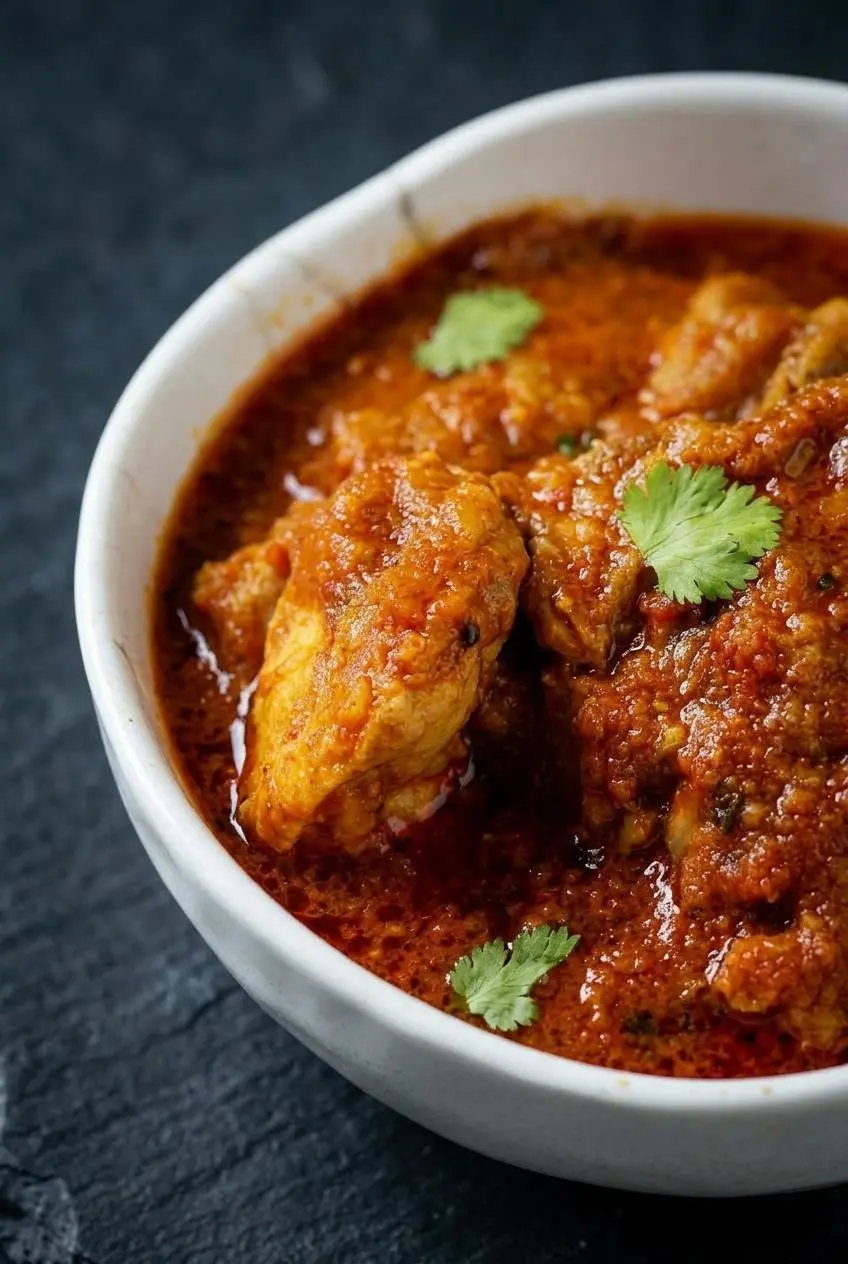
A thick, glossy curry comes from controlling heat and moisture, not from rushing the pan. These fixes keep the gravy balanced and the chicken tender.
- Onions taste sharp: They needed more time. Return them to medium heat and keep stirring until they are deep gold and soft before adding ginger and garlic.
- Chicken feels dry: High boiling heat can tighten the meat. Keep the curry at a gentle simmer and use hot water when loosening the gravy.
- The curry tastes too hot: Add more of the tomato-yogurt or cashew base rather than piling on extra garam masala. This softens chili heat while keeping the spice profile clear.
- The gravy is too salty: Add a little more hot water and simmer gently until the consistency returns. Taste again before adding any more seasoning.
How to Prevent Yogurt from Curdling
Use yogurt that is close to room temperature and whisk it until completely smooth. Lower the heat before adding it. Spoon two tablespoons of warm gravy into the yogurt, whisk well, then stir that warmed mixture into the pan gradually.
Keep the heat low until the yogurt has fully blended with the tomato base. If the sauce starts looking grainy, take the pan off the heat and whisk gently. A hard boil is the usual culprit behind a split-looking gravy.
How to Fix Watery or Thin Gravy
For a thin curry, remove the lid and simmer over medium-low heat for 5 to 10 minutes. Stir occasionally so the onions do not catch on the bottom. The gravy will reduce as excess moisture evaporates.
If it still needs more body, blend or mash a spoonful of the cooked onions into the sauce, or stir in some of the cashew paste option from the ingredient list. Avoid adding more dry spice powder just to thicken it, since that can make the curry taste dusty.
Flavorful Variations and Dietary Swaps
Keep the main method intact, then adapt the finishing liquid or add-ins to suit the meal. These are optional directions, not changes you need to make for a flavorful curry.
Creamy Coconut Chicken Curry Variation
Use light coconut milk in place of the hot water, or choose full-fat coconut milk for a richer result. For a coconut-forward version, replace the yogurt with coconut milk as well, then simmer gently so the gravy stays smooth and mellow. If you enjoy coconut curries with a brothier feel, try this Thai chicken curry soup for another fragrant dinner option.
Chickpeas can join this variation for a heartier meal. Add cooked chickpeas near the end so they warm through without breaking apart.
Hearty Potato and Spinach Add-Ins
For aloo chicken curry, add peeled, quartered Yukon Gold or Russet potatoes when you sear the chicken. They will soften in the gravy and absorb the spices as the curry simmers. Cut them into similarly sized pieces so they finish at the same time.
Spinach works best near the end. Stir it into the finished gravy just until wilted, so it stays green and does not overwhelm the sauce with excess moisture.
Mild and Family-Friendly Adjustments
- Use one deseeded green chili, or omit it entirely, for a gentler heat.
- Choose Kashmiri chili powder or smoked paprika instead of a hotter chili powder.
- Use the cashew option for a creamy, mild gravy that softens the sharper edges of the spices.
- For a fast weeknight version, use boneless chicken and reduce the final simmer to 10 to 12 minutes for breast meat.
Storing and Reheating Chicken Curry
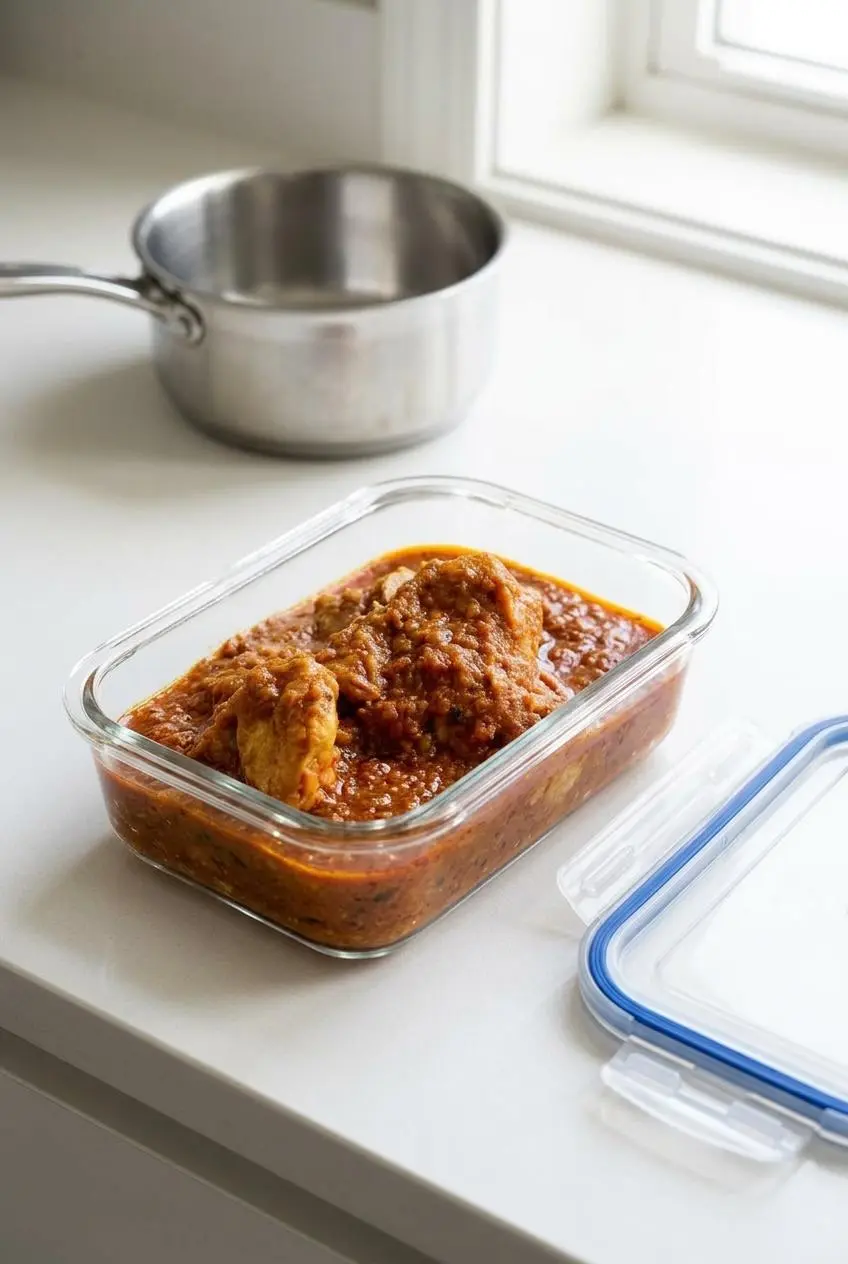
The curry often tastes more blended after it has rested because the spices continue to perfume the gravy. Once cooled, transfer it to a tightly covered container and keep it chilled. The sauce will naturally thicken as it cools, especially when made with bone-in chicken.
Reheat only the portion you plan to serve in a saucepan over medium-low heat. Add a small splash of hot water if needed, stir often, and warm it gradually until the gravy becomes smooth again. Use clean utensils and a food thermometer when checking cooked poultry and leftovers as part of careful handling.
Freezer storage and thawing directions need recipe-specific validation, so do not rely on an untested timeline. For the best texture, keep this curry well covered, chilled, and gently reheated rather than repeatedly warming the whole batch.
What to Serve With Homemade Chicken Curry
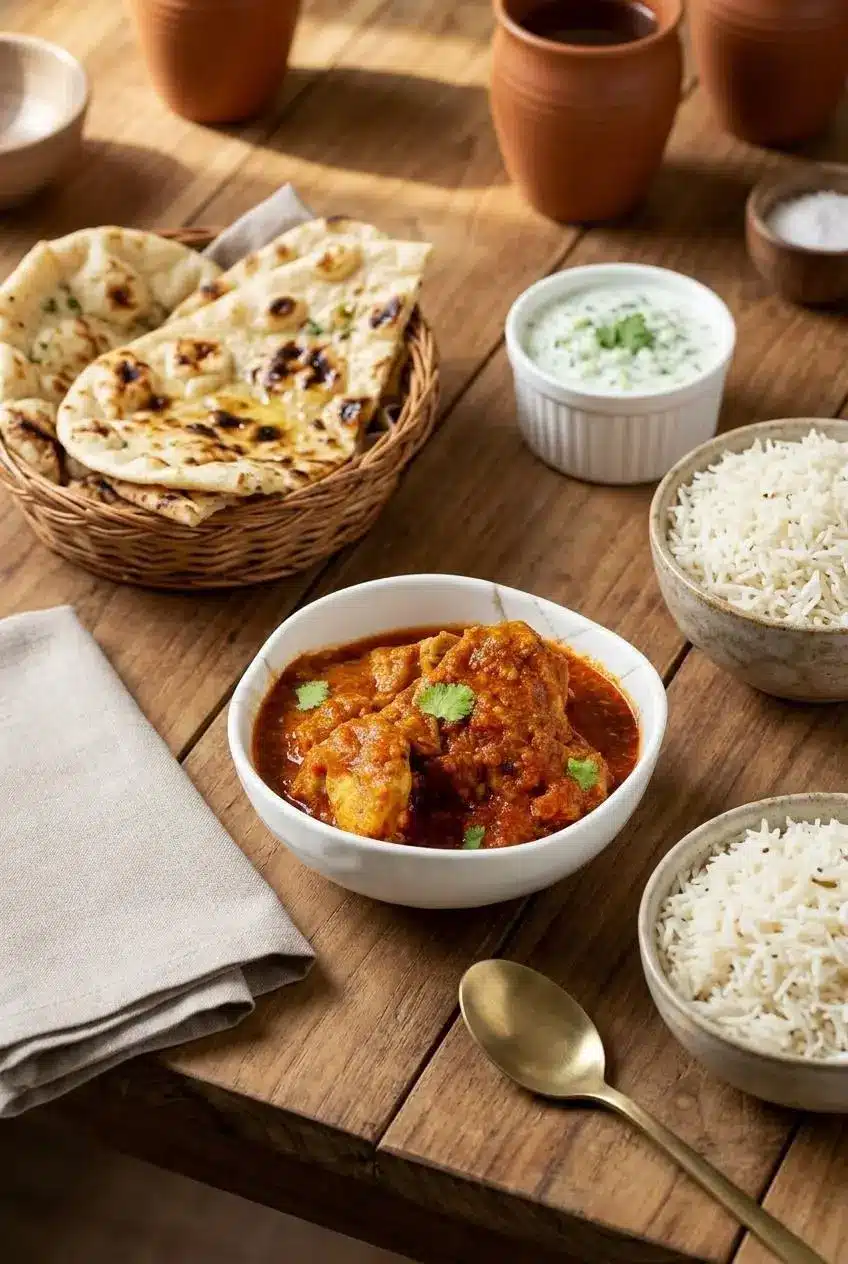
Serve this curry with something that catches the thick gravy and something cool that resets the palate between bites.
- Steamed basmati rice: Its floral aroma works beautifully with the rich onion and tomato gravy.
- Jeera rice or turmeric rice: Both add gentle spice without competing with the chicken.
- Butter naan, roti, or paratha: Warm flatbreads are ideal for scooping every bit of sauce from the bowl.
- Cucumber raita: Cool yogurt and cucumber balance the chili warmth.
- Kachumber salad: Fresh cucumber, tomato, onion, and herbs bring crisp contrast to the tender chicken.
Conclusion
Great chicken curry comes down to a few steady habits: bloom the whole spices, let the onions become deeply golden, and simmer the chicken gently in hot liquid until the gravy turns thick and fragrant.
For a final restaurant-style lift, add crushed toasted kasuri methi and a squeeze of fresh lime just before serving. Keep the heat calm, trust the aroma, and enjoy every spoonful.
Frequently Asked Questions
Can I Use Boneless Skinless Chicken Breasts Instead of Thighs?
Yes. Cut the chicken breasts into bite-sized pieces and add them as directed. Simmer boneless breast meat for 10 to 12 minutes. Keep the curry at a gentle simmer to help the chicken stay tender. Boneless thighs are a more forgiving option if you prefer dark meat.
How Do I Prevent Yogurt or Dairy From Curdling in Curry?
Bring the yogurt close to room temperature and whisk it smooth before cooking. Lower the heat to low. Whisk two tablespoons of warm gravy into the yogurt first. Stir the tempered yogurt into the pan gradually, then avoid a hard boil.
How Can I Thicken Chicken Curry if the Gravy Is Too Thin?
Simmer the curry uncovered over medium-low heat for 5 to 8 minutes so moisture can cook off. Stir occasionally to prevent sticking. Mash or blend some cooked onions into the sauce for natural thickness. Use the cashew paste option from the ingredient list for extra body.
Can I Freeze Chicken Curry and How Long Will It Keep?
Freezer storage needs recipe-specific validation, so avoid relying on an untested storage timeline. Keep cooled leftovers tightly covered in the refrigerator and reheat gently in portions with a little hot water if the gravy has thickened.
What Cut of Chicken Is Best for Curry?
Bone-in thighs, drumsticks, or curry-cut chicken are excellent choices for a rich gravy and tender meat. Dark meat stays juicy during simmering. Bones add deeper savory flavor to the sauce. Boneless chicken is convenient, but it needs a shorter cooking time.
Chicken Curry

Equipment
- Deep heavy bottom pan
- Separate small pot for hot water
Ingredients
Main Ingredients
- ½ kg chicken (1.1 lbs.) (preferably bone-in, boneless is okay)
- 2 to 3 tablespoons oil
- 1 cup onions (3 medium) (fine chopped)
- 1 to 2 green chilies (slit, omit for less spicy, Thai or Indian chili peppers or serrano peppers)
- 1 tablespoon ginger garlic paste or ¾ inch ginger, 3 cloves garlic minced
- ½ cup tomatoes (2 medium) (pureed or finely chopped)
- ¼ cup yogurt (or 1½ tbsp cashew butter or 12 cashews powdered & pureed with ¼ cup water)
- ½ to ¾ teaspoon salt (adjust as needed)
- ½ to 1 cup hot water (or light coconut milk)
- 2 tablespoons coriander leaves or mint leaves finely chopped
Spice Powders
- ¼ teaspoon turmeric powder
- 1 teaspoon Kashmiri red chili powder or smoked paprika (½ tsp for less spicy)
- 1 teaspoon garam masala (½ tsp more if needed, adjust to taste)
- 1 teaspoon coriander powder
Whole Spices
- 1 bay leaf or 1 sprig curry leaves
- 4 cloves
- 2 inch cinnamon piece
- 3 green cardamom
Instructions
Preparation
- Warm the oil in a deep pan over medium heat, then add the bay leaf or curry leaves, cloves, cinnamon, and green cardamom. Stir until the spices smell fragrant and the oil takes on their aroma without letting them burn.
- Add the finely chopped onions and slit green chilies, then cook for 7 to 8 minutes. Keep stirring until the onions turn a deep golden brown and look soft rather than crisp.
- Stir in the ginger garlic paste or minced ginger and garlic, and cook for about 1 minute. The sharp raw smell should fade into a warm, savory aroma.
- Add the tomatoes, turmeric powder, and salt, then cook the mixture until the tomatoes break down. The pan should hold a soft, thick paste with no firm pieces of tomato remaining.
- Lower the heat and stir in the yogurt or cashew mixture, Kashmiri red chili powder or smoked paprika, garam masala, and coriander powder. Mix steadily so the dairy or cashew mixture blends smoothly into the tomato base.
- Keep the heat low and cook the spice mixture until it smells rounded and fragrant. Look for small droplets of oil separating around the edges of the thick masala.
- Add the chicken and chopped coriander or mint leaves, then fry over medium heat for about 3 minutes. The chicken should lose its raw pink color and turn pale or opaque on the outside.
- Cover the pan and cook over low heat for 3 to 4 minutes. This brief covered cook lets the chicken take on the flavor of the spiced onion mixture before liquid is added.
- Heat 1 cup water in a separate pot while the chicken cooks. Use hot water so the pan keeps a steady simmer when the gravy is loosened.
How to Make Chicken Curry
- Add about ½ cup hot water, using only enough to form a thick gravy, and add more as needed while the chicken releases its juices. The sauce should coat the chicken rather than look thin or soupy.
- Cover and cook over medium heat until the chicken is tender and the gravy thickens. Bone-in chicken should feel very tender and release easily from the bone when fully cooked.
- Taste the curry and adjust the salt, adding another ½ tsp garam masala only if the flavor needs more fragrance. The finished gravy should taste savory, warm, and balanced rather than harshly spicy.
- Scatter over the coriander leaves, cover the pan, and turn off the heat. Let the trapped steam carry the fresh herb aroma through the curry before serving.