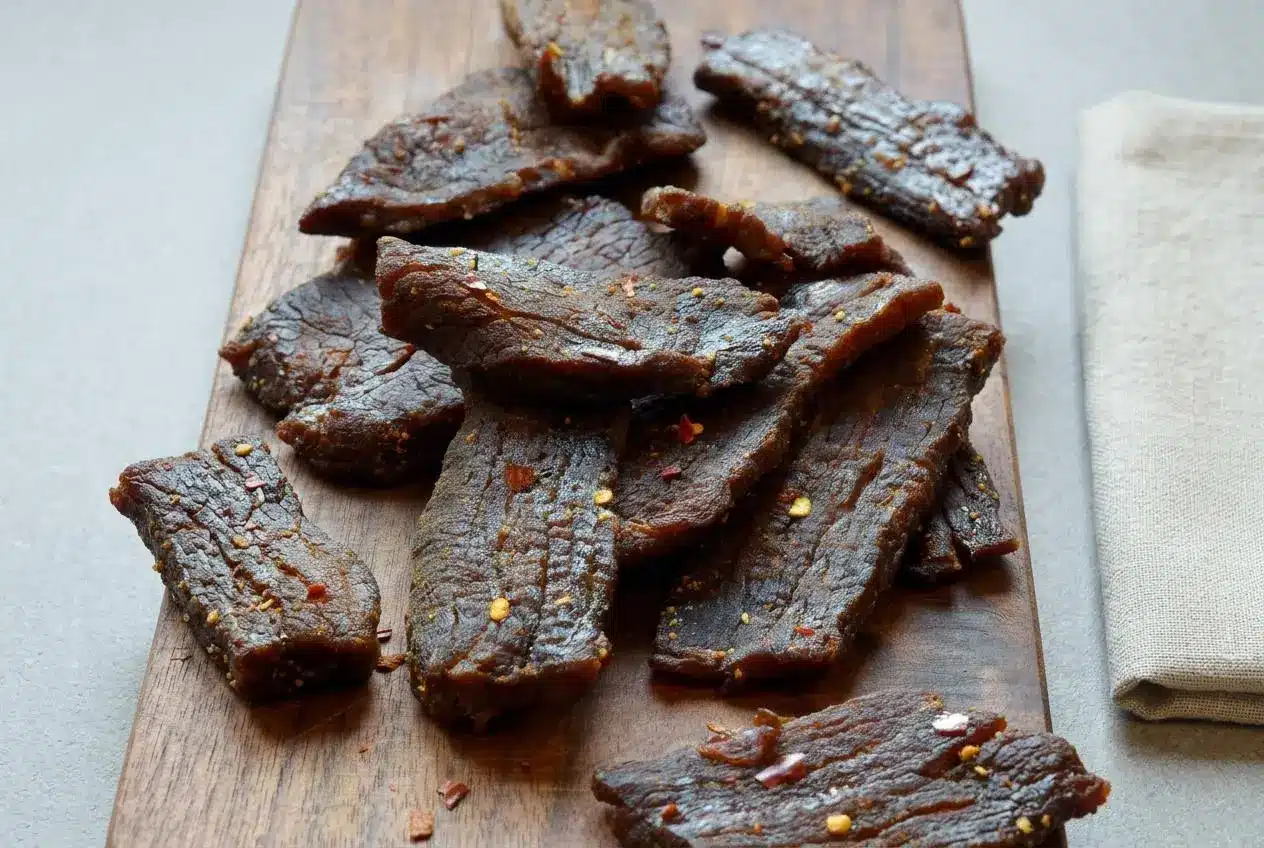
Make homemade jerky by slicing lean beef thin, marinating it for at least 12 hours, then drying it at 175°F for 3 to 4 hours until it is dry, pliable, and chewy.
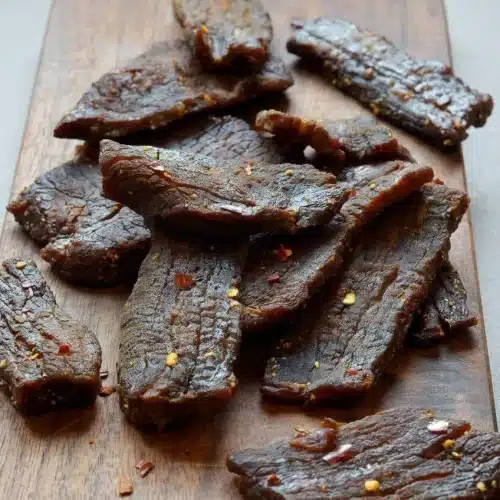
This beef jerky recipe delivers savory, smoky strips with a satisfying chew and a sweet-salty finish. Eye of round is lean enough for drying well, while the soy, Worcestershire, and spices build deep flavor all the way through.
The kitchen starts smelling richly savory as the strips dry, but the cooled bend test is what tells you they are ready. That final crackle of fibers is the payoff.
Keep a sharp knife, two rimmed baking sheets, and wire racks ready before you begin so the marinated beef can go straight into an even drying setup.
Best Cuts of Meat for Jerky
Lean beef makes better jerky because fat does not dry in the same way as muscle. Trim every visible fatty edge and remove the tough, silvery connective layer before slicing, since leftover fat can shorten the keeping quality and create an unpleasant waxy bite.
Eye of round, top round, and flank steak all work well. Skip heavily marbled cuts such as ribeye, which are excellent for a steak dinner but poorly suited to a dry, shelf-stable snack.
Eye of Round vs Flank Steak
Eye of round is the most practical choice for classic jerky. It is lean, affordable, cylindrical in shape, and easy to slice into consistent strips. Top round offers similar benefits, with a slightly broader shape that can be convenient for larger pieces.
Flank steak has a more pronounced grain and a beefier flavor, but it usually costs more and needs careful trimming. Its long fibers are also why it works so well in beef steak fajitas when cut across the grain.
If you buy a round roast, trim it closely and save the scraps only if you have another use planned, such as rendering beef tallow. For jerky, the cleaned lean center is what matters.
Slicing With or Against the Grain
Slice with the grain for the traditional firm, chewy pull associated with old-school jerky. Slice across the grain when you want strips that break down more easily and feel softer when you chew them.
Firm the roast in the freezer for 1 to 2 hours before slicing. It should feel stiff around the edges but still yield to a knife. This makes it easier to keep the slices between ⅛ and ¼ in thick, which helps every strip dry at a similar pace.
Ingredients for the Beef Jerky Recipe
Each ingredient supports the finished jerky: beef provides structure, soy sauce brings umami, brown sugar balances saltiness, and spices create smoky warmth and gentle heat.
- 1 (3-lb) eye of round roast, trimmed of fat and silver skin
- 1 cup (packed) dark brown sugar
- 1 cup soy sauce
- 3 tablespoons Worcestershire sauce
- 1 tablespoon smoked paprika
- 1 teaspoon unseasoned meat tenderizer
- 1 teaspoon freshly ground black pepper
- 1 teaspoon crushed red pepper flakes
- 1 teaspoon onion powder
- ½ teaspoon garlic powder
Soy sauce gives the marinade its salty, savory backbone. Dark brown sugar rounds out that saltiness and helps the finished strips stay pleasantly pliable rather than dry and harsh. Worcestershire adds tangy depth, while the unseasoned tenderizer helps soften the dense muscle fibers in eye of round.
Smoked paprika brings the campfire-style aroma without needing a smoker, while black pepper, red pepper flakes, onion powder, and garlic powder keep the flavor layered instead of one-note.
I trim away every speck of exterior fat I can find, especially along seams and edges, because clean lean meat gives jerky the best texture.
How to Make Beef Jerky
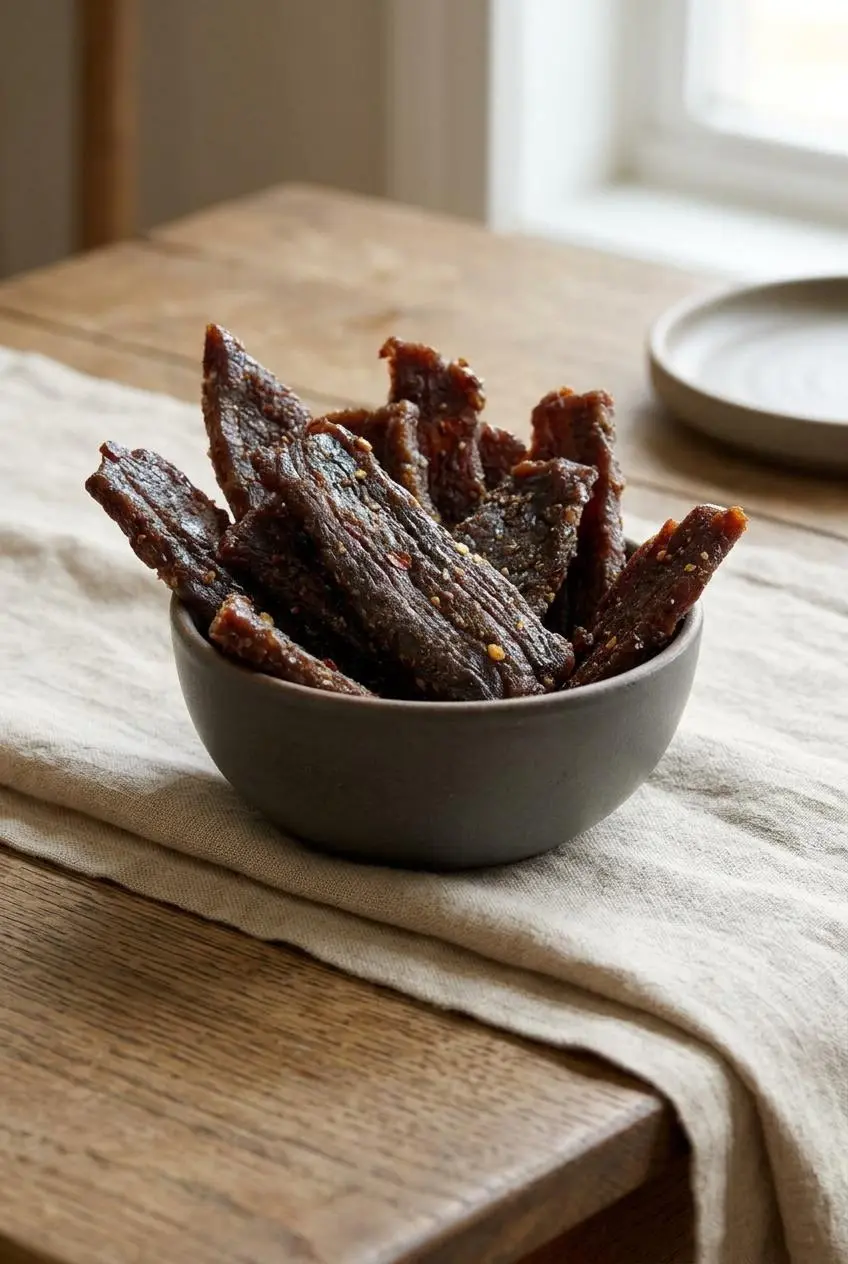
Uniform slicing, a full marinade, and open airflow are the keys to jerky that dries evenly. Keep the strips in one layer on elevated racks so warm air can move above and below the meat.
- Cut the trimmed eye of round with the grain into strips between ⅛ and ¼ in thick; if the roast is too wide to handle, split it horizontally first.
Keep the pieces as even as possible so thin ends do not become brittle before thicker pieces finish drying. - Whisk the dark brown sugar, soy sauce, Worcestershire sauce, smoked paprika, meat tenderizer, black pepper, red pepper flakes, onion powder, and garlic powder in a medium bowl.
Continue whisking until the sugar dissolves and the marinade looks smooth and evenly seasoned. - Coat the beef strips thoroughly in the marinade, then cover the bowl or transfer everything to a large ziplock bag and refrigerate for at least 12 hours or overnight.
Toss the strips or turn the bag once or twice during marinating so the seasoning reaches all sides. - Cover two baking sheets with aluminum foil, place a wire rack over each one, and heat the oven to 175°F (79°C) with two racks positioned near the center.
The raised racks catch drips below the meat while leaving space for air circulation around each strip. - Lay the marinated beef on the racks in a single layer and dry for 3 to 4 hours, switching the pans from top to bottom and front to back halfway through.
At the midpoint, the strips should smell deeply savory and look darker, with no overlapping pieces blocking airflow. - Remove a test strip and let it cool to room temperature before judging the texture, then seal fully cooled jerky in an airtight plastic container, Ziploc bag, or airtight glass jars.
Finished jerky feels dry and leather-like, bends with resistance, and remains chewy with a little tenderness.
Drying Methods: Oven, Dehydrator, and Smoker
Steady low heat and consistent airflow dry jerky without turning it into roast beef. The oven method above follows the recipe exactly, while a dehydrator or pellet grill can be useful alternatives for future batches.
Standard Oven Method
Use wire racks set over foil-lined baking sheets at 175°F. Do not place the strips directly on solid pans, where trapped moisture slows drying and leaves the undersides uneven.
Dry the jerky for 3 to 4 hours, rotating the pans top to bottom and front to back halfway through. Ovens often have warmer zones, so this simple switch helps the strips finish more evenly.
Food Dehydrator Setup
A food dehydrator uses fan-driven airflow around perforated trays, which can produce a very even dry. Arrange strips without touching and use 155°F to 160°F, checking their texture as they dry.
Drying commonly takes 4 to 6 hours in a dehydrator, depending on strip thickness and how actively the machine moves air. Cool a sample before deciding whether the batch is done, because warm jerky feels softer than cooled jerky.
Smoker and Pellet Grill Instructions
For optional smoked pellet grill jerky, hold the grill between 160°F and 165°F and use clean, gentle smoke from mild fruitwood or hickory pellets. Strong smoke can overwhelm the soy-based marinade, so aim for a subtle wood aroma rather than a heavy barbecue crust.
Keep the strips in a single layer with space between them, and check frequently as they approach the desired bend. Low heat matters here, since temperatures much above 200°F cook the meat faster than they dry it.
For an added safety step with homemade dried meat, heating meat to 160°F before dehydrating helps reduce the chance that bacteria survive the drying process.
How to Tell When Beef Jerky Is Done
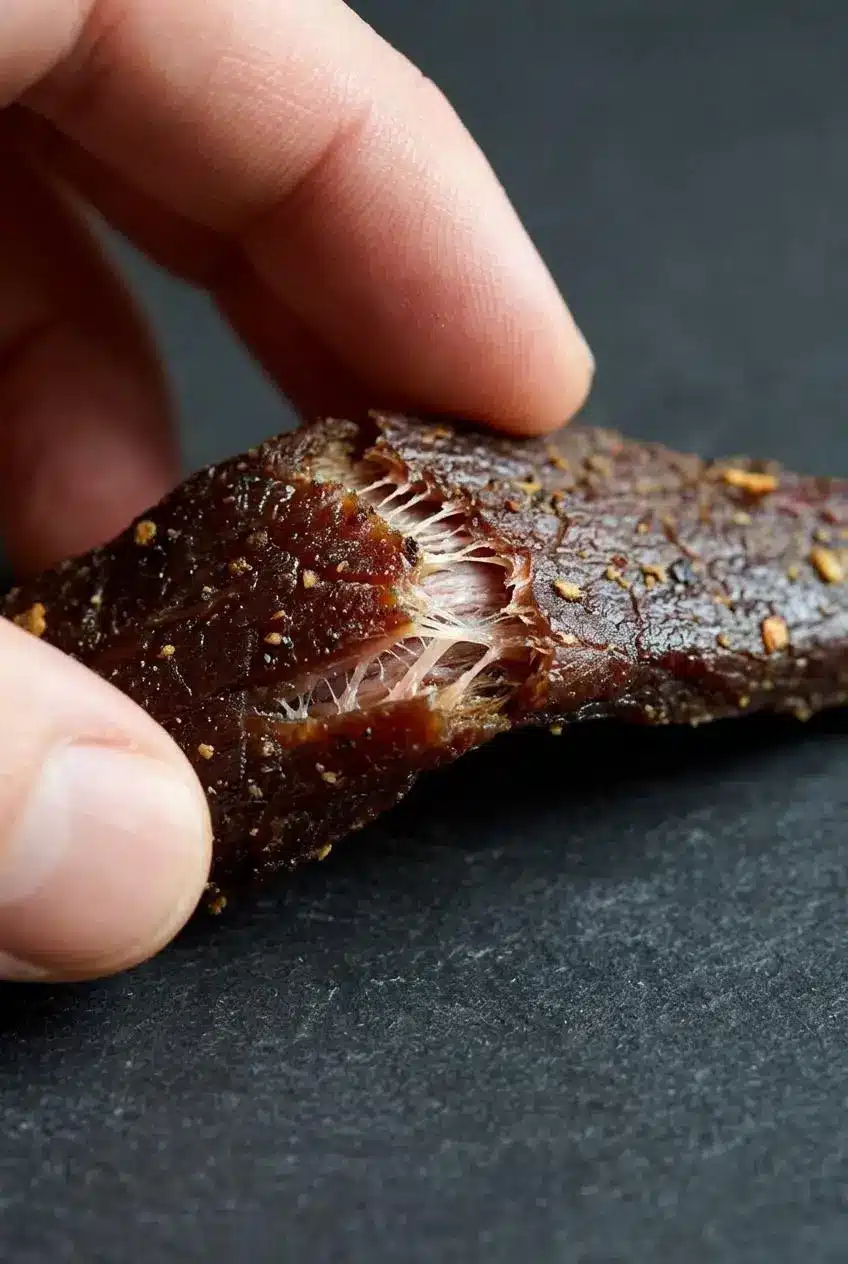
Do not judge jerky while it is hot. A warm strip can feel soft and flexible even when it will become properly chewy as it cools, so let one piece come to room temperature first.
Bend the cooled strip slowly. It should flex firmly and develop small cracks along the bend, exposing pale white muscle fibers. It should not snap cleanly in half, and it should not release moisture or feel spongy in the center.
- Under-dried jerky: feels soft, wet, or spongy and may show moisture when bent. Return it to the drying heat and check again after cooling another sample.
- Properly dried jerky: feels leathery, dry to the touch, and chewy with a slight crack at the bend.
- Over-dried jerky: snaps sharply and crumbles rather than bending. It is still edible, but the texture will be much tougher.
Flavor Variations to Try
Keep the main batch exactly as written, then use these ideas for a separate batch when you want to change the flavor direction.
Sugar-Free Savory Black Pepper
For a more intensely savory, low-sugar style, omit the brown sugar and increase the black pepper and garlic powder. The finished jerky will taste saltier and sharper because there is no sweetness to round out the soy sauce.
Sweet Teriyaki Five-Spice
For a sweeter Asian-inspired batch, use teriyaki sauce in place of part of the savory liquid and add Chinese five-spice powder with ground ginger. The five-spice gives the jerky a warm, fragrant character that pairs well with the brown sugar. If those flavors appeal to you, try this slow cooker Korean beef for a full dinner version of that sweet-savory profile.
Spicy Cayenne and Red Pepper
Add cayenne pepper or habanero hot sauce to the marinade for a hotter batch. Start cautiously, since drying concentrates the seasoning and makes the heat feel more direct with each bite.
Troubleshooting and Common Jerky Pitfalls
- The jerky is rubbery: The strips may be too thick, crowded, or not dry enough. Keep space between pieces and continue drying until a cooled sample passes the bend test.
- The jerky snaps like a cracker: It dried too long or the slices were too thin. Pull future batches earlier and cool a test strip before making the final call.
- The flavor is too salty: Soy sauce is concentrated, especially after drying. For strips that are already marinated, briefly rinse or soak them in cool water before drying, then pat them dry thoroughly.
- The flavor is too sweet: Use less brown sugar in a future batch or move to the sugar-free pepper variation. The soy sauce and Worcestershire will still provide plenty of depth.
- Moisture appears inside the container: The jerky was sealed before it had cooled completely. Spread it out, let it cool fully, and dry it a little longer if it still feels damp.
- Some strips dry faster than others: Uneven slicing or hot areas in the oven are usually responsible. Rotate the pans halfway through and keep thicker strips toward the hotter areas only if your oven dries unevenly.
Storage and Shelf Life
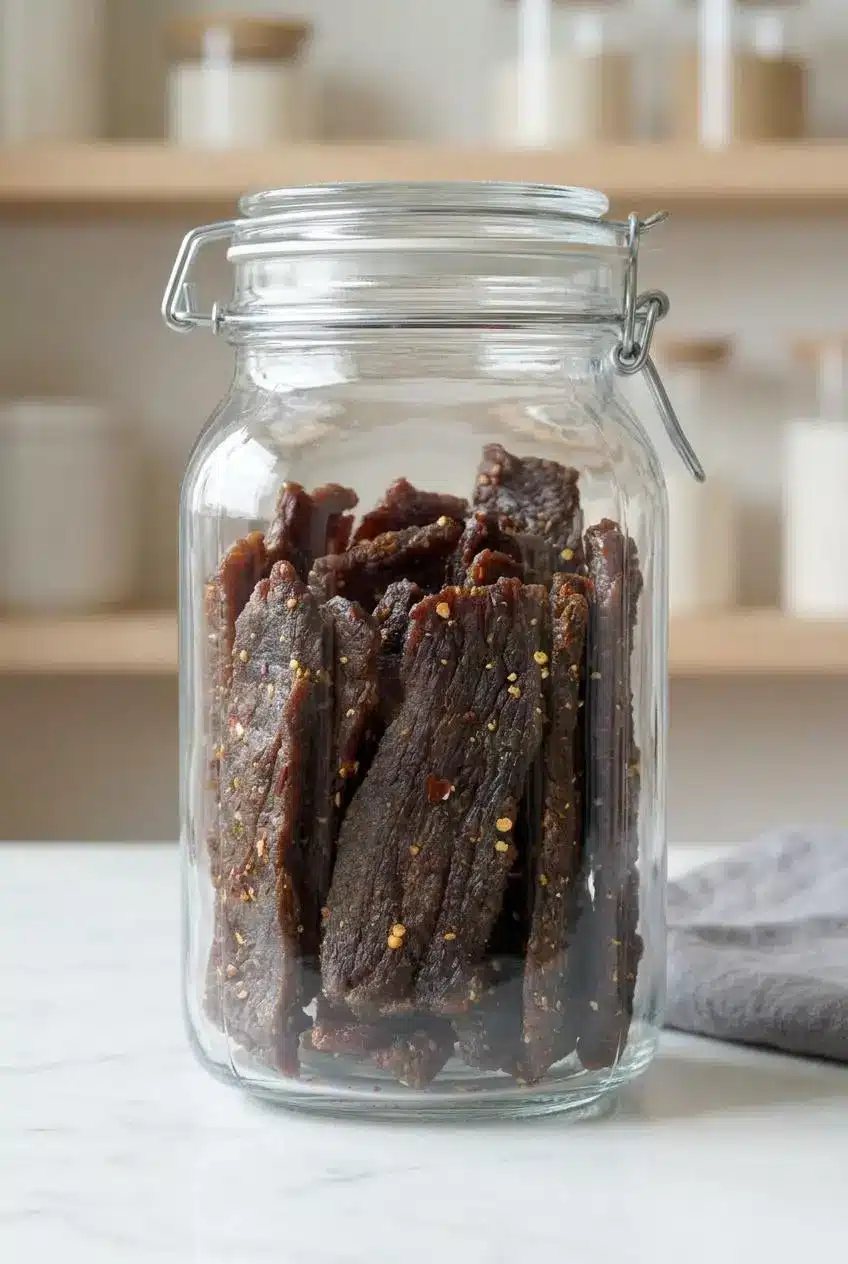
Cool the jerky completely before packing it. Any trapped warmth can create condensation inside the container, which works against the dry texture you just worked to achieve.
Store fully dried jerky in an airtight plastic container, Ziploc bag, or airtight glass jar. The recipe’s room-temperature guidance is about 1 week; for longer keeping, refrigerate or freeze it in a tightly sealed container.
Keep portions away from humidity and avoid returning partly eaten jerky to the main container. If you notice condensation, moisture, or an off smell, discard that portion rather than trying to dry it again.
Conclusion
Homemade jerky is worth the wait when you start with lean beef, slice it evenly, and give the soy-spice marinade time to work. The oven method uses familiar kitchen equipment and produces a smoky, richly seasoned snack with a classic chew.
Before you seal the batch, cool one strip and bend it slowly. That small check helps you land on the sweet spot between tender and dry every time.
Frequently Asked Questions
What Cut of Beef Makes the Best Jerky?
Eye of round is the best all-around choice because it is very lean, economical, and easy to trim into even strips. Top round is another lean, dependable option. Flank steak offers a stronger beef flavor and a distinct grain. Trim away fat and silver skin from any cut before marinating.
How Do I Know When Homemade Jerky Is Fully Done?
Cool a sample to room temperature, then bend it. Properly dried jerky bends firmly and shows pale white fibers at the crease without snapping in half or releasing moisture.
Can I Make Jerky in a Regular Oven Without a Dehydrator?
Yes. Set wire racks inside rimmed baking sheets, arrange the strips in one layer, and dry them at 175°F for 3 to 4 hours. Rotate the pans halfway through so both trays receive similar heat. Test a cooled strip before removing the full batch.
How Long Does Homemade Beef Jerky Last?
When fully dried and packed airtight, this jerky keeps at room temperature for about 1 week. Refrigerate or freeze it for longer storage, keeping the container tightly sealed and free of condensation.
Beef Jerky Recipe

Equipment
- Baking Sheets
- Wire Racks
Ingredients
- 1 3-lb eye of round roast trimmed of fat and silver skin
- 1 cup (packed) dark brown sugar
- 1 cup soy sauce
- 3 tablespoons Worcestershire sauce
- 1 tablespoon smoked paprika
- 1 teaspoon unseasoned meat tenderizer
- 1 teaspoon freshly ground black pepper
- 1 teaspoon crushed red pepper flakes
- 1 teaspoon onion powder
- ½ teaspoon garlic powder
Instructions
- Cut the trimmed eye of round with the grain into strips between ⅛ and ¼ in thick; if the roast is too wide to handle, split it horizontally first. Keep the pieces as even as possible so thin ends do not become brittle before thicker pieces finish drying.
- Whisk the dark brown sugar, soy sauce, Worcestershire sauce, smoked paprika, meat tenderizer, black pepper, red pepper flakes, onion powder, and garlic powder in a medium bowl. Continue whisking until the sugar dissolves and the marinade looks smooth and evenly seasoned.
- Coat the beef strips thoroughly in the marinade, then cover the bowl or transfer everything to a large ziplock bag and refrigerate for at least 12 hours or overnight. Toss the strips or turn the bag once or twice during marinating so the seasoning reaches all sides.
- Cover two baking sheets with aluminum foil, place a wire rack over each one, and heat the oven to 175°F (79°C) with two racks positioned near the center. The raised racks catch drips below the meat while leaving space for air circulation around each strip.
- Lay the marinated beef on the racks in a single layer and dry for 3 to 4 hours, switching the pans from top to bottom and front to back halfway through. At the midpoint, the strips should smell deeply savory and look darker, with no overlapping pieces blocking airflow.
- Remove a test strip and let it cool to room temperature before judging the texture, then seal fully cooled jerky in an airtight plastic container, Ziploc bag, or airtight glass jars. Finished jerky feels dry and leather-like, bends with resistance, and remains chewy with a little tenderness.