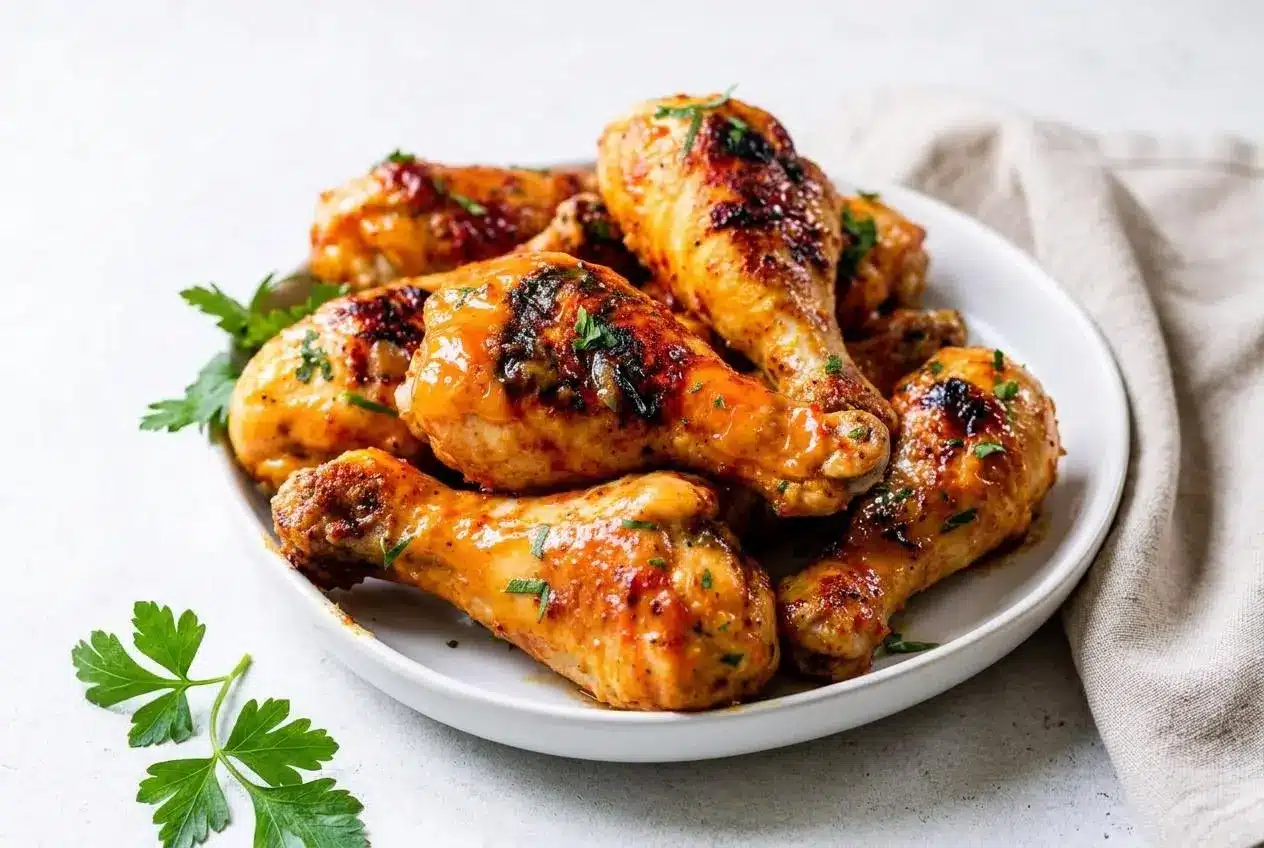
Season chicken, grill it over gentle low or indirect heat until cooked through, then brush on BBQ sauce during the final minutes for a rich glaze that won’t scorch.
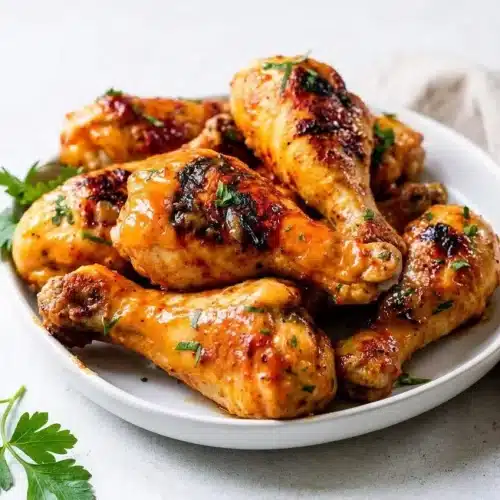
This bbq chicken recipe turns drumsticks into smoky, deeply savory chicken with a sticky coating that clings instead of sliding off. The mustard-thinned sauce is the small detail that makes brushing easy and even.
Listen for a steady, gentle sizzle rather than aggressive popping on the grates. That quieter heat is where tender meat and a glossy glaze meet. The deep mahogany finish is worth the wait.
Pat the drumsticks dry before seasoning so the spices adhere well and the skin browns more evenly.
Key Ingredients and Flavor Foundations
Each ingredient builds a distinct layer: savory seasoning for depth, garlic for warmth, drumsticks for richness, and a tangy sauce mixture for a smooth, caramelized finish.
- 8 chicken drumsticks, skin on, or off
- 1 teaspoon seasoning salt, such as Lawry’s, or adobo seasoning
- 1 teaspoon garlic powder
- 4 tablespoons BBQ sauce, homemade or store bought
- 3 teaspoons yellow mustard
The seasoning salt and garlic powder act as a dry rub, seasoning the meat before sweet sauce enters the picture. This gives the chicken a savory foundation, so the finished glaze tastes balanced rather than overly sweet.
Drumsticks are forgiving dark meat with plenty of flavor around the bone. Bone-in thighs work well with similar heat management, while boneless skinless breasts need closer attention because they cook faster and can dry out sooner.
- Boneless skinless breasts: Grill over moderate heat and begin checking early. Pull them once they reach 165°F in the thickest area.
- Bone-in thighs: Use indirect heat for more even cooking, then finish with the glaze once the meat is nearly done.
- Skin-on drumsticks: Let the skin render gradually over low heat before adding sauce, so it browns rather than burns.
The BBQ sauce brings smoke, sweetness, and body. Yellow mustard adds tang and loosens the sauce with the water used in the method, creating a thinner glaze that brushes into the contours of the chicken without clumping.
I like to dry the chicken thoroughly with paper towels before seasoning because damp skin steams first and delays browning.
How to Make BBQ Chicken
- Coat the drumsticks all over with the seasoning salt and garlic powder, then cover and refrigerate for at least 1 hour or as long as overnight.
The seasoning should look evenly distributed, with no thick patches of salt collecting on the skin. - Stir the BBQ sauce and yellow mustard in a small bowl, adding about 2 tablespoons water to loosen the mixture.
The glaze should flow easily from a brush and leave a thin, even coating rather than dropping in heavy blobs. - Heat an outdoor grill to medium heat before cooking the chicken.
Wait until the grates are fully hot so the drumsticks release more cleanly after they begin to brown. - Oil the grates, lower the heat, and grill the drumsticks with the lid closed for about 18 to 20 minutes, turning them often.
The chicken should turn golden and smell savory, with steady sizzling instead of harsh flare-ups. - Brush the drumsticks with the sauce mixture and continue grilling for about 2 minutes, turning several times.
The glaze should bubble, become tacky, and darken to a deep mahogany without blackening.
Check the thickest part of a drumstick with an instant-read thermometer, keeping the probe away from the bone. A little meat pulling back from the lower bone joint is a useful sign of progress, but use the thermometer for the final call.
Essential BBQ Chicken Grilling Techniques
Two-zone grilling gives you control when chicken fat drips and sweet sauce meets heat. On a gas grill, leave one side on for direct heat and turn the other side off or very low. On a charcoal grill, bank the coals to one side and keep the other side clear.
Start the drumsticks over the gentler side with the lid down, moving them briefly over direct heat only when you need extra color. Covered cooking surrounds the chicken with steady heat and helps it cook evenly around the bone without scorching the outside.
Save the sweet glaze for the last 2 to 5 minutes. BBQ sauce contains sugars that caramelize quickly, but those same sugars can turn bitter and black over a hot flame before the chicken finishes cooking. Brush lightly, turn often, and keep the heat low.
For an optional savory layer before glazing, brush the chicken midway through cooking with a light cider vinegar and smoked paprika mop. Keep it thin and restrained so it seasons the surface without washing away the dry rub. For another bold bone-in grilling idea, try jerk chicken thighs.
Alternative Cooking Methods: Oven and Air Fryer
Indoor methods can still deliver tender chicken and a sticky finish. The key is the same as grilling: cook the chicken through first, then add the sweet sauce near the end so it caramelizes instead of burning.
Oven-Baked BBQ Chicken
Arrange the seasoned drumsticks on a lined baking sheet and bake at 400°F for 35 to 40 minutes. Brush them generously with the BBQ sauce mixture on all sides, then return the pan to the oven or use the broiler for 3 to 5 minutes until the glaze bubbles and darkens.
Keep skin-on pieces spaced apart so heat can circulate and the skin can render. Skinless pieces may color less deeply, so watch the broiler closely and remove them once the glaze looks shiny and tacky. For a sheet-pan approach with a similarly sticky finish, see this baked BBQ chicken.
Crispy Air Fryer BBQ Chicken
Air fry the seasoned drumsticks at 380°F for 18 to 20 minutes, turning the pieces halfway through. During the final 2 to 3 minutes, brush on the sauce and raise the air fryer to 400°F for a glossy finish.
Leave space around each piece instead of stacking them. Air needs room to circulate, especially around skin-on chicken, and crowding can leave the glaze uneven and the skin soft.
Cheesy Weeknight BBQ Chicken
For an optional comfort-food variation, top baked chicken with a layer of BBQ sauce, shredded Monterey Jack or cheddar, and sliced jalapeños or green onions. Bake for 3 to 5 minutes, just until the cheese melts and bubbles. Keep these additions outside the main preparation so the original drumsticks stay true to their smoky, tangy profile.
Mastering Temperature and Flare-Up Troubleshooting
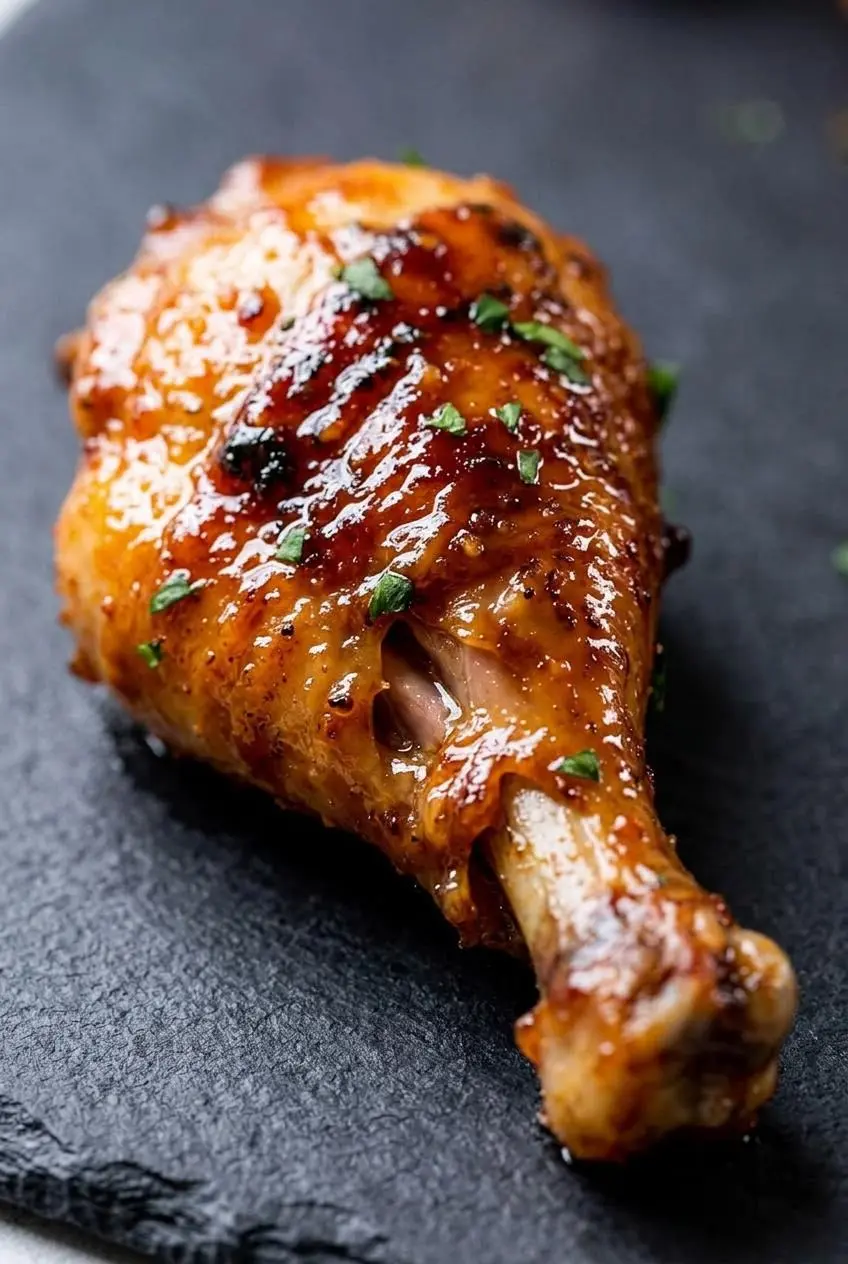
Dark meat can look beautifully browned before it is tender near the bone, while sauce can darken quickly before the chicken is ready. A thermometer and a cooler grill zone solve both problems.
Internal Temperature Guide by Cut
Insert an instant-read thermometer into the thickest portion of the meat without touching bone. Chicken breasts should reach 165°F for doneness. Drumsticks and thighs often become more tender between 175°F and 180°F, when connective tissue has more time to soften.
- Boneless breasts: Remove them promptly at 165°F to help preserve moisture.
- Drumsticks: Cook toward 175°F to 180°F for more tender dark meat and easier eating around the bone.
- Bone-in thighs: Treat them like drumsticks, checking the thickest section away from the bone.
How to Prevent Flare-Ups and Burnt Glaze
- Flames leap up under the chicken: Fat is dripping onto intense heat. Move the drumsticks to the indirect side, close the lid, and let the flames settle before returning them to the heat.
- The skin darkens too fast: The grill is running too hot. Lower the burners or increase the distance from the coals, then cook covered until the center catches up.
- The sauce turns black: It went on too early or too heavily. Wipe away any bitter patches if possible, finish cooking over indirect heat, and apply a fresh light coating at the end.
- The chicken sticks to the grates: The grates may not be hot and oiled enough. Let the chicken cook undisturbed until it releases more easily before turning.
- The exterior is brown but the center needs time: Move the pieces to indirect heat and cover the grill. This protects the surface while the meat finishes gently.
Keep the lid closed whenever possible. It limits oxygen feeding a flare-up and turns the grill into a more even cooking environment.
Storage and Reheating
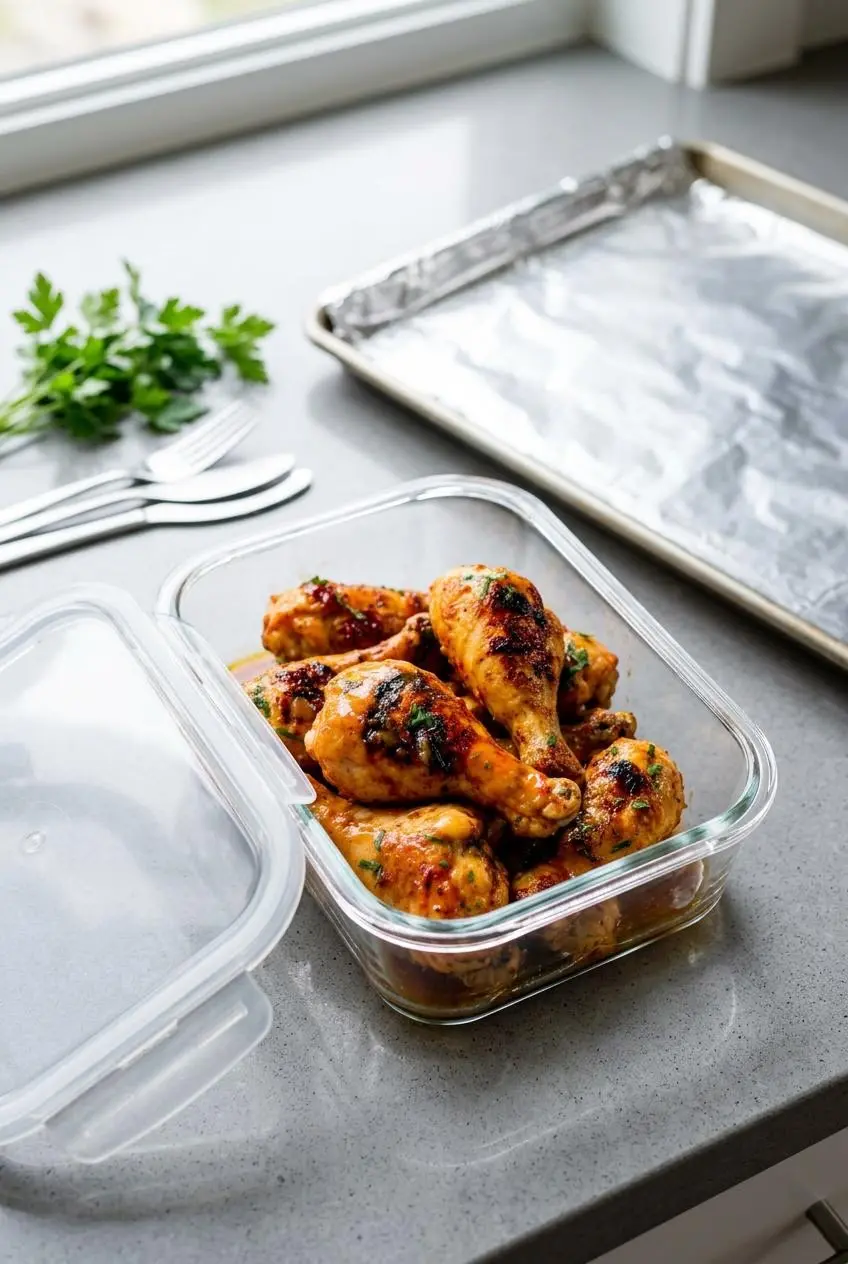
Cool leftover chicken before transferring it to an airtight container and refrigerate it promptly. Pulling the meat from the bone can make later meals easier, especially if you plan to use it for juicy shredded chicken.
Reheat portions gently in a covered oven dish or foil pouch with a small splash of water or broth to protect the meat and glaze from drying out. Heat leftovers until they reach 165°F, using a food thermometer for a more reliable check on reheated poultry. Chicken parts need a minimum internal temperature of 165°F.
If preparing ahead, season and marinate the drumsticks as directed, then cook them close to serving time for the best skin texture. Keep extra glaze separate until the final cooking stage so it stays bright and sticky rather than soaking into the chicken.
Delicious Sides and Serving Suggestions
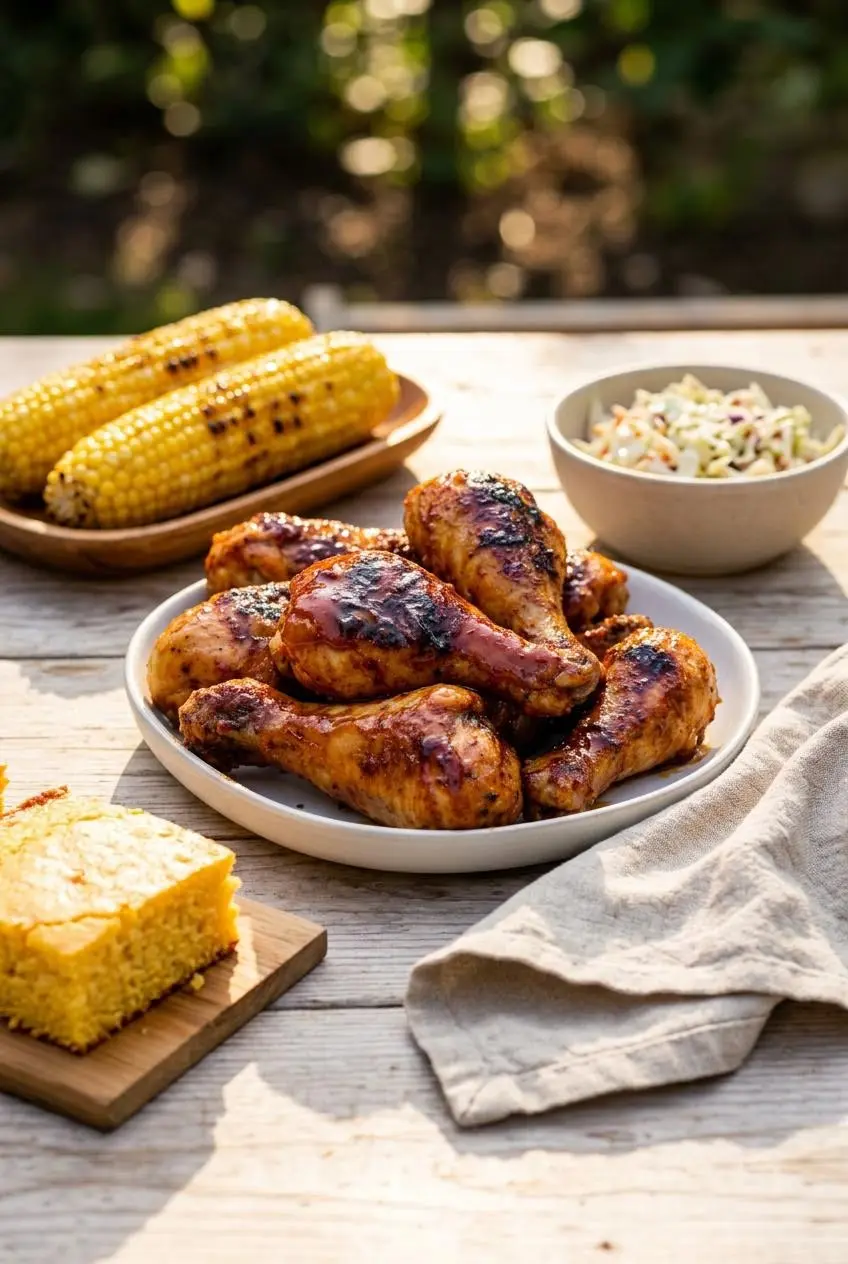
Rich, smoky chicken shines next to sides with crunch, creaminess, or a little acidity. Build a relaxed cookout plate or turn leftovers into a fast meal without losing that barbecue flavor.
- Classic cookout plate: Serve with creamy coleslaw, grilled sweet corn, baked beans, and warm skillet cornbread.
- Fresh contrast: Pair the sticky glaze with cucumber herb salad or tomato salad for a crisp, bright bite.
- Casual leftovers: Pull the meat from the bone for wraps, sliders, or chopped barbecue salads.
- Weeknight shortcut: Tuck leftover chicken into tortillas with crunchy slaw for BBQ chicken tacos.
For a crowd, place the glazed drumsticks on a warm platter and offer extra sauce at the table. That keeps the cooked glaze in place while giving everyone the option of a saucier bite.
Conclusion
This method delivers tender drumsticks with a savory seasoned base and a glossy BBQ finish. Gentle heat gives the chicken time to cook evenly, while the final sauce layer brings the caramelized flavor.
Keep the grill calm, turn the chicken regularly, and save the sweet glaze for the last minutes. That one habit makes barbecue night far less stressful.
Frequently Asked Questions
When Should You Put BBQ Sauce on Chicken?
Brush BBQ sauce onto chicken during the final 2 to 5 minutes of cooking. Use low or indirect heat when the sauce goes on. Turn the chicken often so the sugars bubble and caramelize without forming a bitter black crust.
What Internal Temperature Should BBQ Chicken Reach?
Chicken breasts should reach 165°F. Drumsticks and thighs are often most tender between 175°F and 180°F. Check the thickest portion with a thermometer and avoid touching bone. For poultry safety, use the minimum internal temperature of 165°F for poultry as the baseline.
How Do You Keep BBQ Chicken From Drying Out on the Grill?
Cook over moderate indirect heat with the lid down, and avoid pressing the meat with a spatula. Turn drumsticks regularly instead of leaving one side over direct heat for too long. Let the chicken rest for 5 minutes before serving so the juices settle into the meat.
Can I Use Chicken Breasts Instead of Drumsticks?
Yes. Boneless skinless chicken breasts cook faster than drumsticks and usually need about 10 to 12 minutes total on the grill. Use moderate heat and turn them once or twice for even browning. Brush on the sauce near the end, then remove the breasts as soon as they reach 165°F.
BBQ Chicken Recipe

Equipment
- Outdoor grill
- Small bowl
- Pastry brush
- Instant-read thermometer
Ingredients
- 8 chicken drumsticks skin on, or off
- 1 teaspoon seasoning salt such as Lawry’s, or adobo seasoning
- 1 teaspoon garlic powder
- 4 tablespoons BBQ sauce homemade or store bought
- 3 teaspoons yellow mustard
Instructions
- Coat the drumsticks all over with the seasoning salt and garlic powder, then cover and refrigerate for at least 1 hour or as long as overnight. The seasoning should look evenly distributed, with no thick patches of salt collecting on the skin.
- Stir the BBQ sauce and yellow mustard in a small bowl, adding about 2 tablespoons water to loosen the mixture. The glaze should flow easily from a brush and leave a thin, even coating rather than dropping in heavy blobs.
- Heat an outdoor grill to medium heat before cooking the chicken. Wait until the grates are fully hot so the drumsticks release more cleanly after they begin to brown.
- Oil the grates, lower the heat, and grill the drumsticks with the lid closed for about 18 to 20 minutes, turning them often. The chicken should turn golden and smell savory, with steady sizzling instead of harsh flare-ups.
- Brush the drumsticks with the sauce mixture and continue grilling for about 2 minutes, turning several times. The glaze should bubble, become tacky, and darken to a deep mahogany without blackening.