Baked potato soup is a rich, comforting bowl of tender potato chunks, smoky bacon, savory aromatics, melted cheddar, and tangy sour cream in a velvety broth.
This baked potato soup brings the cozy flavor of a fully loaded potato to the dinner table in about 35 minutes. Smoky bacon, two kinds of cheddar, and creamy potatoes make each spoonful satisfying.
The microwave potato shortcut keeps the stovetop moving, while a gentle roux gives the broth its smooth, spoon-coating body. The key is adding the cheese after the heat is off.
Shred the cheddar while the potatoes cook so it is ready to melt smoothly into the warm broth.
Key Ingredients for Loaded Baked Potato Soup
Every ingredient supports the finished bowl: potatoes create body, bacon adds smoky savor, dairy brings richness, stock balances the flavor, and chives add a fresh finish.
- 4 potatoes, scrubbed
- 8 bacon slices
- 4 tbsp unsalted butter
- 2 garlic cloves, minced
- 1/4 cup yellow onion
- 1/3 cup all-purpose flour
- 2 cups low fat milk
- 1 cup half and half
- 2 cups chicken stock
- 1 tsp salt, plus more to taste
- 1/2 tsp garlic salt, plus more to taste
- 1/2 tsp black pepper
- 1 cup mild cheddar cheese
- 1 cup sharp cheddar cheese
- 1 cup sour cream
- fresh chives, for garnish
Russet potatoes give the soup a fluffy, naturally thick character once broken up. Butter and flour form the roux that thickens the broth, while chicken stock keeps the dairy from tasting too heavy. Sour cream adds the familiar tang that makes the bowl taste like a loaded baked potato.
I grate block cheese after letting it sit briefly at room temperature because it melts into the broth more evenly and is less likely to separate.
Choosing the Right Potatoes: Russets vs Yukon Golds
- Choose russets for a thicker soup. Their fluffy interior breaks apart readily, so the potato itself helps give the broth body.
- Choose Yukon Golds for defined pieces. They hold their shape more firmly and bring a naturally buttery flavor.
- Use the texture you enjoy. Russets suit a classic soft, hearty bowl, while Yukon Golds work well when you want distinct potato bites.
Microwaving is the fastest route for this soup because it cooks the potatoes without adding extra moisture. Baking works when you already have the oven on, and a gentle boil is another option when you prefer to cook the potatoes in advance. In each case, a fork should slide through the center with little resistance before you peel and chunk them.
The Power of Freshly Shredded Cheese and Bacon Drippings
Freshly shredded mild and sharp cheddar melts more smoothly than bagged cheese, which can contain powdery coatings that leave the soup slightly gritty. The mix of mild cheddar and sharp cheddar gives a rounded cheese flavor without overwhelming the potatoes.
Reserve up to 1 tablespoon of bacon drippings for the pot. Cooking the onion and garlic in that flavorful fat creates a savory foundation before the butter and flour go in. It is the same bacon, cheddar, and sour cream combination that makes twice-baked potatoes so comforting, translated into a creamy spoonful.
How to Make Baked Potato Soup
Work in a steady order: cook the potatoes and bacon first, then build the broth while they cool. Keeping the simmer gentle protects the dairy and lets the roux thicken without scorching.
- Prick the potatoes all over with a fork and microwave for 12 to 15 minutes, until tender; halve them and let them cool before peeling and cutting into chunks.
A fork should pass easily through the center, and the potatoes should be cool enough to handle without rushing. - Cook the bacon in a skillet over medium-high heat until crisp, then move it to a paper towel-lined plate and save up to 1 tablespoon of drippings before crumbling the cooled bacon.
The bacon should look deeply browned and feel crisp as it cools, with most of the excess fat left behind. - Melt the butter in a large pot over medium-low heat, then cook the reserved drippings, garlic, and onion for 2 to 3 minutes; whisk in the flour for 1 to 2 minutes before gradually whisking in the milk, half-and-half, stock, salt, garlic salt, and pepper, then lightly simmer for 5 to 7 minutes.
The flour mixture should turn pale golden and smell lightly toasted before the liquids go in, and the broth should slowly thicken into a smooth coating on the whisk. - Reserve 1/4 cup each of the cheese and bacon if using them as garnishes, turn off the heat, then stir in the remaining cheese, bacon, and sour cream before breaking the potato chunks into the pot.
The broth should look glossy and unified after the dairy melts in, with potato pieces left as chunky or as broken down as you prefer.
Keep the pot at a light simmer while the broth thickens. A hard boil can make the dairy look separated, so lower the heat as soon as you see active bubbling around the edges.
Expert Tips for Perfect Creamy Texture

A silky potato soup comes down to starch control and gentle heat. These fixes help when the pot looks thinner, thicker, or rougher than you expected.
- Grainy cheese: High heat can cause cheese proteins to tighten. Remove the pot from direct heat and stir in freshly shredded cheddar gradually until it melts.
- Gluey potatoes: A food processor overworks potato starch. Use a hand masher instead, pressing only until the soup reaches the texture you want.
- Thin broth: Mash more of the cooked potato chunks directly in the pot. Their starch thickens the soup while keeping the flavor unchanged.
- Thick broth: Stir in a small splash of chicken stock or milk over low heat until the soup loosens to a creamy consistency.
- Deeper savory flavor: As an optional change, stir roasted garlic paste and smoked paprika into the roux. Both bring a warm, smoky edge without changing the core method.
Customizing Soup Texture: Chunky vs Pureed
For a rustic, chunky soup, use a hand masher directly in the pot and leave plenty of potato pieces intact. For a smoother base, briefly pulse with an immersion blender, stopping before every chunk disappears. A few whole bites keep the soup from feeling flat or pasty.
Do not blend for long stretches. Potatoes release more starch as they are worked, and too much blending can turn an otherwise velvety soup gluey.
Slow Cooker and Dietary Variations
These options are completely optional and do not change the stovetop method above. They are useful when you want a hands-off approach or need to adjust the soup for a particular preference.
Crockpot Cooking Method and Timing
- Place cooked potato cubes, chicken stock, cooked bacon, softened onion, garlic, salt, garlic salt, and pepper in the slow cooker.
- Cook on Low for 6 to 8 hours or on High for 3 to 4 hours, until the flavors have blended and the potatoes are very tender.
- During the final 30 minutes, stir in the milk, half-and-half, sour cream, and freshly shredded cheese.
- Keep dairy out of the slow cooker at the beginning so it is less likely to separate during the long cook.
For a dedicated all-day version with the same cozy flavor profile, try this crockpot potato soup.
Gluten-Free and Vegetarian Adjustments
- Gluten-free: Skip the flour roux and thicken the hot simmered stock with a slurry of 2 tablespoons cornstarch whisked with 2 tablespoons cold water. Simmer gently for 2 minutes, until glossy and thickened.
- Vegetarian: Use rich vegetable broth in place of chicken stock. Replace the bacon with roasted mushrooms and smoked sea salt for a savory, smoky character.
Storage and Reheating Best Practices
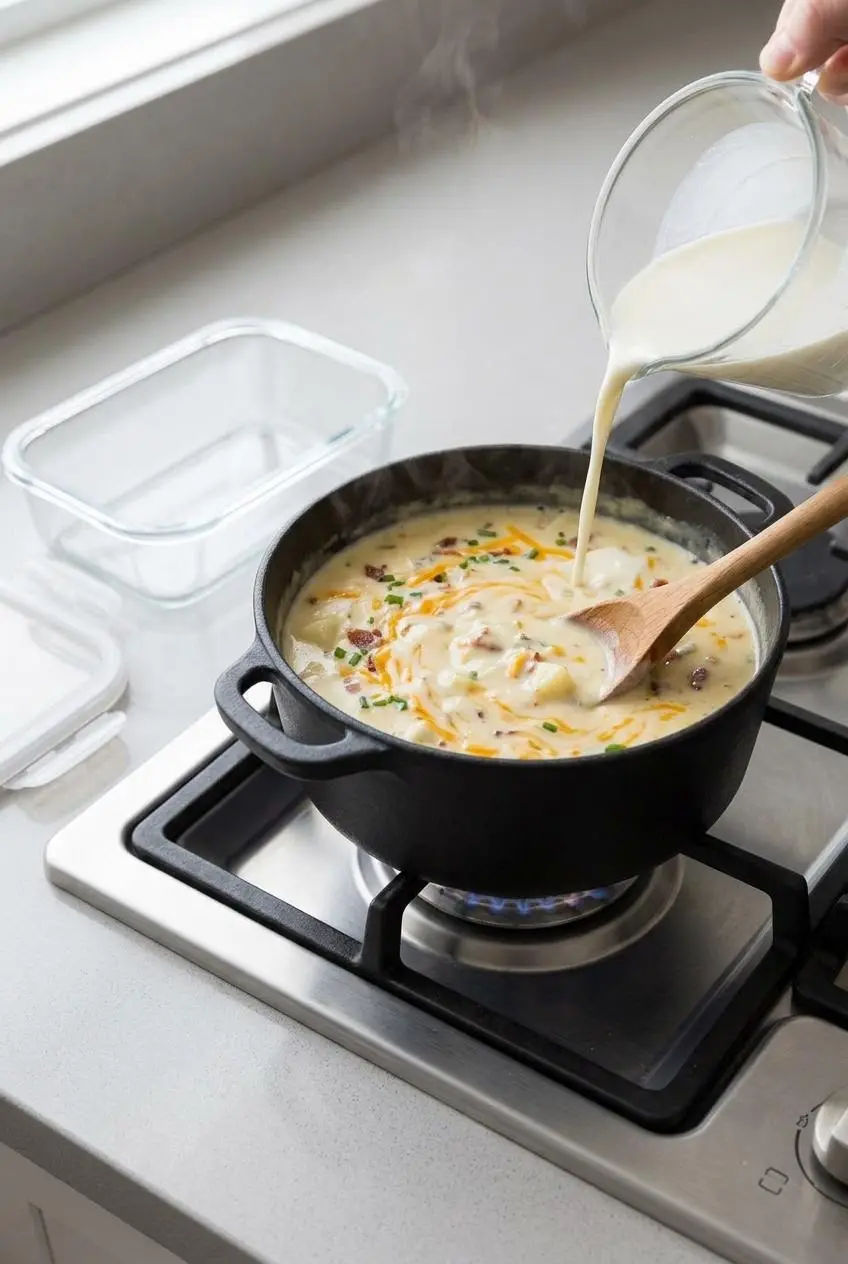
Cool leftover soup promptly, transfer it to an airtight container, and keep it chilled. The dairy-rich broth can thicken as it sits, so reheat only the portion you plan to serve rather than repeatedly warming the full container.
- Warm the soup slowly in a pot over low heat, stirring often to keep the bottom from catching.
- Add a splash of broth or milk if the potatoes have absorbed moisture and the soup has become too thick.
- Avoid a vigorous boil after reheating, which can make the sour cream and cheese look less smooth.
Freezing is not a great choice for this particular soup because dairy and cooked potatoes can separate after thawing, leaving the broth watery or grainy. For the creamiest result, enjoy it freshly made or gently reheated from the refrigerator.
Serving Suggestions and Topping Ideas

Set out toppings so everyone can finish their bowl exactly how they like it. The contrast between hot creamy soup and crisp, fresh garnishes makes a big difference.
- Top each bowl with reserved sharp cheddar, crisp bacon crumbles, fresh chives, and a dollop of sour cream.
- Serve with warm crusty sourdough for dipping into the cheesy broth.
- Garlic breadsticks make a cozy side when you want a heartier meal.
- Pair the soup with a crisp green garden salad and tangy vinaigrette to cut through the richness.
Conclusion
Tender potatoes, a gently cooked roux, and freshly shredded cheddar give this soup its velvety, comforting texture. The bacon drippings and sour cream bring all the best loaded potato flavors into one warm bowl.
Keep the heat gentle once the dairy goes in, and choose chunky or smooth potatoes to suit your mood. A little smoked paprika is a welcome optional finish when you want extra depth.
Frequently Asked Questions
What Are the Best Potatoes for Baked Potato Soup?
Russet potatoes are ideal when you want a thick, fluffy soup because they break down easily. Yukon Golds offer a buttery flavor and hold their shape better. Either works well, depending on whether you prefer a smoother or chunkier bowl.
Can You Freeze Baked Potato Soup?
It is not recommended for the best texture. Milk, sour cream, cheese, and cooked potatoes can separate after thawing, which may leave the soup grainy or watery.
Why Is My Potato Soup Grainy?
Graininess usually comes from adding cheese over high heat or using bagged pre-shredded cheese. Take the pot off the heat, then stir in freshly grated block cheese a little at a time until smooth.
How Do You Thicken Thin Potato Soup?
Mash more cooked potato chunks into the broth with a hand masher for a naturally thicker soup. You can also whisk in the cornstarch slurry described above and simmer gently for 2 minutes, until the broth looks glossy and thickened.

Baked Potato Soup

Equipment
- Large Pot
- Skillet
- Whisk
Ingredients
- 4 potatoes scrubbed
- 8 slices bacon
- 4 tbsp unsalted butter
- 2 cloves garlic minced
- 1/4 cup yellow onion
- 1/3 cup all-purpose flour
- 2 cups low fat milk
- 1 cup half and half
- 2 cups chicken stock
- 1 tsp salt plus more to taste
- 1/2 tsp garlic salt plus more to taste
- 1/2 tsp black pepper
- 1 cup mild cheddar cheese
- 1 cup sharp cheddar cheese
- 1 cup sour cream
- fresh chives for garnish
Instructions
- Prick the potatoes all over with a fork and microwave for 12 to 15 minutes, until tender; halve them and let them cool before peeling and cutting into chunks. A fork should pass easily through the center, and the potatoes should be cool enough to handle without rushing.
- Cook the bacon in a skillet over medium-high heat until crisp, then move it to a paper towel-lined plate and save up to 1 tablespoon of drippings before crumbling the cooled bacon. The bacon should look deeply browned and feel crisp as it cools, with most of the excess fat left behind.
- Melt the butter in a large pot over medium-low heat, then cook the reserved drippings, garlic, and onion for 2 to 3 minutes; whisk in the flour for 1 to 2 minutes before gradually whisking in the milk, half-and-half, stock, salt, garlic salt, and pepper, then lightly simmer for 5 to 7 minutes. The flour mixture should turn pale golden and smell lightly toasted before the liquids go in, and the broth should slowly thicken into a smooth coating on the whisk.
- Reserve 1/4 cup each of the cheese and bacon if using them as garnishes, turn off the heat, then stir in the remaining cheese, bacon, and sour cream before breaking the potato chunks into the pot. The broth should look glossy and unified after the dairy melts in, with potato pieces left as chunky or as broken down as you prefer.