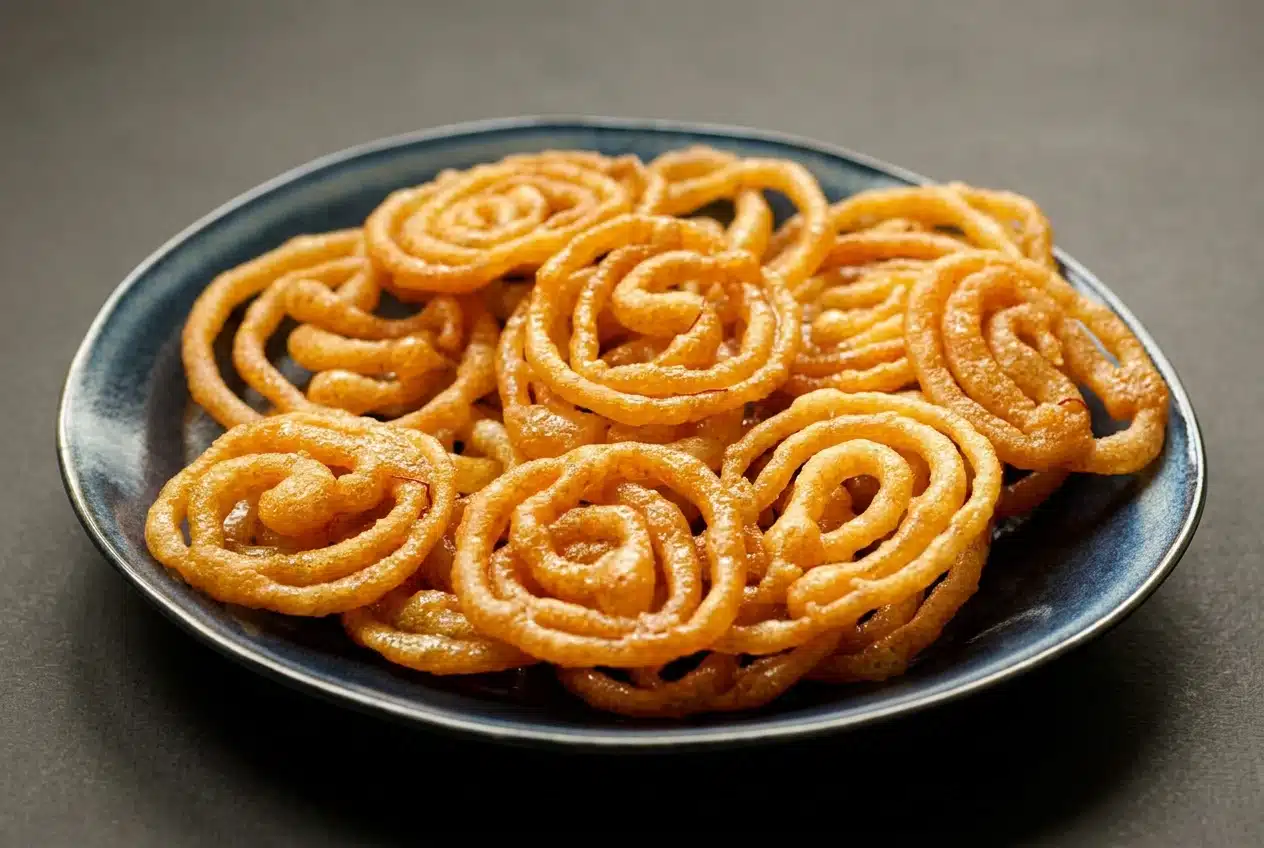
This jalebi recipe makes crisp, syrup-soaked spirals, an Indian sweet, without fermenting the batter. Pipe the yogurt batter into hot oil, fry until crisp, then dip the spirals in warm cardamom syrup. The batter should flow steadily from the bottle and hold its shape in the pan.
The instant method takes about 45 minutes and serves eight. A squeeze bottle gives you control over the coils, and they don’t have to look identical to cook up crisp.
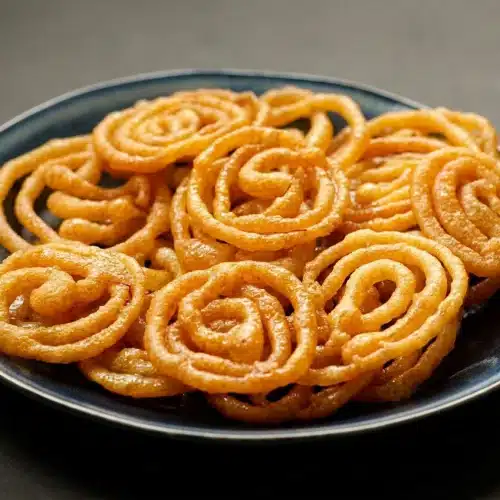
Warm jalebi has a delicate crunch at the edges and a juicy center that tastes of cardamom. That contrast starts with the syrup.
Set the syrup pot beside the frying pan so you can transfer each batch directly from one to the other.
Jalebi Ingredients and What They Do
Each ingredient has a job: flour gives the coils structure, cornstarch helps them crisp, and yogurt adds moisture and tang. Turmeric colors the batter, while cardamom and optional saffron give the syrup its aroma.
- 1 cup all-purpose flour ((organic maida) 125 grams)
- 1 tablespoon cornstarch ((or besan if fermenting batter) (8 grams))
- ⅛ teaspoon turmeric (or use natural food color)
- ½ cup curd ((120 ml plain yogurt) (or use ⅓ cup thick yogurt + add water))
- ½ cup water ((120 ml))
- ½ teaspoon baking soda ((use ¼ teaspoon if fermenting))
- 1 teaspoon lemon juice ((omit if fermenting))
- oil or ghee (to fry)
- 1½ cup sugar ((use organic) (300 grams))
- 1 cup + 2 tablespoons water ((270 ml))
- 1 pinch saffron ((kesar – optional))
- ¼ teaspoon cardamom powder ((elaichi powder))
- 2 teaspoon lemon juice
- 1 sauce/ squeeze bottle (or Zip lock bag or cloth bag)
Maida, curd, and besan: Maida is a refined wheat flour; US all-purpose flour works here. Curd means plain, unsweetened yogurt, not cheese curds. Besan is gram flour, made from split brown chickpeas. It’s an option for fermented batter, not a general substitute for cornstarch in the instant version.
Lemon juice goes in two places. In the instant batter, its acidity reacts with baking soda to give the coils a little lift. In the syrup, it balances the sweetness and helps keep the sugar from crystallizing. The batter portion is the one you omit if fermenting.
Turmeric and saffron do different jobs. Turmeric gives the batter a yellow tint. Saffron, also called kesar, adds a floral aroma and a golden tint to the syrup. You can skip the saffron and still get the fragrance of the ground cardamom, also labeled elaichi powder.
How to Make Jalebi
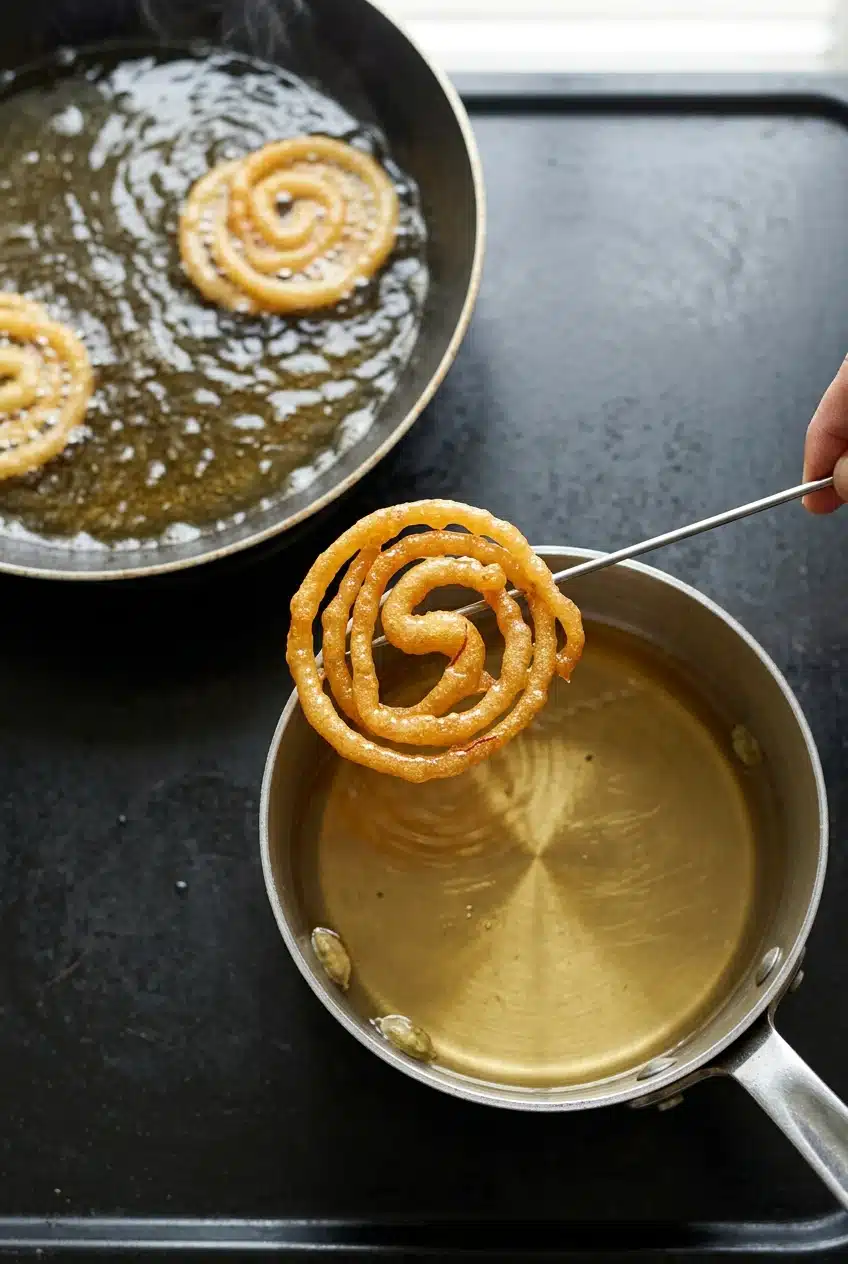
Make the syrup first, then mix the batter and get the oil ready. Once you start frying, the main thing to watch is the handoff: the coils should be crisp when they leave the pan, and the syrup should be warm enough to dip them right away.
Check the Syrup
Some jalebi recipes call for a syrup that pulls into a fine thread. That’s a thicker endpoint than you want here. Stop when the syrup feels tacky but still separates cleanly between your fingers.
Make Sugar Syrup
- Bring the sugar and its measured water to a boil over medium heat in a deep, narrow saucepan.
Once the sugar dissolves, watch for the syrup to thicken slightly. - Scoop a little syrup onto a spoon and let it cool enough to touch, then press a drop between your thumb and forefinger.
As you lift your finger, look for a sticky feel without a strand stretching across the gap. - Add the syrup portion of lemon juice, the cardamom, and the saffron if using, then take the pan off the heat and stir.
Set the fragrant syrup aside while you mix the batter.
Mix the Batter
A thick batter can still be easy to pipe. Look for a smooth, steady stream rather than clumps, a watery trickle, or a heavy ribbon that folds back on itself.
Make the Batter
- Combine the flour, cornstarch, and turmeric in a bowl, then whisk in the yogurt and the batter portion of water.
Whisk in circles in one direction for 4 to 5 minutes, until the batter looks thick, smooth, and free of lumps.
Pipe, Fry, and Dip the Spirals
I’d choose the squeeze bottle for the first batch because it’s easier to keep the stream even as you circle outward.
How to Make Jalebi
- Warm the ghee or oil in a frying pan over medium heat, adding 1 to 2 tablespoons of ghee if you’re frying in oil.
The ghee adds a buttery aroma. - Stir the batter portion of lemon juice and the baking soda into the batter, then spoon it into the squeeze bottle.
The mixture should still have body but flow easily through the opening without falling in a thick ribbon. - Drop a dab of batter into the pan to check the heat.
It should float to the surface without browning right away. - Pipe each spiral into the medium-hot fat, starting at the center and circling outward.
Guide the stream back to the middle to finish, leaving the turns distinct. - Leave the first side undisturbed for 2 minutes, then flip each coil, lower the heat, and fry for another minute.
Look for crisp edges before lifting the coils out. - Check the syrup as the coils fry and gently warm it again if it has cooled.
It should feel very warm to slightly hot when the spirals go in. - Lift the fried coils with a skewer and slip them straight into the syrup.
Give them 2 minutes to soak before moving them to a plate. - Continue piping and frying in batches over medium to medium-high heat, repeating the same dipping process.
Let the way the batter rises and colors guide you as the pan heats up between batches. - Scatter sliced pistachios over the dipped jalebi.
The green slivers stand out against the glossy coils.
Why Jalebi Turns Soggy, Flat, or Soft
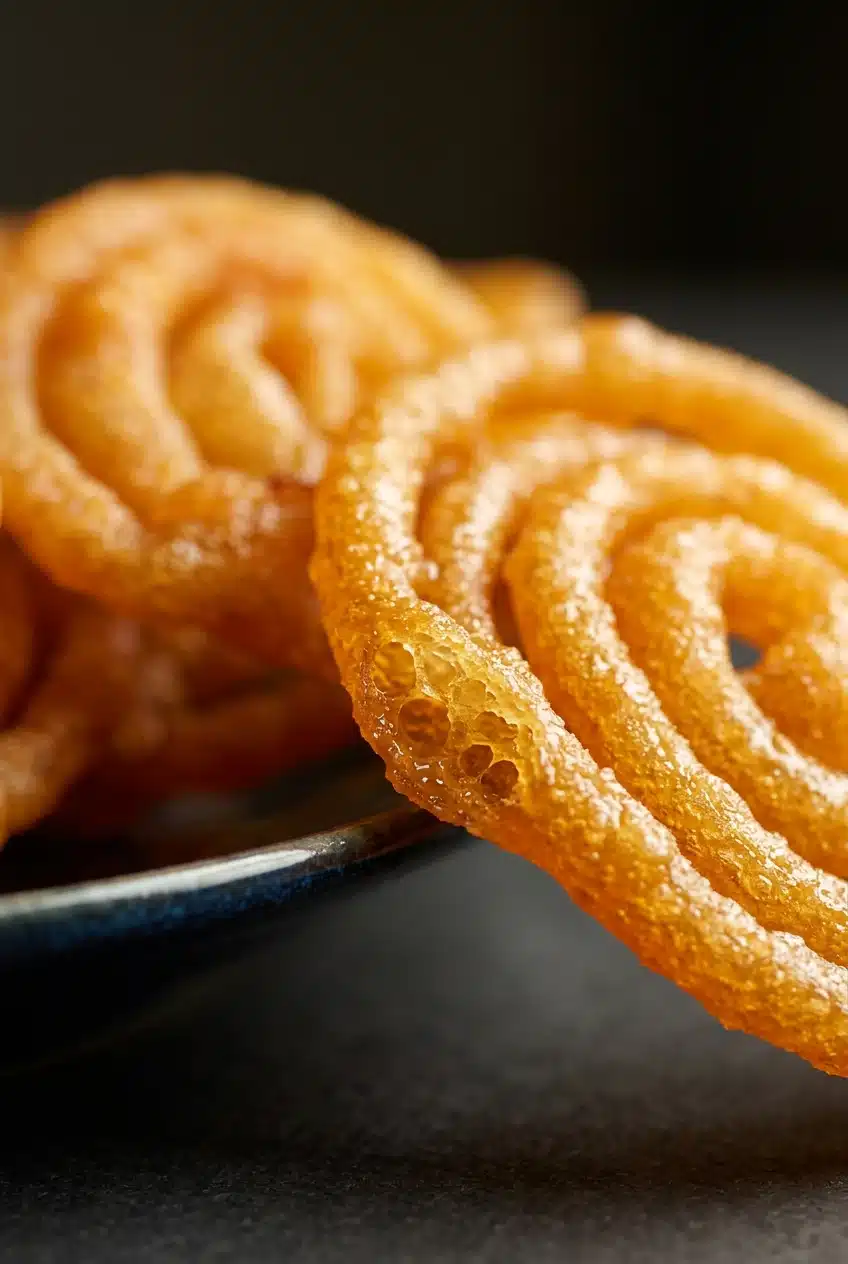
Notice when the problem starts. A spiral that spreads as you pipe it needs a different check from one that holds its shape in the pan but softens in the syrup.
- The coils spread into a flat patch. Check how a dab of batter behaves in the oil. If it sinks and stays down, let the oil warm up; if it colors immediately, lower the heat. If the dab rises without browning but the piped lines still run together, look at the batter: a watery stream points to consistency rather than heat.
- The spirals are thick or soft before dipping. If the batter comes out in heavy spurts, check for lumps and watch the flow at the nozzle. If it pipes evenly but the coils come out soft, focus on the frying: leave the first side alone and look for crisp edges after the flip.
- The coils soften after dipping or barely take up syrup. Check that the syrup was warm, sticky, and still short of the thread stage. Transfer the coils straight from the pan and stick to the specified dip. Frying beyond crispness can also leave the centers less receptive to syrup.
If you’re unsure, use the first spiral you’re already cooking as a check. Notice whether the turns stay separate before dipping, then see whether the edges still have some crunch afterward. Change the part of the process where the problem first appears.
Instant vs. Fermented Jalebi
Choose your route before mixing: the instant version is ready to pipe as soon as the batter and oil are ready, while the fermented version trades speed for a more pronounced tang.
Instant Jalebi
Use the cornstarch, yogurt, lemon juice, and baking soda as directed above. There’s no fermentation step, so you can go from whisking to frying in the same cooking session.
Fermented Jalebi
Choose this optional route if you want a tangier flavor and have time to plan for fermentation. Tiny bubbles are a better clue than an increase in volume. The ingredient list marks which adjustments apply only to fermented batter.
What to Serve With Jalebi
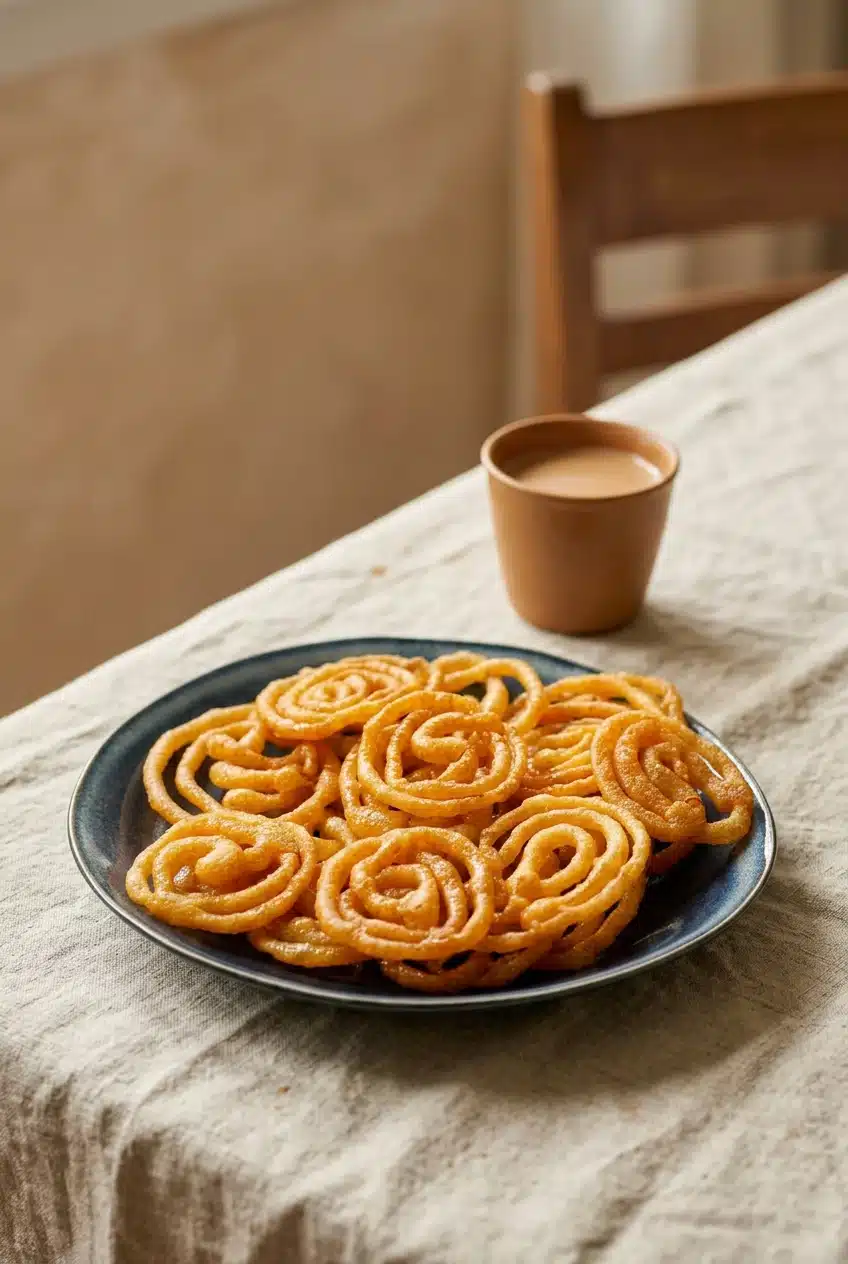
Serve jalebi hot or warm on its own to enjoy the contrast between the crisp edges and syrupy middle. For a pairing, pick something that contrasts with the sweetness or the crunch.
- Rabri: This thickened sweet milk dessert adds a cool, creamy contrast to warm, crisp jalebi.
- Fafda: These savory, crisp strips made with gram flour make a salty counterpoint to the syrup.
- Ginger chai: The ginger’s gentle heat goes well with the cardamom in the syrup.
- Plain curd: Serve unsweetened yogurt on the side if you like a tangy bite between spirals.
Planning Ahead for Jalebi
Get the measuring and setup out of the way before guests arrive. Set out the squeeze bottle, skewer, frying pan, syrup pot, and serving plate. Measure the dry ingredients for the batter and syrup separately so you don’t have to sort them out at the stove.
If crisp edges are the priority, plan to fry and dip close to serving. For a dessert table, bring out warm batches as they’re ready instead of holding the first batch until the last one is done.
The Keys to Crisp, Syrupy Jalebi
Look for batter that flows smoothly and a coil whose turns stay distinct in the oil. Fry until the edges are crisp so there’s still a little crunch after dipping.
Keep the syrup cue in mind: sticky, with no thread. When the coils are ready, that warm syrup is all that stands between you and the first bite.
Jalebi FAQs
Can I Make Jalebi Without Fermenting the Batter?
Yes. The instant version uses a yogurt batter with lemon juice and baking soda. Once the batter is mixed and the oil is ready, you can pipe the spirals without waiting for fermentation.
Why Does Jalebi Become Soggy?
Start with when it softened. If the coil was soft before dipping, check the batter and fry it until the edges crisp; if it softened in the syrup, check the syrup’s consistency and how long you left the coil in it.
Is Jalebi a Sweet or a Dessert?
Both. Jalebi is an Indian sweet made from fried spirals dipped in sugar syrup. Serve it after a meal as dessert or on its own as a snack.
Is It Good to Eat Jalebi With Curd?
Yes, if you like a tangy contrast to the sweet syrup. Serve plain, unsweetened yogurt alongside the warm spirals so you can take a little with each bite.
Is Jalebi Good for Your Health?
Think of jalebi as a dessert rather than a food to eat for a health benefit. It’s fried batter dipped in sugar syrup, and a spiral or two can be a satisfying way to enjoy the flavor.
Can I Make Jalebi Ahead for a Party?
Yes, you can do the setup ahead: measure the dry ingredients and lay out the pans, squeeze bottle, and skewer. Save the frying and dipping for close to serving if you want the edges crisp.
Jalebi Recipe

Equipment
- Deep, narrow saucepan
- Mixing Bowl
- Whisk
- Frying pan
- Spoon
- Squeeze bottle
- Skewer
- Plate
Ingredients
- 1 cup all-purpose flour ((organic maida) 125 grams)
- 1 tablespoon cornstarch ((or besan if fermenting batter) (8 grams))
- ⅛ teaspoon turmeric (or use natural food color)
- ½ cup curd ((120 ml plain yogurt) (or use ⅓ cup thick yogurt + add water))
- ½ cup water ((120 ml))
- ½ teaspoon baking soda ((use ¼ teaspoon if fermenting))
- 1 teaspoon lemon juice ((omit if fermenting))
- oil or ghee (to fry)
- 1½ cup sugar ((use organic) (300 grams))
- 1 cup + 2 tablespoons water ((270 ml))
- 1 pinch saffron ((kesar – optional))
- ¼ teaspoon cardamom powder ((elaichi powder))
- 2 teaspoon lemon juice
- 1 sauce/ squeeze bottle (or Zip lock bag or cloth bag)
Instructions
Make Sugar Syrup
- Bring the sugar and its measured water to a boil over medium heat in a deep, narrow saucepan. Once the sugar dissolves, watch for the syrup to thicken slightly.
- Scoop a little syrup onto a spoon and let it cool enough to touch, then press a drop between your thumb and forefinger. As you lift your finger, look for a sticky feel without a strand stretching across the gap.
- Add the syrup portion of lemon juice, the cardamom, and the saffron if using, then take the pan off the heat and stir. Set the fragrant syrup aside while you mix the batter.
Make the Batter
- Combine the flour, cornstarch, and turmeric in a bowl, then whisk in the yogurt and the batter portion of water. Whisk in circles in one direction for 4 to 5 minutes, until the batter looks thick, smooth, and free of lumps.
How to Make Jalebi
- Warm the ghee or oil in a frying pan over medium heat, adding 1 to 2 tablespoons of ghee if you’re frying in oil. The ghee adds a buttery aroma.
- Stir the batter portion of lemon juice and the baking soda into the batter, then spoon it into the squeeze bottle. The mixture should still have body but flow easily through the opening without falling in a thick ribbon.
- Drop a dab of batter into the pan to check the heat. It should float to the surface without browning right away.
- Pipe each spiral into the medium-hot fat, starting at the center and circling outward. Guide the stream back to the middle to finish, leaving the turns distinct.
- Leave the first side undisturbed for 2 minutes, then flip each coil, lower the heat, and fry for another minute. Look for crisp edges before lifting the coils out.
- Check the syrup as the coils fry and gently warm it again if it has cooled. It should feel very warm to slightly hot when the spirals go in.
- Lift the fried coils with a skewer and slip them straight into the syrup. Give them 2 minutes to soak before moving them to a plate.
- Continue piping and frying in batches over medium to medium-high heat, repeating the same dipping process. Let the way the batter rises and colors guide you as the pan heats up between batches.
- Scatter sliced pistachios over the dipped jalebi. The green slivers stand out against the glossy coils.