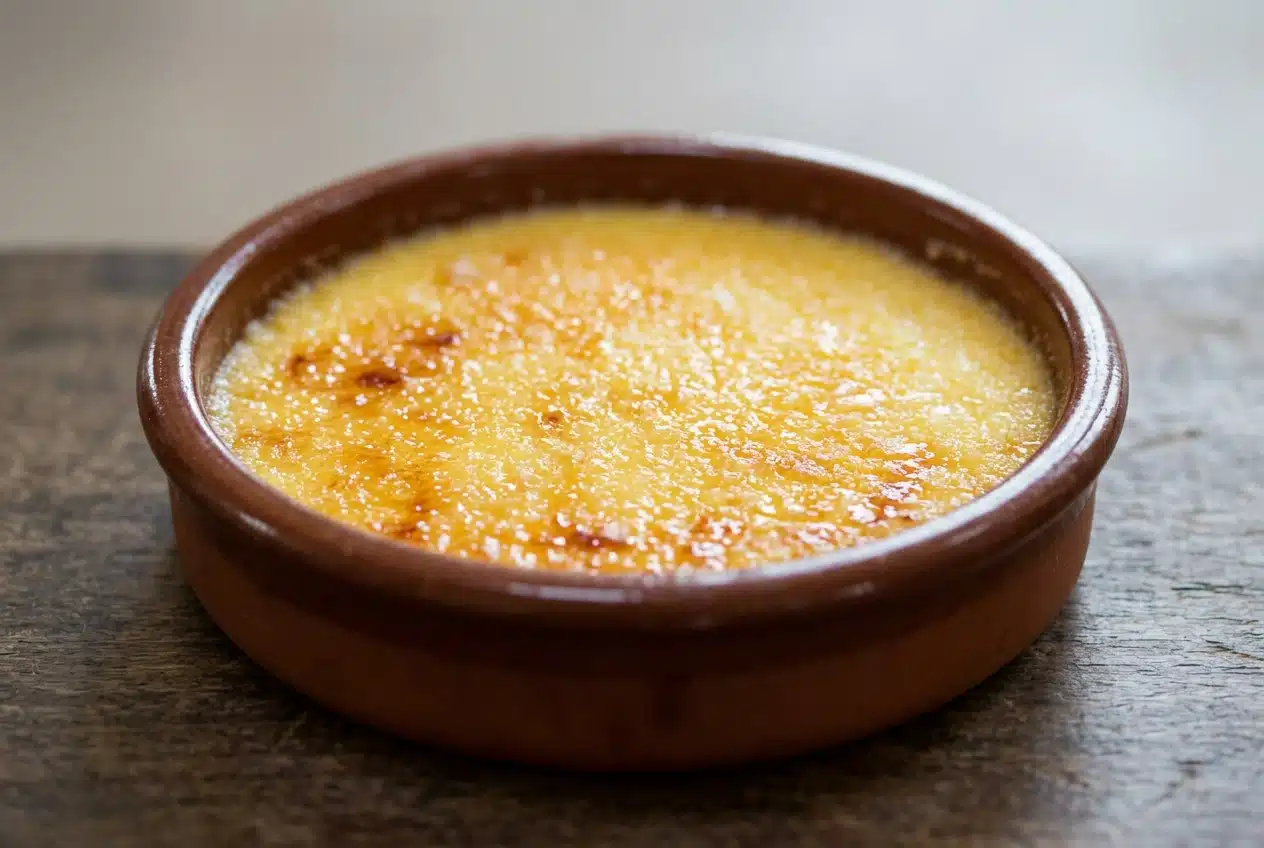
This crema catalana recipe makes a silky Catalan custard scented with orange, lemon, and cinnamon. Cook it gently on the stovetop, chill it until set, then caramelize superfine sugar on top for a shell that cracks under your spoon.
The milk picks up the fragrance of the citrus peels and cinnamon stick as it warms. Lift them out before adding the yolks and you get all that aroma in a smooth custard.
It’s a good dessert to make ahead because the custard can chill while you get on with dinner. The only thing left at dessert time is the crackly top.
Set out the ramekins before you start so you can pour the custard as soon as it thickens.
Crema Catalana Ingredients
Each ingredient has a job: milk gives the custard its soft body, citrus and cinnamon add fragrance, yolks and starch help it set, and the two sugars sweeten the custard and give it a crisp finish.
- 1 cup milk
- 1 strip orange peel ((not zest))
- 1 strip lemon peel ((not zest))
- 1 cinnamon stick
- 2 egg yolks
- 3 tbsp sugar ((fine/regular will work))
- 1/2 tbsp corn starch ((corn flour))
- 2 tbsp superfine sugar ((to top))
The strips of orange and lemon peel release their fragrant oils into the warm milk, while the cinnamon stick adds a warm spice aroma. I like to use a vegetable peeler for the citrus so I can lift off a strip without taking much of the bitter white pith.
The yolks add richness and thicken the milk along with the starch. Here, “corn flour” means cornstarch, the white thickener sold in US stores, rather than finely ground corn. The sugar whisked into the yolks sweetens the custard. Save the superfine sugar for the top, where its finer crystals spread and melt more evenly.
How to Make Crema Catalana
Prep: 10 min. Cook: 10 min. Total prep and cook time: 20 min, plus chilling. Servings: 2. Rating: 5 out of 5 from 6 ratings.
Ahead of time
- Set a small saucepan over medium-low heat with the milk, orange and lemon peels, and cinnamon stick.
Look for tiny bubbles along the rim as the milk takes on the scent of the citrus and spice, but stop short of a boil. - While the milk warms, beat the yolks with the custard sugar and cornstarch using a whisk.
The mixture should look smooth, with no dry pockets of starch. - Remove the saucepan from the heat, lift out the peels and cinnamon stick, and whisk the yolk mixture into the milk in a thin stream.
If the milk feels quite hot, first whisk a splash of it into the yolks to warm them gradually and help prevent cooked egg flecks. - Return the pan to low heat and stir continuously, taking it off the burner at the first clear sign of thickening.
The custard will move a little more slowly around the spoon but should still pour readily. - Divide the custard among individual ramekins or pour it into a ceramic dish, let it cool, then refrigerate for at least 4 hours or overnight.
Press plastic wrap against the custard if you want to prevent a skin from forming as it chills and sets.
When ready to serve
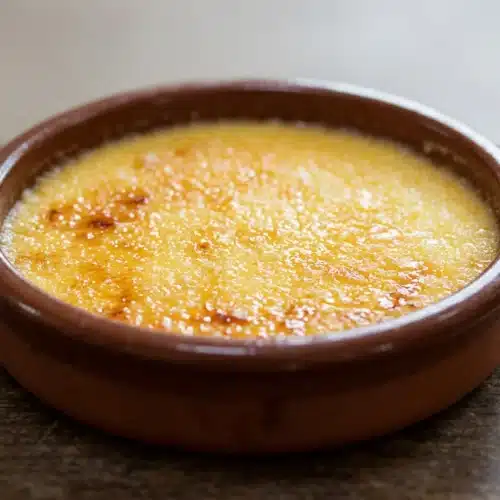
- Scatter the superfine sugar in an even layer over the chilled custard and caramelize it with a kitchen torch or under the broiler.
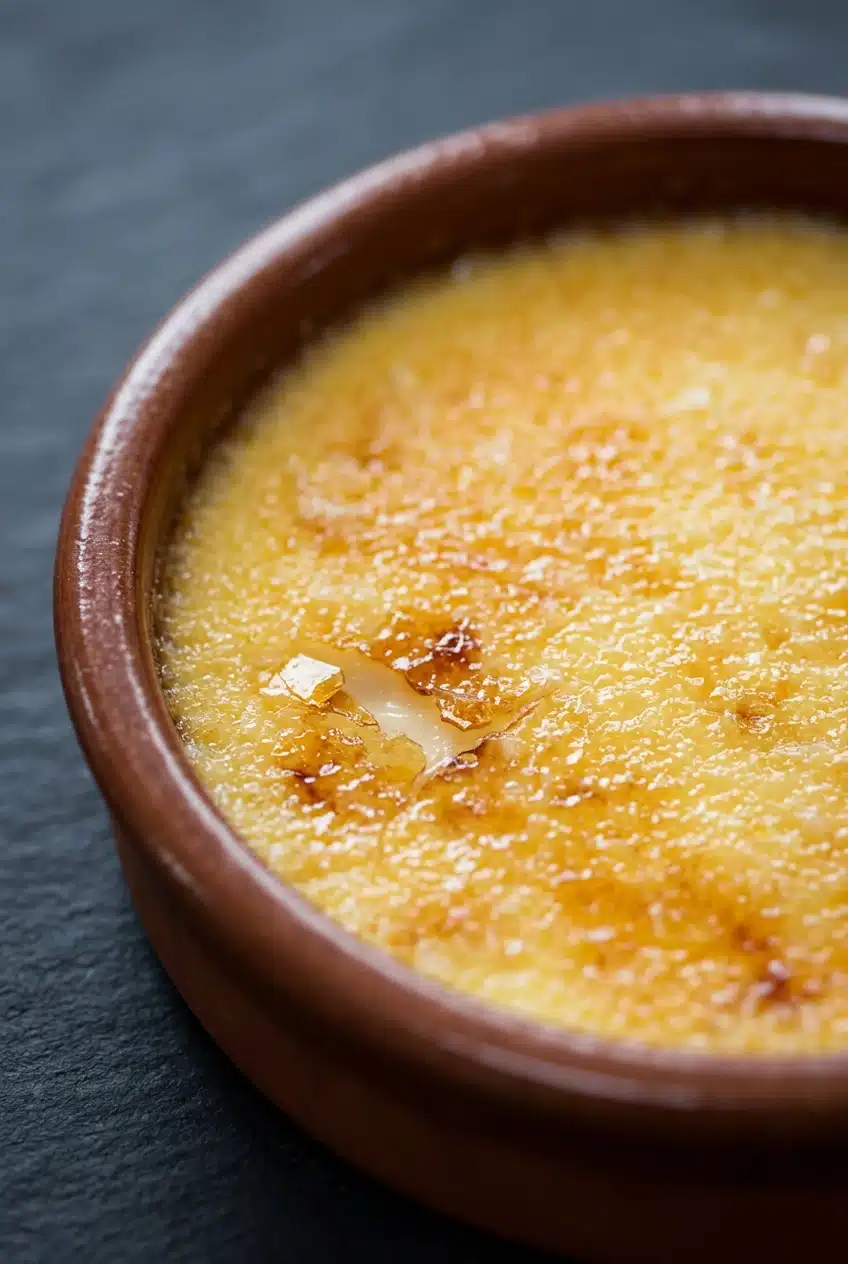
The crystals should melt into a continuous golden layer that hardens into a brittle shell.
Custard and Caramel Troubleshooting
Check whether the problem is with the whole mixture or just a spot or two. A smooth custard that still flows and a custard with visible lumps need different fixes.
When the Custard Looks Lumpy
- Smooth but still thin: If it runs off the spoon like milk, keep stirring over low heat until you feel a little more resistance. Once it thickens noticeably, stop. The refrigerator, not the saucepan, gives the custard its firmer set.
- Specks or clumps: Firm yellow flecks can come from yolks heating too quickly, while pale clumps can be pockets of starch that didn’t blend in. For a few stray bits, you can optionally pass the custard through a fine-mesh strainer before pouring it into the dishes. A strainer can catch flecks, but it won’t reverse widespread curdling.
When the Sugar Won’t Melt Evenly
- Bare spots or piles: Level out the sugar before heating it. A bare patch has no sugar to form a shell, and a mound can still look grainy while the thinner areas turn golden.
- Brown patches next to visible crystals: Color alone doesn’t tell you the topping is ready. Look for an unbroken golden layer with no dry grains, and stop heating before the darker patches scorch.
Flavor and Finishing Variations
You can change how you finish the sugar without changing the custard, or let lemon take the lead in the infusion.
Broiler Finish Without a Kitchen Torch
Use the broiler if you don’t have a torch. Watch the topping closely as it changes from dry crystals to melted sugar. Go by the color and coverage rather than the clock: a continuous golden layer is the goal, even if some spots color faster than others.
Lemon and Cinnamon Flavor Profile
For an optional variation, skip the orange and let lemon and cinnamon scent the milk. You’ll get a brighter lemon aroma in place of the rounder citrus flavor of the orange-and-lemon blend.
How to Make Crema Catalana Ahead
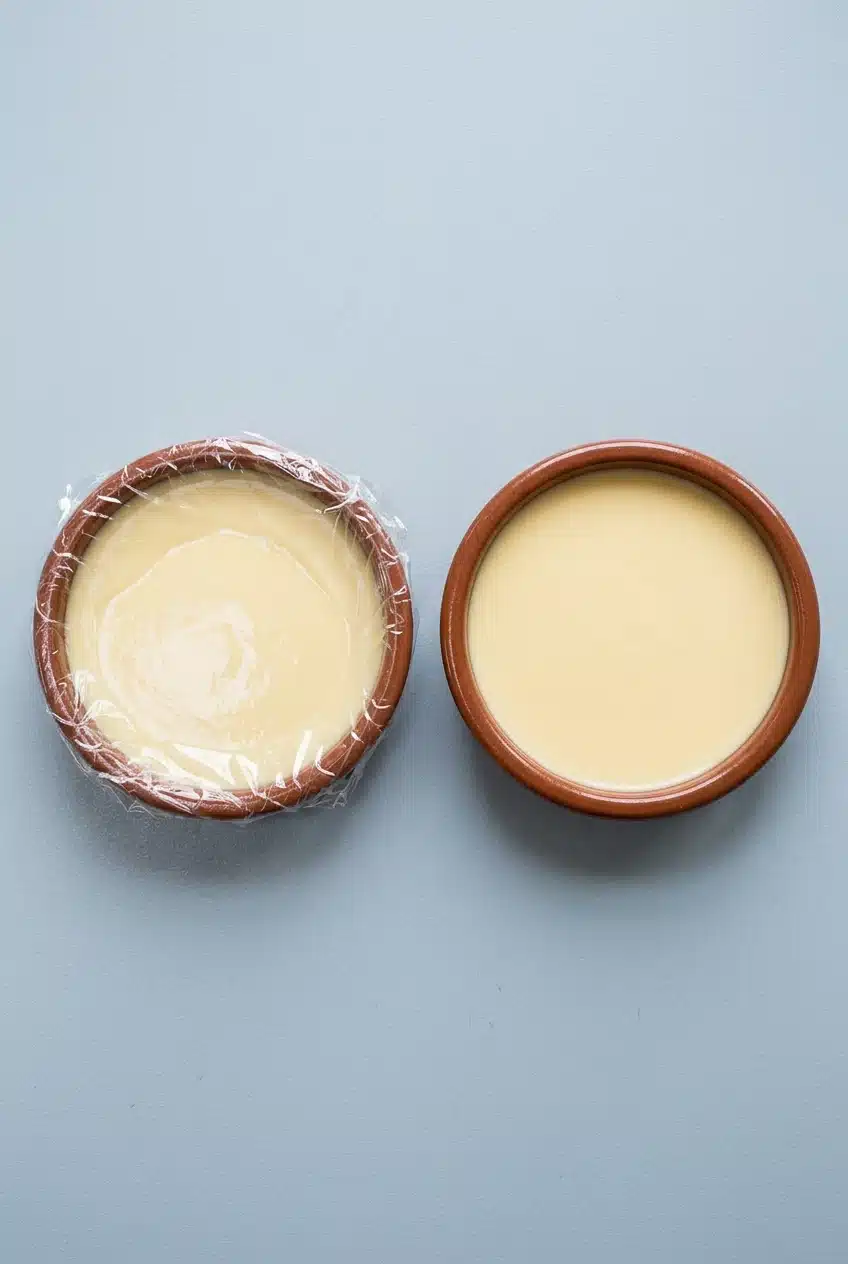
Make and chill the custard without the topping. The prep and cook times cover the stovetop work, so plan backward from dessert and leave room for the chill in the method above.
Keep the superfine sugar separate until you’re ready to serve. Adding and caramelizing it at the last minute keeps the sugar from picking up moisture from the custard and losing its crunch.
How to Serve Crema Catalana
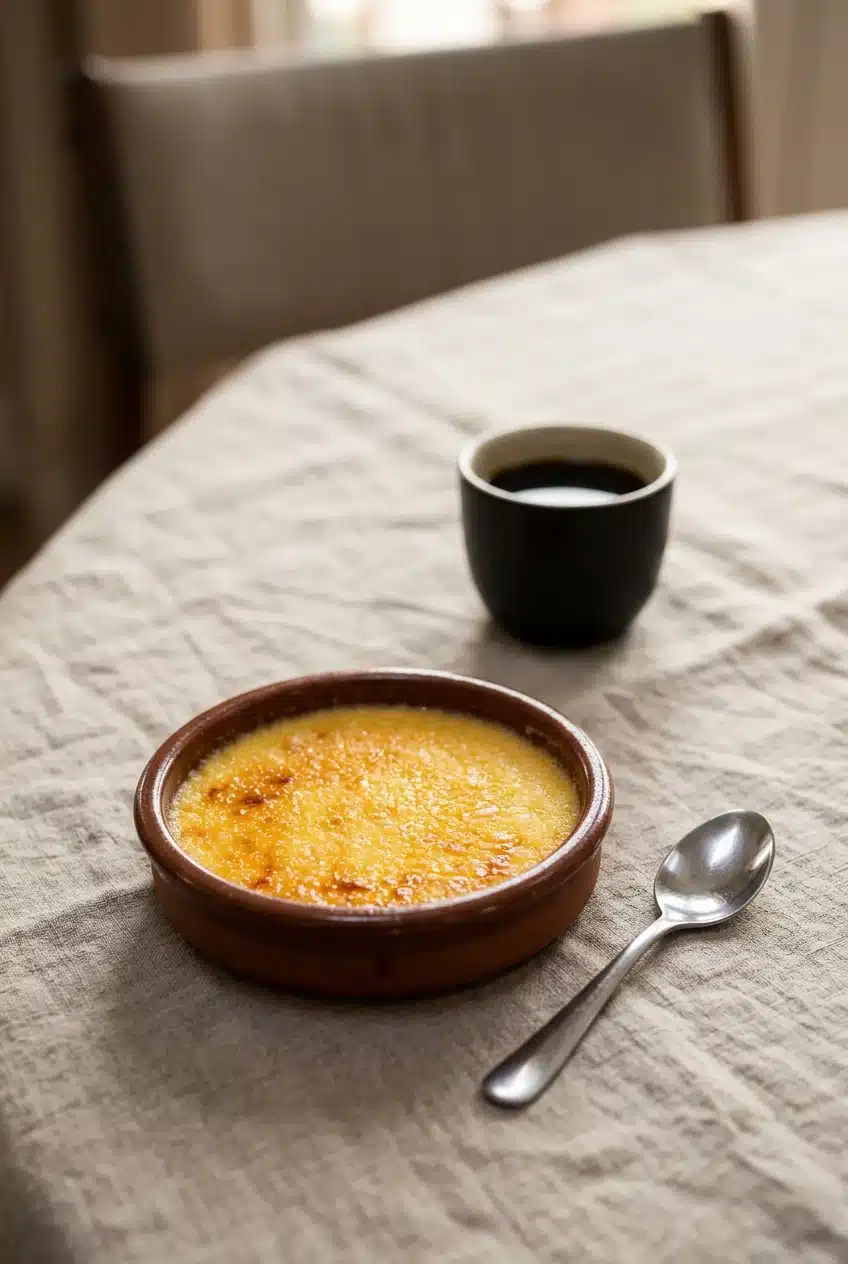
Serve it plain if you want that first spoonful to be all about the brittle caramel and cool, soft custard. Strong coffee balances the sweetness, or you can set out fresh figs alongside rather than covering the caramel with fruit.
The Key to Smooth Custard and a Crisp Top
Keep the heat low and stop cooking at the first noticeable thickening. If the custard still pours easily, you’re right where you want to be.
Let the custard set in the fridge and save the caramel for serving. That way, the first tap of the spoon gets a proper crack.
Crema Catalana FAQ
What Is the Difference Between Crema Catalana and Crème Brûlée?
Both have a caramelized sugar shell. Crema catalana typically starts with milk scented with citrus and cinnamon and thickens with starch on the stovetop. Crème brûlée usually uses cream and vanilla and bakes in a water bath.
Where Is Crema Catalana From?
Crema catalana comes from Catalonia, in northeastern Spain.
Can I Make Crema Catalana Without a Kitchen Torch?
Yes. Use the broiler to melt and caramelize the sugar over the chilled custard.
How Do I Know When the Custard Has Thickened Enough?
It should feel slightly thicker as you stir but still pour easily into the ramekins. It firms up as it chills.
Can I Make the Custard Ahead and Caramelize the Sugar Later?
Yes. Chill the unsugared custard as directed, then sprinkle on the topping and caramelize it just before serving.
Crema Catalana Recipe

Equipment
- Small saucepan
- Whisk
- Ramekins or ceramic dish
- Kitchen torch or broiler
Ingredients
- 1 cup milk
- 1 strip orange peel ((not zest))
- 1 strip lemon peel ((not zest))
- 1 cinnamon stick
- 2 egg yolks
- 3 tbsp sugar ((fine/regular will work))
- 1/2 tbsp corn starch ((corn flour))
- 2 tbsp superfine sugar ((to top))
Instructions
Ahead of time
- Set a small saucepan over medium-low heat with the milk, orange and lemon peels, and cinnamon stick. Look for tiny bubbles along the rim as the milk takes on the scent of the citrus and spice, but stop short of a boil.
- While the milk warms, beat the yolks with the custard sugar and cornstarch using a whisk. The mixture should look smooth, with no dry pockets of starch.
- Remove the saucepan from the heat, lift out the peels and cinnamon stick, and whisk the yolk mixture into the milk in a thin stream. If the milk feels quite hot, first whisk a splash of it into the yolks to warm them gradually and help prevent cooked egg flecks.
- Return the pan to low heat and stir continuously, taking it off the burner at the first clear sign of thickening. The custard will move a little more slowly around the spoon but should still pour readily.
- Divide the custard among individual ramekins or pour it into a ceramic dish, let it cool, then refrigerate for at least 4 hours or overnight. Press plastic wrap against the custard if you want to prevent a skin from forming as it chills and sets.
When ready to serve
- Scatter the superfine sugar in an even layer over the chilled custard and caramelize it with a kitchen torch or under the broiler. The crystals should melt into a continuous golden layer that hardens into a brittle shell.