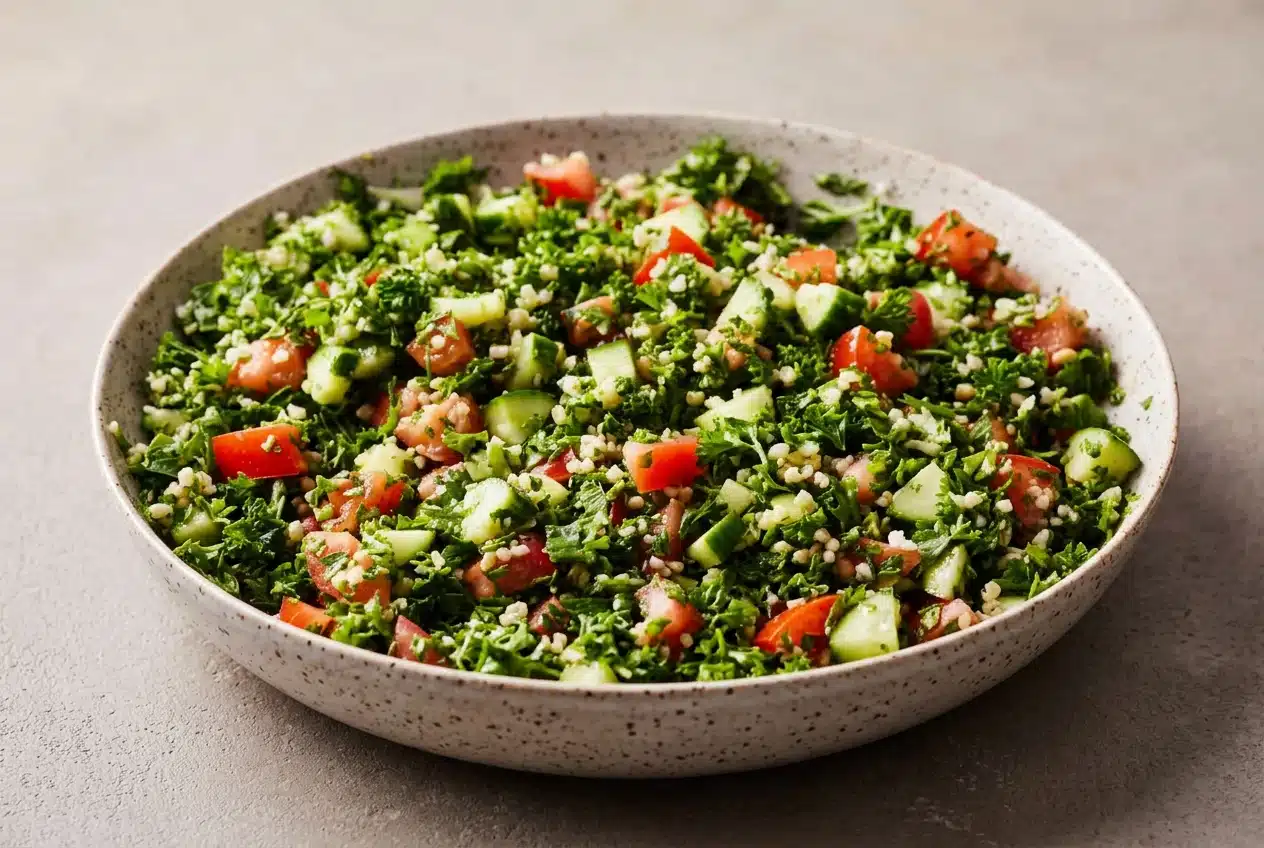
This tabbouleh recipe combines finely chopped parsley and mint with cooked bulgur, juicy tomatoes, and crisp cucumber in a bright lemon and olive oil dressing. The recipe below shows how to toss it so the herbs stay loose and the grains add just a little chew.
Tabbouleh, also spelled tabouli, is a Middle Eastern herb salad. In this version, parsley makes up most of the bowl, with little pops of cucumber and tomato in each bite.
Fresh mint makes the lemon taste even brighter, while coriander and cinnamon give the dressing a warm edge. The cinnamon is the quiet surprise.
I like to pat the rinsed parsley and mint dry before chopping so the leaves don’t stick together on the board.
Tabbouleh Ingredients
Parsley and mint give the salad its fresh flavor, while cooked bulgur adds chew and the vegetables add crunch and juiciness. Lemon juice balances the richness of the olive oil, and garlic, salt, coriander, and cinnamon round out the dressing.
- ⅓ cup extra-virgin olive oil
- 3 tablespoons fresh lemon juice
- 1 garlic clove (grated)
- ½ teaspoon sea salt
- ¼ teaspoon ground coriander
- Pinch cinnamon
- 3 cups finely chopped curly parsley (about 2 bunches)
- 1 cup diced English cucumber
- 1 cup cored and diced tomato
- ⅔ cup cooked bulgur wheat*
- ⅓ cup finely chopped fresh mint
- 2 scallions (chopped)
*Measure the bulgur after cooking, rather than measuring out the dry grain.
Curly parsley gives the salad a fluffy texture, and mint adds a cool finish without taking over. English cucumber contributes a clean snap, while scallions bring a mild onion bite. Keep the tomato and cucumber dice evenly sized so they scatter through the herbs instead of landing in big chunks.
Choosing Fine or Coarse Bulgur
Fine bulgur blends into the chopped parsley, so the texture stays mostly leafy. A coarser grind gives you more distinct grains with a noticeable chew. Either way, look for tender grains that still have a little bite.
Fine and coarse bulgur don’t always prepare the same way, so follow the package directions for the grind you buy. This salad starts with cooked bulgur, not dry grain that softens in the dressing.
How to Make Tabbouleh
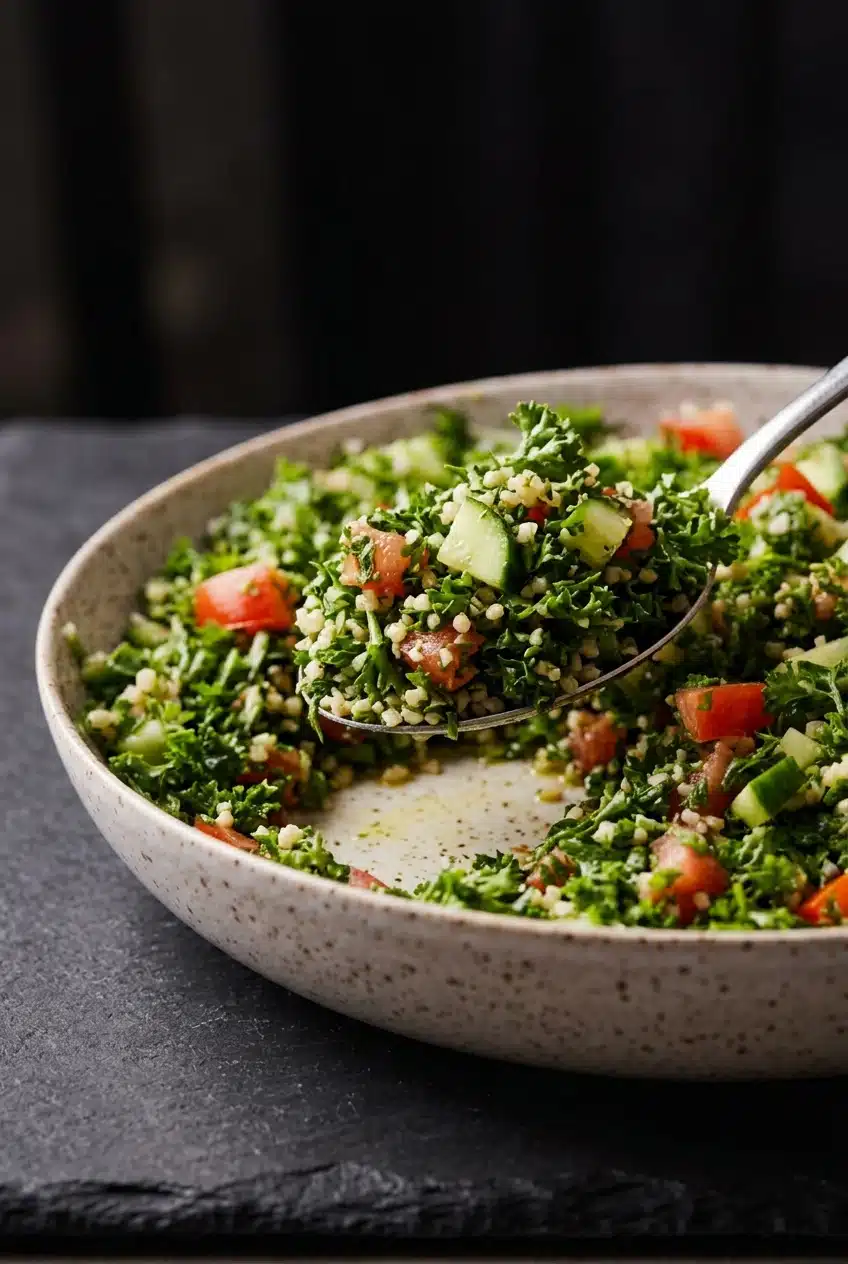
Use a sharp knife to chop the parsley and mint by hand. Stop when the pieces are small and separate; they should still look leafy when you lift a pinch. Whisk the dressing in the bowl you’ll use for tossing, then taste the assembled salad before chilling it.
Prep: 20 min · Cook: 20 min · Total: 40 min · Servings: 6
- Put the olive oil, lemon juice, grated garlic, sea salt, coriander, and cinnamon in a large bowl and whisk until blended.
The dressing should look evenly speckled with spices. - Tip the parsley, cucumber, tomato, cooked bulgur, mint, and scallions into the dressing and toss from the bottom of the bowl.
Look for a light sheen on the herbs and grains rather than a pool of dressing underneath. - Taste a bite, adjust the seasoning as needed, and refrigerate the salad until serving.
The lemon should taste bright without drowning out the parsley and mint.
How to Keep Tabbouleh from Getting Watery
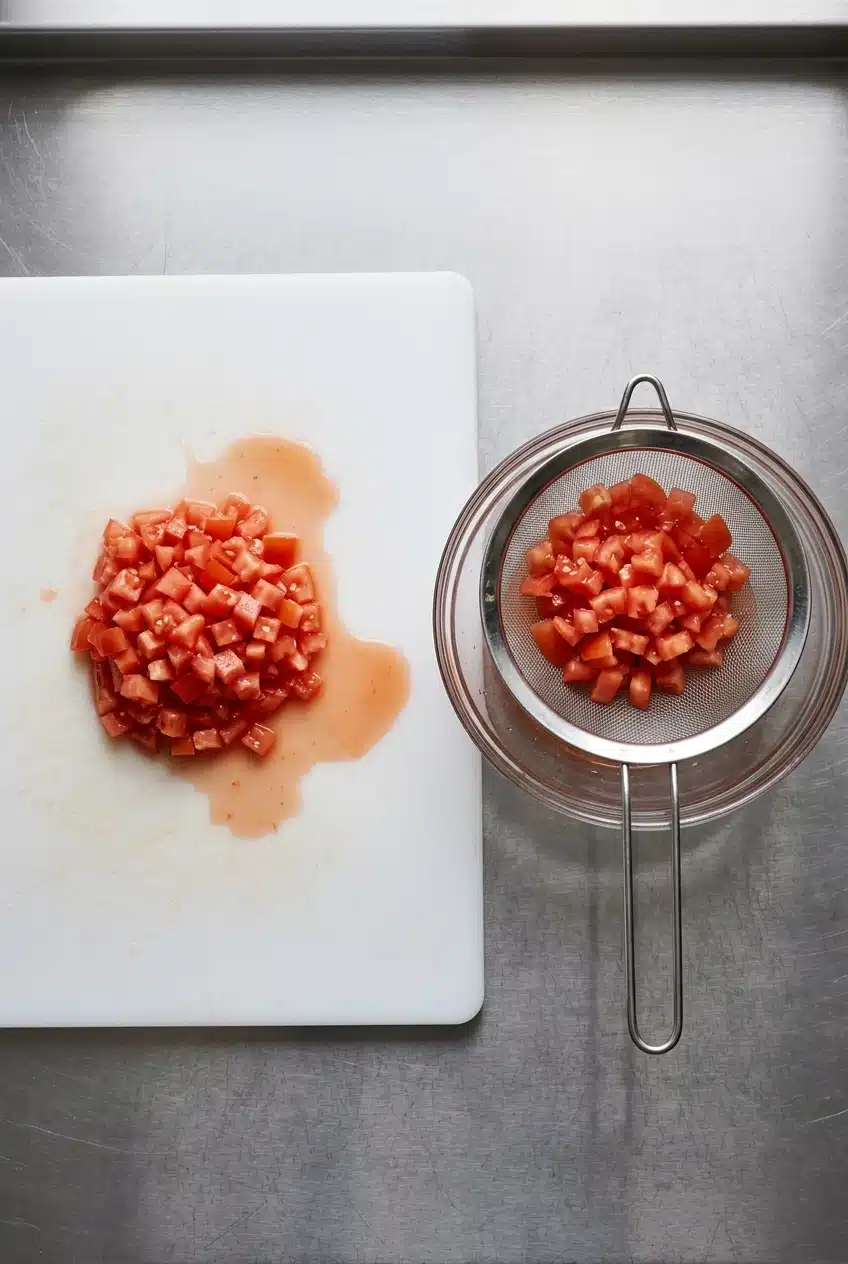
A glossy leaf is a good sign. Liquid running to one side when you tilt the bowl is a different story. Check the tomatoes and herbs before they go into the dressing.
- Juice collects under the diced tomatoes: If you can see a puddle on the cutting board, let the excess drain off before tossing. If the tomatoes are moist but there’s no puddle, skip the draining.
- The herbs look dark and clumpy: A food processor can take parsley from finely chopped to bruised in seconds. Chop by hand and stop while the pieces still fall apart easily.
- The grain takes over: A coarse grind can make bulgur stand out in every bite. Measure it after cooking and choose a finer grind if you want the parsley to come through more clearly.
Tabbouleh Variations
Flat-Leaf Parsley Instead of Curly Parsley
Flat-leaf parsley works if that’s what you have. It gives the salad a smoother, leafier texture, while curly parsley keeps more of its ruffled shape after chopping. Both keep the salad firmly in parsley territory.
Couscous Tabbouleh
Think of couscous tabbouleh as a separate variation. Its soft, rounded pearls give the salad a different bite from chewy bulgur. If you’re after the texture described here, stick with cooked bulgur.
Making Tabbouleh Ahead
To get a head start, whisk the dressing and chop the herbs, then refrigerate them separately in covered containers. Keep the cooked bulgur separate as well, and dice the tomato closer to assembly if you want the salad to stay crisp. Toss everything together with time to chill before the meal.
Before serving, give the salad a gentle toss to bring the dressing back up from the bottom. Check whether the herbs still separate easily and the cucumber still has some snap. Those are texture checks, not ways to tell whether leftovers are safe to eat.
What to Serve with Tabbouleh
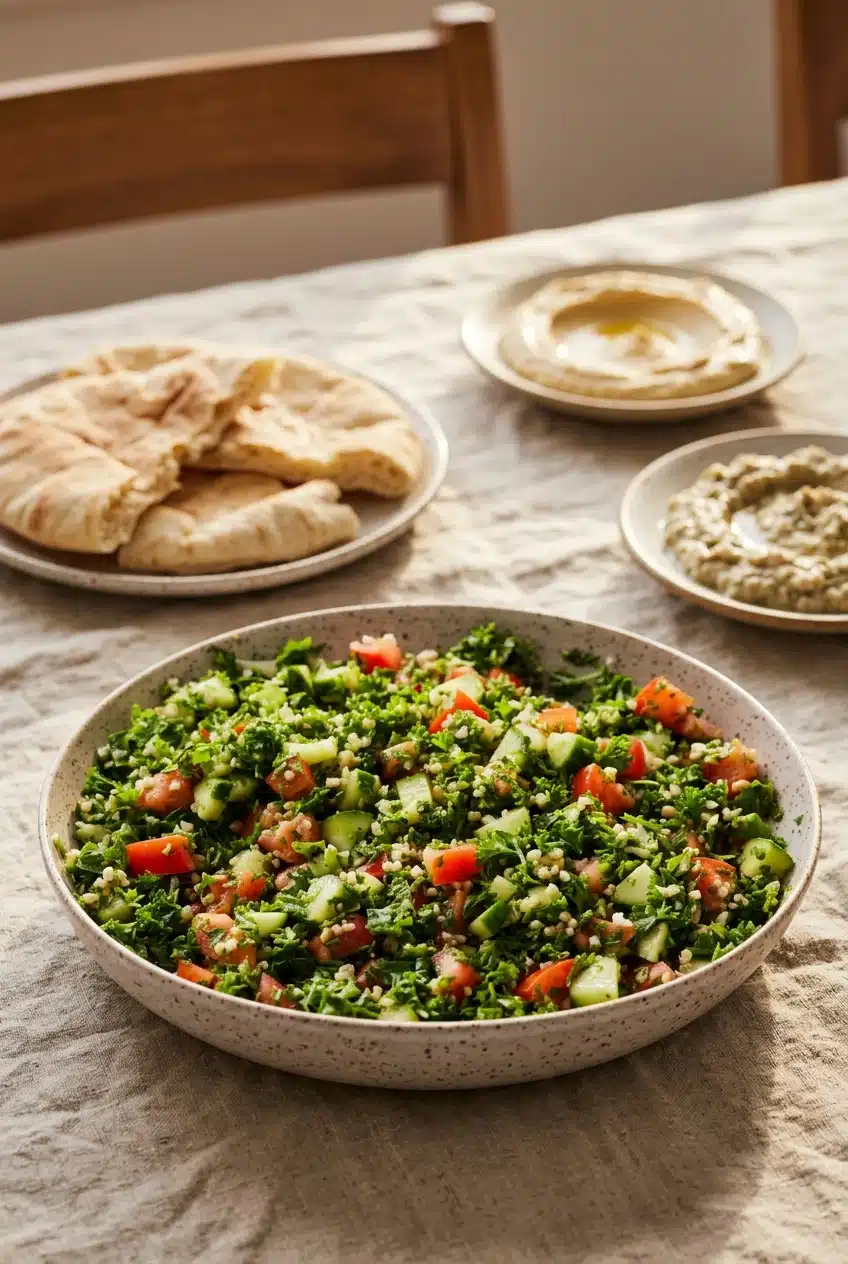
Set it out with hummus, baba ganoush, and warm pita for a mezze spread. The crisp cucumber and lemony herbs give you a fresh bite between scoops of the creamy dips.
Tuck a spoonful into a falafel wrap for crunch and acidity, or serve it alongside lamb gyros so the lemon and mint can cut through the richness of the lamb.
For a sit-down dinner, spoon it next to grilled chicken or roasted vegetables. The cool herbs are especially nice against the browned edges of vegetables straight from the oven.
The Takeaway: Let the Herbs Lead
Finely chopped parsley should be the first thing you notice, with mint and bright lemon close behind. The bulgur is there for a gentle chew.
Use the measured recipe above to keep that balance. When the herbs are loose and lightly dressed, you’ve got the texture you’re after.
Tabbouleh FAQ
What Are the Main Ingredients in Tabbouleh?
Parsley, mint, bulgur, and tomatoes form the core, dressed with lemon juice and olive oil. This version also includes cucumber, scallions, garlic, coriander, and cinnamon.
Should I Use Fine or Coarse Bulgur for Tabbouleh?
Choose fine bulgur if you want it to blend into the herbs, or coarser bulgur if you prefer more chew. Follow the package directions for your grind and measure it once cooked.
How Do I Keep Tabbouleh from Getting Watery?
Let excess juice drain off the diced tomatoes if you see it pooling. Chop the parsley and mint by hand so the herbs stay leafy instead of forming wet clumps.
Can I Use Couscous Instead of Bulgur?
Yes, if you want a softer variation. For the gentle chew in this salad, use cooked bulgur.
How Long Does Tabbouleh Last in the Fridge?
Keep leftovers covered and refrigerated, and plan to use them promptly. If you’re unsure how long the salad has been stored or whether it stayed chilled, it’s better to discard it than rely on smell or appearance.
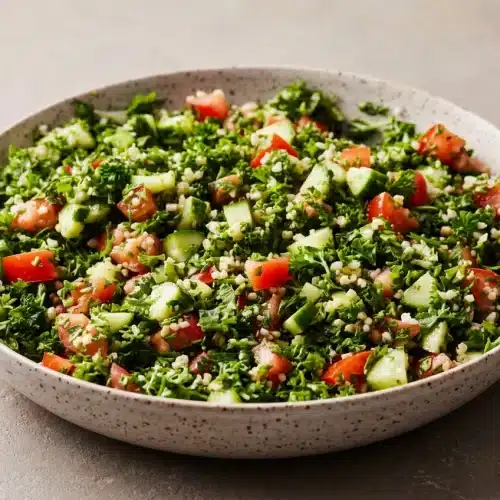
Tabbouleh Recipe

Equipment
- large bowl
- Whisk
- Sharp knife
- Cutting board
Ingredients
- ⅓ cup extra-virgin olive oil
- 3 tablespoons fresh lemon juice
- 1 garlic clove grated
- ½ teaspoon sea salt
- ¼ teaspoon ground coriander
- Pinch cinnamon
- 3 cups finely chopped curly parsley about 2 bunches
- 1 cup diced English cucumber
- 1 cup cored and diced tomato
- ⅔ cup cooked bulgur wheat*
- ⅓ cup finely chopped fresh mint
- 2 scallions chopped
Instructions
- Put the olive oil, lemon juice, grated garlic, sea salt, coriander, and cinnamon in a large bowl and whisk until blended. The dressing should look evenly speckled with spices.
- Tip the parsley, cucumber, tomato, cooked bulgur, mint, and scallions into the dressing and toss from the bottom of the bowl. Look for a light sheen on the herbs and grains rather than a pool of dressing underneath.
- Taste a bite, adjust the seasoning as needed, and refrigerate the salad until serving. The lemon should taste bright without drowning out the parsley and mint.