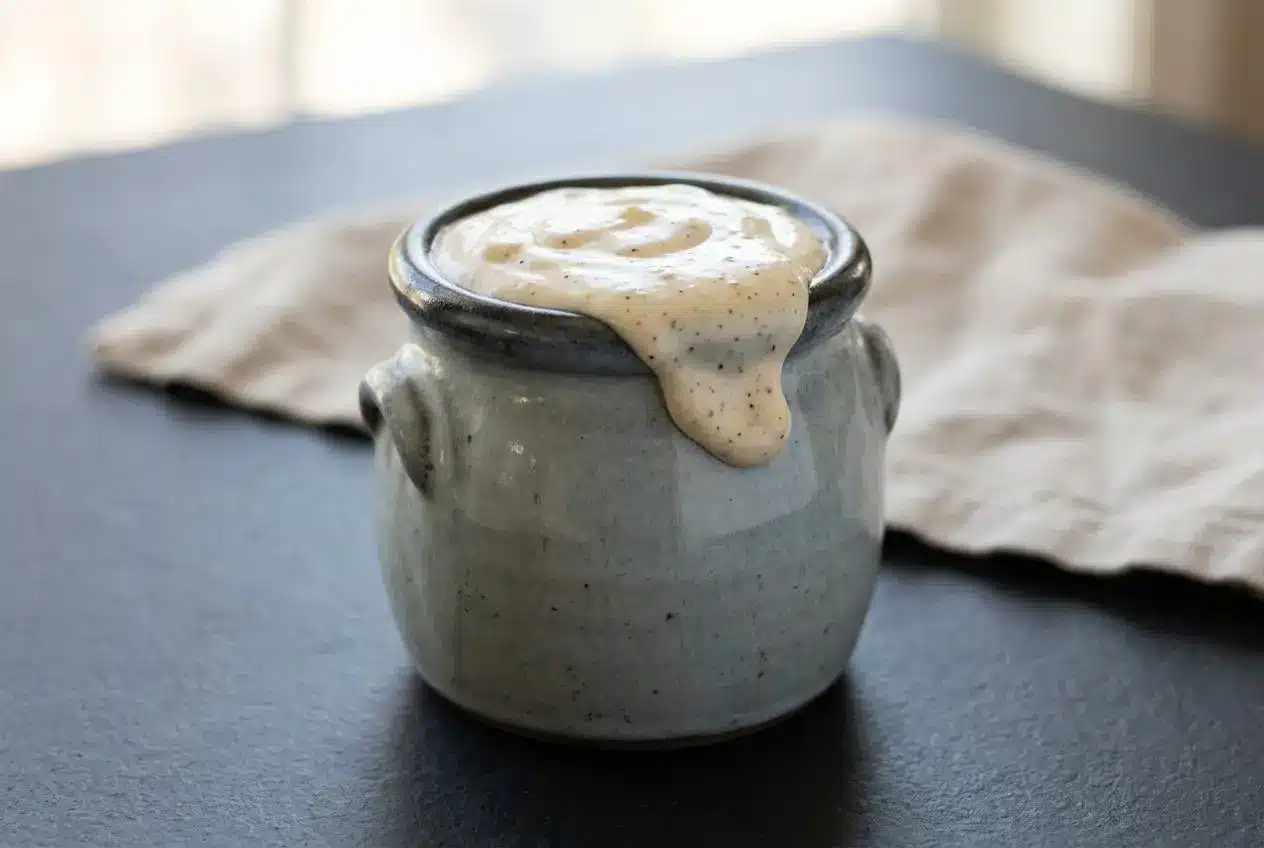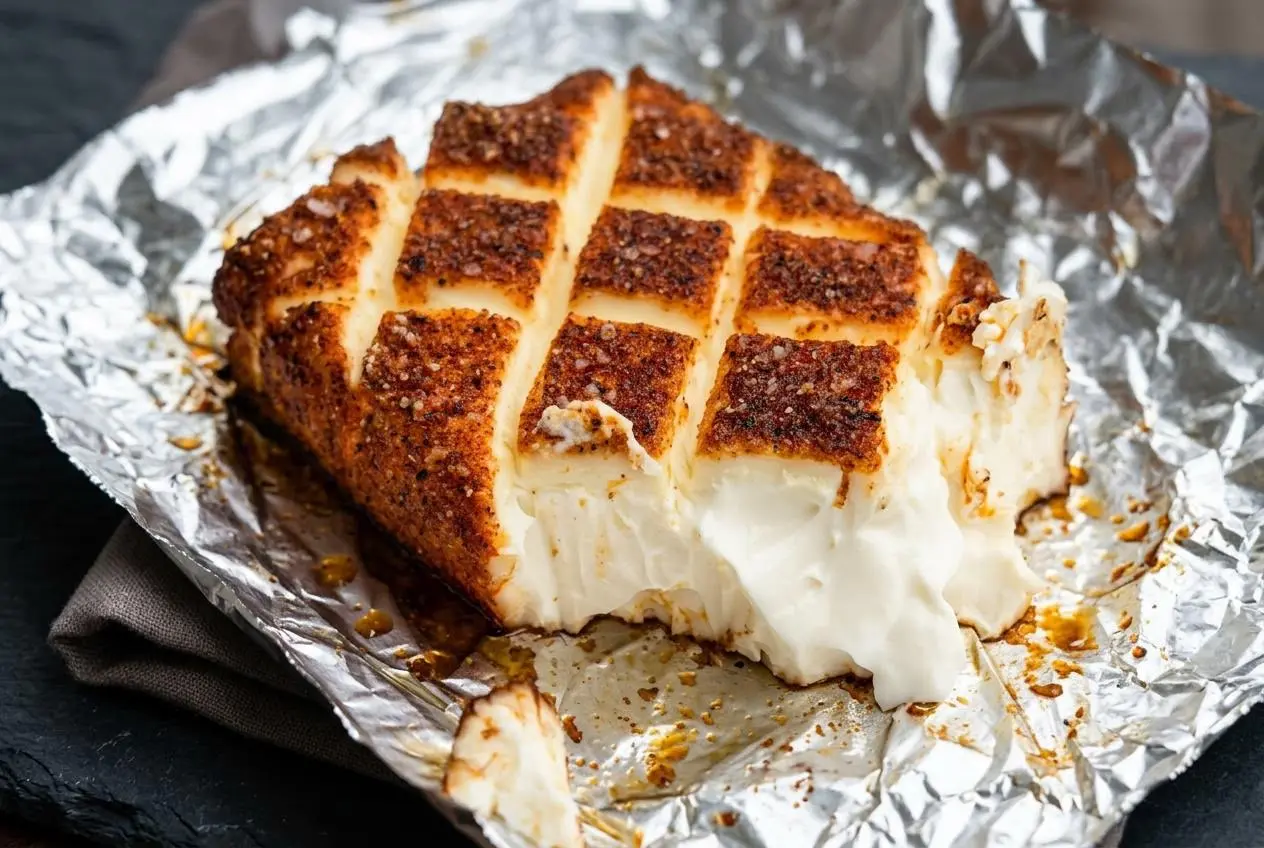
Make smoked cream cheese by coating an 8 oz block with olive oil and BBQ rub, scoring the top, and smoking at 200 F for 1 to 2 hours. The center becomes warm and spreadable while the seasoned exterior develops a sweet-savory crust.
A cold block of cream cheese becomes a scoopable cookout appetizer with very little hands-on work. As it softens, the scored diamonds pull apart, leaving smoky, seasoned edges around a rich center.
Serve it as a spread with a cheese knife or let sturdy kettle chips do the scooping. The homemade brown sugar rub brings sweetness, garlic, and gentle heat. Just measure the rub before you reach for the block.
Keep the cream cheese cold until you’re ready to coat and score it so it’s easier to handle.
Ingredients You Will Need and Why They Work
Cream cheese supplies richness and structure, the oils help seasoning adhere and prevent sticking, and the BBQ rub balances sweetness, salt, savory spices, and heat. Dark brown sugar gives the exterior its glossy, browned finish.
- 8 oz cream cheese (one standard block)
- 2 tbsp BBQ dry rub (use your favorite)
- olive oil
- spray oil
BBQ Dry Rub (makes ½ cup)
- 1/4 cup dark brown sugar
- 2 tbsp kosher salt (do NOT sub table salt 1-1)
- 1 tbsp garlic powder
- 1/2 tbsp black pepper
- 1/2 tbsp onion powder
- 1/2 tbsp smoked paprika (or regular paprika)
- 1/2 tbsp chili powder (add more for extra spice)
Olive oil creates a light binder on the cheese; spray oil helps the finished block release from the foil. Garlic and onion powders build savory flavor, black pepper adds bite, and paprika contributes color. Choose smoked paprika for an extra smoky seasoning note.
A purchased BBQ dry rub also works. Check its salt content before choosing one, especially if you plan to add a salty topping.
I prefer measuring the rub into a separate bowl before handling the cheese so it’s easy to keep the coating controlled.
Why a Full-Fat Brick Holds Its Shape
Standard full-fat brick cream cheese gives the intended rich, spreadable center. Its acid-set protein structure and overall formulation help it soften without flowing like a melting slice of cheddar. Stabilizers may also contribute, but brands differ.
Whipped cream cheese and tub spreads have softer formulations and may spread more on the pan. Neufchatel can work as an optional alternative, though the result may be softer and less rich. A full-fat brick is the most dependable choice for a defined outline.
Keep the Homemade Rub From Becoming Too Salty
The homemade rub is labeled as making ½ cup, but one block uses just 2 tbsp. Save the remaining dry rub for another use. Emptying the batch over one block overwhelms the mild cheese.
Do not replace kosher salt with table salt spoon for spoon. Fine salt packs more densely, and kosher salt crystal sizes vary between brands. There’s no reliable universal volume conversion; an exact substitution needs a weight-based comparison for the specific salts.
How to Make Smoked Cream Cheese Step by Step
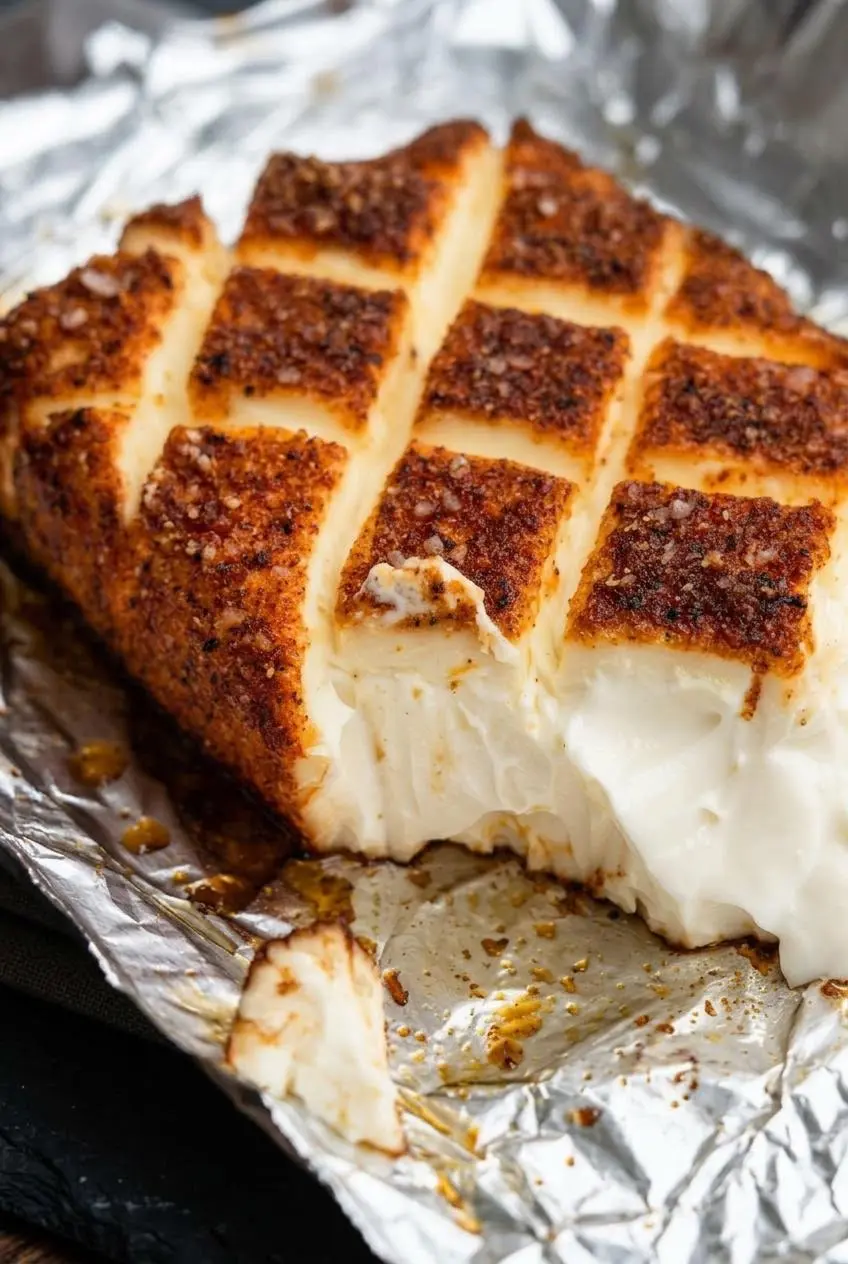
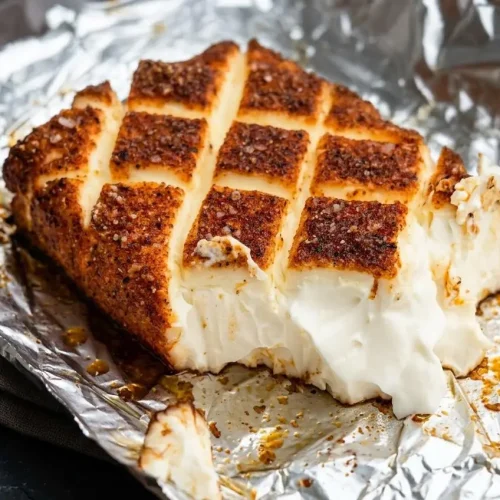
Coat the entire block, then keep it supported as it warms. The widening crosshatch lines and darker exterior give you useful texture cues without requiring a crisp, rigid crust.
Prep: 5 minutes. Cook-time estimate: 1 hour 30 minutes, within the flexible 1 to 2 hour smoking window. Yield: eight 1 oz servings.
- Bring the smoker to 200 F, or choose a setting between 180 F and 250 F when sharing the smoker with another dish.
Let the cooking chamber reach the selected temperature before adding the cheese. - Combine the homemade rub ingredients in a bowl if you aren’t using a purchased blend, keeping the specified kosher salt rather than substituting table salt by volume.
Break up brown sugar clumps until the mixture looks evenly blended. - Cover a small baking sheet with foil, apply spray oil to the foil, and lightly coat every outer surface of the cream cheese with olive oil.
The cheese should have a thin sheen that helps the seasoning cling. - Distribute the measured 2 tbsp BBQ dry rub over the top, bottom, and sides, reserving the remaining homemade mixture.
A light, even coating should cover the block without a thick pile of seasoning. - Set the seasoned cheese on the prepared sheet and cut intersecting diagonal lines across the top with a sharp knife.
The cuts should form a crosshatch while leaving the block intact. - Transfer the sheet to the smoker and cook for 1 to 2 hours, choosing a shorter smoke for milder flavor or a longer smoke for more depth.
Look for opening score lines, a darker seasoned surface, and a warm, spreadable center.
Serve warm with a cheese knife and crackers for spreading, or offer plain kettle chips for dipping. The surface should yield when scooped rather than behave like a firm cheese rind.
Expert Tips, Smoker Temperatures, and Oven Method
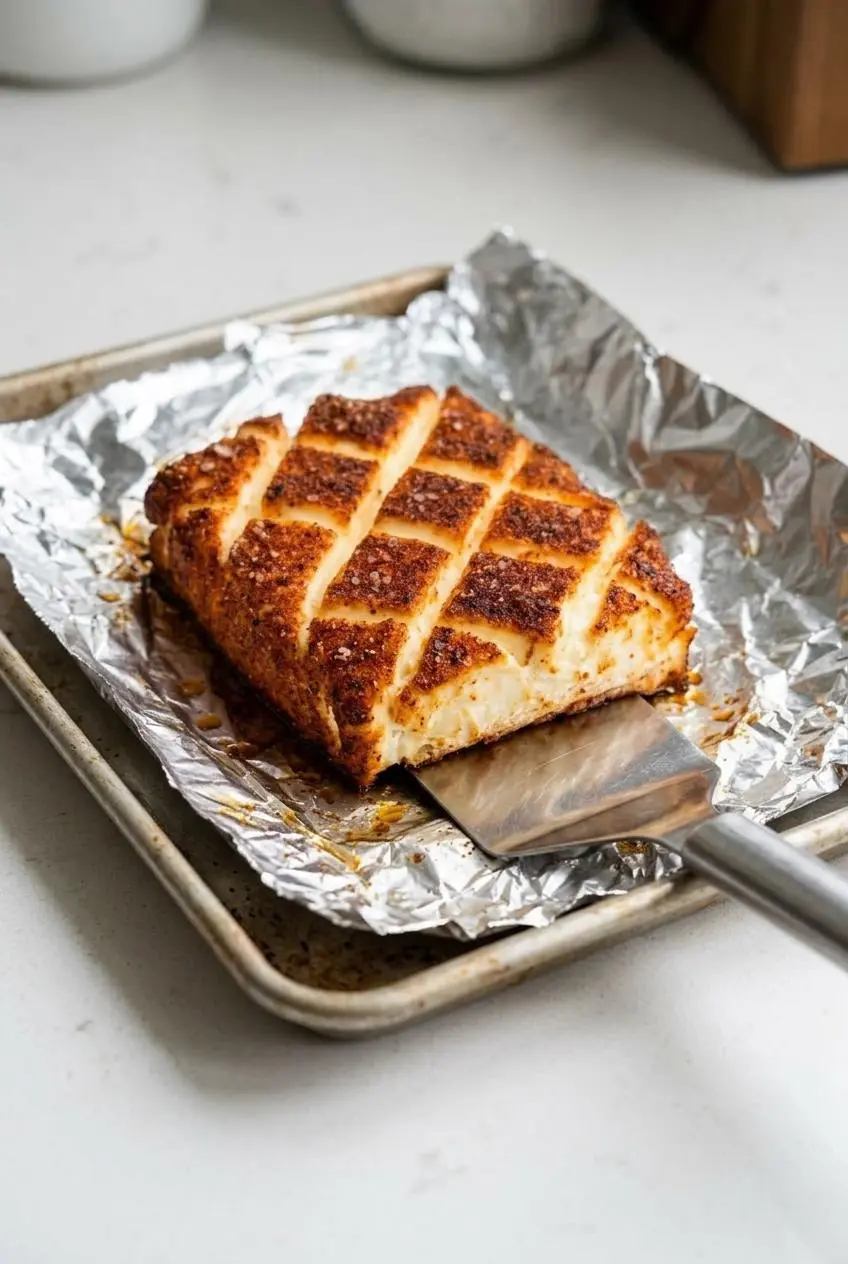
You can fit this appetizer around another smoker project without chasing one exact temperature. Keep the heat within the permitted range and watch the cheese rather than relying on color alone.
Smoking Temperature and Timing From 180 F to 250 F
- 180 F: The coolest permitted setting softens and browns more gently; check the center’s spreadability.
- 200 F: The starting setting gives you a straightforward approach within the 1 to 2 hour window.
- 225 F: A practical option when another dish already needs this temperature; monitor the surface as the cheese warms.
- 250 F: The warmest permitted setting can deepen browning more quickly, so pay closer attention to the sugar coating.
A shorter smoke gives a milder result, while a longer smoke builds more flavor. No single finish time fits every smoker. If ribs, brisket, or chicken are cooking within this range, position the cheese where raw-meat drips cannot reach it.
Best Wood Pellets for Smoking Cream Cheese
- Apple or cherry: Gentler fruitwood smoke lets the tangy dairy and sweet rub stay noticeable.
- Pecan: A rounded, nutty smoke character pairs naturally with brown sugar and savory spices.
- Hickory: A stronger choice for a pronounced barbecue flavor, but heavy smoke can overwhelm mild cheese.
Choose pellets or wood appropriate for your smoker. The goal is a smoky appetizer, not a coating of harsh smoke that hides the seasoning.
Keep the Block Supported and the Crust Intact
Greased foil on a small baking sheet is the standard setup. Butcher paper or a small skillet can serve as optional alternatives when their heat limits suit your equipment. Don’t put softened cheese directly on open grates.
- Block breaking apart: Deep scoring weakens it; try a shallow crosshatch, approximately 1/4 inch deep, on cold cheese.
- Coating sticking to the foil: Grease the foil thoroughly and slide a wide spatula underneath rather than lifting one corner.
- Surface getting too dark: Check for hotter spots in the smoker and monitor the coating more closely near the upper temperature limit.
If you prefer, let the block rest briefly before transferring it to a platter. That’s a serving preference, not a required cooking step.
How to Make It in the Oven Without a Smoker
For an optional indoor adaptation, use the same oil coating, measured seasoning, and scoring approach. Place the block on the greased, foil-lined baking sheet and bake at 250 F for about 1 hour, checking for a warm, spreadable center.
The oven softens the cheese and browns the coating, but it doesn’t create wood smoke. Choose the already-permitted smoked paprika in the rub for smoky seasoning flavor.
Pepper Jelly, Savory Coatings, and Sweet Topping Ideas
Choose an optional flavor direction before seasoning so you don’t accidentally stack several salty coatings. These swaps and finishes stay separate from the measured BBQ-rub version.
Pepper Jelly and Chili-Lime Flavor
- Coating: Use chili-lime seasoning instead of BBQ rub for tangy heat.
- Finish: Spread pepper jelly over the warm block after smoking for a glossy, sweet-spicy contrast.
If you enjoy fruit and jalapeño against tangy cream cheese, cranberry jalapeno dip offers another party-friendly take on that combination.
Everything Bagel, Taco, Ranch, and Cajun Coatings
- Everything bagel: Adds sesame, garlic, and onion crunch; sliced green onions make a fresh finish.
- Taco: Brings warm spice that suits tortilla chips.
- Ranch: Gives an herb-forward, tangy seasoning profile.
- Cajun: Adds peppery heat and a bolder savory edge.
Commercial blends vary in salt, sugar, and heat. Treat each as a replacement coating rather than an addition to the full BBQ rub.
Cinnamon Brown Sugar With a Fruit Topping
- Choose cinnamon brown sugar instead of the savory BBQ coating for a dessert-style version.
- Spoon warm fruit jam or pie filling over the finished cheese and offer graham crackers alongside.
The creamy, tangy center balances the sweet topping, while the smoke adds contrast. Keep the fruit as a finish so it doesn’t hide the seasoned surface during cooking.
Hot Honey and Crumbled Bacon Finish
- Drizzle warm hot honey over the cheese just before serving, letting it settle into the scored crevices.
- Add crisp crumbled bacon last for crunch against the soft center.
This optional finish adds sweetness, heat, and salt, so keep the coating restrained rather than adding another heavy layer of seasoning.
Best Dippers, Cookout Serving Ideas, and Leftover Storage
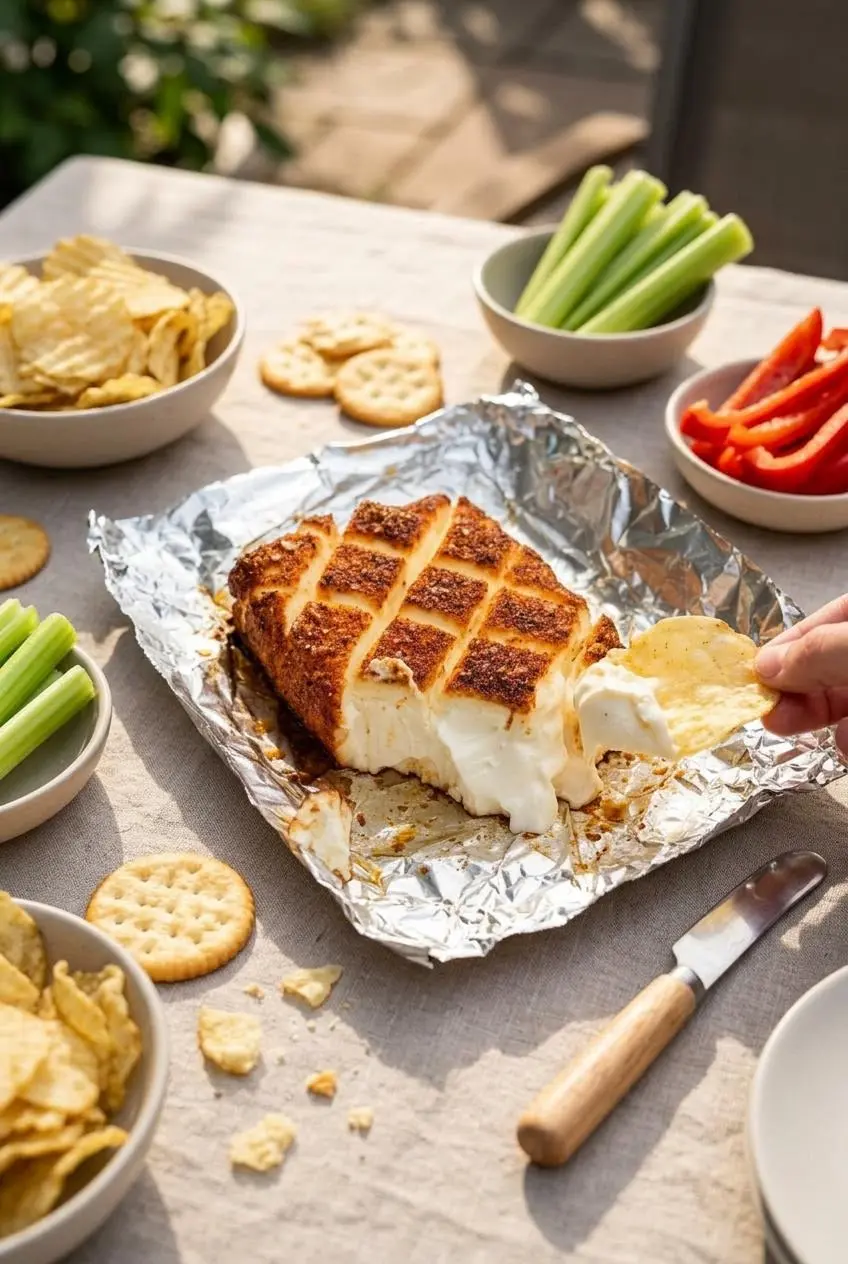
A thick, warm block needs sturdy dippers and a plan for leftovers. Set out a spreading knife even when chips are on the platter.
Sturdy Dippers for Warm, Thick Cream Cheese
Start with crackers and a cheese knife for spreading or plain kettle chips for scooping. Pita chips, buttery crackers, baguette crostini, and toasted Hawaiian roll slices are optional alternatives. Delicate crackers can snap under a generous scoop.
Apple slices, celery sticks, and bell pepper strips add a crisp, fresh contrast. Check every seasoning and accompaniment before describing the platter as gluten-free.
Refrigerating and Gently Reheating the Block
Refrigerate leftovers promptly in an airtight container, keeping the refrigerator at 40 F or below. Smoking adds flavor; it doesn’t make this dairy appetizer shelf-stable. Avoid leaving the platter out through an extended cookout.
Reheat a portion gently in a microwave-safe dish or in the oven using an oven-safe dish. Check frequently to avoid drying the edges; aim for warmed and spreadable rather than heavily browned.
For prep planning, mix the dry rub separately and keep it dry and covered. Treat the finished cheese as a refrigerated leftover rather than assuming the rub extends its storage life.
Turn Leftovers Into Popper or Mushroom Filling
Use leftover smoked cheese as the filling for cream cheese jalapeno poppers, tuck it into stuffed mushrooms, or spread it on a warm bagel.
Chilled cheese becomes firmer, which helps with portioning into fillings. For spreading, gently warm the portion you plan to use rather than leaving the entire container out to soften.
Conclusion
Smoked cream cheese brings a warm, spreadable center and a smoky, sweet-savory exterior to the snack table. Measure the rub and keep the block supported for the best balance of flavor and texture.
Leave it as-is or finish it with pepper jelly for a little sweet heat. Put a spreading knife beside the sturdy chips so everyone can enjoy the soft center without broken crackers.
Frequently Asked Questions
How Long Do You Need to Smoke Cream Cheese?
Smoke it for 1 to 2 hours, starting at 200 F. The permitted range is 180 F to 250 F; a shorter smoke tastes milder, while a longer smoke builds depth.
Does Cream Cheese Melt When You Smoke It?
Standard brick cream cheese generally softens and becomes spreadable while retaining its outline at these temperatures. Products vary, so keep the block supported on the prepared sheet rather than directly on grates.
Is 225 F or 250 F Too Hot to Smoke Cream Cheese?
No, both fall within the permitted 180 F to 250 F range. Watch browning and texture, especially at the warmer setting, and keep the cheese on its prepared sheet.
Can You Make Smoked Cream Cheese in the Oven?
Yes, bake the coated, scored block on the prepared foil-lined sheet at 250 F for about 1 hour. Smoked paprika adds smoky seasoning flavor, but an oven doesn’t produce wood smoke.
Can You Use Low-Fat or Whipped Cream Cheese?
Full-fat brick cream cheese gives the intended richness and structure. Neufchatel may give softer results, while whipped or tub products may spread more because their formulations differ.
Smoked Cream Cheese

Equipment
- smoker
Ingredients
- 8 oz cream cheese (one standard block)
- 2 tbsp BBQ dry rub (use your favorite)
- olive oil
- spray oil
BBQ Dry Rub (makes ½ cup)
- 1/4 cup dark brown sugar
- 2 tbsp kosher salt (do NOT sub table salt 1-1)
- 1 tbsp garlic powder
- 1/2 tbsp black pepper
- 1/2 tbsp onion powder
- 1/2 tbsp smoked paprika (or regular paprika)
- 1/2 tbsp chili powder (add more for extra spice)
Instructions
- Bring the smoker to 200 F, or choose a setting between 180 F and 250 F when sharing the smoker with another dish. Let the cooking chamber reach the selected temperature before adding the cheese.
- Combine the homemade rub ingredients in a bowl if you aren’t using a purchased blend, keeping the specified kosher salt rather than substituting table salt by volume. Break up brown sugar clumps until the mixture looks evenly blended.
- Cover a small baking sheet with foil, apply spray oil to the foil, and lightly coat every outer surface of the cream cheese with olive oil. The cheese should have a thin sheen that helps the seasoning cling.
- Distribute the measured 2 tbsp BBQ dry rub over the top, bottom, and sides, reserving the remaining homemade mixture. A light, even coating should cover the block without a thick pile of seasoning.
- Set the seasoned cheese on the prepared sheet and cut intersecting diagonal lines across the top with a sharp knife. The cuts should form a crosshatch while leaving the block intact.
- Transfer the sheet to the smoker and cook for 1 to 2 hours, choosing a shorter smoke for milder flavor or a longer smoke for more depth. Look for opening score lines, a darker seasoned surface, and a warm, spreadable center.