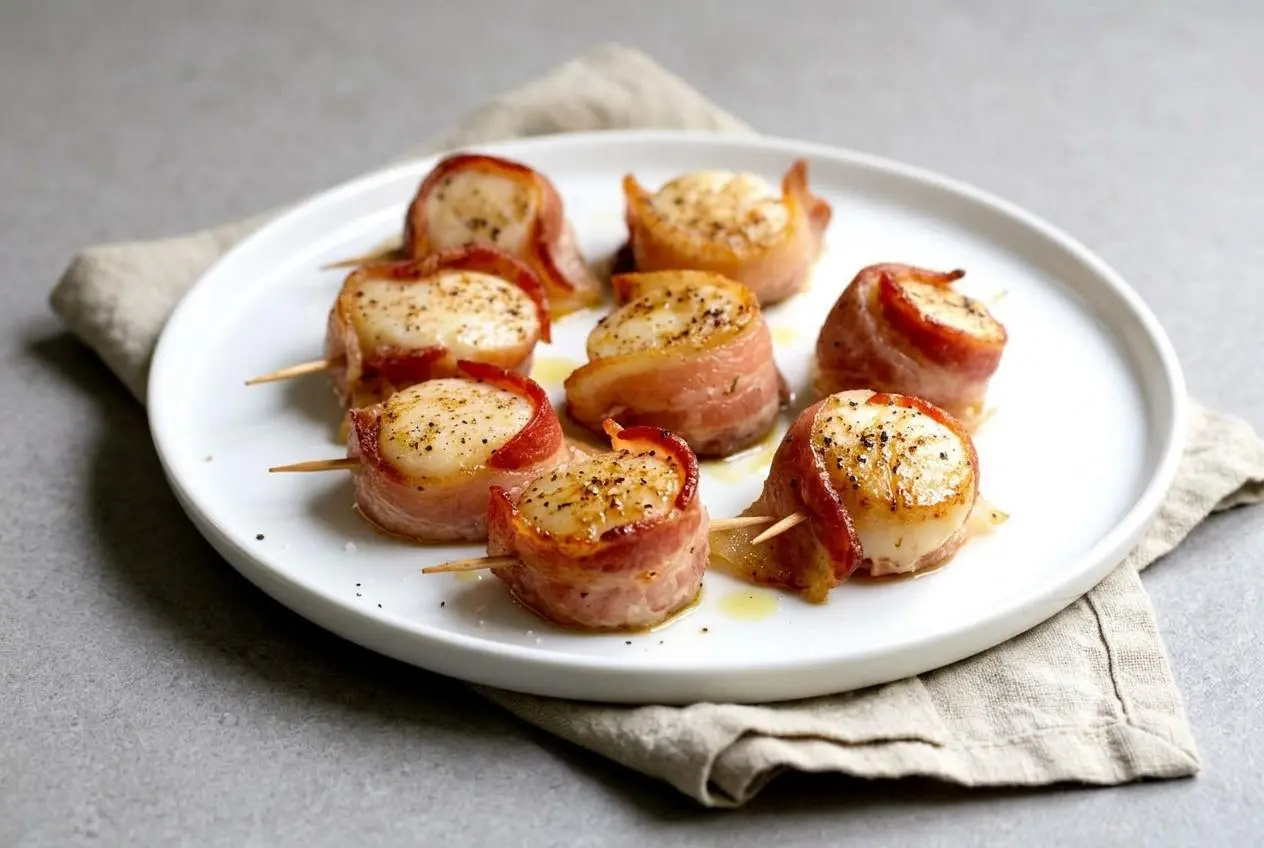
For tender bacon wrapped scallops with crisp edges, use dry-packed sea scallops and thin or partially cooked bacon. Bake at 425°F for 12 to 15 minutes, until the scallops turn opaque and the bacon cooks through.
These bacon wrapped scallops pair sweet, buttery seafood with a smoky bacon jacket. The challenge is getting both textures right at the same time, without leaving the scallops in the oven while thick bacon catches up.
The oven method takes about 25 minutes, including prep, and skips the intense overhead heat that can make bacon splatter under a broiler. A little attention to bacon thickness makes a big difference. The crisp edges start with the wrap.
Have paper towels ready before you open the scallops so you can dry them thoroughly before wrapping.
Ingredients You Need and Why They Matter
Scallops provide a sweet, tender center, while bacon adds smoky richness and crisp edges. Olive oil encourages surface browning, salt and pepper sharpen the flavor, and toothpicks hold the bacon snugly around each scallop.
- 16 sea scallops
- 8 slices bacon (cut in half crosswise)
- 16 toothpicks
- olive oil (for drizzling)
- freshly ground black pepper (to taste)
- kosher salt (to taste)
Choose dry-packed sea scallops when possible. “Dry-packed” means they haven’t been treated with moisture-retaining additives. Wet-packed scallops often contain sodium tripolyphosphate, which makes them retain water that can collect on the pan during cooking. That extra moisture works against browning.
Sea scallops also give you enough surface area for a bacon wrap. Look for reasonably similar sizes so the batch cooks evenly. Small bay scallops aren’t a practical substitute for this wrapping method.
Bacon thickness matters more than the cut’s name. Thin-cut bacon has the best chance of cooking through during the scallops’ short oven time. Center-cut bacon can work well, but check the actual thickness. Regular or thick strips benefit from partial cooking before wrapping; keep them flexible rather than crisp.
Olive oil needs only to lightly coat the surface. Season gently with kosher salt because the bacon already brings saltiness. Freshly ground pepper adds a little bite without covering up the scallops’ sweetness.
If you use wooden toothpicks, soaking them in water beforehand can help limit scorching, though exposed tips may still darken. Position each pick through the overlapping bacon so the seam stays closed.
I run a fingertip along each scallop to find the firm, crescent-shaped side muscle, then peel it away from the softer flesh before drying.
How to Make Bacon Wrapped Scallops
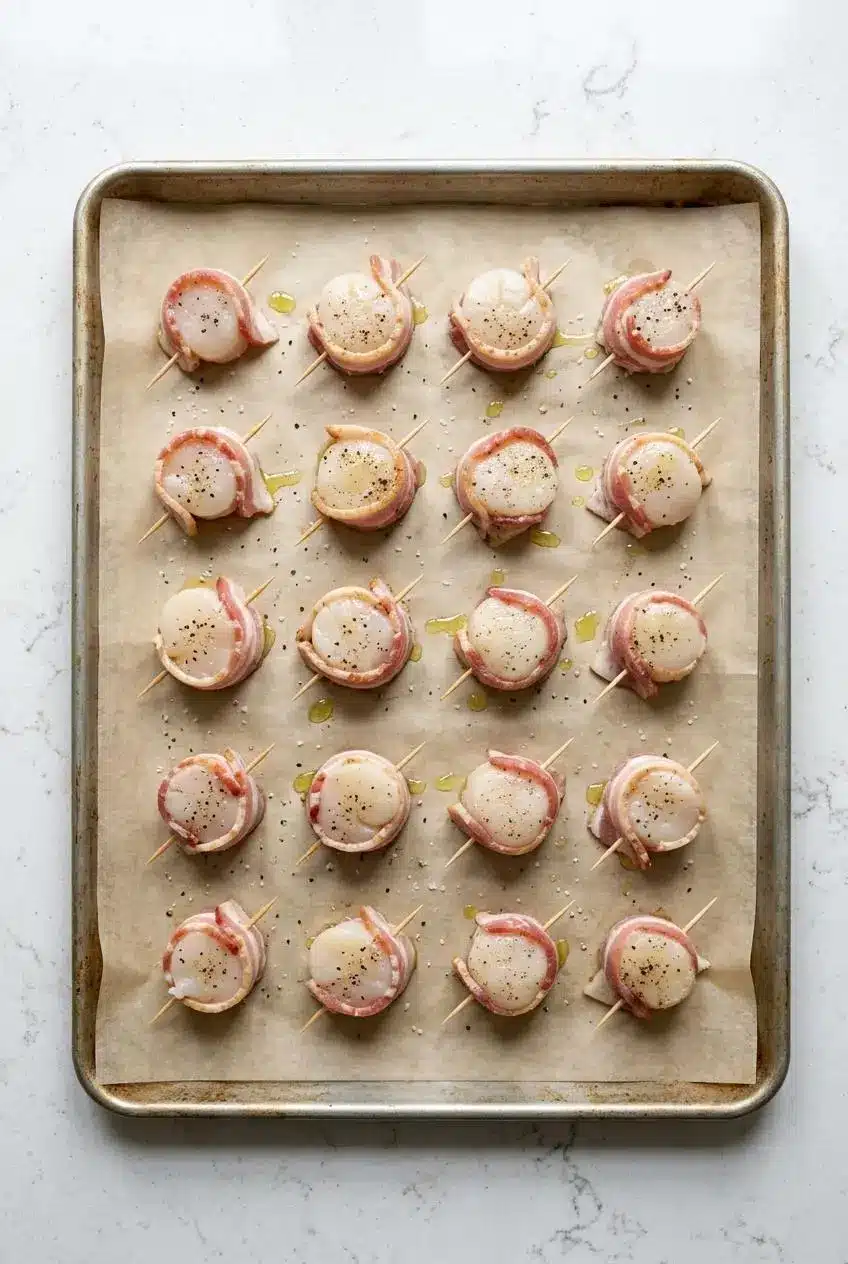
The main recipe uses the oven so you can cook the entire batch together. Allow 10 minutes for prep and up to 15 minutes for baking; the recipe makes 16 pieces and serves 4.
- Set the oven to 425°F and let it heat fully while you prepare the scallops.
A fully heated oven helps the bacon begin rendering as soon as the pan goes in. - Cover the baking sheet with parchment paper and keep it ready beside your work area.
The lined surface will catch the bacon drippings. - Use paper towels to blot the scallops thoroughly, peel away any attached side muscles, then fasten a bacon half around each scallop with a toothpick.
Each wrap should sit snugly against the scallop with its overlapping ends secured. - Lightly drizzle the wrapped scallops with olive oil, then add freshly ground black pepper and kosher salt to taste.
A light sheen is enough to coat the surface without leaving it swimming in oil. - Transfer the wrapped pieces to the lined sheet, keeping them in one layer with gaps between them.
The bacon edges should remain exposed rather than touching neighboring pieces. - Cook for 12 to 15 minutes, checking for opaque, tender scallops and bacon that has cooked through, then serve hot.
The centers should lose their translucent appearance and feel gently springy rather than hard.
Drying deserves care here. Press the paper towel gently against the broad faces and sides, rather than simply resting the scallops on it. A wet surface encourages steaming and leaves the bacon sitting in diluted drippings.
Wrap around the curved side, leaving the flat top and bottom exposed. Avoid stretching the bacon tightly enough to squeeze the scallop. Secure the overlap rather than pushing the toothpick through a loose tail that can unravel.
Spacing helps hot air reach the bacon. If the pieces crowd together, their sides stay damp even while the exposed tops cook. Check the smallest scallops first, since they may finish before larger ones.
Baking is easier to manage than broiling from start to finish. A broiler can brown exposed bacon quickly while causing grease splatter and smoke, yet still leave sheltered portions soft. Don’t keep cooking a finished scallop just to chase darker bacon.
Air Fryer, Grill, and Stovetop Methods
These optional methods change how the heat reaches the scallops, so treat their cooking times as starting points. Bacon thickness and scallop size still determine when each piece finishes.
Air Fryer Method
Preheat the air fryer to 375°F. Arrange the assembled scallops in a single layer with space between them, using thin or partially cooked bacon for more even results.
Air fry for 5 minutes, then gently turn the pieces or shake the basket without dislodging the toothpicks. Cook for another 3 to 4 minutes, checking for opaque centers and cooked, crisp-edged bacon. Work in batches rather than stacking pieces.
Grill and Pan-Sear Options
- Grill: Heat the grill to about 400°F. Cook the wrapped scallops for approximately 10 to 12 minutes, turning once and keeping the bacon seams secured. If desired, baste lightly with melted garlic butter, avoiding drips that can trigger flare-ups.
- Stovetop: Use a hot cast-iron or stainless steel skillet and thoroughly dried scallops. With tongs, cook the bacon-covered edges first to render the fat, then sear the flat faces for about 1½ to 2 minutes per side, adjusting for size and doneness.
The skillet option needs the most attention because the bacon and seafood contact the pan differently. For an unwrapped alternative with a golden crust, try pan-seared sea scallops and serve crisp chopped bacon alongside.
Tips and Troubleshooting for Tender Scallops and Crispy Bacon
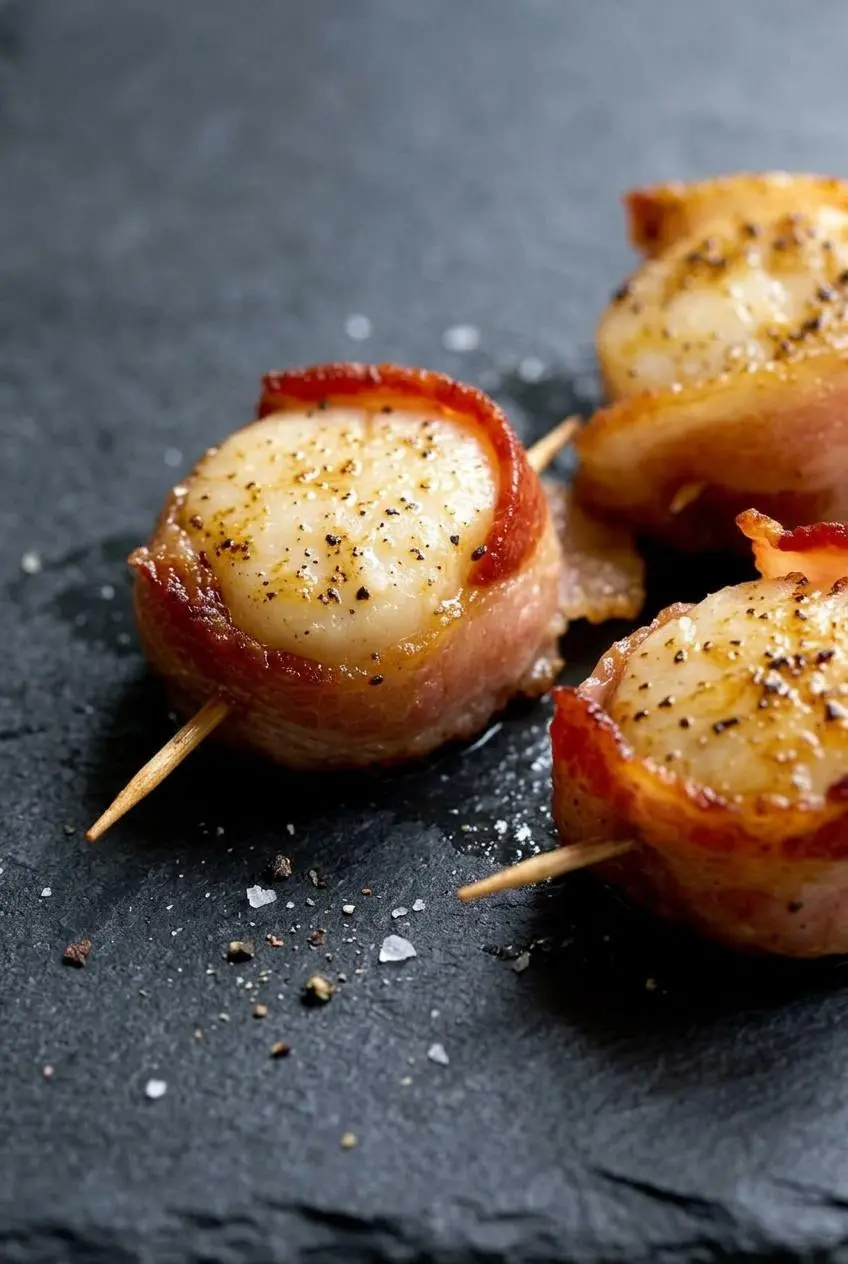
Most texture problems come from a mismatch between fast-cooking scallops and slower-rendering bacon. Fix that mismatch before the wrapped pieces reach the oven.
- Bacon stays limp: The strips may be too thick for the scallops’ cooking window. As an optional preparation step, partially cook regular or thick bacon for 3 to 5 minutes, stopping while it still bends easily; thickness can affect the time needed.
- Bacon becomes brittle before wrapping: You’ve taken the partial cooking too far. Use gentle heat and stop before the strips become crisp. A small splash of water in the skillet or sheet pan can help the bacon render more gently at first, but it won’t prevent every curl.
- Scallops turn rubbery: They likely spent too long on the heat. Begin checking at the early end of the cooking window and avoid extending their cooking solely to darken the bacon.
- Liquid pools around the scallops: Wet-packed seafood, incomplete drying, or crowding can contribute. Choose dry-packed scallops, blot all surfaces, and leave clear gaps on the pan.
- The oven smokes: Excess fat, a dirty oven, or intense broiler heat can contribute. Use a baking sheet that contains drippings and stick with baking rather than full-time broiling.
If starting with frozen scallops, follow the package’s thawing and handling directions before drying and wrapping them. Don’t assume a still-frozen center will cook on the same schedule as a fully thawed scallop.
For texture, watch the flesh change from glossy and translucent to opaque, with slight resistance when gently pressed. Those cues help you judge cooking progress, but they aren’t an exact internal-temperature measurement or a safety guarantee. Follow any product-specific cooking directions.
Best Sauces, Glazes, and Serving Ideas
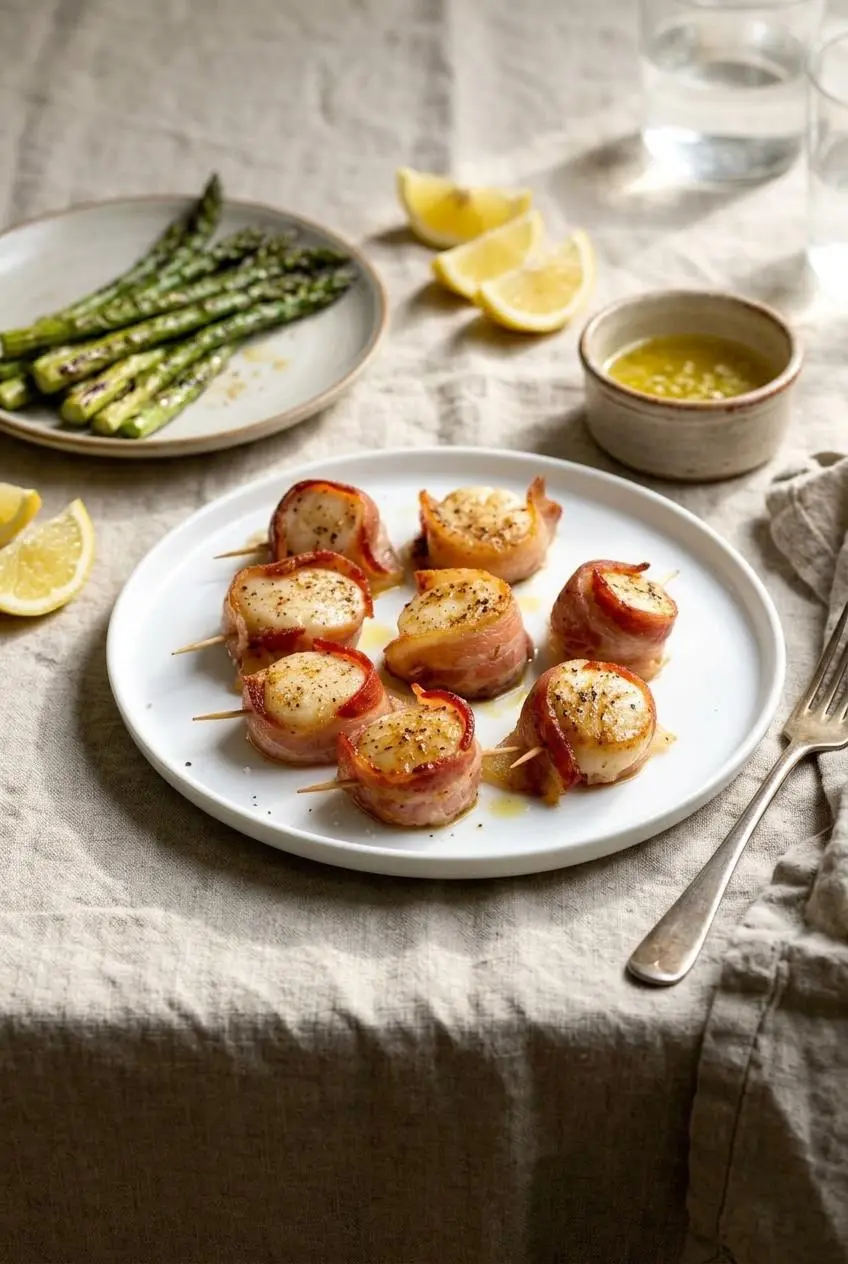
A bright sauce balances the bacon’s richness, but these scallops also work without one. Keep every glaze and dip optional, and use a light hand so the seafood’s sweetness still comes through.
Quick Sauces and Glazes
- Maple-Dijon black pepper glaze: Warm maple syrup with Dijon mustard and black pepper, adjusting the mustard for a pleasantly sharp finish. Brush lightly over the bacon during the final 3 minutes of baking; the syrup helps the surface caramelize, while Dijon balances the richness.
- Lemon garlic butter: Gently warm butter with garlic, then stir in lemon juice to taste. Serve as a dipping sauce rather than pouring enough over the platter to soften the bacon.
- Citrus BBQ glaze: Stir citrus juice into barbecue sauce until it tastes tangy rather than overwhelmingly sweet. Brush on a thin layer near the end of cooking and watch closely for darkening.
Sweet glazes can scorch before the seafood finishes. Add them late, and don’t switch to the broiler just to make them sticky.
What to Serve With Bacon Wrapped Scallops
For an appetizer, serve the scallops hot with their toothpicks, lemon wedges, and optional garlic herb aioli. This batch makes 16 bites; how far that stretches depends on the other food on the platter.
For dinner, divide the batch among four plates and add angel hair pasta, creamy orzo, or jasmine rice. Roasted asparagus, green beans, or a fresh spinach salad provide contrast to the smoky bacon.
A crisp wedge salad also makes a cool, crunchy accompaniment. Keep its dressing moderate so the meal doesn’t feel too rich from start to finish.
Make-Ahead, Storage, and Reheating
For preparation, set out the baking sheet, toothpicks, and seasonings before handling the scallops. If assembly pauses, keep the seafood covered and chilled rather than leaving the tray on the counter. For the best texture, plan to cook and serve the batch together.
Keep leftovers covered in an airtight container in the refrigerator, following the product’s handling guidance. Store dipping sauces separately so they don’t soak into the bacon.
If reheating, use gentle oven heat and watch closely rather than giving the scallops another full cooking cycle. Expect some loss of tenderness and bacon crispness; reheating can’t fully recreate the freshly baked texture.
Conclusion
Good bacon wrapped scallops depend on matching the wrap to the seafood: dry-packed scallops, a thoroughly dried surface, and bacon thin enough to finish in the same cooking window.
The 25-minute oven method keeps the process manageable. Serve them hot, and try a light maple-Dijon glaze when you want a sweet, sharp finish against the smoky bacon.
Frequently Asked Questions
What Is the Best Way to Cook Bacon Wrapped Scallops?
Baking at 425°F for 12 to 15 minutes on a parchment-lined sheet is the easiest way to cook the full batch together. Air frying at 375°F for about 8 to 9 minutes is another option. Both work best with thin or partially cooked bacon and thoroughly dried scallops.
Do You Pre-Cook Bacon Before Wrapping Scallops?
Thin-cut bacon can go around the scallops raw. Regular or thick bacon benefits from partial cooking for about 3 to 5 minutes, depending on thickness. Stop while the strips remain flexible enough to wrap, not browned and brittle.
Why Soak Scallops in Milk Before Cooking?
Some cooks use milk soaking to soften strong seafood flavors, but fresh dry-packed scallops don’t need it. Milk adds surface moisture that you then need to remove for browning. Don’t use soaking to disguise questionable freshness.
How Do You Cook Pre-Made or Frozen Bacon Wrapped Scallops?
Follow the package directions first, including whether to cook from frozen or thaw before baking. Products vary in size and bacon preparation, so the homemade recipe’s timing may not apply. For thawed, uncooked pieces comparable to these, use the oven method as a starting point and check that both components finish cooking.
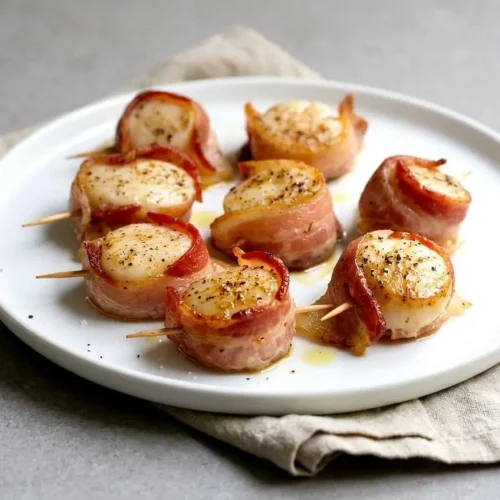
Bacon Wrapped Scallops

Equipment
- Baking Sheet
- Parchment Paper
- Paper towel
- Toothpicks
Ingredients
- 16 sea scallops
- 8 slices bacon cut in half crosswise
- 16 toothpicks
- olive oil for drizzling
- freshly ground black pepper to taste
- kosher salt to taste
Instructions
- Set the oven to 425°F and let it heat fully while you prepare the scallops. A fully heated oven helps the bacon begin rendering as soon as the pan goes in.
- Cover the baking sheet with parchment paper and keep it ready beside your work area. The lined surface will catch the bacon drippings.
- Use paper towels to blot the scallops thoroughly, peel away any attached side muscles, then fasten a bacon half around each scallop with a toothpick. Each wrap should sit snugly against the scallop with its overlapping ends secured.
- Lightly drizzle the wrapped scallops with olive oil, then add freshly ground black pepper and kosher salt to taste. A light sheen is enough to coat the surface without leaving it swimming in oil.
- Transfer the wrapped pieces to the lined sheet, keeping them in one layer with gaps between them. The bacon edges should remain exposed rather than touching neighboring pieces.
- Cook for 12 to 15 minutes, checking for opaque, tender scallops and bacon that has cooked through, then serve hot. The centers should lose their translucent appearance and feel gently springy rather than hard.