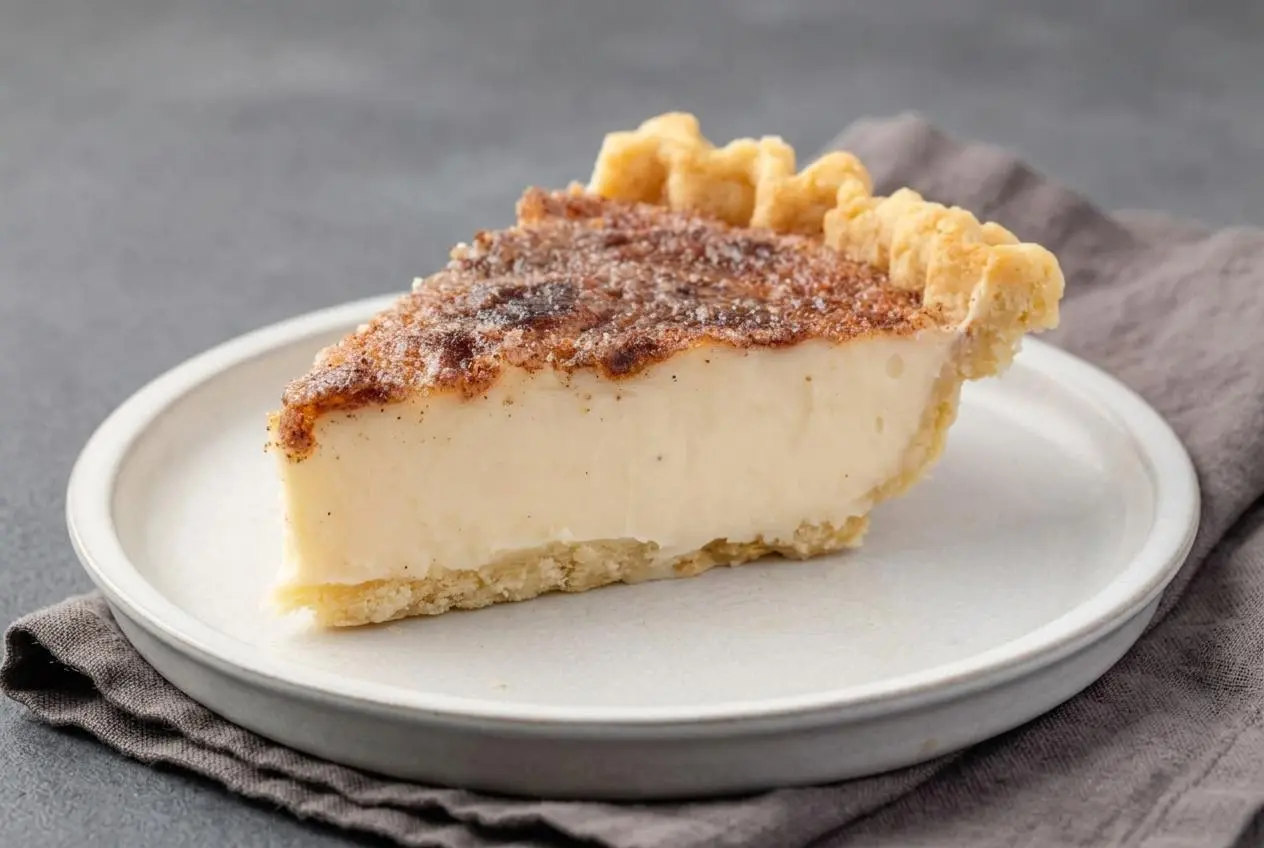
This sugar cream pie recipe makes a classic Hoosier dessert with eggless vanilla custard, a flaky pastry shell, and a broiled cinnamon sugar topping. Heavy cream, sugar, butter, and cornstarch create the rich filling without eggs.
Crackly cinnamon sugar gives way to cool, velvety vanilla cream in every slice. Often called Indiana sugar cream pie, this old-fashioned dessert gets its structure from a cooked starch filling rather than an egg custard.
The stovetop method makes the thickening easy to watch, while the broiler adds a golden finish. Plan beyond the listed 50-minute prep and cooking estimate to allow for cooling and thorough refrigeration before slicing. That cinnamon crunch is worth the wait.
Set a timer beside the stove before heating the filling so you can time the boil without stopping your whisk.
Key Ingredients and Their Roles
Cream and butter provide richness, cornstarch gives the filling structure, and vanilla and salt balance the sweetness. The pastry adds a flaky contrast, while melted butter, sugar, and cinnamon create the fragrant browned topping.
- 1 pie crust
- ⅓ cup ( 43 g ) cornstarch
- 1 cup ( 200 g ) granulated sugar
- 5 tablespoon ( 70 g ) butter
- 3 cups ( 710 ml ) heavy cream
- 1 tablespoon ( 15 ml ) vanilla
- 1 pinch table salt
Topping
- 2 tablespoon ( 28 g ) melted butter
- 2 tablespoon ( 24 g ) granulated sugar
- 1 teaspoon ( 2 g ) cinnamon
Heavy cream gives the custard its full, silky mouthfeel. Cornstarch supplies the thickening power, but the cream’s fat makes the chilled filling taste especially smooth and rich. Lower-fat dairy changes that balance.
Cornstarch and sugar need to meet before the liquid does. Whisking them together dry separates the starch particles, helping them disperse through the cream instead of forming stubborn lumps. During cooking, the starch absorbs liquid and thickens the mixture without eggs.
Butter works in two places. In the filling, it rounds out the cream and vanilla flavors. On top, melted butter moistens the cinnamon sugar, helping it bubble and brown under the broiler.
Vanilla, salt, and cinnamon keep the pie from tasting merely sweet. Vanilla flavors the filling, a pinch of salt sharpens that flavor, and cinnamon adds warmth right where you smell it first.
I’d whisk the sugar and cornstarch thoroughly in the cold saucepan before adding cream, paying attention to any powder caught around the edges.
How to Make Hoosier Sugar Cream Pie Step by Step
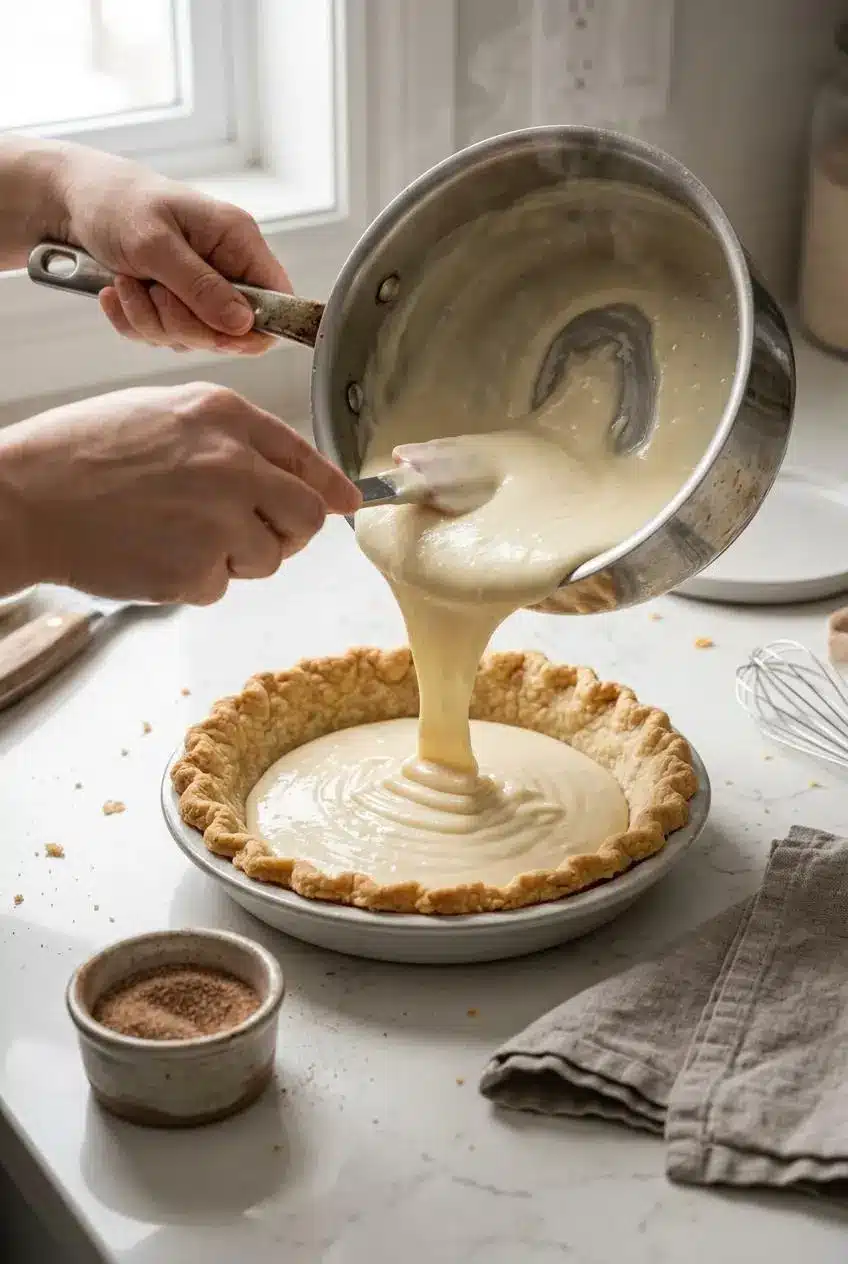
Finish and cool the pastry before cooking the filling. Once the custard thickens, you’ll want the shell ready so you can fill it while the mixture still spreads easily.
Yield: 8 servings. Allow additional time for cooling and chilling before serving.
- Heat the oven to 425°F (220°C) for the crust’s first bake.
The oven should reach temperature before the pastry goes in. - Fit an 11-inch round of rolled dough into your pie pan, press away trapped air, dock the bottom and sides with a fork, and add parchment filled with pie weights or dried beans.
The dough should sit against the pan without air bubbles, with the weights supporting its shape. - Give the weighted shell 15 minutes in the oven, lower the heat to 350°F (180°C), lift out the parchment and weights, and bake uncovered for another 5 minutes before setting it aside to cool completely.
Keep the oven on while the exposed pastry finishes cooling. - Distribute the cornstarch throughout the filling sugar with a whisk in a medium saucepan, keeping the pan off the heat.
The dry mixture should look uniform, without pockets of starch. - Whisk the cream and filling butter into the saucepan over medium heat, stirring continuously, then maintain the boil for 1 minute.
Look for heavy bubbles breaking through the thickened cream and ribbons trailing behind the whisk. - Take the saucepan off the burner, incorporate the vanilla and salt, and spread the hot filling evenly in the cooled shell with a spoon or spatula.
The surface should look smooth rather than mounded in the center. - Distribute the melted topping butter across the filling, then mix the topping sugar with the cinnamon and scatter it over the butter.
A fairly even coating will help the surface brown consistently. - Bake the filled pie on the middle rack at 350°F (180°C) for 20 to 25 minutes.
The outer filling should look set while the center retains a gentle, gelatin-like wobble. - Switch to broil and watch the surface continuously for up to 1 minute, stopping when the sugar browns and crystallizes.
The topping should look golden and bubbling, not dark or scorched. - Let the pie cool to room temperature, then refrigerate it until thoroughly chilled and ready to cut.
The filling should feel firm and cold rather than loose and warm.
Blind Baking the Crust So It Stays Crisp
The filled pie spends relatively little time in the oven, so the shell needs its own bake first. Fork holes let trapped steam escape; weights hold the pastry down and support the sides as it cooks.
Remove the parchment along with the weights for the uncovered portion of baking. That exposes the bottom pastry to the oven’s heat. Cool the shell completely before filling it so residual steam can escape and the pastry can firm up.
Cooking the Eggless Stovetop Custard
Keep the whisk moving across the bottom and into the saucepan’s corners. Thick cream can catch there before the surface shows much activity, especially as the cornstarch begins to swell.
Start timing when substantial bubbles break through the thickened mixture, not when you see the first faint movement near the rim. The filling should fall from the whisk in thick ribbons. Follow the brief boil rather than continuing to cook in pursuit of a firmer-looking custard.
Baking, Broiling the Cinnamon Crust, and Chilling
A gentle center wobble is expected at the end of baking. Don’t wait for the entire pie to become rigid in the oven; the filling firms further as it cools and chills.
Before broiling, check your pie dish’s manufacturer instructions and protect the pastry rim with foil or a suitable shield. Use only a dish rated for broiler use. Watch without stepping away, because the topping can move from golden to scorched quickly.
After cooling, refrigerate the pie until cold throughout. A cool surface alone doesn’t mean the center has set. Chilling is part of finishing this dessert, not merely a serving preference.
Expert Tips and Troubleshooting for a Perfect Set
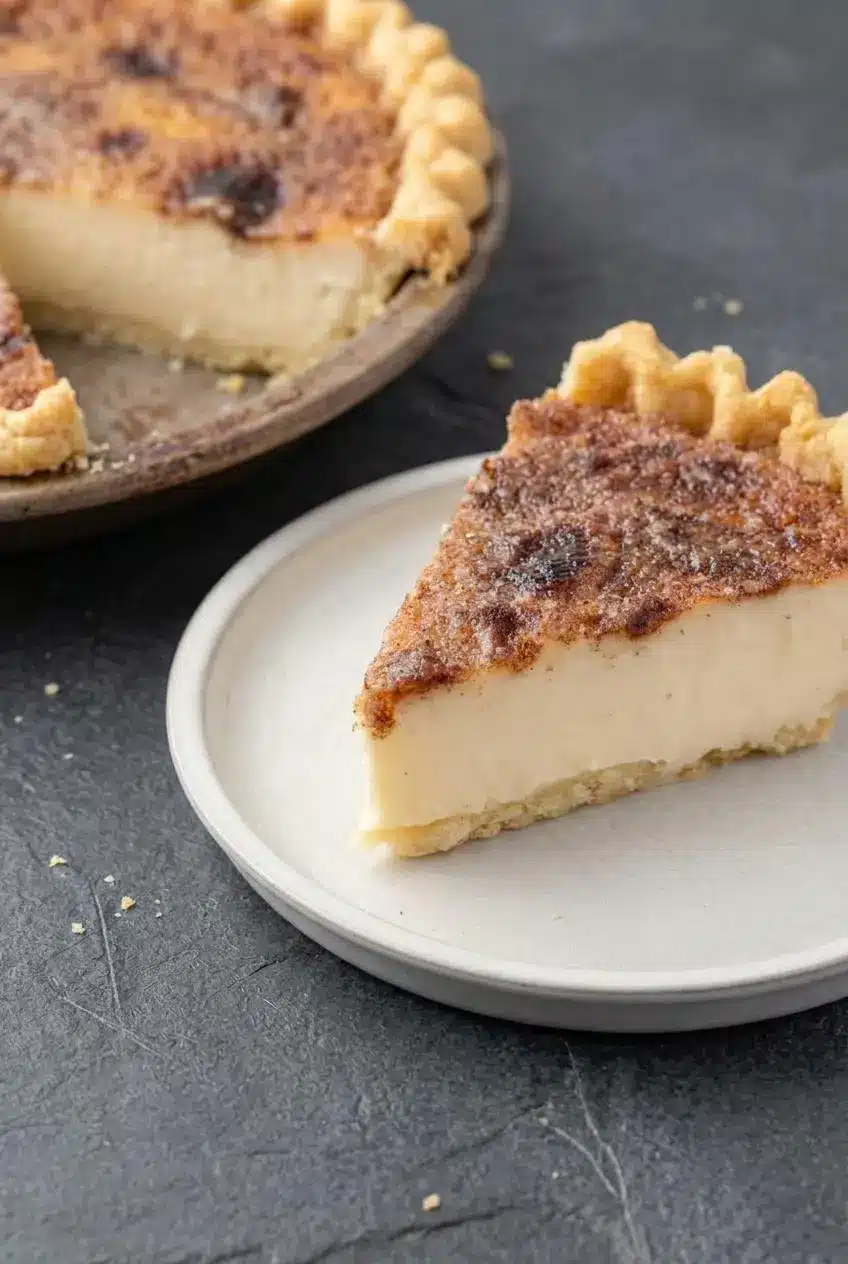
Most texture problems begin with the stovetop boil or an early cut. Use these cues to identify the likely cause before changing ingredients.
- The filling stays loose: If you timed from the first tiny bubble, the mixture may not have reached a proper boil throughout; wait for thick bubbles before starting the timer.
- The custard thins during cooking: Prolonged boiling can weaken starch thickening, so stop at the specified cooking window rather than boiling until the mixture looks solid.
- Lumps appear: Starch that wasn’t dispersed can clump when liquid meets it; thoroughly dry-whisk the sugar and cornstarch, then keep whisking as the cream heats.
- The pastry puffs or slides: Dock the dough and distribute the weights across the bottom and toward the sides; dried beans work when ceramic weights aren’t available.
- You want to use a disposable aluminum pan as support: A nesting pan may help hold the shape, but it isn’t automatically a replacement for the weight the dough needs; the weighted parchment method is the more straightforward choice here.
- The rim gets too dark: Shield the pastry edges before broiling and leave the filling exposed so the sugar can brown.
- The first slice collapses: Give the pie more refrigerator time if the center still feels warm or soft; additional oven time isn’t the answer to an insufficiently chilled pie.
Variations and No-Bake Method
Keep the cream-and-cornstarch method unchanged for the classic version. Treat these alternatives as optional changes with different texture or flavor results.
No-Bake Stovetop and Torch Shortcut
You can skip baking the filled pie because the eggless filling cooks on the stovetop. Use a fully baked, cooled shell, add the cooked vanilla filling, and finish with the melted butter and cinnamon sugar.
Caramelize the surface with a culinary torch, or leave it uncaramelized and chill the pie directly. A quick broil is another option only when the dish permits it. The shortcut avoids the filled-pie bake, but it still needs thorough chilling before slicing.
Using Half-and-Half, Whole Milk, or Condensed Milk
- Half-and-half: Replacing part of the cream makes the filling less rich; expect a different mouthfeel and potentially softer slices.
- Whole milk: A partial swap lightens the custard further, but it won’t reproduce the luxurious texture of the heavy-cream version.
- Sweetened condensed milk: This adds concentrated milk solids and substantial sweetness, so it isn’t a direct replacement for the cream without reformulating the filling.
For the most predictable result, keep the listed dairy and starch quantities. Don’t add extra cornstarch by guesswork to compensate for a dairy swap.
Sugar Cream Pie vs. Buttermilk Pie and Chess Pie
- Sugar cream pie: This version uses sweet cream and cornstarch, without eggs or cornmeal, and finishes with cinnamon sugar.
- Buttermilk pie: Typically an egg-based custard, often with flour, it gets its characteristic tang from buttermilk; some versions also include lemon.
- Chess pie: Usually made with eggs and a little cornmeal, it has a denser filling than this creamy Hoosier pie.
If you prefer a tangy cream dessert, lemon sour cream pie offers a different direction from this sweet vanilla filling.
For optional flavor changes, consider these separately from the classic method:
- Browned butter: Brown the filling butter separately for a nutty aroma, then incorporate it when adding the cream.
- Nutmeg: Add a light grating alongside the cinnamon for an Amish-inspired warm-spice finish.
- Brown sugar topping: Replace part of the topping sugar with brown sugar for a deeper molasses flavor, watching its browning closely.
Make-Ahead, Storage, and Serving Suggestions
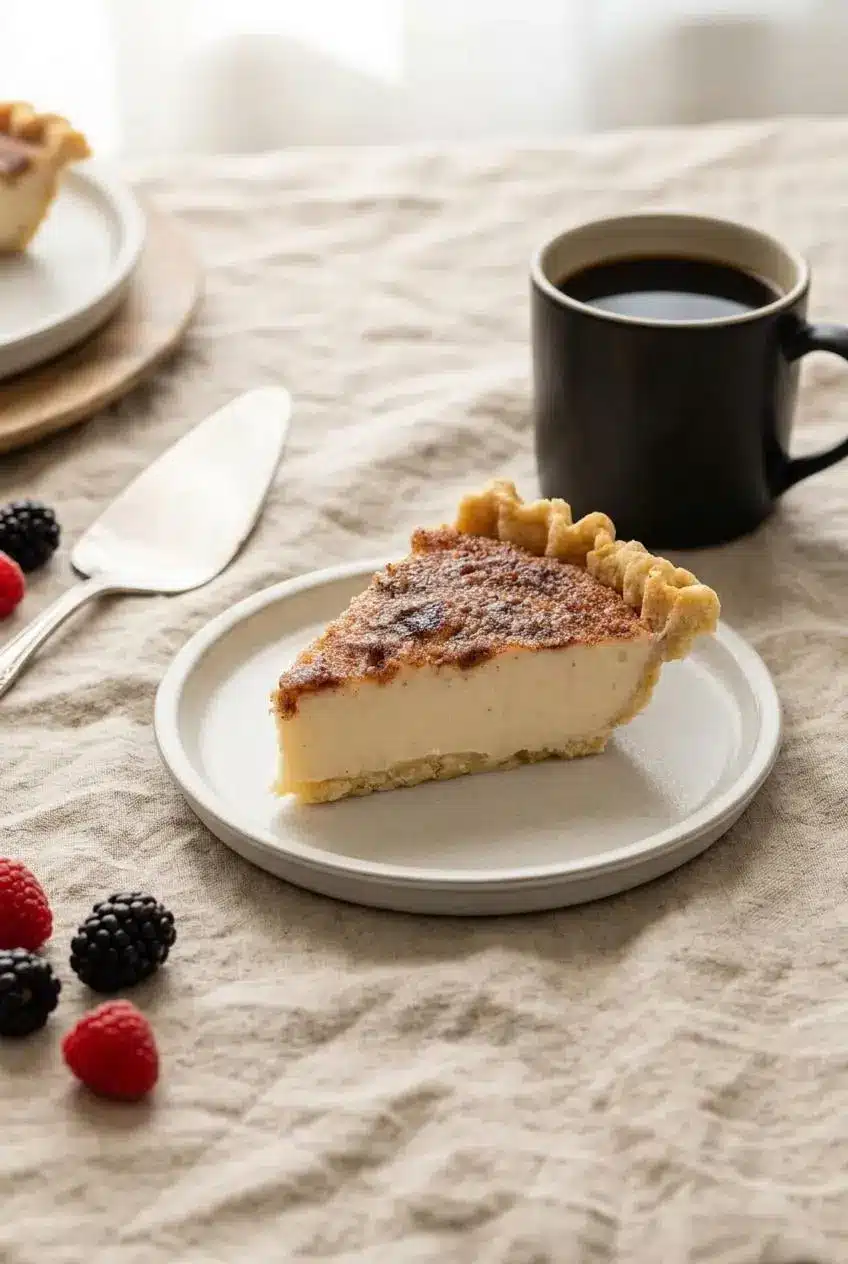
This pie suits advance preparation because it needs to finish chilling before you cut it. Make room in the refrigerator before baking so cooling and storage don’t become an afterthought.
Keep the cooled pie refrigerated and cover it once chilled to protect the filling from drying and refrigerator odors. Maintain a refrigerator temperature at or below 40°F (4°C), and return leftovers to the refrigerator promptly rather than leaving the pie out on the dessert table.
Serve cold for the cleanest slices. Cut through the topping and filling with a sharp knife, then wipe the blade between portions to avoid dragging custard across the next slice.
Tart berries and unsweetened coffee balance the rich filling. For a more dressed-up plate, add a modest spoonful of homemade whipped cream beside the slice rather than covering its cinnamon crust.
On a holiday dessert spread, offer smaller wedges alongside pumpkin or pecan pie. The chilled vanilla filling provides a pleasant contrast to those more densely flavored desserts.
Conclusion
A flaky shell, smooth vanilla filling, and browned cinnamon sugar give Hoosier sugar cream pie its charm. Each layer has a different texture, especially when the pie is thoroughly chilled.
Watch the stovetop boil, stay beside the broiler, and resist cutting before the center sets. Give the filling that finishing time, and the first clean slice will reward your patience.
Frequently Asked Questions
What Is Another Name for a Sugar Cream Pie?
Hoosier pie and Indiana sugar cream pie are common names. You may also see Amish sugar cream pie, finger pie, or desperation pie, although recipes under those names can vary.
What Is the Difference Between Sugar Cream Pie and Buttermilk Pie?
Sugar cream pie uses sweet cream and, in this version, cornstarch without eggs. Buttermilk pie relies on eggs and tangy buttermilk, giving it a noticeably different flavor and custard structure.
Is Chess Pie the Same as Sugar Cream Pie?
No. Chess pie typically contains eggs and cornmeal for a denser filling. This sugar cream pie contains neither and gets its silky structure from cooked cornstarch and cream.
Do I Have to Bake Sugar Cream Pie After Cooking It on the Stove?
No. You can put the fully cooked filling in a baked, cooled shell and chill it without the filled-pie bake. Use a culinary torch for the topping, or broil briefly only in a suitable dish.
Can You Freeze Sugar Cream Pie?
For this recipe, choose refrigerated storage rather than planning to freeze it. Keep the chilled pie covered and follow the storage guidance above to protect its creamy texture.
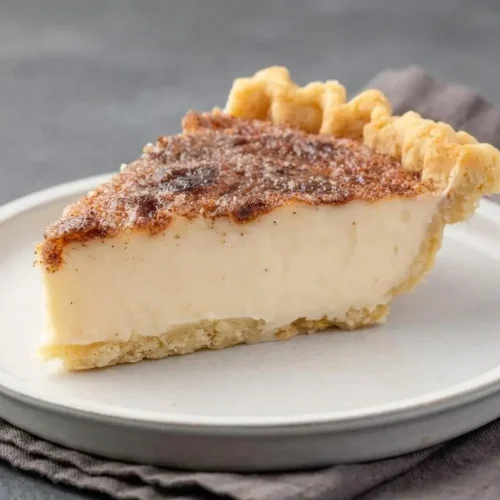
Sugar Cream Pie Recipe

Equipment
- Pie Plate
Ingredients
- 1 pie crust
- ⅓ cup ( 43 g ) cornstarch
- 1 cup ( 200 g ) granulated sugar
- 5 tablespoon ( 70 g ) butter
- 3 cups ( 710 ml ) heavy cream
- 1 tablespoon ( 15 ml ) vanilla
- 1 pinch table salt
Topping
- 2 tablespoon ( 28 g ) melted butter
- 2 tablespoon ( 24 g ) granulated sugar
- 1 teaspoon ( 2 g ) cinnamon
Instructions
- Heat the oven to 425°F (220°C) for the crust’s first bake. The oven should reach temperature before the pastry goes in.
- Fit an 11-inch round of rolled dough into your pie pan, press away trapped air, dock the bottom and sides with a fork, and add parchment filled with pie weights or dried beans. The dough should sit against the pan without air bubbles, with the weights supporting its shape.
- Give the weighted shell 15 minutes in the oven, lower the heat to 350°F (180°C), lift out the parchment and weights, and bake uncovered for another 5 minutes before setting it aside to cool completely. Keep the oven on while the exposed pastry finishes cooling.
- Distribute the cornstarch throughout the filling sugar with a whisk in a medium saucepan, keeping the pan off the heat. The dry mixture should look uniform, without pockets of starch.
- Whisk the cream and filling butter into the saucepan over medium heat, stirring continuously, then maintain the boil for 1 minute. Look for heavy bubbles breaking through the thickened cream and ribbons trailing behind the whisk.
- Take the saucepan off the burner, incorporate the vanilla and salt, and spread the hot filling evenly in the cooled shell with a spoon or spatula. The surface should look smooth rather than mounded in the center.
- Distribute the melted topping butter across the filling, then mix the topping sugar with the cinnamon and scatter it over the butter. A fairly even coating will help the surface brown consistently.
- Bake the filled pie on the middle rack at 350°F (180°C) for 20 to 25 minutes. The outer filling should look set while the center retains a gentle, gelatin-like wobble.
- Switch to broil and watch the surface continuously for up to 1 minute, stopping when the sugar browns and crystallizes. The topping should look golden and bubbling, not dark or scorched.
- Let the pie cool to room temperature, then refrigerate it until thoroughly chilled and ready to cut. The filling should feel firm and cold rather than loose and warm.